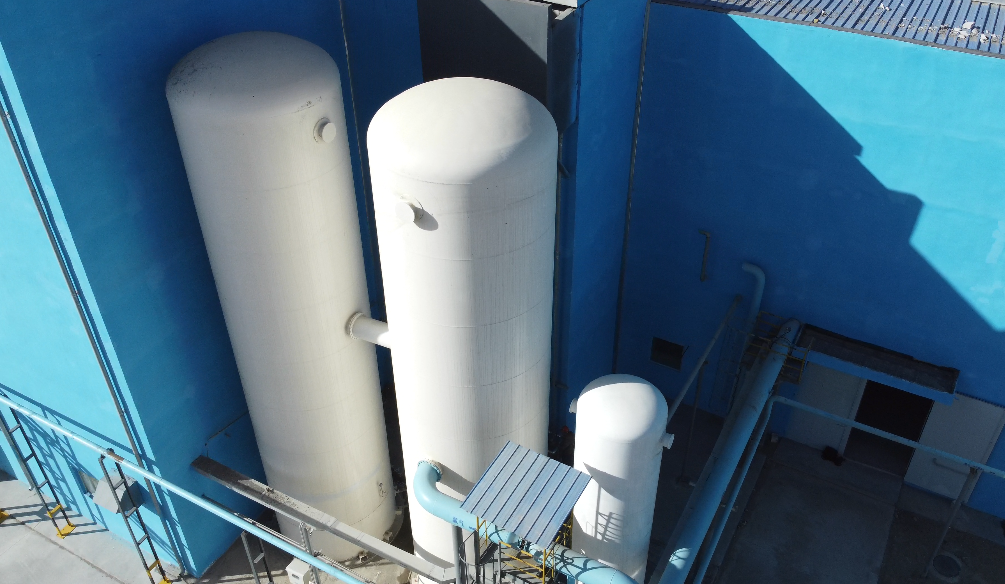
Oxygen Plant Punch List Guide for the United States
Quick Answer

An oxygen plant punch list is the final closeout checklist used before mechanical completion, commissioning acceptance, and turnover. In the United States, the most common punch list defects in VPSA, PSA, and related oxygen systems are instrument calibration gaps, air leakage, valve action errors, blower vibration, pipe support issues, insulation defects, control logic mismatches, analyzer inaccuracies, incomplete labeling, and missing turnover documents. The fastest way to resolve them is to classify items by safety, operability, compliance, and performance, assign an owner and due date, verify repair evidence in the field, then close each item only after retesting.
If you need outside support, practical options in the United States include AirSep Corporation, Atlas Copco Gas and Process, On Site Gas Systems, Oxymat USA partners, PCI Gases, and PDC Machines for related gas system integration work. Qualified international suppliers can also be considered, including experienced Chinese manufacturers with appropriate certifications, strong EPC or turnkey capabilities, and dependable pre-sales and after-sales support, especially when cost-performance and delivery flexibility matter.
For most projects, the best punch list process is simple: inspect the plant by system, separate critical from minor defects, correct leaks and control issues first, validate oxygen purity and flow under load, confirm all safety interlocks, and do not accept turnover until documentation, training, and spare parts are complete.
Market Overview in the United States

The United States remains one of the most active markets for on-site industrial oxygen generation because plant owners across steel, glass, wastewater, non-ferrous metals, pulp and paper, chemical processing, and medical support operations want tighter control over cost, uptime, and supply security. While large cryogenic air separation units still dominate very high purity and high-volume gas production, VPSA and PSA oxygen plants are increasingly selected for decentralized supply, brownfield expansions, emergency redundancy, and energy-sensitive installations. This is especially true in manufacturing corridors around the Gulf Coast, the Great Lakes, Texas, Ohio, Pennsylvania, Indiana, Alabama, and California, where users need reliable oxygen without depending entirely on delivered liquid product.
In this environment, the oxygen plant punch list has become more important, not less. U.S. buyers expect documented turnover, OSHA-conscious site practice, code-compliant electrical installation, stable SCADA or PLC operation, and measurable performance against guaranteed oxygen purity, oxygen flow, pressure, and specific power. That means the final inspection stage is not just a paperwork formality. It is where hidden defects become visible before they turn into startup delays, warranty disputes, or chronic operating losses.
Ports and logistics hubs such as Houston, Long Beach, Savannah, and Newark also influence project execution. Imported skids, blowers, analyzers, valves, and packaged control cabinets may arrive on different schedules, which increases the chance of late field modifications. Every late change raises the risk of unresolved punch items, especially around cable termination, panel labeling, P&ID markups, and spare part reconciliation. A disciplined punch list protects schedule and budget by preventing unfinished work from being pushed into commercial operation.
For buyers comparing technologies, the checklist phase is also where the true difference between suppliers appears. Some firms are strong in equipment delivery but weak in field closure. Others provide better site support, better startup documentation, and faster issue resolution. That is why purchasers in the United States increasingly ask not only for equipment specifications, but also for detailed commissioning procedures, acceptance criteria, local response capability, and post-handover service commitments.
What an Oxygen Plant Punch List Should Cover

A complete oxygen plant punch list should cover every system that can affect safety, operability, compliance, maintainability, and guaranteed process performance. In practical U.S. project terms, this means much more than checking whether the plant starts. The list should verify that all equipment is installed according to approved drawings, all instruments are calibrated, all interlocks function correctly, all rotating equipment meets vibration limits, and all process guarantees are proven at site conditions.
The most effective approach is to divide the oxygen generation package into inspection blocks: air intake and filtration, blower or compressor section, adsorber vessels, switching valves, vacuum system for VPSA units, oxygen buffer and product piping, analyzers, electrical distribution, controls and automation, structural and access systems, and turnover documentation. This allows field teams in places such as Chicago, Houston, Pittsburgh, or Los Angeles to close issues by discipline while keeping a clear path to startup.
Punch items should also be categorized by severity. Category A items are safety or legal compliance issues that prevent startup. Category B items affect operability, reliability, or guaranteed performance and should be closed before final acceptance. Category C items are minor cosmetic or non-critical documentation tasks that can be completed within an agreed closeout period. This classification prevents disputes and keeps owners from taking over incomplete systems without a clear record of risk.
Common Punch List Defects and How to Resolve Them
The most common defects on oxygen plant projects are recurring because oxygen systems combine process equipment, rotating machinery, controls, piping, and strict purity verification. Below are the issues most often found in U.S. plant walkdowns and the practical actions needed to close them.
| Defect Area | Typical Field Finding | Operational Risk | Recommended Fix | Verification Method | Closeout Priority |
|---|---|---|---|---|---|
| Instrument calibration | Pressure, flow, dew point, or oxygen analyzer readings differ from certified values | False acceptance, unstable purity, poor controls | Recalibrate with traceable standards, replace failed transmitters, update PLC scaling | Calibration certificates and repeat reading under load | Critical |
| Valve operation | Wrong fail position, slow switching, air leaks at seats or actuators | Adsorption cycle upset, oxygen loss, unstable product | Adjust solenoids, actuator timing, position feedback, replace seals if needed | Stroke test and cycle timing confirmation | Critical |
| Rotating equipment | Blower vibration, high bearing temperature, misalignment, unexpected noise | Trip risk, reduced equipment life, unstable flow | Laser alignment, baseplate correction, balancing, lubrication review | Vibration report and loaded run test | Critical |
| Piping and joints | Soap-test leaks, poor support spacing, uninsulated sections, low-point condensate issues | Energy loss, contamination, maintenance problems | Rework joints, add supports, insulate correctly, install drains or slope correction | Leak test, visual inspection, insulation checklist | High |
| Controls and logic | Interlocks not matching cause-and-effect matrix, alarm tags inconsistent | Unsafe startup, nuisance trips, operator confusion | Revise PLC code, HMI text, permissives, and shutdown logic | Function test against approved matrix | Critical |
| Documentation | Redlines missing, O&M manuals incomplete, spare list not reconciled | Delayed handover, poor maintenance readiness | Issue final as-built package, training records, vendor data books | Document turnover checklist signoff | High |
This table matters because most unresolved oxygen plant punch list items are not isolated technical errors; they are interface failures between disciplines. A mis-scaled oxygen analyzer can be caused by wrong calibration gas, incorrect transmitter range, or a PLC input mapping error. A blower vibration issue may come from weak grouting, pipe strain, or poor coupling alignment. Good closeout teams investigate root causes rather than just symptoms.
Air leakage remains one of the most expensive hidden problems in VPSA and PSA oxygen plants. Even a small leak on feed air piping, valve manifolds, or vessel nozzles can degrade oxygen recovery and raise specific power. In American industrial settings where electricity costs vary by state and time-of-use structure, these losses accumulate quickly. Leak closure should involve systematic testing, not selective repair. Use a documented leak survey, record defect locations, retest after repair, and compare plant power draw before and after closure.
Analyzer errors are another frequent source of false confidence. Owners sometimes assume the plant is meeting contract because the HMI shows acceptable purity, but the field analyzer may be out of calibration or sampling may be unstable due to condensate, low sample flow, or tubing contamination. Purity acceptance should always be confirmed using calibrated instruments under sustained design or agreed test load, not just at a short unloaded run.
Electrical defects also appear often on punch lists: unlabeled cables, loose gland sealing, incomplete grounding, cabinet cooling issues, and missing arc-flash labels. In the United States, plant owners and EPC contractors are especially sensitive to these items because they affect code compliance, maintenance safety, and insurance expectations. No oxygen plant should move to final acceptance unless panel schedules, I/O lists, grounding checks, and protective settings are complete and verified.
Typical Product Types and How Punch Lists Differ
Not every oxygen system has the same punch list emphasis. A containerized PSA medical backup unit has a very different closeout profile than a large industrial VPSA installation supplying steel or glass production. The checklist must reflect the process design, operating pressure, purity range, and owner operating philosophy.
| Plant Type | Typical Capacity Range | Key Punch List Focus | Common Defect Pattern | Acceptance Test Priority | Best Fit Industries |
|---|---|---|---|---|---|
| Small PSA oxygen generator | Below 500 Nm3/h | Analyzer accuracy, compressor integration, skid wiring | Control alarms, dryer issues, sample line contamination | Purity and pressure stability | Medical backup, labs, small manufacturing |
| Medium PSA oxygen system | 500 to 2,000 Nm3/h | Valve switching, buffer sizing, automation tuning | Cycle mismatch, dew point drift, poor labeling | Flow verification and reliability | Wastewater, metal cutting, small glass plants |
| Industrial VPSA oxygen plant | 2,000 to 100,000+ Nm3/h | Blower performance, vacuum system, adsorber balancing | Vibration, leakage, interlock logic, support issues | Specific power and oxygen recovery | Steel, non-ferrous, glass, chemicals |
| Turnkey oxygen station | Site-specific | Civil interface, utility tie-ins, training, as-builts | Late field mods, incomplete redlines, missing spares | Integrated startup and turnover | New industrial sites and expansions |
| Packaged emergency oxygen plant | Variable | Fast startup, redundancy, alarm communication | Remote monitoring issues, bypass alignment | Availability and switchover | Hospitals, disaster support, remote facilities |
| Hybrid oxygen supply system | Variable | Tank backup logic, vaporizer interface, control sequencing | Inter-system control conflict, valve lockout errors | Seamless source transition | Plants needing high uptime assurance |
This comparison helps buyers and operators choose the right closeout strategy. On a large VPSA project, the oxygen plant punch list usually concentrates on rotating equipment health, adsorber performance, vacuum reliability, and energy consumption. On smaller PSA plants, the issues are often more related to package integration, compressor quality, moisture control, and analyzer verification. Matching the checklist to the equipment type prevents wasted inspection time and uncovers the defects that actually affect production.
Buying Advice for U.S. Plant Owners and EPC Teams
If you are buying an oxygen plant in the United States, do not wait until startup to ask how punch list closure will work. Make it part of the purchase specification. The contract should define mechanical completion, pre-commissioning scope, commissioning responsibility, acceptance test method, guaranteed values, punch item categories, and the maximum time allowed for closeout after provisional acceptance. This is especially important for projects in states with strict environmental, safety, or unionized site requirements.
Ask suppliers for example turnover dossiers before award. A strong vendor should be able to show sample calibration records, FAT and SAT protocols, cause-and-effect matrices, instrument index, valve list, spare parts list, recommended critical spares, training agenda, and as-built handover requirements. If a vendor cannot present a mature documentation structure, the punch list phase is likely to be disorderly.
Also evaluate how the supplier handles field service. Can they send technicians quickly to Texas, Ohio, California, Georgia, or Illinois? Do they support remote diagnostics? Are replacement analyzers, valve kits, and blower parts stocked regionally? Punch list closure becomes much faster when service logistics are already planned before the first equipment shipment arrives at port.
Another practical point is load testing. Some plants are accepted under unrealistically light conditions because the downstream user is not ready. That creates future disputes. Try to define a meaningful partial-load acceptance method if full-load conditions will not be available. For example, agree in advance how purity, power, pressure, and cycle performance will be normalized or retested later.
Industries Driving Oxygen Plant Demand
Oxygen demand in the United States is broad, but industrial on-site plants are concentrated in sectors where delivery economics, continuity of supply, and process intensity justify dedicated generation. Steelmaking and non-ferrous metallurgy use large volumes for enrichment and furnace optimization. Glass plants use oxygen to improve combustion efficiency and product quality. Wastewater treatment increasingly applies oxygen where process control and odor reduction are priorities. Chemical operations, gasification support, and specialty manufacturing also use on-site oxygen for stable long-term supply.
The bar chart above illustrates a realistic demand pattern. It is not a regulatory dataset, but it reflects common project concentration in U.S. industrial sectors. For punch list planning, this matters because each industry has different acceptance pressures. Steel projects often prioritize uptime and energy efficiency. Glass producers focus on stable oxygen flow and combustion consistency. Wastewater operators care more about controls integration, unattended reliability, and maintenance simplicity.
Applications and Their Acceptance Priorities
Applications shape the final walkdown. If oxygen is feeding combustion, purity swings and pressure stability may immediately affect downstream burners. If the plant supports wastewater aeration, remote monitoring and low-maintenance operation can be more important than ultra-tight pressure control. If the oxygen plant is integrated into an existing utility island, electrical compatibility and process alarms may drive the punch list more than mechanical details alone.
| Application | Main Oxygen Requirement | Most Sensitive Punch Item | Why It Matters | Typical U.S. Project Setting | Acceptance Evidence |
|---|---|---|---|---|---|
| Blast furnace enrichment | High flow stability | Blower and control reliability | Any interruption affects furnace efficiency | Midwest and Gulf Coast steel plants | 72-hour stable run data |
| Glass melting | Consistent purity and pressure | Analyzer accuracy and valve response | Product quality and fuel efficiency depend on stable oxygen | Pennsylvania, Ohio, Texas glass clusters | Trend logs and burner integration test |
| Wastewater treatment | Flexible load response | Remote alarms and turn-down capability | Flow changes with seasonal load and process conditions | Municipal and industrial plants nationwide | SCADA verification and turn-down test |
| Chemical oxidation | Purity confidence | Sampling system integrity | Incorrect purity data can affect product quality | Gulf Coast chemical corridors | Certified analyzer comparison |
| Medical reserve support | Availability and redundancy | Backup logic and alarm transfer | Downtime tolerance is minimal | Regional hospitals and emergency facilities | Failure mode simulation |
| Metal cutting and fabrication | Pressure consistency | Buffer vessel and regulator setup | Cut quality depends on stable delivery | Fabrication shops in industrial states | Pressure stability under load cycles |
This table shows why one generic oxygen plant punch list is not enough. Different applications need different evidence before handover. Buyers should insist that the SAT protocol reflects the actual use case, not just the supplier’s standard factory approach.
Case Studies and Practical Lessons
Consider a hypothetical but common U.S. glass plant expansion near Toledo, Ohio. The VPSA oxygen plant reached mechanical completion on time, but startup exposed three hidden defects: blower vibration above acceptable range, unstable oxygen analyzer readings, and inconsistent alarm text between the HMI and the cause-and-effect sheet. None of these issues looked severe during installation, yet all three delayed acceptance. The resolution required baseplate re-shimming and piping strain relief, replacement of contaminated sample tubing with proper conditioning, and PLC-HMI tag cleanup followed by a witnessed alarm test. The lesson is straightforward: small documentation and installation errors can combine into major commissioning delays.
Another typical case is a wastewater oxygen system in California where the plant could produce oxygen at design purity, but remote monitoring alarms did not map correctly into the site SCADA. Operators technically had a working plant, but not an operable facility under local staffing reality. The punch list remained open until communications, alarm priorities, and historian trending were proven during shift operation. This is increasingly relevant in 2026 and beyond as labor constraints push more plants toward low-touch operation.
In large steel installations, a recurring issue is accepting the package before enough time is spent on load transition behavior. A VPSA plant may pass a short steady-state test but still show instability when moving from 50 percent to 90 percent load. If the contract allows only a narrow acceptance definition, the owner may discover these weaknesses too late. Stronger contracts require dynamic testing, not only static point verification.
Supplier Landscape in the United States
The U.S. market includes established domestic manufacturers, multinational engineering groups, and selected international suppliers working through direct project teams or local partners. Buyers should compare more than equipment price. The key factors are field closure discipline, documentation maturity, service response, installed references, and ability to support customer-owned oxygen plants through EPC, turnkey, or supplier-assisted delivery models.
| Company | Service Region | Core Strengths | Key Offerings | Typical Buyer Fit | Punch List Support Notes |
|---|---|---|---|---|---|
| AirSep Corporation | United States and global | Long experience in oxygen generation systems | PSA oxygen systems, engineered packages, service support | Industrial and specialty users | Known for established oxygen generation expertise and documentation support |
| Atlas Copco Gas and Process | North America and global | Broad compressed gas technology base and service network | On-site gas generation, compressors, controls integration | Multi-site industrial operators | Strong service footprint can help with closeout and maintenance transition |
| On Site Gas Systems | United States | Packaged oxygen and nitrogen solutions | PSA oxygen generators, medical and industrial systems | Hospitals, industrial plants, utilities | Practical for projects needing packaged solutions and training |
| PCI Gases | United States and export markets | Custom-engineered industrial gas systems | Oxygen, nitrogen, hydrogen, gas handling systems | Process plants needing engineered packages | Useful where integration detail and custom scope are important |
| Oxymat via U.S. representatives | United States through partners | Modular PSA oxygen technology | Oxygen generators for industrial and utility use | Mid-size facilities and distributors | Partner capability should be checked for local startup and closeout depth |
| PDC Machines | United States | Gas compression and integration capability | Compression skids and related gas systems | Projects needing gas system interfaces | Relevant where oxygen packages connect with broader gas infrastructure |
This supplier table is useful because the best oxygen plant provider is not always the one with the lowest headline quote. For U.S. buyers, handover discipline and service responsiveness often save more money than a modest equipment discount. When comparing vendors, ask for evidence of completed punch list closure on real industrial projects, not just factory test reports.
Our Company for U.S. Oxygen Plant Projects
For buyers looking beyond purely domestic sourcing, PKU Pioneer is a practical option for customer-owned oxygen plants delivered through EPC, turnkey, or tailored supply packages rather than BOO or on-site bulk gas sales. The company has built more than 400 industrial projects across over 20 countries and installed total oxygen capacity exceeding 2 million Nm3/h, with recognized strength in large VPSA systems and proprietary adsorbents developed from its long technical base linked to Peking University. Its manufacturing and project execution model combines in-house R&D, adsorbent and catalyst production, equipment fabrication, and project delivery, supported by ISO, CE, and ASME credentials that help align product quality and fabrication control with international benchmark expectations. For U.S. buyers, that matters because it demonstrates verifiable process know-how, controlled component selection, and tested manufacturing discipline rather than simple trading activity. The company can support end users, EPC contractors, distributors, dealers, brand owners, and project partners through flexible cooperation models including direct supply, customized engineering, OEM or ODM style cooperation where appropriate, wholesale project support, and regional partnership development. Its international project record, fast-response consultation structure, retrofit and upgrade services, equipment leasing, pilot testing, and O&M support show that it works as a long-term project partner rather than a remote exporter. Buyers evaluating larger systems can review its VPSA oxygen plant solutions, examine operational results through world-class project examples, and discuss U.S.-focused project needs through the company’s contact channel. For engineering depth and company background, the technical introduction is also relevant when comparing suppliers for industrial oxygen generation in the United States.
What makes this relevant to the oxygen plant punch list is the company’s operating experience on large industrial systems where blower performance, valve sequencing, adsorption stability, power consumption, and rapid startup all affect acceptance. Its published project scale includes very large VPSA references, and its systems are promoted for low energy consumption, flexible turndown, and rapid startup, which are exactly the operating characteristics that must be validated during site acceptance and punch item closure.
Market Growth, Trend Shift, and 2026 Outlook
The U.S. oxygen generation market is expected to keep growing through 2026 and beyond because industrial users want better resilience, lower transport dependence, and more predictable gas economics. Sustainability pressure is also influencing plant selection. Buyers are looking harder at specific power, lifecycle maintenance, noise, remote operation, and the ability to use oxygen to improve downstream fuel efficiency or reduce emissions intensity. In sectors like steel and glass, policy pressure and internal decarbonization targets make oxygen-enriched process optimization more attractive.
The line chart shows a realistic growth direction for on-site oxygen project activity. While exact project volume changes by sector and macroeconomics, the overall trend supports continued investment in distributed oxygen generation. More projects mean more EPC interfaces, more retrofit work, and therefore more need for disciplined punch list management.
The area chart highlights a major 2026 trend shift: oxygen plants are no longer judged only by whether they make oxygen. Buyers increasingly want remote monitoring, predictive maintenance, better turndown control, cybersecurity-aware automation, and lower specific power. That changes the punch list itself. Future closeout packages will include more verification of data connectivity, alarm routing, historian performance, and performance analytics.
Supplier and Product Comparison Factors
When evaluating suppliers, use a weighted scorecard rather than relying on brochure claims. In the U.S. market, the best predictor of a smooth oxygen plant handover is a combination of technical suitability, project execution discipline, and service accessibility. A vendor with excellent process design but poor documentation can create just as much cost as a vendor with average hardware but strong field closure.
The comparison chart reflects how buyers often prioritize selection criteria in real projects. Field service and documentation rank very high because those two factors strongly influence punch list closure, startup duration, and long-term maintainability.
How to Build a Better Punch List Process
A better process starts before equipment leaves the factory. The owner, EPC team, and oxygen plant supplier should agree on turnover boundaries, inspection forms, naming conventions, and the digital platform for issue tracking. If each party uses different tag numbers, revision status, and closeout formats, the punch list becomes chaotic fast.
During site construction, perform rolling walkdowns by system instead of waiting for one final inspection. This catches support, labeling, cable, and access defects earlier when rework is cheaper. At mechanical completion, require signed discipline check sheets from piping, electrical, instrumentation, rotating equipment, and controls teams. Then move into pre-commissioning with a shorter and cleaner residual list.
Every punch item should have six fields at minimum: unique item number, exact location, description, responsible party, target closure date, and closure evidence. Adding a photo before and after repair is highly recommended. For critical items, require witness signoff from both owner and supplier. This is especially effective on multi-contractor sites near major industrial zones like Houston Ship Channel, Gary, Indiana, or the Ohio River valley where interfaces can be complex.
Finally, define what “closed” means. For a leak, visual repair is not enough; there must be a documented retest. For an analyzer issue, replacement alone is not enough; there must be calibration and operating confirmation. For control logic, code change alone is not enough; there must be functional test evidence. Closure without proof is not closure.
FAQ
What is included in an oxygen plant punch list?
It normally includes mechanical defects, piping leaks, valve action problems, instrument calibration, electrical and grounding issues, control logic mismatches, analyzer accuracy, labeling, insulation, access and safety items, as-built documents, training records, and spare parts verification.
Who is responsible for closing punch list items?
Responsibility depends on contract structure, but typically the supplier closes package defects, the EPC contractor closes construction interface issues, and the owner verifies completion. The best practice is to assign one named owner for each item and require documented evidence before signoff.
Can a plant start up with open punch list items?
Yes, but only if the remaining items are non-critical. Safety, compliance, operability, or performance-related items should be closed before startup or before final acceptance, depending on the contract. Critical items should never be deferred casually.
How long should punch list closure take?
Minor items may close within days, while integrated control or rotating equipment issues can take weeks. A realistic contract should distinguish between provisional acceptance and final acceptance, with clear deadlines for residual Category C items.
What are the most common causes of delayed oxygen plant acceptance in the United States?
The main causes are incomplete documentation, analyzer and control issues, air or oxygen leaks, blower vibration, late field modifications, poor cable and tag management, and unclear acceptance testing conditions when downstream users are not ready.
How can buyers reduce punch list risk before placing an order?
Specify acceptance criteria early, review sample turnover dossiers, confirm local service capability, require document templates before manufacturing, and align on SAT procedures, load conditions, and issue tracking methods before shipment.
Are international oxygen plant suppliers suitable for U.S. projects?
Yes, provided they can demonstrate relevant certifications, strong engineering depth, documented industrial references, and reliable pre-sales and after-sales support. For many projects, qualified international suppliers are considered because they can offer strong cost-performance with serious technical capability.
What is the difference between EPC, turnkey, and BOO in oxygen plant supply?
EPC and turnkey models deliver a customer-owned plant, usually with supplier support through design, equipment, installation coordination, commissioning, and handover. BOO means the supplier retains ownership and sells gas as a service. Many industrial buyers in the United States prefer customer-owned plants for utility control and asset planning.
Final Takeaway
The best oxygen plant punch list is practical, disciplined, and evidence-based. In the United States, owners should treat it as a core project control tool, not a formality after startup. The most common defects are predictable: leaks, calibration gaps, control mismatches, valve issues, rotating equipment problems, labeling omissions, and incomplete turnover documents. The solution is equally predictable: define acceptance clearly, inspect by system, assign ownership, verify repair quality, and do not close items without retest evidence.
If you are planning a new oxygen generation project or upgrading an existing plant, compare suppliers not only by process promise but also by their ability to deliver a clean handover. A provider that can support engineering, documentation, startup, and local issue closure will usually deliver the best total result over the life of the plant.

About the Author
Founded in 1999, PKU Pioneer specializes in VPSA and PSA gas separation technologies, adsorbents, catalysts, and integrated engineering solutions. Backed by strong R&D capability and extensive industrial project experience, the company serves global customers across steel, chemical, energy, environmental protection, and related industries.
Share