How India Buyers Can Measure Oxygen Plant ROI Fast
Quick Answer

For most industrial buyers in India, oxygen plant ROI is calculated by comparing the total annual savings from on-site oxygen generation against the full project cost of the plant, utilities, installation, and financing. In practical terms, the payback period for a VPSA investment is usually strongest when a factory has stable oxygen demand, rising liquid oxygen purchase costs, sufficient power quality, and room to use lower-cost on-site production for steel, glass, non-ferrous metals, wastewater, and chemical processes.
A simple working formula is: payback period = total installed project cost divided by annual net savings. Annual net savings normally equal the cost of purchased oxygen avoided minus electricity, maintenance, manpower, spares, and routine operating expenses. In India, many buyers target a payback of roughly 2 to 5 years, but the actual result depends on oxygen flow, purity requirement, plant load factor, electricity tariff, logistics cost from ports or inland industrial zones, and whether the existing process can consume oxygen steadily.
Shortlisting should focus on companies with real engineering capability and service reach in India. Buyers often compare Air Liquide India, INOX Air Products, Linde India, Oxymat India partners, NOVAIR India partners, and OGSI channel partners for smaller systems, while larger industrial users also evaluate specialized VPSA engineering companies for customer-owned EPC plants. Qualified international suppliers, including Chinese manufacturers with proven certifications, strong project references, and responsive pre-sales and after-sales support, can also be worth considering because they may offer better cost-performance for owner-operated VPSA projects.
Market Overview in India

India has become one of the most closely watched oxygen generation markets in Asia because industrial demand is expanding across steel clusters, glass furnaces, copper and zinc smelters, engineering parks, chemical zones, and wastewater treatment projects. Demand is especially visible in states such as Odisha, Chhattisgarh, Gujarat, Maharashtra, Tamil Nadu, Karnataka, Andhra Pradesh, Telangana, and West Bengal, where heavy industry and logistics access support continuous gas use. Ports such as Mundra, Kandla, Nhava Sheva, Chennai, Visakhapatnam, and Paradip also matter because imported components, fabricated skids, valves, and rotating equipment often move through these gateways before final delivery to inland plants.
Three shifts are shaping the market. First, many factories no longer want to depend entirely on merchant liquid oxygen because transport volatility, tanker scheduling risk, and distance from production hubs can push delivered oxygen costs sharply higher. Second, energy efficiency is now a board-level issue, so buyers are comparing VPSA, PSA, and cryogenic options on a lifecycle basis rather than only on upfront capex. Third, stricter operational planning since the pandemic period has made self-reliance in industrial gases more attractive, especially for plants that cannot afford production interruptions.
Within India, oxygen economics can vary sharply between locations. A steel or glass unit near a major industrial belt may still pay a very different delivered oxygen rate from a comparable plant in an interior district because road transport cost, tanker turnaround, and stock buffer requirements all affect the true landed price. That is why ROI analysis should always use the buyer’s actual plant location, real consumption profile, and local power tariff instead of generic benchmark numbers.
The chart above illustrates a realistic indexed growth pattern for industrial oxygen demand in India. The direction matters more than the exact index base: sectors that use oxygen for combustion enhancement, oxidation, enrichment, metal recovery, and process intensification are steadily increasing capacity. This supports the business case for customer-owned oxygen generation plants where utilization stays high enough to spread fixed costs efficiently.
Why Oxygen Plant ROI Matters

ROI is not only a financial metric; it is also a production security metric. A factory that installs the right oxygen plant gains more control over supply continuity, monthly cost predictability, and process optimization. For example, steel users can improve furnace efficiency, glass users can stabilize melting, and wastewater operators can raise dissolved oxygen levels without relying on uncertain external deliveries. Because oxygen often affects throughput and energy consumption elsewhere in the process, the true return can be larger than the direct gas cost saving alone.
For Indian manufacturers, a well-built ROI study should answer five questions clearly: what the factory currently spends on oxygen, what the on-site system will really cost to own and run, how long the payback will take, what risks can damage the economics, and whether demand growth in the next three to five years justifies sizing for future expansion. Skipping these questions often leads to oversizing, unstable utilization, or underestimating infrastructure costs such as compressed air integration, foundations, pipe rack tie-ins, and backup arrangements.
How to Calculate Payback Period for a VPSA Investment
The most practical formula for an Indian buyer is simple:
Payback period in years = Total installed project cost / Annual net savings
Total installed project cost usually includes the oxygen plant package, air blowers or compressors, vacuum system, control system, oxygen buffer, piping, civil work, erection, commissioning, electrical tie-ins, taxes, inland transport, customs-related charges if imported, and owner-side engineering costs. Annual net savings means the annual cost of bought-in oxygen that is avoided, minus annual operating cost of the new plant.
A fuller ROI method can be expressed this way:
Annual net savings = Avoided annual oxygen purchase cost – annual power cost – annual maintenance cost – annual manpower cost – annual spare parts cost – annual financing or lease burden if applicable
If a factory wants a more strategic metric, it can also calculate internal rate of return, net present value, and five-year cumulative savings. However, payback remains the most widely used screening tool in India because it is easy for plant heads, finance teams, and promoters to understand quickly.
Cost Inputs That Matter Most
The biggest driver of oxygen plant ROI in India is not always plant capex. In many cases, the larger variable is the avoided price of purchased oxygen at the buyer’s location. A user in a remote industrial belt may save much more than a user close to a bulk supply hub because transport and delivery risk are embedded in the purchased price. The second major driver is electricity tariff. VPSA systems can be highly attractive where oxygen demand is continuous and plant energy performance is competitive, but the local power bill still needs close review. The third driver is utilization. A plant that runs near design load most of the time pays back much faster than one that runs irregularly.
| Cost or Saving Item | Typical Impact on ROI | Why It Matters in India | What Buyers Should Check |
|---|---|---|---|
| Delivered liquid oxygen price | Very high | Road freight, tanker availability, and distance from suppliers can raise landed cost | Use actual invoices from the last 12 months |
| Electricity tariff | Very high | State-wise industrial tariffs differ widely | Model peak, off-peak, and contract demand charges |
| Plant utilization rate | Very high | Many plants have seasonal or campaign-based demand patterns | Test oxygen use by shift and by month |
| Required oxygen purity | High | Some processes do not need ultra-high purity | Avoid over-specifying purity unnecessarily |
| Maintenance and spares | Medium | Imported spares and service response time affect lifecycle cost | Ask for annual maintenance budget and local stock support |
| Backup supply strategy | Medium | Critical plants may still need cylinders or LOX backup | Include the backup contract cost in the model |
| Civil and electrical integration | Medium | Brownfield retrofits can be more expensive than expected | Survey foundations, cable routing, and pipe tie-ins early |
This table shows why ROI work should start with the buyer’s own operating data rather than a brochure estimate. In Indian industrial projects, the difference between a strong and weak business case often comes from location-specific costs such as inland logistics, power tariff slabs, or low utilization during monsoon-linked demand cycles.
Sample VPSA Payback Calculation
Consider a mid-sized Indian metals or glass plant using about 5,000 Nm³/h of oxygen on a continuous basis. Assume the plant currently buys liquid oxygen at a fully landed cost that reflects supplier margin, freight, and handling. The owner studies a customer-owned VPSA oxygen plant with EPC delivery.
Example assumptions:
Oxygen demand: 5,000 Nm³/h
Operating hours: 8,000 hours per year
Annual oxygen consumption: 40,000,000 Nm³
Current landed purchased oxygen cost: INR 18 per Nm³
Current annual oxygen spend: INR 720,000,000
Estimated on-site oxygen production cost including power, maintenance, labor, and routine spares: INR 9.5 per Nm³
Projected annual on-site cost: INR 380,000,000
Annual gross savings: INR 340,000,000
Total installed project cost: INR 900,000,000
Simple payback period: INR 900,000,000 / INR 340,000,000 = about 2.65 years
This example is not universal, but it shows the logic clearly. If power tariffs rise or actual utilization falls, the payback becomes longer. If delivered merchant oxygen cost is higher, or if the process benefits from improved throughput, the payback can become shorter. A good supplier should be willing to help buyers build this model with realistic assumptions rather than broad promises.
Product Types and Their ROI Suitability
Not every oxygen generation technology fits every plant. The buyer’s required flow rate, oxygen purity, load flexibility, and uptime expectations determine whether VPSA, PSA, or cryogenic supply is the right path.
| Technology | Typical Use Range | Purity Profile | ROI Suitability in India | Best Fit Applications |
|---|---|---|---|---|
| VPSA oxygen plant | Medium to very large demand | Usually around 80% to 94% | Strong where oxygen demand is steady and large | Steel, glass, non-ferrous, wastewater, chemical oxidation |
| PSA oxygen generator | Small to medium demand | Often higher purity for smaller loads | Good for smaller industrial and institutional users | Hospitals, fabrication, water treatment, pilot plants |
| Cryogenic ASU | Large integrated gas demand | High purity and multi-gas output | Suitable when nitrogen and argon are also needed | Large integrated steel and chemical complexes |
| Liquid oxygen purchase | Variable or low demand | High purity delivered | Weak ROI for high continuous consumption | Backup, remote sites, low-volume users |
| Cylinder oxygen purchase | Very low demand | High purity delivered | Poor for industrial bulk economics | Laboratories, maintenance, emergency support |
| Hybrid on-site plus backup LOX | Critical operations | Depends on system design | Often the most resilient solution | Plants needing continuity during maintenance |
This comparison makes one point clear: a VPSA investment is generally most attractive in India when the user consumes oxygen continuously at a meaningful scale and does not need the full multi-gas complexity of a cryogenic air separation unit.
Industry Demand in India
Steel remains the anchor sector for large oxygen projects, but demand is broader than many buyers assume. Glass manufacturers in Gujarat and Rajasthan, copper and zinc processors, paper and pulp units, aquaculture-linked water treatment projects, and municipal or industrial effluent treatment plants also create viable use cases. The key is whether oxygen is consumed in sufficient volume and duration to justify self-generation.
The bar chart presents realistic relative demand intensity. Steel dominates because oxygen directly supports process efficiency, enrichment, and productivity. Glass and non-ferrous sectors also show strong potential because oxygen-enriched combustion can improve thermal performance and reduce fuel-related inefficiencies.
Applications That Improve Return
ROI improves when oxygen use creates both direct gas savings and indirect process gains. These applications are especially relevant in India:
In blast furnace or steelmaking support, oxygen can increase process intensity and productivity. In glass melting, oxygen enrichment can support furnace performance and emission control strategies. In wastewater treatment, a stable oxygen source can improve treatment efficiency and reduce biological process limitations. In chemical oxidation and metal recovery, oxygen can raise yields and shorten reaction time. In these cases, the buyer should add production gain or utility reduction to the ROI model rather than looking only at gas substitution.
Buying Advice for Indian Projects
Buyers should request a site-specific proposal that includes guaranteed oxygen output, purity, specific power consumption, turndown capability, startup time, annual maintenance assumptions, and local service commitments. The proposal should also identify battery limits clearly: who provides the foundation, pipe rack, electrical cabling, PLC integration, insulation, and backup supply connection. Many disputes begin because scope boundaries are left vague.
It is also important to compare business models correctly. Some gas companies prefer bulk supply contracts, while many industrial buyers want a customer-owned asset. If your goal is long-term cost control and ownership, ask explicitly for EPC, turnkey, or customer-owned plant solutions rather than BOO arrangements. This is particularly important when comparing offers from global gas companies with offers from specialist oxygen plant engineering firms.
Smart buyers in India also check whether the supplier understands local compliance, state electrical realities, dust-heavy environments, monsoon exposure, and local operator training needs. A plant that looks attractive on paper can become expensive if the controls, filtration, blower selection, or maintenance support are not adapted to local operating conditions.
Supplier Landscape in India
The Indian market includes bulk gas majors, local engineering companies, and overseas technology providers working through direct sales or regional partners. The most suitable supplier depends on whether the buyer wants merchant gas, a rented solution, or a customer-owned oxygen plant.
| Company | Service Region in India | Core Strengths | Key Offerings | Best Fit Buyer Type |
|---|---|---|---|---|
| INOX Air Products | Pan-India with strong industrial presence | Large gas infrastructure, bulk supply experience, industrial network | Industrial gases, liquid oxygen supply, gas systems, related support | Buyers comparing supply contracts and integrated gas services |
| Linde India | Pan-India, major industrial corridors | Strong engineering reputation, broad gas portfolio, large project experience | Industrial gases, engineering, supply schemes, plant-related solutions | Large integrated industrial users |
| Air Liquide India | Major manufacturing clusters across India | Global technical depth, industrial process support, reliability focus | Oxygen supply, application support, industrial gas solutions | Process industries needing strong multinational support |
| NOVAIR India partners | Selective regional coverage | On-site gas generation know-how, modular systems | PSA oxygen generation and packaged systems | Small to medium users and specialty applications |
| Oxymat India partners | Selective regional coverage | Packaged on-site oxygen systems, modular engineering | PSA oxygen generators and related support | Institutional and medium-scale users |
| OGSI channel partners | Niche and regional coverage | Smaller oxygen generation systems, packaged deployment | PSA oxygen systems and specialty installations | Smaller industrial and healthcare-related users |
| PKU Pioneer | India-focused project supply via international EPC support | Large-scale VPSA expertise, high installed oxygen capacity, steel-sector references | VPSA oxygen plants, PSA gas systems, turnkey and customer-owned solutions | Industrial users seeking owner-operated oxygen generation |
This supplier table is practical because it separates broad gas service companies from specialized on-site generation providers. For ROI-led projects, this difference is critical. A buyer seeking merchant gas reliability may choose one path, while a buyer seeking capex-led cost control through a customer-owned plant may need a different shortlist.
Detailed Supplier Comparison for ROI Buyers
The comparison chart shows the type of criteria that ROI-focused buyers should weigh. It is not a universal ranking, but it reflects how industrial users often compare suppliers for owner-operated projects: not only by sticker price, but by relevant references, service reliability, process fit, and engineering flexibility.
How Demand Is Shifting Toward Owner-Controlled Oxygen
Across India, more buyers are shifting from pure purchased-gas dependency toward mixed models that include on-site production. This trend is strongest in sectors facing energy volatility, heavy transport costs, or pressure to improve carbon efficiency and operating resilience.
The area chart highlights a realistic market direction: more industrial buyers are considering on-site oxygen generation in order to reduce exposure to external supply interruptions and improve cost visibility. This trend is likely to continue as more Indian plants modernize and benchmark lifecycle cost rather than only initial procurement price.
Local Supplier and Partner Screening Checklist
| Evaluation Point | What to Ask | Why It Affects ROI | Warning Sign |
|---|---|---|---|
| Reference projects | How many similar oxygen plants are running in steel, glass, or chemical plants? | Reduces design and performance risk | No comparable running references |
| Energy guarantee | What specific power consumption is guaranteed at site conditions? | Power is a major operating cost | Only brochure values without guarantees |
| Output guarantee | What flow and purity are guaranteed at normal ambient conditions? | Weak guarantees distort ROI | Broad ranges instead of firm commitments |
| Service support | Where are service engineers and critical spares located? | Downtime damages savings | No local response plan |
| Scope clarity | Who handles civil, electrical, piping, and integration? | Hidden costs can delay payback | Battery limits not defined clearly |
| Load flexibility | What is the stable operating range? | Part-load performance affects real economics | System only works efficiently near 100% load |
| Backup planning | What happens during maintenance or emergency shutdown? | Production continuity has monetary value | No backup strategy included |
This checklist helps Indian buyers avoid one of the most common mistakes in oxygen plant procurement: selecting only by initial quote value without validating performance, integration cost, or support response.
Case Studies and Practical Scenarios
In India, a reheat furnace or steel-related oxygen user often sees the fastest payback because gas consumption is high and process benefits are tangible. A glass unit may also obtain strong returns where oxygen enrichment improves thermal efficiency and production stability. Wastewater treatment projects can justify investment when oxygen use reduces process bottlenecks or supports stricter discharge control. Chemical and non-ferrous plants often benefit where oxygen improves oxidation efficiency or recovery yield.
Case-based thinking matters because ROI does not come from one formula alone. A glass plant in Gujarat with reliable high load and good power quality may achieve excellent economics from a customer-owned VPSA system. A medium chemical user in Dahej or Ankleshwar might see a longer but still attractive payback if oxygen helps both process throughput and environmental compliance. A remote interior plant in central India may find that avoiding trucked liquid oxygen dramatically changes the economics in favor of on-site generation.
Our Company
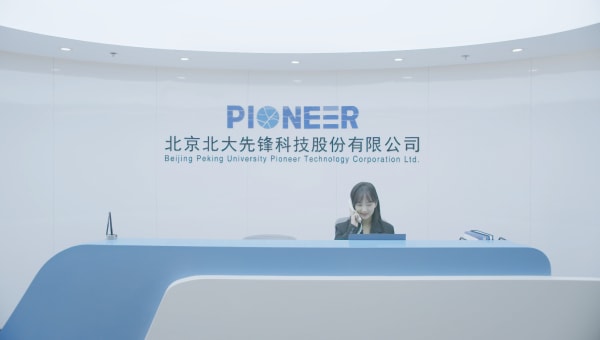
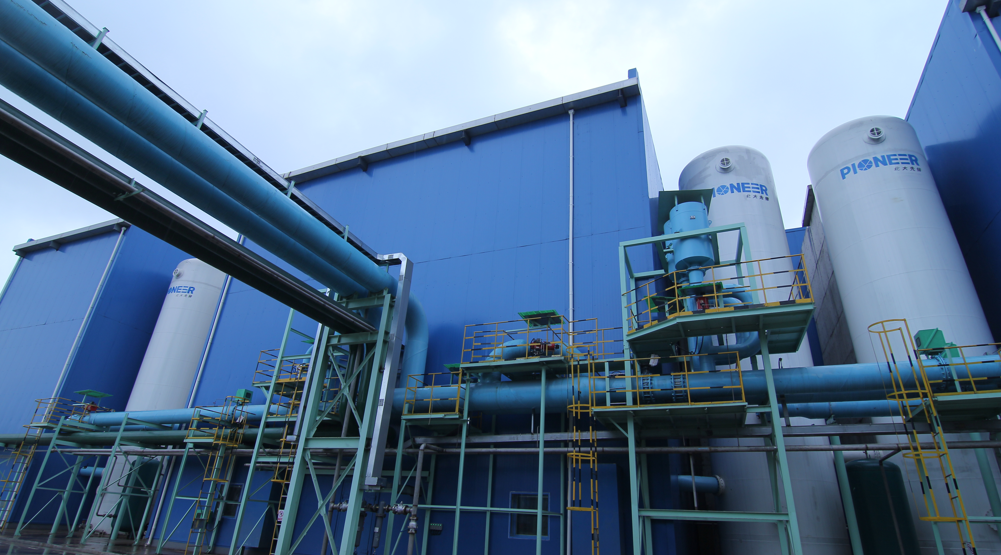
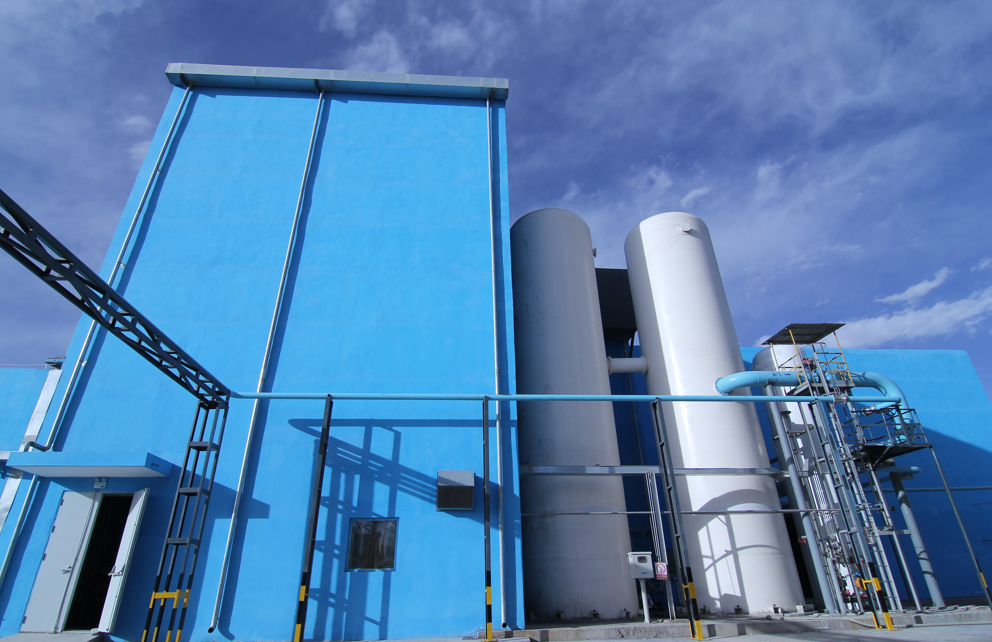
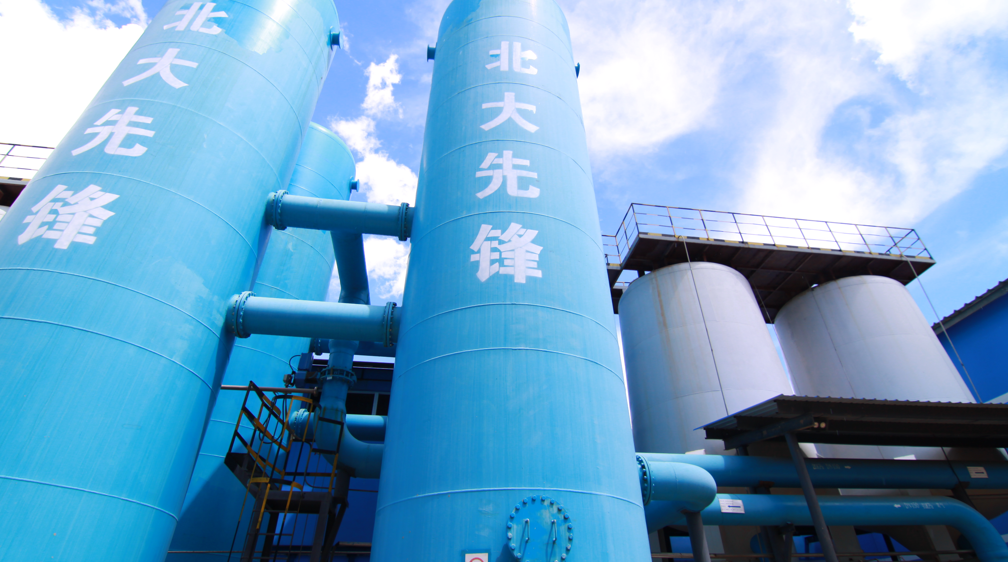
For Indian buyers evaluating customer-owned oxygen generation, PKU Pioneer stands out as a specialist in VPSA and PSA gas separation with a proven industrial track record rather than a trading-only model. The company combines in-house research and development, proprietary adsorbent and catalyst production, precision engineering, equipment fabrication, and turnkey project execution, which matters because product quality in oxygen plants depends heavily on adsorption materials, process design discipline, and full-system testing rather than assembly alone. Its credentials include ISO, CE, and ASME-related certifications, more than 180 patents, and landmark large-scale VPSA references including record oxygen capacities, showing that its products are engineered to meet demanding international industrial benchmarks. For cooperation, the company can support Indian end users, distributors, dealers, project contractors, and brand owners through flexible EPC, turnkey, customer-owned plant, wholesale, OEM, ODM, and regional partnership models instead of BOO or on-site bulk supply structures, making it relevant for factories that want asset control. Local service assurance is also grounded in real export and regional operating experience across more than 20 countries and more than 400 industrial projects, including a recent major VPSA installation in Asia outside China, supported by 24-hour response commitments, proposal engineering, commissioning support, upgrades, leasing options, pilot testing, and after-sales maintenance frameworks. For Indian customers, this combination of manufacturing depth, installed base, and structured online and on-site service provides stronger buyer protection than dealing with a remote exporter that lacks process references or lifecycle support. Buyers can explore industrial oxygen generation solutions, review VPSA oxygen plant technology, see global industrial project examples, understand more about technical capabilities and support, or directly contact the engineering team for an India-focused ROI study.
How to Build a Better ROI Model
A serious ROI model should be prepared in monthly detail for the first year and annual detail for years two to ten. Buyers should include expected downtime, electricity escalation, maintenance shutdowns, oxygen demand growth, spare parts inflation, financing cost, and backup oxygen purchases. If the process benefits from better oxygen stability, buyers should also estimate production uplift, fuel savings, emission control gains, or yield improvements. These indirect gains are often large enough to shorten payback by several months or more.
It is also wise to model three scenarios: conservative, expected, and aggressive. The conservative case should use lower utilization and slightly higher power and maintenance costs. The expected case should use realistic operating assumptions agreed by operations and finance teams. The aggressive case can include throughput gains if those benefits are technically justified. Decision makers in India often move faster when they can see the resilience of the investment under different assumptions.
Industries That Commonly Invest in VPSA Oxygen Plants
| Industry | Common Indian Locations | Typical Oxygen Use | ROI Potential |
|---|---|---|---|
| Steel | Odisha, Chhattisgarh, Jharkhand, Maharashtra | Enrichment, combustion, process intensity | Very high |
| Glass | Gujarat, Rajasthan, Uttar Pradesh | Furnace support, combustion efficiency | High |
| Non-ferrous metals | Gujarat, Rajasthan, Odisha | Smelting, refining, oxidation support | High |
| Chemicals | Dahej, Ankleshwar, Hazira, Vizag belt | Oxidation, process intensification | Medium to high |
| Wastewater treatment | Metro and industrial clusters nationwide | Biological and process oxygenation | Medium |
| Pulp and paper | South and West India clusters | Bleaching and treatment support | Medium |
This industry table shows that the strongest ROI cases are usually those with both high oxygen volume and measurable process improvement. Steel leads because oxygen affects throughput directly, while glass and non-ferrous sectors follow closely due to significant thermal and process gains.
2026 Trends for Oxygen Plant Investment in India
By 2026, three themes are likely to shape oxygen plant ROI decisions in India. The first is technology improvement. Buyers will increasingly ask for better controls, remote monitoring, predictive maintenance, and more stable performance across load changes. The second is policy and sustainability. As Indian industry faces stronger pressure to reduce energy waste, improve emission performance, and document efficiency upgrades, oxygen systems with lower specific power and better process integration will gain preference. The third is supply-chain strategy. Companies will continue moving toward customer-owned or hybrid supply models to reduce dependence on external tanker logistics.
Another notable trend is the use of lifecycle procurement language in boardroom decisions. Instead of asking only who offers the lowest capex, management teams increasingly ask who can support the best cost per delivered Nm³ over the life of the plant. This benefits suppliers that can prove actual operating data, guaranteed performance, strong service support, and expansion capability for future capacity additions.
FAQ
What is a good payback period for an oxygen plant in India?
A good payback period is often around 2 to 5 years for industrial users, but the best benchmark depends on oxygen demand stability, current purchased oxygen cost, power tariff, and process value created by oxygen use.
Is VPSA better than PSA for large industrial oxygen demand?
For larger continuous industrial demand, VPSA is often more suitable than smaller PSA systems because it is designed for higher-volume oxygen generation with attractive operating economics in many industrial use cases.
Should buyers compare capex only?
No. Buyers should compare full lifecycle cost, including power consumption, maintenance, spare parts, uptime, local service response, and the real delivered cost of the oxygen produced.
Can imported oxygen plants make sense for India?
Yes. Imported systems can be attractive when they offer better cost-performance, proven industrial references, certified manufacturing, and dependable India-facing support for commissioning, spares, and after-sales service.
Do all plants need very high oxygen purity?
No. Many industrial applications can work well with lower purity ranges typical of VPSA systems. Buyers should define purity based on actual process need rather than over-specifying.
What is the biggest mistake in ROI calculation?
The most common mistake is using generic benchmark numbers instead of the buyer’s own landed oxygen cost, local power tariff, utilization profile, and full installation scope.
Should a factory still keep backup oxygen after installing a VPSA plant?
For critical operations, yes. Many plants keep liquid oxygen or cylinder backup for maintenance periods and emergencies so that production continuity is protected.
What commercial model should a buyer request from a specialist plant supplier?
If the goal is ownership and long-term cost control, the buyer should ask for EPC, turnkey, or customer-owned plant solutions rather than BOO or on-site bulk supply models.
Conclusion
Oxygen plant ROI in India is strongest when a factory has continuous demand, high delivered oxygen purchase cost, realistic power economics, and a process that benefits from supply stability. The payback calculation itself is straightforward, but the quality of the assumptions determines whether the investment case is trustworthy. Buyers should build the model around actual plant data, compare supplier guarantees carefully, and choose the right commercial path for their operating goals. For many medium and large industrial users, a well-engineered VPSA plant can deliver not only cost savings but also better control, stronger resilience, and a clearer path toward efficient growth through 2026 and beyond.

About the Author
Founded in 1999, PKU Pioneer specializes in VPSA and PSA gas separation technologies, adsorbents, catalysts, and integrated engineering solutions. Backed by strong R&D capability and extensive industrial project experience, the company serves global customers across steel, chemical, energy, environmental protection, and related industries.
Share