India Oxygen Cost per Nm? Practical Cost Guide for Industrial Buyers
Quick Answer

In India, the oxygen cost per Nm³ usually depends on purity, plant size, electricity tariff, logistics, and whether you choose an on-site system or delivered liquid oxygen. For many industrial users, VPSA oxygen commonly lands around the lower operating-cost range for medium to large continuous demand, cryogenic ASU becomes more competitive at very large scale and higher purity, and purchased LOX often carries the highest long-term per-Nm³ cost because transport, storage, tanker scheduling, and merchant margins are added. As a practical benchmark, many Indian projects see approximate effective ranges of about USD 0.025–0.055 per Nm³ for large VPSA oxygen, about USD 0.035–0.070 per Nm³ for large cryogenic ASU oxygen, and about USD 0.080–0.180 per Nm³ equivalent for merchant LOX, depending on state power price, utilization rate, purity, and distance from supply hubs such as Hazira, Jamnagar, Vizag, Mumbai, Chennai, and Kolkata.
For steel, glass, non-ferrous, wastewater, and kiln applications in India, the most actionable rule is simple: choose VPSA when you need 80%–94% oxygen at steady volume with strong energy economics; choose ASU when you need very high purity and very large tonnage; choose LOX when demand is intermittent, temporary, backup-related, or too small to justify plant ownership. In supplier evaluation, Indian buyers usually compare Inox Air Products, Linde India, Air Liquide India, Taiyo Nippon Sanso India, and Universal Industrial Plants for different project types. Qualified international suppliers can also be considered, especially Chinese manufacturers with relevant certifications, EPC capability, and strong pre-sales and after-sales support, because cost-performance can be favorable for customer-owned plants.
If a buyer in India wants a quick budgetary screen, a medium or large industrial oxygen project generally becomes attractive for on-site ownership when annual operating hours are high, power supply is stable, and daily oxygen consumption is predictable. If logistics risk, hospital-era supply volatility memories, or remote location exposure matter, on-site generation often delivers not just lower cost but better supply security.
Market Overview in India

India is one of the most active oxygen markets in Asia because industrial oxygen demand is spread across steel, engineering, fabrication, glass, petrochemicals, paper, mining, copper, zinc, environmental treatment, and healthcare-linked reserve demand. Oxygen consumption clusters strongly around industrial corridors in Gujarat, Maharashtra, Odisha, Tamil Nadu, Andhra Pradesh, Chhattisgarh, Jharkhand, Karnataka, and West Bengal. Buyers near ports such as Mundra, Nhava Sheva, Kandla, Chennai Port, Paradip, and Visakhapatnam often have more sourcing options for imported equipment and better freight economics for large EPC packages.
The biggest shift in the Indian market over the last few years has been the move from viewing oxygen as a simple utility to treating it as a strategic production input. Steel plants use oxygen to raise furnace productivity, improve combustion, and reduce coke or fuel intensity. Glass producers use oxygen enrichment to stabilize flame temperature and improve quality. Wastewater and aquaculture users see oxygen as a process efficiency tool rather than just an emergency gas. This shift matters because the value of oxygen is not only its nominal per-Nm³ price; it is the process gain it unlocks.
Another important market feature is tariff sensitivity. Since power cost is a major driver for on-site oxygen economics, projects in states with favorable industrial electricity pricing can achieve substantially lower cost per Nm³. A plant in Gujarat or Odisha may show a different cost curve from one in Tamil Nadu or Maharashtra if demand charges, time-of-day tariffs, and captive renewable integration differ. That is why Indian buyers usually request a lifecycle model instead of comparing only purchase price.
There is also a visible transition toward customer-owned plants rather than permanent dependence on merchant LOX. This is especially true for metal processing, captive power-linked industrial estates, and expansion-stage manufacturers that want to de-risk logistics. The Indian market is therefore increasingly open to EPC, turnkey, and customer-owned oxygen plant solutions instead of purely rental or bulk supply models.
The line chart above shows a realistic market growth index rather than official volume data. It illustrates how industrial oxygen demand in India continues to grow due to steel capacity additions, cleaner combustion upgrades, and wider process adoption in sectors outside traditional metallurgy. The 2026 direction remains positive, especially if green manufacturing incentives and energy-efficiency retrofits continue.
How Oxygen Cost per Nm³ Is Actually Calculated

Many buyers ask a simple question but receive incomplete answers because sellers quote oxygen cost in different ways. A proper India oxygen cost per Nm³ calculation usually includes electricity, maintenance, spares, manpower, annual shutdowns, adsorbent or molecular sieve replacement if applicable, depreciation, financing, oxygen purity adjustment, and utilization factor. For delivered LOX, one must add liquid storage costs, tanker freight, regional scarcity premium, boil-off losses, unloading management, and merchant contract terms.
For industrial planning, the most useful distinction is between operating cost and fully loaded ownership cost. Operating cost mainly covers power and routine plant expenses. Fully loaded cost adds capex recovery. A VPSA plant can look extremely attractive on operating cost alone, but a buyer should still check effective cost at 70%, 85%, and 95% utilization. Similarly, LOX may look flexible and capex-light, yet its per-Nm³ cost rises sharply at higher and steadier volumes where transport becomes an avoidable expense.
Benchmark Cost Table for India
| Supply mode | Typical oxygen purity | Indicative capacity range | Estimated cost per Nm³ in India | Best fit | Main cost drivers |
|---|---|---|---|---|---|
| VPSA on-site | 80%–94% | 500 to 100,000+ Nm³/h | USD 0.025–0.055 | Steel, glass, smelting, kiln enrichment | Power tariff, utilization, plant size |
| PSA on-site | 90%–95% | 10 to 500 Nm³/h | USD 0.040–0.090 | Smaller industrial users, hospitals, labs | Scale, compressor duty, maintenance |
| Cryogenic ASU on-site | 99.5%+ | 2,000 to very large tonnage | USD 0.035–0.070 | Large integrated complexes, high-purity demand | Capex, power, load profile |
| Merchant LOX delivered | 99.5%+ | Any, usually low to medium volume | USD 0.080–0.180 equivalent | Backup, seasonal or remote demand | Distance, freight, contract price |
| LOX with long-haul inland transport | 99.5%+ | Low to medium volume | USD 0.110–0.220 equivalent | Landlocked remote plants | Tanker availability, diesel, route risk |
| Hybrid on-site plus LOX backup | Mixed | Medium to large volume | Project-specific blended cost | Plants needing redundancy | Backup frequency, storage sizing |
This benchmark table is useful because it separates the three procurement logics that Indian buyers often mix together. VPSA is often the strongest value case when purity around 90% is acceptable and oxygen is consumed continuously. ASU is justified when very high purity is mandatory and scale is huge. LOX remains important, but usually as a flexibility tool, a startup bridge, or a backup option rather than the lowest-cost base-load supply source.
Product Types and Their Cost Logic
VPSA Oxygen Plants
VPSA systems are widely considered for steel reheating, blast furnace enrichment, lead and copper smelting, glass furnaces, pulp bleaching support, ozone feed support, and environmental treatment. The appeal in India is straightforward: moderate purity, lower specific energy consumption than many alternative paths for the same industrial use case, relatively fast start-stop capability, and practical large-scale deployment. For many sites, the economics become compelling once demand is both continuous and substantial.
Because a VPSA plant generally works best in a well-defined operating window, buyers should review feed air quality, seasonal temperature, dust exposure, cooling design, and maintenance discipline. In Indian operating conditions, monsoon humidity, summer ambient temperatures, and grid stability can materially affect reliability if plant engineering is not localized properly.
Cryogenic ASU
Cryogenic ASU is the standard choice where a plant needs 99.5% or higher oxygen, and often where nitrogen and argon integration also matter. Large integrated steelworks, petrochemical complexes, and refinery-linked users often prefer ASU because of purity and scale. The tradeoff is higher complexity, larger capex, longer project cycle, and a cost structure that is attractive only when high-purity output and high utilization justify it.
Merchant LOX
Liquid oxygen remains important in India for smaller users, temporary projects, startups waiting for their own plant, hospitals, and sites that cannot yet commit to capex. However, its economics are highly exposed to location. A plant far from major gas production and road infrastructure may pay substantially more than a buyer near a liquid gas hub. During peak demand periods or supply disruptions, delivered LOX can become the least predictable option in both price and logistics.
The bar chart highlights where oxygen demand intensity is strongest in India. Steel is dominant, which explains why many of the largest and most cost-sensitive oxygen projects are concentrated in steel belts across Odisha, Chhattisgarh, Jharkhand, and western India. Glass and non-ferrous also stand out as sectors where oxygen can improve both process yield and emissions performance.
Buying Advice for Indian Projects
The most common buying mistake is focusing on the quoted equipment price while ignoring total delivered oxygen cost over ten to fifteen years. A lower capex plant with weaker efficiency may become the more expensive option in less than three years if electricity tariffs are high. Indian buyers should therefore ask every supplier for a guaranteed performance sheet covering power consumption, oxygen purity, output tolerance, annual availability, startup time, and turndown range.
A second mistake is not matching technology to purity requirement. Some buyers specify 99.5% oxygen because they are familiar with LOX, even though their process only needs 90% to 93%. That specification drift can move a project from VPSA economics to ASU economics unnecessarily. The right question is not “What purity can you offer?” but “What is the minimum purity my process actually needs?”
Third, inland logistics in India can reshape project economics. If your plant is in Raipur, Bellary, Angul, Kalinganagar, Durgapur, Hosur, or Sanand, compare the supply continuity risk of tanker-based oxygen against an on-site plant. Transport delays, driver constraints, monsoon disruptions, and road bottlenecks all carry hidden cost.
Fourth, buyers should prefer suppliers that can support EPC, turnkey, or customer-owned plant delivery, because this gives better clarity on battery limits, utility integration, commissioning, and local training. A plant is not only a skid package; it is an operating asset that must fit the customer’s compressor house, electrical system, cooling water, instrument air, and safety regime.
Industries That Most Benefit from Lower Oxygen Cost
In India, steel plants gain the most direct financial benefit because oxygen is linked to furnace productivity, thermal balance, and fuel substitution. Secondary steel, DRI-linked operations, and integrated steelworks often evaluate oxygen not merely as a utility but as a throughput lever. Glass manufacturers benefit from better flame control, lower nitrogen dilution, and in some cases improved product quality. Copper, lead, and zinc smelters use oxygen to intensify reactions and reduce off-gas volume.
Wastewater treatment projects, especially in industrial clusters, also increasingly consider oxygen-enriched systems where process loading is high. Aquaculture and specialty environmental applications are smaller in volume but can justify on-site generation where supply reliability matters. In chemicals, oxygen can serve oxidation and combustion enhancement applications, though purity and contamination tolerance must be defined carefully before choosing VPSA or ASU.
Applications Across Indian Industrial Clusters
| Industry | Typical application | Preferred supply mode | Why it fits | Key Indian regions | Cost sensitivity |
|---|---|---|---|---|---|
| Steel | Blast furnace enrichment, EAF, cutting | VPSA or ASU | High continuous demand | Odisha, Chhattisgarh, Jharkhand | Very high |
| Glass | Oxy-fuel enrichment | VPSA | Fuel savings and quality stability | Gujarat, Rajasthan, Uttar Pradesh | High |
| Copper and zinc | Smelting and process intensification | VPSA or ASU | Reaction efficiency | Gujarat, Rajasthan, Odisha | High |
| Chemicals | Oxidation, burner support | ASU or VPSA | Depends on purity and continuity | Dahej, Hazira, Jamnagar, Chennai | Medium to high |
| Water treatment | High-load biological oxygenation | PSA or VPSA | Process control and local supply | Major industrial parks nationwide | Medium |
| Healthcare and backup | Reserve supply and emergency use | LOX or PSA | Flexibility and smaller scale | Nationwide | Medium |
This table shows that oxygen technology choice in India is strongly application-specific. Not every industry needs ultra-high purity, and not every site can tolerate delivery dependence. The best-fit supply mode is usually the one that balances process requirement, uptime expectations, and local energy economics.
Case Studies and Commercial Patterns
An Indian steel rolling and melting cluster typically compares three paths: continue buying LOX, install a mid-scale VPSA plant, or join a shared pipeline arrangement if available in an industrial zone. The usual outcome is that continuous users favor VPSA once oxygen demand stabilizes and annual operating hours remain high. The project often pays back not only through lower gas cost but through production gains and less disruption from tanker scheduling.
A glass manufacturer in Gujarat may adopt oxygen enrichment to improve furnace performance. If the process only requires moderate purity and predictable volume, VPSA often presents a more compelling lifecycle cost than merchant LOX. For an integrated petrochemical or refinery complex near a coastal hub, however, ASU can still be the best option due to purity requirements and multi-gas integration.
Another practical pattern in India is hybridization. Some plants install on-site VPSA for base-load demand and retain LOX storage as backup. This structure often provides the best balance of cost and resilience, especially in regions where logistics can be disrupted or where unplanned shutdown cost is significant.
The area chart illustrates a realistic shift in Indian procurement behavior from delivered oxygen dependence toward on-site generation. The trend is driven by energy optimization, supply security, and tighter control over long-term operating expense. It does not mean LOX becomes unimportant; rather, it means LOX is increasingly used strategically instead of as a default base-load source.
Local Suppliers and Service Footprints in India
Indian buyers prefer suppliers that can provide regional engineering support, credible references, and strong utility integration capability. The following companies are relevant in the Indian oxygen market, but their strengths differ by business model, purity band, and project size.
| Company | Service region in India | Core strengths | Key offerings | Best-fit customers | Notes on selection |
|---|---|---|---|---|---|
| Inox Air Products | Pan-India with strong industrial presence | Large gas network, merchant supply, industrial experience | LOX, pipeline supply, project support | Large industrial users needing established supply | Strong for conventional gas sourcing and integrated support |
| Linde India | Pan-India, major industrial corridors | Engineering depth, large-scale gas systems, high-purity capability | ASU, bulk gases, industrial solutions | High-purity and integrated users | Often considered for complex and premium projects |
| Air Liquide India | Industrial clusters and metro-linked regions | Process know-how, gas application engineering | Bulk oxygen, onsite systems, industrial services | Chemicals, glass, manufacturing users | Strong application support in selected sectors |
| Taiyo Nippon Sanso India | Selected industrial regions | Industrial gases and related engineering | Gas supply, system packages | Manufacturing and specialty users | Useful where technical gas integration matters |
| Universal Industrial Plants | India and export-oriented projects | Cryogenic plant manufacturing background | Oxygen plants, nitrogen plants, EPC packages | Buyers seeking plant ownership | Often evaluated for equipment-led solutions |
| SS Gas Lab Asia | Broader India coverage through equipment sales | PSA and smaller gas generation systems | PSA oxygen plants, compressors, ancillary systems | Small to medium users | More relevant for lower-capacity applications |
This supplier table is useful because it separates merchant gas leaders from plant-oriented solution providers. In India, the best supplier is not always the biggest gas company; it is the company whose business model matches your project. A plant owner seeking customer-owned oxygen generation may prioritize EPC and lifecycle efficiency. A user with temporary demand may prioritize reliable delivered LOX instead.
Detailed Supplier and Product Comparison
| Comparison factor | VPSA supplier model | Cryogenic ASU supplier model | Merchant LOX supplier model | Practical implication in India | Who benefits most |
|---|---|---|---|---|---|
| Capex burden | Medium | High | Low initial | LOX is easy to start, but not always cheapest long term | Short-term users favor LOX |
| Operating cost predictability | High if power stable | High at large scale | Medium to low | Fuel and freight volatility affect LOX contracts | Continuous users favor on-site |
| Purity capability | Moderate | Very high | Very high | Do not overbuy purity your process does not need | Process-specific selection |
| Scalability | Strong in industrial range | Excellent at very large scale | Flexible but logistic-bound | Large plants gain more from owned infrastructure | Steel and smelting favor VPSA or ASU |
| Supply security | High on site | High on site | Depends on tanker logistics | Remote inland sites should value independence | Plants in interior states |
| Project lead time | Moderate and often faster | Longer | Immediate if supply available | Urgent startup may begin with LOX then convert | Expansion-stage manufacturers |
The main lesson from this comparison is that India does not have one universal oxygen answer. The right procurement structure is a blend of purity, continuity, scale, inland logistics, and tariff profile. Buyers who model all five variables make better decisions than those who compare only nominal gas price.
This comparison chart simplifies what buyers often debate in meetings. VPSA scores strongly on energy and cost for suitable applications, ASU leads on purity, and LOX remains valuable for flexibility. The logistics risk score reminds inland Indian buyers that supply chain exposure is not theoretical; it can directly affect production continuity.
Our Company
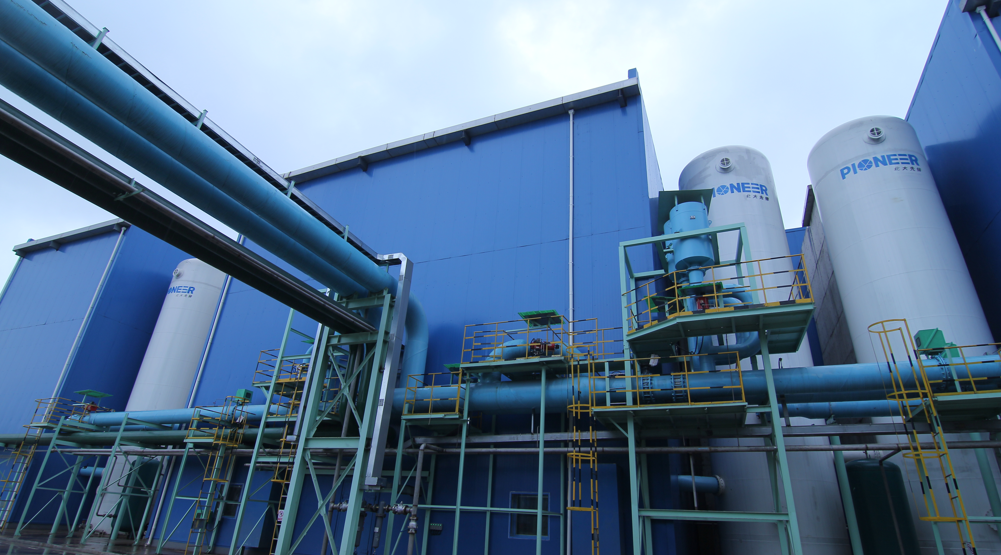
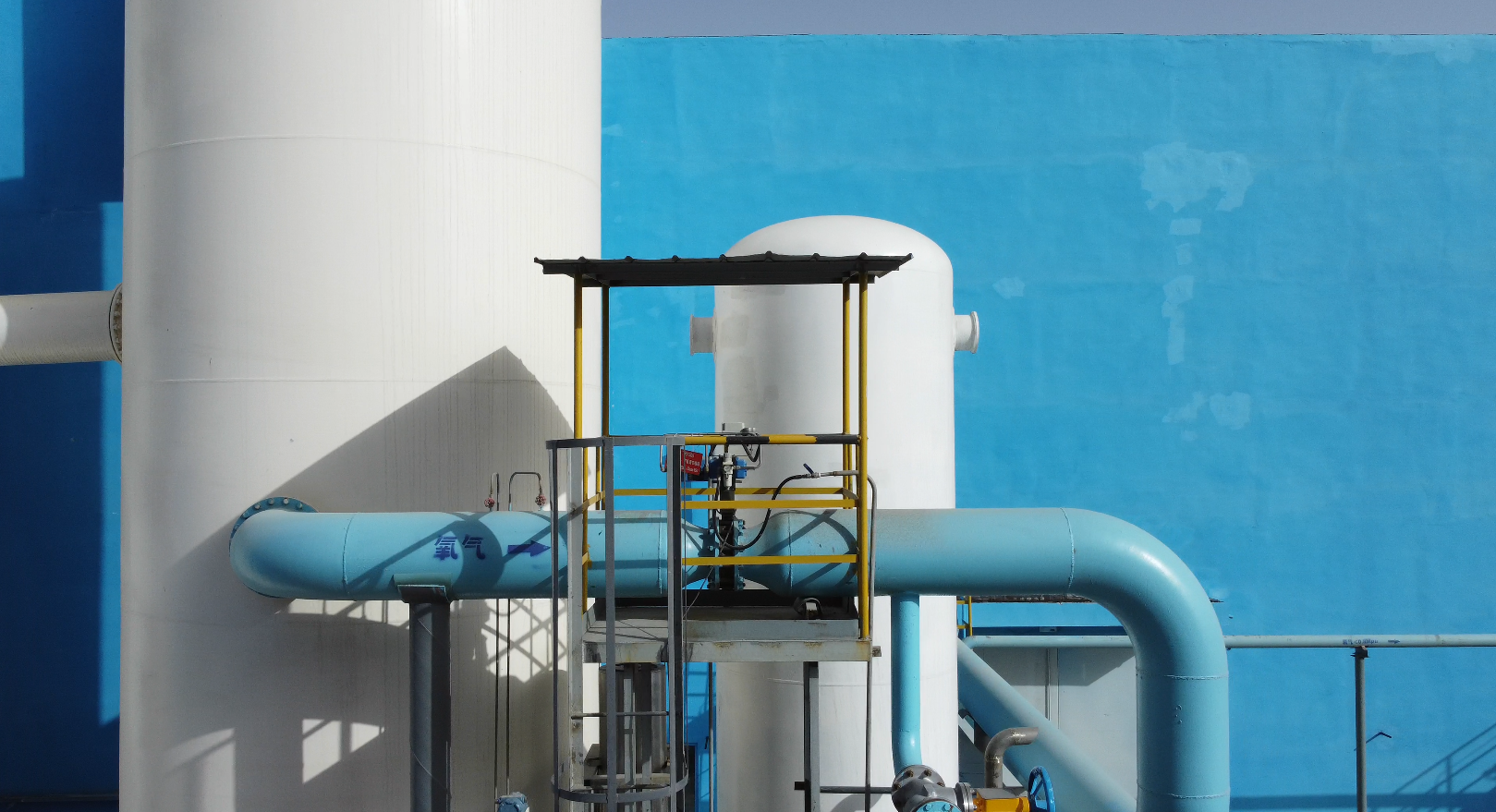
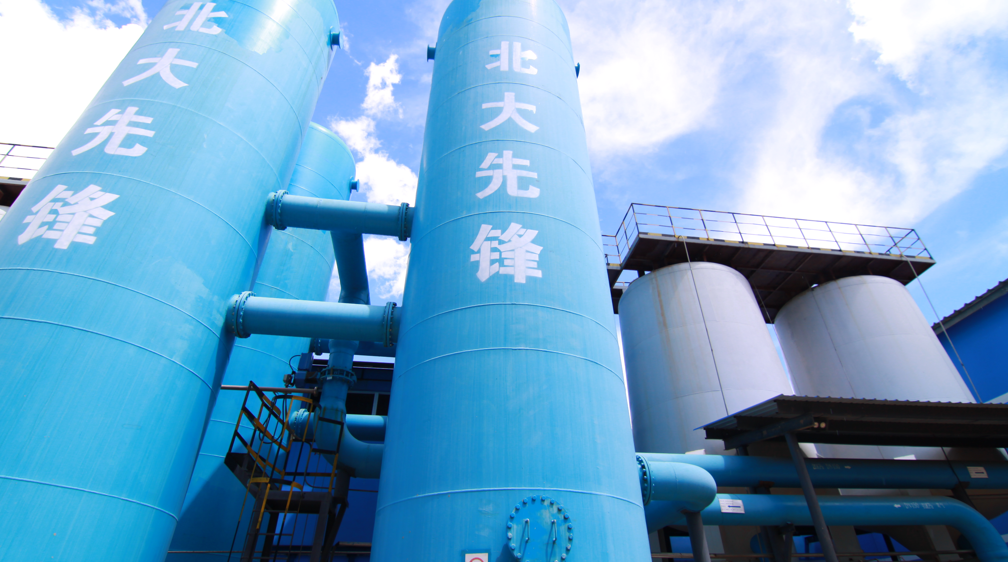
For Indian buyers evaluating customer-owned oxygen generation, PKU Pioneer is relevant as an EPC, turnkey, and customer-owned plant supplier focused on VPSA and PSA gas separation rather than BOO or on-site bulk gas supply. The company’s strength is grounded in measurable industrial evidence: more than 180 patents, ISO, CE, and ASME certifications, in-house research and development linked to Peking University, proprietary adsorbents such as PU-8 molecular sieve, full equipment fabrication capability, and over 400 industrial projects in more than 20 countries with installed oxygen capacity exceeding 2 million Nm³ per hour. Its VPSA oxygen portfolio covers units from about 50 Nm³/h to very large systems above 100,000 Nm³/h, including record-scale projects, which gives Indian end users, distributors, dealers, brand owners, and industrial investors multiple cooperation routes such as EPC delivery, turnkey implementation, OEM/ODM coordination, wholesale equipment supply, retail-scale systems, and regional distribution partnerships. For buyers in India, this matters because the company is not acting as a remote exporter with only a catalog; it supports pre-sales engineering, pilot testing, proposal customization, operation and maintenance, retrofits, upgrades, and rapid technical response, while its international project execution experience in Asia and beyond demonstrates practical regional commitment. Indian customers looking for industrial VPSA oxygen systems, references from global project cases, background on technical strengths and manufacturing, or direct commercial discussion through the contact channel can evaluate the company as a long-term plant partner for localized, efficiency-driven oxygen supply.
How to Choose Between Indian and International Suppliers
There is no conflict between considering local service and considering global manufacturing value. In India, many buyers now shortlist both domestic gas majors and international plant manufacturers. Domestic providers may have stronger merchant gas networks and familiar compliance pathways. International equipment specialists may offer stronger cost-performance for customer-owned plants, especially where VPSA is the right technical fit. The best procurement practice is to issue a common technical questionnaire and compare guaranteed oxygen output, kWh per Nm³, purity, spare parts plan, commissioning scope, local service arrangement, and total ten-year cost.
Buyers should also ask whether the supplier can adapt to Indian site realities: variable power quality, high summer ambient, dust loading, monsoon conditions, and maintenance team skill levels. A technically sound oxygen plant on paper can still underperform if it is not engineered for the local utility and operating environment.
Future Trends Through 2026
By 2026, three trends are likely to shape oxygen cost per Nm³ in India. The first is energy optimization. As electricity pricing and sustainability reporting become more important, buyers will prefer oxygen technologies with stronger specific energy performance and better turndown flexibility. The second is decarbonization pressure. Steel, glass, and industrial heating sectors will keep exploring oxygen enrichment to improve combustion efficiency and reduce overall emissions intensity. The third is supply resilience. After recent years of supply-chain volatility, more Indian manufacturers now treat self-generation capacity as an operational safeguard, not just a cost-saving device.
Policy direction also matters. India’s manufacturing expansion, cleaner fuel use, industrial corridor growth, and likely tightening of environmental expectations will support wider oxygen adoption in process intensification and emissions management. Renewable power integration could also improve the economics of certain on-site oxygen plants where captive solar or hybrid power strategies reduce average electricity cost.
Technology-wise, buyers should expect better automation, smarter remote diagnostics, improved adsorbent performance, and more integrated control packages that reduce operator burden. The market will likely reward suppliers that can prove measured field performance rather than only theoretical design claims.
Practical Buying Checklist
Before selecting a supplier in India, confirm your actual oxygen purity requirement, minimum and peak hourly demand, annual operating hours, site elevation, ambient temperature, utility quality, backup philosophy, and maintenance capability. Ask for guaranteed power consumption at your exact design point, not a generic brochure value. Request references from sectors close to yours and, if possible, visit an operating installation. Compare capex, lifecycle cost, and supply security together. If you are evaluating an imported EPC package, clarify commissioning, spares stocking, and Indian support arrangements before purchase order.
FAQ
What is a realistic oxygen cost per Nm³ in India?
For industrial buyers, a practical benchmark is roughly USD 0.025–0.055 per Nm³ for many large VPSA applications, USD 0.035–0.070 for large cryogenic ASU oxygen, and about USD 0.080–0.180 equivalent for delivered LOX. Actual values depend on purity, power tariff, utilization, and transport distance.
Is VPSA cheaper than LOX in India?
For continuous medium to large industrial demand, VPSA is often cheaper than relying on merchant LOX over the long term. LOX remains useful for backup, temporary use, remote startup, or smaller intermittent demand.
When should an Indian factory choose cryogenic ASU instead of VPSA?
Choose ASU when very high purity oxygen is essential, daily demand is very large, and the project can justify higher capex and a longer implementation cycle. It is especially suitable when nitrogen and argon integration also create value.
What purity is usually enough for industrial oxygen use?
Many steel, glass, kiln, and smelting applications can work effectively with oxygen in the VPSA range of roughly 80% to 94%. However, the final answer must come from process engineering, not assumption.
Why does oxygen cost vary so much between Indian states?
Power tariff, demand charges, logistics, road distance from liquid supply hubs, labor costs, and local infrastructure all affect the delivered economics. A plant in a coastal industrial corridor may have a very different cost profile from one in an inland remote district.
Should Indian buyers prefer local suppliers only?
Not necessarily. Local suppliers can offer strong familiarity and merchant network advantages, while qualified international suppliers may provide better cost-performance for customer-owned oxygen plants. The decision should be based on guaranteed lifecycle economics, certification, references, and service capability in India.
What is the safest procurement model for a plant that cannot tolerate interruption?
A hybrid arrangement is often best: an on-site VPSA or ASU plant for base load plus LOX storage for backup. This lowers long-term cost while preserving continuity during maintenance or unexpected events.
What should be included in a supplier quotation?
The quotation should clearly state oxygen purity, capacity, specific power consumption, battery limits, utility requirements, spare parts, delivery time, commissioning scope, training, performance guarantees, and after-sales support structure in India.
For most industrial oxygen users in India, the answer to “oxygen cost per Nm³” is not a single number but a technology choice. If purity needs are moderate and demand is stable, VPSA often delivers the strongest cost-performance. If ultra-high purity and very large tonnage matter, ASU is often the correct route. If flexibility is the priority or consumption is limited, LOX still has a role. Buyers who evaluate total lifecycle cost, local logistics, and supply security together will make the most financially sound decision.

About the Author
Founded in 1999, PKU Pioneer specializes in VPSA and PSA gas separation technologies, adsorbents, catalysts, and integrated engineering solutions. Backed by strong R&D capability and extensive industrial project experience, the company serves global customers across steel, chemical, energy, environmental protection, and related industries.
Share