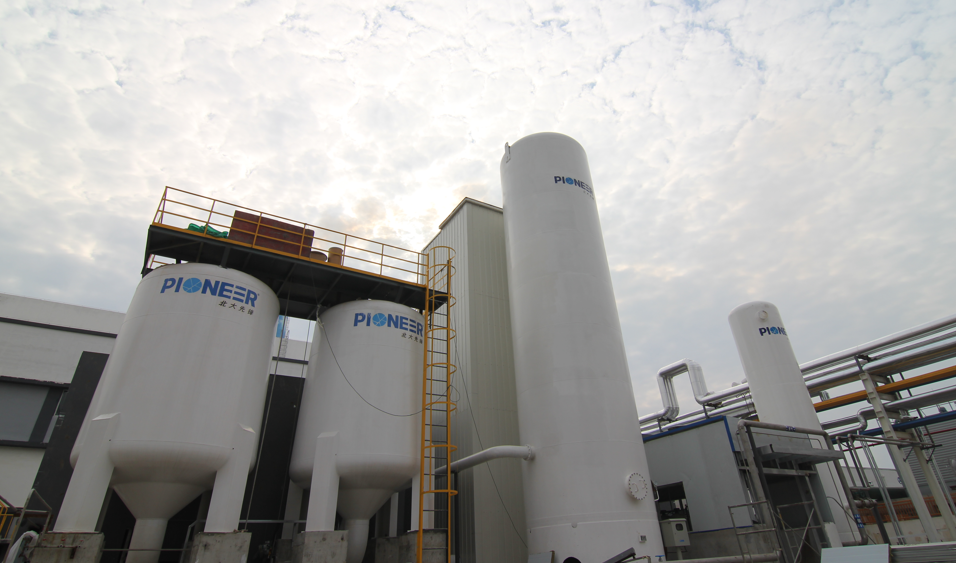
VPSA Oxygen Plant Operation Guide for the Global Market
Quick Answer: How a VPSA Oxygen Plant Supplies Oxygen

A VPSA oxygen plant produces oxygen by taking in ambient air, removing dust and moisture, feeding the air at low pressure into adsorption towers filled with molecular sieve, selectively adsorbing nitrogen, and delivering oxygen-enriched gas to the user. When the sieve becomes saturated with nitrogen, the tower is regenerated by reducing pressure and applying vacuum. This combination of low-pressure adsorption and vacuum desorption is the core reason VPSA systems can provide large volumes of oxygen with comparatively low energy consumption.
In practical industrial operation, the oxygen purity is usually in the range of 80% to 94%, depending on process design, feed conditions, adsorbent selection, cycle timing, oxygen recovery target, and downstream application. Common users include steel mills, non-ferrous metallurgy plants, glass furnaces, pulp and paper mills, chemical plants, wastewater treatment facilities, cement kilns, mining operations, and energy projects. For the Global Market, VPSA oxygen plants are especially valuable where users need stable on-site oxygen without relying on liquid oxygen logistics, cryogenic air separation, or frequent cylinder deliveries.
The simple answer is this: a blower pushes air into one or more adsorption towers, the molecular sieve captures nitrogen more strongly than oxygen, oxygen passes through as product gas, and a vacuum pump then removes the adsorbed nitrogen so the sieve can be reused. Multiple towers are switched by a PLC-controlled valve system to make oxygen output continuous. This is why VPSA is often described as a cyclic, continuous, non-cryogenic oxygen generation technology.
For global industrial buyers in regions such as Rotterdam, Houston, Singapore, Mumbai, Istanbul, Dubai, São Paulo, Ho Chi Minh City, Johannesburg, and Shanghai, the most important purchasing question is not only “how does it work?” but also “will it reduce total oxygen cost reliably over many years?” A well-designed VPSA system can reduce power consumption, cut oxygen transportation risk, enable fast startup, support flexible load changes, and provide predictable oxygen cost for plant owners.
VPSA Working Principle: Low-Pressure Adsorption and Vacuum Desorption

VPSA stands for Vacuum Pressure Swing Adsorption. It is a gas separation technology based on the different adsorption capacities of gases on solid adsorbents under changing pressure conditions. In an oxygen plant, the main target is to separate oxygen from air. Air is roughly composed of 78% nitrogen, 21% oxygen, and small quantities of argon, carbon dioxide, water vapor, and trace gases. VPSA technology does not “make” oxygen chemically; instead, it concentrates oxygen by removing nitrogen from air.
The molecular sieve inside the adsorption tower is the core separation material. Under low positive pressure, nitrogen molecules are preferentially adsorbed by the sieve, while oxygen, argon, and small residual gases pass through the bed. The product gas is therefore oxygen-enriched. When the adsorption bed approaches saturation, the system switches the tower away from product mode. The tower is depressurized and then regenerated under vacuum, which releases the adsorbed nitrogen from the molecular sieve. The nitrogen-rich waste gas is discharged, and the bed becomes ready for the next adsorption cycle.
The low-pressure adsorption stage usually uses a blower rather than a high-pressure compressor. This is one of the major energy advantages of VPSA compared with many PSA oxygen systems for large flow applications. The vacuum desorption stage uses a vacuum pump to achieve deep regeneration. By combining modest feed pressure and strong vacuum regeneration, the plant improves oxygen recovery and molecular sieve utilization while keeping energy consumption under control.
Compared with cryogenic air separation, VPSA does not require air liquefaction, distillation columns, or extremely low temperature operation. It starts faster, has a simpler process route, and is suitable for medium to large oxygen demand where 80% to 94% oxygen purity is acceptable. Compared with cylinder oxygen or purchased liquid oxygen, it can reduce logistics dependence and provide direct on-site supply. Compared with small PSA oxygen generators, VPSA is commonly more competitive for high flow rates because the blower-vacuum configuration can be more efficient at scale.
The Global Market has increasingly adopted VPSA oxygen systems because industries are under pressure to reduce energy use, improve supply resilience, and decarbonize production. Steel plants around the Yangtze River Delta, blast furnace operators in India, copper smelters in Chile, glass manufacturers in Turkey, and wastewater utilities in Southeast Asia all face similar priorities: stable oxygen, lower cost, less dependence on trucks, and controllable operating performance.
| Technology | Typical Oxygen Purity | Best Capacity Range | Startup Time | Energy Profile | Common Use Case |
|---|---|---|---|---|---|
| VPSA oxygen plant | 80% to 94% | Medium to very large | Fast, often around 20 to 30 minutes | Low for large flow oxygen | Steel, glass, chemical, wastewater, mining |
| PSA oxygen generator | 90% to 95% | Small to medium | Fast | Efficient for smaller users | Medical support, aquaculture, small industry |
| Cryogenic ASU | High purity, often above 99% | Very large | Slow | Higher complexity, good for ultra-high purity | Large integrated gas supply |
| Liquid oxygen delivery | High purity | Variable | Immediate if storage is full | Includes production and transport cost | Backup supply or intermittent demand |
| Oxygen cylinders | High purity | Very small | Immediate | High unit cost | Workshops and emergency use |
| Membrane enrichment | Low to medium enrichment | Specialized | Fast | Application dependent | Combustion enhancement and niche processes |
This comparison shows why VPSA has become a preferred option for industrial users requiring large quantities of oxygen at moderate purity. It is not a universal replacement for cryogenic air separation, but it is often the most practical solution when process value depends on oxygen volume, energy savings, and operational flexibility rather than ultra-high purity.
Step-by-Step Process: From Air Intake to Oxygen Output

The first step is air intake. Ambient air is drawn from the surrounding environment through an inlet system. The location of the intake matters. Plants near coastal hubs such as Singapore, Busan, Rotterdam, or Santos may need special corrosion-resistant filtration because of salt-laden air. Facilities near mines or cement plants may need enhanced dust filtration. In hot regions such as the Gulf, India, and parts of Africa, air temperature can also affect blower performance and oxygen output.
The second step is air filtration. Dust, particles, and some moisture must be removed before air enters the blower and adsorption towers. Good filtration protects the blower, valves, instruments, and molecular sieve. Poor filtration can shorten adsorbent life, increase pressure drop, cause valve leakage, and reduce plant efficiency. For this reason, experienced suppliers design the front-end air handling system according to actual site conditions, not only standard catalog data.
The third step is low-pressure feeding. A blower sends filtered air into the adsorption tower. Unlike high-pressure compression, VPSA feed pressure is modest. The blower must provide stable flow and pressure while operating continuously. Its efficiency has a direct influence on total oxygen cost. In many projects, blower selection, inlet control, cooling, and noise treatment are important engineering details.
The fourth step is adsorption. The air passes through the molecular sieve bed. Nitrogen is captured, and oxygen-enriched gas flows out from the product end. The product oxygen passes through a buffer tank or surge vessel to stabilize pressure and flow. It may then go to a pipeline, furnace, reactor, gas holder, oxygen compressor, or direct process user. For steel mills, oxygen may be used in blast furnace enrichment, electric arc furnace operation, or converter support. For wastewater treatment, oxygen may be dissolved into aeration basins to improve biological treatment capacity.
The fifth step is tower switching. When the active tower is near saturation, the PLC changes the valve sequence. Another regenerated tower takes over adsorption, while the saturated tower begins regeneration. This switching is rapid and carefully timed. The user sees a stable oxygen flow even though each tower is cycling internally. Multi-tower architecture is therefore fundamental to continuous VPSA oxygen supply.
The sixth step is vacuum regeneration. The vacuum pump extracts nitrogen-rich gas from the saturated tower, reducing bed pressure below atmospheric pressure. This causes the adsorbed nitrogen to desorb from the molecular sieve. Some systems also use product oxygen purging or equalization steps to improve recovery and purity. After regeneration, the tower is repressurized and prepared for the next adsorption step.
The seventh step is oxygen delivery. Product gas is monitored for purity, pressure, flow, and dew point where required. Safety interlocks protect the system if purity falls outside limits or if pressure becomes abnormal. A complete plant includes valves, silencers, analyzers, control cabinet, instrumentation, piping, electrical systems, and often remote monitoring. Buyers should evaluate the full system, not only the adsorption vessel.
| Process Step | Main Equipment | Key Control Point | Common Risk | Engineering Solution | Impact on Output |
|---|---|---|---|---|---|
| Air intake | Intake duct and filter | Clean, cool, stable air source | Dust, salt, high temperature | Site-specific filtration and intake layout | Protects capacity and sieve life |
| Air feeding | Blower | Flow and pressure stability | Surge or low efficiency | Correct blower sizing and control | Determines energy cost |
| Adsorption | Molecular sieve tower | Bed utilization and cycle timing | Nitrogen breakthrough | Optimized adsorbent and PLC sequence | Controls purity and recovery |
| Depressurization | Valves and piping | Pressure release speed | Gas loss or unstable cycle | Balanced valve logic | Improves switching quality |
| Vacuum desorption | Vacuum pump | Vacuum level and duration | Incomplete regeneration | Deep vacuum and reliable pump design | Restores sieve capacity |
| Oxygen buffering | Product tank | Pressure and flow smoothing | Output fluctuation | Proper buffer volume and control valve | Improves user stability |
| Delivery | Pipeline and analyzer | Purity, pressure, flow | Off-spec oxygen | Online monitoring and interlocks | Ensures safe supply |
The table demonstrates that a VPSA oxygen plant is an integrated process rather than a single machine. Performance depends on how air handling, adsorption, regeneration, controls, and downstream delivery work together.
The Five-Cycle Process: Adsorption, Depressurization, Desorption, Purging, and Repressurization
The VPSA oxygen cycle is often explained through five repeated stages. These stages occur in each tower, but the towers are staggered so that one tower can produce oxygen while another is being regenerated. This cyclic design is the heart of continuous operation.
During adsorption, feed air enters the tower at low pressure. Nitrogen is adsorbed by the molecular sieve, while oxygen-enriched gas exits the product end. The adsorption period must be long enough to use the bed efficiently but short enough to prevent nitrogen breakthrough. If the adsorption time is too long, oxygen purity falls. If it is too short, recovery decreases and energy consumption may rise.
During depressurization, the tower pressure is lowered after adsorption. This stage releases part of the gas and prepares the bed for vacuum desorption. Depressurization can include pressure equalization with another tower, which saves gas and improves energy efficiency. Good valve sequencing reduces unnecessary oxygen loss.
During desorption, the vacuum pump draws gas out of the bed and removes adsorbed nitrogen. The lower the vacuum pressure, the stronger the regeneration effect, but deeper vacuum may also require more power. A good design balances vacuum depth, pump efficiency, adsorbent performance, and plant capacity. Deep regeneration is essential for long-term stable oxygen purity.
During purging, a small amount of product oxygen or intermediate gas may flow through the bed to remove residual nitrogen. Purging improves regeneration quality, especially when high oxygen recovery and stable purity are required. However, excessive purging wastes product gas. Therefore, purge amount and duration must be carefully optimized.
During repressurization, the regenerated tower is brought back to adsorption pressure. Repressurization may use feed air, equalization gas, or product gas depending on the process design. Smooth repressurization prevents bed disturbance, reduces dusting, and prepares the tower for the next adsorption step. Once the tower reaches the required state, it returns to adsorption mode.
The five-cycle process is controlled automatically. Operators usually do not manually switch towers. The PLC receives signals from pressure transmitters, flow meters, oxygen analyzers, valve position feedback, motor status, and safety interlocks. It then executes the control sequence according to the programmed cycle. Advanced systems can adjust operation to match load changes, inlet temperature variation, and downstream demand.
Role of the Blower: Low-Pressure Air Feed System
The blower is the main equipment that supplies air to the VPSA system. It is responsible for moving large volumes of air at relatively low pressure. Because air is the raw material for oxygen production, blower stability directly affects oxygen output. If the blower cannot provide enough flow, plant capacity drops. If pressure is unstable, adsorption performance becomes difficult to control.
VPSA plants may use roots blowers, centrifugal blowers, or other engineered air supply equipment depending on capacity, pressure, noise limits, efficiency requirements, and site conditions. Large oxygen plants often require carefully selected blower systems with variable frequency drives, inlet guide vane control, or optimized motor matching. Energy consumption from the blower is a major component of total plant power use, so a small efficiency improvement can produce substantial savings over the equipment lifetime.
For buyers in the Global Market, blower selection should consider local power cost, ambient temperature, altitude, maintenance resources, spare part availability, and noise regulations. A plant in Mexico City or the Andean mining region may face altitude-related air density changes. A plant near Jebel Ali, Dammam, or Chennai may need high-temperature design margins. A facility near European industrial parks may have strict noise standards. These local factors influence whether a supplier’s design is truly suitable.
Blower operation also affects molecular sieve life. Excessive pressure fluctuations or pulsation can disturb the adsorption bed and cause adsorbent wear. Proper piping, silencers, check valves, flow control, and startup logic help protect the bed. In a high-quality VPSA system, the blower is not treated as a simple accessory; it is integrated into the process design.
Role of the Vacuum Pump: Deep Regeneration for Molecular Sieve Recovery
The vacuum pump is the equipment that makes VPSA different from ordinary pressure swing adsorption. Its main function is to remove nitrogen-rich gas from the adsorption bed and regenerate the molecular sieve. Without effective vacuum regeneration, the sieve would remain loaded with nitrogen and the next adsorption cycle would produce lower purity oxygen.
Vacuum pump performance is defined by pumping capacity, achievable vacuum level, efficiency, reliability, cooling method, maintenance requirements, and compatibility with continuous operation. In large industrial oxygen plants, the vacuum pump must operate for long hours under demanding conditions. Poor vacuum performance can cause lower oxygen purity, higher power consumption, unstable cycles, and reduced adsorbent life.
Deep regeneration allows the molecular sieve to recover adsorption capacity after each cycle. This improves nitrogen removal and supports stable oxygen production. However, deeper vacuum is not always better if it consumes excessive energy. The best design is an optimized balance between oxygen recovery, purity, power consumption, and equipment cost. Experienced VPSA engineering companies use process simulation, pilot testing, historical project data, and adsorbent performance curves to determine the right vacuum level.
Maintenance planning for vacuum pumps is also important. Buyers should ask suppliers about seal design, lubricant requirements, cooling water demand, vibration monitoring, bearing life, spare parts, and expected overhaul intervals. A plant that saves energy on paper but suffers frequent vacuum pump downtime will not deliver real value. For ports, steelworks, and chemical parks where production schedules are tight, reliability can matter as much as nominal power consumption.
| Parameter | Blower Influence | Vacuum Pump Influence | Recommended Buyer Check | Typical Consequence if Ignored | Importance |
|---|---|---|---|---|---|
| Air flow | Defines feed volume | Indirect effect through cycle balance | Check rated and turndown flow | Capacity shortfall | Very high |
| Feed pressure | Controls adsorption driving force | No direct feed role | Confirm operating pressure range | Purity instability | High |
| Vacuum level | No direct vacuum role | Controls regeneration depth | Review vacuum curve and pump capacity | Sieve not fully regenerated | Very high |
| Power efficiency | Major power consumer | Major power consumer | Compare kWh per Nm3 oxygen | High lifetime cost | Very high |
| Noise and vibration | Important for site compliance | Important for reliability | Request noise and vibration data | Complaints and equipment wear | Medium |
| Maintenance | Requires routine inspection | Requires planned service | Check spare parts and service plan | Unexpected shutdown | High |
This table makes clear that both the blower and vacuum pump are strategic components. They determine not only whether the plant works, but how economically and reliably it works over a full operating year.
Multi-Tower Architecture and PLC-Controlled Switching Logic
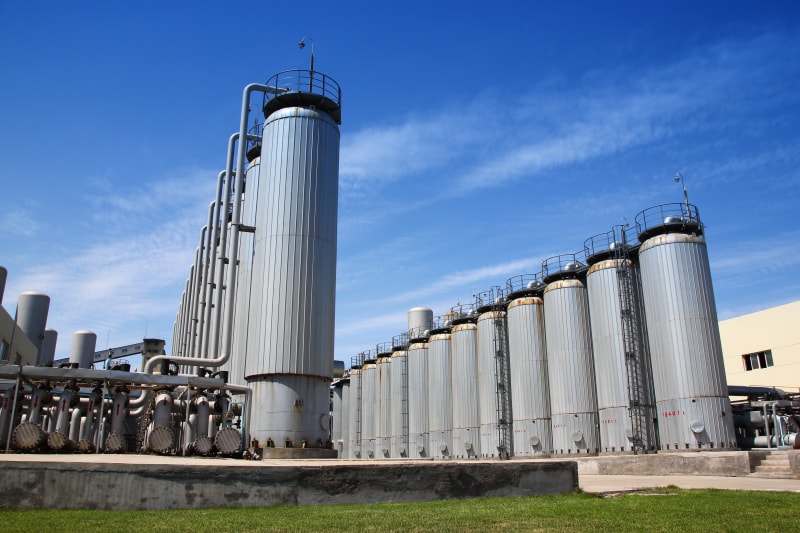
A VPSA oxygen plant may use two towers, three towers, four towers, or more depending on capacity and performance requirements. Multi-tower architecture allows continuous oxygen output while individual towers move through adsorption and regeneration. The larger the plant, the more important balanced tower design becomes. Tower diameter, bed height, gas distribution, valve size, adsorbent loading, and pressure drop all influence final performance.
The PLC-controlled switching logic coordinates all valves and rotating equipment. It ensures that feed air, product gas, waste gas, equalization gas, purge gas, and vacuum lines are opened and closed at the correct time. The sequence must be precise. A valve opening too early or too late can reduce purity, waste oxygen, or create pressure shocks. For this reason, high-performance VPSA plants use reliable valves with fast response, clear position feedback, and robust actuator systems.
Modern control systems also include human-machine interfaces, alarm records, trend displays, remote diagnostics, and communication with plant distributed control systems. In a steel plant in Tangshan, a glass furnace in Egypt, or a chemical plant near Antwerp, operators need clear visibility of oxygen purity, oxygen flow, tower pressure, blower load, vacuum pump status, and valve sequence. Good control design reduces operator workload and improves troubleshooting speed.
PLC logic also supports flexible load adjustment. Many industrial users do not require the same oxygen flow 24 hours a day. Furnaces, converters, kilns, and reactors may change operating conditions. A well-designed VPSA plant can adapt to load changes, sometimes from 25% to 100% depending on design, without losing stability. This is a major advantage for users seeking flexible production and energy savings.
How Process Parameters: Pressure, Timing, and Temperature Affect Performance
VPSA oxygen plant performance is strongly influenced by pressure, timing, and temperature. These parameters are interconnected. Changing one affects the others. A technically mature supplier understands these relationships and designs the plant around the user’s real operating conditions rather than a single ideal laboratory point.
Adsorption pressure affects how much nitrogen can be captured by the molecular sieve. Higher pressure may improve adsorption, but it also increases blower power. Lower pressure saves power but may reduce bed utilization. The correct pressure is therefore an economic optimum, not a maximum value.
Vacuum pressure affects regeneration. Deeper vacuum removes more nitrogen from the sieve, improving the next adsorption cycle. However, vacuum pump power increases as deeper vacuum is required. The correct vacuum level depends on oxygen purity target, adsorbent type, tower design, ambient conditions, and oxygen recovery requirement.
Cycle timing includes adsorption time, depressurization time, vacuum time, purge time, and repressurization time. If cycle timing is too aggressive, the bed may not fully adsorb or regenerate. If timing is too conservative, equipment size and energy consumption may increase. Advanced PLC control and commissioning adjustment are essential for optimizing timing after installation.
Temperature affects air density, adsorption equilibrium, equipment performance, and oxygen output. Hot inlet air typically reduces adsorption capacity. Cold air may improve adsorption but can introduce condensation risks if moisture control is poor. Plants in tropical climates, desert areas, high-altitude mining regions, and cold northern ports all require different design considerations.
| Parameter | Normal Design Focus | If Too High | If Too Low | Optimization Method | Business Impact |
|---|---|---|---|---|---|
| Adsorption pressure | Stable low-pressure feed | Higher power use | Lower nitrogen capture | Blower and bed matching | Controls oxygen cost |
| Vacuum depth | Complete sieve regeneration | Excess power demand | Incomplete desorption | Pump curve optimization | Protects purity |
| Adsorption time | Maximum useful bed capacity | Nitrogen breakthrough | Low recovery | Commissioning tests | Affects product quality |
| Purge rate | Efficient nitrogen removal | Product oxygen waste | Poor regeneration | Valve and flow tuning | Affects efficiency |
| Inlet temperature | Stable thermal condition | Reduced adsorption capacity | Condensation risk | Intake and cooling design | Affects seasonal output |
| Valve timing | Smooth tower switching | Pressure shock | Cycle imbalance | PLC sequence tuning | Affects reliability |
The explanation above is important for procurement teams because guaranteed performance should be based on clearly defined conditions. Buyers should ask whether the quoted oxygen flow and power consumption apply at local ambient temperature, altitude, humidity, and oxygen purity. This is especially important for projects in hot ports, inland deserts, or high-altitude industrial zones.
Global Market Demand, Product Types, and Buying Advice
The Global Market for VPSA oxygen plants is growing because industrial users want lower energy consumption, more resilient gas supply, and faster project deployment. In many countries, oxygen supply has become a strategic operating issue. Steelmakers want oxygen enrichment to improve furnace productivity. Glass manufacturers need oxygen for combustion efficiency and emission reduction. Chemical producers use oxygen in oxidation, gasification, and synthesis processes. Wastewater treatment plants use oxygen to improve biological treatment capacity where land is limited.
Major trade hubs such as Singapore, Rotterdam, Shanghai, Dubai, Houston, Mumbai, and Istanbul influence oxygen equipment procurement because they connect industrial project owners, engineering contractors, shipping companies, and finance providers. In developing markets, local oxygen supply may be expensive or unreliable due to transport distance. In mature markets, carbon reduction and energy efficiency often drive investment. Both conditions support VPSA adoption.
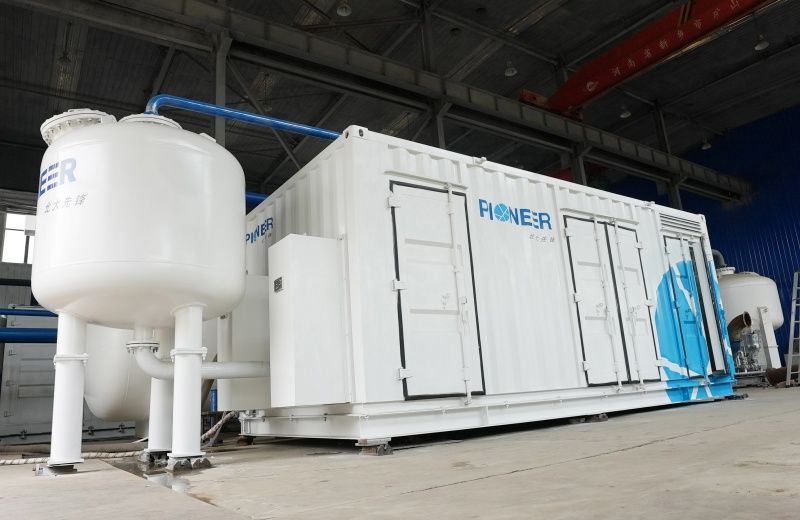
Product types include large-scale VPSA oxygen plants, modular VPSA units, containerized oxygen systems, compact PSA oxygen generators, hybrid systems with oxygen storage, and special oxygen systems integrated with furnaces or chemical reactors. The best product type depends on oxygen flow, purity, operating pattern, available land, utility conditions, and whether the user needs backup oxygen storage.
Buying advice should start with the oxygen balance. The user must define normal flow, peak flow, minimum turndown, required purity, delivery pressure, annual operating hours, and backup philosophy. Then the buyer should compare total cost of ownership, including power, water, maintenance, adsorbent replacement, spare parts, civil works, installation, commissioning, operator training, and downtime risk. The lowest equipment price is not always the lowest oxygen cost.
Supplier evaluation should include reference projects, adsorbent technology, process design capability, manufacturing quality, automation experience, commissioning support, after-sales response, and ability to provide EPC or turnkey delivery. For customer-owned plant solutions, it is important that the supplier can design and deliver a plant that the client owns and operates, rather than a BOO or on-site bulk supply model.
Line Chart: Global VPSA oxygen plant market growth index
The line chart illustrates a realistic demand trend driven by steel modernization, clean combustion, chemical expansion, and growing preference for on-site gas generation. The 2026 trend is expected to include stronger digital monitoring, higher-efficiency adsorbents, carbon-aware procurement, and more modular plant delivery.
Bar Chart: Industrial oxygen demand by sector
The bar chart shows why steel and chemical projects often dominate large VPSA oxygen plant discussions, while glass, wastewater, mining, and non-ferrous metallurgy create strong specialized demand. Each sector has different purity, pressure, and continuity requirements.
Area Chart: Shift from delivered oxygen to on-site generation
The area chart reflects the shift toward customer-owned oxygen assets. This trend is supported by energy efficiency policies, industrial resilience planning, and the desire to avoid transport-related emissions and supply disruptions.
Comparison Chart: Supplier and product evaluation factors
The comparison chart highlights that industrial buyers should evaluate supplier capability across the full project life cycle. A VPSA oxygen plant is a long-term production asset, not a disposable machine.
| Buyer Question | Why It Matters | Good Supplier Response | Warning Sign | Recommended Action | Decision Priority |
|---|---|---|---|---|---|
| What is the guaranteed power consumption? | Power dominates lifetime cost | Clear kWh per Nm3 under defined conditions | Only vague efficiency claims | Request performance guarantee | Very high |
| What oxygen purity is stable? | Process quality depends on purity | Defined purity range and analyzer logic | Maximum value only | Specify normal and minimum purity | Very high |
| Who owns the plant? | Business model affects cost and control | Customer-owned EPC or turnkey solution | Unclear BOO supply terms | Confirm ownership and scope | High |
| What references are available? | Proves real project experience | Similar capacity and industry cases | No comparable installations | Review operating references | High |
| How is maintenance supported? | Reliability affects production | Spare parts, training, remote support | No service plan | Include service agreement | High |
| Can the plant follow load changes? | Industrial demand may fluctuate | Defined turndown and control strategy | Only fixed-load design | Specify operating scenarios | Medium to high |
This buying checklist helps procurement teams avoid common mistakes. The best purchase decision is based on guaranteed performance, lifecycle economics, and supplier accountability.
Our Company: PKU Pioneer’s Technology, Manufacturing, and Service Capabilities
PKU Pioneer, formally Beijing Peking University Pioneer Technology Corporation Ltd., is a high-tech enterprise specializing in VPSA and PSA gas separation technologies. With origins connected to the College of Chemistry and Molecular Engineering at Peking University, the company has developed strong capabilities in oxygen generation, carbon monoxide recovery, hydrogen purification, adsorbents, catalysts, engineering design, and complete plant delivery.
In technological capabilities, PKU Pioneer focuses on process innovation, proprietary adsorbents, molecular sieve performance, cycle optimization, and industrial gas utilization. Its self-developed adsorbents, including high-performance molecular sieve products, are designed to improve adsorption capacity, regeneration efficiency, and long-term reliability. The company has accumulated extensive experience through hundreds of industrial projects, including large-scale oxygen plants for steel and chemical users. More information about its VPSA oxygen technology can be found through the VPSA oxygen plant solution page.
In manufacturing capabilities, PKU Pioneer integrates research and development, adsorbent production, engineering design, equipment fabrication, skid assembly, quality control, and project execution. This integrated model helps align process design with actual manufacturing details. For large plants, tower fabrication, valve system assembly, blower and vacuum pump integration, piping layout, instrumentation, and control cabinet production must be managed as one coherent system. The company’s project experience includes plants ranging from small modular oxygen units to ultra-large VPSA installations exceeding 100,000 Nm3 per hour.
In service capabilities, PKU Pioneer provides EPC, turnkey, and customer-owned plant solutions. The company does not position the service as BOO or on-site bulk supply in this context; instead, it supports clients that want to own oxygen generation assets and control their long-term gas cost. Services may include feasibility study, technical proposal, process design, equipment supply, installation guidance, commissioning, operator training, operation support, maintenance advice, system retrofit, upgrade planning, pilot testing, and consulting. Clients can learn more through the company background and capabilities page.
The company has completed more than 400 industrial projects in more than 20 countries, with total installed oxygen capacity exceeding 2 million Nm3 per hour. It has served many leading steel enterprises and has developed notable projects in blast furnace gas utilization, large-scale oxygen supply, converter gas conversion, calcium carbide furnace exhaust utilization, and international VPSA oxygen deployment. Project examples are available on the innovative industrial projects page.
For global buyers, PKU Pioneer’s value lies in matching gas separation technology to real industrial conditions. A glass plant near the Port of Mersin, a steel facility in India’s Odisha belt, a chemical complex near Rotterdam, or a mining project in South America may all need different engineering assumptions. PKU Pioneer’s experience across industries enables customized designs rather than one-size-fits-all packages. The company’s broader technology portfolio is introduced on the PKU Pioneer gas separation technology website.
PKU Pioneer also offers PSA oxygen systems for smaller or medium applications where PSA may be more suitable than VPSA. Buyers comparing product categories can review the PSA oxygen generator option and the VPSA technology overview to select the right technical route.
FAQ: Common Questions About VPSA Oxygen Plants
1. What oxygen purity can a VPSA oxygen plant produce?
Most industrial VPSA oxygen plants produce oxygen-enriched gas between 80% and 94% purity. The exact purity depends on adsorbent, cycle design, oxygen recovery, pressure, temperature, and user demand. For many combustion, metallurgy, chemical, and wastewater applications, this purity range is technically and economically suitable.
2. Is VPSA better than cryogenic oxygen?
VPSA is better when the user needs medium to large oxygen flow, moderate purity, fast startup, flexible load, and low operating complexity. Cryogenic oxygen is better when ultra-high purity or liquid product is required. The correct choice depends on application, capacity, purity, energy price, and project strategy.
3. How long does a VPSA oxygen plant take to start?
Many VPSA oxygen plants can start much faster than cryogenic systems, often within about 20 to 30 minutes after readiness conditions are met. Actual startup time depends on plant size, control logic, downstream pressure requirements, and operating procedures.
4. What is the main energy consumption source?
The blower and vacuum pump are the main power consumers. Their efficiency, operating point, and control method strongly influence kWh per Nm3 of oxygen. A good VPSA design optimizes both machines as part of the adsorption process.
5. How long does molecular sieve last?
Molecular sieve life depends on air cleanliness, moisture control, temperature, pressure stability, bed design, and operating discipline. With proper filtration and stable operation, high-quality adsorbent can provide long service life. Poor filtration, oil contamination, water ingress, or severe pressure shocks can shorten life.
6. Can VPSA oxygen be used in steel production?
Yes. Steel is one of the most important VPSA oxygen markets. Oxygen can support blast furnace enrichment, electric arc furnace processes, combustion enhancement, and other metallurgical operations. Large steel plants often evaluate VPSA because oxygen demand is high and energy savings can be substantial.
7. Can the plant adjust oxygen flow?
Many VPSA systems can support load adjustment within a designed range. Some systems can operate flexibly from partial load to full load while maintaining oxygen quality. The turndown range should be specified during procurement because it affects equipment and control design.
8. What information is needed for a quotation?
Buyers should provide oxygen flow, purity, delivery pressure, operating hours, site altitude, ambient temperature range, humidity, available power, cooling water conditions, installation location, application, backup requirement, and preferred project scope. This information allows accurate technical and commercial evaluation.
9. Does PKU Pioneer provide BOO or on-site bulk oxygen supply?
For the solutions described here, PKU Pioneer provides EPC, turnkey, and customer-owned plant solutions. The focus is on helping clients own and operate their gas generation assets rather than providing BOO or on-site bulk supply services.
10. What are the key VPSA trends for 2026 and beyond?
Important trends include higher-efficiency molecular sieves, smarter PLC control, remote monitoring, predictive maintenance, lower carbon oxygen production, modular construction, faster installation, integration with industrial decarbonization projects, and stronger demand from emerging markets. Policy pressure on energy efficiency and emissions will continue to support on-site oxygen generation in the Global Market.

About the Author
Founded in 1999, PKU Pioneer specializes in VPSA and PSA gas separation technologies, adsorbents, catalysts, and integrated engineering solutions. Backed by strong R&D capability and extensive industrial project experience, the company serves global customers across steel, chemical, energy, environmental protection, and related industries.
Share