PSA Hydrogen Purification Guide for the Global Market
Quick Answer

A PSA hydrogen plant purifies hydrogen gas by using pressure swing adsorption: impurities are selectively adsorbed on solid adsorbents at high pressure, while hydrogen passes through as product gas. When the adsorbent bed becomes loaded with impurities, the vessel is depressurized, purged, and repressurized so it can be reused. In practical industrial systems, several adsorber vessels operate in staggered cycles to deliver a continuous hydrogen stream.
For the global market, PSA hydrogen purification is widely used in refineries, methanol plants, ammonia units, chlor-alkali plants, coke oven gas recovery, steel by-product gas utilization, synthetic fuel projects, and emerging low-carbon hydrogen networks around Rotterdam, Houston, Singapore, Shanghai, Busan, Mumbai, Jebel Ali, Antwerp, and other industrial trade hubs. The technology is valued because it can produce high-purity hydrogen, often above 99.9% and up to 99.999% depending on feed gas, process design, adsorbent selection, and recovery target.
The simplest explanation is this: hydrogen is weakly adsorbed compared with common impurities such as carbon monoxide, carbon dioxide, methane, nitrogen, water vapor, sulfur compounds, and heavier hydrocarbons. PSA systems use this difference to separate hydrogen from mixed gas streams. High pressure favors adsorption of impurities; low pressure releases them. By repeating this pressure swing in multiple vessels, the plant continuously captures impurities and recovers purified hydrogen.
Companies buying PSA hydrogen purification systems should focus on feed gas composition, hydrogen recovery, product purity, pressure level, turndown capability, adsorbent lifetime, valve reliability, automation strategy, total energy use, local maintenance support, and whether the supplier can provide EPC/turnkey or customer-owned plant solutions. A reliable supplier should also provide process simulation, pilot testing when needed, proprietary adsorbents, detailed engineering, equipment fabrication, commissioning, operator training, and long-term service support.
| Question | Direct Answer | Buyer’s Note |
|---|---|---|
| What does PSA mean? | Pressure swing adsorption, a cyclic gas separation method. | Best for hydrogen-rich feed gases with removable impurities. |
| What purity can be achieved? | Commonly 99.9% to 99.999% hydrogen. | Exact purity depends on feed gas and design target. |
| Is PSA continuous? | Yes, when multiple adsorber vessels operate in sequence. | Single beds are cyclic, but multi-bed systems deliver steady product. |
| What impurities are removed? | CO, CO2, CH4, N2, H2O, hydrocarbons, and trace contaminants. | Upstream pretreatment may be required for sulfur or liquids. |
| What industries use it? | Refining, chemicals, steel, coal chemistry, chlor-alkali, and energy. | By-product gas recovery can reduce purchased hydrogen demand. |
| What is the buying priority? | Balance purity, recovery, reliability, and lifecycle cost. | Lowest equipment price is rarely the lowest total cost. |
This table summarizes the practical meaning of PSA hydrogen purification for decision makers. It shows that the technology is not merely a vessel filled with adsorbent; it is a complete process system involving gas pretreatment, bed cycle control, pressure management, product buffering, tail gas handling, instrumentation, safety interlocks, and long-term adsorbent performance.
The PSA Hydrogen Purification Working Principle

The PSA hydrogen purification working principle is based on the fact that different gas molecules have different adsorption strengths on porous solid materials. In a typical hydrogen-rich feed stream, hydrogen has relatively low adsorption affinity, while carbon monoxide, carbon dioxide, methane, nitrogen, water vapor, and heavier hydrocarbons have stronger adsorption affinity. When the mixed gas enters an adsorber vessel under pressure, the adsorbent captures these stronger-adsorbing impurities and allows hydrogen to move through the bed as the light product.
Adsorption is not the same as chemical reaction. Most PSA hydrogen purification processes are physical adsorption systems. Gas molecules attach to the internal surface of adsorbent pores because of intermolecular forces. Since high-quality adsorbents have very large internal surface areas, a relatively compact vessel can capture significant impurity volumes. When pressure is reduced, adsorbed molecules desorb and leave the adsorbent, which allows the bed to be regenerated.
The working principle can be understood through three core ideas. First, adsorption capacity increases as pressure increases, so the high-pressure phase captures impurities effectively. Second, different gases are adsorbed to different extents, so hydrogen can be separated from more strongly adsorbed contaminants. Third, the process is cyclic, so the same adsorbent bed is repeatedly loaded and regenerated rather than consumed continuously.
In global hydrogen projects, PSA systems are often installed downstream of steam methane reformers, methanol cracking units, ammonia purge gas recovery systems, refinery off-gas networks, coke oven gas treatment lines, and chlor-alkali by-product hydrogen streams. The process design is adjusted for each application. For example, refinery off-gas may contain methane, ethane, propane, carbon monoxide, and carbon dioxide. Coke oven gas may contain hydrogen, methane, carbon monoxide, nitrogen, and trace sulfur compounds. Chlor-alkali hydrogen can be relatively clean but may need moisture and chlorine-related contaminant control.
Hydrogen purification by PSA is favored where operators need a robust, automatically controlled, dry purification route. Compared with some membrane systems, PSA can usually achieve higher hydrogen purity. Compared with cryogenic separation, PSA is often simpler for medium to high hydrogen concentration feed streams and can be more flexible under changing load conditions. However, the best technology choice must always be based on feed composition, product specification, pressure, recovery, utilities, and site economics.
The line chart illustrates a realistic demand trend for PSA hydrogen purification in the global market. Growth is supported by refinery modernization, low-carbon fuel projects, hydrogen recovery from industrial off-gases, stricter emission policies, and the need to reduce energy waste in chemical complexes. The strongest demand clusters are expected around large refining and chemical corridors, including the U.S. Gulf Coast, Northwest Europe, China’s coastal chemical bases, the Middle East, India’s west coast, and Southeast Asian petrochemical hubs.
Step-by-Step PSA Process Cycle Explained

A PSA hydrogen plant operates through a repeating cycle. Although each supplier may use a proprietary sequence, the core steps usually include adsorption, pressure equalization, co-current depressurization, counter-current depressurization, purge, and repressurization. Advanced systems may use several equalization steps, product gas rinse steps, or tailored purge strategies to improve recovery and stability.
Step one is feed pressurization or feed introduction. The mixed gas enters an adsorber at operating pressure. The feed end of the bed first encounters the highest concentration of impurities, so the adsorbent near this end loads more heavily. The product end remains relatively clean, creating a mass transfer zone inside the bed.
Step two is adsorption. During this phase, impurities are retained by adsorbents and high-purity hydrogen exits the product end. The bed remains in production until the impurity front approaches a defined limit. The control system switches the bed before unacceptable impurities break through into the product hydrogen.
Step three is pressure equalization. Instead of simply venting high-pressure gas, the plant transfers gas from a bed finishing adsorption to another bed at lower pressure. This recovers part of the hydrogen and reduces energy losses. Multi-step equalization is common in high-recovery systems.
Step four is depressurization. The bed pressure is reduced, usually in a direction that helps remove adsorbed impurities. Tail gas leaves the vessel and may be used as fuel, recycled, sent to a furnace, or treated further depending on its composition and site requirements.
Step five is purge. A small portion of product hydrogen or intermediate hydrogen-rich gas flows through the bed at low pressure to remove residual impurities. Purge quality and quantity strongly affect final product purity and hydrogen recovery.
Step six is repressurization. The bed is brought back to adsorption pressure using hydrogen-rich gas, equalization gas, or product hydrogen. Smooth repressurization protects the adsorbent, valves, piping, and instruments from pressure shocks. After this step, the bed is ready to return to adsorption.
| Cycle Step | Main Function | Gas Flow Direction | Impact on Performance |
|---|---|---|---|
| Feed introduction | Brings mixed gas into the adsorber at pressure. | Feed end to product end. | Defines loading rate and bed utilization. |
| Adsorption | Captures impurities while hydrogen passes through. | Forward direction. | Controls product purity and production capacity. |
| Pressure equalization | Transfers useful gas to another bed. | Between vessels. | Improves hydrogen recovery and reduces losses. |
| Depressurization | Releases adsorbed impurities by lowering pressure. | Often counter-current. | Regenerates the bed and creates tail gas. |
| Purge | Flushes residual contaminants from the adsorbent. | Usually counter-current. | Enhances purity but consumes some hydrogen. |
| Repressurization | Returns the bed to adsorption pressure. | Controlled and staged. | Stabilizes operation and prepares for the next cycle. |
This cycle table helps buyers evaluate supplier proposals. A higher-quality PSA hydrogen design is usually not the one with the simplest cycle, but the one with the most appropriate cycle for the feed gas and target economics. For example, a refinery project prioritizing high recovery may need more equalization steps, while a small chlor-alkali hydrogen purifier may focus on compactness and simplicity.
Adsorption Phase: How Impurities Are Captured
The adsorption phase is the production phase of a PSA hydrogen purification unit. Feed gas enters the vessel under pressure, and the adsorbent bed selectively captures impurities. The physical structure of the bed is carefully engineered. It may contain multiple adsorbent layers, each targeting different contaminants. A guard layer may remove water or heavy hydrocarbons, while deeper layers remove carbon dioxide, methane, carbon monoxide, and nitrogen.
As gas flows through the bed, impurities do not all stop at the inlet. Instead, a moving mass transfer zone forms. The gas behind this zone is mostly cleaned, while the gas ahead of it still contains impurities. The objective of PSA cycle control is to stop adsorption before the impurity front reaches the product end. If the cycle runs too long, breakthrough occurs and hydrogen purity falls.
For carbon dioxide, adsorption is typically strong, so CO2 is captured readily on suitable adsorbents. Water vapor is also strongly adsorbed and must be considered carefully because it can reduce available adsorption capacity for other gases. Methane and nitrogen are more difficult in some cases, especially when product hydrogen purity is very high. Carbon monoxide removal can require tailored adsorbent selection and process sequencing, especially for fuel cell-grade or synthesis-grade hydrogen.
The adsorption phase is affected by temperature. Higher temperature can reduce adsorption capacity, while lower temperature can improve capacity but may introduce condensation risks if the gas is not properly dried. Industrial PSA systems are usually designed for stable operation under realistic seasonal conditions, whether the site is in a hot region such as Jubail, Abu Dhabi, or Gujarat, or a colder area such as Alberta, Northern Europe, or Northeast China.
Pressure is another major factor. Higher adsorption pressure generally increases impurity loading capacity and can improve productivity. However, compression energy and equipment rating also increase. Buyers should evaluate total lifecycle economics rather than simply choosing the highest possible pressure.
Regeneration Phase: Equalization, Purging, and Repressurization
The regeneration phase restores the adsorbent so it can be used again. In a PSA hydrogen plant, regeneration is achieved mainly by reducing pressure rather than heating the bed. This is why the process can cycle quickly and operate continuously with limited thermal energy input.
Equalization is the first major regeneration-related step. A bed that has just completed adsorption still contains pressurized hydrogen-rich gas in its void spaces. If this gas were vented directly, hydrogen recovery would suffer. Equalization sends part of this gas to another bed that needs pressure, recovering valuable hydrogen and improving the efficiency of the entire system.
Depressurization follows. By lowering pressure, the equilibrium adsorption capacity falls, and captured impurities desorb from the adsorbent. The tail gas generated during this step is often combustible because it may contain hydrogen, methane, carbon monoxide, and other gases. In refinery and chemical plants, this stream can be routed to a fuel gas header, reformer furnace, boiler, thermal oxidizer, or additional recovery system.
Purging is essential for deep regeneration. A small amount of clean hydrogen or hydrogen-rich gas flows through the bed at low pressure, sweeping out residual impurities. More purge improves regeneration and purity, but excessive purge reduces net hydrogen recovery. Good PSA design balances purge consumption and product requirements.
Repressurization is the final step. The bed must return to adsorption pressure before receiving feed gas again. Repressurization may use product hydrogen, equalization gas, or feed gas depending on the sequence. Smooth pressure control is critical because rapid pressure changes can create adsorbent attrition, dust formation, valve stress, and unstable product flow.
Modern PSA systems use PLC or DCS control, fast-response valves, online analyzers, pressure transmitters, flow meters, and safety interlocks to keep the regeneration phase stable. For plants connected to downstream hydrogen compressors, ammonia synthesis loops, hydrocrackers, or fuel cell filling systems, stable pressure and purity are especially important.
| Regeneration Item | Purpose | Optimization Method | Common Risk if Poorly Designed |
|---|---|---|---|
| Equalization pressure | Recover void-space hydrogen. | Use staged pressure transfer. | Lower recovery and unstable bed pressure. |
| Depressurization rate | Release impurities from adsorbent. | Control valve timing and flow path. | Adsorbent damage or poor desorption. |
| Purge gas amount | Clean residual contaminants. | Match purge ratio to purity target. | High hydrogen loss or impurity breakthrough. |
| Tail gas handling | Manage desorbed impurities safely. | Integrate with fuel or treatment systems. | Energy waste or environmental noncompliance. |
| Repressurization speed | Prepare bed for production. | Use controlled staged filling. | Pressure shock and flow instability. |
| Valve sequence | Coordinate all cycle steps. | Apply tested automation logic. | Product purity swings and shutdowns. |
The regeneration table shows why PSA hydrogen purification is a precision process. The cycle must be engineered as an integrated whole. Even a high-performance adsorbent cannot deliver stable purity if equalization, purge, and repressurization are poorly controlled.
Role of Adsorbent Materials in Hydrogen Separation
Adsorbent materials are the heart of hydrogen separation. Their pore size, surface chemistry, adsorption capacity, selectivity, mechanical strength, and resistance to contaminants determine how efficiently the PSA system can capture impurities. Common adsorbent categories include activated alumina, silica gel, activated carbon, carbon molecular sieve, zeolite molecular sieve, and specialty adsorbents designed for carbon monoxide, nitrogen, or trace impurity removal.
Activated alumina and silica gel are often used for water removal and pretreatment layers. Activated carbon can adsorb carbon dioxide, methane, heavier hydrocarbons, and some organic compounds. Zeolite molecular sieves are widely used for polar molecules and gases such as CO2, CO, and N2 depending on type and cation form. Carbon molecular sieves can provide kinetic separation benefits in certain gas mixtures.
Layering is common. A PSA hydrogen bed may use different adsorbents in a specific order so that strongly adsorbed or damaging components are removed before the gas reaches more selective downstream layers. This protects expensive adsorbents and improves overall bed life. The supplier’s know-how lies not only in selecting adsorbents, but also in deciding particle size, layer depth, flow distribution, vessel internals, pressure drop limits, and regeneration strategy.
Adsorbent degradation can occur through liquid carryover, oil contamination, sulfur poisoning, dusting, thermal stress, and repeated pressure shock. Therefore, upstream gas conditioning is important. Knockout drums, filters, coolers, demisters, sulfur removal units, and dryers may be required depending on feed quality. A serious supplier will review feed gas contaminants carefully before confirming performance guarantees.
PKU Pioneer’s technological capabilities include in-house research and development, proprietary adsorbent and catalyst production, process design, and industrial application experience in PSA and VPSA gas separation. Its development background from Peking University’s chemistry and molecular engineering expertise supports adsorbent innovation and process optimization. For more information about the company’s technical background, readers can visit the PKU Pioneer company overview.
| Adsorbent Type | Typical Function | Strength | Design Consideration |
|---|---|---|---|
| Activated alumina | Water vapor removal. | Strong drying ability and durability. | Protect from liquid water slugs. |
| Silica gel | Moisture and polar impurity control. | Good capacity at moderate conditions. | Temperature affects performance. |
| Activated carbon | CO2, hydrocarbons, and organics capture. | Broad adsorption capability. | May need protection from oil mist. |
| Zeolite molecular sieve | CO, CO2, N2, and polar gas separation. | High selectivity and defined pore structure. | Moisture management is critical. |
| Carbon molecular sieve | Kinetic gas separation. | Useful for selected molecular size differences. | Requires accurate cycle design. |
| Specialty adsorbents | Trace contaminant polishing. | Customized for demanding purity targets. | Performance depends on feed analysis. |
This adsorbent table explains why there is no universal bed recipe for every PSA hydrogen plant. The correct adsorbent package for a methanol purge gas project in East Asia may differ from one used in a refinery off-gas recovery unit in Texas or a coke oven gas hydrogen recovery project near Tianjin, Pohang, or Duisburg.
How Multiple Adsorber Vessels Enable Continuous Operation
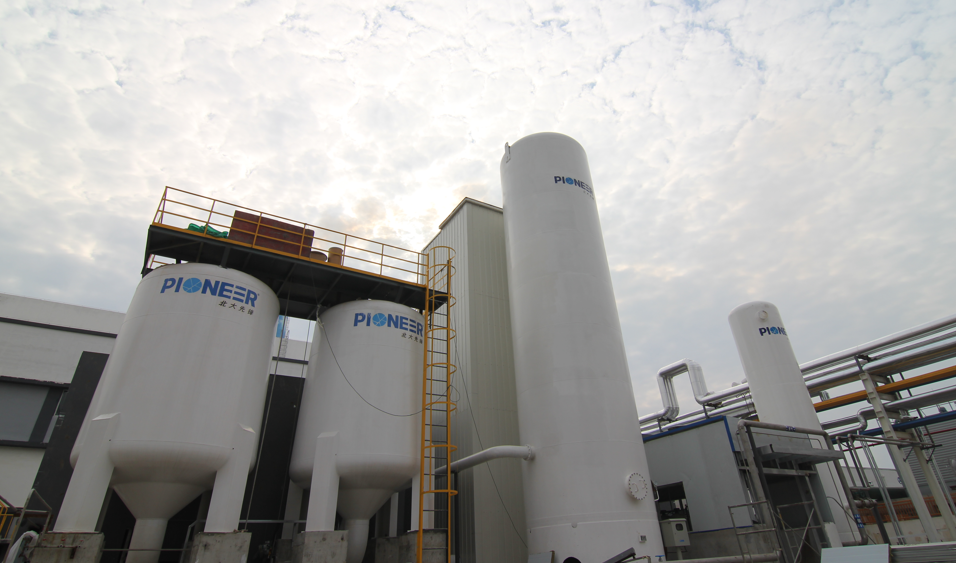
A single adsorber vessel cannot produce hydrogen continuously because it must periodically regenerate. Industrial PSA hydrogen purification systems solve this by using multiple vessels operating in a staggered cycle. While one vessel adsorbs impurities and produces hydrogen, another may be depressurizing, a third may be purging, and a fourth may be repressurizing. Larger systems may use six, eight, ten, or more beds to improve recovery, smooth flow, and reduce pressure fluctuations.
The multi-bed arrangement is one of the main reasons PSA technology can serve continuous industrial operations. Refineries, ammonia plants, steel mills, and chemical complexes cannot tolerate frequent hydrogen interruptions. The PSA control system coordinates all valves and vessels so that product hydrogen flow remains stable even though each individual bed is cycling.
More beds allow more sophisticated equalization steps. This can raise hydrogen recovery because gas from one bed can be reused in another bed at a suitable pressure. However, more vessels also mean higher capital cost, more valves, more piping, and more control complexity. The optimum number of beds depends on capacity, recovery target, feed pressure, required purity, and reliability requirements.
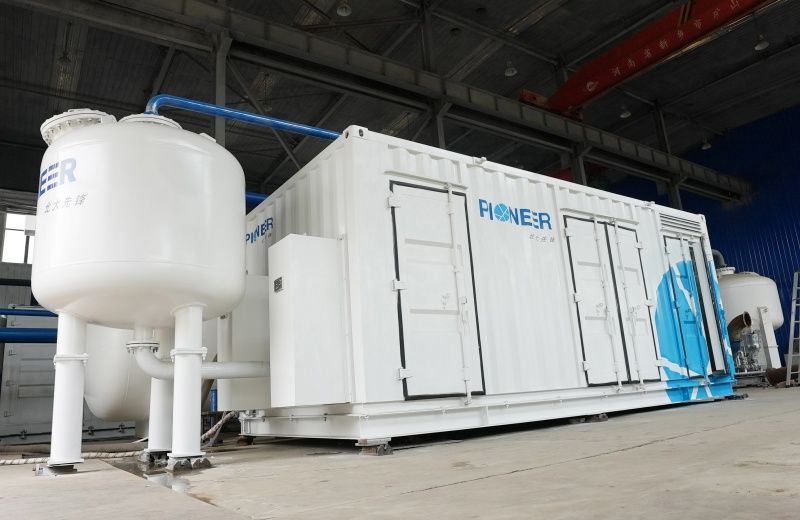
For small and medium systems, skid-mounted PSA hydrogen purifiers may offer compact installation and shorter delivery schedules. For large refinery or coal chemical projects, field-erected vessels and customized process layouts may be preferred. Ports and trade hubs such as Singapore, Rotterdam, Houston, Antwerp, Shanghai, Ningbo-Zhoushan, Busan, and Jebel Ali often demand modular logistics planning because heavy vessels, compressors, and control skids must be transported efficiently.
Continuous operation also depends on valves. PSA valves open and close frequently, sometimes hundreds of thousands or millions of times during service life. Valve leakage, slow response, or timing deviation can reduce purity and recovery. Therefore, valve selection, actuator quality, seal compatibility, instrument air reliability, and preventive maintenance are essential.
The bar chart compares major demand sectors. Refining remains a large user because hydrocracking, hydrotreating, and sulfur reduction require reliable hydrogen. Chemical sectors such as ammonia and methanol use PSA for purge gas recovery and hydrogen purification. Steel and coal chemical sectors are growing because by-product gas recovery supports resource efficiency and emission reduction. Fuel cell and synthetic fuel applications are smaller today but are expected to grow through 2026 and beyond.
Key Process Parameters Affecting Purification Efficiency
Several process parameters determine PSA hydrogen purification efficiency. The first is feed gas composition. A hydrogen-rich stream with moderate impurities is easier to purify than a dilute stream with heavy hydrocarbons, sulfur, high water content, or variable composition. Accurate feed analysis over time is essential, especially when the gas comes from refinery networks or steel plant by-product streams.
The second parameter is feed pressure. Higher pressure can increase adsorption capacity and improve productivity, but compression cost must be included. If feed pressure is already available from an upstream process, PSA can be especially attractive. If compression is required solely for purification, lifecycle energy analysis becomes more important.
The third parameter is product purity. A plant designed for 99.9% hydrogen may achieve higher recovery than one designed for 99.999% hydrogen from the same feed. Ultra-high purity requires deeper impurity removal, more conservative cycle timing, and sometimes higher purge consumption.
The fourth parameter is hydrogen recovery. Recovery represents the percentage of feed hydrogen recovered as product. Higher recovery is economically attractive, but pushing recovery too high can risk purity instability or require more complex equipment. The practical optimum depends on hydrogen value, tail gas value, and product requirements.
The fifth parameter is cycle time. Shorter cycles can increase productivity but may cause higher valve frequency and incomplete mass transfer. Longer cycles may improve bed utilization but increase breakthrough risk if not carefully controlled. Advanced controls can adjust cycle timing based on flow, pressure, and analyzer feedback.
The sixth parameter is temperature. Adsorption equilibrium and kinetics vary with temperature. Stable feed cooling and liquid separation can improve performance. In hot climates, designers may need larger coolers or derating. In cold climates, condensation and freezing risks must be managed.
The seventh parameter is adsorbent condition. Dusting, contamination, or aging reduces capacity and increases pressure drop. Regular monitoring of bed pressure drop, product impurity trends, and tail gas composition helps identify maintenance needs before serious performance loss occurs.
| Parameter | Higher Value Usually Means | Lower Value Usually Means | Optimization Advice |
|---|---|---|---|
| Feed hydrogen concentration | Easier purification and higher recovery. | More tail gas and larger system. | Measure composition over real operating cycles. |
| Feed pressure | Higher adsorption capacity. | Less driving force for separation. | Balance pressure benefit with compression cost. |
| Product purity target | More demanding cycle and adsorbent duty. | Higher possible recovery. | Specify actual downstream requirement, not excessive purity. |
| Hydrogen recovery target | Better hydrogen economics. | More hydrogen in tail gas. | Evaluate tail gas fuel value before final decision. |
| Cycle time | Greater bed utilization if controlled well. | Faster cycling and more valve duty. | Use proven supplier simulation and commissioning tuning. |
| Feed temperature | May lower adsorption capacity. | May improve capacity but risks condensation. | Design cooling, separation, and insulation properly. |
| Adsorbent health | Stable purity and pressure drop. | Breakthrough risk and higher operating cost. | Plan sampling, monitoring, and replacement strategy. |
The process parameter table is useful for procurement teams because it connects technical design with commercial results. A PSA hydrogen plant should be evaluated by guaranteed purity, recovery, availability, adsorbent life, pressure drop, utility consumption, safety design, and service support rather than nameplate capacity alone.
Our Company
PKU Pioneer, formally Beijing Peking University Pioneer Technology Corporation Ltd., is a high-tech enterprise specializing in PSA and VPSA gas separation technologies for the global market. The company focuses on industrial oxygen generation, high-purity carbon monoxide recovery, hydrogen purification, hydrogen recovery, and utilization of industrial by-product gases. Founded in 1999 with roots in Peking University, it has built long-term experience in adsorption process development, adsorbent manufacturing, engineering design, equipment supply, and industrial project delivery.
From a technological capability perspective, PKU Pioneer combines process know-how, proprietary adsorbents, catalyst development, simulation, pilot testing, and industrial optimization. Its experience covers large VPSA oxygen plants, PSA oxygen generators, PSA carbon monoxide plants, and PSA hydrogen purification systems. The company has accumulated more than 400 industrial projects in over 20 countries, with applications across steel, chemical, glass, energy, and environmental utilization sectors. Readers can explore broader gas separation solutions through the PKU Pioneer official website.
From a manufacturing capability perspective, PKU Pioneer operates an integrated model that includes adsorbent and catalyst production, engineering design, complete equipment fabrication, skid assembly, quality inspection, and project delivery coordination. This integration helps control quality, shorten communication chains, and align process design with mechanical equipment. For large projects, vessel fabrication, piping, valve systems, automation cabinets, analyzers, and auxiliary systems must be engineered as one complete plant rather than disconnected packages.
From a service capability perspective, PKU Pioneer provides EPC/turnkey and customer-owned plant solutions. The company does not position these offerings as BOO or on-site bulk supply services. Instead, it supports customers that want to own and operate their own gas production or purification assets. Services may include feasibility study, feed gas review, customized proposal, process design, engineering, equipment supply, installation guidance, commissioning, operator training, maintenance support, troubleshooting, retrofit, upgrade, and technical consulting.
PKU Pioneer’s project experience includes landmark industrial gas separation applications, such as high-value utilization of blast furnace gas, large-scale VPSA oxygen systems for steel enterprises, converter gas chemical utilization, calcium carbide furnace exhaust recovery, and international oxygen projects. These cases demonstrate practical expertise in turning by-product gases into useful resources. To see representative achievements, readers can visit world-class innovative gas separation projects.
For hydrogen purification buyers, this background is important because PSA hydrogen plants require multidisciplinary capability. A supplier must understand chemistry, adsorption, process engineering, pressure vessels, safety, controls, installation, and long-term operation. PKU Pioneer’s experience in PSA and VPSA systems supports customers seeking cost-effective, flexible, and reliable on-site gas production assets under customer ownership.
The area chart shows a trend shift toward by-product hydrogen recovery. As carbon policies, energy prices, and circular economy goals strengthen, more industrial sites are evaluating hydrogen-rich off-gases as valuable resources. This is especially relevant for steel clusters, coal chemical bases, chlor-alkali facilities, and refinery-petrochemical integrated complexes.
FAQ
1. What is the main purpose of a PSA hydrogen purification plant?
The main purpose is to recover high-purity hydrogen from a hydrogen-containing gas mixture. The plant removes impurities by pressure swing adsorption and delivers purified hydrogen for refining, chemical synthesis, fuel, electronics, metallurgy, or energy applications.
2. How pure can PSA hydrogen be?
Industrial PSA hydrogen systems commonly produce 99.9% to 99.999% hydrogen. The achievable purity depends on feed gas composition, operating pressure, adsorbent package, cycle design, purge rate, analyzer control, and required recovery.
3. Is PSA suitable for fuel cell hydrogen?
PSA can be part of a fuel cell hydrogen purification route, but fuel cell specifications are strict, especially for carbon monoxide, sulfur, ammonia, and moisture. Additional polishing or pretreatment may be needed depending on the feed gas.
4. What feed gases can be treated?
Common feed gases include steam methane reformer gas, refinery off-gas, methanol cracking gas, ammonia purge gas, coke oven gas, chlor-alkali hydrogen, coal chemical gas, and other hydrogen-rich industrial streams.
5. What happens to the tail gas?
Tail gas contains desorbed impurities and some hydrogen. It may be used as fuel, recycled to an upstream unit, sent to a furnace or boiler, treated for emissions control, or integrated into a wider energy recovery system.
6. How should buyers compare PSA hydrogen suppliers?
Buyers should compare performance guarantees, reference projects, adsorbent technology, engineering capability, valve and control quality, safety design, fabrication standards, commissioning support, spare parts, and lifecycle service. A complete solution is more important than a low initial price.
7. What industries benefit most from PSA hydrogen purification?
Refineries, petrochemical plants, ammonia and methanol units, steel mills, coke oven plants, chlor-alkali facilities, synthetic fuel projects, and integrated chemical parks benefit strongly because they often have hydrogen-rich streams and continuous hydrogen demand.
8. What is the difference between PSA and VPSA?
PSA generally uses pressure swing between higher pressure adsorption and lower pressure desorption. VPSA uses vacuum during regeneration and is widely applied in oxygen production. PKU Pioneer provides both PSA and VPSA technologies, including VPSA process systems and VPSA oxygen generation solutions.
9. Can PSA hydrogen plants be modular?
Yes. Small and medium PSA hydrogen units can be skid-mounted for faster installation. Large-capacity systems are often customized with field-installed vessels, process piping, analyzers, and integration into plant utilities.
10. Does PKU Pioneer provide customer-owned plants?
Yes. PKU Pioneer provides EPC/turnkey and customer-owned plant solutions for industrial gas separation projects. Its services are designed for customers that want to own their assets, not for BOO or on-site bulk supply service models.
Global Market, Product Types, Buying Advice, Industries, Applications, Case Studies, and Local Supplier Considerations
In the global market, PSA hydrogen purification is shaped by regional industry structure. The U.S. Gulf Coast uses hydrogen heavily in refining and petrochemicals. Northwest Europe, including Rotterdam and Antwerp, is investing in hydrogen infrastructure and industrial decarbonization. China’s coastal and inland industrial bases use hydrogen recovery in refining, coal chemicals, steel, and synthesis gas projects. The Middle East, especially Saudi Arabia, the United Arab Emirates, and Qatar, links hydrogen with refining, ammonia, methanol, and export-oriented energy projects. India’s Gujarat and Maharashtra industrial corridors are expanding refining and chemical capacity. Southeast Asia, including Singapore, Malaysia, Thailand, Vietnam, and Indonesia, is strengthening refinery-petrochemical integration and gas-based chemical production.
Product types include compact PSA hydrogen purifiers, refinery off-gas hydrogen recovery units, ammonia purge gas hydrogen recovery systems, methanol cracking hydrogen purification units, coke oven gas hydrogen recovery systems, chlor-alkali hydrogen purification packages, and customized hydrogen polishing systems. Some systems are designed for maximum purity, some for maximum recovery, and others for low pressure drop, modular installation, or integration with existing fuel gas networks.
Buying advice begins with data quality. Before requesting a firm quotation, prepare feed gas composition, flow range, pressure, temperature, moisture content, sulfur content, expected fluctuations, product purity, product pressure, recovery target, site utilities, hazardous area classification, local code requirements, and installation schedule. If the feed gas varies by operating mode, provide normal, minimum, maximum, startup, and upset conditions.
Buyers should also decide whether hydrogen recovery or hydrogen purity is the leading objective. A hydrocracker may require stable high-purity hydrogen at pressure. A steel by-product gas project may prioritize resource recovery and overall energy value. A chlor-alkali plant may value compact purification and moisture removal. A chemical synthesis project may need very low carbon monoxide or nitrogen limits.
Local supplier evaluation should not be limited to geography. A local fabricator may provide vessels or installation support, but PSA performance depends on process design and adsorbent know-how. International buyers often use a hybrid model: specialized PSA technology provider, local civil and installation contractor, and regional service coordination. This approach works well in markets where import rules, port logistics, and local codes must be managed carefully.
Case studies in gas separation show the value of industrial experience. PKU Pioneer has completed projects that recover carbon monoxide from blast furnace gas, supply very large VPSA oxygen systems to steel operations, and convert industrial exhaust gases into valuable chemical feedstocks. Although every hydrogen project is different, this project record demonstrates capability in large-flow adsorption, complex industrial gas mixtures, and integrated engineering delivery.
PSA hydrogen purification also connects with oxygen and carbon monoxide technologies. For example, steel mills may use VPSA oxygen for oxygen-enriched processes and PSA systems for by-product gas recovery. Chemical plants may combine hydrogen purification with carbon monoxide separation, synthesis gas adjustment, or off-gas utilization. Buyers interested in related PSA oxygen packages can review PSA oxygen generator information as part of broader gas separation planning.
The comparison chart highlights why a specialized PSA technology supplier can provide higher value than a general equipment packager. PSA hydrogen purification depends on process design, adsorbent selection, cycle optimization, and commissioning expertise. Equipment fabrication matters, but it must be combined with separation know-how.
Looking toward 2026 and beyond, several trends will influence PSA hydrogen purification. Technology trends include higher-selectivity adsorbents, smarter cycle optimization, digital twin modeling, predictive valve maintenance, advanced analyzers, and modular plant design. Policy trends include carbon pricing, hydrogen certification, energy efficiency standards, stricter refinery sulfur rules, and incentives for industrial decarbonization. Sustainability trends include recovery of hydrogen from waste gas, integration with renewable hydrogen, reduction of flaring, and conversion of tail gas into useful fuel or chemical feedstock.
For global industrial buyers, the conclusion is clear: PSA hydrogen purification is a proven, flexible, and economically important technology. It works because impurities are adsorbed at high pressure and released at low pressure. It becomes commercially powerful when multiple adsorber vessels, high-performance adsorbents, intelligent valve sequencing, and experienced engineering are combined into a reliable plant. Whether the project is in Houston, Rotterdam, Shanghai, Singapore, Mumbai, Jubail, Antwerp, Busan, or São Paulo, the right PSA hydrogen system can improve resource efficiency, reduce external hydrogen purchases, support cleaner production, and strengthen long-term industrial competitiveness.

About the Author
Founded in 1999, PKU Pioneer specializes in VPSA and PSA gas separation technologies, adsorbents, catalysts, and integrated engineering solutions. Backed by strong R&D capability and extensive industrial project experience, the company serves global customers across steel, chemical, energy, environmental protection, and related industries.
Share