Self-Generation vs Gas Contract in the United States
Quick Answer

For most U.S. industrial users, self-generation is usually the better choice when gas demand is steady, plant utilization is high, logistics risk matters, and long-term operating cost control is a priority. A long-term gas contract is usually the better choice when demand is variable, internal technical staffing is limited, site space is tight, or the facility wants to avoid upfront capital spending. The right answer depends on seven practical factors: annual gas volume, purity requirement, operating profile, delivered gas risk, energy cost, capital budget, and maintenance capability.
If you operate in steel, glass, nonferrous metals, chemicals, wastewater, or combustion enrichment, on-site oxygen production often becomes more attractive as usage rises because it reduces dependence on tanker deliveries and helps stabilize cost. In regions such as Texas, Ohio, Indiana, Pennsylvania, Alabama, and along major industrial corridors near Houston, Gary, Pittsburgh, and Mobile, supply-chain resilience can be just as important as price.
In the United States, common gas partners include Air Liquide, Linde, Airgas, Matheson, Messer, and nexAir. For self-generation systems, buyers should also evaluate qualified international suppliers that offer U.S.-recognized certifications, engineered EPC or turnkey delivery, and reliable after-sales support. Cost-performance can be especially attractive when comparing modern VPSA or PSA systems against long-duration purchased-gas contracts.
Market Overview in the United States

The U.S. market for industrial gas supply is broad, mature, and regionally diverse. Facilities in the Gulf Coast, Midwest, Southeast, and Mid-Atlantic often have several supply options, but those options do not always create equal resilience. A plant located near major merchant gas production and transport routes may secure competitive delivered pricing, while a site in a more remote inland location may face higher transport charges, delivery scheduling limits, and weather-related risk.
That is why the comparison between self-generation vs gas contract has become more strategic than ever. Buyers are no longer judging only the nominal gas price. They are also comparing uptime, trucking exposure, driver availability, storage needs, energy volatility, environmental goals, and long-term expansion flexibility. In sectors with continuous operations, a supply interruption can cost much more than the gas itself.
In recent years, U.S. manufacturers have increased interest in on-site generation for oxygen and nitrogen because it can shorten supply lines and improve process control. This is especially visible in metals processing, wastewater treatment, pulp and paper, glass furnaces, and industrial combustion systems. At the same time, long-term contracts remain attractive for facilities with seasonal demand, temporary projects, very high purity requirements beyond standard on-site capability, or organizations that prefer to outsource gas management completely.
Ports and logistics hubs also influence decisions. Plants near Houston, New Orleans, Baltimore, Savannah, and Los Angeles often evaluate merchant gas supply differently from inland users near St. Louis, Birmingham, Tulsa, or Salt Lake City. If your process depends on regular tanker deliveries, your risk profile changes with local freight conditions and weather patterns. If your process relies on self-generation, your risk profile shifts toward power quality, equipment design, and maintenance discipline.
The line chart above illustrates a realistic growth index for U.S. interest in on-site gas projects. Growth is not driven by one factor alone. It reflects cost pressure, decarbonization planning, logistics resilience, and greater confidence in modular VPSA and PSA technologies.
The Seven Decision Factors That Matter Most

When evaluating self-generation vs gas contract, decision-makers should use a structured framework. The following seven factors shape the total value of each choice.
Annual gas consumption
The more hours you run and the more gas you consume, the more attractive self-generation usually becomes. Delivered gas contracts often look simple at low or irregular volumes, but as annual consumption rises, cumulative transport and supplier margin can make purchased gas more expensive over time.
Required purity and pressure
Not every process needs ultra-high purity. Many oxygen enrichment applications in steel, glass, and wastewater operate effectively with VPSA oxygen in typical industrial ranges rather than cryogenic-grade purity. If the process can use that range, self-generation becomes more competitive. If the application demands extremely high purity, a long-term gas contract or hybrid system may still be preferable.
Demand variability
Facilities with highly variable usage profiles often struggle to optimize either option unless flexibility is designed in from the beginning. Some self-generation systems, especially modern VPSA units, can operate across wide load bands. If your operation fluctuates sharply by shift, season, or campaign, that turndown capability becomes a major advantage.
Supply-chain and logistics exposure
For purchased gas, practical risk includes tanker scheduling, road conditions, labor disruptions, weather, port congestion, and regional merchant gas tightness. For self-generation, the risk is mechanical uptime, spare parts availability, and plant support quality. The lower-risk option depends on your location and supplier support network.
Electricity and utility economics
Self-generation converts a gas purchasing problem into an energy efficiency problem. In states or utility territories with favorable industrial electricity economics, on-site production can outperform merchant supply more easily. If electricity costs are high or unstable, the business case needs closer analysis.
Capital strategy
A gas contract minimizes upfront capital but may create higher total cost over time. A customer-owned plant requires capital or financing, but it can reduce lifetime gas cost and improve control. Companies focused on return on invested capital should compare total cost of ownership, not just annual budget impact.
Internal operations and maintenance capability
A self-generation system works best when the buyer has maintenance processes, utilities integration know-how, and clear uptime accountability. If internal staffing is lean, a contract may still win unless the on-site plant supplier can provide strong remote and field support under a clearly defined service scope.
| Decision Factor | When Self-Generation Usually Wins | When Gas Contract Usually Wins | Why It Matters |
|---|---|---|---|
| Annual Volume | High and stable demand | Low or intermittent demand | Higher use spreads plant ownership cost |
| Purity Requirement | Standard industrial purity is acceptable | Ultra-high purity is mandatory | Technology fit affects cost and feasibility |
| Load Flexibility | Wide turndown is available | Demand swings are unpredictable | Mismatch can increase operating cost |
| Logistics Risk | Remote site or delivery risk is high | Strong local merchant network exists | Supply continuity can outweigh price |
| Power Cost | Competitive electricity rates | Power is expensive or unstable | On-site economics depend on kWh use |
| Capital Budget | Capex is available or financeable | Capex is constrained | Ownership structure changes payback timing |
| Maintenance Capacity | Plant team can support operations | Buyer wants full outsourcing | Operational discipline affects uptime |
This table helps translate the strategic choice into operational conditions. Most U.S. buyers find that self-generation becomes compelling when at least five of the seven conditions lean in that direction.
Product Types and Supply Models
The phrase self-generation vs gas contract covers several different technical and commercial models. Buyers should avoid treating all on-site systems or all merchant contracts as interchangeable.
Self-generation options
Self-generation generally refers to customer-owned systems installed at the plant. In oxygen service, VPSA is often preferred for medium to large industrial demand because it can provide favorable energy performance and flexible operation. PSA oxygen systems are commonly used for smaller to medium applications. In hydrogen or carbon monoxide applications, PSA-based recovery and purification systems may create value from existing process streams.
Gas contract options
A long-term gas contract may include liquid deliveries, pipeline supply, cylinder supply, or merchant bulk service with on-site storage. The buyer pays for product and service under a long-duration pricing framework, often with escalation clauses, volume commitments, and delivery terms.
Hybrid models
Some plants combine both approaches. For example, a facility may install a customer-owned VPSA oxygen plant for base load and keep liquid backup for peak demand or emergency continuity. Hybrid strategies are common where process uptime is critical.
| Model | Typical Use Case | Main Advantages | Main Limitations |
|---|---|---|---|
| VPSA Oxygen Plant | Steel, glass, nonferrous, combustion enrichment | Low long-term cost, flexible load, fast start | Needs power, space, and technical integration |
| PSA Oxygen Generator | Small to medium industrial sites | Compact, on-site control, lower delivery dependence | Less suited to very large oxygen demand |
| Liquid Gas Contract | Variable demand or low-volume users | Low initial capex, outsourced supply management | Delivery risk and contract escalation |
| Pipeline Contract | Sites near supply infrastructure | Stable supply and reduced trucking | Location dependent and contract bound |
| Cylinder or Packaged Gas | Small users, labs, intermittent processes | Simple procurement | Highest unit cost at scale |
| Hybrid Base Load + Backup | Critical continuous operations | Balances resilience and economics | More planning and system coordination needed |
This table shows why the best answer is application-specific. The wrong model can lock a plant into unnecessary cost or avoidable operational risk.
Buying Advice for U.S. Industrial Users
Before choosing a long-term contract or customer-owned gas plant, U.S. buyers should request a side-by-side comparison built on identical assumptions. Too many evaluations compare contract price to plant capex without considering utilization rate, backup costs, maintenance, or outage exposure.
Ask for a total cost of ownership model covering at least ten years. Include electricity, operator time, consumables, major maintenance intervals, spare parts, liquid backup, and potential expansion. For gas contracts, include escalation mechanisms, minimum take-or-pay terms, storage rental, telemetry service, and emergency delivery charges.
Site conditions also matter. A plant in Houston may have better merchant gas logistics than one in rural Arkansas or western Kansas. A steelworks in Indiana may value uninterrupted oxygen more than a smaller fabrication shop in Nevada. Nearby substations, compressed air infrastructure, cooling water, and electrical redundancy all affect the viability of self-generation.
Procurement teams should also verify project scope. Some industrial gas vendors focus on supply contracts, while engineering-focused firms deliver EPC, turnkey, or customer-owned plant solutions. These are not the same. If your goal is to own the asset and lower long-term cost, make sure the supplier is proposing a customer-owned plant and not re-packaging a supply agreement.
The bar chart highlights where U.S. demand for on-site oxygen projects is strongest. Steel remains a major driver because process continuity, volume, and combustion optimization can strongly favor self-generation.
Industries and Applications Where the Choice Is Most Important
Some industries can tolerate delivery-based gas supply with little disruption. Others cannot. The higher the process sensitivity, the more carefully buyers should weigh self-generation vs gas contract.
Steel and ironmaking
Blast furnace enrichment, EAF support, reheating furnaces, and auxiliary oxygen uses often create a strong case for customer-owned oxygen plants. In large steel complexes, oxygen is not an incidental utility. It is part of productivity, fuel efficiency, and process stability.
Glass manufacturing
Glass plants use oxygen for combustion enhancement and emission-related furnace optimization. These sites often run continuously and may suffer from supply disruption costs that exceed direct gas expenses.
Wastewater treatment
Municipal and industrial wastewater facilities increasingly evaluate on-site oxygen generation for aeration intensification and odor control, especially where trucked supply has been costly or unreliable.
Chemicals and gas recovery
Chemical plants may compare merchant gas contracts with customer-owned purification or recovery systems, particularly when by-product streams can be upgraded to useful gases on site.
Nonferrous metals and energy
Smelting, oxidation, enrichment, and specialty combustion applications often benefit from predictable on-site gas production where demand is stable and process economics are volume-driven.
Local Supplier Landscape in the United States
The U.S. market includes established industrial gas companies and engineering-focused technology providers. Buyers should distinguish between supply companies selling product under contract and plant suppliers delivering customer-owned systems.
| Company | Service Region in the United States | Core Strengths | Key Offerings |
|---|---|---|---|
| Air Liquide USA | Nationwide, strong Gulf Coast and industrial corridors | Large supply network, merchant gases, pipeline assets | Liquid oxygen, nitrogen, hydrogen, pipeline and bulk contracts |
| Linde plc | Nationwide, major presence in Texas, California, Midwest | Scale, reliability, engineering depth, gas logistics | Industrial gas contracts, bulk supply, pipeline services |
| Airgas | Nationwide distribution across local branches | Broad packaged gas and bulk delivery network | Cylinders, bulk gases, specialty gases, local service |
| Matheson | Nationwide with strong electronics and industrial coverage | Industrial and specialty gas mix, engineering support | Bulk gas supply, specialty gases, system solutions |
| Messer Americas | Strong in eastern and central United States | Merchant bulk, application support, industrial focus | Oxygen, nitrogen, argon, carbon dioxide supply contracts |
| nexAir | Southeast United States | Regional responsiveness and industrial customer support | Bulk and packaged gases, welding and process support |
This supplier table is useful because it separates practical market coverage from broad branding. A nationwide name does not automatically mean the best local fit. Delivery route density, response times, and familiarity with your industry can be more important than national visibility alone.
Detailed Analysis: Self-Generation Providers and Contract-Oriented Suppliers
Not all suppliers serve the same role. The table below compares the kinds of companies U.S. buyers often shortlist when deciding whether to build an on-site plant or sign a long-term supply agreement.
| Company | Primary Model | Best Fit | Practical Notes |
|---|---|---|---|
| Air Liquide USA | Gas contract and large-scale supply | Plants needing outsourced supply continuity | Strong option where pipeline or liquid logistics are favorable |
| Linde plc | Gas contract and engineered supply | Large integrated industrial users | Often preferred for large multisite or highly strategic accounts |
| Messer Americas | Merchant bulk contracts | Manufacturers seeking regional industrial support | Competitive in many eastern and central markets |
| Airgas | Distribution-led gas supply | Mixed-volume users and local branch support needs | Useful for packaged and bulk combinations |
| On Site Gas Systems | Customer-owned generation systems | Facilities preferring on-site control | Typically evaluated for nitrogen and oxygen generation projects |
| PKU Pioneer | EPC, turnkey, and customer-owned plant solutions | Industrial users seeking VPSA or PSA cost-performance | Relevant for oxygen generation and process gas recovery projects |
This comparison clarifies the commercial split. Supply-led companies are often strong partners when outsourcing is the goal. Engineering-led companies are more relevant when the buyer wants to own the asset, control long-term economics, and reduce dependence on external delivery.
Case-Based Scenarios for U.S. Buyers
A practical way to decide between self-generation vs gas contract is to review scenarios that resemble your plant.
Scenario: Midwestern steel processor
A steel processor in Indiana runs continuously and consumes oxygen every day for combustion improvement and throughput support. Weather delays and truck scheduling are material risks in winter. In this case, self-generation often wins because stable demand and uptime sensitivity justify a customer-owned VPSA plant with liquid backup.
Scenario: Southeast glass facility
A glass plant in Georgia or Alabama needs combustion support and wants to reduce delivered gas exposure. The operation runs long campaigns with limited appetite for interruptions. If purity needs align with VPSA capability, self-generation can provide both lower long-term cost and stronger continuity.
Scenario: Municipal wastewater plant
A municipal authority in Texas or Florida has variable but predictable oxygen demand and limited capex. If budgets are tight, a phased solution may be best: start with contract supply while engineering a future customer-owned system. If grant funding or energy incentives are available, immediate self-generation can become viable.
Scenario: Specialty chemical plant
A chemical facility near Houston may have access to strong merchant gas infrastructure, but it may also have by-product streams that can be purified internally. Here the decision is not only oxygen supply. A plant may compare contracted purchases with PSA recovery systems that upgrade internal gas streams for direct reuse.
Our Company for U.S. Buyers
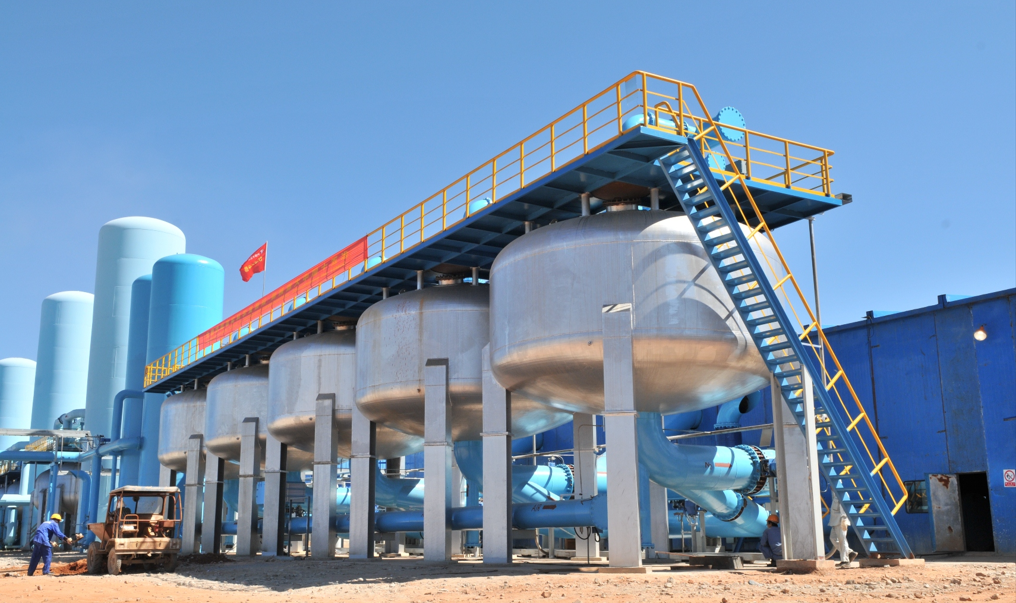
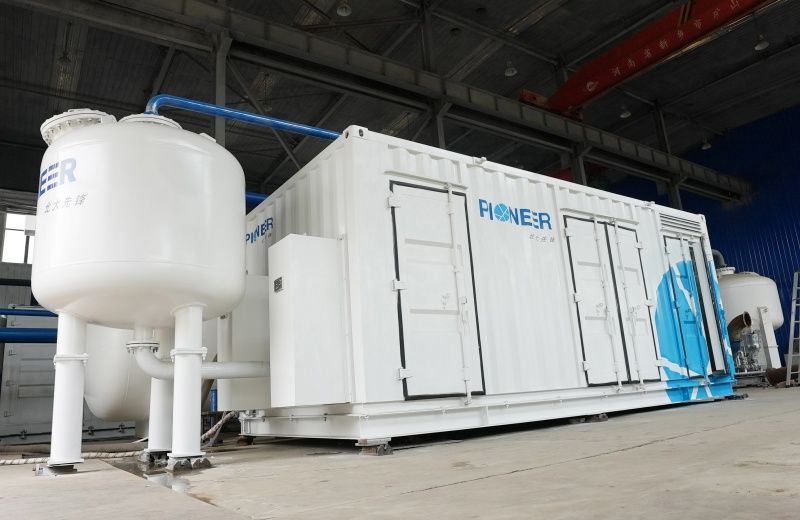
For U.S. manufacturers evaluating customer-owned plants instead of long-term gas purchasing, PKU Pioneer offers EPC, turnkey, and customer-owned VPSA and PSA solutions rather than BOO or on-site bulk supply contracts. The company has completed more than 400 industrial projects in over 20 countries, with total installed oxygen capacity exceeding 2 million Nm³ per hour, and supports demanding sectors such as steel, chemicals, glass, and energy. Its credibility is backed by ISO, CE, and ASME certifications, more than 180 patents, proprietary adsorbents and catalysts, in-house engineering and fabrication, and landmark large-scale oxygen references including world-class VPSA units up to 146000 Nm³/h; these facts matter to U.S. buyers because they show proven manufacturing control, documented testing discipline, and equipment capability that meets international benchmarks. For cooperation, the company supports direct end users as well as distributors, dealers, brand owners, and project partners through flexible models including tailored engineering, OEM or ODM coordination where appropriate, wholesale equipment supply, project-specific retail sales, and regional distribution cooperation for industrial markets. For local service assurance, PKU Pioneer combines online technical response, proposal support, commissioning assistance, operation and maintenance services, retrofits, upgrades, leasing, pilot testing, and consulting with an established export track record and active international project presence, including recent overseas installations that demonstrate it is already serving global buyers in a long-term way rather than acting as a remote catalog exporter. U.S. prospects can review its VPSA oxygen technology, explore industrial project references, learn more about the engineering background, or contact the team for a project-specific discussion.
How to Compare Total Cost in Practice
Cost comparison should never stop at purchase price or contract unit price. The key metric is delivered useful gas at the required pressure and reliability across the full operating period.
| Cost Element | Self-Generation | Gas Contract | Common Buyer Mistake |
|---|---|---|---|
| Initial Capital | Higher upfront spend | Lower upfront spend | Ignoring financing options for plant ownership |
| Operating Energy | Direct electricity cost | Embedded in supplier pricing | Comparing only visible line items |
| Maintenance | Planned service and spare parts | Mostly supplier-managed | Underestimating maintenance discipline needs |
| Transport Risk | Very low once operating | Can be significant | Treating logistics as a minor issue |
| Price Escalation | Mostly power-linked | Contract escalation clauses apply | Not modeling 10-year price movement |
| Expansion Flexibility | Can be engineered into design | New volume may trigger repricing | Not planning for future throughput growth |
| Emergency Backup | May require liquid reserve | Often built into contract model | Leaving backup outside economic comparison |
This table is important because it exposes hidden assumptions. A gas contract can look inexpensive if future escalation and emergency charges are left out. A self-generation project can look expensive if the analysis ignores ten years of avoided delivery costs.
Trend Shift Through 2026
Looking toward 2026, three trends are reshaping the self-generation vs gas contract decision in the United States.
First, technology continues to improve. Better adsorbents, smarter controls, and more efficient blower and vacuum integration are improving the economics of VPSA and PSA systems. Second, policy and sustainability pressure are encouraging plants to reduce transport emissions, improve energy productivity, and optimize internal resource use. Third, procurement strategy is changing. More buyers now evaluate resilience as a formal criterion rather than an informal concern.
The area chart suggests a realistic trend: more industrial users are prioritizing control over supply continuity and long-term cost. This does not eliminate gas contracts, but it does mean contracts must increasingly compete against well-engineered ownership models.
This comparison chart shows the broad trade-off. Self-generation typically scores better on long-term cost control and reduced delivery dependence. Gas contracts often score better on low initial capital and simple outsourcing.
Practical Recommendation by Buyer Type
Different U.S. buyer profiles should approach the decision differently.
If you are a large continuous-process manufacturer, start with a self-generation feasibility study and only then benchmark contract alternatives. If you are a mid-sized plant with moderate usage, compare hybrid models rather than choosing extremes. If you are a distributor or dealer serving industrial customers, focus on suppliers that support regional partnerships, local training, spare parts planning, and clear commissioning responsibility. If you are a project developer or brand owner packaging systems for industrial users, prioritize partners with in-house engineering, certification discipline, and export-proven manufacturing consistency.
The strongest procurement process usually includes three outputs: a process requirement definition, a ten-year total cost model, and a resilience map covering backup strategy, parts support, and service response. With those three elements, the self-generation vs gas contract decision becomes much clearer.
FAQ
Is self-generation always cheaper than a gas contract?
No. It is often cheaper at medium to high, stable consumption levels, but not always. Low-volume or highly intermittent users may still benefit from contracted supply.
What gases are most commonly evaluated for on-site generation?
Oxygen and nitrogen are the most common, but some industrial users also evaluate PSA-based hydrogen purification or carbon monoxide recovery depending on their process streams.
What is the biggest hidden risk in a long-term gas contract?
Many buyers underestimate logistics exposure, escalation clauses, and the cost of supply interruptions. Contract simplicity can hide long-term operational dependency.
What is the biggest hidden risk in self-generation?
The main risk is underestimating maintenance planning, utility integration, and support quality. A well-designed plant with strong service support reduces that risk significantly.
Can a U.S. plant use a hybrid model?
Yes. Many plants use a customer-owned VPSA or PSA system for base load and maintain liquid backup for peaks, turnarounds, or emergency coverage.
How should buyers evaluate international suppliers?
Check certifications, engineering references, scale of installed capacity, support model, and whether the supplier offers EPC, turnkey, or customer-owned solutions rather than only supply contracts. U.S. buyers should also verify communication quality, documentation, commissioning plan, and spare parts strategy.
Why is 2026 important for this decision?
Because energy efficiency, resilience, and sustainability targets are becoming more integrated into capex decisions. By 2026, more U.S. buyers are expected to formally compare delivered-gas dependency against customer-owned gas infrastructure.
Final Takeaway
In the United States, the answer to self-generation vs gas contract is not theoretical. It is a site-level economic and operational decision. If your facility has stable demand, meaningful annual volume, and a strong need for continuity, self-generation often provides better long-term value. If your demand is small, irregular, or highly specialized, a long-term contract may still be the right choice. The best results come from matching the supply model to the process reality, not from defaulting to the option that appears simpler at the start.

About the Author
Founded in 1999, PKU Pioneer specializes in VPSA and PSA gas separation technologies, adsorbents, catalysts, and integrated engineering solutions. Backed by strong R&D capability and extensive industrial project experience, the company serves global customers across steel, chemical, energy, environmental protection, and related industries.
Share