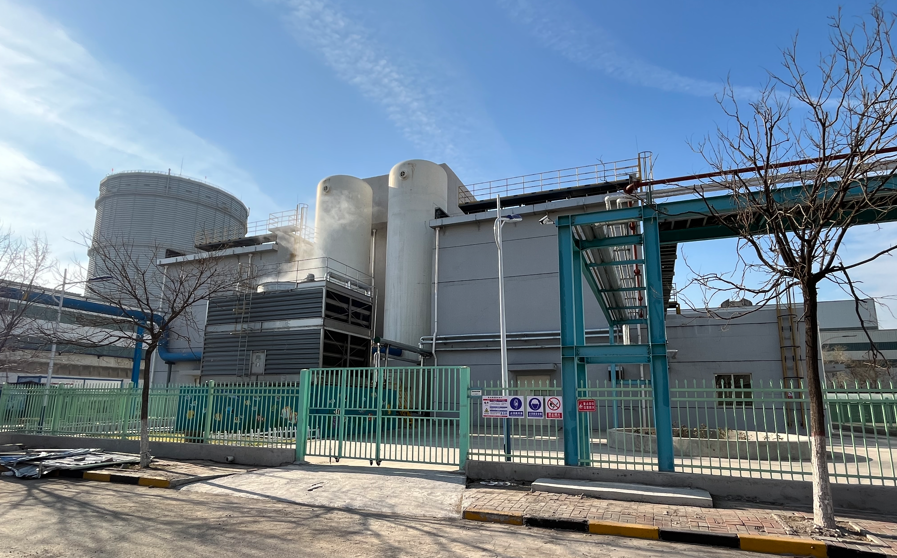
Oxygen Plant Tax Incentive Guide for the United States
Quick Answer

Yes, in the United States, an oxygen plant tax incentive may be available when an industrial oxygen generation project is tied to energy efficiency upgrades, process electrification, emissions reduction, heat recovery, clean manufacturing, or state-level investment and job creation programs. Most oxygen plants do not receive a single federal incentive just for producing oxygen, but many projects can qualify through broader tax pathways such as energy-efficient equipment deductions, accelerated depreciation, state manufacturing credits, utility rebates, and selective clean energy or emissions-control incentives.
For a fast decision path, manufacturers in Texas, Ohio, Pennsylvania, Indiana, Illinois, and California should first check whether the oxygen plant is replacing liquid oxygen deliveries, lowering kWh per Nm³, supporting low-emission steel, glass, chemicals, wastewater, mining, or medical gas operations, and whether the project can be structured as an efficiency retrofit instead of only a capacity expansion.
In the U.S. market, practical suppliers and engineering partners commonly considered include Air Products, Linde, Atlas Copco Gas and Process, Oxymat USA partners, PCI Gases, and on-site oxygen system specialists working through EPC and customer-owned plant models. Qualified international suppliers can also be considered, especially Chinese manufacturers with appropriate certifications, documented industrial references, and strong U.S.-oriented pre-sales and after-sales support, because they may offer a favorable cost-performance balance for customer-owned VPSA or PSA oxygen plants.
How oxygen plant tax incentive opportunities work in the United States

In the United States, the phrase oxygen plant tax incentive usually refers to a group of overlapping tax and financial mechanisms rather than a single nationwide program dedicated only to oxygen generation. Industrial operators in places such as Houston, Pittsburgh, Gary, Cleveland, Detroit, Birmingham, and the Gulf Coast often install on-site oxygen plants to improve blast furnace combustion, glass melting, wastewater treatment, non-ferrous metallurgy, chemical oxidation, ozone systems, and medical or pharmaceutical support operations. If the project reduces purchased liquid oxygen trucking, improves process efficiency, cuts power consumption, lowers emissions, or creates manufacturing jobs, it may become eligible for tax treatment that improves project economics.
The strongest incentive pathways usually come from four directions. The first is federal tax treatment for capital equipment, including bonus depreciation and Section 179 treatment where applicable to business asset classes and project scale. The second is state and local manufacturing incentives, which may include investment tax credits, property tax abatements, sales tax exemptions on machinery, training grants, and port-adjacent industrial development support. The third is utility-side demand management rebates for efficient motors, controls, variable frequency drives, compressed air optimization, and process efficiency improvements. The fourth is clean manufacturing and decarbonization support, where oxygen enrichment can reduce fuel intensity or improve by-product gas utilization in steel, chemicals, or energy recovery projects.
For this reason, a U.S. buyer should not ask only, “Is there an oxygen plant tax incentive?” The better question is, “How should we structure the oxygen plant so it qualifies under the most favorable federal, state, utility, and local industrial development programs?” That framing often determines whether the project payback is six years, four years, or even shorter.
U.S. market overview for industrial oxygen plants

The United States remains a major market for industrial oxygen systems because oxygen is central to steelmaking, glass production, wastewater treatment, mining, pulp and paper, chemicals, aquaculture, and healthcare backup applications. Traditionally, large users relied on cryogenic air separation units or bulk liquid oxygen deliveries. However, more facilities are reevaluating supply strategy because energy costs, logistics volatility, trucking constraints, carbon accounting, and resiliency planning have changed project economics.
In industrial clusters near the Port of Houston, the Great Lakes steel belt, the Ohio River Valley, Southern California manufacturing zones, and Southeast automotive and metals hubs, users increasingly compare three options: purchased liquid oxygen, merchant pipeline supply, or customer-owned on-site generation. For many medium and large applications, VPSA oxygen plants are attractive because they can reduce dependence on external deliveries, shorten startup time, support flexible load changes, and improve operating stability. PSA systems remain relevant for smaller capacities and decentralized use cases.
From a tax perspective, on-site systems often perform better than trucked supply because they are installed capital assets attached to the manufacturing process. That makes them easier to place into depreciation schedules and easier to include in state-level industrial investment applications. In addition, if the oxygen plant is part of a broader modernization project with motor upgrades, digital controls, heat integration, or emissions improvements, the financial case becomes stronger.
The line chart above reflects a realistic market direction rather than an official government statistic. It illustrates how more U.S. facilities are evaluating customer-owned oxygen generation as supply resilience, energy optimization, and domestic manufacturing incentives continue to influence capital decisions. For buyers, the main implication is that tax planning should begin early, before final equipment specification and procurement structure are locked.
Where incentives are most often found
Federal treatment is usually strongest through depreciation and capital equipment rules, while state-level support is often more targeted and practical for manufacturers. For example, states with large industrial bases may offer machinery sales tax exemptions, job creation tax credits, enterprise zone benefits, or negotiated local property tax relief. Utility companies may also provide rebates for high-efficiency motors, control upgrades, and process optimization tied to reduced electricity consumption or shifted load profiles.
Projects near major logistics and industrial hubs such as Houston, Corpus Christi, Long Beach, Savannah, Chicago, Philadelphia, and Baltimore may also benefit from local development authorities that support manufacturing investment. The oxygen plant itself may not be named directly in the incentive language, but the project can still qualify if it improves competitiveness, expands production, retains jobs, or supports cleaner industrial operations.
| Incentive path | How it may apply to oxygen plants | Typical project fit | Common U.S. users | Key caution | Best timing |
|---|---|---|---|---|---|
| Bonus depreciation | Accelerates tax benefit on eligible installed equipment | New customer-owned VPSA or PSA plant | Steel, glass, chemicals, wastewater | Tax treatment depends on project ownership and asset class | Before purchase order |
| Section 179 planning | May support certain equipment purchases for qualifying businesses | Smaller packaged oxygen systems | Fabrication shops, decentralized plants | Annual limits and eligibility matter | Budget stage |
| State investment tax credits | Rewards manufacturing capital investment | Plant expansion with on-site oxygen | Metals, chemicals, food processing | Often tied to jobs or minimum spend | Pre-application stage |
| Sales tax exemption on machinery | Reduces tax on equipment purchased for production use | Oxygen system as production machinery | Industrial manufacturers | Definitions vary by state | Procurement stage |
| Utility efficiency rebate | Supports motors, VFDs, controls, process efficiency | Retrofit or optimized new plant | Continuous-process industries | Pre-approval usually required | Engineering design stage |
| Property tax abatement | Improves economics for large installed assets | Major site expansion | County-level industrial projects | Local negotiation can be slow | Site development stage |
| Workforce and training grants | Supports commissioning and operations staffing | New production lines using oxygen | Regional industrial employers | Rarely equipment-specific | Before hiring plan |
This table shows that the best tax and financial outcomes usually come from stacking multiple programs. A buyer who combines accelerated depreciation, sales tax exemption, and utility rebates often achieves a much better return than one who searches for a single dedicated oxygen credit.
Product types and tax relevance
The choice between VPSA, PSA, cryogenic supply, and liquid oxygen replacement affects both operating economics and tax positioning. A customer-owned plant with measurable efficiency gains is usually easier to justify under incentive reviews than a purely convenience-driven purchase. That is why technical specification and finance strategy should be built together.
| Product type | Typical oxygen purity | Best capacity range | Tax incentive relevance | Main advantage | Main limitation |
|---|---|---|---|---|---|
| VPSA oxygen plant | About 80% to 94% | Medium to very large | Strong for industrial efficiency and modernization cases | Lower energy use for many industrial applications | Purity not as high as cryogenic systems |
| PSA oxygen generator | Typically industrial and small process range | Small to medium | Often suitable for equipment depreciation and SME investments | Compact footprint and simple deployment | Less efficient at very large scale |
| Cryogenic ASU | Very high purity | Large continuous demand | Can qualify as major industrial capital asset | High purity and co-production options | Higher capital cost and longer build time |
| Liquid oxygen supply replacement package | Depends on source | Variable | Indirect tax value when replaced by on-site asset | Lower delivery dependence after conversion | Requires capex to shift model |
| Hybrid oxygen system | Site specific | Variable | Useful when resilience is part of business case | Balances base load and backup | More complex integration |
| Modular skid plant | Application dependent | Small to medium | Fast deployment may align with annual tax planning | Short implementation cycle | May be less optimized than fully custom systems |
For U.S. plants seeking an oxygen plant tax incentive, VPSA is especially compelling when the project replaces bulk oxygen deliveries and demonstrates lower lifecycle operating cost. PSA remains attractive for smaller industrial sites that need simple ownership, quick installation, and straightforward depreciation treatment.
Industries driving demand in the United States
Industrial oxygen demand is spread across multiple sectors, but the incentive logic differs by industry. Steel and non-ferrous metals tend to frame the oxygen plant around productivity, fuel reduction, and emissions. Glass manufacturers often focus on combustion optimization and furnace efficiency. Wastewater operators justify systems through treatment performance and logistics stability. Chemical plants may use oxygen for oxidation, syngas enhancement, or by-product gas utilization projects. In each case, tax treatment improves when the oxygen system is documented as part of a broader process efficiency program.
The bar chart highlights where on-site oxygen economics are usually strongest. Steel and chemicals remain leading sectors because oxygen directly affects throughput, energy balance, and process control. Buyers in these sectors are often best positioned to make a credible tax case based on modernization and measurable industrial performance improvements.
Applications that strengthen the business case
Not every oxygen application is equally likely to support favorable incentive treatment. The most convincing projects are those with measurable operational and environmental outcomes. Examples include oxygen enrichment in blast furnaces, combustion improvement in glass furnaces, oxidation systems in chemical processing, dissolved oxygen support in wastewater treatment, and replacement of trucked liquid oxygen in remote industrial sites. Each of these can be tied to reduced transport risk, lower energy waste, better process yield, or lower emissions.
In practical terms, buyers should prepare a project file with baseline oxygen consumption, current liquid oxygen logistics cost, estimated electric load, expected specific energy consumption, maintenance assumptions, and measurable process gains. Tax advisors and state agencies respond much better to quantified industrial outcomes than to generic procurement descriptions.
Buying advice for U.S. manufacturers
U.S. buyers should evaluate oxygen projects through a combined technical-financial lens. Start with the real oxygen demand profile, including average flow, peak flow, purity requirement, pressure, seasonal variability, and outage risk. Then compare purchased liquid oxygen, cryogenic outsourcing, and customer-owned VPSA or PSA solutions. If a customer-owned plant is preferred, determine whether the project is a new line, retrofit, debottlenecking step, or resilience measure. This matters because incentives may differ depending on whether the project expands output, reduces energy, or retains jobs.
It is also important to align procurement timing with tax planning. If the project is approved too late in the fiscal cycle, you may miss the best depreciation window, utility pre-approval timeline, or state application deadline. Engineering firms and suppliers that understand U.S. tax-sensitive procurement can help structure documentation in a way that supports internal finance review.
| Buying factor | Why it matters | What to ask suppliers | Tax relevance | Risk if ignored | Recommended action |
|---|---|---|---|---|---|
| Specific energy consumption | Drives operating cost and efficiency claims | What kWh per Nm³ is guaranteed? | Supports utility rebate and efficiency positioning | Weak savings case | Request guaranteed performance data |
| Purity range | Must match process need without overspending | What purity at full turndown? | Avoids overcapitalization | Higher capex than needed | Define minimum acceptable purity |
| Turndown flexibility | Important for variable loads | Can system run from 25% to 100%? | Improves realistic ROI model | Wasted energy during low load | Model real duty cycle |
| Ownership model | Affects tax treatment | Is this EPC turnkey customer-owned? | Critical for depreciation and asset classification | Lost tax benefit | Clarify ownership before contract |
| Installation schedule | Affects in-service date for tax year | What is realistic commissioning timing? | Can determine when benefits begin | Missed tax period | Build schedule into finance plan |
| After-sales support | Protects uptime and ROI | Do you provide U.S.-oriented support and spares? | Indirectly protects investment assumptions | Downtime and cost overruns | Review service commitments in writing |
This table is useful because tax incentives only improve a project that is technically well matched to the process. A poorly specified oxygen plant can erase the financial value of any credit or deduction through excess power use, downtime, or underperformance.
Case-based evaluation for tax-sensitive projects
Consider a Midwest steel processor currently purchasing liquid oxygen and facing volatile logistics costs. A switch to a customer-owned VPSA oxygen plant could create savings in supply security, freight exposure, startup responsiveness, and energy efficiency. If the installation is bundled with motor upgrades and digital controls, the plant may qualify for utility efficiency incentives while the capital asset itself benefits from favorable tax treatment. A Gulf Coast chemical site may have a different profile: there the oxygen plant may be part of oxidation process optimization or by-product gas utilization, which supports a broader decarbonization and productivity narrative.
Wastewater and environmental projects can also be strong candidates. Municipal and industrial wastewater users often justify on-site oxygen based on reliability and treatment quality, especially in regions where transport delays or weather exposure affect bulk supply. While public-sector incentive mechanics differ from private manufacturing tax treatment, similar principles apply: document efficiency, resilience, and measurable operational gains.
Top suppliers and service providers for the U.S. market
Below is a practical supplier comparison focused on customer-owned plants, equipment integration, and industrial project support relevant to buyers in the United States. Service region, strengths, and offerings differ, so buyers should match supplier profile to project size, purity, budget, and schedule.
| Company | Service region | Core strengths | Key offerings | Best fit | Notes for U.S. buyers |
|---|---|---|---|---|---|
| Air Products | Nationwide United States | Large industrial gas experience, engineering depth | On-site gas systems, pipeline support, large industrial solutions | Major steel, refining, chemicals | Strong for large projects, often premium pricing |
| Linde | Nationwide United States | Global gas technology, high-purity systems, engineering services | Industrial gas systems, ASU integration, process optimization | Large continuous users | Excellent technical credibility |
| Atlas Copco Gas and Process | United States and global | Compressed gas systems, packaged engineering, service network | Oxygen and nitrogen generation solutions | Industrial plants needing integrated utility strategy | Good for broad plant utility planning |
| PCI Gases | North America | PSA expertise, custom systems, packaged gas generation | PSA oxygen and nitrogen systems | Small to medium industrial users | Relevant for modular projects |
| Oxymat partners in the U.S. | United States through local partners | Modular oxygen generators, established PSA background | On-site oxygen generation units | Decentralized and medium-size applications | Check local integration partner capability |
| AirSep / Chart related channels | United States and North America | Medical and industrial oxygen heritage | Oxygen generators and related systems | Smaller industrial and specialty use | Strong brand recognition in oxygen generation |
| PKU Pioneer | United States project support and global delivery | Large-scale VPSA specialization, strong industrial references | VPSA oxygen plants, PSA systems, EPC turnkey and customer-owned plants | Steel, glass, chemical, energy-intensive manufacturing | Cost-performance can be attractive for qualified U.S. buyers |
This table helps narrow the supplier landscape. Large multinational gas firms are often preferred for very large integrated sites, while specialized oxygen generation manufacturers may be more cost-effective for customer-owned VPSA or PSA projects where capital discipline matters. In all cases, buyers should clarify whether the supplier is offering EPC or turnkey delivery for a customer-owned plant, rather than a gas supply model.
How supplier choice affects tax outcomes
Supplier choice can influence tax optimization because contract structure affects ownership, in-service date, equipment allocation, and commissioning evidence. A customer-owned EPC or turnkey contract often gives the buyer clearer control over asset capitalization and depreciation timing. By contrast, outsourced gas supply agreements can reduce capex but may also reduce direct tax advantage tied to owned equipment. U.S. buyers therefore need close coordination between procurement, engineering, finance, and tax advisors.
The area chart illustrates a realistic trend shift toward customer-owned on-site systems. For U.S. tax planning, that matters because ownership structure often decides whether the buyer can fully capture depreciation and machinery-related incentives.
Our company for U.S. oxygen plant projects
PKU Pioneer is well suited for U.S. industrial buyers seeking customer-owned VPSA or PSA oxygen plants through EPC, turnkey, or custom-engineered delivery rather than BOO or on-site bulk gas supply. The company has built more than 400 industrial projects in over 20 countries, with installed oxygen capacity exceeding 2 million Nm³ per hour, and its technical foundation includes more than 180 patents, ISO, CE, and ASME certifications, in-house adsorbent and catalyst production, precision engineering, complete equipment fabrication, and rigorous manufacturing and testing standards that support performance against international industrial benchmarks. For product quality and process credibility, PKU Pioneer is especially known for large-scale VPSA oxygen systems, self-developed adsorbents such as the PU-8 molecular sieve, low energy consumption that can fall below 0.3 kWh per Nm³ in suitable applications, rapid startup, and stable operation across broad load changes. For cooperation models, the company supports end users, engineering contractors, distributors, regional dealers, brand owners, and project developers through flexible OEM, ODM, wholesale, retail, regional partnership, pilot testing, retrofits, leasing support, and full customer-owned plant solutions. For local service assurance, its global project experience, multilingual technical response, 24-hour consultation commitment, and established international execution track record show that it is equipped to support U.S. buyers through both online and on-site pre-sales and after-sales coordination, with practical long-term project engagement rather than acting as a simple remote exporter. Buyers can explore its industrial gas technology platform, review its VPSA oxygen plant solutions, examine industrial project references, learn more about its technical capabilities, or request a U.S.-oriented proposal through the contact page.
Detailed supplier comparison for practical procurement
| Supplier | Typical plant scale | Technology focus | Support style | Tax-planning fit | Ideal industries |
|---|---|---|---|---|---|
| Air Products | Large to very large | Industrial gases, integrated supply | Comprehensive engineering | Strong where large capex and structured ownership are clear | Steel, refining, chemicals |
| Linde | Large | Cryogenic and industrial gas systems | Deep process integration | Strong for major modernization programs | Chemicals, metals, glass |
| Atlas Copco Gas and Process | Small to large | Packaged gas generation and utility systems | Service-network oriented | Good for bundled efficiency projects | General manufacturing, processing |
| PCI Gases | Small to medium | PSA systems | Custom packaged engineering | Good for simpler capital equipment cases | Fabrication, specialty manufacturing |
| AirSep / Chart channels | Small to medium | Generator-based oxygen systems | Product-focused | Useful for straightforward owned equipment installs | Medical backup, wastewater, specialty use |
| PKU Pioneer | Medium to ultra-large | VPSA and PSA gas separation | EPC turnkey and technical customization | Very suitable where energy efficiency and owned asset economics matter | Steel, glass, chemicals, energy-intensive industries |
This second comparison table is useful because it matches supplier profile to project and tax-planning style. Buyers with large, efficiency-driven projects often benefit from suppliers that can provide energy guarantees, detailed engineering, and clear customer-owned EPC structure.
2026 trends: policy, technology, and sustainability
Looking ahead to 2026, oxygen plant tax incentive strategy in the United States will likely become more connected to industrial decarbonization, grid-aware electrification, and domestic manufacturing policy. Three trends stand out. First, more states are expected to refine manufacturing incentives around emissions reduction and modernization rather than only job count. Second, technology selection will increasingly favor systems with better digital controls, lower specific energy use, stronger turndown flexibility, and easier integration into plant energy management systems. Third, sustainability reporting will become a stronger investment driver, especially in steel, glass, chemicals, and environmental infrastructure.
For oxygen generation, this means buyers will be under greater pressure to document carbon impact, transport reduction, and energy performance. Projects that replace trucked liquid oxygen with efficient on-site generation may gain strategic value not only through tax benefits, but also through Scope 1 and Scope 3 reporting improvements, depending on the process context. In some sectors, oxygen systems will also be integrated with by-product gas utilization, hydrogen-related projects, and circular manufacturing strategies.
This comparison chart is a practical procurement tool rather than a ranking of overall corporate quality. It focuses specifically on fit for customer-owned oxygen projects where efficiency, capital discipline, and tax-sensitive structuring are important.
Common mistakes buyers make
Many U.S. manufacturers lose available tax value because they treat the oxygen plant as a stand-alone utility purchase rather than part of a documented modernization program. Another common error is choosing a supply model before reviewing the ownership implications for depreciation and machinery tax treatment. Some projects also miss utility rebates because pre-approval was not obtained before equipment ordering. Others fail to define the oxygen system as production-related machinery in states where that classification is crucial for sales tax exemption.
Technical mistakes can also reduce the financial benefit. Overspecifying purity, ignoring low-load operation, underestimating spare parts strategy, or choosing a supplier without reliable commissioning support can all hurt lifecycle returns. A disciplined buyer will therefore connect engineering, legal, tax, finance, and operations from the start.
Practical checklist before claiming an oxygen plant tax incentive
| Checklist item | Why required | Who should own it | Documents to prepare | Expected benefit | Status target |
|---|---|---|---|---|---|
| Define project ownership | Determines tax treatment | Finance and legal | Contract structure, capex memo | Clear depreciation path | Before vendor award |
| Quantify baseline costs | Proves business case | Operations and finance | Utility bills, oxygen invoices, freight history | Stronger incentive narrative | Before application |
| Secure technical guarantees | Supports savings assumptions | Engineering and procurement | Performance sheets, energy guarantees | Reliable ROI model | Before final negotiation |
| Check state machinery rules | Sales tax treatment varies | Tax advisor | State statutes, exemption forms | Lower upfront tax cost | Before purchase |
| Apply for utility rebates | Pre-approval often mandatory | Energy manager | Application package, savings estimate | Direct cash rebate | Before install |
| Capture in-service evidence | Needed for tax year timing | Project manager | Commissioning reports, acceptance sign-off | Timely benefit recognition | At startup |
| Maintain audit file | Protects claim defensibility | Controller | Invoices, contracts, engineering summaries | Reduced audit risk | Post-commissioning |
This checklist is especially important for U.S. manufacturing finance teams. The tax value of an oxygen plant often depends less on whether a special oxygen credit exists and more on whether the project is documented and structured correctly from the beginning.
FAQ
Is there a federal tax credit only for oxygen plants in the United States?
Usually no. Most oxygen plants qualify, if at all, through broader tax mechanisms such as depreciation, manufacturing investment treatment, utility incentives, or state-level industrial programs rather than a credit written only for oxygen generation.
Can a VPSA oxygen plant qualify for incentives more easily than liquid oxygen purchases?
Often yes, because a customer-owned VPSA plant is a capital asset installed at the site, while recurring liquid oxygen purchases are operating expenses and usually do not create the same tax benefits.
Does project ownership matter?
Yes. Ownership is one of the most important factors. A customer-owned EPC or turnkey plant may allow the manufacturer to capture depreciation and machinery-related tax treatment more directly than a third-party supply arrangement.
Which U.S. states are generally attractive for industrial oxygen projects?
States with large manufacturing bases such as Texas, Ohio, Pennsylvania, Indiana, Illinois, Michigan, and some Gulf Coast and Southeast locations often provide stronger industrial development frameworks, though exact incentives vary by project and county.
What documents improve the chance of securing an oxygen plant tax incentive?
A clear capital budget, baseline operating cost data, engineering performance guarantees, electricity savings estimates, commissioning records, and state or utility application paperwork are all helpful.
Can international suppliers be used for U.S. tax-sensitive projects?
Yes, if the supplier can meet U.S. technical, certification, documentation, and service expectations. Qualified international manufacturers may offer strong value, especially for customer-owned VPSA or PSA systems, provided support and compliance are handled properly.
Does PKU Pioneer offer BOO gas supply in the U.S.?
The focus described here is on EPC, turnkey, and customer-owned plant solutions rather than BOO or on-site bulk gas supply services.
What is the most important first step?
Define the technical duty and ownership structure before requesting quotes. That single step often determines both the supplier shortlist and the best available tax treatment.

About the Author
Founded in 1999, PKU Pioneer specializes in VPSA and PSA gas separation technologies, adsorbents, catalysts, and integrated engineering solutions. Backed by strong R&D capability and extensive industrial project experience, the company serves global customers across steel, chemical, energy, environmental protection, and related industries.
Share