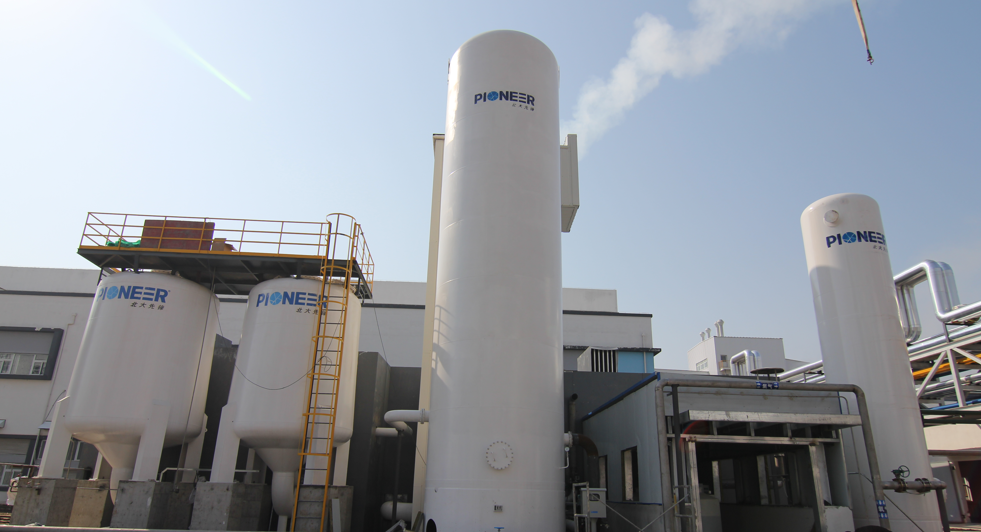
Steel Oxygen Plant Success Story in the United States
Quick Answer

Yes. A well-designed on-site oxygen plant can deliver a strong steel oxygen plant success story in the United States by cutting purchased oxygen costs, stabilizing blast furnace and EAF operations, reducing logistics risk, and improving combustion efficiency. In practical terms, U.S. steel mills usually see the best results when they match plant type to demand profile: large VPSA systems for continuous high-volume oxygen enrichment, PSA units for smaller or variable loads, and cryogenic systems where very high purity or integrated nitrogen and argon demand is critical.
For buyers in the United States, the most actionable shortlist usually includes Air Liquide, Linde, Air Products, Nippon Gases, Atlas Copco Gas and Process, and qualified engineering-focused oxygen plant suppliers that can deliver customer-owned EPC or turnkey systems. A supplier with steel references, measurable power consumption, fast startup capability, and flexible turndown is usually the safest choice for mills in Ohio, Indiana, Pennsylvania, Texas, Alabama, and along Gulf Coast industrial corridors.
Qualified international suppliers can also be considered, especially when they offer relevant certifications, documented steel project experience, and strong pre-sales and after-sales support. In that context, cost-competitive Chinese technology providers with proven large-scale VPSA references and responsive service can be attractive alternatives for U.S. projects where total lifecycle economics matter as much as initial price.
Market Overview in the United States

The U.S. steel sector remains one of the most important industrial oxygen markets in North America. Oxygen is used in electric arc furnaces, basic oxygen furnaces, ladle metallurgy, reheating furnaces, cutting stations, and blast furnace enrichment. As energy prices, transportation costs, labor constraints, and supply-chain risk continue to reshape industrial procurement, more steel producers are re-evaluating the balance between merchant liquid oxygen, pipeline supply, and customer-owned on-site generation.
This shift is especially visible in steel hubs such as Gary and East Chicago in Indiana, Pittsburgh and the Mon Valley in Pennsylvania, Cleveland in Ohio, Birmingham in Alabama, and the greater Houston and Corpus Christi industrial belt in Texas. Plants in these regions increasingly want a more resilient gas strategy. Instead of depending entirely on trucked liquid oxygen, many operators are looking for systems that can produce oxygen on site, respond to load swings, and reduce exposure to delivery delays caused by weather, traffic, or regional supply tightness.
That is why the phrase oxygen plant success story steel has become more than a marketing headline. In the U.S. market, it usually means one thing: a measurable business outcome. Steel mills want evidence that an oxygen system lowers cost per ton, supports stable metallurgy, improves furnace productivity, and creates a clear payback period. A project is considered successful not simply because it runs, but because it reduces annual operating cost and supports production targets with less risk.
From a purchasing perspective, the market has become more segmented. Large integrated steelworks may still favor cryogenic plants if they require very high purity oxygen plus nitrogen and argon integration. But many mills and mini-mills are increasingly open to VPSA oxygen plants because they combine lower power consumption, simpler operation, quick startup, and flexible load adjustment. In the middle of the market, PSA oxygen generators remain relevant for smaller lines, fabrication facilities, foundries, and support processes where flow and purity requirements are more modest.
Another U.S. market driver is decarbonization. Steelmakers are under pressure from customers, investors, and policy signals to reduce emissions intensity. Oxygen enrichment can support combustion optimization, improve fuel efficiency in selected thermal processes, and help convert by-product gas streams into more useful energy or chemical inputs. As a result, the oxygen plant conversation now overlaps with ESG reporting, energy efficiency planning, and strategic capex allocation.
Why Steel Mills Invest in On-Site Oxygen Plants

Steel mills buy oxygen capacity for four main reasons. The first is cost control. Merchant liquid oxygen may appear simple, but delivered cost can rise quickly due to transport distance, trucking constraints, storage losses, and contract pricing. The second is supply security. Mills with tight production windows cannot afford oxygen interruptions. The third is process improvement. Stable oxygen flow supports consistent furnace performance, better combustion, and improved metallurgical control. The fourth is scalability. As output expands or shifts by product mix, on-site systems can often be upgraded or modularized more efficiently than repeatedly increasing liquid purchases.
In integrated steel routes, oxygen supports hot metal and blast furnace related applications. In EAF-based operations, oxygen is central to decarburization, slag foaming support, burner enhancement, and productivity improvement. Secondary metallurgy applications also benefit from steady oxygen availability. For many U.S. facilities, this means a customer-owned plant can become a strategic utility asset rather than a simple consumable gas source.
Common Oxygen Plant Types for Steel Applications
The most suitable oxygen technology depends on volume, required purity, electricity price, operating pattern, plot space, and whether the project needs EPC, turnkey, or customer-owned plant execution. U.S. steel buyers should align plant type with actual process needs rather than defaulting to the highest-purity option. Over-specifying purity often raises both capex and opex without improving steel performance.
| Plant Type | Typical Oxygen Purity | Best Fit | Main Advantage | Main Limitation | Typical U.S. Use Case |
|---|---|---|---|---|---|
| VPSA Oxygen Plant | 80% to 94% | Large continuous steel demand | Low energy use and flexible turndown | Not ideal where ultra-high purity is mandatory | Blast furnace enrichment and high-volume combustion support |
| PSA Oxygen Generator | 90% to 95% | Small to medium plants | Compact footprint and straightforward operation | Less economical at very large capacities | Foundries, cutting lines, specialty metal shops |
| Cryogenic ASU | 99%+ | Very large integrated complexes | High purity and multi-product output | Higher capex and longer construction schedule | Integrated mills needing oxygen, nitrogen, and argon |
| Liquid Oxygen Storage + Backup Vaporizer | Merchant grade | Backup or low-volume users | Fast implementation | High recurring delivered cost | Backup supply for mills with on-site generation |
| Hybrid VPSA + Liquid Backup | 80% to 94% plus merchant backup | Users prioritizing resilience | Balances low opex with supply security | Requires coordinated control strategy | Mini-mills with variable campaign loads |
| Modular Skid-Mounted System | Depends on technology | Fast deployment projects | Shorter installation time | May be less optimized for very large custom duties | Brownfield upgrades and pilot capacity additions |
The table above shows why VPSA is increasingly discussed in steel oxygen plant success story examples. It occupies a favorable middle ground for many steel users: lower lifecycle cost than merchant oxygen, less complexity than a large cryogenic unit, and enough flexibility for production swings common in U.S. steel operations.
How the Economics Work
A steel mill’s oxygen economics depend on flow rate, operating hours, purity target, local electricity tariffs, backup strategy, and current merchant gas contract terms. For many U.S. sites, the tipping point appears when oxygen demand becomes steady enough that trucking and delivered liquid oxygen costs are clearly higher than the amortized cost of on-site generation plus power and maintenance.
For example, if a plant in Ohio or Texas consumes oxygen around the clock for furnace enrichment or combustion support, a properly sized VPSA plant can often lower unit supply cost substantially. The strongest projects also account for soft savings: fewer truck deliveries, lower inventory risk, reduced line stoppage exposure, better process stability, and less management time spent on gas logistics.
The growth pattern above illustrates the direction of the U.S. market: more steel operators are comparing on-site oxygen generation with delivered supply models. This trend is strongest where transportation cost, reliability concerns, or decarbonization objectives place a premium on local production.
Detailed Buying Advice for U.S. Steel Plants
Buying an oxygen plant for steel service should begin with process mapping, not vendor quotes. Before asking for proposals, the mill should define average flow, peak flow, minimum turndown, purity needs, pressure requirements, annual operating hours, and the exact points of use. This avoids overbuying capacity and prevents underestimating compression, controls, and backup requirements.
It is also wise to distinguish between oxygen purity that is technically necessary and purity that is simply traditional. Many steel applications perform well with VPSA oxygen in the 80% to 94% range, particularly where the process objective is enrichment rather than laboratory-grade purity. If the plant only needs oxygen for combustion enhancement or blast furnace support, specifying 99%+ purity may add cost without creating equal value.
U.S. buyers should ask suppliers for measured, not theoretical, power consumption figures. Site conditions matter. Ambient temperature, elevation, humidity, and load profile all affect real operating cost. They should also request startup time, dynamic response data, adsorbent life assumptions, valve maintenance intervals, and evidence from comparable steel references.
Project structure matters too. Many mills prefer EPC or turnkey delivery because it reduces internal engineering burden. Others want a customer-owned plant delivered in packages so they can use their own construction teams. The key point is clarity: define battery limits, utility scope, performance guarantees, acceptance tests, training obligations, and spare parts inventory before contract award.
For U.S. environmental and safety compliance, the supplier should be comfortable with local codes, documentation, and integration into mill safety systems. In practical terms, that means instrument lists, electrical compliance, operating manuals, interlock logic, and maintenance procedures should be prepared for a U.S. industrial environment rather than translated after the fact.
Industries and Applications Connected to Steel Oxygen Demand
While steel is the focus here, oxygen generation decisions are often influenced by neighboring industrial ecosystems. Plants located near petrochemical complexes, port terminals, glass facilities, or energy-intensive manufacturing sites may compare utility strategies across multiple business units. This is common in the Gulf Coast, Great Lakes region, and parts of the Southeast.
Within steel itself, oxygen demand may be split across several applications, each with different pressure and purity expectations. Understanding these internal demand centers helps justify a stronger business case for on-site generation.
| Application | Typical Demand Pattern | Why Oxygen Matters | Preferred Plant Type | Location Examples | Operational Impact |
|---|---|---|---|---|---|
| Blast Furnace Enrichment | Continuous, high volume | Raises flame temperature and productivity | VPSA or cryogenic | Indiana, Pennsylvania | Supports throughput and fuel efficiency |
| Electric Arc Furnace Oxygen Injection | High but variable | Accelerates refining and improves energy balance | VPSA with buffer or cryogenic | Ohio, Texas, Arkansas | Reduces tap-to-tap time |
| Ladle Metallurgy | Batch-oriented | Supports chemistry control | PSA or integrated supply | Alabama, Kentucky | Improves consistency |
| Reheating Furnaces | Steady thermal load | Enhances combustion efficiency | VPSA or PSA | Midwest and Southeast | Lowers fuel intensity in selected cases |
| Oxy-fuel Cutting | Moderate, distributed | Clean cutting performance | PSA or liquid backup | Fabrication clusters nationwide | Reduces outsourcing dependence |
| By-product Gas Utilization Projects | Site-specific, strategic | Improves energy recovery and sustainability | VPSA plus gas separation systems | Large integrated plants | Turns waste streams into value |
This table matters because oxygen projects in steel are rarely isolated utility purchases. They directly influence thermal performance, process stability, and by-product gas strategy. That is why the best oxygen plant success story steel examples connect gas generation to overall plant productivity rather than gas cost alone.
Case Study Pattern: What a Strong Steel Oxygen Success Story Looks Like
A convincing case usually has five elements. First, the mill had a meaningful baseline problem, such as high merchant oxygen cost, unstable delivery schedules, or a planned production increase. Second, the chosen system was sized to real demand rather than headline maximums. Third, the supplier guaranteed measurable performance on purity, flow, and energy consumption. Fourth, the plant integrated with operations without disrupting production. Fifth, the financial result was clear enough for plant management to defend the investment internally.
In real steel environments, that often means replacing part of delivered liquid oxygen with a customer-owned VPSA plant, retaining liquid storage as emergency backup, and linking controls to existing furnace and utility management systems. Once the site moves away from a fully truck-dependent model, cost volatility declines and production planning becomes more predictable.
The most powerful success stories also include an operational lesson: the oxygen plant was not treated as a commodity skid, but as a process utility requiring proper instrumentation, maintenance discipline, operator training, and demand forecasting. Where those factors are in place, mills can achieve recurring annual savings that materially affect cost per ton.
Supplier Landscape in the United States
The U.S. market includes global industrial gas majors, specialized equipment companies, compressor and process technology providers, and international oxygen plant manufacturers entering through EPC or equipment partnerships. Choosing between them depends on whether the buyer wants a gas supply agreement, a customer-owned plant, or a turnkey EPC package.
| Company | Service Region | Core Strengths | Key Offerings | Best For | Notes for U.S. Steel Buyers |
|---|---|---|---|---|---|
| Air Liquide | United States nationwide | Industrial gas infrastructure, engineering depth | Cryogenic supply, on-site systems, engineering services | Large integrated mills | Strong U.S. footprint and reference base |
| Linde | United States nationwide | Large-scale gas projects and process integration | ASUs, pipeline, plant supply solutions | Complex multi-gas facilities | Very strong for integrated industrial networks |
| Air Products | United States nationwide | Major industrial gas supply and engineering support | Oxygen plants, liquid supply, gas management | High-volume users seeking established support | Often considered for large and strategic sites |
| Nippon Gases | North America selected markets | Industrial gases and application support | Bulk gas supply and technical services | Regional industrial users | Check exact U.S. project scope by location |
| Atlas Copco Gas and Process | United States and global | Air separation know-how and packaged systems | PSA and process gas solutions | Mid-scale industrial projects | Good fit where equipment integration matters |
| PKU Pioneer | United States via international project delivery | Large VPSA oxygen technology and steel references | VPSA oxygen plants, PSA systems, EPC/turnkey customer-owned solutions | Steel mills comparing lifecycle cost and scalability | Attractive for buyers seeking proven large-scale VPSA alternatives |
The table provides a practical starting point. Large U.S. industrial gas companies bring local footprint and established infrastructure. Equipment-driven international suppliers can be especially competitive where the buyer wants to own the asset and prioritize capex-to-opex balance rather than long-term gas purchase contracts.
Local Supplier Comparison by Use Case
Not every supplier is equally suitable for every steel site. Buyers in inland markets may prioritize local field service and spare parts access. Plants near major ports such as Houston, New Orleans, or Norfolk may be more open to imported modular systems. Midwestern mills often emphasize reliability and maintenance simplicity because downtime can be extremely expensive.
The demand profile above helps explain procurement behavior. High-demand oxygen uses such as blast furnaces and EAF operations justify detailed analysis of on-site generation economics. Lower-demand uses may still favor PSA packages or partial merchant supply, depending on local conditions.
| Scenario | Recommended Supplier Profile | Why It Fits | Preferred Technology | Key Buying Question | Decision Priority |
|---|---|---|---|---|---|
| Large integrated mill with multi-gas needs | Major industrial gas company | Strong cryogenic and utility integration capability | Cryogenic ASU | Need for nitrogen and argon too? | Reliability and integration |
| Mini-mill seeking lower oxygen cost | VPSA-focused EPC supplier | Favorable lifecycle economics at medium to high demand | VPSA + liquid backup | What is the real kWh per Nm3? | Opex reduction |
| Brownfield retrofit with tight space | Packaged equipment specialist | Faster deployment and modularity | Modular VPSA or PSA | Can installation avoid production interruption? | Schedule and footprint |
| Fabrication or specialty steel facility | PSA equipment supplier | Smaller scale and lower capital need | PSA | Is purity stable under varying load? | Simplicity |
| Port-accessible Gulf Coast project | Domestic or international EPC provider | Logistics are easier for imported modules | VPSA or hybrid | How strong is local commissioning support? | Total installed cost |
| Plant with frequent load swings | Supplier with strong control philosophy | Turndown and rapid response are critical | VPSA with flexible controls | How stable is operation from 25% to 100% load? | Process flexibility |
This comparison shows that the right supplier is not simply the biggest brand. It is the one whose delivery model, technology, and support structure match the mill’s operating profile and ownership goals.
Our Company for U.S. Steel Oxygen Projects
PKU Pioneer is particularly relevant for U.S. steel buyers who want customer-owned oxygen generation through EPC, turnkey, or custom-engineered plant delivery rather than BOO or on-site bulk supply contracts. The company’s oxygen and gas separation portfolio is built on long-running VPSA and PSA specialization, supported by in-house research, proprietary adsorbent and catalyst production, precision engineering, complete equipment fabrication, and certifications such as ISO, CE, and ASME that align with international project expectations. Its operating record includes more than 400 industrial projects in over 20 countries, installed oxygen capacity above 2 million Nm3 per hour, and service to more than 100 major steel enterprises, including record-scale VPSA references up to 146000 Nm3 per hour in a single unit and systems known for energy use often below 0.3 kWh per Nm3, startup around 20 minutes, and stable load adjustment from 25% to 100%. For U.S. buyers, that matters because it shows not just equipment supply but repeatable industrial execution. The company works flexibly with end users, distributors, dealers, engineering partners, and private-label channels through wholesale, project-based customization, OEM/ODM support, and regional cooperation models that fit both direct mill procurement and channel-driven markets. Local buyer assurance comes from its established international project experience, responsive 24-hour support model, professional consulting, operation and maintenance assistance, retrofits, upgrades, leasing, and pilot testing, giving U.S. customers both online and on-site style technical backing throughout plant life. Buyers evaluating steel oxygen projects can review its industrial gas technology platform, explore the VPSA oxygen plant range, see selected world-class project references, learn more about technical capabilities and innovation resources, or use the project contact page for U.S.-focused discussions.
What a U.S. Buyer Should Ask Before Signing
Even strong proposals can differ significantly once details are tested. Ask for guaranteed oxygen purity at actual site conditions, not nominal catalog conditions. Ask for specific power consumption at average and peak load. Ask what happens during seasonal heat waves or low winter temperatures. Ask who supplies valves, blowers, analyzers, PLC hardware, and instrumentation. Ask whether the adsorbent is self-manufactured or sourced from third parties. Ask for a training plan, spare parts list, maintenance schedule, and startup staffing plan.
Most importantly, ask whether the supplier has delivered comparable steel projects. A plant serving a wastewater or medical oxygen application is not automatically a suitable reference for steel. The cycling behavior, demand stability, and integration complexity are different. U.S. steel plants should prioritize references with similar duty, flow range, and operating rhythm.
Technology Trends Shaping 2026 Decisions
Looking into 2026, three trends are reshaping oxygen procurement in the U.S. steel market. The first is digital operation. More plants want remote diagnostics, predictive maintenance, and energy benchmarking tied to plant historians and utility dashboards. The second is flexible decarbonization. Mills are searching for practical improvements they can implement now, and oxygen optimization is often more achievable than a full process overhaul. The third is by-product gas valorization. Technologies that help recover or upgrade steelmaking gases are getting more attention because they turn waste management into an efficiency opportunity.
Policy and sustainability pressures are also making lifecycle energy consumption more important in procurement. In board-level reviews, buyers increasingly compare technologies not only on capex, but on total electricity use, logistics emissions, resilience, and compatibility with future modernization. That environment favors systems that can start quickly, handle load swings, and scale without major redesign.
The trend shift above reflects what many buyers are already experiencing: oxygen systems are moving from being viewed as isolated utility assets to strategic components of energy, sustainability, and production planning.
Supplier and Product Comparison for Practical Selection
A clear way to compare suppliers is to score them on factors that matter to steel plants: project experience, U.S. support readiness, power efficiency, scalability, and flexibility under load changes. This does not replace a technical bid evaluation, but it helps purchasing teams narrow the field quickly.
The chart is illustrative, not a ranking mandate. It highlights that established U.S. gas majors tend to score highly on domestic footprint, while a specialized supplier with strong large-scale VPSA references can still be highly competitive when the project objective is customer-owned, energy-efficient oxygen generation with a compelling payback.
Red Flags to Avoid
Some projects disappoint because the oxygen system is sold on headline purity or low capex alone. Buyers should be cautious if a vendor does not provide steel references, avoids site-specific energy guarantees, or fails to define battery limits clearly. Another warning sign is an offer with no realistic backup plan. Steel plants need continuity, so even the best on-site plant should be integrated with an emergency strategy such as liquid oxygen storage.
It is also risky to ignore maintenance access and parts standardization. A low-cost system can become expensive if replacement components are difficult to source or if service response is weak. In the U.S. market, downtime cost often exceeds any up-front purchase saving, so long-term support should be part of the commercial decision from day one.
Frequently Asked Questions
Is VPSA oxygen suitable for U.S. steel mills?
Yes, especially where the plant needs large volumes of oxygen for enrichment or combustion support and does not require ultra-high purity. VPSA is often attractive for customer-owned steel projects because of its lower energy use, flexible turndown, and relatively fast startup.
When is a cryogenic plant better than VPSA?
A cryogenic plant is usually better when the steel complex needs very high purity oxygen plus significant nitrogen and argon production, or when the integrated utility model strongly favors a large ASU.
Can U.S. mills combine on-site oxygen with liquid backup?
Yes. This is often one of the best arrangements. A customer-owned on-site plant covers the base load while liquid oxygen storage provides backup during maintenance, startup, or unusual demand spikes.
What purity does steel production typically need?
It depends on the application. Some steel duties perform well with oxygen in the VPSA range of roughly 80% to 94%, while other uses may require higher purity. The correct specification should come from process engineering, not assumption.
How should a U.S. buyer evaluate suppliers?
Focus on comparable steel references, guaranteed performance under local conditions, real power consumption, control flexibility, spare parts strategy, commissioning support, and long-term service responsiveness.
Does PKU Pioneer offer gas supply contracts?
The relevant model for this market discussion is customer-owned plant delivery through EPC, turnkey, or customized engineering packages, not BOO or on-site bulk gas supply services.
What makes an oxygen plant success story in steel credible?
A credible case includes a defined baseline cost problem, verified technical performance, successful integration into operations, and measurable annual savings or productivity gains after startup.
Final Takeaway
A true oxygen plant success story steel buyers care about in the United States is not just about installing equipment. It is about achieving repeatable savings, stronger production resilience, and better control over one of the mill’s most important process utilities. For large and medium steel operations, especially those facing high delivered gas costs or supply-chain risk, on-site oxygen generation deserves serious review. U.S. buyers should compare domestic majors and specialized international EPC suppliers on the same practical criteria: real steel references, power efficiency, uptime design, local support readiness, and the ability to deliver a customer-owned plant that fits the mill’s actual operating profile.

About the Author
Founded in 1999, PKU Pioneer specializes in VPSA and PSA gas separation technologies, adsorbents, catalysts, and integrated engineering solutions. Backed by strong R&D capability and extensive industrial project experience, the company serves global customers across steel, chemical, energy, environmental protection, and related industries.
Share