India Steelmakers’ Guide to Oxygen Plant Selection
India Steelmakers’ Guide to Oxygen Plant Selection
Quick Answer

For most Indian steel producers, the right oxygen plant for steel industry use depends on furnace route, daily oxygen demand, required purity, pressure, turndown, power tariff, and whether the plant must serve blast furnace enrichment, basic oxygen furnace blowing, electric arc furnace operation, ladle metallurgy, reheating, cutting, or captive utilities. Large integrated steelworks in Odisha, Jharkhand, Chhattisgarh, Karnataka, Maharashtra, and Gujarat often evaluate cryogenic air separation units when they need very high purity oxygen, nitrogen, and argon together. Mini-mills, sponge iron units, rolling mills, foundries, ferroalloy plants, and oxygen-enrichment projects often find VPSA oxygen plants attractive because they can reduce capital intensity, start quickly, and operate flexibly at 80–94% oxygen purity where the process allows it.
A practical sizing approach is to map oxygen users by Nm3 per hour, peak flow, average flow, pressure, purity, redundancy, and expansion margin. For steel plants in India, a small utility oxygen system may begin around 50–500 Nm3/h, medium furnace support may fall around 1,000–10,000 Nm3/h, and large oxygen-enrichment or integrated steel applications may require tens of thousands of Nm3/h. The decision should not be made only on plant price. Compare lifecycle power consumption, compressor and blower reliability, adsorbent life, cooling water demand, maintenance skills, spares availability, commissioning schedule, and contractual guarantees.
Top local and regional names to evaluate include Linde India, INOX Air Products, Air Liquide India, Taiyo Nippon Sanso India, Ellenbarrie Industrial Gases, Universal Boschi, Nuberg GPD, and EPC or technology specialists serving the steel belt. Qualified international suppliers, including experienced Chinese VPSA and PSA companies with relevant certifications, proven steel references, strong pre-sales engineering, and reliable after-sales support, can also be considered in India, especially when cost-performance, fast deployment, and flexible capacity expansion are priorities.
India Market Overview

India is one of the world’s most important steel growth markets, and oxygen supply has become a strategic production input rather than a simple utility. Steel clusters around Jamshedpur, Bokaro, Rourkela, Angul, Kalinganagar, Raipur, Bhilai, Bellary, Dolvi, Hazira, Durgapur, Salem, Visakhapatnam, and Ludhiana need dependable oxygen for productivity, energy efficiency, and decarbonization. Ports such as Paradip, Dhamra, Visakhapatnam, Mundra, Kandla, Hazira, and Mormugao also influence project economics because imported equipment, compressors, valves, molecular sieves, and large fabricated modules may move through these logistics corridors.
Demand is supported by infrastructure spending, railway expansion, renewable energy equipment, automotive manufacturing, construction, shipbuilding, engineering goods, and urban development. India’s steel sector includes large integrated producers, secondary steelmakers, sponge iron plants, induction furnace units, electric arc furnace operators, foundries, rolling mills, and alloy producers. Each group uses oxygen differently. A blast furnace operator may use oxygen enrichment to increase hot metal productivity and reduce coke rate. A BOF shop requires high-volume oxygen at elevated pressure and high purity. An EAF plant values fast oxygen lancing and burner performance. A rolling mill may need smaller quantities for cutting, heating, and maintenance.
The country’s gas supply model is also changing. Purchased liquid oxygen can be convenient but exposes buyers to transport cost, tanker availability, distance from air separation hubs, and peak demand risk. Captive cryogenic units can provide very high purity oxygen plus nitrogen and argon, but they involve larger capital expenditure, longer implementation, and more complex operations. VPSA oxygen generation offers another route for steelmakers that can use medium-purity oxygen for enrichment, combustion intensification, wastewater treatment, or selected metallurgical processes. In many Indian plants, the winning solution is a hybrid: cryogenic oxygen for core BOF needs, VPSA for enrichment or utilities, and liquid oxygen backup for emergency reliability.
The chart below shows an illustrative growth pattern for industrial oxygen demand linked to Indian steel expansion, modernization, and replacement of delivered oxygen with onsite generation. It is not a price forecast; it is a planning view for procurement and capacity teams.
Oxygen Plant Types for Steel

The main technology choice is between cryogenic ASU, VPSA oxygen plant, PSA oxygen generator, and purchased liquid oxygen backup. A cryogenic air separation unit cools and distills air to produce high-purity oxygen, nitrogen, and argon. It is usually preferred where the steel plant needs oxygen purity above 99%, large steady volumes, and co-products. A VPSA plant uses vacuum pressure swing adsorption with molecular sieves to separate oxygen from air at lower pressure and typically produces 80–94% oxygen. It is often attractive for blast furnace enrichment, combustion improvement, non-critical oxygen applications, and projects where quick start and flexible turndown matter. PSA oxygen systems are usually smaller and compact, suitable for maintenance, cutting, foundry use, and medium industrial needs.
For Indian buyers, the right configuration should be linked to process tolerance. If the metallurgical process strictly requires high purity and high pressure, cryogenic oxygen remains the standard. If the process accepts 90–93% oxygen and benefits mainly from oxygen enrichment, VPSA can offer lower specific power and faster installation. If the plant is in a remote industrial area where tanker oxygen is costly or uncertain, onsite generation improves control. If the site has unstable grid power, engineering must include voltage protection, backup power planning, and equipment that can restart safely after power interruptions.
| Technology | Typical oxygen purity | Best capacity range | Core strengths | Common steel uses | Key buying caution |
|---|---|---|---|---|---|
| Cryogenic ASU | 99% or higher | Large and continuous demand | High purity, nitrogen and argon co-products, stable bulk supply | BOF blowing, integrated steelworks, large EAF shops | Higher capex, longer project schedule, skilled operation needed |
| VPSA oxygen plant | 80–94% | Medium to very large enrichment demand | Fast start, flexible load, lower pressure operation, strong energy economics | Blast furnace enrichment, combustion, utility oxygen, some EAF support | Confirm process acceptance of medium purity oxygen |
| PSA oxygen generator | 90–95% | Small to medium onsite users | Compact footprint, modular design, simple operation | Cutting, foundry, small furnace, repair shops | May not suit high-volume steelmaking demand |
| Liquid oxygen storage | Usually 99% or higher | Backup or variable demand | Quick availability, emergency reserve, no production equipment | Backup for ASU, peak shaving, shutdown support | Transport cost and tanker dependency can be high |
| Hybrid cryogenic plus VPSA | Mixed by application | Large multi-user sites | Optimizes purity, cost, and redundancy across processes | BOF, enrichment, utilities, maintenance oxygen | Needs careful pressure and purity segregation |
| Mobile or containerized PSA | 90–95% | Temporary or remote use | Fast deployment, useful during maintenance or pilot trials | Shutdown support, temporary cutting, remote fabrication | Limited capacity and storage integration |
This table shows why no single oxygen generation technology is best for every Indian steel plant. A buyer in Kalinganagar running integrated operations may prioritize large cryogenic capacity, while a Raipur secondary steel mill may prioritize a modular VPSA or PSA system with fast installation. A site near Mumbai, Pune, Chennai, or Delhi NCR may have better access to liquid oxygen backup, while plants in inland industrial clusters may benefit more from self-generation.
Sizing Method
Sizing begins with a process oxygen balance. Procurement teams should collect data from furnace operations, utility departments, maintenance shops, environmental systems, and expansion plans. The most important numbers are average flow, maximum flow, minimum stable flow, required pressure at user point, purity, daily operating hours, annual production days, and acceptable downtime. For steelmaking, peak oxygen demand can be much higher than average demand, especially in BOF and EAF operations where oxygen blowing or lancing follows a batch cycle.
A practical design margin is necessary, but oversizing can destroy ROI. Oversized equipment may operate at poor efficiency, increase electricity cost, and create unnecessary maintenance burden. Undersized equipment causes production bottlenecks and forces emergency liquid oxygen purchases. Indian plants should also account for seasonal ambient temperature, dust loading, monsoon humidity, cooling water quality, and local power quality. Sites in coastal Gujarat, Odisha, and Andhra Pradesh may need corrosion-resistant specifications, while dusty inland areas need robust filtration and housekeeping access.
| Plant or process type | Indicative oxygen flow | Purity need | Pressure focus | Suitable solution | Procurement note |
|---|---|---|---|---|---|
| Maintenance cutting and repair | 50–300 Nm3/h | 90–99% | Low to medium | PSA or liquid oxygen | Keep backup cylinders for critical maintenance |
| Foundry and small melting shop | 200–1,500 Nm3/h | 90–95% | Medium | PSA or small VPSA | Check burner and lance compatibility |
| Sponge iron and reheating support | 500–5,000 Nm3/h | 85–93% | Low to medium | VPSA | Model fuel savings against power tariff |
| EAF oxygen support | 1,500–15,000 Nm3/h | 90–99% | Medium to high | VPSA, cryogenic, or hybrid | Confirm dynamic peak demand and storage buffer |
| Blast furnace enrichment | 5,000–60,000 Nm3/h | 80–94% | Low to medium | Large VPSA or cryogenic | VPSA can be attractive where 90% oxygen is acceptable |
| BOF steelmaking | 20,000 Nm3/h and above | Usually 99% or higher | High | Cryogenic ASU | Design redundancy and liquid backup are critical |
The sizing table is only a starting point. Final design should be based on real process data, oxygen balance simulation, and supplier performance guarantees. If a steel plant plans capacity expansion, the oxygen system should allow modular extension or reserve space for future trains. For VPSA systems, confirm turndown range, restart time, oxygen buffer capacity, adsorbent replacement interval, and blower efficiency. For cryogenic systems, confirm cold box design, compressor configuration, liquid production flexibility, and emergency storage days.
ROI and Cost Drivers
ROI for an oxygen plant in India is shaped by capital cost, power consumption, annual operating hours, local electricity tariff, equipment availability, avoided liquid oxygen purchases, productivity improvement, fuel saving, and maintenance cost. A steel plant paying high delivered oxygen prices because of distance from a gas hub may recover investment faster than a plant located beside a large industrial gas network. Similarly, a blast furnace enrichment project may justify oxygen generation through higher productivity, lower coke rate, and more stable operation rather than oxygen price alone.
Key cost elements include air blowers or compressors, vacuum pumps, molecular sieves, vessels, valves, control system, cooling system, civil works, erection, electrical panels, instrumentation, piping, buffer tanks, analyzers, and commissioning. Indian buyers should request a lifecycle cost sheet rather than a one-line quotation. The sheet should include guaranteed power consumption in kWh per Nm3, expected adsorbent life, maintenance schedule, spare part list, water use, operator requirement, and remote monitoring capability.
Power tariff sensitivity is especially important. If the oxygen plant runs more than 8,000 hours per year, a difference of only 0.03 kWh per Nm3 can materially affect annual cost. For example, at 10,000 Nm3/h and 8,000 hours per year, 0.03 kWh per Nm3 equals 2.4 million kWh annually. At industrial tariffs common in many Indian states, this can be a significant recurring expense. This is why compressor selection, adsorbent performance, valve reliability, and pressure drop control are not technical details; they are financial decisions.
The bar chart below illustrates relative oxygen demand intensity across common Indian steel applications. It helps procurement teams prioritize which process users deserve detailed metering and guaranteed supply planning.
Buying Advice for India
Indian buyers should begin with a user requirement specification that is clear enough to compare suppliers fairly. It should define oxygen flow, purity, outlet pressure, dew point if relevant, ramp-up time, turndown, annual availability, site conditions, electrical standard, cooling water quality, automation preference, noise limits, statutory requirements, and documentation language. For imported packages, clarify customs, inland transport, unloading, foundation design, local certification, and responsibility for commissioning tools.
For EPC or turnkey procurement, the contract should clearly state battery limits. A strong bid identifies who supplies civil work, electrical cabling, transformer, instrument air, cooling water, product piping, oxygen buffer tank, analyzer shelter, fire safety equipment, and operator training. Oxygen service demands strict cleanliness and compatible materials. Valves, gaskets, lubricants, and pipelines must follow oxygen safety practices. Buyers should insist on pressure testing, leak testing, oxygen cleaning records, control logic review, and performance test procedures before acceptance.
After-sales support is a major differentiator in India because steel plants often operate continuously and cannot wait weeks for spares. Evaluate whether the supplier can support sites in Odisha, Chhattisgarh, Jharkhand, Karnataka, Maharashtra, and Gujarat with field engineers, remote diagnostics, spare valves, adsorbent support, compressor service, and emergency troubleshooting. A supplier’s installed references in steel are more valuable than general gas industry claims. Ask for data from similar furnace routes, similar capacities, and similar climate conditions.
| Evaluation area | What to request | Why it matters | Preferred evidence | Risk if ignored | Practical India note |
|---|---|---|---|---|---|
| Process fit | Flow, purity, pressure, turndown guarantee | Ensures oxygen matches furnace needs | Process calculation and performance curve | Production loss or quality instability | Check BOF, EAF, and enrichment users separately |
| Energy performance | Guaranteed kWh per Nm3 | Power is often the largest operating cost | Reference data and test protocol | ROI underperformance | Model tariffs by state and open-access options |
| Equipment quality | Brand list for blowers, valves, analyzers, PLC | Reliability depends on core components | Data sheets and inspection records | Frequent shutdowns and difficult spares | Confirm local service for major rotating equipment |
| Safety compliance | Oxygen cleaning and material compatibility records | Oxygen systems have fire and explosion hazards | Inspection certificates and FAT documents | Unsafe operation and insurance issues | Train operators before hot commissioning |
| Project execution | Schedule, battery limits, site responsibility matrix | Prevents delay and scope disputes | Gantt chart and EPC interface document | Cost overruns during erection | Plan around monsoon and port congestion |
| Service support | Spare list, response time, remote monitoring | Protects continuous steel production | Service contract and Indian references | Long downtime after minor failures | Keep critical valves and analyzer spares onsite |
The checklist should be used before commercial negotiation. A low-priced quotation without clear performance guarantees can become expensive after installation. Conversely, a higher initial price may be justified if the supplier offers lower power use, better uptime, faster startup, and stronger field support. For steel projects in India, total cost of ownership usually matters more than equipment price.
Industries and Applications
Although the focus is steel, an industrial oxygen plant can serve multiple departments and nearby users. Integrated steel complexes may use oxygen in ironmaking, steelmaking, rolling, wastewater treatment, power plant combustion support, and maintenance. Industrial parks around steel hubs may also include cement, chemicals, glass, fabrication, and non-ferrous operations that can share utility planning. This creates opportunities for centralized oxygen generation with dedicated pressure and purity headers.
In blast furnace enrichment, oxygen increases the oxygen concentration in the hot blast, supporting higher productivity and improved fuel balance. In EAF operations, oxygen lancing accelerates decarburization and melting, while oxy-fuel burners improve heat transfer. In BOF steelmaking, oxygen is a primary reactant and must be highly reliable. In reheating furnaces, oxygen-enriched combustion can reduce fuel consumption and improve temperature control when engineered correctly. In cutting and scarfing, oxygen quality affects cut speed, edge quality, and consumable use.
The area chart below reflects a realistic strategic shift: Indian steel plants increasingly evaluate captive onsite generation and hybrid supply instead of relying only on delivered liquid oxygen. The trend is strongest where transport cost, growth uncertainty, or energy optimization pressure is high.
Case Studies and Practical Scenarios
A medium steel mill near Raipur using induction furnaces and rolling operations may not need a large cryogenic ASU. If its main requirements are cutting, burner support, and limited process oxygen, a PSA or small VPSA package with liquid backup can be more practical. The buyer should compare delivered oxygen cost against onsite power consumption and include maintenance staff capability in the decision.
A blast furnace operation in Odisha may evaluate VPSA oxygen enrichment to increase productivity and optimize fuel rate. In this case, oxygen purity around 90–93% may be acceptable if the furnace process is designed for enrichment rather than pure oxygen blowing. The project should include integration with hot blast control, safety interlocks, flow metering, and stable pressure regulation. A fast-start VPSA plant can be valuable when the site needs flexible operation during burden changes or maintenance cycles.
An integrated steel plant in Jharkhand or Karnataka with BOF steelmaking usually needs cryogenic ASU capacity because BOF oxygen requires high purity and high reliability. However, the same site may still use VPSA oxygen for enrichment, wastewater, or combustion support. This hybrid configuration can reduce load on the main ASU and improve overall energy optimization.
A coastal steel project in Gujarat or Maharashtra may benefit from port access for imported equipment and large modules. However, coastal humidity and corrosion require suitable coatings, electrical protection, and air filtration. A supplier with experience in coastal industrial environments should provide material specifications and preventive maintenance guidance.
A brownfield modernization project in Durgapur, Jamshedpur, or Salem may face space constraints. Modular skids, prefabricated piping, and phased shutdown planning become important. In such cases, suppliers that can conduct site surveys, 3D layout checks, and tie-in planning before final quotation reduce execution risk.
Top Suppliers Serving India
The supplier landscape includes industrial gas majors, engineering companies, equipment manufacturers, and specialized VPSA or PSA technology providers. Large gas companies often bring strong operating experience and liquid backup networks. Equipment-focused suppliers may offer customer-owned EPC or turnkey plants, which many Indian steelmakers prefer when they want asset ownership and direct control over operating cost. The following table is a practical shortlist for initial benchmarking, not a universal ranking.
| Company | Service regions | Core strengths | Key offerings | Best-fit steel buyers | Buyer check |
|---|---|---|---|---|---|
| Linde India | Pan-India, strong presence near major industrial clusters | Industrial gases, ASU operation, liquid oxygen network, engineering depth | Bulk oxygen, onsite plants, cryogenic solutions, pipeline supply | Integrated steel plants and large continuous users | Clarify ownership model, long-term gas contract terms, and backup pricing |
| INOX Air Products | Western, northern, southern, and eastern India with industrial gas network | Large gas production footprint, liquid distribution, steel and manufacturing experience | Liquid oxygen, onsite supply, cryogenic gas solutions | Plants needing dependable bulk oxygen and regional logistics | Compare delivered oxygen economics with captive generation |
| Air Liquide India | Major industrial regions including west, south, and east India | Global gas engineering, safety systems, industrial gas operations | Oxygen supply, onsite generation, gas management, process support | Large steel, automotive, fabrication, and engineering clusters | Review local project references and service response commitments |
| Taiyo Nippon Sanso India | Selected Indian industrial regions and customer clusters | Industrial gas know-how, quality systems, specialty and bulk gas support | Oxygen, nitrogen, argon, onsite and packaged gas services | Steel processors and precision manufacturing users | Confirm capacity fit for heavy steelmaking demand |
| Ellenbarrie Industrial Gases | Eastern and northeastern India with broader industrial supply reach | Indian gas market experience, cylinder and liquid supply capability | Industrial oxygen, medical oxygen, nitrogen, argon, customer supply programs | Regional steel fabricators, foundries, and secondary mills | Check onsite generation capability for large continuous loads |
| Universal Boschi | India-based manufacturing with export activity | Air separation equipment manufacturing and packaged gas plant experience | PSA oxygen plants, nitrogen plants, cryogenic plants, gas equipment | Small to medium industrial oxygen users and EPC buyers | Verify steel-specific references and performance guarantees |
| Nuberg GPD | India and international project markets | Gas plant engineering, packaged oxygen and nitrogen systems | PSA oxygen plants, nitrogen generators, gas generation systems | Industrial users seeking customer-owned equipment | Evaluate lifecycle service support near the project site |
| PKU Pioneer | International markets including Asia, with steel-sector references | Large VPSA and PSA technology, proprietary adsorbents, steel gas utilization projects | VPSA oxygen plants, PSA CO recovery, PSA hydrogen purification, EPC and turnkey plants | Steelmakers seeking cost-effective onsite VPSA alternatives | Confirm Indian certification needs, local installation partner, and after-sales plan |
This supplier table should be read with the project scope in mind. If the buyer wants BOO or long-term gas supply, industrial gas majors may be suitable. If the buyer wants a customer-owned plant, EPC or turnkey equipment suppliers should be compared. For this article’s focus, customer-owned EPC or turnkey oxygen plant solutions are especially relevant because they give the steelmaker greater control over assets, operating practices, and long-term cost.
Detailed Supplier Analysis
Linde India and INOX Air Products are often considered by larger Indian steel plants because they combine industrial gas production, operations experience, and logistics. Their strengths are particularly relevant when a plant needs liquid backup, multi-gas supply, and high reliability. Air Liquide India brings global engineering and safety practices, which can be valuable in complex steel or manufacturing clusters. These companies are strong candidates when the buyer prefers an industrial gas partnership or long-term supply arrangement.
Equipment and EPC-oriented suppliers are important when the buyer wants to own the oxygen plant. Universal Boschi and Nuberg GPD can be evaluated for PSA and air separation equipment, especially for smaller and medium industrial requirements. For large medium-purity oxygen in steel, specialized VPSA suppliers deserve attention because VPSA design quality directly affects power consumption, uptime, and adsorbent life. International suppliers with strong references may offer competitive engineering, faster delivery, and practical modular designs, provided they can meet Indian documentation, safety, and service requirements.
The comparison chart below gives an indicative view of supplier model fit. It is not a score of corporate quality; it compares suitability by procurement model and technical fit for customer-owned steel oxygen projects.
Our Company
PKU Pioneer supports Indian steelmakers with EPC, turnkey, and customer-owned plant solutions rather than BOO or onsite bulk gas supply services, combining VPSA and PSA technology experience with in-house research and development, proprietary adsorbent and catalyst manufacturing, complete equipment fabrication, precision engineering, commissioning, retrofits, upgrades, equipment leasing, pilot testing, and consulting; its credentials include ISO, CE, and ASME certifications, more than 180 patents, national technology awards, over 400 industrial projects in more than 20 countries, total installed oxygen capacity exceeding 2 million Nm3/h, and service to more than 100 leading steel enterprises, while its large VPSA oxygen portfolio spans modular units around 50 Nm3/h to systems exceeding 100,000 Nm3/h with typical oxygen purity of 80–94%, rapid startup around 20 minutes, load flexibility from 25–100%, and long-term energy performance often below 0.3 kWh per Nm3 depending on configuration; for cooperation in India, the company can work with end users, distributors, dealers, brand owners, project contractors, and individual industrial investors through customized EPC, OEM/ODM-oriented engineering support, wholesale equipment packages, retail-scale modular systems, and regional distribution partnerships, while online and offline pre-sale and after-sale support, 24-hour response, technical consultation, custom proposals, operation and maintenance services, and proven Asian references such as a 10,000 Nm3/h VPSA oxygen installation in Vietnam and record-scale steel oxygen projects demonstrate that Indian buyers are dealing with an experienced regional industrial technology partner with practical steel applications, not a remote exporter selling equipment without lifecycle accountability; buyers can review additional VPSA oxygen technology information at VPSA oxygen plant solutions, examine project experience through world-class innovative projects, and request engineering discussions through the contact team.
Configuration Guidelines
A reliable oxygen plant for steel industry operations should be configured around safety, energy efficiency, and maintainability. For VPSA systems, the main equipment usually includes air intake filtration, blower, adsorption vessels, molecular sieve, vacuum system, switching valves, oxygen buffer tank, control system, analyzers, cooling system, and product delivery interface. The adsorbent quality and vessel flow distribution are central to performance. Poor distribution can increase energy use and reduce purity stability. Valve life is also critical because VPSA cycles frequently.
For cryogenic ASU projects, the configuration includes air compressor, pre-purification unit, heat exchangers, cold box, distillation columns, expansion turbine, liquid storage, product compressors, and control systems. BOF applications often require oxygen compression and storage design that can handle batch peaks. Nitrogen and argon value should be included in the commercial calculation. If nitrogen is useful for purging, blanketing, or downstream processing, the ASU economics improve.
For Indian conditions, robust intake filtration is essential. Dust from raw material yards, sinter plants, roads, and coal handling can affect equipment life. Monsoon humidity requires proper drain design and instrument protection. Electrical panels should match local grid conditions and plant standards. Remote monitoring is useful for sites in industrial belts where central engineering teams supervise multiple plants. Integration with distributed control systems should be discussed early, not after mechanical erection.
Safety and Compliance
Oxygen is not flammable, but it strongly supports combustion. Materials that appear safe in air can burn intensely in oxygen-enriched environments. Indian steel plants should treat oxygen systems as critical safety assets. Piping cleanliness, compatible lubricants, proper valve opening speed, pressure regulation, grounding, signage, fire separation, and operator training are mandatory. Oxygen cleaning certificates and FAT records should be part of the documentation package.
Safety review should include HAZOP, emergency shutdown logic, pressure relief sizing, analyzer calibration, ventilation, and isolation procedures. For imported equipment, documentation should be clear enough for Indian maintenance teams. Labels, spare part codes, PLC backups, electrical drawings, and operating manuals should be delivered before commissioning. Training should cover startup, shutdown, purity deviation, power failure, valve fault, compressor trip, adsorbent protection, and emergency oxygen isolation.
2026 Trends
By 2026, Indian steel oxygen projects will be influenced by sustainability pressure, cost volatility, digital maintenance, and more flexible production routes. Steelmakers are preparing for lower-carbon operations, greater scrap use, hydrogen trials, renewable power integration, and stricter environmental expectations. Oxygen will remain central because it improves combustion efficiency, supports productivity, and enables process optimization. However, the preferred supply model will increasingly be judged by carbon intensity as well as rupees per Nm3.
Technology trends include more efficient blowers, better molecular sieves, predictive maintenance, digital twins, remote service platforms, modular VPSA trains, optimized hybrid ASU-VPSA systems, and smarter oxygen storage control. Policy trends include stronger energy-efficiency expectations, environmental reporting, industrial safety scrutiny, and incentives linked to cleaner manufacturing. Sustainability trends include using oxygen enrichment to reduce fuel intensity, improving waste gas utilization, and recovering valuable gases from by-product streams.
For procurement teams, the implication is simple: do not buy a plant only for today’s flow. Choose a system that can adapt to furnace upgrades, product mix changes, fuel substitution, carbon reporting, and regional power market shifts. A design that saves energy, supports turndown, and allows future expansion will have greater strategic value than a plant selected only by lowest initial quote.
Decision Framework
A strong decision framework compares technical fit, project execution, lifecycle economics, and supplier capability. The first filter is process requirement: purity, pressure, and flow. The second filter is ownership model: customer-owned EPC or turnkey plant, long-term gas supply, or hybrid. The third filter is reliability: redundancy, backup liquid oxygen, spare parts, and service response. The fourth filter is financial: capex, electricity, maintenance, production benefit, and avoided purchases. The fifth filter is future readiness: expansion, digital monitoring, and sustainability performance.
For Indian steel plants, the most common mistake is to compare oxygen plants only by nameplate capacity. Two plants with the same Nm3/h rating may have very different power use, purity stability, valve quality, adsorbent life, and maintenance cost. Another mistake is ignoring site integration. Product pressure at the generator outlet is not the same as usable pressure at the furnace after piping losses and control valves. The third mistake is insufficient backup planning. Even a reliable onsite plant needs emergency strategy because steel production is continuous and downtime is costly.
A practical procurement sequence is to complete an oxygen audit, issue a clear technical specification, shortlist suppliers with steel references, request lifecycle cost data, conduct technical clarification, visit reference plants if possible, evaluate safety documentation, negotiate performance guarantees, and finalize a commissioning and training plan. This sequence reduces commercial uncertainty and protects plant operations.
Useful Internal Resources
Buyers who are comparing VPSA and PSA options can start with the main PKU Pioneer gas separation technology website for a broader view of onsite gas generation. Steel companies exploring adsorbents, oxygen enrichment, or by-product gas utilization can review the technical support resources before preparing a request for quotation. These resources are most useful when combined with real site data, including furnace route, oxygen demand profile, local power tariff, and available space.
FAQ
What is the best oxygen plant for steel industry use in India?
The best choice depends on the steel process. BOF shops generally need cryogenic ASU oxygen because of high purity and high volume requirements. Blast furnace enrichment, combustion improvement, and some medium-purity applications can often use VPSA oxygen plants. Smaller foundries and maintenance users may select PSA generators. Many large Indian steel sites use hybrid strategies.
Is VPSA oxygen suitable for steel plants?
Yes, VPSA oxygen can be suitable when the process accepts 80–94% oxygen purity. It is particularly relevant for oxygen enrichment, combustion support, and applications where flexible operation and lower specific energy use are valuable. It may not replace high-purity cryogenic oxygen for BOF blowing unless the process is specifically engineered for it.
How much capacity should an Indian steel plant install?
Capacity should be based on average demand, peak demand, minimum turndown, future expansion, and backup strategy. A small maintenance system may need only hundreds of Nm3/h, while integrated steel operations may need tens of thousands of Nm3/h. A site oxygen audit is the safest starting point.
What purity is required for steelmaking oxygen?
BOF steelmaking commonly requires high-purity oxygen, usually supplied by cryogenic ASU. EAF and enrichment applications vary by furnace design and operating practice. VPSA oxygen at around 90–93% may be acceptable for many enrichment and combustion applications, but final confirmation must come from process engineering.
How is ROI calculated for an oxygen plant?
ROI is calculated by comparing capital cost, electricity use, maintenance, spares, labor, and backup cost against avoided liquid oxygen purchases, fuel savings, productivity gains, and reliability benefits. The most important recurring cost is usually power consumption, so guaranteed kWh per Nm3 should be carefully evaluated.
Should Indian buyers choose local or international suppliers?
Local suppliers can offer strong logistics, established service networks, and familiarity with Indian regulations. International suppliers can be attractive when they provide proven steel references, competitive technology, certifications, and reliable support. The best choice is the supplier that offers the strongest lifecycle value and service assurance for the specific site.
What documents should be requested before purchase?
Buyers should request process guarantees, equipment data sheets, layout drawings, utility consumption, electrical load list, oxygen safety documents, control philosophy, inspection plan, commissioning procedure, spare parts list, and reference project details. For EPC or turnkey projects, battery limits must be clearly defined.
Does PKU Pioneer provide BOO oxygen supply in India?
PKU Pioneer focuses on EPC, turnkey, and customer-owned plant solutions for VPSA and PSA gas separation projects. It does not position the offer as BOO or onsite bulk gas supply service. This model suits steelmakers that want to own the oxygen asset and control long-term operating cost.
What backup is needed for an onsite oxygen plant?
Backup depends on production criticality. Options include liquid oxygen storage, spare equipment trains, buffer tanks, dual power feeds, critical spares, and service agreements. BOF and continuous steel operations need stronger backup planning than intermittent cutting or maintenance users.
What will change in 2026 oxygen plant procurement?
Procurement will place more weight on energy efficiency, carbon impact, digital monitoring, flexible turndown, fast service, and integration with modernization projects. Steel plants will increasingly compare oxygen generation options by lifecycle cost and sustainability value, not only by purchase price.

About the Author
Founded in 1999, PKU Pioneer specializes in VPSA and PSA gas separation technologies, adsorbents, catalysts, and integrated engineering solutions. Backed by strong R&D capability and extensive industrial project experience, the company serves global customers across steel, chemical, energy, environmental protection, and related industries.
Share
Related News
-
India Steelmakers’ Guide to Oxygen-Enriched Furnaces
For Indian steel producers, oxygen-enriched blast furnace operation is a practical way to raise hot metal productivity, stabilize furnace permeability, reduce coke rate, and support higher pulverized coal injection when the oxygen supply system is correctly sized and controlled. The best enrichment rate is not a fixed number; it should be optimized against burden quality, tuyere velocity, raceway adiabatic flame temperature, top gas composition, coke strength, PCI rate, and the marginal cost of oxygen. In many integrated steel plants, a moderate enrichment strategy can deliver better economics than simply pushing maximum oxygen flow.For plants in Jamshedpur, Rourkela, Durgapur, Bokaro, Bhilai, Hazira, Dolvi, Angul, Bellary, Kalinganagar, Raigarh, and Visakhapatnam, the most actionable route is to combine process modelling with staged oxygen ramp-up trials. Large blast furnaces connected to existing cryogenic air separation units may use pipeline oxygen, while medium furnaces, mini integrated mills, foundry coke operations, non-ferrous smelters, and captive industrial clusters can evaluate VPSA or PSA oxygen plants for faster deployment, lower civil complexity, and flexible turndown.A practical shortlist for India should include established local and regional gas and engineering companies such as INOX Air Products, Linde India, Air Liquide India, Praxair India, Taiyo Nippon Sanso India, and Tata Projects for infrastructure integration. Qualified international suppliers, including experienced Chinese VPSA and PSA oxygen technology companies, can also be considered when they have relevant certifications, documented steel references, Indian partner support, and strong pre-sales and after-sales capability, especially where cost-performance, delivery speed, and customer-owned plant models are priorities.The key buying decision is not only oxygen price per Nm3. Buyers should compare guaranteed oxygen purity, power consumption, ramp-up time, equipment redundancy, adsorbent life, compressor and blower selection, control system reliability, EPC scope, spares availability, and whether the supplier supports customer-owned EPC/turnkey plants rather than BOO or on-site bulk oxygen supply. A plant that produces oxygen below 0.3 kWh per Nm3 under stable conditions can be highly attractive for many Indian steel sites if the furnace practice can absorb the additional oxygen productively.India is one of the world’s most important steel growth markets, and its blast furnace route remains central to production in eastern, western, and southern industrial corridors. Demand from infrastructure, railways, automotive, energy, shipbuilding, engineering goods, and urban construction continues to pressure steelmakers to raise output without always building entirely new ironmaking assets. Oxygen enrichment helps because it improves the oxygen availability at the tuyere level, accelerates combustion of coke and injected coal, increases heat generation in the raceway, and allows higher hot blast productivity when the burden and gas flow are well managed.Unlike a simple equipment purchase, oxygen-enriched blast furnace operation is a coordinated process decision. Indian plants face varying raw material quality: domestic iron ore is often strong in Fe content but may require careful sinter and pellet balance, while coking coal dependency increases exposure to imported coal prices through ports such as Paradip, Dhamra, Haldia, Visakhapatnam, Mormugao, Mundra, and Hazira. When coal prices rise, oxygen enrichment can support higher PCI, lower coke consumption, and improved fuel flexibility. When power prices are high, the plant must evaluate whether extra oxygen generation cost is offset by reduced coke rate and increased hot metal output.Policy also matters. India’s steel sector is moving toward lower emissions intensity, higher energy efficiency, and greater use of waste gas recovery. The 2026 trend is not only more oxygen, but smarter oxygen: digital control, dynamic enrichment based on furnace condition, integration with top gas analysis, predictive maintenance for oxygen plants, and more customer-owned on-site gas generation assets. Steel clusters in Odisha, Jharkhand, Chhattisgarh, West Bengal, Maharashtra, Gujarat, Karnataka, and Andhra Pradesh are likely to see more interest in VPSA oxygen plants because they can be installed faster than large cryogenic systems and can serve brownfield expansion projects.For very large integrated works, cryogenic oxygen remains common because it supplies high volumes and high purity for blast furnaces, basic oxygen furnaces, continuous casting support, and other metallurgical operations. However, VPSA oxygen at 80% to 94% purity can be attractive where the process does not require ultra-high purity, where a plant wants to reduce purchased liquid oxygen dependence, or where a new oxygen demand emerges faster than a large air separation unit can be built. The right answer depends on scale, purity, operational flexibility, and total lifecycle cost.The following chart illustrates a realistic directional view of oxygen demand linked to blast furnace productivity improvement, PCI expansion, and captive oxygen plant adoption in India.Blast furnace productivity depends on how efficiently air, oxygen, fuel, burden, and gas flow interact. In conventional operation, hot blast contains about 21% oxygen. Enrichment increases the oxygen concentration of the blast by injecting additional oxygen into the hot blast main or tuyere system. This raises the combustion intensity in the raceway, increases flame temperature, and can generate more reducing gas when paired with pulverized coal, natural gas, coke oven gas, or other auxiliary fuels.The main benefit is not simply higher flame temperature. The plant wants a balanced thermal and aerodynamic result. If oxygen is added without enough auxiliary fuel or burden adjustment, the furnace may experience excessive raceway temperature, hanging, slipping, lower top gas utilization, or refractory stress. If oxygen is added with a well-designed PCI strategy, the plant can replace a portion of expensive metallurgical coke while maintaining the heat and reduction balance required for stable hot metal quality.Indian steelmakers should treat oxygen enrichment as a control variable. Operators should monitor hot blast temperature, oxygen concentration, blast humidity, tuyere pressure, pressure drop, top gas CO and CO2, shaft efficiency, silicon in hot metal, sulphur, hearth drainage, and slag basicity. A small change in oxygen flow can have a large impact when combined with changes in coal injection, burden distribution, or sinter quality. Therefore, the ideal enrichment rate should be derived from plant trials and continuously refined using operating data.For an established blast furnace, the practical starting point is usually a conservative oxygen increase followed by incremental steps. The metallurgical team should confirm that tuyeres, lances, valves, oxygen piping, flowmeters, interlocks, and control logic are suitable for safe operation. Safety is critical because oxygen accelerates combustion and can create severe fire risks if pipelines, gaskets, lubricants, or valves are not oxygen-compatible. Indian buyers should insist on oxygen cleaning, certified materials, pressure testing, emergency shutoff logic, and operator training.Choosing the oxygen supply system is as important as choosing the enrichment rate. A blast furnace that needs very high oxygen volumes may justify cryogenic oxygen. A medium-scale furnace or a brownfield expansion may benefit from VPSA oxygen because of lower power consumption, fast start-up, and flexible turndown. PSA oxygen can serve smaller users, backup needs, pilot projects, or industrial clusters where moderate flow and compact installation are important.Comparison of oxygen supply options for Indian steel plantsSupply optionTypical purityBest-fit capacity rangeCore strengthsLimitationsTypical Indian use caseCryogenic ASU99% or higherLarge to very largeHigh purity, large flow, suitable for integrated worksHigher capital cost, longer project schedule, less flexible for small loadsLarge steel plants with BOF, blast furnace, and continuous oxygen demandVPSA oxygen plant80% to 94%Medium to ultra-large depending on designLower energy use, fast start, flexible load, simpler operationLower purity than cryogenic oxygen, requires process compatibility reviewBlast furnace enrichment, EAF support, non-ferrous smelting, glass furnacesPSA oxygen generator90% to 95%Small to mediumCompact skid, modular expansion, quick installationLess economical for very large continuous flowFoundries, rolling mill heating, cutting, smaller industrial oxygen networksLiquid oxygen purchase99% or higherVariableNo plant ownership, useful for backup or peak demandTransport cost, delivery risk, exposure to market price spikesTemporary oxygen demand near Mumbai, Pune, Chennai, NCR, or Gujarat clustersPipeline oxygen from merchant supplierUsually high purityMedium to largeStable supply in industrial clustersDepends on supplier network and long-term contract termsPlants located near established industrial gas infrastructureHybrid oxygen systemMixed by sourceMedium to largeBalances reliability, cost, backup, and operating flexibilityRequires careful control and commercial planningSteel sites combining captive VPSA with liquid oxygen backupThis table shows that the best technology depends on operating context. In India, a large coastal integrated steel plant may favour cryogenic oxygen for multiple users, while an inland brownfield furnace may find VPSA attractive because civil work, delivery time, and power consumption can be more favourable. For customer-owned projects, buyers should also compare EPC scope, commissioning support, spare parts, and guaranteed performance testing rather than only nameplate flow.Rate optimization begins with the furnace objective. If the target is higher hot metal output, oxygen can increase combustion intensity and allow a higher blast rate. If the target is lower coke rate, oxygen must be linked to PCI and thermal compensation. If the target is operational stability during raw material variation, oxygen may be used more conservatively to maintain permeability and thermal reserve. A single Indian plant may use different enrichment strategies across monsoon raw material conditions, imported coal price cycles, maintenance periods, and peak demand seasons.The practical optimization process should include baseline mapping, safe ramp-up, steady-state measurement, economic evaluation, and operator review. Baseline mapping captures coke rate, PCI rate, productivity, oxygen use, hot blast temperature, top pressure, silicon, slag volume, and gas utilization. Ramp-up should avoid sudden changes that mask cause and effect. Steady-state measurement should run long enough to account for burden descent time. Economic evaluation should calculate oxygen cost, power cost, coke savings, coal injection cost, hot metal value, maintenance impact, and yield improvement.For many furnaces, each additional percentage point of oxygen enrichment can raise productivity, but the gain gradually flattens if burden permeability, hearth capacity, gas cleaning, stoves, cast house logistics, or downstream steelmaking become bottlenecks. The oxygen plant supplier and furnace team should therefore avoid selling enrichment as a standalone miracle. The highest value comes when the oxygen system, blast furnace control, PCI system, burden distribution, and maintenance planning are aligned.Operational variables to review before increasing oxygen enrichmentVariableWhy it mattersRecommended actionRisk if ignoredRelevant Indian plant conditionBurden permeabilityControls gas flow through the shaftReview sinter size, coke strength, pellet ratio, and charging patternHanging, slipping, pressure instabilityImportant where ore and coke quality vary by seasonPCI rateDetermines fuel replacement potentialMatch oxygen increase with coal injection trialsUnburnt char, lower efficiency, tuyere issuesCritical for plants reducing imported coking coal exposureRaceway flame temperatureMaintains heat balance and tuyere zone stabilityModel oxygen, blast humidity, hot blast temperature, and coal rateOverheating or chilled hearth operationRelevant to high-productivity furnaces in Odisha and JharkhandTop gas compositionShows reduction efficiency and fuel useTrack CO, CO2, H2, temperature, and utilizationWasted reducing gas and higher fuel rateUseful where top gas is reused in stoves or power generationOxygen plant turndownSupports changing furnace demandSelect systems capable of stable partial loadVenting, unstable purity, poor energy performanceImportant for mills with variable production schedulesSafety interlocksProtects personnel and equipmentVerify oxygen-clean components, ESD valves, alarms, and trainingFire, explosion, pipeline damageEssential for all plants under Indian factory safety normsDownstream capacityEnsures extra hot metal can be processedCheck BOF, ladle logistics, casters, torpedo ladles, and slag handlingHot metal congestion and poor economic returnCommon issue in brownfield productivity upgradesThe table underlines a practical point: oxygen enrichment must be evaluated at system level. A furnace may technically accept more oxygen, but the economic benefit can be limited if the cast house, steelmaking shop, raw material yard, or gas cleaning system cannot handle the increased production rate.The bar chart below compares indicative oxygen demand intensity across Indian industrial segments where PSA, VPSA, cryogenic, or hybrid oxygen systems are commonly evaluated.A strong oxygen enrichment project starts with a clear technical basis. Buyers should prepare historical blast furnace data, current oxygen consumption, target hot metal output, coke and coal prices, power tariff, space availability, cooling water condition, instrument air supply, and preferred ownership model. This allows suppliers to offer a realistic design instead of a generic proposal. For Indian sites with high dust, heat, monsoon humidity, and power quality fluctuations, robust equipment selection is essential.When comparing suppliers, request guaranteed performance at Indian ambient conditions. A plant designed only for mild climate assumptions may underperform during hot summer months in Chhattisgarh, Odisha, Maharashtra, or Gujarat. The blower, vacuum pump, cooling system, adsorber vessel, valves, silencers, control system, and adsorbent should be selected for local conditions. Buyers should also ask how the plant behaves during load changes from low turndown to full capacity, because blast furnace demand may vary during maintenance, burden changes, or production curtailment.Commercially, the decision should be based on total cost of oxygen and total value in ironmaking. Total cost includes power, maintenance, adsorbent replacement, cooling water, manpower, spares, instrument calibration, downtime risk, and financing. Total value includes coke savings, increased hot metal, lower liquid oxygen purchases, lower logistics risk, and improved process control. In many cases, a customer-owned VPSA or PSA plant can be attractive because the steelmaker controls its own oxygen asset and avoids long-term dependency on delivered oxygen pricing.Indian buyers should ask for references in steel, not only medical or general industrial oxygen. Blast furnace enrichment is demanding because flow stability, continuous operation, safety, and integration with DCS matter. A supplier with successful metallurgical oxygen projects can better understand tuyere demand, PCI coordination, oxygen buffer design, and emergency shutdown logic. Site visits, remote reference calls, and performance test documents are valuable before final purchase.Although blast furnaces are the focus, oxygen generation systems support many Indian industries. Integrated steel plants use oxygen in blast furnace enrichment, BOF steelmaking, ladle refining, scarfing, cutting, reheating, wastewater treatment, and gasification support. Secondary steel plants may use oxygen in EAFs, induction furnace support operations, cutting yards, and rolling mill maintenance. Non-ferrous producers use oxygen to intensify copper, lead, zinc, and nickel smelting. Glass manufacturers in Firozabad, Gujarat, Rajasthan, and South India use oxygen enrichment to improve combustion and reduce fuel use. Chemical plants use oxygen in oxidation, syngas, wastewater, and process intensification.For blast furnace operators, the most valuable application is the combination of oxygen enrichment and pulverized coal injection. This helps reduce metallurgical coke dependency, which is important for India because premium coking coal is often imported from Australia, the United States, Mozambique, Canada, and other sources. Oxygen enrichment can also help during productivity campaigns where a plant must meet rail, infrastructure, or automotive order peaks without immediately adding new furnace capacity.Applications also extend to environmental improvement. Better combustion control can reduce fuel waste, stabilize top gas quality, and support higher recovery value from by-product gases. A plant that combines oxygen enrichment with top gas recovery, coke oven gas use, converter gas recovery, and waste heat systems can create broader energy savings. This is consistent with India’s increasing focus on resource efficiency and lower carbon steelmaking pathways.A large integrated steel plant in eastern India may already have cryogenic oxygen for BOF steelmaking. In this case, the oxygen enrichment project should focus on distribution capacity, pressure stability, control valves, and blast furnace process trials. The plant may not need a new oxygen generation unit immediately, but it may need pipeline upgrades, metering, and improved automation to avoid conflicts between BOF peak demand and blast furnace continuous demand.A medium steel producer in central India may rely on delivered liquid oxygen or a smaller ASU. If the plant wants to raise hot metal output, a VPSA oxygen plant can be evaluated as a customer-owned project. The plant can install modular oxygen capacity, integrate it with the hot blast system, and keep liquid oxygen as backup. This approach may reduce logistics exposure and improve oxygen availability during supply disruptions.A coastal plant in Gujarat or Maharashtra may compare merchant pipeline oxygen, liquid oxygen, and captive VPSA. If the site has strong industrial gas infrastructure nearby, merchant supply may be convenient. However, a customer-owned plant can still be attractive where long-term oxygen cost, strategic control, or expansion flexibility matters. The best decision comes from a lifecycle cost comparison using local power tariffs and actual demand profile.An Indian foundry or smaller ironmaking unit may not require huge oxygen volume but may still benefit from PSA oxygen for combustion improvement, cutting, lancing, or smaller furnace operations. In this case, compact skid design, ease of maintenance, local service response, and spare parts availability are more important than ultra-large capacity.PKU Pioneer’s industrial experience is relevant to these scenarios because the company has completed more than 400 industrial projects in over 20 countries, with total installed oxygen capacity exceeding 2 million Nm3 per hour and service to more than 100 major steel enterprises. Its project history includes record-scale VPSA oxygen systems and industrial by-product gas utilization projects, showing that oxygen generation can be connected not only to blast furnace enrichment but also to wider steelworks energy optimization.India has a mature industrial gas market with strong domestic operations from multinational and Indian suppliers. Steelmakers should evaluate them alongside qualified EPC contractors and specialized oxygen technology providers. The right supplier depends on whether the buyer wants pipeline oxygen, liquid oxygen, cryogenic ASU, VPSA/PSA equipment, EPC integration, or a customer-owned plant.Representative suppliers and engineering partners for oxygen projects in IndiaCompanyService regions in IndiaCore strengthsKey offeringsBest-fit buyerINOX Air ProductsPan-India, strong industrial clusters including western and eastern IndiaLarge industrial gas network and steel sector experienceLiquid oxygen, pipeline supply, on-site gas projects, storage systemsLarge and medium users needing established domestic supply infrastructureLinde IndiaMajor steel and industrial regions including eastern IndiaGlobal gas engineering capability and ASU expertiseCryogenic oxygen, gas applications, plant engineering, bulk supplyIntegrated steel plants needing high-purity oxygen and engineering supportAir Liquide IndiaIndustrial corridors near Gujarat, Maharashtra, NCR, and southern IndiaProcess gas expertise and multinational operating standardsIndustrial oxygen, nitrogen, hydrogen, application supportPlants requiring reliable gas supply and advanced safety practicesPraxair IndiaMultiple industrial regions and steel-consuming hubsIndustrial gas supply and metallurgical application knowledgeBulk gases, on-site plants, cylinder and liquid productsSteel, fabrication, automotive, and heavy engineering customersTaiyo Nippon Sanso IndiaAutomotive and industrial clusters, especially developed manufacturing beltsJapanese gas technology background and industrial customer supportOxygen, nitrogen, argon, gas handling solutionsManufacturers needing dependable industrial gas qualityTata ProjectsPan-India EPC presence, strong in industrial infrastructureLarge project execution and integration capabilityEPC, utilities, plant infrastructure, project managementSteelmakers needing integration of oxygen systems into brownfield sitesThermaxPan-India industrial customer baseEnergy, utilities, environmental systems, and process integrationUtility systems, energy solutions, environmental equipmentPlants combining oxygen projects with broader efficiency upgradesPKU PioneerInternational projects with support for Indian steel and industrial buyers through project-based cooperationVPSA/PSA oxygen technology, adsorbents, EPC/turnkey delivery, steel referencesCustomer-owned VPSA oxygen plants, PSA oxygen generators, PSA CO and hydrogen recoveryBuyers seeking cost-performance, fast deployment, and flexible oxygen generation assetsThis table is intended as a practical starting point, not a final vendor ranking. Indian buyers should request site-specific proposals, check safety compliance, compare guaranteed energy consumption, and confirm whether the supplier’s commercial model matches the buyer’s preferred ownership structure. For customer-owned blast furnace oxygen enrichment assets, specialized VPSA and PSA suppliers can be especially relevant when they provide engineering, commissioning, training, and long-term spare support.The following comparison chart uses indicative scores to show how different oxygen supply models may perform against common buying criteria. Actual results depend on site capacity, purity needs, power cost, and contract structure.Indian steelmakers often compare suppliers across three dimensions: technology fit, commercial model, and service confidence. A supplier may be strong in bulk gas delivery but less suitable for customer-owned VPSA equipment. Another supplier may offer excellent equipment but require a capable EPC partner for site integration. The buyer should define responsibilities for civil work, electrical systems, DCS communication, oxygen piping, safety approvals, statutory documentation, operator training, and performance testing.Detailed evaluation points for supplier selectionSupplier typeRepresentative companiesStrength in IndiaQuestions to askPractical buying noteIndustrial gas majorsINOX Air Products, Linde India, Air Liquide IndiaStrong bulk oxygen networks, safety systems, and industrial referencesCan the contract support flexible blast furnace demand and long-term cost control?Suitable where supply reliability and established local operations are top prioritiesCryogenic ASU engineering providersLinde Engineering, Air Liquide Engineering, other ASU specialistsHigh-purity large-scale oxygen for integrated steel complexesWhat is the project timeline, turndown, backup design, and lifecycle cost?Best for very large sites with multiple oxygen users and continuous high demandVPSA and PSA specialistsPKU Pioneer and other adsorption technology providersFlexible oxygen generation, faster deployment, customer-owned assetsWhat are guaranteed kWh/Nm3, adsorbent life, purity stability, and steel references?Strong option for enrichment, brownfield expansion, and cost-performance projectsEPC and infrastructure contractorsTata Projects, Larsen & Toubro, ThermaxProject execution, utilities, piping, electrical, and brownfield coordinationWho owns process guarantees, safety integration, and commissioning responsibility?Useful when oxygen equipment must be integrated into complex existing plantsLocal fabrication and service partnersRegional engineering firms in Odisha, Jharkhand, Gujarat, Maharashtra, KarnatakaFast site support, fabrication, maintenance, and local manpowerDo they have oxygen service experience and certified welding procedures?Helpful for installation support but should not replace core technology guaranteesLiquid oxygen distributorsRegional gas distributors near ports and industrial estatesQuick supply for backup, commissioning, and peak demandWhat are delivery guarantees during road disruption, festivals, or demand spikes?Good as backup, but risky as the only source for continuous furnace enrichmentThe explanation is straightforward: supplier selection should match the plant’s operating philosophy. If the steelmaker wants no equipment ownership, bulk supply contracts may be convenient. If the steelmaker wants strategic control of oxygen cost and availability, customer-owned EPC/turnkey VPSA or PSA systems deserve detailed evaluation. For blast furnace oxygen enrichment, the technical guarantee should always include stable flow and purity under actual site conditions.PKU Pioneer, formally Beijing Peking University Pioneer Technology Corporation Ltd, provides VPSA and PSA gas separation systems for customer-owned EPC/turnkey oxygen plants, PSA carbon monoxide recovery, hydrogen purification, and industrial by-product gas utilization; it does not position these solutions as BOO or on-site bulk supply services. The company’s product strength is supported by in-house research rooted in Peking University, proprietary adsorbent and catalyst manufacturing including PU 8 molecular sieve, complete equipment fabrication, strict engineering and testing procedures, and ISO, CE, and ASME certifications, with more than 180 patents and national technology awards supporting its authority in adsorption gas separation. Its cooperation models are suitable for Indian end users, distributors, dealers, brand owners, regional partners, and project developers through EPC/turnkey delivery, customer-owned plant solutions, technical consulting, pilot testing, retrofits, upgrades, equipment leasing, and flexible cooperation for wholesale or regional distribution where appropriate. For local service assurance, PKU Pioneer brings export experience from more than 20 countries, over 400 industrial projects, more than 2 million Nm3 per hour of installed oxygen capacity, and service to more than 100 leading steel enterprises, while supporting Indian buyers through online and offline pre-sales engineering, custom proposals, commissioning guidance, operator training, after-sales response, maintenance support, and long-term upgrade services; this gives steel plants in India a practical alternative to traditional cryogenic ASUs or purchased liquid oxygen when they need fast start-up, flexible 25% to 100% load operation, and energy consumption that can often be below 0.3 kWh per Nm3 under suitable conditions.For Indian steelmakers evaluating oxygen enrichment, PKU Pioneer’s relevant advantage is its experience with large VPSA oxygen systems and steel-sector gas utilization. Its references include very large oxygen installations, such as systems at 87,500 Nm3 per hour and a single unit reported at 146,000 Nm3 per hour, plus blast furnace gas utilization projects where PSA technology converts steelworks gases into higher-value products. These examples matter because Indian steel plants are increasingly interested in both oxygen supply and by-product gas value recovery. A supplier that understands adsorption oxygen generation and steel gas recovery can support broader resource efficiency planning.Buyers can explore technical information through VPSA and PSA gas separation solutions, review VPSA oxygen plant technology, study world-class industrial project examples, examine technical support resources, or request a site-specific discussion through the PKU Pioneer contact page. For India, the most useful inquiry package should include target oxygen flow, required purity, furnace volume, current coke and PCI rates, available power tariff, site elevation, cooling water temperature, and preferred project schedule.The 2026 direction for oxygen-enriched blast furnace operation in India is shaped by productivity, decarbonization pressure, and supply security. Steel producers are expected to invest more in digital furnace control, oxygen flow optimization, automated top gas analysis, PCI improvement, and energy management. Oxygen enrichment will increasingly be treated as part of an integrated fuel strategy rather than a standalone oxygen injection project.Policy pressure is also rising. India’s long-term steel growth ambition must align with energy efficiency, emissions reduction, and resource conservation. While full replacement of blast furnaces will take time, incremental improvements can deliver meaningful benefits. Oxygen enrichment, higher PCI, better burden preparation, waste heat recovery, top gas utilization, and captive renewable electricity for oxygen generation can all contribute to lower specific emissions.Technology suppliers are responding with modular VPSA trains, better adsorbents, improved valve life, lower pressure drop adsorber designs, advanced control algorithms, remote monitoring, and predictive maintenance. For Indian plants, remote support is useful but not sufficient. Buyers should still require local service arrangements, spare parts planning, and emergency support commitments because blast furnace interruptions are costly.Another trend is hybridization. A plant may use cryogenic oxygen for BOF and core steelmaking demand, VPSA oxygen for enrichment or expansion demand, and liquid oxygen for backup. This layered approach can reduce single-source risk and improve economic flexibility. Hybrid systems are especially relevant for industrial corridors where grid reliability, oxygen logistics, and production schedules vary.The area chart below shows a realistic directional shift from pure purchased oxygen dependence toward captive and hybrid oxygen strategies among Indian industrial users.A disciplined implementation roadmap reduces technical and commercial risk. The first stage is diagnostic review. The plant should define current blast furnace performance, oxygen availability, bottlenecks, and target outcomes. The second stage is feasibility engineering, where suppliers model oxygen flow, purity, pressure, power consumption, and integration requirements. The third stage is commercial comparison, where customer-owned VPSA or PSA options are compared with cryogenic expansion, liquid oxygen purchase, or pipeline supply.The fourth stage is detailed engineering. This includes oxygen plant layout, foundation design, compressor or blower selection, vacuum system design, cooling water system, electrical load, transformer capacity, PLC and DCS integration, oxygen pipeline routing, safety zoning, venting, firefighting, and statutory compliance. The fifth stage is installation and commissioning. Performance testing should verify flow, purity, power consumption, turndown, noise, vibration, automation, and emergency shutdown logic.The sixth stage is furnace optimization. After oxygen is available, metallurgical teams should run controlled trials. The plant should adjust PCI, blast parameters, burden distribution, and thermal control gradually. The best projects continue optimization for months after commissioning because the first stable operating point is rarely the final economic optimum.The main benefit is higher productivity and improved fuel flexibility. When properly controlled, oxygen enrichment can support higher PCI, lower coke rate, better raceway combustion, and increased hot metal output. The benefit is strongest when the oxygen system and furnace practice are optimized together.VPSA oxygen can be suitable when the required purity and pressure match the furnace process design. It is often attractive for customer-owned plants because it can offer fast start-up, flexible load operation, and competitive energy consumption. Large integrated plants should compare VPSA with cryogenic oxygen based on actual volume, purity, and lifecycle cost.There is no universal rate. The correct rate depends on furnace size, burden quality, coke strength, PCI capacity, hot blast temperature, gas flow, top pressure, and downstream capacity. The best practice is to start with a safe baseline, increase oxygen gradually, and measure both metallurgical and economic results.It can help reduce specific emissions when it lowers coke consumption, improves fuel efficiency, supports higher PCI, or increases productivity without proportional fuel increase. However, oxygen generation consumes power, so the net impact depends on power source, plant efficiency, and operating discipline.Large integrated sites with very high purity and volume needs often choose cryogenic ASUs. Medium-scale or brownfield enrichment projects may find VPSA attractive. Liquid oxygen is useful for backup, peak demand, or temporary supply but can be costly and logistics-dependent for continuous enrichment.A serious proposal should include flow, purity, pressure, turndown, power consumption, water demand, layout, equipment list, control philosophy, safety design, delivery time, commissioning plan, performance test method, spares list, warranty, and after-sales support commitments for Indian conditions.They can be considered if they have proven steel references, international certifications, clear EPC or turnkey scope, strong engineering documents, local partner capability, and reliable after-sales support. Cost-performance can be attractive, but buyers should verify guarantees and service arrangements carefully.PKU Pioneer focuses on EPC/turnkey and customer-owned plant solutions for VPSA and PSA oxygen generation, as well as related gas separation and recovery technologies. It should be evaluated as a technology and project delivery partner rather than a BOO or bulk oxygen supplier.Many VPSA systems can start rapidly, often around 20 minutes depending on design and operating conditions. This is useful for plants that need flexible response, but final start-up performance should be confirmed in the supplier’s technical guarantee.Buyers should prepare required oxygen flow, purity, pressure, operating hours, furnace size, enrichment target, current oxygen source, power tariff, water condition, site temperature, altitude, available space, preferred ownership model, and expected commissioning schedule.For India, oxygen-enriched blast furnace operation is most valuable when it is treated as an integrated productivity and fuel optimization project. The strongest results come from matching the enrichment rate with PCI practice, burden quality, furnace permeability, oxygen generation cost, and downstream steelmaking capacity. Local industrial gas suppliers provide strong supply networks, while qualified international VPSA and PSA specialists can offer competitive customer-owned EPC/turnkey oxygen plants. Indian buyers should insist on site-specific guarantees, steel-sector references, oxygen safety compliance, and long-term service support before committing to any project. -
Industrial Oxygen Generation Methods for India Plants
For most Indian industrial buyers, the best oxygen generation method depends on capacity, purity, power tariff, site space, startup needs and reliability expectations. Cryogenic air separation is usually the right choice for very large, continuous users needing high-purity oxygen, nitrogen and argon from one complex. VPSA oxygen generation is often the most cost-effective option for medium to large oxygen demand where 80% to 94% oxygen purity is acceptable, especially in steel, non-ferrous metallurgy, glass, pulp, wastewater and oxygen-enriched combustion. PSA oxygen generation is practical for smaller to medium plants that need compact, fast-starting oxygen supply at 90% to 95% purity. Membrane systems are best when lower oxygen enrichment is enough, portability matters, or the application requires simple operation rather than high purity.In India, buyers in Gujarat, Maharashtra, Karnataka, Tamil Nadu, Odisha, Chhattisgarh, Jharkhand, Rajasthan, Andhra Pradesh and the Delhi NCR industrial belt should compare total lifecycle cost, not only equipment price. Electricity cost, adsorbent life, compressor efficiency, cooling water availability, service response, import clearance through ports such as Nhava Sheva, Mundra, Chennai, Kandla and Kolkata, and local statutory compliance can change the final economics. A well-sized VPSA plant can reduce operating cost sharply compared with purchased liquid oxygen when the plant runs continuously, while PSA can be a faster solution for captive oxygen in compact facilities.Recommended Indian suppliers to shortlist include Linde India, INOX Air Products, Air Water India, PCI Gases India, Trident Pneumatics and Nuberg GPD for different scales and service models. Qualified international suppliers, including experienced Chinese companies, can also be considered when they have relevant certifications, strong pre-sales engineering, reliable after-sales support and proven project references, particularly because EPC or turnkey customer-owned plants may offer strong cost-performance advantages.India’s oxygen market is shaped by heavy industry, infrastructure growth, energy transition, environmental compliance and the need for dependable captive utilities. Steel clusters in Odisha, Jharkhand, Chhattisgarh, Karnataka and West Bengal require large oxygen volumes for blast furnaces, basic oxygen furnaces, electric arc furnaces, ladle metallurgy and oxy-fuel cutting. Glass plants around Gujarat, Rajasthan and Uttar Pradesh need stable oxygen for melting efficiency and emission control. Chemical and petrochemical parks in Dahej, Jamnagar, Hazira, Panipat, Haldia, Paradip and Visakhapatnam use oxygen for oxidation, gasification, synthesis gas conditioning and wastewater treatment. Smaller users across Pune, Bengaluru, Chennai, Coimbatore, Faridabad, Rajkot, Ludhiana and Hyderabad need oxygen for fabrication, heat treatment, aquaculture, effluent treatment and process intensification.Industrial oxygen generation methods are increasingly evaluated as strategic infrastructure rather than a simple utility purchase. Many Indian plants previously relied on merchant liquid oxygen or cylinder supply because it was familiar and required less upfront engineering. That model is still useful for intermittent users, backup requirements and remote sites with limited demand. However, as consumption rises, transport distance, evaporation losses, cylinder handling, delivery risk and price volatility make on-site generation attractive. Captive generation also helps plants avoid production stoppages during logistics disruptions, monsoon transport delays, regional demand spikes and port congestion.Policy and sustainability trends are pushing industries toward efficient on-site oxygen production. India’s steel sector is working toward lower emission intensity while still increasing output. Cement, glass and non-ferrous metallurgy are adopting oxygen enrichment to improve combustion and reduce fuel consumption. Municipal and industrial wastewater operators are using oxygen to increase biological treatment efficiency in space-constrained plants. Green hydrogen, coal gasification, biomass conversion, methanol, ethanol and specialty chemicals may also add demand for integrated gas separation solutions. For 2026 and beyond, buyers will increasingly ask suppliers to prove kWh per Nm3, turndown flexibility, remote monitoring, digital maintenance capability, adsorbent replacement strategy and emissions impact.The Indian buying environment is also practical and cost-driven. Buyers often compare EPC contractors, gas majors, imported package plants, domestic fabricators and technology licensors in one tender. Land availability, transformer capacity, compressed air quality, cooling conditions and operator skill levels matter as much as nameplate capacity. A plant near a major port such as Mundra or Chennai may import core equipment efficiently, while a site in central India may value strong regional service coverage more than a small price saving. The best procurement process starts with oxygen flow, purity, pressure, dew point, operating hours and backup philosophy, then moves to technology comparison.The following chart shows a realistic directional view of industrial oxygen demand growth in India, driven mainly by steel, chemicals, glass, wastewater and energy applications. It is not a quotation or official forecast; it is a planning illustration for buyers comparing industrial oxygen generation methods.The four major industrial oxygen generation methods are cryogenic separation, VPSA, PSA and membrane enrichment. All start from air, but they separate oxygen differently. Cryogenic systems cool air until it liquefies and then distill oxygen, nitrogen and argon based on boiling points. VPSA and PSA use adsorbents that preferentially capture nitrogen, allowing oxygen-rich gas to pass through. Membrane systems use selective permeation through hollow fibers or polymeric membranes to enrich oxygen to a lower level. The right choice is not universal; it depends on the process oxygen purity tolerance, consumption profile, pressure requirement and plant economics.Comparison of Industrial Oxygen Generation Methods for IndiaMethodTypical Oxygen PurityBest Capacity RangeCore StrengthCommon Indian ApplicationsBuying CautionCryogenic ASU95% to 99.9%+Large to ultra-large continuous demandHigh purity and multi-product outputIntegrated steel, refineries, petrochemicals, large chemical parksHigh capital cost, long project schedule and higher complexityVPSA Oxygen Plant80% to 94%Medium to very large oxygen demandLow energy use and flexible operationSteel, glass, non-ferrous smelting, wastewater, pulp and combustion enrichmentPurity is lower than cryogenic, so process acceptance must be confirmedPSA Oxygen Generator90% to 95%Small to medium demandCompact footprint and fast startupFabrication, aquaculture, small furnaces, medical-industrial backup, labs and ozone systemsPower cost and compressor maintenance can dominate lifecycle costMembrane Oxygen Enrichment25% to 45% commonlyLow to moderate enrichment needsSimple operation and low maintenanceCombustion air enrichment, aquaculture, portable systems and niche processesNot suitable for high-purity oxygen applicationsLiquid Oxygen Supply99%+Intermittent or backup useNo major on-site generation equipmentBackup for plants, peak shaving, remote operations and emergency supplyTransport cost, evaporation loss and supply risk increase with consumptionHybrid On-site SystemDepends on configurationSites with variable load or critical backup needsBalances captive generation with stored oxygen securitySteel re-rolling, glass, chemicals, wastewater and regional manufacturing clustersNeeds careful control integration and safety designThis table helps Indian buyers create an initial shortlist. Cryogenic systems are strong where purity and scale justify complexity. VPSA is often the leading choice when oxygen purity below 95% is acceptable and power saving is central. PSA is convenient when the required flow is moderate and the buyer values a packaged solution. Membrane oxygen enrichment is not a replacement for high-purity generation, but it can be a practical tool when the process only needs oxygen-enriched air.Cryogenic air separation remains the benchmark for high-purity oxygen and large industrial gas complexes. It includes air compression, purification, heat exchange, liquefaction and distillation. In India, cryogenic ASUs are common at large steel plants, refineries and petrochemical complexes where oxygen, nitrogen and argon are all valuable. A large integrated ASU can supply oxygen to a basic oxygen furnace, nitrogen for blanketing and argon for metallurgy or specialty uses. The technology is mature and reliable when operated by experienced teams, but it requires significant capital, skilled operation, larger installation space and longer delivery time.For buyers in India, cryogenic plants are most suitable when oxygen purity above 95% is mandatory, flow is very high, and the plant runs continuously. They are less attractive for a medium factory that needs quick deployment or flexible turndown. Power reliability and cooling water availability should be checked early. A site in a high-temperature region such as Rajasthan or inland Maharashtra may need careful cooling design. Buyers should also evaluate spares, cold box integrity, turbine service, statutory approvals and shutdown planning.Vacuum Pressure Swing Adsorption, or VPSA, uses adsorbents to separate oxygen from air under low positive pressure and vacuum regeneration. The system generally includes air blowers, vacuum pumps, adsorption vessels, valves, oxygen buffer tanks, controls and analyzers. Because the feed air pressure is lower than conventional PSA, VPSA can achieve attractive energy consumption for large oxygen volumes. For Indian industries that can use 80% to 94% oxygen, VPSA is often the most economical captive option.VPSA is especially relevant to oxygen-enriched blast furnace operation, non-ferrous smelting, glass melting, cement kiln enrichment, pulp bleaching support, wastewater aeration and chemical oxidation. It starts much faster than a cryogenic plant and can follow load changes more easily. In a country where production schedules, grid conditions and fuel prices vary by region, this flexibility matters. Buyers should ask for guaranteed power consumption, adsorbent type, valve life, vacuum pump efficiency, turndown range, plant automation and references in similar applications. More detail on this technology is available through VPSA oxygen plant technology.Pressure Swing Adsorption, or PSA, uses compressed air and molecular sieves to adsorb nitrogen and deliver oxygen-rich gas. PSA systems are modular, compact and widely used in India for small and medium oxygen requirements. They are common in fabrication shops, heat treatment units, aquaculture farms, laboratories, small furnaces, ozone generation, electronics support and captive oxygen backup. PSA plants typically deliver 90% to 95% oxygen, depending on design and operating conditions.PSA is easier to install than a large cryogenic plant and can often be commissioned quickly. The main lifecycle cost is electricity for air compression, so compressor efficiency and maintenance support are critical. In humid coastal regions such as Chennai, Kochi, Visakhapatnam and Mumbai, air drying and filtration are especially important for adsorbent protection. Buyers should confirm the design ambient temperature, inlet air quality, oxygen dew point, receiver sizing, purity stability during load changes and the availability of local service technicians.Membrane systems separate gases through selective permeation. They generally provide oxygen-enriched air rather than high-purity oxygen. For many Indian buyers, membranes are not direct substitutes for VPSA, PSA or cryogenic oxygen plants, but they are useful in specific applications. Aquaculture, combustion enrichment, small portable units and low-purity process air can benefit from membrane simplicity. The technology has fewer moving parts in the separation module, but it still needs clean compressed air and realistic expectations about purity.Membranes should be selected when the process benefits from moderate oxygen enrichment, not when it requires industrial oxygen at 90% or above. Buyers should review membrane life, oil contamination risk, pressure drop, outlet concentration, seasonal ambient effects and replacement cost. For remote sites where maintenance skill is limited, membranes may be attractive, but only after confirming that lower oxygen concentration will still deliver the desired process result.A strong oxygen plant procurement process begins with a process audit, not with supplier brochures. The buyer should define normal flow, peak flow, minimum flow, required purity, delivery pressure, dew point, hourly operating pattern, annual operating days, backup requirement and future expansion. For example, a glass furnace in Gujarat may value continuous low-cost oxygen enrichment, while a fabrication cluster unit in Pune may need compact PSA oxygen with fast service. A steel plant in Odisha may compare VPSA against cryogenic supply depending on oxygen purity tolerance and the presence of nitrogen or argon demand.Total cost of ownership should include equipment price, civil work, electrical work, transformer upgrades, cooling systems, compressed air systems, adsorbent replacement, valve spares, analyzer calibration, maintenance labor, operator training, remote monitoring, downtime risk and backup liquid oxygen. In India, electricity tariff varies widely by state and consumer category, so a plant in Tamil Nadu may reach a different conclusion from a plant in Chhattisgarh even at the same oxygen flow. Import duty, inland logistics, port handling, insurance and currency exposure also matter when comparing domestic and international suppliers.Practical Selection Criteria for Indian Oxygen Plant BuyersSelection FactorWhy It MattersBest PracticeRisk If IgnoredOxygen purity toleranceDetermines whether cryogenic, VPSA, PSA or membrane can workValidate process performance at required purity before purchaseOverspending on purity or buying a plant that cannot support productionPower consumptionElectricity is often the largest operating costAsk for guaranteed kWh per Nm3 under Indian ambient conditionsLow equipment price may become high lifecycle costLoad flexibilityMany Indian factories operate with variable production schedulesSpecify turndown range and purity stability during load changesFrequent venting, unstable pressure or poor oxygen qualityService coverageDowntime can stop furnaces, reactors or treatment systemsCheck local engineers, spare parts plan and response timeLong stoppages waiting for imported components or specialistsSite utilitiesAir, power, cooling and space affect installation feasibilityComplete a site survey before final technical offerUnexpected civil, electrical or compressor upgrade costsCompliance and safetyOxygen systems increase fire and pressure safety requirementsReview PESO, electrical, pressure vessel and plant safety needsApproval delays, insurance issues or unsafe operationBackup philosophyCritical processes may need oxygen during maintenance or tripsDesign liquid oxygen, cylinder or redundant generation backupProduction loss during planned or unplanned shutdownsThe table shows why technical comparison must be tied to site reality. A supplier that provides a detailed heat and mass balance, power guarantee, layout, utility list and maintenance plan is usually more valuable than a supplier offering only a low headline price. Buyers should also request performance testing procedures before signing the contract, including how oxygen flow, purity, pressure and power consumption will be measured after commissioning.Indian buyers usually evaluate oxygen generation through three commercial models: equipment purchase, EPC or turnkey customer-owned plant, and long-term gas supply from an industrial gas company. For this article, the focus is customer-owned generation, where the buyer owns the oxygen plant after purchase. EPC or turnkey scope is often useful because it reduces coordination risk among technology supplier, compressor vendor, electrical contractor, civil contractor and site owner. In contrast, BOO or on-site bulk supply models may suit buyers who prefer outsourced gas ownership, but they are different from customer-owned plant procurement and should not be confused with it.When comparing offers, buyers should request a clear battery limit. Some offers include only the oxygen generator skid, while others include air blower or compressor, vacuum pump, cooling system, control system, analyzers, oxygen buffer, valves, installation supervision and commissioning. A cheaper offer may exclude important items. Warranty should cover critical components, performance guarantee, adsorbent quality and workmanship. Payment milestones should be tied to engineering approval, manufacturing progress, factory inspection, shipment, installation and performance acceptance.Oxygen improves productivity because it supports faster combustion, stronger oxidation, better process control and higher biological treatment efficiency. In India, the strongest industrial demand comes from steel and metallurgy, followed by chemicals, glass, wastewater, fabrication, pulp and paper, non-ferrous metals, energy and environmental systems. Each industry has a different purity requirement. A basic oxygen furnace generally needs high volume and reliable pressure. A glass furnace may use oxygen enrichment to improve flame temperature and reduce fuel consumption. A wastewater plant may use oxygen to increase dissolved oxygen transfer in limited tank volume. A chemical oxidation process may require stable purity and strict safety interlocks.Industry Applications and Suitable Oxygen TechnologiesIndustryTypical Indian LocationsOxygen UseSuitable TechnologyKey Decision PointSteel and metallurgyJamshedpur, Rourkela, Angul, Raipur, Bellary, DurgapurBOF, EAF, blast furnace enrichment, ladle metallurgyCryogenic or VPSAPurity requirement, flow scale and integration with existing utilitiesGlass manufacturingFirozabad, Bharuch, Vadodara, Neemrana, SriperumbudurOxy-fuel melting and furnace enrichmentVPSA or PSAFuel saving, flame stability and emission reductionChemicals and petrochemicalsDahej, Jamnagar, Haldia, Panipat, Paradip, VisakhapatnamOxidation, gasification and process intensificationCryogenic, VPSA or PSAProcess purity, pressure and safety requirementsWastewater treatmentMumbai, Delhi NCR, Bengaluru, Chennai, Pune, AhmedabadHigh-efficiency aeration and odor controlVPSA or PSAOxygen transfer efficiency and operating costMetal fabricationPune, Rajkot, Ludhiana, Faridabad, Coimbatore, HosurCutting, brazing, heating and small furnacesPSA or liquid oxygen backupCompact design, pressure and service availabilityAquacultureAndhra Pradesh, Odisha, West Bengal, Kerala, Tamil NaduPond oxygenation and hatchery supportPSA or membraneOperating simplicity and corrosion-resistant installationPulp and paperUttarakhand, Uttar Pradesh, Punjab, Andhra Pradesh, TelanganaBleaching support and effluent treatmentVPSA or PSAChemical savings, water treatment performance and reliabilityEnergy and gasificationGujarat, Odisha, Jharkhand, Chhattisgarh, AssamCoal, biomass or residue gasification supportCryogenic or VPSAOxygen purity, continuous operation and safety interlocksThis table highlights why one oxygen technology cannot serve all Indian users equally. The same plant size may be economical in one industry and unsuitable in another. Steel and chemical users generally require deeper process integration, while fabrication and aquaculture users may prioritize simplicity and quick maintenance. Buyers should invite suppliers to review the actual process instead of asking only for a standard capacity quotation.The following bar chart illustrates relative oxygen demand intensity by Indian industry segment. Steel remains the largest industrial consumer, but environmental treatment, glass and chemical applications are rising as buyers pursue efficiency and emissions control.Industrial oxygen projects succeed when technology is matched to the operating case. A large steel producer considering oxygen enrichment may calculate savings from lower coke rate, higher productivity and improved combustion stability. In such cases, VPSA can be attractive because oxygen purity around 90% may be adequate and energy consumption can be lower than alternatives. A glass manufacturer near a gas pipeline may use VPSA oxygen enrichment to reduce fuel consumption and improve furnace control. A wastewater treatment plant in a dense urban zone may choose PSA or VPSA oxygen to increase biological capacity without building new tanks.International project experience is useful for Indian buyers because many operating challenges are similar: dusty environments, high ambient temperature, continuous production pressure, utility constraints and the need to reduce fuel cost. Proven VPSA plants in steel operations show that large oxygen volumes can be produced with stable purity and flexible load adjustment. PSA gas separation projects in industrial by-product gas recovery also demonstrate how adsorption systems can turn waste streams into useful products. For Indian steel and chemical groups pursuing circular economy projects, this experience is relevant beyond oxygen supply.Buyers should ask suppliers for references with comparable capacity, climate and process use. A small medical PSA reference is not enough to prove competence for a steel VPSA project. Similarly, a cryogenic ASU reference does not automatically prove membrane expertise. A good reference list should include commissioning date, capacity, oxygen purity, energy consumption, adsorbent or core module information, operating hours and service record. Where confidentiality prevents full disclosure, the supplier should still be able to share anonymized performance data and acceptance testing methods.One practical lesson for Indian sites is to pay attention to air quality. Dust, oil vapor, humidity and high temperature can reduce adsorbent life or membrane performance. Sites near cement plants, steel mills, ports or desert regions should design filtration and intake location carefully. Another lesson is backup. Even reliable oxygen plants need planned maintenance, so critical users should design liquid oxygen storage, cylinder manifold, redundant modules or production scheduling strategies. Finally, operator training matters. A well-designed oxygen plant can underperform if operators bypass alarms, ignore filter pressure drop or delay valve maintenance.India has a mature industrial gas ecosystem with global gas majors, domestic engineering firms, packaged generator suppliers and international technology providers. The best supplier depends on whether the buyer wants merchant gas, a customer-owned plant, a turnkey package, a large cryogenic installation or a specialized VPSA/PSA solution. Buyers should not treat every oxygen supplier as interchangeable. Some companies are strongest in liquid oxygen distribution, some in cryogenic ASUs, some in compact PSA, and some in adsorption-based large oxygen plants.Selected Oxygen Generation and Industrial Gas Suppliers Serving IndiaCompanyService Regions in IndiaCore StrengthsKey OfferingsBest FitLinde IndiaPan-India presence including eastern steel belts, western industrial zones and major metrosLarge industrial gas operations, cryogenic expertise and established supply networksBulk gases, cryogenic ASUs, liquid oxygen, pipeline gas and engineering supportLarge steel, refining, healthcare-industrial backup and petrochemical usersINOX Air ProductsStrong national network across Gujarat, Maharashtra, Tamil Nadu, Karnataka, Rajasthan and eastern IndiaLarge liquid gas production, distribution reliability and industrial customer baseLiquid oxygen, nitrogen, argon, on-site gas solutions and bulk supply infrastructureBuyers needing dependable merchant gas or large industrial gas partnershipAir Water IndiaIndustrial clusters in western, southern and northern IndiaIndustrial gas production, application support and Japanese gas technology backgroundOxygen, nitrogen, argon, specialty gases and customer supply systemsManufacturing plants needing stable gas supply and technical application supportNuberg GPDNoida base with projects across India and export marketsEngineering-driven gas plant packages and EPC capabilityPSA oxygen plants, nitrogen plants, hydrogen plants and gas generation systemsCustomers seeking packaged generation and engineering coordinationTrident PneumaticsCoimbatore base serving Tamil Nadu, Karnataka, Kerala, Andhra Pradesh and wider IndiaCompressed air treatment experience and packaged gas generatorsPSA oxygen generators, nitrogen generators, air dryers and filtration systemsSmall and medium manufacturers needing compact PSA systemsPCI Gases IndiaServes Indian industrial and institutional customers through regional channelsPackaged oxygen generation systems and modular oxygen equipmentPSA oxygen systems, mobile oxygen solutions and service packagesCompact, modular oxygen requirements and fast deployment needsOn Site Gas Systems India PartnersDealer and partner coverage in major industrial statesModular PSA technology and packaged gas systemsPSA oxygen generators, nitrogen generators and maintenance supportDistributed industrial users and sites needing standardized packagesPKU PioneerInternational EPC and turnkey project support for Indian steel, glass, chemical and environmental buyersLarge VPSA and PSA gas separation expertise with more than 400 industrial projects globallyVPSA oxygen plants, PSA oxygen, PSA carbon monoxide, PSA hydrogen and adsorbentsCustomer-owned VPSA or PSA plants where cost-performance and adsorption expertise are prioritiesThe table gives a practical shortlist rather than a universal ranking. Indian buyers should match supplier strengths with project type. A merchant gas leader may be ideal for liquid oxygen backup but not always the most economical source for a customer-owned VPSA plant. A compact PSA vendor may be excellent for a 100 Nm3 per hour factory requirement but unsuitable for a 50,000 Nm3 per hour steel application. A technology specialist may offer stronger lifecycle economics if the buyer has in-house operation capability and wants to own the plant.The following chart compares broad supplier or product suitability across four common buying priorities. Scores are illustrative and should be verified in a project-specific tender.PKU Pioneer supports Indian buyers with EPC, turnkey and customer-owned plant solutions for VPSA oxygen, PSA oxygen, PSA carbon monoxide, PSA hydrogen and adsorbent-based gas recovery, not BOO or on-site bulk supply services. Built on Peking University research roots and more than 27 years of gas separation experience, the company has completed more than 400 industrial projects in over 20 countries, with total installed oxygen capacity exceeding 2 million Nm3 per hour and service to more than 100 leading steel enterprises; this gives Indian steel, chemical, glass and environmental customers practical evidence of operating expertise rather than laboratory claims. Product strength comes from in-house research and development, proprietary adsorbent and catalyst manufacturing including PU-8 molecular sieve, complete equipment fabrication, strict engineering and performance testing, and ISO, CE and ASME certifications that help projects meet international procurement benchmarks. Cooperation models are flexible for Indian end users, EPC partners, distributors, dealers, brand owners and regional project developers, including OEM or ODM cooperation, wholesale equipment supply, retail-scale modular PSA packages where appropriate, regional distribution partnerships and full turnkey delivery for customer-owned oxygen assets. For local service assurance, PKU Pioneer combines online engineering consultation, pilot testing, custom proposals, installation and commissioning guidance, operation and maintenance support, retrofit and upgrade services, equipment leasing options and 24-hour response mechanisms with established overseas project experience in Asia, including a 10,000 Nm3 per hour VPSA oxygen installation in Vietnam; for Indian buyers, this means support is structured around long-term regional participation, nearby Asian project learning, responsive pre-sale design review and after-sale technical protection rather than a remote exporter approach. Buyers can explore the company’s broader capabilities at PKU Pioneer gas separation solutions, review world-class oxygen and gas recovery projects, study technical resources for adsorption gas separation, or request a project discussion through the India project consultation channel.PKU Pioneer is especially relevant when an Indian buyer needs medium to large oxygen capacity, wants to own the asset, and can use oxygen purity from 80% to 94% for industrial processes. Steel mills evaluating oxygen-enriched blast furnace operation, non-ferrous smelters seeking lower fuel intensity, glass plants comparing oxy-fuel alternatives, wastewater operators needing higher oxygen transfer, and chemical plants studying by-product gas utilization can benefit from adsorption-focused engineering. The company’s record-scale VPSA installations, including very large single-unit systems, show that adsorption oxygen generation can be scaled beyond small packaged equipment.For Indian tenders, the strongest approach is to share gas flow, required purity, delivery pressure, location, ambient conditions, power tariff, operating hours and existing oxygen cost. PKU Pioneer can then compare VPSA or PSA against cryogenic or purchased liquid oxygen and prepare a practical customer-owned plant proposal. If the buyer needs 99.5% oxygen, a cryogenic supplier may be more suitable. If the buyer needs 90% oxygen at large volume with low energy consumption, VPSA deserves serious evaluation.By 2026, Indian oxygen generation procurement will be more data-driven. Buyers will expect digital monitoring of purity, pressure, valve cycles, compressor health, vacuum pump performance, adsorbent condition and specific power consumption. Remote diagnostics will become a standard requirement because many plants operate far from supplier headquarters. Artificial intelligence will not replace plant operators, but predictive maintenance tools can help detect valve leakage, abnormal adsorption cycles, fouled filters and compressor inefficiency before production is affected.Technology trends will also favor lower energy consumption. Advanced adsorbents, improved bed design, efficient blowers, variable frequency drives, optimized vacuum pumps and smarter cycle control can reduce kWh per Nm3. For India, where industrial power tariffs may be high, even a small efficiency improvement can justify a better technology package. Hybrid systems may become more common, combining VPSA for base load, PSA for backup or polishing, and liquid oxygen for emergency storage. This approach can help plants balance cost and reliability.Sustainability will influence technology selection. Oxygen enrichment can reduce fuel use in glass and metallurgy. Better wastewater oxygenation can improve treatment performance and reduce odor. Gasification and chemical recycling projects may need integrated oxygen supply to convert low-value feedstocks into useful products. Steel decarbonization, green hydrogen integration and circular carbon projects will create new demand for oxygen, hydrogen purification and carbon monoxide recovery. Indian buyers will increasingly ask suppliers to provide emissions impact estimates, not just equipment drawings.Policy and compliance trends will also matter. India’s push for domestic manufacturing, infrastructure growth, cleaner industrial operations and export competitiveness will support captive utility investments. At the same time, safety expectations for oxygen systems will rise. Buyers should expect more attention to oxygen-compatible materials, fire safety separation, pressure vessel documentation, electrical classification, operator training and emergency procedures. Suppliers that provide complete documentation and training will be favored over those that sell equipment without lifecycle support.The following area chart shows a realistic planning trend: Indian users gradually shift part of their oxygen sourcing from cylinders and merchant liquid supply toward captive VPSA, PSA and integrated on-site generation, especially where consumption is steady.Before issuing a purchase order, Indian buyers should complete a structured checklist. First, define the oxygen specification clearly: flow in Nm3 per hour, purity, pressure, dew point, temperature, allowed fluctuation and operating schedule. Second, calculate current oxygen cost, including liquid oxygen price, transport, evaporation, cylinder rental, handling labor, downtime risk and safety management. Third, confirm site utilities: power voltage, transformer spare capacity, compressed air availability, cooling water, instrument air, drainage, foundation space and control room integration. Fourth, ask suppliers for comparable references, performance guarantees and local support details.Technical bids should be compared in a common format. If one supplier quotes a generator without compressor and another quotes a complete turnkey package, the lower price may be misleading. If one offer gives power consumption at 25°C and another at 40°C, the Indian site condition must be normalized. If a supplier guarantees purity but not flow at pressure, the process may still face shortages. Buyers should insist on acceptance testing after commissioning and define correction methods for temperature, pressure and measurement instrument accuracy.Commercially, payment terms should protect both sides. Advance payment may be normal, but major milestones should connect to engineering approval, factory acceptance, dispatch documents, site installation and performance test. Spare parts should be included for at least the first operating period. Training should cover normal startup, shutdown, emergency stop, oxygen safety, filter replacement, analyzer calibration, valve inspection and troubleshooting. Documentation should include P and ID, electrical drawings, equipment manuals, certificates, recommended spares list, maintenance schedule and performance test protocol.For imported systems, buyers should plan logistics early. Major ports such as Nhava Sheva, Mundra, Kandla, Chennai, Ennore, Visakhapatnam and Kolkata handle industrial equipment, but inland transport to plant sites may need route surveys, permits and unloading plans. Large adsorption vessels, compressors, vacuum pumps and skids should be packed for monsoon conditions and long inland movement. Customs documentation, HS codes, insurance, inspection certificates and local tax treatment should be clarified before shipment.There is no single best method for every Indian plant. Cryogenic oxygen is best for very large, high-purity, continuous demand. VPSA is often best for medium to large industrial users that can use 80% to 94% oxygen and want low energy cost. PSA is best for compact small to medium systems needing 90% to 95% oxygen. Membrane systems are best for low-purity enrichment and simple operation.Yes, VPSA can be suitable for steel plants when the process accepts oxygen below cryogenic purity. It is commonly considered for oxygen-enriched blast furnace operation, combustion enrichment and other high-volume uses. Large integrated steel plants needing ultra-high purity oxygen and multiple gases may still prefer cryogenic ASUs.Compare required capacity, oxygen purity, operating pressure, power consumption, footprint, startup time and maintenance needs. VPSA is generally more attractive for larger oxygen volumes and lower energy consumption. PSA is usually more compact and convenient for smaller and medium requirements. The best decision depends on site-specific operating hours and power tariff.Usually no. Membrane systems generally produce oxygen-enriched air at lower concentration, often far below PSA purity. They can be useful for aquaculture, portable enrichment or combustion support, but they are not normally suitable when a process requires 90% oxygen or higher.Many glass plants can use oxygen enrichment or oxygen-fuel systems depending on furnace design. VPSA oxygen may be suitable where 80% to 94% purity meets combustion requirements. The plant should confirm burner design, flame temperature, fuel saving, refractory impact and emission targets before finalizing the oxygen technology.Electricity is often the most important operating cost for captive oxygen generation. Buyers should compare guaranteed kWh per Nm3 under local ambient conditions. Compressor efficiency, vacuum pump efficiency, adsorbent quality and load profile can change the real cost more than the initial equipment price.Indian buyers should choose based on project fit, references, lifecycle cost and support capability. Local suppliers may offer fast service and familiar compliance handling. International suppliers, including Chinese technology companies with certifications and strong after-sales systems, can be competitive for EPC or turnkey customer-owned VPSA and PSA plants when they provide clear guarantees and reliable support.Most critical users should include backup. Options include liquid oxygen storage, cylinder manifolds, redundant PSA modules, spare equipment or scheduled production buffers. Backup design depends on how costly oxygen interruption would be for the process.Provide oxygen flow, purity, pressure, dew point, operating hours, site location, ambient temperature, power supply, application, current oxygen source, expansion plans and backup expectations. Better input data leads to a more accurate technical and commercial proposal.Yes. EPC and turnkey models usually deliver a customer-owned plant after installation and commissioning. BOO or on-site bulk supply models are owned and operated by the gas supplier under a supply contract. Buyers should clarify ownership, operation responsibility and long-term cost before comparing offers.Industrial oxygen generation methods for India should be selected through process need and lifecycle economics, not by habit. Cryogenic ASUs are powerful for high-purity, large-scale, multi-gas requirements. VPSA plants offer strong economics for medium to large oxygen users that can accept 80% to 94% purity and want lower power consumption, fast startup and flexible operation. PSA generators are practical for compact small and medium applications requiring 90% to 95% oxygen. Membrane systems serve lower-purity enrichment needs where simplicity is more important than oxygen concentration.For Indian buyers, the best next step is to prepare a clear oxygen demand sheet, compare total cost of ownership, ask for proven references and insist on performance guarantees. Suppliers should be evaluated by technology fit, local or regional support, documentation quality, safety design and after-sales commitment. As India expands steel, chemicals, glass, environmental infrastructure and cleaner industrial processes, well-designed captive oxygen generation will become an increasingly important tool for cost reduction, productivity and sustainability. -
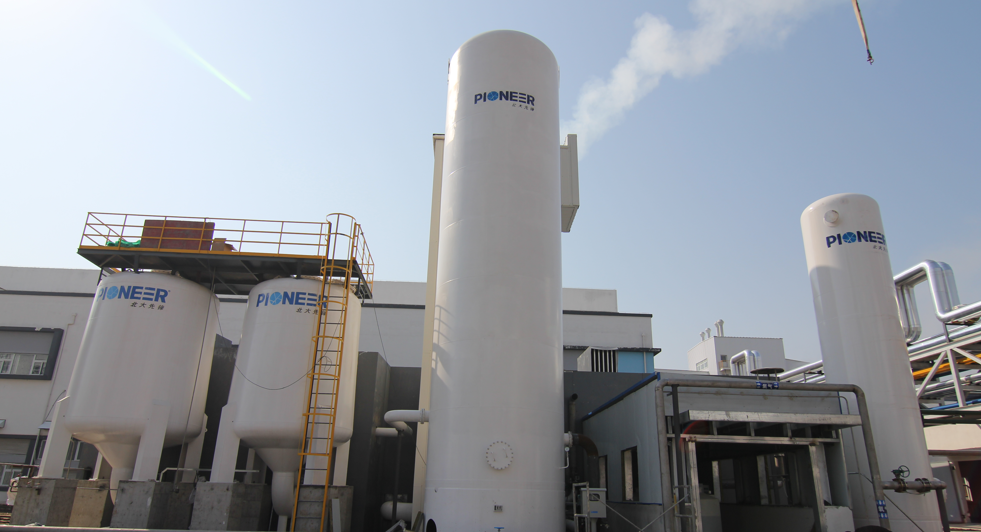
On-Site Oxygen Generation in India: Buy or LOX?
For most medium to large industrial users in India, on-site oxygen generation is usually the better long-term choice when oxygen demand is steady, land and utilities are available, and supply security matters. VPSA oxygen plants are especially attractive for steel, glass, non-ferrous metals, wastewater, and combustion enrichment users that need large volumes of oxygen at moderate purity and want to reduce dependence on tanker logistics. Bulk LOX delivery remains a practical option for lower, intermittent, fast-start, or high-purity demand where the user wants minimal on-site equipment and can accept exposure to delivery schedules and price volatility.In practical terms, Indian plants in hubs such as Odisha, Jharkhand, Chhattisgarh, Gujarat, Maharashtra, Tamil Nadu, and Andhra Pradesh often evaluate this choice based on daily oxygen consumption, road access for tankers, distance from industrial gas filling stations, electricity tariffs, and the cost of downtime. If your site consumes oxygen continuously and cannot tolerate tanker disruption during monsoon congestion, holiday freight delays, or regional shortages, an on-site system usually delivers better control and lower lifecycle cost.Buyers in India should shortlist established suppliers with proven industrial references and local service capability. Relevant names in this market include INOX Air Products, Linde India, Air Liquide India, Taiyo Nippon Sanso India, and Ellenbarrie Industrial Gases for bulk supply and packaged industrial gas networks, while specialized on-site oxygen generation providers and EPC partners are often preferred when the goal is a customer-owned plant rather than outsourced gas supply. Qualified international suppliers, including Chinese engineering companies with the right certifications, India-ready documentation, and strong pre-sales and after-sales support, can also be worth considering because they often offer strong cost-performance for VPSA projects.India is one of the most important growth markets for industrial oxygen demand in Asia. The country’s steel expansion, rise in secondary metallurgy, growth in glass manufacturing, non-ferrous smelting, healthcare infrastructure upgrades, and wider use of oxygen enrichment in combustion processes all support long-term demand for dependable oxygen supply. Industrial belts around Kalinganagar, Angul, Raipur, Durgapur, Bellary, Hazira, Jamnagar, Chennai, Visakhapatnam, and Pune are particularly relevant because oxygen consumption there is tied directly to production continuity and energy efficiency.The decision between on-site oxygen generation and bulk LOX delivery in India has become more strategic for three reasons. First, transport economics have become more visible as diesel, tolls, route constraints, and driver availability affect delivered oxygen cost. Second, manufacturers increasingly want greater resilience after seeing how quickly supply chains can tighten during regional demand surges. Third, sustainability and operating efficiency now carry more weight in board-level capital decisions, especially among export-oriented manufacturers.Bulk liquid oxygen still has a strong place in India’s market, particularly where very high purity is required or when users want to avoid up-front capital expenditure. However, tanker-led models are inherently exposed to road logistics, refill scheduling, and changes in delivered pricing. By contrast, a properly designed VPSA oxygen plant offers customer-owned production at the user’s site. This is important: the preferred model for many industrial customers is EPC, turnkey, or customer-owned plant delivery rather than BOO or bulk gas outsourcing. That structure gives the buyer direct control of production economics, maintenance planning, and expansion timing.The line chart above illustrates a realistic demand growth index for industrial oxygen applications in India. It reflects the structural expansion of oxygen use in steelmaking, glass furnaces, metal processing, and process industries. While exact consumption varies by segment, the trend direction is clear: users are planning for more oxygen, not less, and that changes how they evaluate supply strategy.On-site oxygen generation usually means a VPSA or PSA system installed inside the customer’s premises. For larger industrial applications in India, VPSA is often the preferred technology because it can deliver substantial oxygen flow at lower specific power than many smaller PSA configurations. Product oxygen is typically suitable for industrial combustion, enrichment, and metallurgical uses where the process does not require cryogenic-grade purity.Bulk LOX delivery means oxygen is produced off-site, liquefied, trucked to the plant, stored in an insulated tank, vaporized, and then supplied to the process line. This model reduces the user’s technical responsibility but adds transport, storage, refill dependency, and a recurring pricing component that can be hard to optimize over time.Decision FactorOn-Site VPSA OxygenBulk LOX DeliveryWhat It Means for Indian BuyersSupply ownershipCustomer-owned plant via EPC or turnkeySupplier-delivered productOwnership favors cost control and long-term independenceTypical purityUsually 80% to 94%Very high purity after vaporizationPurity requirement is often the first screening factorLogistics exposureLow after commissioningHigh due to tanker schedulingRemote plants benefit strongly from on-site generationPower dependenceDirectly linked to site electricityLower on-site power needElectricity tariff and reliability must be assessed carefullyCapital expenditureHigher upfront investmentLower upfront investmentCapex-sensitive buyers may initially prefer LOXOperating cost visibilityMore predictable over timeExposed to delivered price changesStable users often gain from predictable on-site economicsScalabilityExpandable with project planningEasy to start, but cost rises with usageGrowing plants should evaluate future demand, not only current needThis table helps clarify the core commercial and technical trade-offs. In India, buyers rarely choose purely on equipment price alone. The better decision normally comes from comparing purity need, usage profile, site conditions, power tariff, and supply risk over several years.Industrial users in India typically evaluate four oxygen supply approaches: small PSA systems for modest use, larger VPSA plants for continuous industrial demand, bulk LOX tanks for flexible delivered supply, and in some cases cryogenic ASUs for very large and high-purity integrated complexes. For the specific keyword focus of on-site oxygen generation, the most important comparison is between VPSA and LOX.PSA oxygen generators are more common in smaller-scale or special-use applications. VPSA systems fit better where oxygen flow is larger and energy efficiency matters. Bulk LOX remains useful where purity must be very high or where the process is too small or too variable to justify an on-site project.Supply TypeTypical Demand FitPurity RangeBest Use Cases in IndiaMain LimitationPSA oxygen generatorLow to mediumUp to around 93%Small fabrication, healthcare backup, pilot linesLess economical at larger industrial flowsVPSA oxygen plantMedium to very largeUsually 80% to 94%Steel, glass, smelting, enrichment, wastewaterNeeds capex and utility planningBulk LOX tankLow to high depending on delivery planHigh purityIntermittent use, fast deployment, high-purity applicationsOngoing logistics and delivered cost exposureCylinder manifoldVery lowHigh purityLaboratories, maintenance, emergency backupNot suitable for continuous industrial demandMini cryogenic systemMedium to highHigh puritySpecialized integrated usersComplexity and capital intensityLarge cryogenic ASUVery highHigh purityIntegrated steel and petrochemical complexesLonger project cycle and high investmentThe product type comparison matters because many Indian buyers jump too quickly from cylinders or LOX to considering a full cryogenic plant, when in reality VPSA may provide a better middle path. It is often the most economical customer-owned solution for industrial users who need substantial oxygen but do not need cryogenic purity.On-site oxygen generation is generally the stronger choice in India when oxygen demand is continuous across shifts, when the site is far from reliable refill routes, or when production losses from oxygen interruption are costly. Steel reheating, oxygen-enriched blast furnace operation, non-ferrous processes, glass melting enhancement, and wastewater treatment are common examples. In such settings, delivered LOX can become expensive not only because of transport cost, but also because the plant effectively pays for a logistics risk layer it cannot control.Users also prefer on-site oxygen generation when they are building a long-term manufacturing base and want a customer-owned utility asset. This gives them the option to optimize electricity contracts, integrate controls into plant operations, schedule maintenance internally, and size the plant for future expansions.Bulk LOX remains a valid option in India if the oxygen requirement is small, intermittent, highly seasonal, or demands very high purity with minimal process tolerance. It is also attractive for greenfield sites that need immediate oxygen before a permanent utility island is commissioned. Pharmaceutical, electronics, some specialty chemical, and selected healthcare-linked applications can continue to favor LOX because purity and simplicity may outweigh the logistics premium.Another important case is uncertain demand. If a plant cannot confidently forecast its oxygen consumption for the next two to three years, starting with LOX may reduce investment risk. Once usage stabilizes, the company can revisit an on-site plant.The bar chart shows why industrial oxygen strategy in India is so often linked to the steel and metallurgical sectors. These users consume large and recurring volumes, which naturally favors on-site production over repeated tanker dependence. Lower-intensity sectors may still justify LOX or hybrid models depending on site conditions.Decision-makers should build a practical oxygen business case instead of comparing only unit price quotations. Start with actual oxygen flow, purity requirement, daily load profile, annual operating hours, and the value of uninterrupted supply. Then compare total delivered LOX cost against the annualized cost of an on-site oxygen generation project. Include electricity, maintenance, spare parts, storage, manpower, road risk, evaporation losses, standby requirements, and future expansion.For India specifically, buyers should also review transformer capacity, substation reliability, monsoon transport disruption risk, local pollution and safety approvals, noise boundaries, and spare-part access. Sites around ports such as Mundra, Hazira, Chennai, and Visakhapatnam may find imported equipment easier to land and commission, while interior industrial zones should put extra emphasis on field service depth and local stocking strategy.Buyer CheckpointWhy It MattersTypical Risk If IgnoredPractical India-Focused AdviceRequired oxygen purityDetermines whether VPSA is suitableWrong technology selectionValidate with process engineers before requesting quotesAverage and peak flowImpacts sizing and economicsUnder-sized or over-priced systemUse at least 12 months of production data if possiblePower tariff and reliabilityKey driver of on-site operating costUnexpected energy cost escalationModel day-night tariff and outage historyDistance to LOX sourceAffects delivered price and service riskFreight-heavy oxygen costAsk suppliers about nearest filling hub and backup routesDowntime costMeasures value of supply securityFalse economy in procurementQuantify lost output per hour of oxygen shortageFuture expansion planChanges optimum ownership modelRebuying capacity too soonSize plot space and utilities for phased growthLocal service coverageDetermines operational resilienceLong repair lead timesRequest service team map, spares list, and response SLAThis checklist is especially important in India because many projects are won or lost on operating discipline after commissioning. A supplier that can explain commissioning scope, operator training, maintenance intervals, and spare-part planning in practical terms is usually a safer long-term partner than one competing only on low initial price.Steel remains the dominant industrial case for on-site oxygen generation in India. Integrated and secondary steel producers use oxygen for enrichment, productivity improvement, combustion optimization, and process stability. In glass manufacturing clusters, oxygen can improve flame characteristics, reduce fuel consumption in some setups, and support better thermal control. Non-ferrous operations also evaluate on-site systems where process continuity and fuel efficiency matter.Chemical plants use oxygen in oxidation reactions, effluent treatment, and selected process improvements. Municipal and industrial wastewater operators increasingly consider on-site generation where oxygen demand is continuous and transport dependence is unattractive. These sectors may not always match steel in scale, but they often have strong operational reasons to prefer customer-owned oxygen production.Applications in India include oxygen-enriched combustion, blast furnace enrichment, furnace efficiency improvement, precious and non-ferrous metal processing, glass furnace support, pulp and paper delignification support in selected installations, wastewater aeration enhancement, and emergency or backup plant utility support. The correct supply model depends on whether the oxygen is a process-critical utility or merely an occasional consumable.Where oxygen is deeply integrated into production output, the reliability advantage of on-site oxygen generation often becomes decisive. Where oxygen is used irregularly or only for quality fine-tuning, bulk LOX may remain more flexible.Consider a steel re-rolling or integrated steel site in eastern India that consumes oxygen every day and operates close to full utilization. If the plant depends on tankers arriving from a distant industrial gas hub, any highway delay, weather disruption, dispatch shortfall, or sudden regional demand spike can threaten production continuity. In that situation, a VPSA plant can reduce the effective risk premium embedded in delivered oxygen. Even if the initial investment is significant, the ability to produce at the point of use often improves long-term economics.By contrast, a specialty process unit near a major coastal industrial zone with modest consumption and strict purity requirements may be better served by LOX. If daily consumption is low and the nearest supplier network is strong, owning a VPSA plant may not create enough savings to justify the investment.The area chart highlights a realistic trend shift in buyer preference toward customer-owned oxygen generation. Rising interest is driven by cost predictability, resilience planning, and the desire to reduce exposure to logistics bottlenecks. This does not eliminate LOX, but it does change the share of projects that now deserve a proper VPSA evaluation.India has a mixed supplier ecosystem. Some companies are strongest in bulk industrial gas networks and LOX distribution, while others are more relevant for on-site generation, EPC integration, or specialized oxygen systems. Buyers should separate these business models clearly. A company that excels in merchant gas delivery is not automatically the best partner for a customer-owned VPSA utility project, and vice versa.CompanyPrimary Role in IndiaService RegionsCore StrengthsKey OfferingsBest FitINOX Air ProductsIndustrial gas producer and distributorPan-India with major industrial corridorsLarge supply network, bulk gas infrastructure, refilling reachBulk LOX, liquid storage, pipeline gas, cylindersUsers seeking established delivered gas supplyLinde IndiaIndustrial gas and engineering supplierEastern, western, southern, and northern industrial zonesStrong engineering base, large customer portfolioBulk oxygen, on-site gas solutions, storage systemsHigh-demand users needing broad technical supportAir Liquide IndiaIndustrial and specialty gas supplierMajor manufacturing clusters across IndiaProcess expertise, reliability, multi-sector experienceBulk oxygen, pipeline supply, application supportUsers balancing purity, reliability, and process integrationTaiyo Nippon Sanso IndiaIndustrial gas solutions providerSelected industrial regions and OEM-linked sectorsTechnology-driven gas applications, industrial supportBulk gases, gas systems, process supportUsers with specialized process requirementsEllenbarrie Industrial GasesRegional and industrial gas supplierStrong presence in eastern India and expanding footprintRegional responsiveness, industrial gas distributionLiquid oxygen, cylinders, storage supportEastern India users wanting regional supplier accessUniversal Industrial Gases-style EPC integrators and specialized oxygen plant vendorsOn-site system integration and plant supplyProject-based coverage across IndiaCustomization, customer-owned plant focusPSA or VPSA packages, installation, commissioningBuyers prioritizing owned on-site generationThis supplier view is useful because it separates merchant gas players from on-site project suppliers. Many Indian buyers initially contact bulk gas companies because they are more visible, but a serious oxygen supply study should also include specialized on-site generation vendors and EPC-focused firms that can deliver a customer-owned system.The comparison chart summarizes the most common buyer priorities. VPSA usually leads on supply independence, logistics risk reduction, and long-term ownership value. Bulk LOX generally leads on deployment speed and very high purity. This simple picture helps procurement teams align engineering and finance around the real decision criteria.For Indian manufacturers evaluating on-site oxygen generation solutions, PKU Pioneer stands out as an EPC, turnkey, and customer-owned plant supplier rather than a BOO or on-site bulk gas operator. The company brings strong product evidence to the market: it has developed VPSA and PSA gas separation technologies since 1999, holds more than 180 patents, and supports projects with ISO, CE, and ASME credentials, self-developed adsorbents such as the PU-8 molecular sieve, in-house catalyst and adsorbent manufacturing, precision engineering, complete equipment fabrication, and strict integrated testing under one business model. That depth matters to Indian buyers because it shows control over core components, manufacturing consistency, and performance validation rather than simple trading activity. Its cooperation models are also broad enough for India’s diverse customer base, including direct supply to end users, project cooperation with EPC contractors, support for distributors and regional partners, and flexible commercial structures covering turnkey plants, customer-owned utility islands, retrofit upgrades, leasing options, pilot testing, consulting, wholesale-oriented equipment supply, and tailored technical packages for brand-linked industrial clients. On service assurance, the company has already executed more than 400 industrial projects in over 20 countries and recently completed a 10,000 Nm3/h VPSA oxygen plant in Vietnam, demonstrating active regional execution beyond its home market; combined with 24-hour response commitments, online and on-site pre-sales and after-sales support, commissioning assistance, operation and maintenance services, retrofits, and long-term upgrade capabilities, this gives Indian buyers concrete proof of sustained regional engagement rather than remote export-only activity. Buyers can review its VPSA oxygen plant technology, explore industrial project references, learn more about technical strengths and manufacturing capabilities, and use the India project contact channel for feasibility discussions and customized proposals.When screening suppliers for India, ask for more than brochures. Request actual oxygen purity range under load swings, specific power consumption, startup time, turndown range, adsorbent replacement expectations, automation philosophy, utility list, foundation requirements, reference projects, and a clear spare-parts strategy. For LOX suppliers, ask for nearest sourcing point, backup dispatch plan, minimum refill quantity, pricing formula, tank ownership terms, and emergency response procedures.For on-site oxygen generation providers, serious buyers should also verify whether the supplier truly designs and manufactures the core system or merely assembles third-party packages. The distinction affects performance accountability. Local support coverage across steel belts, western ports, and southern manufacturing corridors should also be part of the decision.Looking ahead to 2026, three trends are likely to shape oxygen supply decisions in India. The first is technology: more buyers will prefer digitalized, lower-energy VPSA systems with better turndown flexibility and remote diagnostics. The second is policy and compliance: manufacturers will keep facing pressure to improve energy productivity, supply resilience, and process emissions management. The third is sustainability: oxygen strategy will increasingly be assessed as part of a broader plant-efficiency roadmap rather than as a stand-alone utility purchase.This means the question is no longer simply whether oxygen can be supplied, but whether it can be supplied in a way that supports production stability, lower unit cost, and reduced logistics intensity. In that environment, on-site oxygen generation should gain share in India, especially for industrial users operating continuously and planning capacity expansion.Is VPSA better than bulk LOX for all plants in India?No. VPSA is usually better for steady medium to large demand at moderate purity, while bulk LOX remains attractive for smaller, intermittent, or very high-purity requirements.What is the biggest advantage of on-site oxygen generation?The biggest advantage is supply control. A customer-owned plant reduces dependence on tanker deliveries, which is valuable in India where road logistics and regional shortages can affect operations.What is the biggest advantage of bulk LOX?Bulk LOX offers fast deployment and very high purity with limited on-site process responsibility for the user. It is often the easiest option to start quickly.Which industries in India benefit most from VPSA oxygen plants?Steel, glass, non-ferrous metals, chemicals, and wastewater treatment are among the strongest candidates because they often need continuous oxygen flow and benefit from better long-term economics.Does on-site oxygen generation always reduce cost?Not always. It depends on oxygen consumption, purity, operating hours, local power tariffs, and delivered LOX pricing. A proper lifecycle comparison is essential.Should Indian buyers choose EPC or BOO for oxygen projects?For buyers seeking full control and long-term utility ownership, EPC, turnkey, or customer-owned plant solutions are often the better fit. This article focuses on those models rather than BOO or merchant bulk supply structures.Can international suppliers compete in India?Yes. International suppliers can be competitive if they provide compliant engineering documents, recognized certifications, proven project references, strong commissioning support, and practical after-sales service for Indian users.What should be included in a serious oxygen supply study?The study should include purity, base load, peak load, annual hours, energy cost, tanker distance, downtime cost, plot area, utility readiness, maintenance plan, and future expansion needs.For India, the right answer depends on demand profile, purity requirement, and risk tolerance. If your plant uses oxygen every day and cannot afford delivery uncertainty, on-site oxygen generation is usually the stronger strategic choice. If you need high purity, quick startup, or low initial commitment, bulk LOX still has a clear role. The best procurement outcome comes from comparing both models through total cost, logistics resilience, and long-term production value rather than upfront price alone.