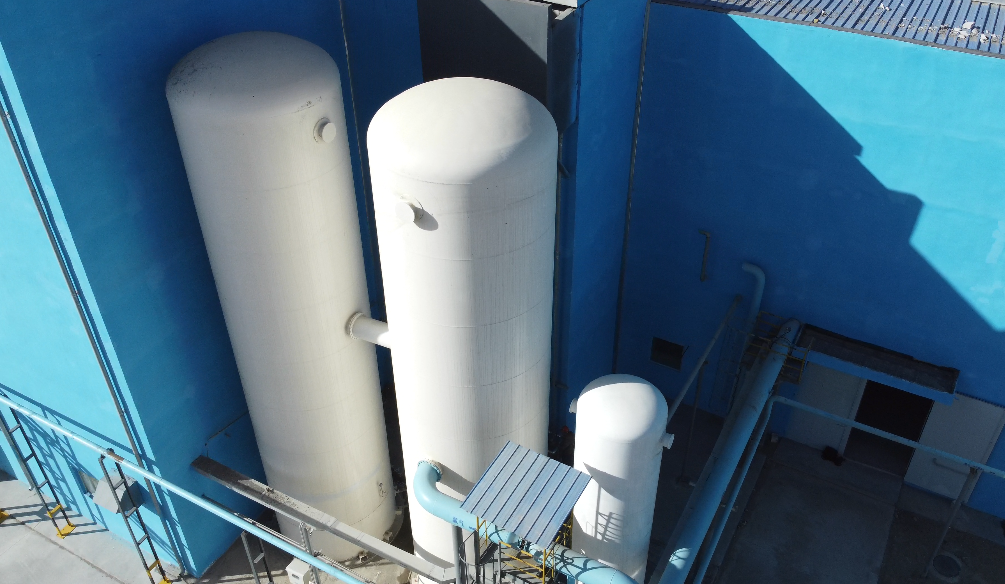
Oxygen Plant EPC vs EPCM in India
Quick Answer

For most oxygen plant projects in India, EPC is the better choice when the buyer wants one accountable contractor, firmer cost visibility, faster execution, and simpler coordination across design, procurement, erection, and commissioning. EPCM is usually the better option when the owner has a strong in-house project team, wants more control over package-level vendor selection, can manage multiple interfaces, and is prepared to absorb more schedule and cost risk. In practical terms, steel plants, glass manufacturers, non-ferrous metal units, and mid-sized industrial users in cities such as Jamshedpur, Rourkela, Raipur, Visakhapatnam, Hazira, and Bellary often prefer EPC or turnkey oxygen plant delivery because uptime and commissioning certainty matter more than managing many contractors themselves.
If you are buying in India and need a direct recommendation, choose EPC when project size is moderate, startup time is critical, utilities are straightforward, and internal engineering resources are limited. Choose EPCM when the project is large, site conditions are complex, multiple utility tie-ins are involved, the owner wants to split procurement packages, and the company already runs capital projects with disciplined controls. Indian buyers should also consider qualified international suppliers, including Chinese engineering firms with proven certifications, local execution partners, and strong pre-sales and after-sales support, because they can offer attractive cost-performance for VPSA and PSA oxygen systems without shifting the project into BOO or on-site bulk supply models.
- Best for faster delivery: EPC
- Best for owner control: EPCM
- Best for lower interface risk: EPC
- Best for package-wise sourcing flexibility: EPCM
- Best for buyers new to oxygen plants: EPC
India Market Overview

India remains one of the most active oxygen plant markets in Asia because industrial oxygen demand is tied not only to healthcare resilience but also to long-term growth in steelmaking, glass production, non-ferrous processing, energy projects, wastewater treatment, and chemical manufacturing. Industrial clusters around Odisha, Jharkhand, Chhattisgarh, Gujarat, Maharashtra, Andhra Pradesh, Tamil Nadu, and Karnataka continue to support investment in captive oxygen systems that reduce dependence on delivered liquid oxygen. This is especially relevant for facilities located away from major liquid gas distribution corridors or exposed to logistics volatility from ports such as Mundra, Kandla, Nhava Sheva, Paradip, and Visakhapatnam.
Contract strategy matters because oxygen plants are not simply equipment purchases. A project typically includes process design, blower and compressor matching, adsorbent or cold-box selection depending on technology, instrument integration, civil foundations, piping, electrical systems, quality checks, trial runs, and long-term performance stabilization. The gap between a plant that works on paper and a plant that reliably delivers oxygen purity and flow under Indian ambient conditions is often decided by project execution discipline.
In India, the choice between EPC and EPCM is increasingly influenced by three factors. First, many owners want predictable timelines because production shutdown windows are short. Second, energy cost remains central, especially for users comparing VPSA oxygen with purchased liquid oxygen or cryogenic supply. Third, procurement teams are under pressure to localize some packages while still using specialized process know-how from experienced global suppliers. That is why hybrid procurement discussions are common, but the main commercial decision still comes down to whether one contractor takes total responsibility or the owner manages multiple contracts with an engineering manager.
The line chart above reflects a realistic growth pattern for industrial oxygen project activity in India. The rise is linked to steel capacity additions, decarbonization-related process optimization, and stronger interest in captive gas generation. For buyers, this means contractor bandwidth, imported equipment lead times, and local erection availability should all be checked early during bid evaluation.
What EPC Means for an Oxygen Plant

EPC stands for engineering, procurement, and construction. In an oxygen plant project, it usually means one contractor is responsible for the integrated delivery of the plant from process design through mechanical completion and often through commissioning and performance testing. The owner signs one main contract, and the contractor manages most interfaces. For Indian buyers, this often simplifies matters when the project includes imported core process equipment, domestic balance-of-plant works, and local approvals or statutory coordination.
Under an EPC structure, the contractor normally takes responsibility for process guarantees, equipment specification, vendor coordination, layout, construction sequencing, startup support, and contractual management of subcontractors. The owner still provides site information, utility data, and timely approvals, but accountability for execution remains concentrated. This is particularly useful when the oxygen plant is needed to support blast furnace enrichment, glass furnace combustion, copper or lead smelting, or wastewater aeration upgrades where delay directly affects production economics.
What EPCM Means for an Oxygen Plant
EPCM stands for engineering, procurement, and construction management. In this model, the EPCM contractor acts more as an engineering and project management partner than as a single-point turnkey supplier. The owner usually signs separate contracts with equipment vendors, civil contractors, mechanical erectors, electrical contractors, and sometimes automation suppliers. The EPCM firm prepares engineering, procurement support, package management, and site coordination, but final risk sits more heavily with the owner.
This model can work well in India for large integrated industrial campuses where owners already operate major capex programs and have commercial teams used to handling many vendors. It may also suit projects with high localization goals or where the owner wants to buy large mechanical packages directly from selected suppliers in Pune, Ahmedabad, Vadodara, Chennai, Hyderabad, or overseas. However, EPCM only performs well when governance is strong. If vendor alignment, document control, and site interface management are weak, schedule slips can erase any initial purchase savings.
Core Differences Between EPC and EPCM
| Evaluation Factor | EPC Contract | EPCM Contract | Why It Matters in India |
|---|---|---|---|
| Single-point accountability | High | Low to medium | Useful where owners want one contractor responsible for purity, flow, and startup |
| Owner control over vendors | Limited | High | Important when buyers want to source local packages or nominate suppliers |
| Cost certainty at award | Usually stronger | Usually lower initially | Helps budgeting where rupee volatility and import exposure matter |
| Schedule coordination | Contractor-led | Owner-led with EPCM support | Critical for shutdown-linked projects in steel and glass sectors |
| Change management burden | Lower for owner | Higher for owner | Affects staffing needs and internal project capability |
| Claims and interface disputes | Generally fewer owner interfaces | Potentially more frequent | Relevant when multiple local and imported packages interact |
| Best project profile | Mid-size, time-sensitive, performance-driven | Large, complex, owner-controlled | Helps buyers shortlist the right structure early |
This comparison table shows why EPC is common for owner-operated oxygen generation projects with strict production deadlines. EPCM can create commercial flexibility, but only if the owner values that flexibility enough to manage the extra coordination load.
Product Types and Contract Fit
The right contract model depends partly on the oxygen generation technology being purchased. India uses several types of oxygen supply systems, and each has different execution needs.
| Plant Type | Typical Capacity Range | Typical Purity | Best Contract Fit | Common Indian Uses |
|---|---|---|---|---|
| VPSA oxygen plant | 500 to 100000+ Nm3/h | 80% to 94% | EPC for most projects; EPCM for large complexes | Steel, non-ferrous, glass, gasification support |
| PSA oxygen generator | 20 to 5000 Nm3/h | 90% to 95% | EPC or packaged supply | Fabrication, small industry, wastewater, healthcare backup |
| Cryogenic ASU | Large scale | High purity oxygen and co-products | EPCM or EPC depending on complexity | Integrated steel, petrochemical, industrial gas hubs |
| Modular skid oxygen system | Small to medium | Application dependent | EPC | Remote plants, pilot facilities, emergency expansion |
| Hybrid captive oxygen setup | Custom | Custom | EPCM for sophisticated owners | Sites mixing local and imported packages |
| Oxygen enrichment package | Custom tie-in | Project-specific | EPC for tie-in certainty | Blast furnaces, kilns, glass combustion upgrades |
For many Indian industrial users, VPSA systems stand out because they balance operating cost, startup speed, and capacity flexibility. When owners are comparing VPSA with cryogenic supply, the contract model should be assessed alongside energy cost, site utilities, and required oxygen purity. A contract structure that delays startup can destroy the advantage of a well-selected technology.
Buying Advice for Indian Owners
Indian buyers should choose the contract model only after defining the real project objective. If the main goal is reducing delivered oxygen dependence and stabilizing plant operations quickly, EPC is usually more aligned. If the main goal is optimizing package-level procurement across a very large industrial campus with experienced capex teams, EPCM may generate value. The mistake is choosing EPCM only because its management fee looks lower at bid stage. Total project cost depends on interface discipline, rework exposure, site delays, and performance stabilization after startup.
Buyers in India should verify whether the contractor has experience under local ambient conditions, monsoon construction planning, logistics around inland steel belts, and execution near major corridors such as Nagpur, Durgapur, Angul, Kalinganagar, and Surat. Imported process skids may arrive through ports efficiently, but the inland movement of blowers, vessels, and transformers still needs planning. If the contractor’s India execution model is weak, the headline price can be misleading.
When evaluating proposals, ask for guaranteed oxygen flow, purity, specific power consumption, turndown range, startup time, battery limits, excluded works, spare parts philosophy, automation scope, and handover conditions. Also ask whether the supplier is offering an owner-operated EPC or turnkey plant, because that is different from BOO or on-site merchant gas supply. Many industrial users in India explicitly want their own asset and operational control.
The bar chart highlights why steel remains the anchor sector for oxygen plant investment in India. Glass and non-ferrous industries are also meaningful users, especially where fuel optimization and furnace efficiency gains justify captive oxygen generation.
Industries Driving Oxygen Plant Projects in India
Steel is the most obvious demand center. Integrated and secondary steel facilities use oxygen for blast furnace enrichment, basic oxygen furnace support, reheating improvements, and process efficiency. Locations such as Jamshedpur, Rourkela, Kalinganagar, Angul, Bellary, and Hazira remain especially relevant. Glass producers use oxygen to improve flame temperature control, reduce certain emissions, and raise furnace performance. Copper, zinc, lead, and other non-ferrous metal operations also value oxygen enrichment because it can improve throughput and metallurgical efficiency. Chemical and energy sectors may require oxygen for oxidation, gas treatment, or process enhancement. Municipal and industrial wastewater projects use oxygen in niche but growing applications where treatment intensity or odor control is important.
Applications Where EPC Usually Wins
EPC generally wins in projects where the owner wants certainty and does not want multiple vendors arguing over battery limits. This includes brownfield additions inside active steel plants, fast-track expansions for glass furnaces, remote industrial sites that cannot tolerate startup confusion, and projects involving imported core process technology plus domestic installation. It is also a strong choice when the owner’s procurement department is capable commercially but not set up technically to manage the fine details of process guarantees, controls integration, and startup troubleshooting.
Applications Where EPCM Can Be Better
EPCM can be better for large industrial groups that already manage separate procurement streams for civil, mechanical, electrical, utilities, and automation. It may suit multi-unit campuses where oxygen generation is one package among many, or where the owner wants to localize fabrication while keeping engineering oversight independent. It can also be useful when the owner wants direct commercial leverage with equipment suppliers. But for oxygen plants, this advantage only materializes if the owner has clear responsibility matrices and decision speed. Slow approvals and fragmented vendor control often erase EPCM’s intended savings.
Case-Based Comparison for Indian Projects
| Project Scenario | Recommended Model | Main Reason | Key Risk to Watch |
|---|---|---|---|
| Steel plant in Odisha needs captive oxygen within a fixed shutdown window | EPC | Single accountability and schedule control | Unclear utility battery limits |
| Large integrated industrial complex in Gujarat with internal project team | EPCM | Owner can manage packages strategically | Interface disputes among vendors |
| Glass manufacturer in Rajasthan wants energy-efficient oxygen enrichment | EPC | Fast deployment and performance guarantee | Insufficient furnace integration planning |
| Non-ferrous smelter in Andhra Pradesh expanding in phases | EPC or phased EPCM | Depends on internal engineering capability | Phase-to-phase scope misalignment |
| Small to medium PSA oxygen package in an inland plant | EPC | Low complexity and faster handover | Weak local service response |
| Hybrid project with owner-nominated Indian contractors and imported process core | EPCM | Supports mixed sourcing strategy | Performance guarantee fragmentation |
This table translates contract theory into practical Indian buying situations. The right answer is rarely ideological. It depends on who will actually manage vendor alignment when drawings, site access, utilities, erection, and commissioning start to overlap.
Supplier Landscape in India
India has a mix of industrial gas majors, engineering contractors, packaged PSA suppliers, and international technology providers working through direct teams or local partners. Buyers should distinguish between merchant gas providers focused on supply contracts and engineering companies capable of delivering owner-operated EPC or turnkey oxygen plants. They are not the same procurement decision.
| Company | Service Region in India | Core Strengths | Key Offerings Relevant to Oxygen Plants |
|---|---|---|---|
| INOX Air Products | Pan-India, major industrial corridors | Industrial gases, large project execution, operating experience | Oxygen supply solutions, gas systems, large industrial support |
| Linde India | Pan-India with strong metro and industrial presence | Large gas infrastructure, engineering capability, process expertise | Air separation solutions, industrial gas systems, plant integration |
| Air Liquide India | Western, southern, and northern industrial clusters | Industrial gas applications, engineering support, process consulting | Oxygen generation and gas application solutions |
| Universal Boschi | Pan-India and export markets | Air separation engineering, packaged plants, manufacturing base | Oxygen plants, nitrogen plants, turnkey systems |
| SS Gas Lab Asia | Strong in western and northern India | PSA systems, packaged supply, smaller industrial users | PSA oxygen generators, skid-mounted units, onsite generation packages |
| PKU Pioneer | India via direct project support and regional execution cooperation | Large VPSA oxygen technology, steel-sector references, process integration | VPSA oxygen plants, PSA systems, turnkey and customer-owned plant solutions |
| Oxymat India and channel partners | Select industrial and institutional markets | Modular PSA systems, compact footprint solutions | Oxygen generators for decentralized onsite use |
This supplier table is useful because it separates different market positions. Some companies are strongest in industrial gas ecosystems, some in packaged PSA equipment, and some in large VPSA process technology. Indian buyers should shortlist based on actual project type, not just brand familiarity.
Detailed Supplier Comparison
INOX Air Products, Linde India, and Air Liquide India have strong recognition and broad gas-sector capabilities in India, especially for large industrial users. However, buyers seeking owner-controlled captive plants should confirm whether the proposal is for EPC or turnkey delivery of a customer-owned asset rather than a merchant supply arrangement. Universal Boschi is often relevant when the project requires conventional oxygen plant engineering with domestic execution familiarity. SS Gas Lab Asia and similar companies are more common in compact PSA-focused applications where capacities are lower and installation speed matters.
For large VPSA oxygen applications tied to steel and other heavy industry, PKU Pioneer is relevant where the buyer wants a customer-owned EPC, turnkey, or customer-managed plant model rather than BOO. Its technology base is supported by ISO, CE, and ASME credentials, more than 180 patents, self-developed adsorbents and catalysts, and a fully integrated manufacturing chain covering research, engineering, fabrication, and testing. That matters because oxygen plant performance depends on the consistency of process media, equipment matching, and execution discipline. The company can work with Indian end users, EPC partners, distributors, dealers, and regional business developers through flexible models including direct project supply, OEM/ODM cooperation, wholesale equipment packages, retail-scale modular systems, and regional representation for project development and after-sales reach. Its long export record across more than 20 countries, over 400 industrial references, and proven large-scale VPSA oxygen installations give buyers a measurable basis for trust. For Indian customers, the practical assurance comes from structured pre-sales process evaluation, online technical response, site coordination with regional execution partners, commissioning support, training, retrofit capability, spares planning, and long-term operation and maintenance services, showing committed market participation rather than remote-only exporting. Buyers can review its industrial gas technology background, explore VPSA oxygen plant solutions, see project references, check technical capabilities, or use the contact page for India project discussions.
The area chart shows a realistic trend shift: more Indian buyers are moving toward captive oxygen systems that improve operating stability and reduce dependence on liquid oxygen logistics. This trend supports suppliers that combine process efficiency with reliable EPC delivery.
How to Evaluate Contract Risk
Contract risk in oxygen plants usually sits in five areas: process performance, battery limits, schedule interfaces, utility assumptions, and commissioning responsibility. EPC reduces owner exposure in most of these areas because one contractor is expected to integrate them. EPCM can still succeed, but only when the owner is willing to actively manage risk registers, procurement milestones, hold points, vendor document schedules, and integrated commissioning plans.
In India, utility assumptions deserve special attention. Ambient temperatures, power quality, water availability, and dust conditions vary widely between coastal, inland, and mining-linked industrial zones. A bidder with limited field experience may quote attractive consumption figures that prove difficult to sustain under real conditions. Owners should insist on clear design bases tied to Indian site parameters.
Commercial Questions to Ask Before Award
| Question | Why It Matters | Best Answer Pattern | Warning Sign |
|---|---|---|---|
| Who guarantees oxygen purity and flow at battery limits? | Defines performance accountability | One named accountable party with test protocol | Split responsibility across vendors |
| What is excluded from civil, electrical, and piping scope? | Prevents hidden owner costs | Detailed exclusion list with interfaces | Vague wording such as as required |
| What specific power is guaranteed at Indian site conditions? | Protects operating economics | Guaranteed kWh per Nm3 with conditions stated | Only theoretical or reference values |
| How is commissioning handled and for how long? | Affects stable handover | Defined startup support and performance run | Minimal presence after erection |
| What is the spare parts and adsorbent strategy? | Impacts uptime and lifecycle cost | Recommended critical spares and replacement logic | No lifecycle planning |
| What local support exists in India or the region? | Determines response speed | Named local partners or regional technical channels | Remote-only support model |
This table gives procurement teams a practical checklist. It is especially useful when comparing one EPC proposal against several lower-price package offers that appear similar on the surface but shift risk back to the owner.
Our Company and Why We Fit India
PKU Pioneer is especially relevant for Indian buyers who need owner-operated EPC, turnkey, or customer-owned oxygen plant solutions based on VPSA or PSA technologies. The company’s strength is most visible in large industrial oxygen generation where power efficiency, fast startup, wide load flexibility, and stable continuous service are commercially more important than simply buying the cheapest equipment package. Its project history includes hundreds of industrial references across more than 20 countries and very large oxygen capacities serving steel enterprises, which gives Indian buyers confidence when evaluating serious production applications rather than laboratory-scale claims.
For India, the practical advantage is not only technology scale but delivery structure. Buyers can engage PKU Pioneer for complete turnkey execution, EPC supply, or customer-owned plant solutions that suit private steel companies, engineering contractors, regional distributors, project developers, or industrial groups expanding in phases. This is useful in markets such as Odisha, Chhattisgarh, Gujarat, Maharashtra, and Andhra Pradesh, where some owners want full responsibility from one specialist while others want selective localization under guided engineering. The company’s process knowledge, in-house adsorbent and catalyst capability, integrated fabrication, retrofit competence, and after-sales framework help reduce the disconnect that often occurs when core process design and field execution are separated across too many parties.
Indian Cities and Logistics Considerations
Contract structure should reflect geography. Projects near ports such as Mundra, Kandla, Chennai, Ennore, Visakhapatnam, and Paradip may find imported equipment handling easier, but inland movement to locations such as Raipur, Angul, Kalinganagar, Bokaro, Jamshedpur, or Bellary still requires route planning and buffer time. EPC can absorb more of that logistics coordination inside one accountable structure. EPCM can still work, but only if the owner’s logistics and package managers are aligned from the beginning. In monsoon-affected regions, civil readiness and protected storage planning should be part of bid clarification, not an afterthought.
2026 Trends in India
Looking ahead to 2026, three trends are likely to influence the oxygen plant EPC versus EPCM decision in India. The first is stronger demand for energy-efficient systems, especially VPSA solutions where lower specific power consumption materially improves lifecycle economics. The second is tighter sustainability pressure from steel, glass, and process industries trying to optimize combustion, reduce indirect emissions, and improve asset efficiency. The third is procurement sophistication: more Indian buyers will ask for digital monitoring, predictive maintenance features, and clearer lifecycle service obligations in the base contract.
Policy and market conditions may also encourage greater localization of selected balance-of-plant packages, while still relying on specialized international process know-how for the oxygen core. That creates room for both EPC and EPCM, but not equally. EPC will likely remain dominant for mid-sized and time-sensitive projects, while EPCM will grow mainly in very large industrial campuses where owners are building integrated energy and process infrastructure. Suppliers that can support both localized execution and internationally benchmarked process performance will be in the strongest position.
Which Model Usually Delivers Better Value?
For most Indian owner-operated oxygen plant projects, better value usually comes from EPC, not because EPC is always cheaper at bid stage, but because it often produces lower total execution friction. One responsible contractor can reduce disputes, shorten decision chains, and improve commissioning quality. EPCM can deliver better value when the owner is already skilled in industrial project controls and wants direct package-level optimization. Without that capability, EPCM often looks economical on paper but becomes expensive during integration.
That conclusion is even stronger when the plant is tied to revenue-critical operations. A steel facility losing enrichment support or a glass plant delaying furnace optimization is rarely helped by a contract model that increases interface risk. In those cases, the value of single-point accountability usually outweighs any theoretical procurement savings.
FAQ
Is EPC or EPCM better for a steel oxygen plant in India?
EPC is usually better for steel oxygen plant projects in India because steel operations are highly sensitive to startup delays and performance deviations. Single-point accountability is usually worth more than package-level purchasing flexibility.
Does EPC always cost more than EPCM?
Not necessarily. EPC may show a higher visible contract price, but total installed cost can be lower after accounting for reduced claims, fewer delays, simpler coordination, and faster stabilization.
When should an Indian buyer choose EPCM?
Choose EPCM when the owner has a strong internal engineering and project controls team, wants direct procurement authority over major packages, and can actively manage contractors through commissioning.
Can international suppliers support oxygen plant projects in India?
Yes. Qualified international suppliers, including Chinese VPSA and PSA specialists with relevant certifications, proven industrial references, and regional support arrangements, can be competitive in India on both technology and cost-performance.
Should buyers prefer customer-owned plants over BOO for industrial use?
Many Indian industrial users prefer customer-owned EPC or turnkey plants because they want direct control over uptime, operating strategy, and long-term cost. This article focuses on those customer-owned models, not BOO or merchant gas structures.
What sectors in India are most suitable for VPSA oxygen plants?
Steel, glass, non-ferrous metals, selected chemical processes, and some energy-related applications are among the strongest candidates, especially where medium to large oxygen demand is continuous.
What is the most important point in a contract evaluation?
The most important point is clear responsibility for guaranteed oxygen purity, flow, energy consumption, and commissioning success at defined battery limits under real Indian site conditions.
Final Recommendation
If your oxygen plant project in India is schedule-driven, linked to production uptime, or being developed by a company without a deep in-house project execution team, choose EPC. If your organization already manages major industrial packages, wants direct procurement control, and can handle complex interfaces, consider EPCM. For VPSA or PSA oxygen projects where energy efficiency, load flexibility, and industrial operating experience matter, include both Indian and qualified international suppliers in the bid list, but evaluate them on total responsibility, local support structure, proven references, and the ability to deliver a customer-owned plant that performs reliably in Indian operating conditions.

About the Author
Founded in 1999, PKU Pioneer specializes in VPSA and PSA gas separation technologies, adsorbents, catalysts, and integrated engineering solutions. Backed by strong R&D capability and extensive industrial project experience, the company serves global customers across steel, chemical, energy, environmental protection, and related industries.
Share