How to Justify an Oxygen Plant Business Case in the United States
Quick Answer

If you are building an oxygen plant business case in the United States, the strongest justification is usually a combination of lower delivered oxygen cost, reduced supply risk, better process control, and a payback period that can often fall within two to five years for steady industrial demand. For U.S. buyers with continuous oxygen consumption, an on-site VPSA oxygen plant is often more economical than purchased liquid oxygen, especially in inland manufacturing corridors such as Ohio, Indiana, Texas, Pennsylvania, and the Southeast where freight, tank rental, and delivery volatility can materially increase total gas cost.
The most actionable path is to compare four options side by side: liquid oxygen purchase, small PSA oxygen generation, VPSA oxygen generation, and cryogenic air separation. For most medium-to-large industrial users needing moderate purity oxygen and flexible output, VPSA is frequently the best business-case fit because it offers lower energy use than many compressed-air PSA systems, fast startup, and load flexibility without the capital intensity of a full cryogenic unit.
In the United States, buyers commonly shortlist domestic industrial gas leaders and engineering providers such as Air Liquide USA, Linde, Air Products, Atlas Copco Gas and Process, On Site Gas Systems, and Oxymat’s North American channel partners, depending on project size and purity requirements. Qualified international suppliers can also be worth considering, including Chinese manufacturers with relevant certifications, strong engineering depth, and responsive pre-sales and after-sales support, because cost-performance can be very competitive when EPC, turnkey, or customer-owned plant models are evaluated carefully.
The simplest decision rule is this: if your site has stable oxygen demand, expensive liquid deliveries, production losses tied to supply interruptions, or a decarbonization target linked to furnace or oxidation efficiency, then an on-site oxygen plant business case is usually worth developing immediately.
United States Market Overview for On-Site Oxygen Generation

The United States remains one of the largest industrial gas markets in the world, supported by steel, glass, non-ferrous metals, water treatment, chemicals, pulp and paper, healthcare backup systems, and emerging clean-energy manufacturing. Demand is concentrated around major industrial corridors such as the Gulf Coast from Houston to Baton Rouge, the Great Lakes manufacturing belt, the Ohio River Valley, the Mid-Atlantic, and growing reshoring hubs in Arizona, Tennessee, Georgia, and the Carolinas.
For many U.S. plants, oxygen procurement has historically depended on bulk liquid contracts. That model still works well for low-volume or variable-demand users near established supply networks and ports. However, many inland users have faced higher logistics costs, weather-related delivery uncertainty, allocation risk during market tightness, and pressure to reduce operating expenses. As a result, customer-owned oxygen generation systems are gaining attention as a strategic utility investment rather than just a gas purchase alternative.
An oxygen plant business case in the United States is no longer based only on price per cubic meter. Procurement teams increasingly evaluate resilience, emissions intensity, labor efficiency, digital monitoring, maintenance burden, and the ability to expand later. This is particularly relevant in sectors where oxygen directly affects output quality, fuel efficiency, oxidation speed, or furnace productivity.
VPSA technology has become especially relevant because it fills the gap between smaller PSA systems and large cryogenic air separation units. It is well suited for many industrial plants that need substantial oxygen flow but do not require ultra-high purity. In these situations, the total cost of ownership can be more favorable than delivered liquid oxygen, especially when the process accepts oxygen in the roughly 80 to 94 percent purity range typical of VPSA systems.
Industrial buyers across the United States are also looking beyond first cost. CFOs want a credible return-on-investment model. Plant managers want uptime and maintainability. EHS teams want lower trucking exposure and better site safety planning. Sustainability teams want reduced transport emissions and more efficient process combustion. A strong business case must address all of these stakeholders in one document.
Why an Oxygen Plant Business Case Is Often Strong in the United States

Several factors repeatedly make the investment case compelling.
- Bulk liquid oxygen prices can rise sharply when freight, tank leasing, fuel surcharges, and supply chain constraints are added.
- On-site oxygen generation can reduce exposure to truck delivery delays, contract escalation clauses, and supply allocation events.
- Many U.S. industrial facilities run 24/7 or close to it, which improves plant utilization and shortens payback.
- Oxygen enrichment in steel, glass, wastewater, and combustion applications can improve throughput, energy efficiency, and environmental performance.
- Customer-owned plants support better utility planning and can be integrated into broader modernization or expansion programs.
In practical terms, the business case becomes strongest when annual oxygen demand is predictable and high enough to justify fixed assets. It also improves when the current delivered oxygen price is high due to distance from supply hubs, or when process downtime from oxygen shortage has a measurable cost.
Typical Oxygen Supply Options Compared
The right technology depends on flow, purity, pressure, footprint, and how strategic oxygen is to production. The table below gives a practical comparison for U.S. buyers screening supply models.
| Supply Option | Typical Best Fit | Purity Range | Capital Intensity | Operating Cost Pattern | Main Strength | Main Limitation |
|---|---|---|---|---|---|---|
| Delivered liquid oxygen | Low to moderate demand or temporary need | High purity | Low on customer side | High variable cost with logistics exposure | Fast to start, no production asset to manage | Freight risk, contract dependence, price volatility |
| Cylinders or microbulk | Small users and backup duty | High purity | Very low | Highest unit gas cost | Simple procurement | Not economical for continuous industrial demand |
| PSA oxygen plant | Small to medium demand | Typically up to low 90s | Moderate | Power-driven, compact system cost | Good for decentralized sites | Can be less favorable than VPSA at larger flows |
| VPSA oxygen plant | Medium to large demand | Typically 80 to 94 percent | Moderate to high | Low long-run operating cost | Strong ROI for steady industrial use | Not intended for ultra-high purity needs |
| Cryogenic ASU | Very large demand or high purity requirements | Very high purity | High | Efficient at very large scale | Best for massive integrated gas demand | Longer project cycle and larger investment |
| Hybrid supply model | Sites needing resilience and flexibility | Varies | Moderate to high | Optimized by mix | Balances backup and economics | More complex design and contracting |
This comparison is useful because many U.S. projects fail at the business-case stage by comparing only equipment price. The correct comparison is total delivered oxygen cost over time, adjusted for reliability, utility consumption, maintenance, and production risk.
Cost Drivers That Shape the Business Case
A credible oxygen plant business case in the United States should include the following cost elements.
First is baseline oxygen spend. This includes not just commodity oxygen price, but also freight, storage charges, tank rental, vaporizer maintenance, handling fees, emergency deliveries, and contract escalation formulas. In states where industrial sites are far from air separation hubs or where truck availability is tight, these hidden costs can be substantial.
Second is electrical power cost. For VPSA and PSA plants, electricity is one of the largest operating cost inputs. The business case must use the actual tariff structure at the site, including demand charges, time-of-use pricing, and any interruptible or renewable energy arrangements. Locations such as Texas, Indiana, Ohio, and parts of the Midwest often show meaningful differences in plant economics based on utility rate structures alone.
Third is maintenance and staffing. Some buyers underestimate spare parts, adsorbent replacement intervals, blower upkeep, instrumentation calibration, and operator oversight. The right approach is to include a realistic annual maintenance budget and any service agreement cost.
Fourth is process value. Oxygen is not always just a utility. In steelmaking, glass melting, wastewater aeration intensification, and combustion optimization, oxygen can increase output, improve thermal efficiency, or reduce emissions. These gains should be quantified because they often make the difference between a marginal and a strong investment case.
Fifth is risk reduction. On-site generation can reduce the probability of production loss caused by delivery disruption. In sectors with high downtime costs, even a modest reduction in supply risk has real financial value.
Illustrative Financial Framework for a U.S. Buyer
The table below shows a simplified framework that procurement and finance teams can adapt during screening. The figures are illustrative but realistic enough to guide internal discussion.
| Business Case Item | Bulk Liquid Oxygen Model | VPSA Customer-Owned Plant | Why It Matters | Decision Impact | Typical U.S. Consideration |
|---|---|---|---|---|---|
| Upfront capital | Low | Moderate to high | Determines financing need | Can slow approval if capex is constrained | Use lease, phased build, or EPC milestone plan |
| Unit oxygen cost over time | Variable and freight-sensitive | Usually more stable | Drives lifecycle savings | Often the core ROI lever | Especially important inland |
| Supply reliability | Dependent on vendor logistics | Controlled on site with backup plan | Reduces outage risk | High impact for continuous plants | Relevant during storms or logistics shortages |
| Energy consumption | Embedded in supplier price | Visible and manageable | Supports cost control | Important under rising power scrutiny | Can be optimized by local tariff strategy |
| Operational flexibility | Bound to delivery schedule | Fast response within plant design range | Supports load swings | Useful for variable furnace loads | Important in mini-mills and batch processes |
| Decarbonization value | Transport-related emissions remain | Potentially lower logistics footprint | Supports ESG targets | Growing role in approvals | Useful for public reporting and incentives |
| Expansion path | More deliveries or tank changes | Add modules or new train | Improves future planning | Raises strategic value | Useful in reshoring and brownfield expansion |
This type of framework helps management see that an oxygen plant is not just a utility replacement. It can be a resilience, productivity, and sustainability investment.
Market Growth Outlook Through 2026 and Beyond
U.S. demand for on-site oxygen systems is expected to remain positive through 2026 as manufacturers continue to localize supply chains, modernize furnaces, and seek more controllable utility costs. Water treatment, glass, specialty metals, and energy-intensive process industries are likely to support sustained demand. The policy environment also matters. Stricter emissions expectations, industrial efficiency programs, and funding tied to domestic manufacturing or infrastructure upgrades can indirectly improve project economics.
The chart reflects a realistic directional trend rather than a fixed public statistic. It illustrates why many U.S. operators are now revisiting the economics of self-generation versus delivered gas.
Industry Demand in the United States
Not every industry values oxygen the same way. The strongest oxygen plant business cases are usually found where oxygen directly affects throughput, combustion efficiency, reaction performance, or treatment effectiveness.
Steel and glass remain especially important because oxygen can influence productivity and fuel intensity directly. Wastewater also continues to be a strong market where oxygen supports process intensification and improved biological performance in selected systems.
Technology Shift: From Delivered Gas Toward On-Site Generation
The trend in the United States is not a full replacement of merchant liquid oxygen, but a shift toward more balanced portfolios. Many users are moving to customer-owned plants with liquid backup rather than relying entirely on deliveries.
This trend is driven by freight sensitivity, resilience planning, and better energy performance from modern systems.
Product Types and Where Each Fits
Small PSA oxygen generators typically suit hospitals, laboratories, smaller fabrication sites, and certain decentralized utility systems. They are compact and straightforward, but once flow requirements rise, unit economics may become less attractive than VPSA.
VPSA oxygen plants are often the best fit for medium-to-large U.S. industrial sites that need lower-cost oxygen at moderate purity. Their ability to start quickly and handle load changes can be attractive in variable manufacturing environments. A useful overview of this technology can be found on VPSA oxygen plant solutions.
Cryogenic air separation is the choice for very large integrated facilities or sites requiring very high purity oxygen, nitrogen, argon, or multi-gas integration. The capital threshold is much higher, so a cryogenic project usually needs a broader strategic justification.
Hybrid systems are increasingly common. A manufacturer may run a VPSA base-load plant while retaining liquid oxygen storage as peak-shaving or emergency backup. In the United States, this approach can be especially sensible in regions affected by severe weather or transportation bottlenecks.
How to Build the Buying Case Internally
To secure approval, the project champion should tailor the business case to the concerns of each internal stakeholder.
Finance teams want net present value, simple payback, internal rate of return, sensitivity analysis, and financing options. Operations teams want uptime, start-stop behavior, maintenance burden, and integration simplicity. Engineering wants process guarantees, battery limits, utility requirements, and expansion options. Procurement wants supplier risk, warranty terms, and service capability. EHS wants hazard review, permitting implications, and backup planning.
A practical internal approval package should include current oxygen consumption, current annual oxygen spend, estimated future demand, required purity and pressure, preferred ownership structure, utility pricing, expected maintenance cost, and a downside scenario if product throughput weakens. Without these elements, the project can look speculative even when economics are actually favorable.
Industries and Applications That Commonly Support Investment
| Industry | Common U.S. Locations | Typical Oxygen Use | Business Case Driver | Preferred Technology | Comments |
|---|---|---|---|---|---|
| Steel | Indiana, Ohio, Pennsylvania, Texas | Blast furnaces, EAF support, enrichment | Throughput and fuel efficiency | VPSA or cryogenic | Often one of the strongest ROI sectors |
| Glass | Ohio, Pennsylvania, New Jersey, California | Combustion enrichment, oxy-fuel support | Melting efficiency and emissions | VPSA | Continuous operations help payback |
| Water treatment | Nationwide municipal and industrial sites | Biological treatment intensification | Process performance and compliance | PSA or VPSA | Site-specific load pattern matters |
| Non-ferrous metals | Arizona, Utah, Texas | Smelting and oxidation support | Process efficiency | VPSA | Useful for remote or inland plants |
| Chemicals | Texas Gulf Coast, Louisiana, Midwest | Oxidation and reaction support | Yield and reliability | PSA, VPSA, or cryogenic | Purity requirement is critical |
| Pulp and paper | Southeast, Pacific Northwest | Bleaching and wastewater support | Utility optimization | PSA or VPSA | Case depends on site integration |
| Energy and environmental | Gulf Coast, Appalachia, Midwest | Gasification, oxidation, treatment | Resilience and performance | VPSA or cryogenic | Often linked to broader process upgrades |
The table shows why there is no single answer for all buyers. Demand profile and process role determine the right oxygen generation approach.
Case Study Patterns Seen in the Market
Across industrial markets, the most successful oxygen projects usually fall into a few recurring patterns.
One common pattern is the inland manufacturer that has acceptable oxygen pricing on paper but high real annual spend once freight surcharges, emergency deliveries, and tank costs are included. When this customer compares a VPSA plant against the fully loaded merchant cost, the payback becomes attractive.
Another pattern is the process upgrade case. Here, oxygen is part of a furnace modernization, wastewater intensification project, or production debottlenecking effort. The value comes not just from lower gas cost but from higher output and better fuel performance.
A third pattern is the resilience case. Some U.S. plants treat oxygen as mission-critical and cannot tolerate delivery interruptions. In these situations, the avoided cost of downtime strongly supports a customer-owned plant with backup storage.
There are also examples of large-scale industrial deployments globally where VPSA oxygen systems have reached very high capacities and delivered measurable energy and operating savings. A selection of industrial oxygen and gas separation reference projects shows how large plants have used these systems for steel and related sectors. These examples matter because U.S. buyers often want proof that the technology scales beyond pilot size.
Leading Suppliers Relevant to U.S. Oxygen Plant Projects
The supplier landscape in the United States includes major industrial gas companies, packaged equipment providers, and specialist oxygen generation firms. The right choice depends on whether you want a turnkey EPC plant, a customer-owned skid, a larger integrated solution, or a long-term supply arrangement. For this article, the focus stays on EPC, turnkey, and customer-owned plant solutions rather than BOO or on-site bulk supply structures.
| Company | Service Region | Core Strengths | Key Offerings | Best Fit | Notes for U.S. Buyers |
|---|---|---|---|---|---|
| Air Liquide USA | Nationwide, strong industrial corridors | Large gas expertise, engineering depth, reliability | Industrial oxygen systems, pipeline, storage, integration | Large strategic users | Strong technical capability; evaluate ownership model carefully |
| Linde | Nationwide | Scale, process expertise, broad gas portfolio | Oxygen supply systems, process integration, plant engineering | Large multi-site or complex projects | Well suited where high purity or integrated gases are needed |
| Air Products | Nationwide | Industrial gas infrastructure and project execution | Oxygen systems, cryogenic expertise, plant support | Large industrial operations | Strong choice for major process industries |
| Atlas Copco Gas and Process | North America | Packaged gas generation and equipment experience | On-site oxygen and nitrogen solutions | Mid-size industrial users | Good for engineered packaged systems |
| On Site Gas Systems | United States and export markets | On-site generation specialization | PSA oxygen generators and integrated systems | Hospitals, industry, decentralized sites | Known name in smaller to medium systems |
| Oxymat via North American channels | United States through partners | Modular oxygen generation systems | PSA oxygen plants | Smaller industrial and utility sites | Check service partner depth by region |
| PCI Gases | United States | Gas engineering and plant capabilities | Oxygen and nitrogen systems, service support | Industrial buyers needing engineering customization | Useful for projects requiring tailored integration |
This table matters because supplier fit is not just about brand size. It is about ownership structure, technology match, local field service, and whether the supplier understands your process economics.
Supplier Comparison by Project Priorities
For most U.S. projects, local service and capital efficiency rank near the top. That is why even internationally sourced systems can be attractive when they are backed by certified manufacturing, strong engineering documentation, and dependable local commissioning and support arrangements.
Detailed Buying Advice for U.S. Procurement Teams
Start with oxygen demand by hour, not by month. On-site plant sizing should reflect base load, peak load, and minimum turndown. Then confirm the true purity requirement. Many applications do not need ultra-high-purity oxygen, and specifying more purity than the process requires can destroy the economics.
Ask suppliers to quote on a normalized basis: oxygen flow, purity, delivery pressure, specific power, battery limits, startup time, turndown range, adsorbent life assumptions, and guaranteed availability. Require a lifecycle cost model over at least ten years. If two proposals have different utility assumptions, the cheaper one on paper may not be cheaper in operation.
Also review site constraints. U.S. brownfield facilities often have tight footprints, electrical limits, or compressed-air bottlenecks. A vendor that can adapt design around existing infrastructure may create more value than a lower-priced but rigid package.
Make sure the contract clearly states performance tests, acceptance criteria, training, spare parts scope, remote monitoring expectations, and response times for field support. This is particularly important when buying from overseas manufacturers through local representatives or integrators.
Our Company for U.S. Oxygen Plant Projects
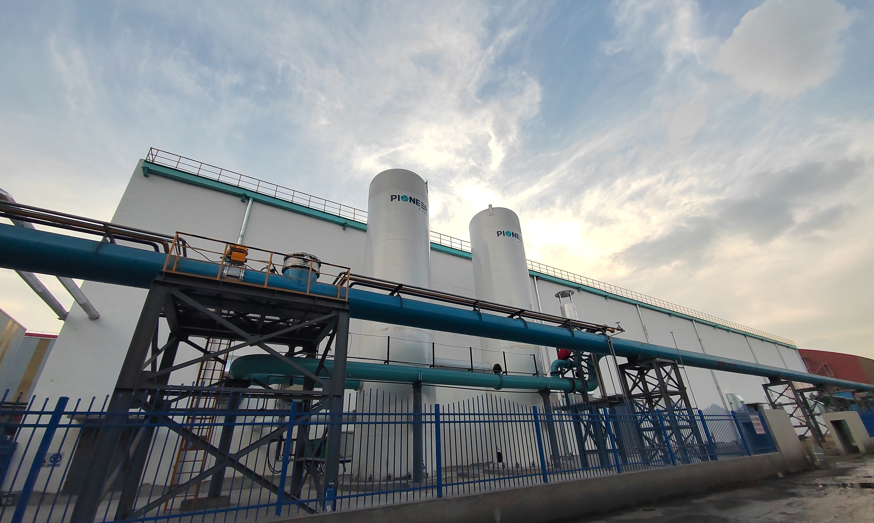
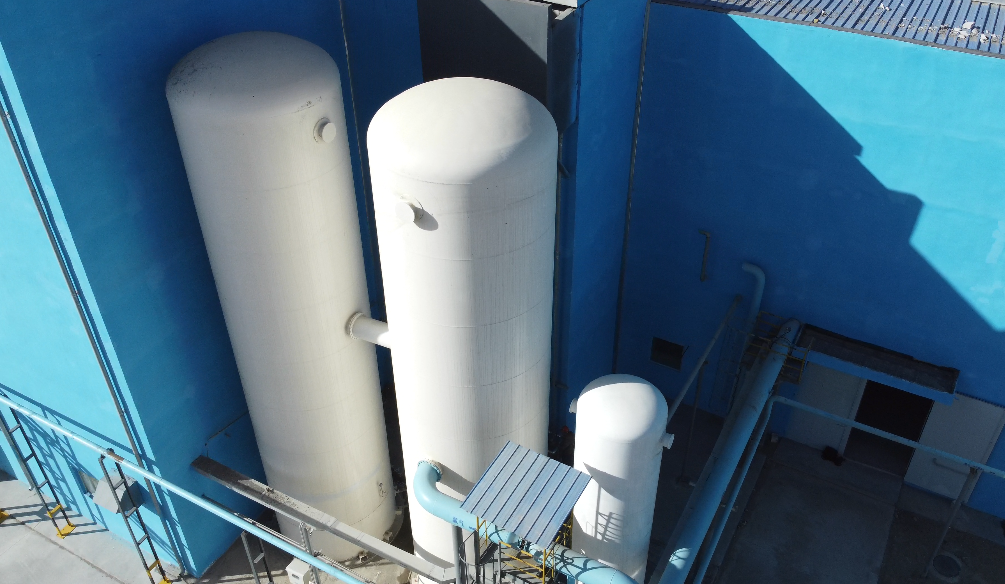
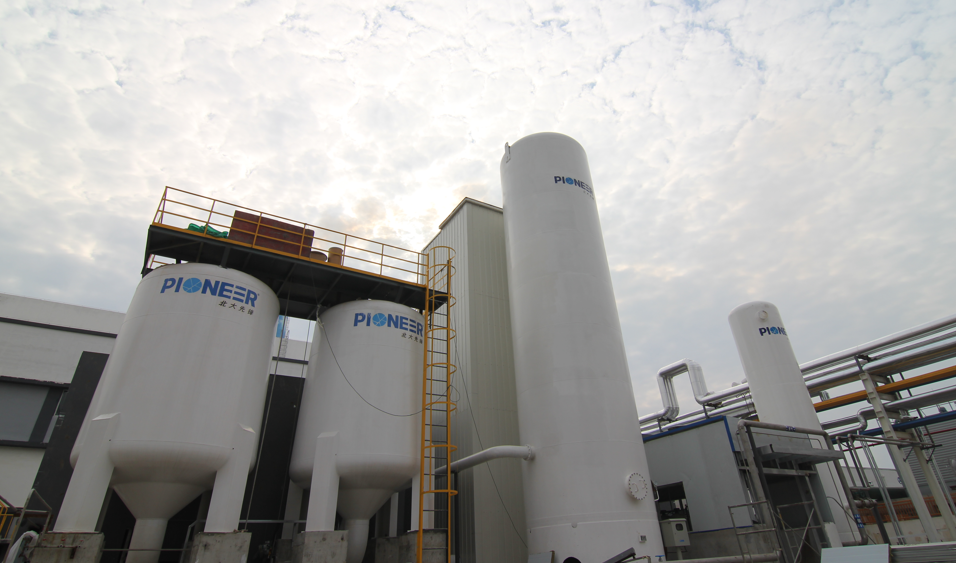
For U.S. manufacturers evaluating customer-owned oxygen generation, PKU Pioneer is relevant as an EPC, turnkey, and customer-owned plant supplier with long experience in VPSA and PSA gas separation rather than a BOO bulk-supply model. The company has completed more than 400 industrial projects in over 20 countries and has installed oxygen capacity exceeding 2 million Nm3 per hour, with certifications including ISO, CE, and ASME that support alignment with international equipment and fabrication expectations. Its integrated model combines in-house R&D, proprietary adsorbent and catalyst production, engineering, fabrication, and commissioning, which matters for U.S. buyers seeking traceability of core materials, tighter process control, and factory testing discipline. The company’s oxygen portfolio spans small modular units to ultra-large VPSA plants, including record-scale references, while typical energy performance is often below 0.3 kWh per Nm3 with rapid startup and stable turndown capability. For the U.S. market, this is especially useful for end users, distributors, dealers, brand owners, and project developers that need flexible cooperation models such as OEM, ODM, wholesale packages, direct retail supply of customer-owned systems, or regional distribution support for industrial projects. Importantly, the company does not position itself as a remote exporter only; it supports projects through structured pre-sales engineering, proposal customization, commissioning, upgrades, pilot testing, consulting, and after-sales response, with established international delivery experience and ongoing overseas market activity that demonstrates long-term commitment to local buyers who want documented performance guarantees and lifecycle support. Buyers who want to review the company’s technology background can see more on its technical capabilities page, and those preparing a U.S. project can request direct engineering discussion through the contact page.
What Makes a U.S. Business Case Fail
The most common mistake is comparing a plant only against the nominal commodity portion of a liquid oxygen contract. If freight, storage, emergency deliveries, and process losses are excluded, the analysis can understate savings dramatically.
Another common problem is overestimating purity needs. Some project teams specify near-cryogenic purity when the actual application performs well at VPSA oxygen purity. This inflates capex and shifts the project toward the wrong technology.
Failure also occurs when there is no backup strategy. Even an on-site plant should be paired with practical resilience planning, such as liquid backup, redundancy, or spare critical components. Management will resist a proposal that appears to replace one single point of failure with another.
Finally, some projects ignore service capability. The best equipment proposition still needs startup support, operator training, spare parts planning, and a realistic field response plan inside the United States.
2026 Trends Shaping Oxygen Plant Decisions
By 2026, several trends are likely to influence oxygen generation investment in the United States.
Digitalization will continue to improve plant optimization. Remote diagnostics, predictive maintenance, and better blower and valve monitoring can reduce downtime and lower service costs.
Energy efficiency will remain central. Rising scrutiny on industrial electricity use will push buyers to demand guaranteed specific power and better integration with site power strategies, including demand response and renewable sourcing.
Decarbonization pressure will expand beyond direct emissions. Companies will increasingly examine the carbon impact of trucking, delivered gas logistics, and furnace efficiency gains from oxygen enrichment.
Reshoring and industrial policy will keep supporting domestic capital investment. As more manufacturers expand in states such as Texas, Ohio, Tennessee, and Arizona, utility independence becomes part of broader supply chain resilience planning.
There will also be more modular growth strategies. Instead of one oversized installation, many buyers will prefer phased VPSA capacity that aligns with plant ramp-up, preserving capital while protecting future expansion.
Frequently Asked Questions
Is VPSA or PSA better for an oxygen plant business case in the United States?
For smaller demand and compact applications, PSA may be sufficient. For medium-to-large continuous industrial demand where moderate purity is acceptable, VPSA often produces a stronger business case because operating economics are usually better at scale.
What payback period is considered acceptable?
Many U.S. industrial companies look for simple payback in roughly two to five years, though strategic projects tied to expansion, resilience, or decarbonization may justify longer periods.
When does liquid oxygen remain the better option?
Liquid oxygen can remain preferable for low-volume users, temporary operations, highly variable demand, or applications requiring very high purity without enough utilization to support plant ownership.
Can a customer-owned oxygen plant still use liquid backup?
Yes. In fact, this is often the most practical structure. A customer-owned VPSA or PSA plant can cover base demand while liquid storage provides backup or peak coverage.
What should I ask a supplier before requesting a final proposal?
Ask for guaranteed oxygen flow, purity, delivery pressure, specific power, startup time, turndown range, maintenance schedule, spare parts list, warranty terms, local service plan, and total lifecycle cost assumptions.
Are international suppliers realistic for U.S. projects?
Yes, if they can demonstrate certifications, documented industrial references, compliant fabrication standards, clear engineering responsibility, and credible U.S.-oriented pre-sales and after-sales support. Many buyers consider them when cost-performance is attractive.
Which U.S. cities or regions most often show good economics?
Projects are often strong in inland industrial hubs where delivered oxygen logistics are costly, including parts of Ohio, Indiana, Pennsylvania, Texas inland corridors, and some Southeastern manufacturing regions.
Should the plant be purchased outright or financed?
That depends on capital policy. Outright purchase may maximize long-term savings, while financing, leasing, or phased EPC structures can make approval easier when capex is tight.
Final Takeaway
A well-built oxygen plant business case in the United States is strongest when it measures full delivered-gas cost, site-specific power cost, maintenance, process gains, and supply risk reduction together. For many medium-to-large industrial users, especially those in steel, glass, wastewater, and process manufacturing, a VPSA oxygen plant can offer a practical middle ground between purchased liquid oxygen and large cryogenic units. The best results come from matching the technology to actual process purity needs, choosing a supplier with real engineering depth and local support planning, and structuring the project as a customer-owned EPC or turnkey investment that creates both operating savings and supply resilience.

About the Author
Founded in 1999, PKU Pioneer specializes in VPSA and PSA gas separation technologies, adsorbents, catalysts, and integrated engineering solutions. Backed by strong R&D capability and extensive industrial project experience, the company serves global customers across steel, chemical, energy, environmental protection, and related industries.
Share