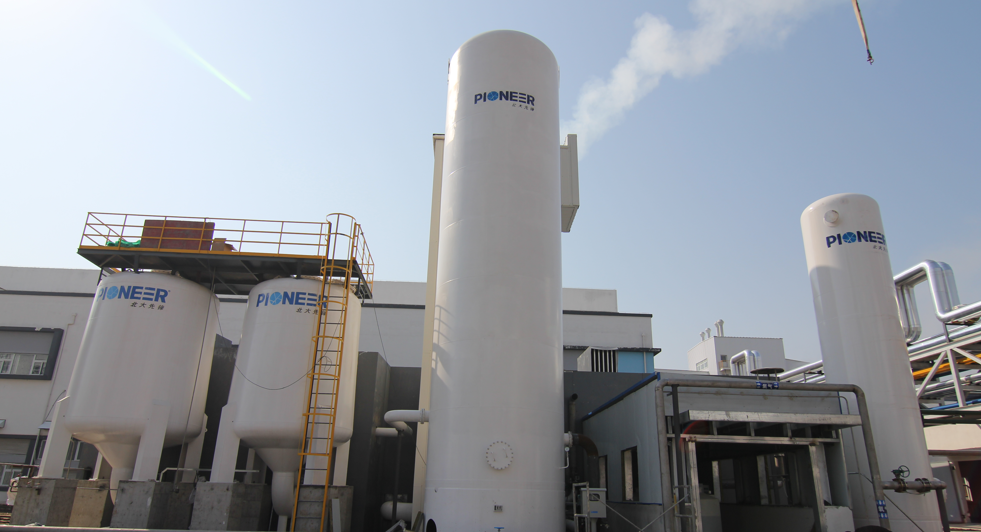
VPSA Oxygen Plant Engineering for the Global Market
Fast Technical Answer for Project Teams

A well-designed VPSA oxygen plant is an on-site oxygen generation system that separates oxygen from ambient air by using vacuum pressure swing adsorption, specialized molecular sieve, low-pressure air blowers, vacuum regeneration, automated valves, and PLC-based cycle control. For the Global Market, the most successful designs are not copied from a standard equipment catalog; they are engineered around oxygen flow rate, purity target, altitude, ambient temperature, utility price, available plot area, operating philosophy, maintenance capability, and integration with downstream users such as blast furnaces, glass furnaces, non-ferrous smelters, wastewater treatment basins, pulp bleaching lines, chemical oxidation units, or combustion enrichment systems.
In practical terms, a VPSA oxygen plant usually includes air intake filtration, a blower, air cooling and pretreatment, adsorption towers, molecular sieve beds, switching valves, a vacuum pump, oxygen buffer vessels, oxygen delivery control, nitrogen-rich exhaust handling, safety instrumentation, and a PLC or SCADA system. Typical VPSA oxygen purity is 80% to 94%, with many industrial projects operating at 90% to 93% oxygen depending on the economic balance between purity, recovery, power consumption, and equipment size. For very high purity oxygen, cryogenic air separation or a hybrid polishing step may be considered, but for large-volume medium-purity oxygen, VPSA is often one of the most economical options.
The direct buying advice is simple: define the real oxygen demand curve before requesting quotations. Buyers should provide minimum, normal, and peak oxygen flow; required oxygen purity; delivery pressure; site altitude; weather data; power tariff; water availability; plant layout drawings; and the downstream process tolerance for pressure or purity fluctuations. This information allows a reliable supplier to size the adsorption towers, select molecular sieve, calculate blower and vacuum pump power, design valve sequencing, and provide realistic energy consumption figures. A professional supplier should also clarify whether the offer is for EPC, turnkey delivery, or a customer-owned plant solution. For example, PKU Pioneer provides EPC/turnkey and customer-owned plant solutions, not BOO or on-site bulk supply services.
For readers seeking an overview of VPSA technology, the VPSA technology introduction explains how adsorption, depressurization, purge, and repressurization steps work together. For specific oxygen generation projects, the VPSA oxygen plant solution gives additional context on industrial applications, capacity ranges, and operating benefits.
| Input item | Typical range or requirement | Why it matters | Design consequence |
|---|---|---|---|
| Oxygen capacity | 50 to over 100,000 Nm3/h | Defines plant scale and number of adsorption trains | Impacts vessel diameter, blower size, valve size, and footprint |
| Oxygen purity | 80% to 94% | Determines adsorbent loading and cycle optimization | Higher purity usually increases power and equipment size |
| Delivery pressure | Low pressure to several bar after compression | Must match the downstream process | May require oxygen blower or compressor after buffer tank |
| Site altitude | Sea level to highland locations | Affects air density and machine capacity | Requires blower derating and larger volumetric handling |
| Ambient temperature | Arctic, temperate, tropical, or desert climates | Changes cooling duty and adsorption performance | May require larger coolers, shelters, or heat tracing |
| Power price | Varies widely by country and region | Energy is a major lifecycle cost | Influences equipment selection and cycle strategy |
| Operating mode | Continuous, variable load, seasonal, or standby | Determines automation and turndown needs | Requires load-following logic and robust startup sequences |
This table shows why capacity alone is not enough for accurate engineering. A plant in Rotterdam, Houston, Jebel Ali, Singapore, Shanghai, Mumbai, or São Paulo can have the same oxygen flow requirement but different equipment choices because climate, power cost, maintenance practice, and downstream process requirements vary greatly.
VPSA Oxygen System Architecture: Key Modules and Practical Roles

A VPSA oxygen plant is best understood as a coordinated system rather than a set of independent machines. The air intake system protects equipment from dust, salt mist, pollen, cement particles, and industrial aerosols. The blower provides the low-pressure air required for adsorption. Pretreatment components stabilize air temperature and remove liquid water or contaminants. The adsorption towers contain molecular sieve that preferentially adsorbs nitrogen while oxygen passes through as product gas. The vacuum pump regenerates the molecular sieve by lowering pressure and removing nitrogen-rich gas. Product buffer vessels smooth oxygen flow and purity. Valves execute the cycle, and the control system coordinates every step in milliseconds to seconds.
The architecture usually follows a two-bed, three-bed, or multi-bed arrangement. Smaller plants may use compact modular skids, while large steel, chemical, and glass projects use field-erected vessels, large rotary or butterfly switching valves, heavy-duty blowers, and high-capacity vacuum machines. In global trade hubs such as Antwerp, Busan, Tianjin, Los Angeles, Dubai, Durban, and Santos, modularization is often chosen to reduce site installation time, while very large projects near steel clusters are usually delivered as engineered systems with major equipment assembled on site.
In modern designs, the oxygen production island is integrated with utilities and safety systems. The PLC monitors valve positions, tower pressure, oxygen purity, oxygen flow, blower vibration, bearing temperature, vacuum level, cooling water flow, and emergency shutdown signals. SCADA platforms can display real-time trends and allow operators to adjust load within the approved operating envelope. Remote support is particularly valuable for global users in mines, island industrial parks, inland steel plants, and chemical facilities far from large service centers.
The product types in the VPSA family include small skid-mounted VPSA oxygen plants, medium-capacity packaged systems, large field-erected oxygen plants, multi-train systems for steel works, and hybrid solutions combined with oxygen compressors, buffer storage, or backup liquid oxygen. PSA oxygen generators are also used in smaller applications where compactness and higher delivery pressure are priorities. For comparison, see the PSA oxygen generator information, which is useful when deciding between PSA and VPSA for smaller or medium-scale demand.
| Module | Main function | Key equipment | Common engineering focus |
|---|---|---|---|
| Air intake | Introduces clean ambient air | Weather hood, coarse filter, silencer | Dust load, noise, rain protection, inlet pressure loss |
| Air supply | Provides adsorption pressure | Roots blower, centrifugal blower, inlet guide vanes | Efficiency, turndown, vibration, discharge temperature |
| Pretreatment | Controls air quality before towers | Aftercooler, separator, fine filter, drainage | Moisture removal, pressure drop, corrosion control |
| Adsorption section | Separates oxygen from nitrogen | Adsorption vessels, distributors, molecular sieve | Bed uniformity, cycle time, adsorbent life |
| Vacuum regeneration | Desorbs nitrogen from adsorbent | Vacuum pump, silencer, exhaust stack | Vacuum level, power use, exhaust noise |
| Product handling | Stabilizes and delivers oxygen | Buffer tank, flow meter, analyzer, control valve | Pressure stability, purity control, downstream matching |
| Automation | Coordinates cycle and safety | PLC, SCADA, instruments, actuated valves | Reliability, alarm strategy, remote diagnostics |
The most important lesson from this module view is that local optimization can damage total performance. A low-cost valve with slow response can reduce oxygen recovery. A poorly selected blower can increase energy cost for ten or fifteen years. Inadequate pretreatment can shorten molecular sieve life. Therefore, EPC-style engineering must evaluate the complete oxygen generation chain.
Line Chart: Global on-site oxygen demand is expected to keep growing as industries pursue energy efficiency, lower logistics risk, and lower carbon intensity.
Adsorption Tower Engineering: Vessel Sizing, Molecular Sieve, and Bed Arrangement

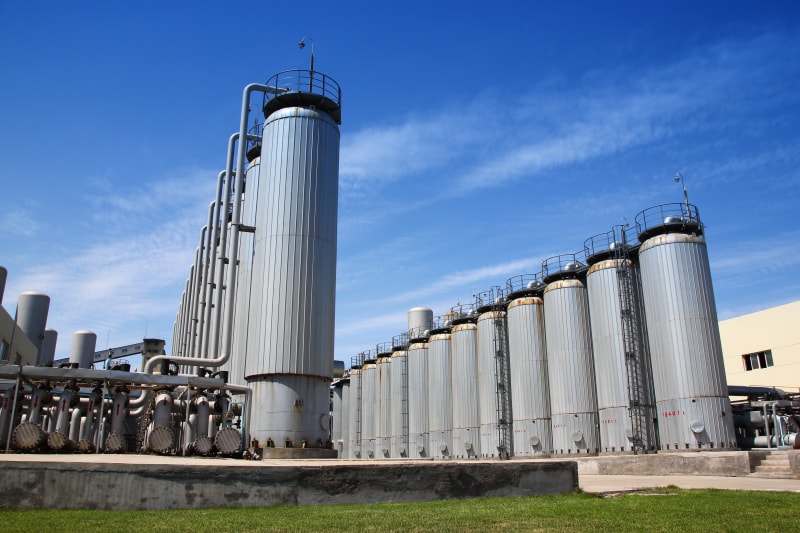
The adsorption tower is the heart of a VPSA oxygen plant. Vessel sizing is based on superficial gas velocity, cycle pressure, vacuum pressure, mass transfer zone behavior, pressure drop, adsorbent loading, product purity target, and mechanical code requirements. A well-designed tower must distribute air evenly across the bed so that the molecular sieve is fully utilized. Channeling, dead zones, uneven loading, excessive bed lift, or poor distributor geometry can reduce oxygen recovery and shorten adsorbent life.
For small modular units, vertical cylindrical vessels are common because they simplify packaging and shipping. For large oxygen systems, vessel diameter and bed height become major cost and performance factors. The designer must balance a low pressure drop with good mass transfer. Too high a gas velocity can increase attrition and reduce separation efficiency. Too low a velocity may increase vessel size and capital cost. The tower shell must also satisfy local pressure vessel codes, which may include ASME, CE-related requirements, Chinese standards, or local acceptance procedures in markets such as India, Brazil, Saudi Arabia, Türkiye, South Africa, the European Union, and Southeast Asia.
Molecular sieve selection has a direct effect on oxygen recovery, power consumption, and equipment footprint. High-performance lithium-based or specially formulated adsorbents can improve nitrogen adsorption capacity and selectivity, allowing a smaller bed or lower energy consumption. PKU Pioneer has developed proprietary adsorbent products such as PU-8 molecular sieve and applies its adsorption know-how in VPSA oxygen, PSA carbon monoxide, and PSA hydrogen projects. This is an example of technological capability that goes beyond mechanical fabrication: the process cycle, adsorbent properties, distributor design, and control logic must be developed together.
Bed configuration may include support balls, activated alumina or guard layers, main molecular sieve layers, top retaining screens, compression devices, and gas distributors. The plant may use two towers alternating between adsorption and regeneration, or more complex multi-tower cycles that improve product stability and recovery. In large projects, multiple trains may run in parallel to provide redundancy and load flexibility. A steel plant near Port Hedland or a glass facility near Hamburg may require different bed arrangements because dust conditions, uptime expectations, and maintenance windows differ.
| Design choice | Typical option | Advantage | Risk if poorly designed |
|---|---|---|---|
| Vessel orientation | Vertical vessel | Compact footprint and easier bed loading | Height restrictions may complicate indoor installation |
| Vessel orientation | Horizontal vessel | Useful for special height-limited sites | Distribution uniformity can be more challenging |
| Adsorbent type | High-performance molecular sieve | Higher recovery and lower power per Nm3 oxygen | Requires strict moisture and contamination control |
| Guard layer | Alumina or protective media | Reduces moisture impact on main sieve | Wrong sizing can add pressure drop |
| Distributor | Engineered flow distribution plate or pipe system | Improves bed utilization | Uneven flow causes early breakthrough |
| Bed restraint | Screen, grid, spring, or compression system | Limits adsorbent movement and attrition | Bed settling can lead to dust and efficiency loss |
| Cycle arrangement | Two-bed or multi-bed | Matches capacity and stability needs | Wrong cycle selection causes purity fluctuation |
The tower specification should always be connected to lifecycle economics. A cheaper vessel with higher pressure drop may appear attractive at purchase, but the extra blower and vacuum power can cost far more over ten years. Similarly, premium adsorbent can reduce overall capital cost if it allows smaller towers and lower installed power.
Blower and Vacuum Pump Engineering: Matching Equipment to Capacity Targets
The blower and vacuum pump are the largest rotating machines in many VPSA oxygen plants, and they strongly influence power consumption, noise, maintenance, and reliability. The blower must deliver air at the required flow and pressure during the adsorption step. The vacuum pump must remove nitrogen-rich gas from the bed and reach the required vacuum level during regeneration. Both machines must be selected for the actual site conditions, not only standard factory conditions.
Capacity targeting begins with oxygen demand. If the user needs 10,000 Nm3/h of oxygen at 90% purity, the plant designer calculates air feed, oxygen recovery, cycle step timing, bed size, adsorption pressure, vacuum pressure, and losses. From these calculations, the blower and vacuum pump duties are established. For large systems, the designer may consider centrifugal blowers, Roots blowers, liquid ring vacuum pumps, dry screw vacuum pumps, or combinations depending on capacity, efficiency, water availability, environmental rules, and maintenance skills.
In regions with high electricity costs, such as parts of Europe, Japan, South Korea, Australia, and island markets, equipment efficiency can dominate purchasing decisions. In regions where ambient temperature is high, such as the Gulf, India, Southeast Asia, and North Africa, thermal margins are essential. In mining regions of Chile, Peru, South Africa, and western China, altitude affects air density, which changes volumetric flow and motor loading. These real-world conditions should be reflected in guarantees.
VPSA oxygen plants often target low energy consumption, with advanced systems frequently designed to operate below 0.3 kWh per Nm3 of oxygen in suitable applications and conditions. However, no responsible supplier should promise one universal number for all projects. Power consumption depends on oxygen purity, flow, altitude, inlet air temperature, cooling design, delivery pressure, adsorbent performance, and load profile. A transparent quotation should state battery limit, assumed conditions, guaranteed values, and test method.
Bar Chart: Industry demand for on-site oxygen differs by region and sector, but heavy industry remains the anchor market.
When evaluating a blower or vacuum pump package, buyers should review motor efficiency class, lubrication system, cooling method, inlet filters, silencers, vibration monitoring, spare parts availability, and local service support. The cheapest rotating equipment can become expensive if it causes frequent downtime. A robust design includes safe startup and shutdown sequences, anti-surge or anti-overload protection where applicable, sound attenuation, flexible connectors, and adequate foundation design.
Air Pretreatment Design: Filtration, Cooling, and Moisture Control
Air pretreatment protects the molecular sieve and stabilizes the separation process. Ambient air contains dust, moisture, oil vapor from nearby equipment, acidic gases in some industrial parks, salt mist near ports, and seasonal contaminants such as pollen or smoke. If these contaminants enter the adsorption bed, they can increase pressure drop, reduce adsorption capacity, or permanently damage the adsorbent. Therefore, pretreatment must be designed for the actual site environment.
The first line of defense is the intake filter. In a cement plant, steel mill, or foundry area, dust loading can be high, and filter replacement access is important. Near ports such as Singapore, Busan, Jebel Ali, Rotterdam, or Santos, salt-laden air can increase corrosion risks. In desert regions, sand and high temperature require rugged filtration and weather protection. In cold climates, snow ingestion and icing must be avoided.
Cooling is also essential because blower discharge air can be hot. Higher air temperature reduces adsorption performance and may increase moisture load. Aftercoolers, air-to-air coolers, water-cooled exchangers, and separators are used depending on site utilities. Drainage must be reliable because liquid water entering the adsorption tower can severely damage molecular sieve. Automatic drains should be monitored, and manual bypasses should be available for maintenance.
Moisture removal does not always require a full refrigerated dryer in VPSA systems, but the design must prevent liquid water carryover and manage relative humidity. Some projects use guard beds or protective adsorbent layers. The correct choice depends on climate and adsorbent sensitivity. For tropical areas such as Indonesia, Malaysia, Thailand, Vietnam, coastal India, and Brazil, humidity control deserves special attention. For high-altitude dry regions, filtration and temperature management may be more important than condensate load.
| Site condition | Main risk | Recommended measure | Maintenance focus |
|---|---|---|---|
| Coastal industrial zone | Salt mist and corrosion | Corrosion-resistant materials and efficient intake filtration | Inspect housings, dampers, and instrument fittings |
| Desert or dry mining site | Sand and dust | Multi-stage filtration and weather hood design | Frequent differential pressure checks |
| Tropical climate | High moisture load | Effective aftercooling and condensate separation | Drain function and separator performance |
| Cold climate | Icing and snow entry | Anti-icing intake layout and heat tracing where needed | Winter inspection and freeze protection |
| Steel plant | Iron oxide dust and heat radiation | Remote intake location and heavy-duty filters | Filter replacement and duct cleaning |
| Chemical park | Trace corrosive gases | Site air assessment and special media if required | Periodic adsorbent health monitoring |
| Urban wastewater site | Odor and biological aerosols | Protected intake away from exhaust vents | Filter hygiene and intake inspection |
A reliable pretreatment system reduces unplanned shutdowns. It is also easier to maintain when designers provide adequate space around filters, coolers, drains, and instruments. Maintenance personnel should not need to climb over piping or remove unrelated equipment simply to replace filter elements.
Plant Layout Principles: Spacing, Ventilation, and Maintenance Access
Good layout design improves safety, maintainability, construction speed, and long-term operating cost. VPSA oxygen plants require clear access for blowers, vacuum pumps, adsorption towers, valves, filters, coolers, electrical panels, and oxygen analyzers. Large rotating machines need removal space for motors, bearings, impellers, couplings, and seals. Adsorption vessels need access for inspection, adsorbent loading, and future replacement. Valve skids need platforms or floor-level access for actuator maintenance.
Ventilation is important because the plant handles oxygen-enriched product and nitrogen-rich exhaust. Oxygen is not flammable by itself, but it greatly accelerates combustion. Equipment rooms must avoid oxygen accumulation, and oil or grease contamination must be strictly controlled. Nitrogen-rich exhaust can create asphyxiation risks in poorly ventilated areas. Therefore, oxygen vents and vacuum exhausts should discharge to safe locations according to local codes and site risk assessment.
Spacing should consider construction logistics. If modules arrive through the Port of Shanghai, Hamburg, Houston, Mumbai, Durban, or Dubai and then travel by road, transport dimensions can limit skid size. If heavy equipment is installed in an existing steel plant with narrow roads, crane access and foundation sequence must be planned early. Outdoor installation may reduce building cost but requires weather protection, noise control, and winterization in cold regions. Indoor installation improves protection but needs ventilation, crane beams, and safe access.
For global projects, local standards may require fire separation distances, electrical classification assessment, pressure vessel inspection zones, noise boundary limits, or building permits. The layout should be developed jointly by process, mechanical, civil, electrical, and safety engineers. A drawing that looks compact in a proposal can become difficult and costly if it ignores drain routing, cable tray access, forklift routes, or maintenance lifting points.
Applications also influence layout. Steel and non-ferrous users may place the oxygen plant near combustion or enrichment users to reduce pipeline length. Wastewater plants may prefer compact containerized systems near aeration basins. Glass plants may need stable oxygen supply to furnaces and may include backup oxygen storage. Chemical plants usually require stricter instrument integration and emergency shutdown interfaces.
Piping and Instrumentation: Flow Direction, Valves, and Safety Controls
Piping and instrumentation design converts process calculations into a safe operating plant. The main airflow path begins at the ambient air intake, passes through filtration and the air blower, moves through cooling and separation equipment, enters the adsorption towers, and leaves as oxygen-rich product or nitrogen-rich exhaust depending on the cycle step. Product oxygen flows to a buffer tank and then to the user through flow control and pressure regulation. Vacuum exhaust is routed through silencers or stacks to a safe discharge point.
Valve selection is especially important in VPSA systems because cycle valves open and close frequently. These valves must handle large flows, low pressure drop, fast response, and millions of cycles. Butterfly valves, double eccentric valves, pneumatic actuators, position switches, and special sealing designs may be used. A valve that leaks or responds slowly can reduce oxygen purity and increase energy consumption. Critical valves should provide open and closed feedback to the PLC, and the system should alarm if valve movement time exceeds limits.
Instrumentation usually includes pressure transmitters on adsorption towers, blower discharge, vacuum lines, oxygen buffer tanks, and product headers. Flow meters measure feed air or product oxygen. Oxygen analyzers monitor purity continuously. Temperature sensors protect rotating machines and verify cooler performance. Vibration and bearing temperature monitoring improve reliability. Safety devices include relief valves, non-return valves, emergency stops, oxygen-compatible components, grounding, and interlocks.
Oxygen service requires strict cleanliness. Piping and components exposed to high oxygen concentration should be cleaned and protected from oil, grease, incompatible lubricants, and combustible debris. Even if the oxygen purity is below cryogenic oxygen plant levels, oxygen-enriched gas still demands disciplined material selection and maintenance procedures. Operators should use oxygen-compatible sealants, gaskets, and lubricants where required.
For buyers, the piping and instrumentation diagram should be reviewed carefully before contract finalization. It should show battery limits, manual valves, automated valves, bypasses, drains, vents, sampling points, analyzers, safety interlocks, and maintenance isolation. A complete P&ID helps avoid disputes during commissioning and makes future troubleshooting easier.
PLC and SCADA Integration: Automation, Remote Monitoring, and Alarm Strategy
Automation is central to VPSA performance because the adsorption cycle depends on precise timing and stable machine coordination. The PLC controls blower startup, vacuum pump startup, valve sequencing, purge timing, pressure equalization, product delivery, purity protection, load adjustment, and emergency shutdown. Modern systems include SCADA screens for trend viewing, alarm management, operator guidance, and remote diagnostics.
A typical control philosophy includes automatic startup, oxygen purity ramp-up, product admission to the user only after purity is qualified, load adjustment according to user demand, and automatic shutdown if critical alarms occur. The system can maintain stable oxygen purity while load changes within the designed range, commonly from partial load to full load. Advanced systems may support rapid startup, sometimes around 20 minutes depending on plant size and conditions, which is valuable for users who need flexible production.
Remote monitoring is increasingly important in the Global Market. Operators in Africa, Southeast Asia, Latin America, the Middle East, and Central Asia may need fast support from process experts. Secure remote access can allow engineers to review trends, diagnose valve timing issues, check vacuum performance, evaluate analyzer drift, and recommend operating adjustments. Cybersecurity must be considered, especially in steel mills, chemical plants, and energy facilities where industrial networks are protected.
Alarm strategy should be practical, not excessive. Too many nuisance alarms can cause operators to ignore important signals. Critical alarms include low oxygen purity, high product pressure, low vacuum, blower trip, vacuum pump trip, valve failure, analyzer fault, high bearing temperature, high vibration, cooling failure, emergency stop, and unsafe oxygen venting conditions. Each alarm should have a clear operator action.
Area Chart: The trend in oxygen sourcing is shifting from delivered liquid oxygen toward on-site generation and hybrid strategies in many industrial regions.
The 2026 trend is toward smarter and more sustainable oxygen plants. Users are asking for lower specific power, wider turndown, digital maintenance, carbon accounting, and better integration with renewable electricity. Policy pressure on industrial emissions is also encouraging oxygen-enriched combustion, high-efficiency metallurgy, wastewater treatment upgrades, and by-product gas utilization. Future-ready VPSA plants will combine advanced adsorbents, efficient rotating machines, predictive analytics, and modular construction.
PKU Pioneer Capabilities and Global Project Experience
PKU Pioneer, formally Beijing Peking University Pioneer Technology Corporation Ltd., is a high-tech enterprise specializing in VPSA and PSA gas separation technologies. Founded in 1999 with roots in Peking University’s College of Chemistry and Molecular Engineering, the company has developed a strong record in industrial oxygen generation, high-purity carbon monoxide production, hydrogen recovery, and industrial by-product gas utilization. Its experience includes more than 400 industrial projects in over 20 countries and a total installed oxygen capacity exceeding 2 million Nm3 per hour.
Technological capabilities are a major part of the company’s value. PKU Pioneer combines process research, proprietary adsorbent development, catalyst knowledge, cycle design, and industrial engineering. Its VPSA oxygen systems cover capacities from small modular units around 50 Nm3/h to ultra-large plants above 100,000 Nm3/h, with typical oxygen purity between 80% and 94%. The company has developed specialized adsorbents such as PU-8 molecular sieve and applies adsorption science across oxygen, carbon monoxide, and hydrogen applications. Its large-scale VPSA oxygen references include major steel industry installations, including record-scale systems serving oxygen-enriched blast furnace operations.
Manufacturing capabilities are also integrated. PKU Pioneer’s model includes in-house engineering, adsorbent and catalyst manufacturing, equipment fabrication coordination, quality control, and complete plant delivery. This integrated approach helps control the relationship between process design and hardware execution. It is particularly useful for large industrial clients that need predictable performance, reliable spare parts, and engineered customization rather than a generic equipment package. Certifications and engineering practices include internationally relevant requirements such as ISO, CE, and ASME-related project execution depending on project scope and destination.
Service capabilities cover consultation, pilot testing, feasibility analysis, engineering design, commissioning, operation support, maintenance guidance, retrofits, upgrades, and long-term technical assistance. The company provides EPC/turnkey and customer-owned plant solutions. It does not position these services as BOO or on-site bulk oxygen supply. This distinction matters for buyers: under a customer-owned plant model, the industrial user invests in and owns the oxygen generation asset, gaining control over production, energy optimization, and long-term operating cost.
Representative case studies show the breadth of the technology. In steel, large VPSA oxygen plants support oxygen-enriched processes that improve productivity and reduce energy cost. In by-product gas utilization, PSA technology has been used to recover carbon monoxide from blast furnace gas, replacing large quantities of fuel and improving resource efficiency. In chemical and steel co-production, waste gas streams can be converted into valuable chemicals such as formic acid or monoethylene glycol feedstock routes. In Southeast Asia, a 10,000 Nm3/h VPSA oxygen plant in Vietnam demonstrates fast deployment and growing international adoption.
Readers can learn more about the company through the PKU Pioneer company overview and review reference achievements in the world-class innovative project portfolio. For general navigation and technical resources, the PKU Pioneer official website provides access to product and application information.
Comparison Chart: Supplier evaluation should balance technology depth, manufacturing control, service capability, and lifecycle economics rather than purchase price alone.
| Evaluation item | What to ask | Positive signal | Warning sign |
|---|---|---|---|
| Process design | Can the supplier explain cycle steps and guarantees? | Clear mass balance and operating assumptions | Only a price and capacity number are provided |
| Adsorbent | Who selects and supports the molecular sieve? | In-house or proven adsorbent expertise | No data on adsorbent life or protection |
| Energy consumption | What is the guaranteed kWh per Nm3? | Defined conditions and test method | Universal promise without site conditions |
| References | Are there similar projects in size and industry? | Comparable operating installations | Only small units shown for a large plant bid |
| Automation | Does the system include PLC, SCADA, and alarms? | Detailed control philosophy and remote support | Manual or poorly documented operation |
| After-sales | How are spare parts and technical support handled? | Response commitments and maintenance plan | No structured service program |
| Commercial model | Is the plant customer-owned, EPC, or turnkey? | Clear scope, battery limits, and ownership | Unclear responsibility after commissioning |
This checklist helps procurement teams compare proposals on technical and lifecycle value. A lower purchase price can be outweighed by higher energy use, short adsorbent life, weak automation, or limited support.
Frequently Asked Questions About VPSA Oxygen Plant Design
What oxygen purity can a VPSA oxygen plant produce?
Most industrial VPSA oxygen plants produce 80% to 94% oxygen. The best purity depends on application economics. Steel, glass, non-ferrous, wastewater, and combustion processes often do not require 99.5% oxygen, so VPSA can provide a lower-cost solution than high-purity cryogenic oxygen in many cases.
How is VPSA different from PSA oxygen generation?
Both use adsorption, but VPSA operates with low-pressure adsorption and vacuum regeneration, making it efficient for larger oxygen flows. PSA oxygen systems often use compressed air and are common for smaller or medium applications where compact equipment and higher delivery pressure are useful.
What information is needed for a reliable quotation?
Provide oxygen capacity, purity, delivery pressure, operating hours, load variation, altitude, ambient temperature, humidity, power supply, cooling water availability, site layout, local standards, and downstream process details. Better input data leads to better equipment sizing and more reliable guarantees.
How long does startup take?
Startup time depends on plant size, control logic, and operating condition. Advanced VPSA systems can start quickly compared with cryogenic plants, and some industrial systems can reach useful operation in around 20 minutes after proper sequence completion. The exact time should be confirmed for each project.
What industries use VPSA oxygen plants?
Major users include steel, non-ferrous metallurgy, glass, chemicals, pulp and paper, wastewater treatment, energy, gasification, cement, and environmental industries. Ports, industrial parks, and remote mining regions also adopt on-site oxygen generation to reduce dependence on delivered oxygen logistics.
How should a plant owner plan maintenance?
Maintenance should cover filters, drains, coolers, valves, actuators, analyzers, blowers, vacuum pumps, instruments, and adsorbent health. Operators should track pressure drop, oxygen purity, vacuum level, power consumption, and valve cycle performance. Preventive maintenance is cheaper than emergency shutdown recovery.
Can a VPSA plant follow variable demand?
Yes, well-designed VPSA plants can support flexible load operation within the approved design range. The control system must coordinate blower flow, vacuum performance, valve timing, and product delivery so that purity remains stable during load changes.
Is VPSA suitable for the Global Market in 2026 and beyond?
Yes. The global trend toward energy efficiency, lower carbon intensity, resilient supply chains, and digital operation supports wider adoption of on-site oxygen generation. Future projects will emphasize efficient adsorbents, smart controls, remote diagnostics, modular installation, and integration with industrial decarbonization strategies.
Does PKU Pioneer provide BOO or on-site bulk oxygen supply?
No. PKU Pioneer provides EPC/turnkey and customer-owned plant solutions for VPSA and PSA gas separation projects. The customer owns the plant asset and operates it according to the agreed project scope, with technical support, commissioning, maintenance guidance, upgrades, and consulting available.
How can a buyer reduce project risk?
Choose a supplier with proven references, adsorption technology expertise, strong engineering capability, manufacturing control, clear guarantees, and structured service support. Review the P&ID, layout, control philosophy, energy guarantee, spare parts list, and commissioning plan before signing the contract.

About the Author
Founded in 1999, PKU Pioneer specializes in VPSA and PSA gas separation technologies, adsorbents, catalysts, and integrated engineering solutions. Backed by strong R&D capability and extensive industrial project experience, the company serves global customers across steel, chemical, energy, environmental protection, and related industries.
Share