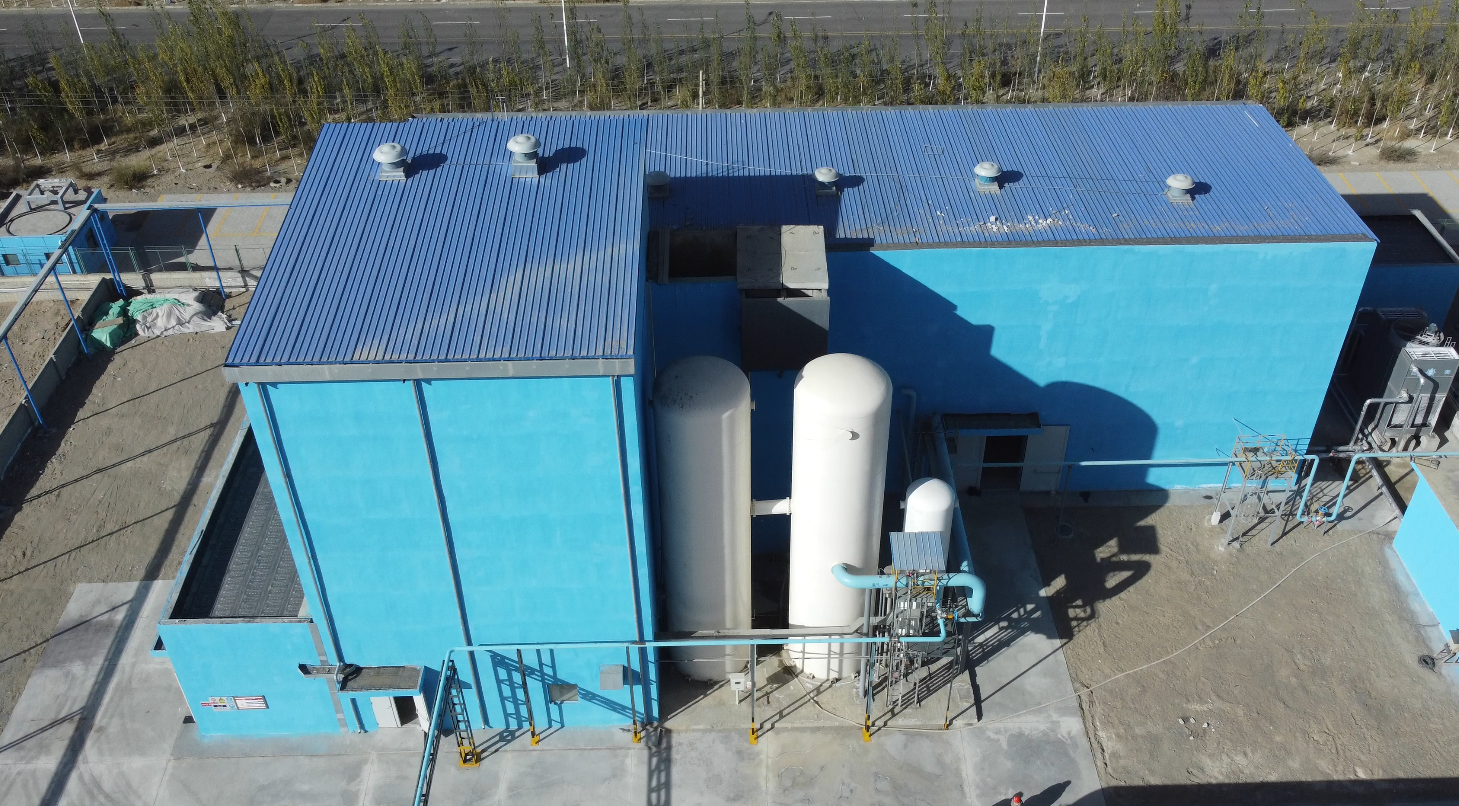
Used VPSA Oxygen Plant in India: What to Check Before You Buy
Quick Answer

Yes, buying a used VPSA oxygen plant in India can make financial sense, but only when the plant has verifiable operating history, a strong inspection record, and a realistic refurbishment scope. For most Indian buyers, the biggest risks are not the steel structure or vessels; they are hidden losses in adsorbent performance, blower efficiency, valve leakage, automation obsolescence, and missing documentation for motors, pressure parts, and electrical systems. A used unit can be a good option for steel rerolling mills, glass furnaces, lead smelters, non-ferrous units, and industrial combustion users if the delivered oxygen purity, pressure, power consumption, and turndown range are matched to the process.
In practice, buyers in India should shortlist suppliers and service partners that can support inspection, refurbishment, commissioning, and spare parts access in industrial regions such as Odisha, Chhattisgarh, Jharkhand, गुजरात, Maharashtra, Tamil Nadu, and Andhra Pradesh. Commonly considered names in the Indian market include Inox Air Products, Air Liquide India, Linde India, Praxair-style engineering service networks through Linde, Novair India channel partners, and local oxygen system integrators serving Raipur, Rourkela, Jamshedpur, Visakhapatnam, Kandla-linked importers, and Mumbai trading networks. Qualified international suppliers can also be considered, especially Chinese manufacturers with relevant certifications, EPC capability, and strong pre-sales and after-sales support, because the cost-performance balance can be attractive when the plant is properly audited and locally supported. Buyers should insist on a process guarantee after refurbishment rather than purchasing only on nameplate capacity.
India Market Overview

India has become one of the most active markets for oxygen generation assets because oxygen is no longer viewed only as a medical emergency commodity or a purchased gas utility. In industrial clusters, it is now a process efficiency tool. Steel mills use oxygen enrichment to improve combustion and productivity. Glass manufacturers use oxygen to stabilize flame temperature and product quality. Non-ferrous metallurgy operations depend on controlled oxidation. Waste treatment, paper, chemicals, and wastewater plants use oxygen to intensify biological or thermal processes. These industrial realities explain why interest in used VPSA oxygen plant options has expanded in India, especially among small and mid-sized operators that want lower initial capital expenditure than a brand-new system.
The used market usually appears in three forms: a complete running plant sold after capacity expansion, a relocated unit from another country, or mixed refurbishment packages built from recovered vessels, skids, and control sections. Each route has a different risk profile. Indian buyers often encounter listings through project brokers in Mumbai, Chennai, Delhi NCR, and Ahmedabad, or through industrial asset channels connected to ports such as Nhava Sheva, Mundra, Kandla, Chennai Port, and Visakhapatnam. However, the best deals are not always the cheapest listed assets. The winning purchase is normally the one with the clearest operating logs, service history, original drawings, and practical retrofit plan.
A used VPSA oxygen plant in India should be evaluated against local power quality, ambient temperature, dust load, maintenance skill level, and the buyer’s oxygen consumption profile. Many older imported plants were designed for relatively stable utilities and cleaner intake conditions than those found near Indian steel, mining, and cement belts. That means derating, inlet filtration upgrades, PLC migration, and blower overhaul are often necessary. If these costs are ignored, the apparent purchase savings can disappear within the first year of operation.
For buyers comparing ownership models, it is important to distinguish between buying equipment and buying gas. This article focuses on customer-owned plants, refurbishment, EPC, and turnkey delivery. That model is especially relevant in India where many industrial users want tighter control over operating costs and oxygen availability rather than relying fully on cylinder or liquid supply contracts.
The market growth pattern above is realistic for India because more plants are moving away from dependence on purchased liquid oxygen where logistics, freight, and supply interruptions can affect margins. Even when a buyer chooses a used unit, the demand driver remains the same: secure onsite oxygen at predictable cost.
Product Types in the Used Market

When Indian buyers search for a used VPSA oxygen plant, they often see very different technologies mixed under one label. A correct technical classification prevents expensive mistakes.
| Plant type | Typical oxygen purity | Typical scale | Best-fit industries in India | Main buying advantage | Main caution in used purchase |
|---|---|---|---|---|---|
| VPSA oxygen plant | 80% to 94% | Medium to very large | Steel, glass, non-ferrous, furnaces | Lower specific power at larger scale | Blower, vacuum pump, adsorbent and valve wear |
| PSA oxygen generator | 90% to 95% | Small to medium | Hospitals, fabrication, small industry | Compact layout and simpler installation | Often confused with VPSA duty expectations |
| Cryogenic ASU | 99%+ | Large | Integrated steel, specialty gases | High purity and multi-product capability | Not comparable to used VPSA cost or complexity |
| Skid-refurbished VPSA package | 80% to 93% | Small to medium | Regional industrial users | Faster redeployment | Mixed-origin components may complicate spares |
| Relocated complete oxygen plant | Original design dependent | Medium to large | Growing process plants | Potentially lower capex than new build | Foundation, transport damage, missing records |
| Hybrid rebuilt system | Customized | Medium | Users needing tailored budget solution | Can upgrade controls and drives | Performance depends on engineering quality |
This table matters because not every second-hand oxygen system marketed in India is a true VPSA solution suitable for industrial combustion enrichment. Some sellers promote small PSA skids as equivalent alternatives, but the operating economics, flow profile, and achievable pressure are different. Buyers should therefore define process oxygen demand first and then evaluate equipment type.
How VPSA Plants Actually Create Value
VPSA technology uses selective adsorption and vacuum desorption to separate oxygen from air. At industrial scale, that allows continuous oxygen production without the higher complexity of cryogenic separation. For Indian users, the real value is often seen in three metrics: reduced dependence on delivered liquid oxygen, more stable process operation, and lower unit power consumption compared with older onsite generation routes. This is especially relevant in regions where road logistics can delay tankers during monsoon seasons or where remote plant locations face irregular external gas supply.
In a used asset decision, value should be measured against delivered oxygen cost over five to seven years, not simply against auction or resale price. A plant with slightly higher upfront refurbishment cost may still be the better investment if it includes better blowers, healthier adsorbent beds, modern controls, and complete commissioning support.
Key Buying Risks for a Used VPSA Oxygen Plant
The major risk categories in India are technical, commercial, compliance-related, and operational.
Technical risk starts with the adsorption system. If the molecular sieve has seen prolonged moisture ingress, oil contamination, thermal upset, or poor switching control, oxygen recovery and purity will drop. This damage is not always obvious during a superficial walkthrough. Performance decay may only become visible under full-load testing or after several weeks of cycling.
Mechanical risk is usually concentrated in air blowers, vacuum pumps, valves, silencers, and piping. On older plants, erosion, vibration, bearing wear, and leakage can push power consumption sharply upward. Electrical risk is another frequent issue in India because many imported units use discontinued PLC platforms, non-standard motor protection devices, or control cabinets not optimized for local temperature and dust conditions.
Commercial risk appears when a seller cannot provide original design data, operating logs, maintenance history, or proof of previous capacity. In such cases, buyers may overpay for a plant that requires near-total rebuilding. There is also logistics risk when dismantling, shipping, customs handling, inland transport, and reinstallation are underestimated. Oversized vessels and blowers can create transport complications between ports and inland industrial belts.
Compliance risk should not be ignored. Indian buyers should review electrical safety, pressure equipment records, motor specifications, emission implications for associated process changes, and site integration requirements. Even if the plant itself is used, the installed system on the buyer’s site must still satisfy practical engineering and safety expectations.
Inspection Checklist Before Purchase
A proper inspection should include document review, visual assessment, mechanical testing, instrumentation review, and if possible, supervised performance testing under load. The checklist below is useful for Indian buyers negotiating a used VPSA oxygen plant.
| Inspection item | What to verify | Why it matters | Warning signs | Recommended buyer action | Impact on deal value |
|---|---|---|---|---|---|
| Nameplate and design basis | Capacity, purity, pressure, altitude, temperature assumptions | Confirms suitability for Indian site conditions | Missing plates or inconsistent drawings | Request OEM documents and guaranteed conditions | High |
| Adsorbent condition | Age, contamination history, pressure drop, bed stability | Directly affects oxygen recovery and purity | Dusting, moisture exposure, channeling suspicion | Budget for replacement or sample testing | Very high |
| Blower and vacuum unit | Vibration, bearing history, efficiency, spare availability | Largest power and uptime driver | Excess noise, oil leakage, repair welding | Perform vibration analysis and overhaul estimate | Very high |
| Valves and actuators | Switching speed, seat condition, actuator response | Stable cycle timing is essential | Air leaks, slow response, obsolete spares | Plan replacement set for critical valves | High |
| PLC and controls | Platform age, code backup, alarm history, HMI health | Controls determine safety and efficiency | No backup, unsupported PLC model | Cost a migration to current architecture | High |
| Pipework and vessels | Corrosion, thickness, structural integrity, documentation | Relocation safety and longevity | Patch repairs, corrosion under insulation | Conduct NDT and thickness checks | Medium to high |
| Performance test record | Purity, flow, pressure, kWh per Nm3, turndown | Separates real assets from optimistic claims | No witnessed test or selective data | Make purchase conditional on test acceptance | Very high |
The smartest buyers in India make the inspection contractual. Instead of relying on sales claims, they define acceptance criteria for oxygen purity, flow, power consumption, and continuous runtime after refurbishment and recommissioning. This changes the negotiation from speculative resale to engineered asset transfer.
How to Judge Refurbishment Scope
Not every used plant should be rebuilt the same way. Some units only need controls modernization, adsorbent renewal, and valve kits. Others require major blower rebuilding, vessel cleaning, paint removal, piping replacement, instrument recertification, and complete rewiring. The difference can be several crores in project cost.
In India, refurbishment plans should reflect local operating realities. High dust zones near sponge iron, rolling, and mining-linked industry require upgraded air intake filtration. Regions with unstable power supply may justify variable frequency drive protection and stronger electrical panels. Coastal locations near Chennai, Vizag, Mundra, or Dahej may need corrosion-conscious repainting and enclosure selection. Northern and central industrial belts may need more robust cooling design for peak summer conditions.
The trend above reflects what many Indian buyers have already learned: paying slightly more for a properly refurbished system with defined engineering scope is often better than importing a low-priced plant that becomes a prolonged repair project.
Industries in India That Commonly Use VPSA Oxygen
Industrial oxygen demand in India is broad and regionally diverse. The following sectors are the most common end users for used or refurbished VPSA systems.
| Industry | Typical oxygen use | Key Indian locations | Why VPSA fits | Common buyer concern | Used plant suitability |
|---|---|---|---|---|---|
| Steel and rerolling | Combustion enrichment, cutting, process intensity | Odisha, Chhattisgarh, Jharkhand, West Bengal | Large and continuous oxygen need | Power cost and uptime | High if refurbished well |
| Glass manufacturing | Oxy-fuel support, flame stability | Gujarat, Rajasthan, Uttar Pradesh | Improves thermal control | Purity consistency | Good with stable controls |
| Lead and copper smelting | Oxidation and furnace enhancement | Rajasthan, Gujarat, Maharashtra | Supports metallurgical efficiency | Corrosive environment durability | Good with material upgrades |
| Chemicals | Oxidation and process intensification | Dahej, Hazira, Ankleshwar, Chennai region | Predictable onsite supply | Integration with DCS and safety systems | Moderate to good |
| Wastewater and environmental | Biological oxygenation | Urban and industrial parks nationwide | Can lower dependence on liquid oxygen | Economics at variable load | Case dependent |
| Cement and specialty furnaces | Combustion support | Andhra Pradesh, Telangana, Tamil Nadu | Process flexibility | Dust handling and air filtration | Good if intake design is upgraded |
This table shows why location-specific engineering matters. A used VPSA oxygen plant that ran acceptably in a cleaner European environment may require filtration and cooling redesign before working efficiently in a dusty Indian furnace cluster.
The bar chart indicates why most used VPSA oxygen plant enquiries in India still originate from steel and high-temperature process industries. These sectors consume oxygen in volumes large enough for onsite generation economics to become compelling.
Applications Buyers Should Match Before Closing a Deal
Before signing a purchase agreement, Indian buyers should match the plant to the real application rather than to a generic statement like “industrial oxygen use.” A furnace enrichment system may tolerate lower oxygen pressure but require continuous flow stability. A wastewater application may need wider turndown and lower flow variability. A glass plant may prioritize purity stability and control integration. Mismatch at this stage is one of the most common reasons used assets disappoint after installation.
It is also important to define whether the oxygen is for direct process injection, lance systems, combustion enrichment, storage-backed balancing, or distribution to several users across one industrial campus. Each application changes pipeline design, buffer requirements, control logic, and redundancy planning.
Supplier Landscape in India
The Indian market includes multinational gas companies, engineering firms, local fabricators, and international OEMs working through direct export or channel-based support. For a used VPSA oxygen plant, buyers should distinguish between three supplier roles: asset seller, refurbishment engineer, and long-term service provider. In many poor transactions, one of these roles is missing.
| Company | Service region in India | Core strengths | Key offerings | Fit for used plant buyers | Important note |
|---|---|---|---|---|---|
| Linde India | Pan-India industrial corridors | Deep gas engineering expertise, industrial integration | Industrial gas systems, engineering, support networks | Strong reference point for technical benchmarking | Often stronger in large integrated solutions than budget used systems |
| Air Liquide India | Major industrial states and clusters | Process know-how and reliability focus | Gas supply systems, technical support, industrial applications | Useful for understanding operating standards | Project model may differ from customer-owned refurbished assets |
| INOX Air Products | Nationwide with strong industrial presence | Local market reach and gas application knowledge | Oxygen supply, industrial support, regional presence | Strong local understanding of demand patterns | Buyer should clarify scope for equipment ownership support |
| Novair India channels and partners | Selected industrial and medical markets | Onsite oxygen generation familiarity | PSA and oxygen generation packages | Relevant for smaller to mid-scale benchmarking | Not every solution is equivalent to larger VPSA duty |
| Local EPC and refurbishment integrators in Raipur, Ahmedabad, Mumbai | Regional industrial belts | Faster site work and lower modification costs | Relocation, piping, electricals, commissioning | Useful for rebuilding used assets | Technical quality varies greatly and must be audited |
| PKU Pioneer | India via direct project engagement and regional support response | Large-scale VPSA specialization, proprietary adsorbents, turnkey engineering | VPSA oxygen plants, retrofits, upgrades, EPC and customer-owned plant solutions | Strong option when buyer wants used-plant evaluation or replacement benchmarking | Best suited to buyers needing industrial-scale performance discipline |
This supplier view helps buyers avoid a common mistake: assuming that any oxygen company is equally capable of auditing, rebuilding, and guaranteeing a second-hand VPSA asset. Some firms are strong in gas supply, some in small generators, and some in large industrial oxygen engineering.
Detailed Buying Advice for India
First, define the target operating case in hard numbers: required flow in Nm3/h, purity, delivery pressure, annual operating hours, minimum turndown, available power tariff, and expected installation timeline. Without this, there is no rational basis to judge a used plant.
Second, ask for the original process flow diagram, P&ID, equipment list, motor list, PLC architecture, and maintenance logs. If the seller cannot provide them, reduce the offered price sharply or walk away.
Third, inspect the plant with a multidisciplinary team. A process engineer alone is not enough. Include rotating equipment expertise, electrical controls knowledge, and site installation experience relevant to Indian conditions.
Fourth, treat adsorbent replacement as a normal scenario, not an exceptional one. Many used VPSA oxygen plant purchases become viable only after replacing the molecular sieve and recalibrating the cycle.
Fifth, negotiate acceptance testing after refurbishment and installation in India. The contract should define oxygen purity, net flow, specific power, runtime, and penalties for underperformance.
Sixth, budget civil, electrical, piping, and logistics realistically. Transport from port to plant can be a hidden cost, especially for remote sites in mineral belts or hilly routes.
Seventh, compare the used asset against a new plant quotation. Many buyers are surprised to find that once dismantling, shipping, taxes, overhaul, and installation are included, the gap to a new system becomes narrower than expected. The used plant still may win, but only after total lifecycle calculation.
Case-Based Risk Scenarios
A steel rerolling unit in central India buys a second-hand plant because the auction price looks attractive. On arrival, the vessels are usable, but the blower efficiency is poor, the PLC is obsolete, and the adsorbent is oil-fouled. The final refurbishment bill rises so much that the project loses its cost advantage. This is the classic “cheap asset, expensive reality” case.
A glass manufacturer in Gujarat purchases a refurbished unit with full load testing, new adsorbent, upgraded control panel, and defined spare package. The delivered oxygen purity and flow align with furnace needs, and the plant reaches operational payback faster than continued liquid oxygen dependence. This is the right way to buy used.
A metals processor near Visakhapatnam imports a relocated plant but underestimates inland logistics, monsoon scheduling, and foundation modifications. Start-up is delayed by months. This shows why execution planning is as important as equipment price.
What Good Documentation Looks Like
The best used VPSA oxygen plant deals in India come with a full data pack: design basis, mechanical drawings, valve schedules, instrument lists, control philosophy, previous operating data, maintenance records, spare parts lists, OEM manuals, and dismantling photographs. If possible, the buyer should also get software backups and password access for the control system. Documentation quality is often the single best predictor of project success because it determines how quickly Indian EPC teams can rebuild and integrate the plant.
Our Company
For Indian buyers evaluating whether to refurbish a second-hand unit or move to a new customer-owned system, PKU Pioneer stands out as a specialist in large-scale VPSA and PSA gas separation with a track record of more than 400 industrial projects across more than 20 countries and total installed oxygen capacity exceeding 2 million Nm3 per hour. Its product strength is backed by ISO, CE, and ASME credentials, more than 180 patents, in-house research and development, proprietary adsorbents such as the PU-8 molecular sieve, complete equipment fabrication, and strict engineering control developed from deep roots at Peking University; these facts matter to Indian industrial buyers because they show the company is not simply trading assembled skids but controlling the process, key materials, testing discipline, and long-term performance basis. The company serves end users, distributors, dealers, brand owners, and project developers through flexible cooperation models including EPC, turnkey, retrofit, OEM/ODM-related industrial cooperation, wholesale equipment supply, and regional partnership support for customer-owned plants rather than BOO or onsite bulk gas supply, which fits the ownership preferences of many Indian steel, glass, and chemical operators. For local service assurance, PKU Pioneer’s international execution experience, rapid-response support, upgrade services, operation and maintenance assistance, pilot testing, and consulting model give Indian clients concrete protection before and after commissioning; buyers exploring industrial VPSA oxygen systems or reviewing global reference projects can assess real evidence of scale, while direct commercial and technical coordination through India-facing project communication channels supports long-term market engagement rather than one-time remote export activity.
How to Compare Used Plant vs New Plant
| Decision factor | Used VPSA oxygen plant | New VPSA oxygen plant | When used is better | When new is better | Practical India note |
|---|---|---|---|---|---|
| Initial capex | Usually lower | Higher | When core equipment is healthy | When refurbishment cost is high | Always compare landed and installed cost |
| Delivery time | Can be faster | Predictable but fabrication-based | When documentation is complete | When relocation complexity is high | Port clearance can erase used-plant timing advantage |
| Energy efficiency | Variable | Usually better | When blower and controls are upgraded | When power tariff is a major concern | High Indian power costs favor efficient systems |
| Spare parts support | Can be difficult | Stronger | When OEM lineage is clear | When components are proprietary or obsolete | Check local availability before purchase |
| Performance guarantee | Must be negotiated carefully | Easier to define | When refurbishment supplier accepts guarantees | When process risk is high | Never buy only on historic nameplate |
| Long-term reliability | Depends on rebuild quality | Usually superior | When major components are renewed | When uptime is business-critical | Steel and glass users should value reliability heavily |
This comparison is useful because many Indian buyers start with price but end up deciding on risk-adjusted ownership cost. If oxygen downtime can stop production, the cheapest asset is rarely the cheapest business decision.
The comparison chart summarizes the decision logic many buyers apply when selecting a supplier or engineering partner for a used project. Technical depth and scale capability matter most because failures in those areas are expensive to fix later.
Future Trends Through 2026
By 2026, the India market for onsite oxygen will likely become more disciplined in three ways. First, energy efficiency will matter more as industrial electricity pricing remains a major cost variable. Buyers will prefer systems with lower specific power, upgraded blowers, optimized cycle control, and better heat and dust management. Second, digitalization will expand. Even refurbished plants will increasingly need modern PLCs, remote diagnostics, vibration monitoring, and trend-based preventive maintenance. Third, sustainability and policy alignment will strengthen demand for onsite oxygen where it improves furnace efficiency, reduces fuel intensity, or supports better process conversion.
There is also a practical environmental angle. In steel, glass, and chemicals, improved oxygen availability can support cleaner combustion and better process control. That does not make every project automatically green, but it can contribute to lower unit fuel consumption and more stable emissions performance when engineered correctly. Indian buyers should therefore evaluate used VPSA oxygen plant options not only on capex, but on how they align with future efficiency expectations, ESG reporting pressure, and tighter operating discipline in export-facing industries.
Another important trend is the move from equipment-only deals to full-scope solutions. Buyers increasingly expect not just a plant, but a deliverable package: process review, refurbishment plan, spare strategy, performance testing, commissioning, training, and long-term upgrade roadmap. Suppliers able to combine these elements will gain market trust.
FAQ
Is a used VPSA oxygen plant worth buying in India?
It can be worth buying when the asset has good documentation, healthy major equipment, realistic refurbishment scope, and a defined performance guarantee after installation. It is not worth buying only because the price is low.
What is the biggest hidden risk in a second-hand VPSA oxygen system?
The biggest hidden risk is often performance loss caused by damaged adsorbent, inefficient blowers, or poor valve switching. These issues may not be obvious during a casual site visit but can severely affect purity and power consumption.
Should Indian buyers replace the adsorbent in a used plant?
In many cases, yes. Even if the bed still works, fresh adsorbent can improve reliability and bring the plant closer to expected oxygen recovery and purity. Replacement should be judged case by case, but buyers should budget for it early.
How do I compare used and new oxygen plants fairly?
Compare total installed cost, expected power consumption, spare parts availability, commissioning timeline, guarantee terms, and five-year ownership cost. Do not compare only purchase price.
Can international suppliers support Indian projects effectively?
Yes, if they have proven industrial references, recognized certifications, strong engineering capability, spare support, and responsive pre-sales and after-sales systems. This is especially relevant when the buyer wants industrial-scale EPC or customer-owned turnkey solutions rather than only a brokered asset sale.
What documents should I insist on before payment?
Ask for P&IDs, equipment list, original performance data, maintenance history, control system details, OEM manuals, motor list, dismantling plan, and spare parts list. If these are missing, the commercial risk rises significantly.
Which Indian regions are most active for industrial oxygen projects?
Odisha, Chhattisgarh, Jharkhand, West Bengal, Gujarat, Maharashtra, Andhra Pradesh, Tamil Nadu, and industrial port-linked zones around Mundra, Kandla, Nhava Sheva, Chennai, and Visakhapatnam are among the most active regions.
Final Practical View
For India, the most reliable approach to buying a used VPSA oxygen plant is simple: define the process need, verify the asset technically, price refurbishment honestly, and secure a supplier or engineering partner that can stand behind the plant after commissioning. If the plant has healthy vessels, recoverable rotating equipment, modernizable controls, and good documentation, used ownership can deliver meaningful savings. If not, a new customer-owned system may be the better long-term investment. In both cases, the buyer should think beyond equipment price and focus on delivered oxygen cost, uptime, and local support.
Companies that combine industrial oxygen process expertise, verifiable project references, documented engineering standards, and practical India-facing support are best positioned to help buyers make the right choice. Whether the answer is a carefully refurbished second-hand system or a new turnkey installation, disciplined evaluation is what protects project economics.

About the Author
Founded in 1999, PKU Pioneer specializes in VPSA and PSA gas separation technologies, adsorbents, catalysts, and integrated engineering solutions. Backed by strong R&D capability and extensive industrial project experience, the company serves global customers across steel, chemical, energy, environmental protection, and related industries.
Share