Oxygen for Graphene in India: How to Choose the Right VPSA Configuration
Quick Answer

If you are sourcing oxygen for graphene production in India, the most practical configuration is usually a customer-owned VPSA oxygen plant sized to your oxidation reactor load, daily batch rhythm, and purity target rather than a generic merchant oxygen contract. For most graphene oxide and related oxidation lines, buyers in India typically compare on-site VPSA oxygen, liquid oxygen storage, and small PSA systems, then choose based on flow stability, operating cost, utility availability, and expansion plans.
The most relevant companies to evaluate in India include INOX Air Products, Linde India, Air Liquide India, Oxymat India, and generon-style packaged oxygen system integrators working through Indian engineering channels. For larger process users or companies planning integrated oxidation capacity, qualified international suppliers with strong engineering depth can also be considered, especially Chinese technology providers that combine cost-performance advantages with EPC or turnkey delivery, local commissioning support, and internationally recognized certifications.
- Choose VPSA when your plant needs continuous medium-to-large oxygen flow and lower long-term cost than recurring liquid oxygen purchases.
- Choose PSA when oxygen demand is smaller, intermittent, or tied to pilot and specialty production lines.
- Keep liquid oxygen as a backup if reactor uptime is critical or if your utility quality is unstable.
- Prefer suppliers with proven oxygen references in steel, glass, chemicals, and industrial oxidation because those projects demonstrate stable flow control at scale.
- For Indian locations such as Gujarat, Maharashtra, Tamil Nadu, Telangana, and Odisha, assess logistics, power tariff, maintenance access, and distance from industrial gas depots before selecting the final configuration.
Market Overview in India

Demand for oxygen for graphene in India is still a niche compared with steel, healthcare, and glass, yet the underlying market drivers are strengthening. Graphene oxide, reduced graphene oxide, conductive additives, specialty coatings, membranes, composites, sensors, and energy-storage materials all depend on reliable oxidation control during critical process stages. As Indian manufacturing expands around Ahmedabad, Vadodara, Pune, Mumbai, Chennai, Hyderabad, Bengaluru, Visakhapatnam, and the Delhi NCR region, more material producers are moving from laboratory-scale oxidation to pilot and commercial lines. That transition changes the oxygen sourcing question from simple cylinder supply to engineered gas infrastructure.
India’s graphene ecosystem also benefits from strong adjacent sectors. Battery materials, specialty chemicals, electronics, water treatment, and functional coatings are growing around industrial corridors linked to ports such as Mundra, Nhava Sheva, Chennai Port, and Visakhapatnam Port. These hubs matter because they influence imported equipment lead times, spare-parts availability, and total project cost. For producers planning repeatable quality in graphene oxide, oxygen supply consistency is not a minor utility topic; it directly affects oxidation kinetics, plant safety planning, and batch-to-batch reproducibility.
In the Indian context, buyers usually compare three commercial paths. The first is continued purchase of liquid oxygen, which offers quick deployment but exposes the plant to delivery schedules, tank rental, and price volatility. The second is a compact PSA oxygen generator, often attractive for pilot lines or lower hourly demand. The third is VPSA, which becomes more compelling when a plant needs sustained oxygen flow, flexible load following, and lower lifecycle cost over years of operation. Because graphene-related production often begins small and scales gradually, modularity is particularly important. Indian buyers increasingly prefer systems that support phased expansion instead of overbuilding on day one.
Another important market factor is energy. Industrial electricity cost varies significantly by state and by supply arrangement. A VPSA design that looks attractive on paper in one region may not have the same payback in another unless compressor configuration, blower efficiency, control logic, and oxygen delivery pressure are optimized. This is why Indian buyers should ask for state-specific operating models rather than generic consumption claims.
Market Growth Trend

The chart below illustrates a realistic estimate of the growth trend for industrial oxygen demand associated with graphene and advanced carbon material production in India. It reflects increasing pilot activity, industrial qualification, and broader adoption in coatings, batteries, and specialty chemicals.
Product Types for Oxygen Supply
For graphene oxidation and related chemical processing in India, oxygen supply solutions can be grouped into four practical types: cylinder packs, liquid oxygen, PSA oxygen systems, and VPSA oxygen systems. Each option serves a different stage of plant maturity.
Cylinders are suitable for laboratory work, process development, and very small output. Their limitations appear quickly when a site scales up because pressure management, manifold safety, and refill frequency become operational burdens. Liquid oxygen is often the fastest route for early commercialization because it avoids installing a generation plant immediately. However, recurring refill cost, tanker dependency, and storage management can erode margins over time.
PSA oxygen systems fit smaller batch plants and specialty applications where oxygen demand is moderate and compact installation matters. VPSA systems are generally preferred for higher-volume continuous use because they are designed around lower energy consumption per unit of oxygen at scale. In practice, the best configuration often combines on-site generation with a backup liquid oxygen tank or cylinder manifold for contingencies and maintenance shutdowns.
| Supply Type | Typical Use Case | Best Demand Range | Main Advantages | Main Limitations | India Buying Note |
|---|---|---|---|---|---|
| Cylinder Packs | Lab, trials, small batch oxidation | Very low | Fast start, no plant installation, simple procurement | High unit cost, manual handling, limited continuity | Useful in early R&D clusters such as Bengaluru and Hyderabad |
| Liquid Oxygen | Commercial startup, backup supply | Low to high | High purity, rapid deployment, scalable storage | Delivery dependence, rental cost, price volatility | Stronger option near established industrial gas routes and ports |
| PSA Oxygen | Pilot plants, modular specialty lines | Low to medium | Compact footprint, simpler package integration | Less economical at larger flow levels | Good for multi-product specialty chemical sites |
| VPSA Oxygen | Continuous graphene oxide and oxidation plants | Medium to very high | Lower long-term operating cost, scalable, stable supply | Needs engineering, utilities, and planned installation | Well suited to larger plants in Gujarat, Maharashtra, and Odisha |
| Hybrid VPSA + LOX Backup | Critical production with uptime priority | Medium to high | Strong reliability and operating flexibility | Higher initial complexity | Preferred for export-oriented production with strict delivery schedules |
| Skid Pilot Oxygen System | Technology validation and process scale-up | Low | Mobile, lower capital commitment, fast installation | Not ideal for mature high-throughput operation | Practical for startups and academic spin-offs |
This comparison matters because many Indian graphene producers start with liquid oxygen or cylinders, then shift to PSA or VPSA when oxygen cost starts affecting product economics. A supplier that can support staged expansion from pilot to industrial operation usually creates a smoother transition than a vendor focused on only one supply method.
How VPSA Fits Graphene Oxide Production
Graphene oxide production involves controlled oxidation chemistry, and while the exact plant design varies by process route, oxygen supply quality still affects practical operation. Facilities using oxidation, washing, drying, and post-treatment steps often need steady gas availability for reactor support, oxidation intensification, associated utilities, wastewater treatment, or adjacent furnace and incineration systems. VPSA becomes attractive when oxygen is part of a broader integrated materials plant rather than a single isolated lab reactor.
In India, the strongest case for VPSA appears where the plant has one or more of the following characteristics: repeated daily batch operation, 24-hour processing windows, utility integration with compressors and blowers, need for lower unit oxygen cost, or an expansion roadmap from specialty chemicals into nanomaterials and battery additives. Buyers should not assume that the highest oxygen purity is always the best answer. In many industrial cases, the optimal design balances purity, flow, power consumption, and storage strategy. Paying extra for purity you do not need can weaken project economics.
Industry Demand Comparison
Although graphene is still emerging, oxygen infrastructure is often justified more easily when the same site also serves chemical oxidation, wastewater treatment, glass, or furnace enrichment. The chart below shows a realistic comparison of oxygen demand intensity by industry segment in India.
Buying Advice for India
Buying oxygen for graphene in India should begin with process mapping, not with a request for a standard generator. Ask your internal engineering and production teams to define actual hourly oxygen use, minimum and peak flow, required pressure at point of use, annual operating hours, startup and shutdown frequency, available utility power, ambient temperature conditions, and expansion forecast for the next three to five years. These inputs determine whether the best answer is PSA, VPSA, or a hybrid arrangement.
Indian buyers should also examine local constraints. Coastal sites with easier import logistics may accept larger custom-engineered packages, while inland specialty plants may prefer modular skids with simplified maintenance. Power quality and downtime patterns differ widely among industrial clusters. A robust control system, spare blower strategy, and remote diagnostics capability may be more valuable than a marginally lower quoted capital price.
Another common mistake is evaluating oxygen cost only by nameplate power consumption. A sound comparison must include oxygen availability, turndown capability, adsorbent life, maintenance intervals, filter replacement, blower efficiency, civil work, commissioning, and operator training. For batch-driven graphene oxide plants, turn-up and turn-down behavior can be especially important because the oxygen profile may not stay flat throughout the day.
| Buying Factor | What to Check | Why It Matters | Warning Sign | Practical Target | India-Specific Tip |
|---|---|---|---|---|---|
| Flow Matching | Minimum, normal, and peak oxygen demand | Prevents oversizing or frequent shortages | Supplier sizes only to peak load | Plant matches real production rhythm | Use actual shift data from at least 3 months |
| Purity Requirement | Required oxygen concentration at use point | Avoids paying for unnecessary specification | No process-based purity justification | Choose process-driven purity window | Validate against reactor and downstream specs |
| Energy Consumption | kWh per Nm3 under expected operating range | Drives lifecycle cost | Only best-case number is provided | Demand part-load performance curve | Model using local state power tariff |
| Turndown Flexibility | Stable operation at reduced load | Important for batch and pilot scaling | System trips at lower load | Stable from partial to full demand | Useful for mixed-product plants |
| Service Support | Commissioning, spares, troubleshooting time | Protects uptime | No clear service response commitment | Defined support plan and spare list | Prefer suppliers with India-ready support routing |
| Expansion Path | Modular additions or future debottlenecking | Reduces future retrofit cost | Plant cannot be expanded economically | Clear 2-stage or 3-stage plan | Critical for fast-growing materials businesses |
A disciplined procurement process should include process data collection, a preliminary feasibility study, technical clarifications, site survey, utility review, lifecycle cost comparison, reference checks, and final commercial negotiation. This structure helps separate serious technology partners from sellers that only provide standard catalog packages.
Industries Using Oxygen Adjacent to Graphene
Graphene production does not exist in isolation. In India, oxygen infrastructure often becomes commercially viable because it supports multiple product lines or utilities on the same site. Specialty chemicals may need oxygen for oxidation reactions. Glass and ceramics operations use oxygen enrichment for thermal efficiency. Wastewater units can require oxygenation for treatment performance. Metallurgical or calcination operations may need oxygen-supported combustion. A site that integrates two or three of these demands can justify a larger and more efficient VPSA plant.
This multi-use approach is especially relevant in industrial estates around Ankleshwar, Dahej, Vapi, Nagpur, Chennai, and Visakhapatnam where chemical and materials businesses are clustered. If your graphene project is being developed inside a broader specialty chemical complex, you should calculate oxygen demand at the whole-site level rather than only at the graphene line level. That broader perspective often changes the preferred plant configuration.
Applications of Oxygen for Graphene and Related Materials
Within the graphene value chain, oxygen can support raw material oxidation environments, associated process units, thermal treatment integration, emissions control, wastewater processing, and plant utilities. For graphene oxide specifically, stable oxidation conditions and repeatable auxiliary systems matter because the value of the product lies in consistency, not only throughput. If product variation leads to conductivity shifts, dispersion problems, or downstream coating issues, the financial impact can exceed the apparent savings from choosing a cheaper but less stable gas solution.
Indian buyers serving electronics coatings, energy storage, membranes, conductive inks, anti-corrosion formulations, and composite additives should therefore view oxygen system selection as part of product quality assurance. This is particularly important for exporters supplying qualification-sensitive markets where material consistency is audited repeatedly.
| Application Area | Role of Oxygen | Typical Operational Need | Best Supply Option | Why It Fits | Commercial Note |
|---|---|---|---|---|---|
| Graphene Oxide Production | Supports oxidation-related process stability | Consistent batch or semi-continuous demand | PSA or VPSA | Balances quality, cost, and onsite control | VPSA gains value as plant scales |
| Reduced Graphene Oxide Facilities | Supports integrated utilities and auxiliaries | Variable demand across process stages | PSA with backup or VPSA | Flexible load handling is useful | Check expansion for post-treatment lines |
| Conductive Coatings Plants | Feeds oxidation and utility requirements | Medium stable demand | PSA | Compact and easier for medium plants | Suitable in urban industrial estates |
| Battery Material Sites | Supports broader materials processing needs | High and expanding demand | VPSA | Lower long-term cost at scale | Good fit for phased capacity buildout |
| Wastewater Units in Materials Plants | Improves treatment oxygenation | Continuous utility demand | VPSA or hybrid | Can share plant economics across departments | Useful in chemical parks with stricter compliance |
| Thermal Process Integration | Combustion enrichment and process support | Continuous or campaign-based demand | VPSA + LOX backup | Reliability matters for thermal uptime | Important for export-focused production schedules |
The key takeaway from these applications is simple: if oxygen serves more than one unit on the site, a VPSA project often becomes easier to justify financially and technically.
Trend Shift Toward On-Site Generation
The area chart below shows the likely shift in India from merchant oxygen dependence toward on-site generation for advanced materials and related specialty manufacturing between 2021 and 2026.
Case Studies and Practical Scenarios
A useful way to assess oxygen strategy is to map it against realistic Indian operating scenarios. Consider a pilot graphene oxide plant in Bengaluru producing specialty dispersions for R&D and limited customer qualification. In this case, cylinders or a compact PSA skid may be sufficient because the site values low capital exposure and quick process changes. Now compare that with a larger specialty materials unit in Dahej that plans multiple oxidation lines, wastewater treatment integration, and future battery material expansion. In that case, a modular VPSA system with backup liquid oxygen can provide better economics and stronger operational resilience.
Another practical case is an exporter in Chennai or Mundra-linked industrial zones serving overseas customers with fixed delivery schedules. Such a company may tolerate slightly higher capital cost in exchange for stronger uptime assurance, remote diagnostics, spare-parts planning, and hybrid backup. For these users, total supply reliability is worth more than a headline-low equipment quote.
There is also a scenario in which a materials producer shares oxygen infrastructure with adjacent chemical operations. This is common when a business group operates specialty oxidation chemistry, thermal treatment, and wastewater systems within the same industrial campus. In those cases, the oxygen project should be modeled as a site utility asset rather than a single-process cost center, often improving project payback materially.
Local and Active Suppliers Relevant to India
The Indian market offers a mix of global industrial gas majors, packaged system providers, and international oxygen technology companies selling through direct engineering support or regional channels. The table below helps buyers create a practical shortlist.
| Company | Service Region | Core Strengths | Key Offerings | Best Fit | Buyer Comment |
|---|---|---|---|---|---|
| INOX Air Products | Pan-India industrial hubs | Strong domestic gas footprint, logistics reach | Liquid oxygen, bulk gas supply, industrial gas solutions | Plants needing immediate oxygen access and backup | Useful benchmark for merchant oxygen economics |
| Linde India | Major Indian manufacturing corridors | Large-scale gas infrastructure, process engineering | Bulk oxygen, onsite systems, industrial gas services | Large complex plants with strict uptime needs | Often preferred by multinationals and heavy industry |
| Air Liquide India | Chemical, electronics, and industrial clusters | Strong global process know-how | Industrial oxygen, gas management, application support | Quality-sensitive specialty manufacturers | Good option for integrated process support |
| Oxymat India | India through local representation | Packaged oxygen generator focus | PSA oxygen generators and modular systems | Small to medium specialty plants | Suitable for pilot-to-commercial transitions |
| PKU Pioneer | India via project-based delivery and regional support | Large-scale VPSA and PSA engineering depth | Customer-owned VPSA oxygen plants, EPC, turnkey, pilot systems | Scaling manufacturers needing long-term oxygen economics | Strong fit when lifecycle cost and expansion matter |
| Universal Boschi | India and export markets | Gas plant manufacturing and packaged systems | Oxygen generation equipment and air separation solutions | Buyers wanting domestic equipment engagement | Check project references by capacity class |
This supplier mix reflects a practical reality in India. Large gas majors remain strong when liquid oxygen logistics and broad industrial support are priorities. Packaged PSA providers suit smaller or modular applications. Technology-led VPSA specialists become more attractive when buyers want a customer-owned plant with lower operating cost over time and a clear expansion path.
Supplier Comparison for Oxygen System Selection
The chart below provides a realistic supplier comparison across criteria that matter to Indian graphene and specialty materials buyers. Scores are indicative and meant to help structure evaluation rather than replace project-specific bidding.
Detailed Supplier Analysis
INOX Air Products is a logical first conversation for Indian manufacturers that want to understand the baseline cost and operational model of supplied oxygen. Its strength lies in domestic reach and the practical ability to support bulk oxygen requirements through an established industrial gas network. This makes it valuable not only as a supplier but also as a benchmark against which onsite generation economics can be measured.
Linde India remains relevant for larger industrial users needing sophisticated gas engineering and high reliability. For a graphene producer located inside a broader chemical or industrial complex, Linde India may be attractive where uptime, application engineering, and group-level procurement structures matter more than lowest upfront cost.
Air Liquide India is often well regarded by specialty manufacturers because it combines gas supply expertise with application-level understanding. For producers serving quality-sensitive downstream markets, the company’s process-oriented approach can be useful during early commercialization and operational stabilization.
Oxymat India and similar packaged oxygen generator providers are practical for smaller-scale or modular needs. They can be well suited to pilot or specialty lines where floor space, installation simplicity, and moderate oxygen demand dominate the buying decision.
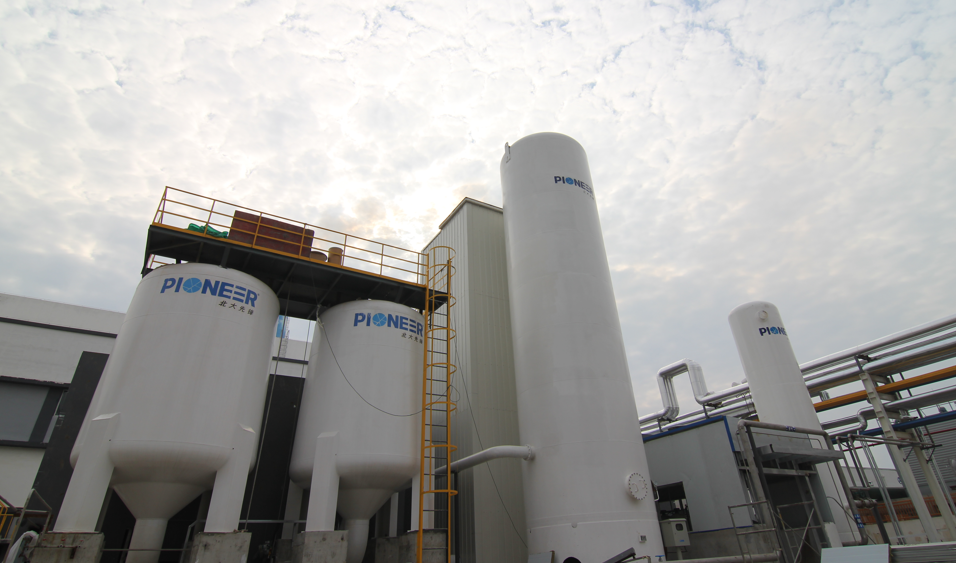
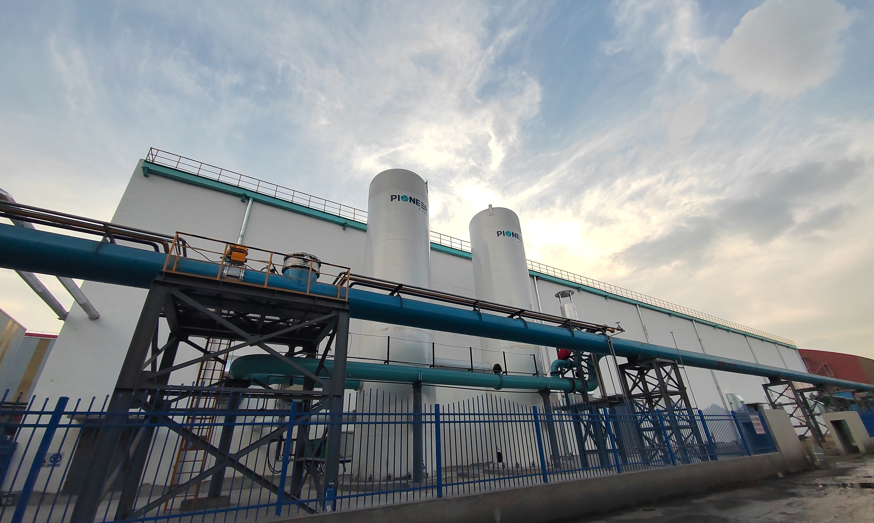
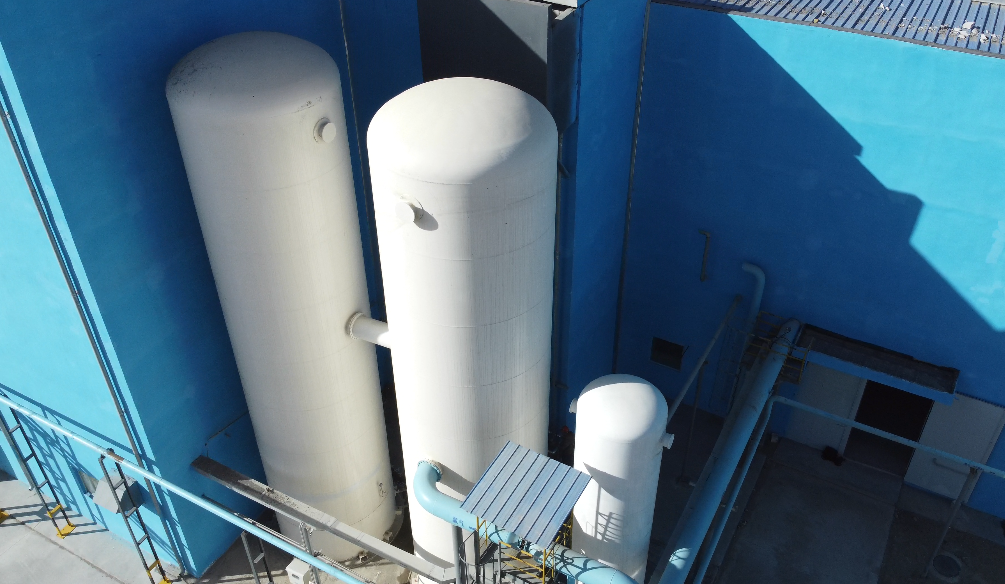
PKU Pioneer is particularly relevant when the Indian buyer is considering a customer-owned VPSA oxygen plant rather than recurring merchant supply. The company’s proposition is strongest in medium-to-large oxygen projects where energy efficiency, flexible turndown, and long-term operating economics matter. For buyers planning scale-up, this type of supplier can be more commercially attractive than defaulting to liquid oxygen dependence.
Universal Boschi and other Indian equipment makers deserve attention when local fabrication access, domestic communication, and a familiar procurement path are important. However, buyers should verify actual reference projects in the required capacity band and ask detailed questions about adsorbent performance, control philosophy, and field service depth.
Our Company
For Indian manufacturers evaluating oxygen for graphene, PKU Pioneer offers a customer-owned EPC, turnkey, or customer-owned plant solution rather than BOO or on-site bulk supply, which is important for companies that want to control operating economics and expand capacity on their own timeline. The company has built its authority in VPSA and PSA gas separation through more than 400 industrial projects across over 20 countries, with installed oxygen capacity exceeding 2 million Nm3 per hour and major references ranging from large steel oxygen systems to advanced gas utilization projects. Its product strength is supported by an integrated model that combines in-house research and development, proprietary adsorbent and catalyst manufacturing, precision engineering, full equipment fabrication, and certifications including ISO, CE, and ASME, alongside more than 180 patents and nationally recognized awards for VPSA oxygen and PSA gas technologies. For Indian end users, distributors, dealers, brand owners, and project developers, this supports flexible cooperation models including OEM and ODM support, wholesale project supply, pilot-scale validation, regional partnership discussions, retrofit work, and fully engineered plant delivery. The company’s experience in international deployment, including large industrial oxygen plants and a recent overseas VPSA installation in Vietnam, shows it is not acting as a remote catalog exporter but as a long-term engineering partner capable of online and offline pre-sales consultation, commissioning, operation and maintenance support, upgrades, leasing, and technical response. Indian buyers exploring phased plant expansion can review industrial oxygen technology solutions, assess the company’s VPSA oxygen plant capabilities, see selected international project references, learn more through the company overview, or request a tailored proposal through the contact page.
How to Shortlist the Right Configuration
For most Indian graphene-related buyers, the shortlist should be based on actual oxygen demand and growth stage. If the plant is still proving its product-market fit, use PSA or even liquid oxygen to avoid locking in an oversized asset. If demand is moving toward steady industrial operation, build a VPSA business case with energy modeling, backup strategy, and future debottlenecking. If the site runs multiple oxygen-consuming units, evaluate a centralized VPSA plant sized for the full campus instead of separate smaller systems.
It is also wise to compare three commercial models in parallel: merchant oxygen purchase, customer-owned PSA, and customer-owned VPSA. Ask each supplier to quote on a comparable basis including installed scope, utilities, annual operating cost, spares, startup support, and optional redundancy. This makes the selection far more objective.
| Plant Situation | Recommended Oxygen Strategy | Why It Works | Capex Profile | Opex Profile | Growth Readiness |
|---|---|---|---|---|---|
| Lab and early pilot | Cylinders or small PSA | Low commitment and fast deployment | Low | High per unit oxygen | Limited |
| Pilot to pre-commercial | Compact PSA with backup cylinders | Balances control and cost | Moderate | Moderate | Fair |
| Commercial startup | Liquid oxygen or hybrid PSA | Fast scaling while process stabilizes | Moderate | Moderate to high | Good |
| Stable medium-volume operation | VPSA | Better lifecycle economics | Higher | Lower | Strong |
| High uptime export production | VPSA + LOX backup | Improves resilience and continuity | Higher | Controlled long term | Very strong |
| Integrated chemical campus | Centralized VPSA utility plant | Shares cost across multiple units | Higher | Efficient at site scale | Excellent |
This table shows why no single oxygen method fits every graphene producer in India. The best answer depends on maturity, scale, and whether oxygen is used only in graphene production or across multiple plant functions.
2026 Trends: Technology, Policy, Sustainability
By 2026, oxygen supply decisions for graphene in India are likely to be shaped by three major trends. The first is technical modularity. Buyers increasingly want systems that can begin at a modest load and expand without rewriting the entire plant layout. This favors suppliers that offer staged engineering and realistic turndown performance. The second is policy and compliance pressure. Industrial parks and export-oriented manufacturers face rising expectations for energy efficiency, emissions management, and wastewater performance, which can strengthen the case for integrated oxygen systems that support cleaner and more controllable processing. The third is sustainability economics. Companies are no longer evaluating oxygen only as a utility purchase; they are measuring carbon intensity, logistics dependency, and total lifecycle efficiency.
For graphene and advanced materials producers, these trends mean that on-site generation becomes strategically attractive when it reduces tanker traffic, improves energy control, and stabilizes production quality. At the same time, Indian buyers will likely demand stronger digital support, remote diagnostics, predictive maintenance, and performance transparency from suppliers. Vendors that can provide not only equipment but also operating insight will have an advantage.
Another likely 2026 shift is closer integration between oxygen supply planning and broader plant design for advanced materials. Instead of being purchased late in the project as a utility afterthought, oxygen systems will increasingly be specified during process engineering. That change should produce better sizing, stronger payback, and fewer retrofits.
FAQ
Is VPSA always better than liquid oxygen for graphene production in India?
No. VPSA is usually better only when oxygen demand is sustained enough to justify on-site generation. For small or early-stage lines, liquid oxygen or PSA can be more practical.
What oxygen purity is normally needed for graphene oxide production?
The required purity depends on the exact process and how oxygen is used in the plant. Buyers should define purity based on actual process needs instead of assuming the highest available purity is necessary.
Should a graphene plant in India buy oxygen or generate it onsite?
If the plant is in early commercialization or has variable low demand, purchased oxygen may be reasonable. If demand is steady and scaling, onsite generation often delivers better long-term economics and control.
Why is backup supply important?
Backup cylinders or liquid oxygen storage protect production during maintenance, startup issues, power disruptions, or unexpected peak demand. This is especially important for export-focused manufacturers.
Can one oxygen plant serve graphene and other units together?
Yes. Many Indian sites improve project economics by sharing oxygen infrastructure across specialty chemicals, wastewater treatment, thermal systems, and materials processing.
What should Indian buyers ask suppliers first?
Ask for a process-based sizing proposal, state-specific operating cost model, reference projects in similar industries, guaranteed performance parameters, spare-parts plan, and service response commitments.
Are international suppliers realistic for Indian projects?
Yes, especially when they provide recognized certifications, clear EPC or turnkey scope, strong pre-sales engineering, commissioning support, and practical after-sales arrangements for India.
What is the biggest procurement mistake?
The biggest mistake is choosing based only on initial price or a single energy figure without comparing lifecycle cost, flexibility, service depth, and expansion capability.
Final Takeaway
For oxygen for graphene in India, the right VPSA configuration is not a one-size-fits-all package. It should be selected according to real oxygen consumption, production scale, utility conditions, and future expansion plans. For small and emerging operations, PSA or purchased oxygen may still be the best choice. For stable and growing industrial production, especially in chemical and materials clusters across Gujarat, Maharashtra, Tamil Nadu, Telangana, and Odisha, a customer-owned VPSA plant often provides the strongest long-term balance of cost, control, and scalability. The most effective procurement approach is to compare Indian gas majors, local equipment providers, and qualified international VPSA specialists on a fully comparable lifecycle basis, then choose the partner that can deliver reliable engineering, practical service access, and a configuration that matches your actual graphene manufacturing roadmap.

About the Author
Founded in 1999, PKU Pioneer specializes in VPSA and PSA gas separation technologies, adsorbents, catalysts, and integrated engineering solutions. Backed by strong R&D capability and extensive industrial project experience, the company serves global customers across steel, chemical, energy, environmental protection, and related industries.
Share