Why Oxygen Prices Keep Rising in India: Cost Guide
Why Oxygen Prices Keep Rising in India: Cost Guide
Quick Answer

Industrial oxygen prices in India keep rising because the total delivered cost is being pushed up from several directions at once: higher electricity tariffs, volatile diesel and freight expenses, cylinder and tanker logistics bottlenecks, seasonal demand spikes from steel, glass, fabrication, hospitals, and chemicals, plus stricter reliability expectations from buyers who cannot afford production stoppages. In practical terms, the biggest price increases usually come not from the oxygen molecule itself, but from transport distance, low utilization of cylinders, emergency deliveries, and dependence on merchant liquid oxygen during periods of tight supply.
If you are buying oxygen in India, the fastest actions are to reduce delivered distance, lock in annual supply terms, audit actual consumption by shift, separate medical and industrial procurement channels, and compare cylinder supply against on-site generation for stable demand. Buyers in industrial belts such as Odisha, Jharkhand, Gujarat, Maharashtra, Tamil Nadu, and Chhattisgarh often save the most by moving from ad hoc cylinder purchases to pipeline, liquid tank, or VPSA/PSA systems depending on volume and purity needs.
Well-known suppliers active in the Indian market include Linde India, INOX Air Products, Air Liquide India, Praxair India Private Limited, Ellenbarrie Industrial Gases, and Bhuruka Gases. Qualified international suppliers can also be evaluated when projects involve new plants rather than only gas purchase; Chinese technology companies with the right certifications, engineering depth, and dependable pre-sales and after-sales support may offer strong cost-performance advantages for customer-owned oxygen plants.
Why Prices Are Rising in India

The phrase why oxygen prices keep rising matters to Indian buyers because oxygen is no longer viewed as a simple commodity. It is now a strategic utility input. A steel mill in Jamshedpur, a glass plant in Bharuch, a non-ferrous smelter in Angul, or a hospital network in Delhi NCR all consume oxygen differently, but each depends on continuity. That continuity has a cost. When power becomes more expensive, when tanker turnaround slows at industrial corridors, or when port congestion affects imported equipment and spare parts, oxygen cost rises through the whole chain.
In India, industrial oxygen pricing typically reflects five layers: production cost, compression cost, storage cost, transportation cost, and reliability premium. Merchant liquid oxygen supplied by road tanker tends to be more sensitive to diesel and routing conditions. Cylinder oxygen is affected by handling, cylinder testing, distribution density, and return logistics. On-site generation avoids part of the transport burden, but then power efficiency, adsorption performance, spare availability, and maintenance discipline become central cost variables.
Electricity is especially important. Oxygen production by cryogenic ASU, VPSA, or PSA depends on stable power and energy efficiency. When state-level industrial power tariffs rise or when factories rely on backup DG sets during outages, the oxygen cost per normal cubic meter also rises. This is one reason buyers in power-sensitive zones often re-evaluate whether purchased liquid oxygen is still the lowest-cost option over a multi-year horizon.
Freight is another major reason oxygen prices keep climbing in India. Transporting liquid oxygen from an ASU cluster near a refinery or industrial zone to inland users in remote areas can add a material premium. Distances from coastal hubs like Hazira, Dahej, Chennai, Visakhapatnam, and Paradip to inland consumers may appear manageable on paper, but turnaround time, road conditions, driver availability, state border delays, and competing demand from multiple sectors change the actual delivered cost.
Supply tightness also affects pricing psychology. After the pandemic period, many Indian buyers became more willing to pay for guaranteed allocation, backup cylinders, dual supply contracts, telemetry, and faster response times. That reliability premium remains embedded in many contracts today. In sectors where a shutdown could damage a furnace, ruin a heat, interrupt a medical oxygen line, or disrupt chemical oxidation, buyers often accept higher prices for proven supply security.
Market Overview in India

India’s oxygen market is closely tied to industrialization, urban hospital expansion, and infrastructure growth. The heaviest industrial demand comes from steelmaking, metal cutting, foundries, glass, chemicals, wastewater treatment, and healthcare. The eastern corridor around Odisha and Jharkhand remains highly relevant because of steel and mining-linked demand. Western India, especially Gujarat and Maharashtra, combines petrochemicals, engineering, pharma, and glass usage. Southern clusters around Chennai, Hosur, Bengaluru, and Hyderabad create mixed demand across electronics, fabrication, hospitals, and specialty manufacturing.
Buyer behavior is also changing. Earlier, many mid-sized users accepted fragmented procurement through local cylinder distributors. Today, more companies are comparing delivered cost by ton or per Nm³ over full annual consumption. That shift encourages longer contracts, storage optimization, telemetry, and customer-owned oxygen plants for steady loads. In dense industrial belts, competition among gas companies helps moderate pricing, but in interior districts the delivered cost can still rise sharply because the supply chain is thinner.
The market is therefore not moving in one straight line. Production capacity is expanding, but so is demand for dependable service, faster emergency response, and lower-carbon operations. Buyers increasingly ask not only “what is the oxygen price today?” but also “what will the total oxygen cost be over five years?” That is where equipment choice, logistics planning, and supplier structure become decisive.
Estimated Market Growth Trend
The chart below illustrates a realistic directional view of India’s industrial oxygen market size growth, showing how expanding steelmaking, urban infrastructure, healthcare readiness, and process industries can sustain demand even when short-term pricing fluctuates.
Main Product Types and Cost Behavior
Not all oxygen supply modes react to cost pressure in the same way. A buyer trying to understand why oxygen prices keep rising should first distinguish between cylinders, liquid oxygen, and on-site generation. Each has a different exposure to power, transport, asset utilization, and maintenance.
| Supply Type | Typical User Profile | Main Cost Drivers | Advantages | Limitations | Best Fit in India |
|---|---|---|---|---|---|
| Cylinder Oxygen | Small workshops, hospitals, labs, backup users | Filling fees, transport rounds, cylinder handling, testing | Low entry barrier, flexible, available through local dealers | High delivered cost at scale, return logistics, frequent stockouts in peak demand | Small or emergency demand in cities like Pune, Coimbatore, Jaipur |
| Liquid Oxygen Tank Supply | Mid to large industrial users, hospitals, continuous operations | ASU production, tanker freight, storage tank lease, evaporation loss | Stable purity, large volumes, lower unit cost than cylinders | Transport sensitive, dependent on supplier route and fleet availability | Industrial parks near major corridors such as Gujarat and Maharashtra |
| PSA Oxygen Generator | Hospitals, fabrication shops, smaller industrial sites | Power, compressor upkeep, adsorbent life, service intervals | On-site supply, less transport dependence, quick deployment | Lower purity range than cryogenic, less ideal for very large loads | Decentralized facilities needing autonomy |
| VPSA Oxygen Plant | Steel, non-ferrous, glass, wastewater, larger process users | Power efficiency, blower performance, adsorbent quality, maintenance planning | Low long-term cost for large steady demand, no tanker dependency | Requires project planning, capital budget, utility integration | Large plants in Odisha, Chhattisgarh, Jharkhand, Tamil Nadu |
| Cryogenic ASU On-Site | Very large integrated industrial complexes | High capex, power, maintenance, technical staffing | Very high purity, multi-gas output, large scale | Longer project cycle, high complexity | Integrated steel and refinery complexes |
| Hybrid Supply Model | Plants needing resilience | Capex plus backup gas contract | Better continuity, reduced downtime risk | Requires disciplined contract management | Sites where shutdown costs exceed gas premium |
This comparison explains why two Indian buyers using “oxygen” can face very different invoices. A fabrication cluster in Faridabad relying on cylinders will feel logistics inflation immediately. A steel plant in Bellary operating a well-optimized VPSA system will feel power and maintenance pressure more than freight pressure. A hospital chain with liquid backup and an on-site PSA unit will focus on uptime, purity assurance, and redundancy rather than only the headline price.
Industry Demand Comparison
The next chart shows an illustrative demand comparison by sector in India. Steel and metals remain dominant, while healthcare, glass, and chemicals maintain strong baseline demand that supports firm pricing in multiple regions.
Detailed Cost Drivers Behind Rising Oxygen Prices
Power inflation is the first structural driver. Whether oxygen is produced in a cryogenic air separation unit or through VPSA/PSA, the equipment depends on motors, blowers, compressors, chillers, valves, instrumentation, and control systems. If the energy consumption per Nm³ worsens because of aging equipment, dirty filters, poor maintenance, or suboptimal load factor, the effective oxygen cost rises even when electricity tariffs stay flat. If the tariff itself rises, that effect becomes sharper.
Transport inefficiency is the second driver. Oxygen distribution in India can become expensive when the buyer is far from a fill plant or liquid storage hub. Return trips with low backhaul utilization, frequent emergency dispatches, and low drop density make each delivery costlier. This is common for fragmented cylinder routes serving smaller towns or mixed industrial-commercial areas.
The third driver is underutilization of assets. A customer may lease a liquid tank or invest in a generator but operate well below the designed throughput. In such cases, fixed expenses are spread across fewer units of gas. The result is a high apparent oxygen price. Buyers sometimes blame market inflation when the real issue is low utilization or mismatched system sizing.
The fourth driver is purity and process requirement. High-purity or high-reliability applications usually cost more. The same applies when the buyer needs tightly controlled dew point, pressure stability, or constant flow for continuous furnaces and burners. A robust specification protects production quality but raises the total system cost.
The fifth driver is downtime risk. Suppliers now price not only supply but also service assurance. Spare inventory, 24-hour response teams, telemetry, preventive maintenance, and dedicated fleet planning all have a cost. Indian buyers increasingly request these features, especially in healthcare and continuous-process industries.
The sixth driver is capex financing. As interest rates, imported component costs, and currency movements influence equipment economics, suppliers price new plants more cautiously. This affects long-term contracts where the gas price is tied to investment recovery or escalation formulas.
Trend Shift in Supply Models
The market is gradually shifting from fragmented spot purchases toward more structured, resilience-focused supply. The chart below reflects a realistic trend in India: lower relative dependence on cylinders for core industrial loads and higher preference for on-site or bulk arrangements.
Industries Driving Oxygen Demand
Steel is the single most important industrial oxygen consumer in India. Oxygen enrichment supports blast furnace performance, BOF operations, reheating, and several combustion-related steps. As steel capacity grows and plants push for productivity, oxygen remains central. This is especially visible in eastern and central India.
Glass manufacturing is another major user. Oxygen-fuel combustion can improve furnace efficiency, reduce NOx, and support better melting performance. Clusters in Gujarat and northern India continue to influence regional oxygen demand.
Chemicals and petrochemicals use oxygen for oxidation, partial oxidation, process intensification, and off-gas treatment. Refineries and integrated chemical complexes also maintain stringent reliability requirements, which supports premium supply arrangements.
Healthcare remains structurally important. Even when medical demand normalizes from emergency peaks, hospitals are less willing than before to operate without redundancy. Many facilities now use mixed models involving liquid tanks, manifolds, and PSA backup.
Fabrication, shipbuilding, foundries, and engineering sectors continue to support decentralized cylinder and small bulk demand. Wastewater treatment and aquaculture are emerging applications in selected regions, particularly where dissolved oxygen improvement directly affects process efficiency or biomass productivity.
| Industry | Primary Oxygen Use | Demand Pattern | Price Sensitivity | Reliability Need | Typical Preferred Supply |
|---|---|---|---|---|---|
| Steel | Enrichment, BOF, combustion support | Very high and continuous | Medium | Very high | VPSA, cryogenic, bulk liquid |
| Hospitals | Medical pipeline and ICU support | Steady with emergency peaks | Low to medium | Critical | Liquid tank plus PSA backup |
| Glass | Oxy-fuel combustion | High and continuous | Medium | High | Bulk liquid or on-site |
| Chemicals | Oxidation and process intensification | Process-linked | Medium | High | On-site or dedicated bulk contract |
| Fabrication | Cutting and welding | Fragmented and variable | High | Medium | Cylinders or small PSA |
| Wastewater | Aeration enhancement | Moderate and site-specific | Medium | Medium | PSA or VPSA |
This table matters because the answer to why oxygen prices keep rising depends on the industry. Steel buyers often focus on total utility economics. Hospitals focus on uninterrupted supply and compliance. Fabricators feel distribution inflation most directly. Glass users often weigh energy efficiency gains against oxygen cost.
Applications That Influence Buying Strategy
Applications matter because they determine the acceptable purity, pressure, continuity, and cost structure. Oxygen for laser cutting and welding may be purchased differently from oxygen for biological wastewater treatment. Oxygen used for enriched combustion in a furnace can justify an on-site plant because steady load improves project economics. By contrast, intermittent laboratory or repair-shop demand usually favors cylinders or manifold systems.
In India, applications close to ports and industrial corridors often have more supply choices. Users in Hazira, Dahej, Kandla, Mumbai region, Ennore, Chennai, Krishnapatnam, and Visakhapatnam may have better access to bulk gas logistics or project support. Inland plants in mining and steel corridors may benefit more from customer-owned generation because transport risk is higher.
Buying Advice for Indian Oxygen Users
The first rule is to buy on total delivered cost, not unit gas price alone. A lower nominal cylinder rate can be more expensive once transport, rent, testing, and emergency dispatch are included. The second rule is to measure actual daily and monthly load profile. Many buyers overestimate peak demand and overspend on unnecessary standby assets.
The third rule is to choose the right contract model. If demand is stable and large, compare merchant liquid oxygen with customer-owned VPSA or PSA. If reliability is essential, consider hybrid architecture with primary on-site generation and contracted backup. If demand is fragmented across multiple branches, central sourcing with regional dealer execution may work better than purely local spot buying.
The fourth rule is to ask for clear performance metrics. For a plant project, request power consumption guarantees, oxygen purity range, startup time, turndown capability, spare philosophy, operator training scope, and annual maintenance plan. For merchant gas, ask about refill lead time, fleet size, storage minimums, delivery coverage, and escalation formula. The fifth rule is geographic. Suppliers should be evaluated by actual service presence in the states where you operate, not only by national brand recognition.
| Buyer Situation | Common Problem | Better Strategy | Expected Benefit | Key Risk to Watch | Indian Example Scenario |
|---|---|---|---|---|---|
| Small fabrication shop | Frequent cylinder stockouts | Use regional distributor with buffer stock contract | Fewer production interruptions | Hidden cylinder rental fees | Workshop cluster in Ludhiana |
| Mid-sized hospital | High emergency refill costs | Install PSA with liquid backup | Lower crisis dependence | Poor maintenance discipline | Private hospital in Nagpur |
| Glass furnace operator | Bulk cost volatility | Compare long-term liquid contract versus on-site VPSA | Better forecastability | Undersized oxygen flow design | Glass unit in Bharuch |
| Steel plant | Large annual oxygen spend | Evaluate customer-owned VPSA or cryogenic integration | Lower long-run unit cost | Power quality issues | Integrated steel site in Odisha |
| Chemical plant | Purity and continuity concerns | Dedicated supply agreement with guaranteed response | Lower process disruption risk | Weak escalation clauses | Chemical unit in Gujarat |
| Multi-site manufacturer | Fragmented procurement | Central tender with state-wise service mapping | Stronger price control | Supplier gaps in remote sites | Engineering group across Maharashtra and Tamil Nadu |
These recommendations are actionable because they align the supply model with the buyer’s operating reality. Many Indian oxygen buyers can reduce cost without changing supplier simply by improving forecasting, storage planning, or contract structure. Others reach the next level of savings only by changing the supply architecture itself.
Local Suppliers and Service Coverage
India has several established oxygen suppliers, but the right choice depends on your state, consumption volume, process requirement, and willingness to invest in owned assets. The companies below are widely recognized names or practical regional options for industrial buyers evaluating supply continuity and cost.
| Company | Main Service Regions in India | Core Strengths | Key Offerings | Best For | Buyer Notes |
|---|---|---|---|---|---|
| Linde India Limited | Pan-India with strong industrial corridors | Large gas infrastructure, engineering depth, reliability systems | Bulk oxygen, cylinders, on-site supply, pipeline solutions | Large industrial and healthcare users | Strong option for buyers prioritizing national coverage and process support |
| INOX Air Products | Pan-India across manufacturing and healthcare markets | Large production network, distribution reach, medical oxygen presence | Liquid oxygen, industrial gas supply, medical gas systems | Hospitals, industry, regional distribution | Often competitive where route density and local service are strong |
| Air Liquide India | Major industrial zones and key urban markets | Global gas expertise, process application support, safety systems | Bulk supply, packaged gases, on-site solutions | Chemicals, electronics, high-spec users | Good fit when process integration matters more than lowest headline price |
| Praxair India Private Limited | Selected industrial regions and large accounts | Industrial gas know-how, application engineering, long-term contracts | Bulk oxygen, cylinders, industrial support services | Large manufacturing users | Evaluate actual local response capability by state before final selection |
| Ellenbarrie Industrial Gases | East India and expanding industrial clusters | Regional familiarity, packaged gas strength, industrial responsiveness | Industrial oxygen, specialty gases, cylinders, bulk supply | Eastern India buyers | Relevant for buyers in Kolkata-linked and eastern logistics networks |
| Bhuruka Gases Limited | South and selected national markets | Regional supply network, packaged gases, healthcare and industrial mix | Cylinders, liquid gases, related supply services | Mid-sized users and decentralized demand | Useful where regional support and practical distribution matter most |
The supplier list should be used as a starting framework rather than a final ranking. In India, a regional player with better fleet utilization in your district can outperform a larger national supplier on delivered cost and emergency response. Buyers should validate service reach at plant level, not only city level.
Supplier and Product Comparison Snapshot
The comparison chart below illustrates how buyers often weigh suppliers or project options in India across reliability, regional service reach, engineering support, cost competitiveness, and suitability for customer-owned plant decisions.
Case Studies and Practical Scenarios
Consider a medium glass plant in Gujarat using bulk liquid oxygen. It experiences annual price escalation due to freight, tank rental, and seasonal route pressure. After mapping hourly flow and furnace oxygen demand, the company finds its base load is stable enough to justify studying an on-site oxygen plant. The result may not be immediate conversion, but even that analysis improves negotiation leverage with the merchant gas supplier.
Now consider a hospital network in tier-two cities. It previously depended mainly on cylinders and emergency manifold switching. Rising logistics cost and the memory of supply disruption push management toward on-site PSA backed by liquid or cylinder reserve. The direct oxygen price per unit is not the only metric; resilience becomes part of cost control because emergency buying is the most expensive form of procurement.
In a steel-related application in eastern India, a plant with significant and continuous oxygen demand may compare three models: long-term liquid purchase, customer-owned VPSA, or integrated cryogenic supply. When power conditions are manageable and land is available, a properly designed VPSA can reduce exposure to tanker logistics and improve long-run predictability. In such sectors, buyers often discover that the reason oxygen prices keep rising is less about market shortage and more about remaining locked into a supply model that no longer fits plant scale.
Our Company
For Indian buyers evaluating customer-owned oxygen plants rather than only merchant gas purchase, PKU Pioneer is relevant because it focuses on EPC, turnkey, and customer-owned plant solutions instead of BOO or on-site bulk supply models. The company’s oxygen technologies are backed by ISO, CE, and ASME certifications, more than 180 patents, and large-scale project execution that includes VPSA oxygen plants from small modular systems to world-record single-unit capacities, with self-developed adsorbents and strict in-house engineering, fabrication, and testing that support international benchmark performance, including low energy consumption often below 0.3 kWh per Nm³ and rapid startup capability. For Indian end users, distributors, dealers, brand owners, and industrial investors, the company supports flexible cooperation models including direct project supply, OEM/ODM collaboration for selected equipment structures, wholesale system packages, retail-scale modular opportunities, and regional distribution partnerships for long-term market development. Its practical service assurance is stronger than a remote export model because it combines full-process consulting, pilot testing, retrofits, upgrades, equipment leasing, operation and maintenance support, and responsive technical communication with established international project experience across more than 20 countries, including Asian markets, which helps Indian clients secure both online technical support and on-site project coordination for installation, commissioning, training, and lifecycle maintenance. Buyers exploring VPSA oxygen plant solutions or reviewing global industrial references can use this approach to compare long-term ownership economics against recurring merchant oxygen purchases in India.
How to Decide Between Buying Gas and Building a Plant
The decision should depend on three factors: average daily demand, demand stability, and the cost of interruption. If your requirement is low and variable, a cylinder or liquid contract may still be rational. If your requirement is medium and predictable, PSA may provide a solid autonomy advantage. If your requirement is large and continuous, VPSA or cryogenic on-site generation often deserves serious financial modeling.
The break-even analysis should include power, capex recovery, maintenance, manpower, spare inventory, purity requirement, backup gas cost, and the value of avoided outages. Many buyers make the mistake of comparing only the current cylinder or liquid rate against estimated plant power cost. A better method is to compare total five-year delivered oxygen cost under at least three scenarios.
It is also wise to visit plants with operating references. A paper proposal may look attractive, but real performance depends on instrumentation philosophy, blower selection, adsorbent quality, automation design, erection discipline, and support response after handover. For buyers interested in structured project evaluation, the company’s technical capabilities and service approach can be benchmarked alongside Indian market offerings.
What to Ask a Supplier Before Signing
Ask how the supplier handles peak-demand weeks, power interruptions, spare lead times, route disruptions, and annual escalation. Ask for named reference sectors, not generic statements. Ask whether purity, flow, and energy guarantees are contractual. Ask who performs commissioning and how quickly service engineers can reach your site in Odisha, Gujarat, Maharashtra, Tamil Nadu, Karnataka, or elsewhere. Ask whether preventive maintenance parts are stocked regionally. Ask how the supplier defines uptime and remedies underperformance.
For on-site systems, ask who owns the plant, who operates it, who supplies consumables, and whether the arrangement is EPC/turnkey for customer ownership. This is especially important because some buyers want asset control and lower lifecycle cost rather than a service-only gas arrangement.
2026 Outlook: Technology, Policy, Sustainability
By 2026, oxygen buying in India is likely to become even more data-driven. Three trends stand out. First, digital monitoring will expand. Remote telemetry, predictive maintenance, and energy dashboards will help buyers detect when oxygen cost rises because of equipment drift rather than market inflation. Second, policy and sustainability pressure will grow. Energy efficiency, lower emissions, and better utilization of industrial by-product gases will matter more in tender decisions, particularly for large manufacturing groups and export-oriented producers. Third, localization and supply resilience will shape procurement. Indian buyers will favor suppliers and technology partners that demonstrate dependable regional support, clear spare strategies, and practical execution in local conditions.
Technology-wise, efficient VPSA systems, improved adsorbents, smarter controls, and hybrid backup architecture should gain traction. Policy-wise, industrial decarbonization and efficiency-linked investment decisions will support interest in lower-energy oxygen generation. Sustainability-wise, plants that reduce transport miles, cut energy use, and integrate by-product gas utilization will have an edge. This means the answer to why oxygen prices keep rising may increasingly be met not only with negotiation, but with redesign of the supply model itself.
FAQ
Why oxygen prices keep rising in India even when demand seems normal?
Because the delivered cost depends on power, freight, storage, fleet utilization, and service assurance. Even when headline demand is stable, logistics and reliability costs can rise.
Is cylinder oxygen always more expensive than liquid oxygen?
For larger and steady consumption, yes, cylinder oxygen is usually more expensive on a delivered basis. For small or irregular demand, cylinders can still be practical.
When should an Indian factory consider VPSA or PSA oxygen generation?
When oxygen demand is steady enough that transport cost, emergency dependence, or annual gas spend makes customer-owned generation economically attractive.
Which sectors in India are most exposed to rising oxygen costs?
Steel, glass, chemicals, hospitals, fabrication, and any remote industrial site with high transport dependence are especially exposed.
Can international suppliers be a practical option for Indian projects?
Yes, especially for new customer-owned EPC or turnkey oxygen plants. The key is to verify certifications, reference scale, local execution support, spare strategy, and after-sales responsiveness.
How can I start reducing oxygen cost quickly?
Audit real consumption, compare supply modes, renegotiate logistics terms, add buffer planning, and request proposals from both local gas suppliers and qualified plant technology providers. If you are reviewing project options, you can contact the team for a tailored technical discussion.

About the Author
Founded in 1999, PKU Pioneer specializes in VPSA and PSA gas separation technologies, adsorbents, catalysts, and integrated engineering solutions. Backed by strong R&D capability and extensive industrial project experience, the company serves global customers across steel, chemical, energy, environmental protection, and related industries.
Share
Related News
-
Will VPSA Become Obsolete in India? Market and Tech Outlook
No. VPSA is unlikely to become obsolete in India in the foreseeable future. Instead, it is becoming more specialized, more efficient, and more valuable in sectors that need large-volume on-site oxygen at lower operating cost than liquid oxygen delivery and with lower capital intensity than many cryogenic installations. In India, where steel clusters, glass plants, non-ferrous metals, wastewater treatment projects, and distributed industrial hubs continue expanding across Odisha, Jharkhand, Chhattisgarh, Gujarat, Maharashtra, Tamil Nadu, Andhra Pradesh, and Karnataka, VPSA remains highly relevant.The practical answer is this: VPSA will not disappear, but its role will sharpen. It is strongest where users need medium-to-large oxygen flow, stable purity typically in the 80% to 94% range, flexible load following, relatively fast start-up, and predictable long-term power cost. Cryogenic ASUs will still dominate ultra-high purity and integrated large complex plants, while smaller PSA systems will continue serving hospitals and lower-flow industrial applications. For many Indian industrial buyers, VPSA sits in the middle ground where economics and operational flexibility are compelling.If you are buying in India today, the most actionable shortlist usually includes INOX Air Products, Linde India, Air Liquide India, Oxymat India, NovaAir, and qualified EPC-focused international suppliers such as PKU Pioneer that can deliver customer-owned VPSA plants with strong cost-performance, local project support, and compliance-oriented documentation. International suppliers, especially experienced Chinese technology companies with proven references, relevant certifications, and dependable pre-sales and after-sales support, can be worth serious consideration when buyers want competitive capex without giving up engineering depth.India is one of the most interesting oxygen and industrial gas markets in Asia because demand is structurally diversified. Oxygen is no longer viewed only as a commodity feed for steelmaking. It is now tied to furnace efficiency, decarburization, oxy-fuel combustion, wastewater treatment, medical backup planning, hazardous waste processing, glass melting, and a broad range of oxidation reactions. That diversity supports technologies with different scale and purity profiles rather than creating a single winner.For Indian buyers, the question is not whether one technology eliminates another. The real question is where each technology delivers the best lifecycle economics. In coastal industrial zones near Mundra, Hazira, Dahej, Kandla, Chennai, Visakhapatnam, and Paradeep, logistics can support liquid oxygen or large ASU ecosystems. But in inland clusters around Raipur, Rourkela, Jamshedpur, Bellary, Angul, Durgapur, and Nagpur, reliable on-site generation has strong appeal because it reduces dependence on tanker dispatch, road variability, and supply disruption during demand spikes.VPSA is particularly resilient in India because the local market still contains a large number of plants that need oxygen enrichment, but do not need 99.5% oxygen. Many of these sites care more about cost per Nm3, power draw, load flexibility, maintenance simplicity, and project speed than they do about ultra-high purity. That is why VPSA continues to win projects in steel and related energy-intensive industries.At the same time, the market is becoming more sophisticated. Buyers increasingly ask for digital monitoring, remote diagnostics, spare parts assurance, energy guarantees, and lifecycle service packages. This shift does not make VPSA obsolete. It raises the standard for which suppliers can compete.The line chart above illustrates a realistic growth pattern in India’s on-site oxygen project demand. It reflects how industrial expansion, energy cost pressure, and supply security concerns continue supporting investment in customer-owned gas generation systems. The trend does not indicate technology extinction; it indicates selection by application.Vacuum Pressure Swing Adsorption uses selective adsorbents to separate oxygen from air through cyclic adsorption and desorption under pressure and vacuum conditions. It remains relevant because it solves a practical industrial problem: how to generate a significant volume of oxygen on site with lower energy use than many older alternatives and with operational flexibility that suits fluctuating production schedules.Several conditions in India strengthen the case for VPSA. Power tariffs matter, but so does logistics reliability. Monsoon disruptions, tanker availability constraints, and regional supply imbalances can change the economics of purchased liquid oxygen quickly. Plants that run continuously also dislike exposure to delivery risk. A well-designed VPSA system offers autonomy, especially where the user can accept 80% to 94% oxygen for enrichment or combustion enhancement.Another reason VPSA stays relevant is that Indian industry increasingly looks at total cost of ownership rather than only first cost. Once oxygen demand crosses a certain threshold, recurring expenditure on merchant oxygen often becomes less attractive than an on-site system. Even when cryogenic plants are technically suitable, a buyer may still prefer VPSA if lower complexity, faster deployment, and lower upfront investment are more important than maximum purity.VPSA is not universal. It can lose share in applications requiring very high purity, integration with nitrogen and argon production, or extremely large complex gas supply strategies connected to captive power, refinery integration, or pipeline networks. In those cases, cryogenic technology will remain strong.VPSA can also be less compelling if the site has very low oxygen demand, where compact PSA skids are simpler, or if the buyer’s process is extremely sensitive to purity shifts and requires narrow oxygen specifications beyond typical VPSA output. In a few regions with easy liquid oxygen access and favorable delivered pricing, merchant supply may also remain competitive for smaller or irregular loads.So the threat to VPSA is not obsolescence in a broad sense. The real threat is application mismatch. Buyers who choose it for the wrong duty point may become disappointed, but that is a project selection issue, not a technology end-of-life issue.India’s gas generation market uses several technical routes side by side. Understanding their roles is essential for procurement teams, plant engineers, and project finance decision-makers.TechnologyTypical Oxygen PurityBest Flow RangeMain Indian Use CasesKey AdvantageMain LimitationVPSA oxygen plant80% to 94%Medium to very largeSteel, glass, non-ferrous, wastewater, combustion enhancementGood economics for high-volume on-site oxygenNot ideal for ultra-high purity demandPSA oxygen generator90% to 95%Small to mediumHospitals, fabrication, small industry, backup oxygenCompact and fast deploymentLess economical at very large flowCryogenic ASU99% plusLarge to very largeIntegrated steel, refinery, petrochemical, electronics supportHigh purity and multi-product capabilityHigher capex and greater complexityLiquid oxygen purchaseHigh purity deliveredLow to variablePlants with sporadic use or no utility roomNo plant ownership burdenExposure to logistics and recurring price volatilityHybrid VPSA plus LOX backupMixed strategyMedium to largePlants needing reliability during maintenance or peak loadImproves supply resilienceRequires coordinated planningHybrid cryogenic plus on-site distributionHigh purity systemLarge industrial campusesMega steel and chemical complexesFull integration and capacity depthOnly justified for large stable demandThis comparison shows why VPSA remains commercially relevant. It occupies a strong middle position in the market. It is not replacing every option, and no other single option replaces it across all industrial conditions in India.Indian buyers should avoid evaluating VPSA through a single headline claim such as “lower power” or “cheaper oxygen.” The right method is to compare full project economics and operational fit. A buyer in Hazira may have different priorities from one in Angul or Salem. Freight cost, utility quality, plant uptime expectations, purity requirements, and expansion plans all matter.The first filter is oxygen flow and purity. If the process works efficiently with oxygen in the VPSA range, the technology should remain on the table. The second filter is annual operating hours. Plants with high utilization often gain the most from on-site oxygen. The third filter is electricity cost and load stability. The fourth is site logistics and risk tolerance. The fifth is supplier capability, because plant performance depends as much on engineering quality as on the underlying technology.Buyers should also ask whether the project will be EPC, turnkey, or customer-owned. That matters in India, where many industrial users want asset ownership and control over production costs rather than dependence on external bulk supply contracts. For this reason, EPC and turnkey VPSA solutions remain attractive.When buying a VPSA oxygen plant in India, do not focus only on quoted capacity. Request a detailed technical and commercial package covering oxygen purity at rated conditions, guaranteed specific power consumption, turndown capability, adsorbent life assumptions, blower and vacuum pump brands, instrumentation scope, automation architecture, spares list, commissioning scope, and local service commitments.Look carefully at ambient design conditions. Indian climates vary sharply from coastal humidity in Chennai and Kochi to high summer temperatures in Nagpur and Raipur. A plant designed for mild conditions may underperform in actual field operation. Ask the supplier to state performance at real site conditions, not generic test conditions.You should also compare civil and balance-of-plant implications. Sometimes a lower quoted equipment price hides higher installation complexity. Utilities, foundations, noise control, cooling requirements, and compressed air integration all affect total project cost.Evaluation FactorWhat to AskWhy It Matters in IndiaGood Supplier ResponseWarning SignProcurement ImpactSpecific power consumptionWhat is kWh per Nm3 at site conditions?Electricity cost strongly affects paybackGuaranteed figure with correction basisOnly brochure value, no guaranteeDetermines OPEX credibilityPurity stabilityHow does purity vary across load range?Plants often run variable production schedulesClear purity window and controls logicVague statements on stabilityReduces process riskEquipment brandsWhich blower, vacuum pump, valves, PLC brands?Spare parts access is essential locallyRecognized brands with India supportUnspecified critical componentsAffects uptime and maintenanceAfter-sales coverageWho supports commissioning and breakdowns?Distance can delay service recoveryNamed team, response time, spares planNo local contact structureProtects operationsProject referencesWhere has similar capacity been installed?Comparable references reduce execution riskSteel, glass, or process references sharedOnly generic experience claimsImproves lender and board confidenceExpansion pathCan the system be modularly expanded?Indian manufacturers often phase capexDefined upgrade routeNo future scale optionSupports long-term planningThe table above is useful because the strongest VPSA proposal is not always the cheapest initial quotation. In India, the best-value project usually comes from the supplier that can prove stable energy performance, site-adapted engineering, and service continuity over the plant lifecycle.Steel remains the clearest example. Oxygen enrichment supports blast furnace efficiency, steelmaking productivity, and fuel optimization. In a country where steel capacity expansion is central to industrial policy, oxygen infrastructure remains strategic. Plants in Odisha, Jharkhand, Chhattisgarh, and Karnataka continue to evaluate ways to improve productivity and reduce unit energy costs. VPSA fits many of these needs, especially where the oxygen demand is large but not necessarily tied to the full cryogenic ecosystem.Glass is another strong segment. Oxy-fuel combustion and melting process improvements support better temperature control and lower emissions. Ceramics, foundries, and non-ferrous metallurgy also maintain demand for robust on-site oxygen generation.Wastewater treatment and environmental projects may not use the largest oxygen volumes, but they increasingly value decentralized supply. Municipal and industrial treatment facilities around large urban corridors such as Delhi NCR, Mumbai, Ahmedabad, Hyderabad, Bengaluru, and Pune can benefit from on-site oxygen where aeration efficiency and process stability matter.This bar chart highlights why VPSA remains hard to displace in India. Steel dominates oxygen demand, and that demand profile often aligns well with customer-owned on-site generation. Secondary sectors add resilience to the market by broadening the application base.The practical applications of VPSA are the real answer to the obsolescence question. Technologies become obsolete when they stop solving real problems competitively. That is not the case here.VPSA still performs well in oxygen-enriched combustion, blast furnace enrichment, wastewater oxygenation, smelting support, kiln enhancement, and several chemical oxidation processes. It is also used where plants want to reduce dependence on purchased liquid oxygen but do not need the purity and complexity of cryogenic systems. For industrial users under cost pressure, this remains a meaningful value proposition.Another important application trend in India is debottlenecking existing factories. Instead of building a fully new utility block, some companies prefer modular oxygen generation that can be integrated into existing operations with manageable downtime. VPSA supports that approach.Consider a steel plant in Odisha with sustained high oxygen consumption, access to land, and a desire to cut long-term oxygen purchase costs. If purity requirements are within the normal VPSA envelope, a VPSA plant can offer a balanced route between merchant supply and a larger cryogenic investment.Consider a glass plant in Gujarat that wants to improve furnace efficiency and reduce delivered oxygen dependence. If its demand is large enough, VPSA can lower recurring cost and improve supply reliability. In contrast, a small fabrication unit in Pune with limited and intermittent oxygen need may be better served by cylinders, liquid supply, or compact PSA rather than VPSA.Now consider an integrated refinery-petrochemical complex near Jamnagar or a mega steel complex that requires multiple gases at high purity and large scale. Here, cryogenic technology may remain more suitable. These examples show that the market is segmenting, not abandoning VPSA.Indian ScenarioLikely Best OptionWhy VPSA Wins or LosesExpected Buyer PriorityTypical Region ExampleDecision SummaryLarge steel oxygen enrichmentVPSAHigh flow and suitable purity windowOPEX reduction and reliabilityOdisha, JharkhandStrong VPSA caseIntegrated multi-gas megaprojectCryogenic ASUNeeds very high purity and multiple productsIntegration and scaleGujarat coastVPSA less suitableMedium glass furnace upgradeVPSA or hybridSupports oxy-fuel economics wellFuel efficiencyGujarat, RajasthanGood VPSA potentialSmall medical backup projectPSALower flow and compact footprintFast installationTier-2 citiesPSA preferredWastewater oxygenation plantVPSAOn-site autonomy can be valuableStable process performanceMumbai region, Delhi NCRSelective but relevantSporadic industrial oxygen useLOX purchasePlant ownership may not pay backLow capex and convenienceDistributed SME clustersVPSA usually not idealThe table demonstrates that the future of VPSA in India depends on application fit. In several major scenarios, it remains not only viable but often the most rational choice.Buyers in India should review both established industrial gas majors and specialized on-site plant suppliers. The right choice depends on whether you want merchant supply, a captive on-site project, or a customer-owned EPC/turnkey plant.CompanyService Region in IndiaCore StrengthsKey OfferingsBest Fit BuyerNotesINOX Air ProductsPan-India, major industrial clustersStrong industrial gas network and project executionIndustrial gases, on-site systems, supply solutionsLarge industrial usersWell known for scale and local presenceLinde IndiaPan-India with strong metro and industrial footprintEngineering depth and global process expertiseASU projects, industrial gases, on-site supplyComplex and large industrial projectsStrong credibility for integrated solutionsAir Liquide IndiaPan-India, especially large industrial basesGlobal gas technology and service systemsIndustrial oxygen, on-site gas supply, engineering supportProcess industries and large manufacturersGood option for long-term industrial partnershipsOxymat IndiaIndia presence with broader South Asia reachOn-site oxygen generation specializationPSA and oxygen generation systemsUsers prioritizing packaged systemsOften considered for distributed projectsNovaAirIndia and export-oriented South Asian marketsPSA oxygen experience and compact systemsOxygen generators, medical and industrial systemsSmall to medium oxygen demandStronger in PSA than large VPSA scalePKU PioneerIndia-focused EPC opportunities across steel and process hubsLarge VPSA references, PSA CO and hydrogen expertiseCustomer-owned VPSA oxygen plants, PSA gas separation, turnkey and EPC solutionsIndustrial users seeking cost-performance and large-scale process know-howEspecially relevant for steel and by-product gas utilizationThis supplier table matters because the Indian market does not have a single supplier profile. Industrial gas majors may be stronger in large integrated supply strategies, while specialized technology firms may offer better capex efficiency or more targeted on-site generation expertise. Buyers should compare technical fit and ownership model, not just brand recognition.In India, buyers often split into three groups. The first group wants a full-service gas partner and may lean toward large industrial gas companies. The second wants a customer-owned plant and evaluates EPC or turnkey proposals from dedicated equipment and technology suppliers. The third wants a compact packaged solution with rapid delivery and moderate capacity. VPSA usually sits in the second group.That distinction is important when assessing whether VPSA becomes obsolete. If the buyer population continues to include companies that prefer asset ownership, process control, and predictable unit cost, then VPSA remains strategically relevant. India clearly still has such a buyer base.The area chart visualizes a realistic trend: a gradual increase in interest for customer-owned on-site systems in India. This supports the continued role of VPSA, especially for buyers who want autonomy instead of ongoing dependence on merchant gas logistics.For Indian industrial users evaluating large oxygen generation and related gas separation projects, PKU Pioneer stands out as a specialized EPC and turnkey technology partner rather than a remote trading exporter. The company has built more than 400 industrial projects across over 20 countries and has delivered total installed oxygen capacity exceeding 2 million Nm3 per hour, including record-scale VPSA references up to 146000 Nm3 per hour in a single unit. That track record is backed by more than 180 patents, ISO, CE, and ASME certifications, in-house adsorbent and catalyst production, and an integrated engineering and fabrication model that gives buyers better control over core material quality, manufacturing discipline, and performance testing against demanding industrial benchmarks. For the India market, this matters because end users, distributors, dealers, brand owners, and project developers do not all buy the same way; PKU Pioneer can support customer-owned plants through EPC, turnkey, OEM, ODM, wholesale equipment supply, retail-scale modules, and regional distribution cooperation depending on the project structure. Its offer is centered on VPSA oxygen plants, PSA CO systems, hydrogen purification, retrofits, leasing, pilot testing, and professional consulting, not BOO or on-site bulk supply ownership models. The company’s experience serving steel and process industries in Asia, along with responsive 24-hour support, proposal customization, online engineering coordination, commissioning assistance, and long-term after-sales service, gives Indian buyers concrete service assurance. Combined with international references, strong documentation, and scalable project execution, this shows real commitment to sustained participation in India rather than opportunistic export selling. Buyers can explore the company’s industrial gas technology platform, review its VPSA oxygen solutions, see global project examples, learn more about the engineering team, or reach out through the contact page for India project discussions.Looking ahead, the most likely future is not replacement but refinement. By 2026, buyers in India will evaluate oxygen generation systems through four main lenses: energy intensity, automation quality, carbon management, and supply resilience. VPSA is well positioned if suppliers keep improving in those areas.First, adsorbent development and cycle optimization will continue reducing specific power consumption. Second, advanced controls will improve purity stability under variable loads. Third, predictive maintenance and remote diagnostics will reduce unplanned downtime. Fourth, modular project architecture will help phased industrial expansions, which is especially relevant in India where many plants prefer staged investment.Policy trends also support continued interest. Industrial decarbonization, energy efficiency incentives, and pressure to optimize combustion and process yields all favor technologies that can deliver oxygen close to the point of use. Sustainability discussions will increasingly compare not only direct energy use but also transport emissions and logistics resilience associated with delivered liquid oxygen.In sectors where by-product gas utilization is growing, suppliers with expertise beyond oxygen alone may gain an edge. This is one reason companies with CO recovery and hydrogen purification capabilities may become more attractive strategic partners for integrated plants.This comparison chart shows a realistic view of VPSA in India. Its strongest advantages are flexibility, deployment speed, and capital efficiency for the right demand profile. Its weakest area is multi-gas integration, where cryogenic systems keep a clear advantage. That does not point to obsolescence; it points to defined competitive boundaries.Not in the near term. Membrane-based oxygen enrichment has niche applications, but it generally does not replace VPSA for mainstream industrial oxygen generation at the scale many Indian users require. Electrochemical and novel separation technologies attract research interest, yet they are not close to displacing well-established commercial VPSA systems across steel, glass, and process industries.The more realistic change is that procurement teams will expect better digitalization, better performance guarantees, and better service support. That means weak suppliers may fall behind, but the core technology remains market-relevant.A common mistake is comparing quoted purity from one technology against the total lifecycle cost of another without matching the actual process requirement. If 90% oxygen does the job, paying for 99.5% may destroy project economics.Another mistake is ignoring service structure. A technically sound system still becomes a bad investment if spare parts are slow, commissioning is poorly planned, or local operators are not trained. In India, local execution capability is often as important as the process design itself.Buyers also sometimes overlook future scaling. If the plant may expand in two years, the current proposal should be checked for modular growth compatibility. This is especially relevant in fast-growing industrial corridors.No. Cryogenic plants and VPSA serve different operating windows. Cryogenic remains stronger for very high purity and integrated multi-gas needs, while VPSA remains attractive for medium-to-large on-site oxygen demand where purity in the VPSA range is acceptable.Yes, often very suitable. Steel is one of the strongest application areas for VPSA in India, especially where oxygen enrichment and long operating hours create a clear economic case for on-site generation.Yes, especially when demand is steady, annual consumption is high, and logistics risk or delivered oxygen cost is significant. For small or irregular demand, liquid oxygen may still be more practical.It can be power-efficient relative to alternative supply routes for the right application, but the exact answer depends on site conditions, oxygen purity requirement, equipment design, and operating profile. Buyers should ask for guaranteed energy consumption at actual Indian ambient conditions.Typically around 80% to 94%, depending on system design and application. This is often sufficient for combustion enhancement, steel enrichment, and many industrial processes, but not for every use case.Mostly help, provided the application is correct. Pressure to improve efficiency, reduce transport dependence, and optimize industrial operations supports on-site oxygen generation. However, buyers will increasingly demand documented performance and environmental rationale.Yes, if the supplier has credible certifications, large industrial references, strong engineering depth, and real pre-sales and after-sales support for India. Cost-performance can be attractive, but service quality and documentation must be checked carefully.Match the technology to the process first, then shortlist suppliers with relevant references, guaranteed performance, and reliable local execution capability. For many medium-to-large industrial projects, a customer-owned EPC or turnkey VPSA plant remains a sound option.VPSA will not become obsolete in India in the near future. Its role is too well aligned with the economics and operating realities of several important Indian industries. What will change is buyer expectation: stronger data, stronger guarantees, smarter controls, and better service infrastructure. Suppliers that meet those standards will continue to win. Suppliers that do not may disappear from consideration, but that is a supplier shakeout, not a technology extinction event.In short, the future of VPSA in India is not decline into irrelevance. It is continued use in the right industrial window, reinforced by energy efficiency priorities, supply security concerns, and the need for practical customer-owned oxygen systems across major production regions from Gujarat and Maharashtra to Odisha, Jharkhand, Tamil Nadu, and Karnataka. -
Oxygen Supply Diversification Strategies for India
For industrial buyers in India, the best oxygen supply diversification strategy is not relying on a single source. A resilient model usually combines on-site generation, long-term liquid oxygen backup, cylinder support for emergencies, and regional logistics planning around major industrial corridors such as Jamnagar, Hazira, Pune, Chennai, Visakhapatnam, and Odisha’s steel belt. For most steel, glass, non-ferrous, wastewater, chemical, and fabrication plants, the most practical mix is a customer-owned VPSA or PSA oxygen plant for base demand, plus merchant liquid oxygen for peak demand and shutdown coverage.The most relevant companies to evaluate in India include INOX Air Products, Linde India, Air Liquide India, Ellenbarrie Industrial Gases, Bhuruka Gases, and Goyal MG Gases. For buyers seeking equipment instead of bulk gas contracts, qualified international engineering suppliers can also be shortlisted, especially when they offer EPC or turnkey delivery, customer-owned plant solutions, local commissioning support, and strong cost-performance. In that category, Chinese specialists with proven certifications and industrial references, including PKU Pioneer, can be worth considering when buyers want lower lifecycle cost, flexible load response, and faster deployment rather than a traditional large cryogenic model.The immediate action plan is simple: map current oxygen consumption by hourly base load and peak load, identify downtime risk, compare delivered liquid oxygen cost against on-site generation cost, and build a two-source or three-source procurement structure. If your plant consumes oxygen daily and cannot tolerate interruptions, diversification is no longer optional in India’s fast-growing industrial market.India is one of the most important growth markets for industrial oxygen in Asia. Demand is driven by steelmaking, metal cutting, glass melting, cement enrichment, wastewater treatment, paper and pulp, chemicals, refineries, pharmaceuticals, and medical infrastructure. The country’s large geography and uneven industrial distribution make oxygen procurement more complex than in compact markets. Plants in western India may depend on supply links through ports such as Mundra, Kandla, Nhava Sheva, and Hazira, while eastern industrial clusters around Paradip, Dhamra, Kolkata, and Visakhapatnam often optimize around steel, mining, and chemicals.The phrase oxygen supply diversification is increasingly relevant in India because buyers face multiple risks at once: transport bottlenecks, seasonal energy volatility, merchant gas price swings, emergency spikes in demand, maintenance shutdowns at third-party air separation units, and local shortages during extreme weather or healthcare emergencies. Companies that still buy all oxygen from one liquid supplier often underestimate the operational cost of disruption. In practice, a production stop in a steel reheating furnace, EAF shop, glass furnace, or chemical oxidation line can cost more than the annual savings from choosing the cheapest single-source contract.Across India, the market is moving from pure delivered-gas dependence toward mixed sourcing models. Large users still work with bulk liquid oxygen suppliers, but more mid-size and large plants are investing in on-site VPSA or PSA systems to gain control over base-load supply. This trend is visible in metal processing hubs near Pune and Nashik, ceramic and glass clusters in Gujarat, steel units in Odisha and Chhattisgarh, and engineering manufacturing zones around Chennai and Bengaluru.Another key market shift is that procurement teams now evaluate oxygen not only by purchase price per cubic meter, but by total landed cost, uptime assurance, energy intensity, load flexibility, purity suitability, backup resilience, and installation lead time. This broader view is what makes diversification the core purchasing strategy rather than a secondary procurement detail.The chart below illustrates a realistic growth path for industrial oxygen demand in India. The trend reflects manufacturing expansion, steel investment, stricter process control, and the increasing preference for decentralized gas generation in industrial clusters.This growth pattern matters because a rising market usually tightens logistics and merchant supply capacity during regional peaks. Buyers that diversify early often secure more stable pricing and better operating continuity than buyers who remain dependent on one external source.Industrial oxygen users in India need diversification for four direct reasons. First, transport distance affects supply security. A plant located far from a liquid oxygen production center or refill station remains vulnerable to tanker delays and road disruptions. Second, purity needs vary by application. Some processes can run efficiently at 90 to 93 percent oxygen from VPSA, while others need higher purity from cryogenic or specific PSA systems. Third, demand profiles are often uneven. Daily peaks, weekly campaign shifts, and maintenance cycles require a supply structure that can ramp up and down without penalty. Fourth, cost structures change quickly when diesel prices, electricity tariffs, or merchant gas prices fluctuate.A diversified oxygen sourcing model allows procurement managers and plant heads to separate base-load demand from contingency demand. This is especially useful in India, where many industrial plants are expanding capacity in phases. Instead of oversizing a single gas contract or installing a system built only for future capacity, companies can stage investments through modular on-site units backed by external liquid oxygen or cylinders.The main oxygen supply options available in India fall into four practical categories: merchant liquid oxygen, cylinders, on-site PSA oxygen generation, and on-site VPSA oxygen generation. Cryogenic ASUs are also relevant for very large users, but many buyers now prefer smaller-capex or modular routes before committing to very large standalone cryogenic investments.Supply ModelTypical User ProfilePurity RangeMain StrengthMain LimitationBest Use in IndiaLiquid oxygen by tankerPlants needing steady external supplyHigh purityNo on-site production managementLogistics risk and delivered price volatilityBackup, peak shaving, urban or smaller sitesCylinder oxygenSmall workshops and emergency usersHigh purityFast access for low-volume useHigh unit cost at scaleEmergency reserve and maintenance workPSA oxygen plantSmall to medium industriesUsually around 90 to 95 percentCompact and simple installationLess suited for very large low-pressure flow needsHospitals, fabrication, wastewater, small process plantsVPSA oxygen plantMedium to large industrial usersUsually around 80 to 94 percentLow power use at scale and flexible turndownNeeds site planning and utility integrationSteel, glass, non-ferrous, chemicalsCryogenic ASUVery large integrated plantsVery high purityLarge-volume stable outputHigher capex and longer project timelineIntegrated steel, refinery, petrochemical complexesHybrid multi-source modelRisk-aware medium and large usersDepends on mixBest resilience and procurement flexibilityNeeds planning and contract coordinationMost practical diversification approachThis comparison shows why oxygen source diversification in India is usually not a choice between one technology and another. It is a portfolio decision. Merchant liquid oxygen remains useful, but on-site generation improves control. Cylinders are costly for routine operation but very valuable as a safety layer. Hybrid planning creates the most resilient structure.Demand concentration differs widely by industry. The largest industrial oxygen consumers in India remain steel and metals, followed by chemicals, glass and ceramics, engineering fabrication, and water treatment. This pattern explains why supply strategies should be tailored to process intensity rather than copied from another sector.For example, steel plants often gain the most from VPSA because they need large oxygen volumes and can benefit from lower specific power consumption. In contrast, a medium-sized fabrication or medical user may prefer PSA or liquid oxygen. Sector-level demand data is useful because it helps buyers benchmark whether their current supply model is oversized, undersized, or simply too risky.The first buying decision is not which supplier to choose. It is which supply layer each supplier should serve. Base-load oxygen should usually be the lowest long-run cost source with the highest controllability. Peak-load oxygen should be the most flexible source. Emergency oxygen should be the fastest deployable source. Once those roles are defined, procurement becomes clearer.For a plant in Gujarat, Maharashtra, Tamil Nadu, Odisha, Chhattisgarh, Karnataka, or Andhra Pradesh, the recommended evaluation sequence is practical. Measure actual hourly consumption. Confirm required purity by process, not by habit. Check available power quality and utility layout. Model downtime cost if tanker delivery fails. Estimate storage requirement for backup. Compare customer-owned plant economics against delivered liquid oxygen. Then issue RFQs to both domestic gas companies and plant suppliers.Indian buyers should also be careful about hidden contract structures. Some bulk gas arrangements look inexpensive at first but become costly when minimum take-or-pay, transport surcharges, or emergency refill premiums are included. By contrast, an on-site VPSA or PSA plant has higher upfront investment but can reduce exposure to merchant price escalation over the equipment life.For plants evaluating imported technology, the key is not just price. The supplier must prove engineering depth, documentation quality, commissioning capability, spare parts planning, and support responsiveness in India. A low-cost machine without local service readiness is not genuine diversification. It merely shifts the risk from gas delivery to equipment downtime.IndustryTypical Oxygen UsePreferred Supply MixWhy Diversification HelpsKey Location ExamplesPriority MetricSteelBlast furnace enrichment, EAF, BOF supportVPSA plus liquid backupPrevents process interruptions and handles variable loadsOdisha, Chhattisgarh, JharkhandNm³ per hour stabilityGlassCombustion enrichment, furnace efficiencyVPSA or liquid plus cylinder reserveImproves melting efficiency and reduces fuel useGujarat, RajasthanFuel savingsChemicalsOxidation processes and gas feed integrationLiquid plus PSA or VPSASupports purity-specific and peak-sensitive operationsDahej, Ankleshwar, VizagPurity complianceFabricationCutting and weldingCylinders plus PSABalances accessibility and lower recurring costPune, Chennai, FaridabadCost per cylinder equivalentWastewaterAeration and biological treatment enhancementPSA or VPSAReduces dependence on recurring deliveriesMetro regions and industrial parksEnergy per Nm³Healthcare and pharmaMedical use and clean process supportPSA plus liquid backupEnsures resilience under emergency demand spikesDelhi NCR, Mumbai, HyderabadContinuity assuranceThis table shows why there is no universal oxygen sourcing template. The right strategy depends on process continuity, purity requirements, local logistics, and the cost of supply failure.Indian oxygen procurement is shifting from a delivered-only model toward a more balanced sourcing structure. The following area chart visualizes that change.The pattern is realistic because several forces push the market in the same direction: process intensification, rising risk awareness after past supply disruptions, and stronger adoption of modular gas generation systems. In practical terms, many Indian plants now treat oxygen as a strategic utility rather than a routine consumable.India has a strong mix of multinational gas majors, regional distributors, and plant engineering options. The table below focuses on concrete supplier profiles relevant to oxygen diversification decisions.CompanyService Region in IndiaCore StrengthsKey OfferingsBest FitBuyer NoteINOX Air ProductsPan-India with strong industrial presenceLarge distribution network and bulk supply capabilityLiquid oxygen, cylinders, pipeline supply, industrial gasesLarge and mid-size users needing reliable merchant supplyStrong for backup and long-term bulk contractsLinde IndiaPan-India, major industrial clustersEngineering depth and integrated gas solutionsBulk gases, on-site systems, cylinder networksComplex industrial buyers and large process plantsOften suitable for high-spec and integrated projectsAir Liquide IndiaMajor industrial corridors and citiesGlobal process expertise and supply reliabilityIndustrial oxygen, liquid supply, packaged gasesChemicals, electronics, industrial manufacturingUseful where process control and purity assurance matterEllenbarrie Industrial GasesStrong in eastern and northern IndiaEstablished Indian market presenceLiquid and compressed gases, distribution supportRegional buyers needing domestic service familiarityRelevant in eastern industrial zonesBhuruka GasesSouth and central India focusRegional distribution and packaged gas accessIndustrial gases, cylinders, bulk optionsMedium-scale plants needing local responsivenessGood for practical regional support modelsGoyal MG GasesNorth India and selected industrial marketsPackaged gases and industrial supply supportOxygen cylinders, industrial gases, related servicesFabrication, hospitals, medium industrial usersUseful as part of backup diversificationThese suppliers are not identical. Some are strongest in bulk liquid logistics and integrated contracts, while others are more valuable for regional cylinder support or responsive local service. A robust procurement strategy often uses one major bulk supplier, one regional backup supplier, and one on-site generation solution.When comparing options, Indian buyers typically evaluate reliability, logistics reach, flexibility, project support, and cost control. The chart below gives a simplified comparison framework across common supply paths.The chart does not imply that one option is always best. Instead, it shows why VPSA and hybrid models are increasingly attractive for medium and large Indian industrial users: they score well because they combine cost control, load flexibility, and reduced transport dependence.A steel re-rolling and oxygen-enrichment user in eastern India may consume a steady base load every day, with peaks during campaign changes. If that plant buys only liquid oxygen, it faces both tanker dependency and supplier pricing pressure. By installing a VPSA plant for base demand and retaining liquid oxygen for peak periods, it can reduce supply risk and often improve cost predictability.A specialty chemical producer in Dahej or Ankleshwar may need tighter purity assurance and cannot risk supply interruptions during oxidation reactions. In that situation, a liquid oxygen contract remains important, but a secondary on-site PSA or VPSA system can protect production continuity and lower emergency procurement exposure.A medium glass plant in Gujarat may use oxygen enrichment to improve furnace performance and reduce fuel intensity. For such a plant, on-site oxygen generation can work well because the application is repetitive and steady. Liquid oxygen then functions as maintenance backup rather than primary supply.Even smaller engineering users in Pune, Faridabad, or Coimbatore can benefit from diversification. Instead of relying only on cylinders, they may use a compact PSA unit for regular needs and keep cylinders only as reserve. This reduces repetitive refill dependence and stabilizes operating cost.Indian buyers often receive quotations that are hard to compare because the scope differs. One supplier quotes only equipment, another includes erection, another excludes electrical integration, and another prices only delivered gas. A clean RFQ should request the same framework from every bidder.RFQ ItemWhy It MattersWhat to RequestCommon Risk if OmittedBest PracticeDecision ImpactRequired flow rangePrevents under- or over-sizingMinimum, normal, and peak Nm³/hSystem cannot match real demandUse actual plant dataHighRequired purityAligns process and supply economicsAccepted oxygen purity bandPaying for unnecessary purityConfirm by application engineerHighOperating profileImpacts technology choiceDaily hours, load changes, shutdownsPoor flexibility and excess costInclude seasonal variationHighBattery limitsAvoids scope confusionMechanical, electrical, piping inclusionsUnexpected project extrasDefine EPC or turnkey split clearlyHighUtilities and site dataAffects performance guaranteePower, ambient conditions, layoutCommissioning delays or deratingShare accurate site conditionsMediumBackup requirementCompletes diversification modelStorage, cylinders, liquid reserve needsNo resilience during outageDefine emergency hours of coverageHighClear RFQs save time and expose which suppliers truly understand industrial oxygen systems. They also make it easier to compare customer-owned plant proposals against merchant gas contracts on a like-for-like basis.The sectors that benefit most from oxygen supply diversification in India are those where downtime is expensive and oxygen is process-critical. Steel and metallurgical plants top the list because base-load consumption is high and interruptions directly hit output. Glass plants follow because furnace efficiency and fuel economy are strongly linked to stable oxygen use. Chemical plants are another priority because batch continuity and safety often depend on controlled oxygen availability. Wastewater, paper, and pulp users are also increasingly adopting on-site generation where treatment efficiency and recurring logistics costs justify the investment.For smaller users, diversification is still useful, but the model differs. Instead of a large on-site system, the right structure may be a compact PSA skid paired with cylinder reserve. The principle stays the same: never expose production or essential operations to a single supply point if the cost of disruption is material.For Indian buyers seeking a customer-owned oxygen generation plant rather than a bulk gas purchase model, PKU Pioneer’s VPSA oxygen solutions are relevant because the company combines in-house R&D, proprietary adsorbent and catalyst production, precision engineering, equipment fabrication, and turnkey project delivery under one system. This matters in procurement because technical consistency across core materials, control design, and package integration often determines long-term plant stability. The company’s track record includes more than 400 industrial projects in over 20 countries, oxygen installations exceeding 2 million Nm³/h in aggregate, ISO, CE, and ASME certifications, and major large-scale references in steel applications, including world-scale VPSA units. For Indian market cooperation, the business model is flexible: it can support end users, EPC partners, regional distributors, dealers, and industrial brand owners through EPC, turnkey, OEM/ODM-related cooperation, wholesale equipment supply, modular packages, retrofit support, leasing-related discussions, pilot testing, and technical consulting, while clearly focusing on customer-owned plant solutions rather than BOO or on-site bulk supply. From a service assurance perspective, the company already operates internationally with dedicated engineering and after-sales capabilities, 24-hour response commitments, upgrade and O&M support, and proven export execution in Asian industrial markets, which gives Indian buyers concrete confidence that commissioning, spare planning, technical training, and lifecycle support are backed by real operating experience rather than remote trading alone. Buyers wanting more project examples can review industrial reference projects, learn more about the company background at the company overview page, or request a localized proposal through the contact page.A good plan is measurable, not theoretical. It defines base-load source, backup source, emergency reserve duration, maintenance coverage, and the trigger point for switching sources. It also assigns ownership internally. Procurement handles contracts, operations monitors demand, maintenance owns plant uptime, and finance tracks total supply cost over time.In India, good diversification also means local realism. If your site is close to a strong liquid oxygen network, your backup model may lean more heavily on delivered gas. If your site is remote or in a high-consumption industrial belt, a stronger on-site generation layer is usually wiser. If your demand changes sharply by shift or campaign, choose a system with load flexibility rather than only headline purity.Looking toward 2026, three trends will shape oxygen supply diversification in India. The first is technology optimization. More plants will adopt digital monitoring, predictive maintenance, and remote diagnostics for PSA and VPSA systems. Buyers will increasingly ask for lower specific power consumption, modular expansion capability, and faster startup behavior.The second trend is policy and resilience planning. India’s manufacturing expansion, industrial corridor development, and heightened focus on strategic infrastructure will encourage companies to secure utilities more independently. Oxygen, especially in steel, chemicals, and healthcare-linked operations, will be treated as a critical supply stream with formal continuity planning.The third trend is sustainability. Energy efficiency and carbon intensity will matter more in procurement. Systems that reduce transport dependence, optimize electricity use, and support better furnace or process efficiency will gain preference. This is especially relevant where oxygen enrichment can reduce fuel consumption or improve process yield. In many Indian states, sustainability and cost control are now aligned rather than conflicting objectives.Usually yes. For many Indian plants, liquid oxygen remains the best backup for maintenance, emergency peaks, or expansion phases. Diversification works best when on-site generation covers base demand and liquid oxygen covers exceptional demand.For medium to large industrial oxygen demand, VPSA is often more attractive because it can provide larger flow ranges with competitive energy performance. PSA is usually more suitable for smaller or medium-duty applications, especially where compact layout is important.No. Many industrial processes in India, especially enrichment-related uses, do not require the purity associated with cryogenic supply. Choosing the necessary purity rather than the maximum available purity can significantly improve project economics.That depends on whether the priority is outsourced supply convenience or customer-owned control. Merchant gas suppliers are suitable when external delivery is reliable and volumes are moderate. Equipment suppliers are attractive when long-term cost, resilience, and operational control are more important.The most common mistake is comparing only unit price. Buyers should compare full lifecycle cost, downtime exposure, transport dependence, maintenance support, power consumption, and load flexibility.Yes, provided the supplier offers proven industrial references, recognized certifications, proper documentation, spare parts planning, commissioning support, and responsive after-sales service in the Indian market. Cost-performance can be attractive, but support capability must be verified.Oxygen supply diversification in India is best understood as operational risk management combined with cost optimization. The strongest strategy for most serious industrial users is a layered model: on-site generation for control, merchant liquid oxygen for backup and peak demand, and cylinder reserve where appropriate. Supplier choice should be based on region, process needs, and service capability rather than brand familiarity alone. In a market as large and dynamic as India, diversified oxygen sourcing is the most practical way to protect uptime, stabilize cost, and prepare for 2026 growth, policy pressure, and sustainability expectations. -
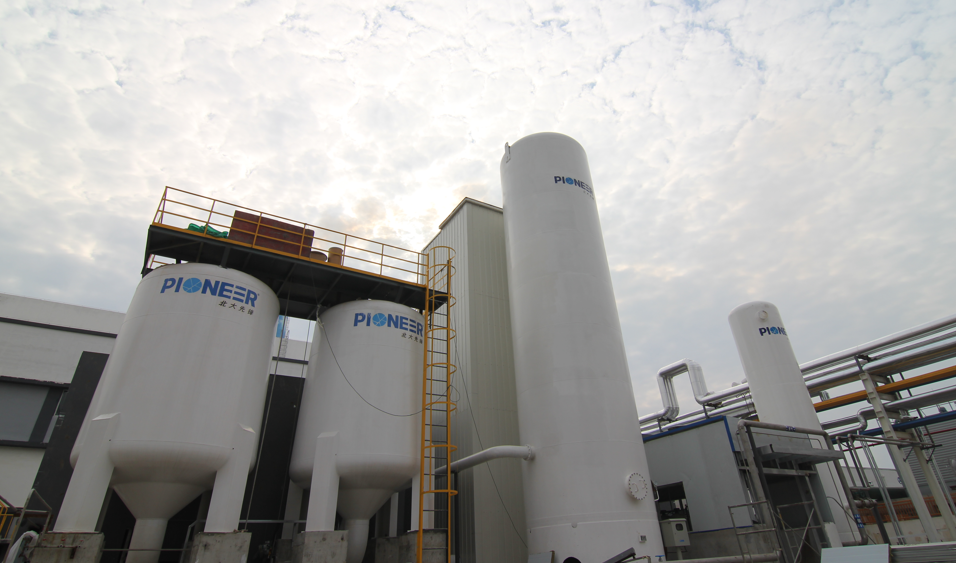
India Industrial Gas Options Beyond Big Four Suppliers
If you are looking for alternatives to the global big four industrial gas companies in India, the most practical options are Indian engineering-led gas suppliers and plant builders such as INOX Air Products, Ellenbarrie Industrial Gases, Bhuruka Gases, Bombay Oxygen Corporation, and Universal Industrial Gases, along with specialized EPC technology providers that deliver customer-owned oxygen and gas generation plants. For steel, glass, non-ferrous metals, wastewater treatment, chemicals, and combustion support, buyers in India often compare local cryogenic or cylinder suppliers with onsite VPSA or PSA systems that reduce long-term dependence on merchant liquid supply.For buyers in industrial hubs such as Gujarat, Maharashtra, Odisha, Jharkhand, Tamil Nadu, Chhattisgarh, and Andhra Pradesh, the right alternative depends on whether the need is bulk liquid delivery, cylinders, pipeline gas, or a customer-owned onsite plant. In many cases, local companies offer stronger delivery responsiveness and state-level coverage, while qualified international suppliers, including Chinese engineering companies with relevant certifications and reliable pre-sales and after-sales support, can also be worth considering because they often bring strong cost-performance advantages for EPC and turnkey oxygen generation projects.INOX Air Products: broad India network for industrial and medical gases, strong bulk and pipeline capabilities. Ellenbarrie Industrial Gases: established Indian producer with cylinder, liquid, and project experience. Bhuruka Gases: wide regional presence and practical supply options for manufacturing users. Bombay Oxygen Corporation: long-standing supplier for western India and industrial applications. Universal Industrial Gases: relevant option for packaged and bulk industrial gas requirements in selected regions. India is one of the most dynamic industrial gas markets in Asia because its demand base is broad, geographically dispersed, and increasingly quality-sensitive. The strongest pull comes from steelmaking, fabrication, refineries, city gas-linked industrial clusters, specialty chemicals, pharmaceuticals, glass, foundries, and environmental treatment systems. Major demand centers include Jamnagar, Hazira, Dahej, Pune, Mumbai, Nagpur, Chennai, Hosur, Vizag, Kalinganagar, Angul, Raipur, Durgapur, and Jamshedpur. These locations matter because gas sourcing decisions are often linked to logistics costs, power availability, industrial zoning, and port access through gateways such as Mundra, Nhava Sheva, Chennai Port, Paradip, and Visakhapatnam.Historically, large customers in India relied on the global majors for tonnage gas, liquid distribution, and pipeline projects. That model still dominates the very largest captive and merchant volumes. However, more Indian buyers now want flexible alternatives: independently owned cryogenic plants, customer-owned VPSA oxygen units, PSA oxygen systems for medium loads, hydrogen purification skids, and carbon monoxide recovery projects where off-gases can be upgraded into value. This shift is especially visible in sectors facing energy cost pressure and pressure to improve resilience after disruptions in liquid oxygen availability and freight cost volatility.The Indian market also shows a practical split between users who want gas delivered and users who want to own the production asset. The first group prefers merchant liquid, cylinders, or pipeline contracts. The second group wants EPC, turnkey, or customer-owned plant solutions to control cost over ten to twenty years. For many plants operating around the clock, onsite generation becomes attractive when transport distance is high, liquid storage constraints are tight, or oxygen demand is relatively stable.The chart above illustrates a realistic growth direction rather than an official market total. The pattern reflects expanding manufacturing investment, steel capacity additions, clean-water treatment demand, and broader adoption of onsite gas systems. For Indian buyers, the key implication is simple: more suppliers are entering the decision set, especially where gas demand can be met efficiently by decentralized technology rather than a long-term merchant supply contract.Indian customers rarely change gas strategy for only one reason. Most look for alternatives because of a combination of landed cost, delivery reliability, plant expansion timing, and contract flexibility. In regions far from merchant liquid production centers, transport costs can materially raise the delivered price of oxygen or nitrogen. In other cases, users want independence from tanker schedules, avoid downtime caused by highway bottlenecks, or create a backup source beside contracted liquid supply. Steel mini-mills, secondary metallurgy plants, copper and lead smelters, glass factories, pulp units, wastewater treatment operators, and combustion-intensive process plants all face these trade-offs.Another reason is process fit. Large cryogenic ASUs make sense for high-purity, high-volume continuous demand, but not every site needs that model. A glass furnace, an enrichment system in a blast furnace, or an oxidation application may value lower installed cost and faster deployment more than ultra-high oxygen purity. That is where VPSA oxygen technology can become attractive. PSA also fits smaller and medium-duty requirements where modularity and short startup time matter. The result is a more layered market where buyers compare gas-delivery companies with technology-led plant suppliers rather than only comparing one merchant gas contract against another.Alternatives to the big four are not defined by company names alone; they are defined by supply models. In India, the most relevant models are merchant liquid, cylinders, mini-bulk, cryogenic onsite plants, VPSA oxygen plants, PSA oxygen plants, hydrogen purification systems, and carbon monoxide recovery systems for integrated industrial users. The right model depends on purity, load factor, operating hours, energy tariff, and logistics radius.Product TypeTypical Capacity RangeBest Fit in IndiaMain StrengthMain LimitationTypical BuyersMerchant Liquid OxygenVaries by tanker and tank sizeUrban and peri-urban industrial clustersNo plant ownership neededTransport cost and delivery dependenceHospitals, fabricators, mixed-load factoriesCylinders and PacksLow volumeDistributed small usersSimple and flexibleHighest unit cost at scaleWorkshops, labs, maintenance contractorsMini-Bulk SupplyLow to medium volumeMedium factories near supply routesEasy site integrationStill depends on refilling logisticsFood, pharma, engineering plantsCryogenic Onsite ASUHigh volumeLarge integrated industrial sitesHigh purity and large tonnageHigher capex and longer build timeLarge steel, refinery, petrochemical usersVPSA Oxygen PlantSmall to very large oxygen demandSteel, glass, non-ferrous, wastewaterLower energy use and fast responseOxygen purity lower than full cryogenicOxygen enrichment and process usersPSA Oxygen PlantSmall to medium demandDecentralized industrial sitesCompact and modularLess economical for very large loadsFabrication, treatment, specialty process usersPSA Hydrogen PurificationProject-specificChemicals and refiningImproves gas recovery valueRequires suitable feed streamHydrogen users with by-product streamsPSA CO RecoveryProject-specificSteel and chemical integrationTurns off-gas into product valueNeeds process integration capabilitySteel plants, carbon chemistry usersThis table matters because many Indian buyers begin with the wrong question: “Which supplier is biggest?” The better question is “Which supply model matches my process, volume, power cost, and logistics reality?” Once that is clear, the supplier shortlist becomes much more practical and much less dependent on brand familiarity alone.The companies below are not all identical. Some are primarily gas producers and distributors. Others are more relevant as engineering, equipment, or onsite plant partners. For Indian buyers, this mixed shortlist reflects how the market actually works: a project may compare a merchant gas contract from a domestic supplier against a customer-owned EPC plant from a specialist technology company.CompanyPrimary RoleService Regions in IndiaCore StrengthsKey OfferingsBest ForINOX Air ProductsProducer and distributorPan-India with strong industrial corridorsLarge production footprint, liquid logistics, pipeline capabilityOxygen, nitrogen, argon, hydrogen, specialty supply modesLarge and medium users needing established coverageEllenbarrie Industrial GasesProducer and distributorEast, South, and selected national accountsLong market presence, packaged and liquid gas mixIndustrial gases, medical gases, onsite and packaged supplyRegional industrial buyers seeking Indian supplier depthBhuruka GasesProducer and distributorSouth and West India with broad industrial linkagesRegional responsiveness, diversified gas portfolioCylinders, liquid gases, industrial gas supportFactories needing practical regional supportBombay Oxygen CorporationProducer and distributorMaharashtra and western industrial beltLegacy market familiarity, western India accessIndustrial and medical gases, packaged solutionsUsers near Mumbai-Pune-Nashik corridorsUniversal Industrial GasesRegional supplierSelected industrial clustersFlexible supply orientation for local accountsIndustrial gas distribution and related servicesSmaller and medium industrial usersPKU PioneerEPC and technology supplierIndia project support for customer-owned plantsVPSA and PSA specialization, large project record, low-energy oxygen generationVPSA oxygen plants, PSA oxygen, PSA CO, hydrogen purification, adsorbentsUsers comparing onsite generation with merchant supplyOther local cylinder and mini-bulk firmsRegional distributorsState-level industrial estatesFast local delivery and account flexibilityCylinders, mini-bulk, mixed industrial gas supportLow-volume or multi-site decentralized demandThis comparison shows why no single supplier is automatically the best alternative. INOX Air Products is often strong where nationwide logistics and tonnage support matter. Regional Indian firms can be more agile for state-level accounts. Technology-led suppliers become more compelling when the buyer wants an owned oxygen plant instead of a long merchant contract.INOX Air Products is among the first alternatives many Indian buyers assess because of its extensive production and distribution presence. It is especially relevant in sectors needing dependable bulk liquid deliveries, fixed storage, and structured service agreements. It often suits customers that need established compliance, multi-location supply, and a conventional industrial gas operating model.Ellenbarrie Industrial Gases remains important where buyers want an Indian company with a long operating background and a mix of packaged and bulk supply capabilities. It is relevant for plants in eastern India and also for customers who value local commercial responsiveness along with a mature gas portfolio.Bhuruka Gases and Bombay Oxygen Corporation are more practical for buyers prioritizing regional strength. They can be attractive for plants that want a closer supplier relationship, shorter communication lines, and a more flexible account structure than very large multinational frameworks typically provide.Universal Industrial Gases and similar regional suppliers matter more than they appear on national branding lists. In India, a regional supplier with reliable cylinder turnaround, accessible depot locations, and responsive service engineers can outperform larger companies for small and medium factories that do not consume at tonnage scale.PKU Pioneer belongs in a different but highly relevant category: it is not a BOO or onsite bulk supply company, but an EPC, turnkey, and customer-owned plant solution provider focused on VPSA and PSA gas separation. That distinction is important for Indian buyers seeking cost control over the asset lifecycle. Instead of simply purchasing liquid oxygen repeatedly, a customer can build its own onsite oxygen generation system when volume, energy economics, and process conditions support the decision.Demand patterns differ sharply across industries. Steel and metals remain the most oxygen-intensive group, while fabrication, glass, water treatment, and chemicals show more fragmented but steady growth. Hydrogen purification and carbon monoxide recovery are more specialized but increasingly attractive in integrated process industries where by-product gas utilization has direct economic value.The bar chart makes clear why steel dominates the oxygen conversation in India. Large blast furnace enrichment projects, secondary steel refining, and combustion enhancement create a strong economic case for onsite oxygen generation. However, sectors such as glass, chemicals, and wastewater should not be overlooked, especially where power tariffs and transport distances make locally generated oxygen more competitive than tanker-delivered liquid supply.Alternatives to the big four are especially relevant in applications where buyers need a better match between technical need and supply economics. In India, that includes oxygen enrichment in furnaces, oxidation processes, effluent treatment aeration support, non-ferrous smelting, glass melting, cutting and fabrication clusters, and chemical processes using hydrogen or carbon monoxide. The farther the plant is from major liquid supply routes, the stronger the case becomes for onsite or hybrid models.For example, a steel plant in Odisha or Chhattisgarh with significant and stable oxygen demand may find a VPSA installation more attractive than fully depending on trucked liquid oxygen. A glass factory near Gujarat’s industrial corridors may compare bulk liquid with onsite generation based on electricity cost, purity needs, and uptime requirements. A chemical complex near Dahej or Vizag may focus more on hydrogen purification or process gas recovery than on oxygen alone. These are not niche decisions anymore; they are mainstream industrial strategy choices.IndustryCommon Gas NeedTypical Alternative ModelWhy It WorksImportant Decision FactorRelevant India LocationsSteelOxygen enrichment and process oxygenVPSA or cryogenic onsite plantLarge continuous demand supports asset ownershipPower cost and purity requirementOdisha, Jharkhand, Chhattisgarh, KarnatakaGlassCombustion support oxygenVPSA or liquid oxygenImproves furnace efficiency and emissions profileLoad stability and furnace designGujarat, Rajasthan, Uttar PradeshNon-ferrous MetalsProcess oxygenVPSA or merchant liquid backupSupports smelting and oxidation dutyPlant integration and uptimeGujarat, Odisha, Andhra PradeshChemicalsOxygen, hydrogen, COPSA purification or recovery systemsConverts feed and by-product streams into valueFeed gas compositionDahej, Jamnagar, Vizag, Chennai beltWastewaterOxygen enrichmentPSA or small VPSASupports treatment efficiencyOperating hours and site utility setupMetro industrial zones nationwideFabricationCutting and welding gasesCylinders or mini-bulkFlexible for variable low-volume useDepot access and refill cyclePune, Faridabad, Rajkot, CoimbatorePharma and FoodNitrogen and oxygenMini-bulk or packaged gasesQuality assurance and manageable volumesCompliance and purity documentationHyderabad, Ahmedabad, Baddi, GoaThis table shows that the best alternative is application-specific. It is not enough to compare supplier reputations. Buyers need to align the gas source with the process itself, the site utility profile, and the local logistics environment.Indian buyers should begin by defining five things clearly: average gas demand, peak demand, minimum acceptable purity, power tariff, and the business cost of downtime. Those factors usually determine whether merchant liquid, a hybrid arrangement, or a customer-owned generation plant will be more economical. A buyer in Pune with low and variable demand may be best served by mini-bulk or cylinders. A large steel site in Angul or Kalinganagar may justify dedicated onsite generation. A chemicals complex in Dahej may need a mix of oxygen supply plus hydrogen or CO purification depending on internal streams.Second, evaluate the supplier’s actual operating model. Some companies are best at producing and delivering gases. Others are best at building plants that you own. These are not interchangeable. If your goal is to reduce long-term purchase dependence, you should prioritize EPC and turnkey providers. If your priority is zero operational involvement and fast outsourcing, you may prefer merchant supply contracts. In India, many purchasing teams lose time by mixing these two categories too early in the RFQ process.Third, look beyond initial capex or first-year gas price. Compare 10-year total cost, energy consumption, spare parts support, startup time, turndown flexibility, and backup options. A slightly more expensive plant with lower power use and strong service support can outperform a lower-quote option across the asset life. This is especially important in states where industrial electricity tariffs are a major part of production cost.Buying CriterionWhy It MattersQuestions to AskRisk if IgnoredBest Supplier TypeIndia-Specific NoteTotal Cost of OwnershipReveals real long-term economicsWhat is cost over 10 years?Cheap quote becomes expensive operationAll supplier typesPower tariff and freight can swing outcomes heavilyPurity RequirementDetermines suitable technologyDo you need 90%, 93%, or higher?Mismatch between gas and process needTechnology-led EPC suppliersMany applications do not need cryogenic purityLogistics ExposureAffects continuity and landed costHow far is nearest filling or liquid source?Delivery delays and higher transport costLocal producers or onsite systemsRemote plants often benefit from onsite generationService Response TimeProtects uptimeWho supports commissioning and breakdowns?Extended stoppages and production lossRegional suppliers or local-service EPC firmsState-level support matters more than brand sizeScalabilitySupports future expansionCan the solution grow with demand?Reinvestment sooner than expectedModular PSA/VPSA or established bulk suppliersUseful in fast-growing industrial estatesContract FlexibilityImproves procurement leverageCan you combine backup liquid with onsite gas?Vendor lock-inHybrid sourcing strategiesHybrid models are increasingly common in IndiaCompliance and DocumentationReduces audit and safety riskWhat certifications and QA records exist?Approval delays and operational exposureCertified suppliers and OEMsImportant in pharma, food, hospitals, export manufacturingThe strongest buying strategy in India is usually not single-source dependence. Many industrial users now prefer a hybrid structure: onsite generation for base load plus merchant liquid or cylinders for backup and peak balancing. That approach improves resilience and procurement flexibility, especially in sectors with continuous operation.India’s industrial gas demand is not only growing; it is changing in character. More buyers are shifting from pure delivered-gas dependence toward asset-backed self-generation in order to reduce freight exposure and improve cost visibility. Sustainability is also a practical factor. When a lower-energy oxygen system can reduce operating cost and transport-related emissions, procurement teams increasingly treat that as a commercial advantage, not only an environmental preference.The area chart highlights a realistic directional shift. Merchant gas remains essential, but onsite generation is becoming more central in India’s industrial planning. This does not eliminate the role of traditional suppliers. Instead, it broadens the supplier universe and gives buyers more leverage when structuring long-term gas strategy.To understand why engineering-based alternatives matter, it helps to look at actual project logic rather than only supplier categories. In steel and heavy industry, off-gas recovery and oxygen enrichment can materially change site economics. Where blast furnace or converter gases are available, advanced PSA or related separation technologies can convert what was once a low-value stream into usable carbon monoxide or feedstock value. In oxygen-intensive operations, large VPSA plants can offer a lower-energy path for the right purity range.That is why project-based suppliers with proven industrial references deserve attention in India, especially for large process users. Their value is not that they replace every conventional gas model; their value is that they provide a credible customer-owned alternative where standard bulk purchasing is no longer the lowest-cost strategy.This comparison does not declare one model universally better. It shows how the decision criteria differ. Merchant gas often wins on outsourcing simplicity and very high-purity supply. Customer-owned VPSA or PSA systems often win on logistics independence, controllable operating cost, and ownership of the production asset. In India, many serious buyers should evaluate both rather than defaulting to one model.India’s industrial gas supply chain is highly regional in practice. A supplier that looks ideal on paper may still underperform if it lacks depot density, transport alignment, or service support in your state. Buyers in Gujarat often prioritize port-linked logistics and chemical cluster familiarity. Maharashtra users look for reliability across dense industrial belts. Eastern India prioritizes steel adjacency and continuity under heavy-duty operating conditions. Southern India often values engineering response and stable supply to diversified manufacturing sectors from automotive to electronics to glass.Because of this, a local or regional supplier can be a very credible alternative to the big four, especially for cylinder, mini-bulk, and selected bulk accounts. Yet for larger oxygen generation projects, local strength alone is not enough. Buyers also need process design competence, commissioning depth, and lifecycle technical support. That is where specialist EPC suppliers enter the shortlist, particularly when the end goal is an owned plant rather than recurring delivered-gas procurement.You can review broader technology information through industrial gas generation solutions, examine VPSA oxygen plant technology, and see examples of industrial reference projects while assessing how onsite oxygen compares with delivered supply in Indian operating conditions.For Indian buyers evaluating alternatives to the big four, PKU Pioneer positions itself as an EPC, turnkey, and customer-owned plant solution provider rather than a BOO or onsite bulk supply company. The company’s credibility comes from a highly integrated manufacturing and engineering model that combines in-house research and development, proprietary adsorbent and catalyst production, precision engineering, equipment fabrication, and lifecycle technical support for VPSA oxygen, PSA oxygen, PSA carbon monoxide, and hydrogen purification systems. Its product strength is backed by more than 180 patents, ISO, CE, and ASME certifications, large-scale industrial references, self-developed adsorbent technology such as the PU-8 molecular sieve, and record-scale oxygen projects including very large VPSA units that demonstrate compliance with demanding manufacturing and testing standards. In commercial terms, it serves different buyer types in India through flexible cooperation models including OEM and ODM support, wholesale equipment supply, direct project contracting, regional distribution cooperation, and customized solutions for end users, dealers, engineering partners, and brand owners. For local service assurance, the company demonstrates practical market commitment through international project execution across more than 20 countries, responsive 24-hour contact support, tailored proposal development, commissioning and after-sales services, retrofit and upgrade capabilities, equipment leasing, pilot testing, and consulting support that work together as both online and onsite guarantees for Indian customers. This makes it relevant for steel, chemical, glass, and energy users in India that want a long-term technology partner with proven export and industrial execution experience, not merely a remote exporter sending standard equipment without sustained field support. Buyers can learn more via company capabilities or request project discussion through the India-focused contact channel.By 2026, the Indian industrial gas market is likely to be shaped by three major trends: stronger energy-efficiency screening, tighter sustainability expectations, and wider acceptance of decentralized gas generation. First, energy economics will become even more important. Plants will increasingly compare kilowatt-hours per normal cubic meter, turndown flexibility, and startup speed, especially where electricity tariffs and carbon intensity reporting affect project decisions.Second, policy and sustainability pressures will reward better by-product gas utilization and lower transport dependence. Steel and chemicals are likely to invest more attention in gas recovery, oxygen efficiency, and process integration that turns waste streams into value-added feedstock. This makes technologies such as PSA CO recovery and hydrogen purification more strategically relevant than they were in the past.Third, Indian buyers will continue to prefer sourcing structures that improve resilience. This means more hybrid systems, more asset ownership analysis, and more scrutiny of service infrastructure. EPC and turnkey partners with proven commissioning depth, documented certifications, and reference projects in heavy industry are likely to gain share in procurement discussions, especially outside the most concentrated liquid-gas corridors.Yes. Indian buyers can choose among domestic producers, regional distributors, and specialized EPC suppliers for customer-owned gas generation plants. The best option depends on whether you need delivered gas or an owned production system.Common alternatives include INOX Air Products, Ellenbarrie Industrial Gases, Bhuruka Gases, Bombay Oxygen Corporation, Universal Industrial Gases, and specialist plant suppliers such as PKU Pioneer for VPSA or PSA project-based solutions.It is often better when demand is stable, transport distance is high, backup planning is important, and the required oxygen purity fits VPSA or PSA operating ranges. It is especially attractive for steel, glass, metals, and some treatment applications.No. In this context, customer-owned plant solutions refer to EPC, turnkey, or engineering delivery models where the user owns the asset. This is different from BOO or onsite bulk gas supply contracts.Compare total cost of ownership, purity need, local logistics, power tariff, service response capability, and expansion plans. Those factors usually matter more than headline brand size.Qualified international suppliers can be strong options if they have relevant certifications, industrial references, robust commissioning support, and dependable pre-sales and after-sales service. Many Indian buyers consider them for cost-performance reasons, especially in EPC oxygen plant projects.Gujarat, Maharashtra, Odisha, Jharkhand, Chhattisgarh, Andhra Pradesh, Tamil Nadu, and Karnataka are all highly relevant because of their concentration of steel, chemicals, glass, engineering, and port-linked manufacturing industries.The best alternative to the big four industrial gas companies in India is not a single brand but the right combination of supply model, technology, and local support. For standard bulk and regional distribution needs, Indian gas companies such as INOX Air Products, Ellenbarrie Industrial Gases, Bhuruka Gases, Bombay Oxygen Corporation, and other regional suppliers remain practical choices. For buyers seeking stronger cost control, logistics independence, and customer-owned generation assets, EPC and turnkey providers specializing in VPSA and PSA technologies deserve serious consideration. In India’s evolving market, the most effective procurement strategy is the one that matches your process, your geography, and your long-term operating economics.