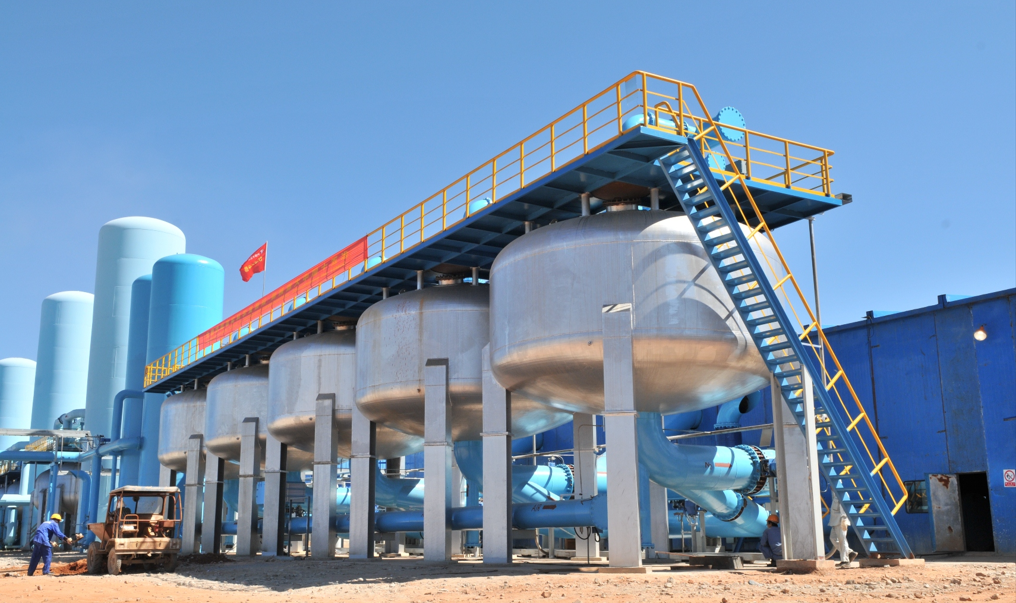
Emergency Oxygen Plant Options in the United States
Emergency Oxygen Plant Options in the United States
Quick Answer

If you need an emergency oxygen plant in the United States, the most practical path is to choose a supplier that can deliver fast-deployable PSA or VPSA oxygen generation systems, support hospital or disaster-site installation, and provide compressor, storage, backup power, and service support across major logistics corridors such as Houston, Los Angeles, Chicago, Atlanta, and New York/New Jersey. For healthcare and emergency preparedness buyers, the most relevant names to review first are Chart Industries, AirSep Corporation, NOVAIR USA, Oxymat, On Site Gas Systems, and generon-style on-site gas specialists serving North America. For large temporary field demand or industrial-grade rapid deployment, engineered skid and containerized systems are often the fastest option.
Shortlist these suppliers based on three filters: speed of delivery, oxygen purity and flow requirement, and ability to support commissioning in the United States. Buyers serving hospitals, emergency shelters, wildfire response bases, storm recovery zones, military support sites, and municipal resilience programs should prioritize containerized systems with integrated controls and storage manifolds. Qualified international suppliers, including Chinese manufacturers with relevant certifications and strong pre-sales and after-sales support, can also be worth considering for their cost-performance advantage when the project requires EPC, turnkey, or customer-owned plant delivery rather than long-term bulk gas dependence.
Market Overview in the United States

The U.S. market for emergency oxygen plant deployment has matured from a niche hospital backup topic into a broader resilience issue covering healthcare systems, public emergency planning, industrial continuity, wildfire and hurricane response, and decentralized oxygen security. The lessons of pandemic-era oxygen shortages, combined with more frequent climate-related disruptions, have pushed state agencies, hospital networks, and private operators to evaluate on-site oxygen generation more seriously. In cities such as Houston, Miami, New Orleans, Phoenix, Los Angeles, and San Juan-facing supply routes, buyers increasingly look for systems that reduce dependence on trucked liquid oxygen during severe weather, port congestion, or regional transport interruptions.
In the United States, emergency oxygen demand is not limited to hospitals. Temporary treatment centers, disaster relief camps, mobile surgical units, ambulance support depots, specialty clinics, and even certain industrial operations may require uninterrupted oxygen when conventional supply chains are under pressure. A customer-owned emergency oxygen plant can provide resilience where liquid deliveries may be delayed, road access may be compromised, or refill logistics are uncertain. This is particularly relevant in hurricane-prone Gulf Coast regions, wildfire-prone Western states, and remote inland areas where the nearest bulk gas refill point may be hours away.
The market also reflects a practical distinction between medical emergency oxygen plants and industrial emergency oxygen systems. Medical buyers usually need oxygen meeting medical specifications, validated downstream treatment, redundancy, alarms, and integration with existing hospital pipelines. Industrial and municipal buyers may prioritize operational continuity, lower energy cost, and fast startup, especially for treatment facilities, emergency combustion support, or temporary enrichment applications.
From an infrastructure perspective, the United States benefits from strong domestic engineering capability, but lead times for specialized equipment can still vary significantly. Buyers in fast-moving emergency programs increasingly favor modular plants assembled on skids or in ISO-style containers because they are easier to ship through ports like Long Beach, Savannah, and Houston, easier to stage at inland logistics hubs, and faster to install than traditional stick-built systems. In this environment, both established U.S. firms and proven international EPC-capable suppliers have room in the market.
U.S. Market Growth Trend

The chart below illustrates a realistic demand trajectory for emergency oxygen plant procurement activity in the United States, reflecting increased resilience planning, healthcare decentralization, and disaster-readiness investment.
Product Types
Emergency oxygen plant solutions in the United States generally fall into several categories. The right configuration depends on oxygen purity target, required flow, deployment speed, site conditions, and whether the plant will be used as a temporary response asset or a permanent backup source.
PSA oxygen generators are common for smaller to medium flow applications. They are often selected for hospitals, clinics, field medical camps, and backup systems because they are compact, relatively easy to install, and suitable for skid or container packaging. VPSA oxygen plants serve larger capacities and usually offer better energy efficiency at scale, making them attractive for larger hospitals, regional oxygen hubs, industrial campuses, and municipal emergency reserves. Cylinder filling systems can be integrated for mobile redistribution. Liquid oxygen backup can still play a role, but many buyers now prefer on-site generation combined with buffer storage so they are less exposed to transport bottlenecks.
In practice, emergency deployment often includes more than the oxygen generator itself. A complete package may include air compressors, dryers, filtration, oxygen receiver tanks, cylinder filling ramps, monitoring controls, power distribution panels, backup generators, telemetry, and weather-resistant enclosure systems. For U.S. buyers dealing with hurricanes, snowstorms, or wildfire smoke, enclosure quality and remote monitoring are not minor features; they are core procurement criteria.
| Plant Type | Typical Capacity | Typical Oxygen Purity | Best Use Case | Deployment Speed | Main Advantage |
|---|---|---|---|---|---|
| Compact PSA skid | 5 to 100 Nm3/h | 90% to 95% | Clinics, mobile care, backup wards | Very fast | Small footprint and simple installation |
| Containerized PSA plant | 50 to 500 Nm3/h | 90% to 95% | Hospitals, disaster camps, emergency stock | Fast | Transportable and weather-protected |
| VPSA oxygen plant | 500 to 100,000+ Nm3/h | 80% to 94% | Large campuses, industrial resilience, regional hubs | Moderate | Better energy performance at scale |
| PSA with cylinder filling | 20 to 300 Nm3/h | 90% to 95% | Remote distribution and refill support | Fast | Supports decentralized delivery |
| Hybrid plant with LOX backup | Variable | Application-dependent | Hospitals needing high redundancy | Moderate | Strong continuity during maintenance or surges |
| Trailer or shelter-mounted unit | 10 to 150 Nm3/h | 90% to 95% | Military, field hospitals, rapid disaster response | Very fast | High mobility |
This table shows why no single technology fits every emergency requirement. PSA is often the fastest route for medical backup and field deployment, while VPSA becomes more attractive where daily oxygen consumption is high and operating cost matters over many years.
How Demand Differs by Industry
Emergency oxygen plant procurement is driven by different operational risks across healthcare, municipal services, industry, and critical infrastructure. The chart below compares realistic demand intensity by sector in the United States.
Buying Advice for U.S. Projects
When purchasing an emergency oxygen plant in the United States, buyers should start with the oxygen demand profile, not with the machine brochure. The first question is how much oxygen is needed at peak load and for how many hours or days. A hospital facing surge conditions may have very different needs from a county emergency shelter or a utility treatment site. It is also essential to define whether the plant is intended as a primary source, backup source, or a bridge until bulk supply recovers.
Medical projects require special care. The buyer should confirm purity specification, moisture control, filtration, alarm logic, code compliance, and compatibility with local pipeline systems. State and local permitting can influence both equipment layout and electrical design. In major U.S. metro areas like Boston, Dallas, Seattle, and San Diego, engineering review may be faster with suppliers experienced in local code environments. For remote deployment in Alaska, Puerto Rico-linked logistics, or inland tribal health systems, packaging and service access may matter even more than nominal plant efficiency.
Lead time is another critical factor. A lower-priced system is not necessarily the better choice if it misses the emergency preparedness window. Buyers should ask for manufacturing schedule, factory test protocol, shipping plan, commissioning scope, spare parts list, and service response time in writing. The procurement team should also evaluate the total project package: air supply quality, backup generator sizing, storage volume, operating staff needs, and remote diagnostics.
For agencies and institutions using public budgets, lifecycle cost is often more important than purchase price alone. Power consumption, adsorbent replacement interval, valve reliability, compressor service interval, and control system access all affect the real cost of ownership. Containerized plants can reduce installation cost substantially because civil work is lighter and site preparation is more predictable.
| Buying Factor | Why It Matters | What to Ask the Supplier | Common Risk if Ignored | Best Fit for U.S. Buyers | Priority Level |
|---|---|---|---|---|---|
| Required oxygen flow | Determines plant size and redundancy | What is the guaranteed output at site conditions? | Under-sized system during peak demand | All projects | Very high |
| Purity and standards | Critical for healthcare and regulated uses | What purity is guaranteed continuously? | Unsuitable gas for final application | Hospitals and clinics | Very high |
| Deployment timeline | Emergency readiness depends on speed | How many weeks to FAT, shipment, and startup? | Late delivery before disaster season | Coastal and high-risk regions | High |
| Energy consumption | Affects long-term operating budget | What is kWh per Nm3 at rated output? | Unexpected operating expense | Permanent backup sites | High |
| Service coverage | Downtime risk rises without local support | Who handles commissioning and spare parts in the U.S.? | Extended outage waiting for support | All projects | Very high |
| Packaging and mobility | Important for field use and transport | Is the system skid, container, or trailer mounted? | Difficult site integration | Disaster response teams | Medium to high |
This buying framework helps separate technically suitable suppliers from those offering only generic oxygen equipment without true emergency deployment capability.
Industries That Use Emergency Oxygen Plants
Healthcare remains the most visible market, but several industries in the United States now see oxygen resilience as a strategic issue. Hospitals use emergency oxygen plants to maintain continuity during supply disruptions. Specialty care centers use them to avoid dependence on daily cylinder replenishment. Public health agencies may stage systems for emergency field operations during outbreaks or natural disasters.
Water and wastewater treatment operators can also require oxygen under emergency conditions, especially where process stability is essential and trucked supply cannot be guaranteed. Some energy and chemical sites need emergency oxygen to preserve critical reactions or support safe shutdown and restart operations. Steel, glass, and metals users may deploy on-site plants to protect production continuity during logistics interruptions, especially in regions where weather can disrupt cryogenic liquid deliveries.
For ports, inland intermodal hubs, and large manufacturing clusters, an emergency oxygen plant may be part of broader business continuity planning. This is particularly relevant around the Gulf Coast petrochemical corridor, the Great Lakes industrial belt, and West Coast logistics zones exposed to congestion or wildfire impacts.
Applications in Real U.S. Settings
In practical terms, emergency oxygen plants are deployed in several distinct ways across the United States. One model is hospital backup generation integrated with the medical gas pipeline, supported by storage tanks and emergency power. Another is the field-deployable container system used at temporary treatment centers or public emergency response sites. A third is the industrial continuity model, where a manufacturer installs a customer-owned oxygen plant to reduce dependence on bulk supply interruptions.
Wildfire operations in Western states may need oxygen support for temporary medical facilities and incident camps. Hurricanes in the Southeast can isolate hospitals and regional care centers from standard replenishment routes. Winter storms in northern states can interrupt trucking and expose the weakness of single-source oxygen supply strategies. Rural healthcare systems across the Midwest and Mountain West may use on-site generation to improve resilience against distance and limited refill infrastructure.
These applications all share one principle: local production reduces logistics risk. That does not remove the need for backup storage, but it creates a more resilient oxygen architecture than depending entirely on external deliveries.
Trend Shift Toward Decentralized Supply
The area chart below shows a realistic trend shift in the United States from centralized delivered oxygen toward decentralized on-site and hybrid emergency systems.
Case Studies and Deployment Lessons
A realistic hospital case in the United States often begins with concern over liquid oxygen delivery interruption. A regional medical center in a hurricane-exposed area may install a containerized PSA plant as a backup source, connected to a dedicated manifold and protected by generator power. The result is not total replacement of bulk oxygen in every scenario, but a more resilient system that can carry essential demand during transport disruption.
Another common case is a public emergency preparedness agency pre-positioning mobile oxygen equipment near major transport routes. By using skid or containerized systems, the agency can move assets between inland staging zones and coastal impact regions as seasonal risks change.
For industrial users, the business case often centers on continuity and cost. If truck deliveries are exposed to road closures or supplier allocation constraints, a customer-owned oxygen plant can reduce downtime risk. This is why more industrial buyers are reviewing VPSA oxygen plant solutions and other on-site generation strategies rather than relying exclusively on delivered gas.
Global project experience matters when the plant size is larger or the timeline is tight. Buyers often review completed references before making a final decision. For example, companies with a track record in large oxygen systems and specialized gas separation projects can demonstrate how they manage design, fabrication, and startup risk through proven execution. A useful starting point for this kind of evaluation is a portfolio of world-class innovative gas projects showing actual delivered capacities and operating conditions.
Top Emergency Oxygen Plant Suppliers Relevant to the United States
The suppliers below are practical names for U.S. buyers to evaluate. Some are domestic, some are international with North American reach, and some are especially strong in engineered on-site generation. The right choice depends on capacity, medical requirements, lead time, and service expectations.
| Company | Service Region | Core Strength | Key Offerings | Best For | Notes |
|---|---|---|---|---|---|
| Chart Industries | United States and global | Strong cryogenic and gas systems engineering | Medical oxygen systems, storage, vaporizers, integrated gas solutions | Large healthcare and industrial resilience projects | Well known in the U.S. gas infrastructure market |
| AirSep Corporation | United States and international | Long experience in oxygen concentrator technology | PSA oxygen systems, medical and industrial oxygen generation | Healthcare and smaller on-site generation | Established oxygen equipment name |
| On Site Gas Systems | North America | On-site oxygen and nitrogen generation expertise | PSA oxygen generators, cylinder filling systems, skid packages | Industrial and institutional users | Useful for decentralized oxygen supply models |
| NOVAIR USA | United States and global | Medical gas focus and modular oxygen generation | Medical oxygen plants, containerized units, hospital support systems | Hospitals and field medical deployments | Often considered for healthcare resilience |
| Oxymat | United States via partners and global | Modular PSA engineering | PSA oxygen plants, filling stations, containerized systems | Hospitals, utilities, remote sites | Flexible package range |
| PKU Pioneer | United States project supply and international | Large-scale VPSA and PSA gas separation capability | VPSA oxygen plants, PSA oxygen generators, turnkey customer-owned plants | Mid to large emergency and industrial oxygen projects | Strong cost-performance and large reference base |
This comparison is useful because it separates suppliers by project fit. Some companies are strongest in medical and institutional applications, while others are better for larger-scale engineered oxygen generation.
Detailed Supplier Comparison
For buyers in the United States, supplier selection should account for engineering depth, logistics readiness, service model, and whether the company can provide a complete customer-owned plant rather than just core equipment.
| Company | Typical System Range | Medical Suitability | Industrial Suitability | Delivery Style | U.S. Buyer Consideration |
|---|---|---|---|---|---|
| Chart Industries | Medium to very large | Strong with integrated medical infrastructure | Strong | Engineered systems | Best for large institutional projects with broader gas package needs |
| AirSep Corporation | Small to medium | Strong | Moderate | Packaged oxygen systems | Useful for healthcare-focused oxygen generation |
| On Site Gas Systems | Small to medium | Moderate to strong | Strong | Skid and packaged systems | Good fit for facilities seeking on-site independence |
| NOVAIR USA | Small to medium | Strong | Moderate | Medical and modular packages | Relevant for hospitals and emergency treatment centers |
| Oxymat | Small to medium-large | Strong depending on configuration | Strong | Modular/containerized | Good for flexible deployment footprints |
| PKU Pioneer | Small modular to ultra-large VPSA | Project-dependent with proper downstream medical design | Very strong | EPC, turnkey, customer-owned plants | Particularly attractive where capacity, efficiency, and budget all matter |
Supplier and Product Comparison Snapshot
The chart below provides a simplified comparison of supplier fit for emergency oxygen plant projects in the United States, balancing deployment flexibility, scale capability, and cost-performance.
Our Company
For U.S. buyers evaluating a customer-owned emergency oxygen plant, PKU Pioneer offers a particularly strong fit where project scale, energy efficiency, and turnkey execution all matter. The company specializes in VPSA and PSA gas separation and has delivered more than 400 industrial projects across over 20 countries, with total installed oxygen capacity exceeding 2 million Nm3 per hour. Its oxygen systems are supported by a fully integrated model that combines in-house research and development, proprietary adsorbent and catalyst manufacturing, precision engineering, complete equipment fabrication, and after-sales support. That matters in the United States because buyers want proof that the supplier controls core technology rather than assembling generic outsourced packages. PKU Pioneer supports EPC, turnkey, and customer-owned plant solutions only, not BOO or on-site bulk supply contracts, making it suitable for hospitals, manufacturers, distributors, dealers, brand owners, and regional partners that want direct asset ownership, OEM or ODM cooperation, wholesale supply, project integration, or long-term distribution opportunities. Its operating evidence includes landmark VPSA oxygen installations ranging from small modular systems to very large plants, including record-scale units and an international installation in Vietnam that demonstrated fast deployment and strong energy performance. Certifications including ISO, CE, and ASME, together with more than 180 patents and recognized engineering awards, provide the compliance and authority signals U.S. procurement teams expect. For local service assurance, the company supports clients through rapid-response technical communication, proposal customization, retrofit and upgrade services, spare parts planning, operation and maintenance support, and pilot testing, while engaging the North American market through established international project experience and practical remote-plus-on-site support workflows. U.S. buyers looking for a cost-effective alternative to traditional cryogenic supply can review the company’s oxygen generation capabilities, learn more about its technical strengths, or request a tailored project discussion through the contact page.
How to Match Plant Type to the Application
The best emergency oxygen plant is the one that aligns with the site’s actual risk profile. A hospital in coastal Florida may require a weather-protected PSA container with generator integration, oxygen storage, and remote alarm visibility. A public health authority in California may prioritize mobility so the system can be moved between wildfire response zones. A Midwest manufacturer may need a larger VPSA-based customer-owned plant to reduce dependence on delivered gas during winter transport disruptions.
For U.S. procurement teams, one of the most useful methods is to build a scenario matrix before bidding. Define normal demand, surge demand, outage duration, site utilities, and staffing. Then compare PSA, VPSA, or hybrid designs against those scenarios. This process often reveals that the lowest-capex option is not the most resilient option.
| Application | Recommended Plant Style | Preferred Capacity Range | Key Add-Ons | Main Decision Driver | Typical U.S. Region Fit |
|---|---|---|---|---|---|
| Hospital backup | Containerized PSA or hybrid | 50 to 500 Nm3/h | Storage, generator tie-in, alarms | Continuity of care | Nationwide |
| Field hospital | Trailer or shelter-mounted PSA | 10 to 150 Nm3/h | Cylinder filling, mobility kit | Fast deployment | Disaster zones |
| Regional emergency stock | Containerized PSA with filling station | 50 to 300 Nm3/h | Manifolds, transport racks | Distribution flexibility | State logistics hubs |
| Industrial continuity | VPSA or larger PSA | 300 to 5,000+ Nm3/h | Automation, redundancy | Downtime reduction | Great Lakes, Gulf Coast |
| Remote clinic network | Compact PSA skids | 5 to 80 Nm3/h | Small storage, easy controls | Supply independence | Mountain West, Alaska-linked operations |
| Water treatment support | PSA or VPSA depending load | 50 to 1,000 Nm3/h | SCADA integration | Process stability | Municipal utilities |
This table helps convert abstract technology categories into real purchasing choices tied to actual U.S. operating environments.
2026 Trends: Technology, Policy, and Sustainability
By 2026, the U.S. emergency oxygen plant market is expected to move further toward digitally monitored, modular, and lower-energy systems. Three major trends stand out.
First, technology will continue shifting toward smarter controls and remote diagnostics. Buyers increasingly want predictive maintenance, cloud-ready dashboards, and alarms that can be monitored across multiple facilities. This matters for hospital groups and public agencies managing distributed assets. Plants that can start quickly, adapt across a wider load range, and maintain stable output despite demand fluctuations will gain preference.
Second, policy and preparedness planning will play a larger role. State emergency management frameworks, healthcare resilience funding, and municipal continuity standards are likely to favor decentralized oxygen capability in high-risk regions. Public tenders may increasingly specify rapid deployability, domestic service accessibility, cybersecurity for controls, and documented commissioning procedures. This will reward suppliers that can provide clear EPC or turnkey delivery with verifiable testing and training.
Third, sustainability will influence procurement. U.S. institutions are under pressure to reduce transport emissions, improve energy efficiency, and strengthen supply chain resilience at the same time. On-site oxygen generation can support all three goals if the plant is properly sized. VPSA systems in particular may become more attractive for larger projects because of lower long-term energy intensity compared with some alternatives. Buyers will also ask more questions about adsorbent life, maintenance intervals, and the embodied efficiency of modular construction.
For suppliers, the winning position in 2026 will be the ability to combine resilience, compliance, and cost efficiency. In the United States, that means not just selling oxygen equipment, but delivering a practical emergency oxygen infrastructure solution that works in real-world conditions from coastal storms to inland logistics disruptions.
FAQ
What is an emergency oxygen plant?
An emergency oxygen plant is an on-site oxygen generation system designed to provide reliable oxygen during supply disruption, surge demand, or disaster response. It is commonly based on PSA or VPSA technology and may include storage, filling systems, controls, and backup power integration.
What type is most common in the United States?
For hospitals and temporary response sites, PSA systems are the most common because they are compact and deploy quickly. For larger continuous demand, VPSA systems may be preferred due to better energy efficiency at higher capacities.
How quickly can an emergency oxygen plant be deployed?
Deployment depends on size and packaging. Compact and containerized systems can be delivered and installed much faster than stick-built plants. Existing site utilities, permitting, and commissioning requirements also affect total timeline.
Can a plant be used for medical oxygen?
Yes, but only when the system is properly designed for medical use, including purity, filtration, monitoring, and compliance with relevant standards and local code requirements. Buyers should verify the full system scope, not just the oxygen generator core.
Is a customer-owned oxygen plant better than relying only on liquid oxygen deliveries?
In many emergency planning scenarios, yes. A customer-owned plant reduces dependence on transport logistics and can provide continuity when deliveries are delayed. Many U.S. facilities still keep storage or backup supply, but on-site generation adds resilience.
What should U.S. buyers ask suppliers before purchasing?
Ask about guaranteed oxygen output, purity, energy use, delivery schedule, factory testing, commissioning support, spare parts, service response in the United States, and whether the supplier provides EPC, turnkey, or customer-owned plant delivery.
Can international suppliers be a good option for U.S. projects?
Yes. International suppliers with strong certifications, proven large-project references, and responsive pre-sales and after-sales support can be competitive, especially when offering cost-effective turnkey oxygen generation systems for customer ownership.
Where should buyers in the United States start?
Start by defining required flow, purity, emergency duration, and site conditions. Then compare suppliers with experience in similar U.S.-style deployment environments and ask for a tailored technical proposal.

About the Author
Founded in 1999, PKU Pioneer specializes in VPSA and PSA gas separation technologies, adsorbents, catalysts, and integrated engineering solutions. Backed by strong R&D capability and extensive industrial project experience, the company serves global customers across steel, chemical, energy, environmental protection, and related industries.
Share
Related News
-
Global Market Guide to PSA Carbon Monoxide Plants 2026
A PSA carbon monoxide plant is an industrial gas separation system that recovers, purifies, and delivers carbon monoxide from synthesis gas or industrial off-gas by using pressure swing adsorption, vacuum pressure swing adsorption, selective adsorbents, and automated cyclic operation. For buyers in the Global Market, the short answer is this: a modern PSA or VPSA carbon monoxide plant can convert gas streams such as syngas, BOF gas, converter gas, calcium carbide tail gas, and other carbon-rich by-product gases into valuable CO for chemical manufacturing, fuel utilization, or integrated low-carbon industrial upgrading.In a typical high-purity configuration, the plant removes CO2, moisture, sulfur compounds, nitrogen, methane, hydrogen, oxygen, and trace impurities in stages. The goal is to deliver stable carbon monoxide product at a specified purity, commonly 98.5% to 99.9%, with recovery rates often ranging from 80% to 95%, depending on feed composition, target purity, pressure, adsorbent selection, cycle design, and downstream use. The plant may be designed as a single PSA unit, but many demanding chemical applications use a two-stage VPSA arrangement: VPSA-1 for de-CO2 and pre-purification, followed by VPSA-2 for CO enrichment and purification.The technology is important because many industrial hubs are under pressure to reduce waste gas flaring, replace purchased fuel, reduce carbon intensity, and secure local supply of chemical-grade carbon monoxide. In regions connected to major ports such as Shanghai, Singapore, Rotterdam, Antwerp, Houston, Busan, Jebel Ali, Hamburg, and Santos, gas utilization projects can also be linked with petrochemical parks, steel mills, methanol complexes, and carbon utilization programs. A well-engineered PSA carbon monoxide plant therefore becomes both a production asset and a resource-efficiency tool.QuestionPractical AnswerBuyer ImpactWhat does the plant produce?Purified carbon monoxide from syngas or off-gas.Supports acetic acid, ethylene glycol, TDI, DMF, polycarbonate, and fuel use.What purity is realistic?Commonly 98.5% to 99.9% depending on feed and design.Higher purity requires more precise pretreatment and cycle optimization.What recovery is typical?Usually 80% to 95% in optimized industrial projects.Higher recovery improves feed utilization and economics.Which feed gases are used?Syngas, BOF gas, converter gas, calcium carbide tail gas, and other industrial gases.Feed analysis is the first step in plant sizing.Is VPSA different from PSA?VPSA uses vacuum desorption to improve regeneration and separation efficiency.Useful for large or difficult gas streams.What should buyers request?Gas analysis, mass balance, utility consumption, guarantee values, layout, and EPC scope.Reduces technical and commercial risk.This table shows that the purchasing decision is not only about nominal capacity. Feed composition, impurity profile, recovery target, adsorbent life, instrument reliability, and integration with upstream and downstream units determine whether the plant performs profitably over many years.A PSA carbon monoxide plant is a cyclic adsorption-based separation system. Unlike cryogenic separation, which relies on very low temperature distillation, PSA and VPSA systems use the selective adsorption behavior of porous materials. Different gases are retained with different strengths under pressure, and then released when pressure is reduced or vacuum is applied. By repeating this process through several adsorption towers, the system continuously separates carbon monoxide from unwanted components.For the Global Market, the attraction is flexibility. A PSA CO plant can be installed in a chemical complex in the Yangtze River Delta, a steel zone in Tangshan, a petrochemical hub near Houston, a coal-chemical park in Inner Mongolia, a gas-based chemical facility in the Middle East, or a port-linked industrial cluster in Southeast Asia. It can be engineered for large centralized production or as a customer-owned plant inside an existing industrial site. It can also be combined with hydrogen purification, oxygen enrichment, combustion optimization, or downstream carbonylation units.The process usually begins with feed gas conditioning. Dust, tar, sulfur, water, oxygen, and heavy hydrocarbons may damage adsorbents or create safety issues, so the feed is filtered, cooled, compressed, washed, or desulfurized as needed. The conditioned gas enters the adsorption system, where CO2 and other strongly adsorbed components are removed first. Afterward, carbon monoxide is concentrated and purified in a dedicated PSA or VPSA section. Product gas is then buffered, analyzed, and delivered to downstream users at the required pressure and flow rate.Carbon monoxide is toxic and flammable, so the plant must include robust safety design. Online CO analyzers, oxygen monitoring, emergency shutdown logic, nitrogen purging, flame arrestors, hazardous area classification, ventilation, pressure protection, and strict operating procedures are essential. International buyers should evaluate compliance with local codes, such as European ATEX practice, U.S. OSHA and NFPA requirements, Chinese GB standards, or relevant Middle East and Southeast Asian industrial safety codes.System AreaMain FunctionImportant Design PointCommon Buyer CheckFeed pretreatmentRemoves dust, water, sulfur, tar, and trace contaminants.Protects adsorbent and valves.Ask for maximum impurity limits.Compression or pressure controlProvides stable feed pressure.Determines energy use and cycle stability.Review power consumption and compressor redundancy.Adsorption towersSeparate CO from other gas components.Requires correct adsorbent loading and tower sizing.Confirm design flow and turndown range.Vacuum systemRegenerates adsorbent in VPSA cycles.Affects recovery, purity, and operating cost.Check vacuum pump efficiency and maintenance plan.Control systemCoordinates valves, analyzers, and cycle timing.Maintains continuous product quality.Request PLC logic, alarms, and remote support options.Product bufferStabilizes pressure and flow.Reduces downstream fluctuation.Check storage volume and safety valves.Tail gas handlingUses or safely disposes of off-gas.Impacts energy recovery and emissions.Consider boiler, furnace, or recycle integration.The table highlights a central point: PSA carbon monoxide production is a complete process package, not just an adsorption skid. Buyers should evaluate the full system boundary, from gas inlet battery limit to CO product outlet and tail gas utilization.VPSA technology separates gases by combining selective adsorption with vacuum regeneration. In syngas and industrial off-gas, the main components may include CO, H2, CO2, N2, CH4, O2, H2O, and trace sulfur compounds. Some molecules are more easily adsorbed than others because of polarity, molecular size, interaction strength, and diffusion behavior. By selecting adsorbents with suitable pore structure and surface chemistry, engineers can design a cycle that removes impurities while allowing carbon monoxide to be recovered at high value.In a carbon monoxide purification system, the first separation challenge is often CO2. CO2 is strongly adsorbed and can occupy adsorption capacity if not removed efficiently. Therefore, de-CO2 is frequently placed before final CO purification. Moisture removal is also essential because water competes for adsorption sites and can reduce separation performance. In some feed gases, oxygen must be carefully controlled to prevent unsafe mixtures. Sulfur compounds may require upstream desulfurization because they can poison adsorbents and catalysts.Compared with conventional PSA, VPSA uses a lower regeneration pressure, often created by vacuum pumps or blowers. This deep desorption improves adsorbent regeneration and can increase working capacity. For large off-gas streams, VPSA may reduce compression requirements and improve overall energy economics. The exact advantage depends on inlet pressure, gas composition, product pressure, and utility costs in the local market.In a port-based petrochemical cluster such as Singapore Jurong Island, Antwerp, Rotterdam, or Ulsan, VPSA carbon monoxide recovery may be integrated with methanol, acetic acid, or polycarbonate production. In steel regions such as Hebei, Pohang, Duisburg, Jamshedpur, or Gary, the same technology can upgrade converter gas and BOF gas that would otherwise be burned at lower value. In coal-chemical bases, it can support ethylene glycol and oxo chemical routes by improving CO utilization.Line Chart: Global demand outlook for PSA and VPSA carbon monoxide plantsThe line chart uses an index to illustrate steady growth in PSA and VPSA carbon monoxide projects. The trend is supported by chemical capacity expansion, steel off-gas utilization, carbon efficiency policies, and the increasing need for secure on-site CO generation.The PSA carbon monoxide cycle is built on several repeated steps. Multiple towers operate in staggered sequence so that one tower can produce product while another is being regenerated. The cycle is designed to maintain continuous gas flow, stable purity, and predictable recovery.During adsorption, feed gas enters a pressurized bed filled with adsorbents. Unwanted components are selectively retained, while the desired CO-rich stream passes through or is collected depending on the specific separation arrangement. The adsorption step must stop before the mass transfer zone breaks through and contaminates the product. Breakthrough behavior is calculated from feed composition, bed length, temperature, flow rate, and adsorbent properties.During purge, a portion of clean gas or intermediate gas is used to remove residual impurities from the bed. Purge flow improves product quality but must be optimized because excessive purge reduces recovery. During vacuum desorption, pressure is reduced below atmospheric pressure so adsorbed impurities are released from the adsorbent. This step regenerates the bed for the next cycle. Finally, repressurization prepares the bed for the next adsorption step by raising pressure gradually with feed gas, product gas, or equalization gas.Advanced PSA CO systems also use pressure equalization steps, co-current depressurization, counter-current evacuation, and intermediate gas recycling. These refinements improve recovery and energy efficiency. Reliable switching valves are critical because the plant may perform thousands of cycles every day. Poor valve performance causes purity fluctuation, product loss, and maintenance interruptions.Cycle StepPurposeTypical Control VariablePerformance EffectAdsorptionSeparates gas components under pressure.Feed flow, pressure, temperature, and endpoint timing.Controls purity and bed utilization.Pressure equalizationTransfers gas from one bed to another.Equalization time and valve sequence.Improves recovery and lowers energy use.PurgeRemoves residual impurities.Purge ratio and direction.Improves product quality but can reduce yield.Vacuum desorptionRegenerates adsorbent.Vacuum level and evacuation time.Improves working capacity and cycle stability.RepressurizationPrepares bed for next adsorption step.Ramp speed and gas source.Protects adsorbent and reduces product fluctuation.Product bufferingSmooths outlet pressure and composition.Buffer size and control valve response.Ensures stable downstream supply.Tail gas recoveryUses remaining combustible value.Tail gas pressure and calorific value.Improves overall plant economics.This process table is useful during technical negotiations. A supplier should explain not only the basic cycle but also how its control system responds to feed fluctuation, startup, shutdown, and emergency conditions.Many high-performance carbon monoxide plants use a two-stage design. VPSA-1 is primarily responsible for de-CO2 and bulk impurity removal. VPSA-2 then focuses on carbon monoxide purification and recovery. This arrangement is especially helpful when the feed gas contains a high CO2 fraction or when the final CO purity must meet strict chemical synthesis requirements.In VPSA-1, CO2, water vapor, and other strongly adsorbed components are removed. The outlet from this stage is a cleaner CO-rich intermediate gas. The design reduces load on the second stage and improves adsorbent life. In VPSA-2, the intermediate gas is further processed to separate CO from hydrogen, nitrogen, methane, and other light gases. The cycle configuration can be adjusted to prioritize purity, recovery, or energy efficiency.For acetic acid and carbonylation processes, consistent CO purity is vital because downstream catalysts are sensitive to contaminants. For ethylene glycol routes based on coal or calcium carbide tail gas, high recovery can strongly influence project economics. For TDI, DMF, and polycarbonate, stable CO supply supports continuous production and reduces dependence on external cylinder or liquid gas logistics.A two-stage plant also creates opportunities for integrated tail gas use. Tail gas from one section may be used as fuel, recycled to an upstream gasifier, sent to a boiler, or blended into plant fuel gas networks. In areas where carbon pricing or emissions regulation is developing, such as the European Union, China, South Korea, Japan, Canada, and parts of the United States, this integration can improve both economic and environmental performance.Comparison Chart: Typical supplier and product evaluation factorsThe comparison chart shows why two-stage and advanced VPSA systems are often preferred for demanding projects. Basic PSA packages may be suitable for simpler applications, but chemical-grade CO usually requires deeper engineering, stronger purification design, and better control of feed variability.The best feed source for a PSA carbon monoxide plant depends on the industrial site. Synthesis gas from coal gasification, natural gas reforming, biomass gasification, or partial oxidation is one of the most common sources. Its composition may be adjusted upstream, and it is often already connected to chemical production. However, syngas may contain CO2, H2, methane, sulfur compounds, and water that must be managed carefully.BOF gas and converter gas are important in steelmaking. These gases contain carbon monoxide generated during oxygen blowing and metal refining. Historically, some of this gas has been recovered for fuel, while some has been flared or used inefficiently. By applying PSA or VPSA carbon monoxide separation, steel enterprises can produce a higher-value CO stream while still using residual tail gas as fuel. This is particularly relevant in steel hubs such as Tangshan, Baotou, Pohang, Jamshedpur, Duisburg, Linz, and the Great Lakes region.Calcium carbide tail gas is another valuable source. It often contains a high concentration of CO and can be upgraded for chemical routes such as monoethylene glycol or other carbon-based products. In regions with calcium carbide and coal chemical industries, converting tail gas into purified carbon monoxide can reduce waste, improve plant profitability, and support cleaner production policies.Other feed gases may include yellow phosphorus tail gas, ferroalloy furnace gas, coke oven-related gas streams, and mixed industrial off-gases. Each source needs detailed laboratory analysis and pilot validation if composition varies significantly. Before purchasing equipment, buyers should provide a complete gas analysis including normal, minimum, and maximum values for CO, CO2, H2, N2, CH4, O2, H2O, H2S, COS, hydrocarbons, particulates, pressure, temperature, and flow.Feed GasTypical CO PotentialMain ImpuritiesSuitable ApplicationSynthesis gasMedium to high, depending on gasification or reforming route.H2, CO2, CH4, H2O, sulfur compounds.Acetic acid, methanol integration, oxo chemicals.BOF gasModerate to high during converter operation.N2, CO2, dust, O2 traces.Steel gas upgrading and fuel replacement.Converter gasHigh when properly collected and stabilized.CO2, N2, dust, moisture.Chemical co-production near steel mills.Calcium carbide tail gasOften high and economically attractive.Dust, sulfur, phosphorus compounds, moisture.Ethylene glycol and carbonylation routes.Furnace off-gasVariable by process and operation.Particulates, CO2, N2, tar, sulfur.Fuel gas upgrading and CO recovery.Mixed industrial off-gasHighly site-specific.Changing composition and trace contaminants.Customized recovery after pilot testing.This table demonstrates why feed gas data is the foundation of plant design. A supplier that quotes only by capacity without studying gas composition may underestimate pretreatment, adsorbent selection, and control requirements.Product specification is the central commercial guarantee of a PSA carbon monoxide plant. The most visible parameter is CO purity. Chemical-grade applications may require 98.5%, 99%, 99.5%, or up to 99.9% CO depending on the downstream process. However, purity is only one part of the specification. Buyers must also define recovery, pressure, flow stability, oxygen limit, CO2 limit, hydrogen limit, nitrogen limit, sulfur limit, moisture dew point, and allowable fluctuation during load changes.Recovery is equally important because it determines how much carbon monoxide in the feed becomes saleable product. A plant with very high purity but low recovery may waste valuable feed. Conversely, a plant with high recovery but insufficient purity may damage downstream catalysts or fail to meet production requirements. The best design balances these targets according to the economic value of CO, feed availability, utility cost, and product use.For the Global Market, buyers should also evaluate operating flexibility. Industrial gas streams are rarely constant. Steel converter gas changes with blowing cycles. Gasifier composition may shift with coal quality. Calcium carbide tail gas can vary with furnace operation. A robust plant should handle reasonable feed variation without frequent shutdowns. Turndown capability, commonly from 25% to 100% for well-designed adsorption systems in related gas service, can be a major advantage in integrated chemical and steel sites.Bar Chart: Relative demand by downstream industryThe bar chart indicates strong demand from acetic acid, ethylene glycol, and steel gas utilization projects. These segments benefit most from stable, high-volume carbon monoxide supply and from the conversion of lower-value feed gas into higher-value chemical or energy products.Carbon monoxide is a strategic raw material in many chemical pathways. In acetic acid production, CO is used in methanol carbonylation. This is one of the largest global uses of high-purity CO and is common in petrochemical and coal-chemical regions. Stable CO supply helps maintain catalyst performance, plant continuity, and product quality.In ethylene glycol production, especially coal-based or carbide-based routes, purified carbon monoxide can participate in oxalate or related synthesis routes. Plants in China and other coal-rich regions have used such routes to diversify feedstock supply and reduce dependence on ethylene. As sustainability pressure rises, the ability to convert tail gas into useful chemical feedstock becomes increasingly attractive.TDI production requires carbon monoxide in phosgene-related chemistry. Product purity and safety are especially important because downstream processes are sensitive and hazardous. DMF production can also use CO in carbonylation chemistry, while polycarbonate production may rely on CO-derived intermediates. In each case, reliable CO availability is a production security issue, not just a utility decision.Steel and fuel applications are also significant. A CO-rich stream recovered from blast furnace or converter gas can replace natural gas, support reheating furnaces, or feed chemical co-production. One landmark application in the industry processed a large blast furnace gas flow to produce a CO-rich fuel stream, replacing tens of millions of cubic meters of natural gas annually and reducing dependence on purchased fuel. Such projects demonstrate how adsorption technology can turn previously underutilized gas into measurable savings.ApplicationCO RequirementValue DriverKey Risk to ManageAcetic acidHigh-purity, stable CO.Methanol carbonylation efficiency.Catalyst sensitivity to impurities.Ethylene glycolHigh recovery and controlled purity.Coal or tail-gas-to-chemical value.Feed variability and sulfur control.TDIStrict impurity limits.Secure feed for isocyanate production.Safety and phosgene process integration.DMFReliable CO supply.Continuous carbonylation operation.Moisture and oxygen control.PolycarbonateConsistent chemical-grade CO.High-value polymer chain.Quality assurance and analyzer accuracy.Steel fuel replacementMedium to high CO concentration.Reduced purchased fuel and better gas utilization.Dust, pressure fluctuation, and calorific stability.Carbon utilization projectsProject-specific purity.Lower emissions and circular carbon use.Regulatory verification and economic balance.This table clarifies that different industries do not need the same plant. A fuel replacement project may focus on calorific value and recovery, while a TDI or acetic acid unit may prioritize purity, contaminant limits, and uninterrupted delivery.PKU Pioneer, officially Beijing Peking University Pioneer Technology Corporation Ltd., is a high-tech enterprise focused on VPSA and PSA gas separation technologies. The company originated from the scientific foundation of Peking University and has developed industrial solutions for oxygen generation, carbon monoxide purification, hydrogen recovery, and by-product gas utilization. For global customers, PKU Pioneer provides EPC, turnkey, and customer-owned plant solutions. The company does not position these offerings as BOO or on-site bulk supply services; instead, it supports clients that want their own reliable gas production asset integrated into their industrial site.Technological capabilities are a core strength. PKU Pioneer has long-term experience in adsorption process design, proprietary adsorbents, process simulation, valve sequencing, pilot testing, and large industrial scale-up. Its PSA CO technology has received national recognition, and its project experience includes high-value utilization of steel gas, chemical co-production from converter gas, and purification of carbon monoxide from complex industrial gas streams. The company also develops adsorbents and catalysts in-house, which allows tighter integration between material performance and process design. Buyers can learn more about the company through the PKU Pioneer company profile.Manufacturing capabilities are equally important for project execution. PKU Pioneer combines engineering design, adsorbent production, equipment fabrication, skid assembly, control system integration, and quality management. This integrated model helps shorten project schedules and reduce interface risk. The company has completed hundreds of industrial projects across more than 20 countries and has supplied major steel, chemical, glass, and energy customers. Its broader gas separation portfolio includes large VPSA oxygen systems, compact PSA oxygen units, hydrogen purification, and carbon monoxide plants. For related oxygen solutions, buyers may review VPSA oxygen plant technology and PSA oxygen generator options.Service capabilities include feasibility discussion, feed gas evaluation, custom proposal development, pilot testing when required, EPC execution, commissioning, operator training, remote technical support, maintenance guidance, system retrofit, and performance optimization. For international customers in the Global Market, this service model is valuable because local conditions vary widely. A project in a Middle East petrochemical zone may have different utility economics from a steel project in India, a chemical project in China, or a port-based facility in Europe. PKU Pioneer’s experience with both new plants and upgrades helps customers evaluate technical feasibility before committing capital.Representative achievements show the practical effect of these capabilities. In one steel off-gas utilization project, PSA technology was used to process a large volume of blast furnace gas and produce a CO-rich stream that replaced significant natural gas consumption. In other industrial cases, converter gas and calcium carbide furnace exhaust have been converted into chemical feedstock instead of being treated as low-value by-products. Large VPSA oxygen projects also demonstrate scale-up ability, including record-size units serving steel production. More examples can be explored through world-class innovative gas separation projects.Area Chart: Technology and policy trend shift toward resource utilizationThe area chart reflects a major 2026 trend: more projects are justified by resource utilization, carbon efficiency, and circular industrial development rather than only by gas purchase savings. Policies on energy efficiency, industrial decarbonization, and waste gas recovery are expected to push more steel, coal chemical, and petrochemical companies toward PSA and VPSA solutions.When buying a PSA carbon monoxide plant, start with the feed gas. A complete gas analysis is more important than a quick price. Provide normal, minimum, and maximum flow; pressure; temperature; water content; dust content; sulfur; oxygen; and all major components. If the gas varies by operating cycle, send time-series data rather than a single average. For BOF and converter gas, transient composition can strongly affect system design.Second, define the product specification in writing. Do not request only “high-purity CO.” State the required CO purity, delivery pressure, hourly flow, annual operating hours, recovery target, impurity limits, startup time, turndown range, and analyzer requirements. If the product feeds a licensed chemical process, confirm the licensor’s limits before finalizing the PSA design.Third, evaluate total cost of ownership. The lowest equipment price may not produce the lowest CO cost. Compare power consumption, vacuum pump efficiency, adsorbent life, valve maintenance, spare parts, automation quality, commissioning support, and performance guarantees. For remote locations such as mining-chemical bases, inland steel mills, or desert industrial zones, maintenance simplicity and spare parts availability can be decisive.Fourth, select a supplier with proven reference projects. Carbon monoxide is hazardous, and purification from complex off-gas is technically demanding. A qualified supplier should be able to discuss process safety, adsorbent selection, tail gas use, control philosophy, operating cases, and guarantee testing. If a supplier has only generic PSA experience but no CO reference, the project risk is higher.Finally, consider future trends. By 2026 and beyond, plants will increasingly use digital monitoring, predictive valve maintenance, improved adsorbents, lower-energy vacuum systems, modular fabrication, and integration with carbon management systems. Buyers should ask whether the control platform supports remote diagnostics, data logging, energy optimization, and future retrofit. Sustainability reporting may also require measurement of avoided flaring, fuel replacement, and carbon efficiency improvement.For companies comparing technologies, the VPSA technology overview provides useful background on adsorption-based gas separation and why it is widely applied in industrial oxygen and carbon monoxide recovery.What is a PSA carbon monoxide plant?A PSA carbon monoxide plant is a gas separation system that recovers and purifies CO from syngas or industrial off-gas using selective adsorption, pressure changes, purge steps, and regeneration. It is used to produce carbon monoxide for chemical synthesis, fuel replacement, and by-product gas utilization.What is the difference between PSA and VPSA for CO purification?PSA mainly uses pressure reduction for regeneration, while VPSA uses vacuum desorption to remove adsorbed components more deeply. VPSA can improve regeneration efficiency and may be preferred for large or complex gas streams.Can CO purity really reach 99.9%?Yes, CO purity up to 99.9% can be achieved in properly designed systems with suitable feed pretreatment, adsorbents, process configuration, and control. However, the achievable purity depends on feed composition and impurity limits.What recovery rate should buyers expect?Many industrial PSA and VPSA CO plants target recovery rates from 80% to 95%. Higher recovery may require more advanced cycle design, larger equipment, or additional recycle steps.Which feed gas is best?There is no universal best feed gas. Synthesis gas is often easier to integrate with chemical production, while BOF gas, converter gas, and calcium carbide tail gas can offer excellent resource-utilization value. The best option depends on composition, flow stability, pressure, and downstream use.Is a PSA CO plant safe?It can be safely operated when properly engineered. Carbon monoxide is toxic and flammable, so the plant must include gas detection, ventilation, oxygen control, emergency shutdown, safe purging, pressure protection, and trained operators.How long does project development take?Timeline depends on capacity, customization, site conditions, and procurement scope. A small modular system may be faster, while a large two-stage VPSA CO plant integrated into a chemical complex requires detailed engineering, fabrication, installation, commissioning, and performance testing.Can the plant be integrated with hydrogen recovery or oxygen systems?Yes. Many industrial sites combine CO recovery with hydrogen purification, oxygen generation, combustion optimization, or tail gas fuel use. Integrated design can improve total energy efficiency and project economics.Does PKU Pioneer provide turnkey projects?Yes. PKU Pioneer provides EPC, turnkey, and customer-owned plant solutions for PSA and VPSA gas separation projects. These are not BOO or on-site bulk supply services; the customer owns and operates the plant or operates it with agreed technical support.How can buyers start a project inquiry?Buyers should prepare feed gas analysis, required product specification, site location, utility conditions, and target application. They can contact PKU Pioneer through its official website at PKU Pioneer VPSA and PSA gas separation solutions for consultation and customized proposals.A PSA carbon monoxide plant is more than a purification unit. It is a strategic asset for chemical manufacturing, steel gas utilization, fuel replacement, and circular industrial development. With the right feed evaluation, two-stage VPSA design, adsorbent selection, safety system, and EPC execution, carbon-rich off-gases can be transformed into high-value CO streams with purity up to 99.9% and recovery commonly in the 80% to 95% range.For the Global Market, the strongest opportunities are in industrial clusters where syngas, BOF gas, converter gas, or calcium carbide tail gas is already available near downstream users. Cities and trade hubs such as Shanghai, Tianjin, Singapore, Rotterdam, Antwerp, Houston, Mumbai, Busan, Dubai, and Hamburg will continue to influence project logistics, equipment procurement, and chemical supply chains. As 2026 policies emphasize energy efficiency, carbon utilization, and industrial sustainability, PSA and VPSA carbon monoxide recovery will become increasingly important for manufacturers seeking cost reduction and lower emissions. -
Global Market Oxygen Generators: PSA, VPSA Guide
An industrial oxygen generator is an on-site system that separates oxygen from air and supplies process oxygen directly to a plant, furnace, kiln, reactor, water basin, pulp line, smelter, or chemical unit. In the Global Market, the three main technology choices are PSA oxygen generators, VPSA oxygen plants, and cryogenic air separation units. PSA is often selected for small to medium demand, modular installation, and oxygen purity around 90% to 95%. VPSA is usually preferred for larger continuous oxygen demand where energy efficiency and low operating cost matter, especially in steel, non-ferrous metallurgy, glass, wastewater treatment, and chemical oxidation. Cryogenic systems are suitable when very high oxygen purity, large nitrogen co-production, argon recovery, or ultra-large integrated gas supply is required.The practical buying rule is simple: choose PSA when the site needs compact equipment, flexible operation, fast installation, and moderate flow; choose VPSA when oxygen demand is high and electricity cost is a major part of the lifetime budget; choose cryogenic when the process requires oxygen above typical adsorption purity or multiple liquid and gas products. For many Global Market users in industrial hubs such as Shanghai, Rotterdam, Houston, Hamburg, Mumbai, Singapore, Busan, Jebel Ali, Santos, and Durban, on-site oxygen generation can reduce dependence on trucked liquid oxygen, improve supply security, and lower total cost of ownership.For oxygen purity, 93% is the most common industrial specification for PSA systems, while VPSA plants commonly provide 80% to 94% oxygen depending on the process. A 90% oxygen stream may be enough for combustion enrichment, oxidation, biological wastewater treatment, and furnace boosting. A 95% stream may be preferred for certain chemical, aquaculture, ozone, and medical-adjacent industrial applications, subject to local standards. The correct decision depends on oxygen flow, pressure, purity, operating hours, local power tariff, project timeline, space, maintenance capability, and integration with existing compressors, blowers, pipelines, DCS/SCADA, and safety systems.Selection QuestionPSA Oxygen GeneratorVPSA Oxygen PlantCryogenic Air SeparationTypical capacity rangeSmall to medium, often tens to several thousand Nm3/hMedium to very large, from modular units to more than 100,000 Nm3/hLarge and ultra-large integrated supplyCommon oxygen purity90% to 95%80% to 94%95% to 99.6% or higher depending on designBest advantageCompact, fast, modular, easy start-stopLower energy consumption at larger scaleHigh purity and co-product capabilityTypical startup timeMinutes to tens of minutesOften around 20 minutes for advanced systemsHours to days depending on plant conditionMain utility needCompressed air and powerBlowers, vacuum pumps, cooling and controlsLarge power load, refrigeration, sophisticated controlsGood fitWater treatment, ozone, small furnaces, chemical usersSteel, glass, copper, cement, large wastewater, chemicalsLarge gas complexes, refineries, petrochemicals, LNG-linked hubsThis table shows why “best technology” is not universal. The most economical industrial oxygen generator is the one that matches the real site profile: flow, pressure, purity, uptime, energy price, maintenance skill, and expansion plan.The Global Market is no longer served by a single oxygen supply model. Heavy industries in North America, Europe, China, India, Southeast Asia, the Middle East, Latin America, and Africa increasingly combine on-site generation, liquid backup, and digital monitoring. The pressure comes from energy volatility, carbon reduction targets, port congestion, industrial gas delivery risk, and new investment in electric arc furnaces, green chemicals, battery materials, water reuse, and high-efficiency combustion.PSA, or pressure swing adsorption, uses compressed air and adsorbent beds filled with molecular sieve. Nitrogen is preferentially adsorbed under pressure, while oxygen-rich gas passes through as product. When one bed produces oxygen, the other bed regenerates by depressurization. The valves switch repeatedly, creating stable product oxygen. PSA units are compact and familiar to operators, making them attractive for plants that need 24/7 supply but do not want the logistics of liquid oxygen deliveries.VPSA, or vacuum pressure swing adsorption, also uses adsorbent separation, but it operates at lower feed pressure and regenerates adsorbent with vacuum. This changes the energy balance. Instead of compressing all air to a higher pressure, VPSA relies on blowers and vacuum pumps, which can reduce kWh per Nm3 at larger flows. VPSA plants are widely used in steelmaking oxygen enrichment, glass furnace boosting, non-ferrous smelting, chemical oxidation, pulp bleaching support, and municipal or industrial wastewater treatment. Advanced VPSA systems can support load adjustment from about 25% to 100% while maintaining stable oxygen quality.Cryogenic oxygen generation cools air to very low temperatures, liquefies it, and separates oxygen, nitrogen, and argon by distillation. It is the most established route for very high purity oxygen and multiple gas products. However, cryogenic plants normally need higher capital investment, longer project cycles, and specialized operating teams. They remain essential for large integrated steel, refining, petrochemical, electronics, and merchant gas networks, especially near ports and pipeline corridors.TechnologySeparation PrincipleTypical ProductProject CharacterCommon Global Market UsersKey Risk to CheckPSA oxygenPressure adsorption and depressurization90% to 95% oxygenModular and quick deploymentWater, ozone, small metallurgy, chemicalsCompressed air quality and valve durabilityVPSA oxygenLow-pressure adsorption plus vacuum regeneration80% to 94% oxygenEnergy-optimized for larger demandSteel, glass, smelting, wastewater, chemicalsCorrect sizing of blower and vacuum equipmentCryogenic gas plantLow-temperature distillationHigh-purity oxygen, nitrogen, argonLarge, complex, long-life assetPetrochemical, refinery, large steel, merchant gasCapital cost, startup time, operating expertiseHybrid supplyOn-site generator plus liquid backupStable process oxygen with emergency reserveFlexible risk managementRemote mines, islands, port industriesBackup storage sizing and vaporizer capacityContainerized PSASkid-mounted adsorptionUsually 90% to 95%Fast relocation and limited civil workConstruction, mining, water projects, temporary plantsVentilation, heat, noise, site accessLarge modular VPSAMultiple trains and adsorbersUsually 80% to 94%Scalable industrial installationSteel clusters, glass parks, chemical zonesIntegration with process demand swingsThe table highlights that PSA and VPSA are not simply “small” and “large” versions of the same product. Their pressure strategy, utility consumption, maintenance pattern, and integration requirements differ. A reliable supplier should model the oxygen demand curve, not just quote a nameplate flow.In ports such as Rotterdam, Antwerp-Bruges, Singapore, Ningbo-Zhoushan, Los Angeles/Long Beach, Jebel Ali, Busan, and Santos, oxygen users often compare on-site generation with delivered liquid oxygen. Near inland steel clusters in Hebei, Maharashtra, the Ruhr region, Ohio, Minas Gerais, and Turkey’s Marmara region, the decision is driven by production stability, energy tariffs, and carbon policy. In water-stressed regions such as the Gulf, North Africa, western India, and parts of Australia, oxygen for wastewater and advanced oxidation is also becoming more strategic.Ambient air contains about 20.9% oxygen, 78% nitrogen, and small amounts of argon, carbon dioxide, water vapor, and trace gases. An on-site oxygen generator removes most nitrogen and moisture, delivering oxygen-enriched gas at the pressure and purity required by the downstream process. The system normally includes air intake filtration, compression or blower equipment, air cooling, water separation, dryers, adsorption vessels, valves, oxygen buffer tanks, analyzers, pressure control, flow meters, safety devices, and control software.For PSA, the air compressor is central. The inlet air must be clean, dry, and oil-controlled because molecular sieve can be damaged by oil vapor, liquid water, dust, or aggressive contaminants. After treatment, compressed air enters the adsorption bed. Nitrogen, carbon dioxide, and water are captured more strongly by the adsorbent, allowing oxygen-rich gas to flow to a receiver. When the adsorbent approaches saturation, the system switches beds. The saturated bed is depressurized and purged, then returns to production. This cyclic process runs continuously.For VPSA, the system usually uses a feed blower instead of a high-pressure compressor. Air enters the adsorber at a relatively low pressure. Nitrogen is adsorbed, oxygen is collected, and then a vacuum pump regenerates the adsorbent. The cycle reduces compression energy at larger scale, especially when oxygen delivery pressure is moderate or when a separate oxygen booster can be optimized only for the actual pressure required by the process.Modern systems include oxygen analyzers, PLC control, emergency shutdown logic, valve position feedback, vibration monitoring, remote dashboards, and data logging. Integration with plant DCS or SCADA allows operators in control rooms from Duisburg to Dubai, from Monterrey to Mumbai, and from Ho Chi Minh City to Houston to monitor flow, purity, pressure, energy consumption, alarm history, and maintenance status. Remote monitoring is especially valuable for multi-site groups operating steel mills, glass factories, water facilities, and chemical plants across several countries.Process StepMain EquipmentPurposeDesign CheckpointCommon Failure ModeRecommended ControlAir intakeFilters, louvers, silencerProtect compressor or blowerDust, humidity, temperature, corrosive gasesBlocked filter and pressure dropDifferential pressure alarmsAir compression or blowingCompressor or blowerProvide feed airFlow margin, power, cooling, noiseHigh discharge temperatureTemperature and vibration monitoringAir treatmentCooler, separator, dryer, oil removalRemove water and contaminantsDew point and oil carryoverMolecular sieve contaminationOnline dew point and maintenance scheduleAdsorptionAdsorber vessels and molecular sieveSeparate nitrogen from oxygenBed design, flow distribution, adsorbent qualityPurity drop and channelingPurity analyzer and bed pressure trackingRegenerationValves, purge, vacuum pump for VPSARelease adsorbed nitrogenCycle time and vacuum levelIncomplete regenerationCycle optimization and vacuum monitoringProduct deliveryBuffer tank, booster, pipeline, analyzerSupply stable oxygen to processPressure fluctuation and demand surgeLow pressure tripBuffer sizing and demand control logicEach step affects reliability. Buyers should not evaluate only the adsorber vessel. Air pretreatment, valves, control logic, buffer design, and service access often determine whether a generator performs well after years of operation.Safety design is also essential. Oxygen supports combustion, so pipelines, valves, seals, lubricants, gaskets, and cleaning procedures must be compatible with oxygen service. Equipment rooms require ventilation. Materials must be selected to reduce ignition risk. Local codes in the European Union, the United States, China, India, Brazil, the Gulf states, and other markets may differ, but the engineering principle is consistent: control contamination, pressure, temperature, velocity, and ignition sources.The PSA versus VPSA decision is usually a total-cost decision, not a purity decision alone. A PSA oxygen generator can achieve 93% and sometimes up to 95% oxygen purity efficiently at smaller and medium flows. It is compact, often skid-mounted, and convenient for facilities that need oxygen at a relatively higher delivery pressure. VPSA becomes attractive as flow increases and the oxygen delivery pressure is moderate. Because VPSA uses low-pressure feed air and vacuum regeneration, it can reduce energy consumption, sometimes reaching below 0.3 kWh per Nm3 in well-designed large industrial projects.Capacity is the first divider. A food wastewater plant, ozone oxidation system, aquaculture project, or small metal cutting gas station may only need tens to hundreds of Nm3/h, where PSA can be the practical solution. A float glass furnace, blast furnace oxygen enrichment system, copper smelter, gold pressure oxidation plant, or large municipal wastewater basin may need thousands or tens of thousands of Nm3/h, where VPSA usually deserves serious evaluation. For mega-scale oxygen networks with high-purity requirements and nitrogen or argon co-products, cryogenic systems may still dominate.Purity must be defined by process need. More purity is not always better if the process is designed for oxygen enrichment rather than pure oxygen combustion. A glass furnace may gain efficiency with 90% oxygen enrichment. A biological treatment basin may be satisfied with 90% to 93% oxygen if transfer efficiency is good. Some chemical oxidation or ozone generation processes may prefer higher and more stable purity. When a buyer requests 95% oxygen without process justification, capital and energy cost can rise unnecessarily.Energy efficiency must be measured at the site boundary. A quote may state generator consumption, but the real figure should include air compressor or blower, vacuum pump, cooling, dryers, oxygen booster, control power, and utility losses. Buyers should request kWh per Nm3 at defined flow, purity, pressure, ambient temperature, and turndown conditions. In hot climates such as the Gulf, Southeast Asia, northern Australia, and parts of India, ambient temperature can affect compressor performance and cooling loads. At high-altitude sites in Peru, Mexico, western China, and South Africa, lower air density changes equipment sizing.The line chart presents a realistic demand index for on-site oxygen generation in the Global Market. Growth is supported by industrial decarbonization, wastewater upgrades, higher logistics risk for liquid oxygen, steel process optimization, and the shift toward distributed utilities in industrial parks.Comparison ItemPSA Oxygen GeneratorVPSA Oxygen PlantBuying AdviceFlow rangeBest for small and medium requirementsBest for medium, large, and ultra-large requirementsPrepare hourly, daily, and seasonal demand curvesPurityCommonly 90%, 93%, up to 95%Commonly 80% to 94%Specify what the process truly requiresEnergy profileHigher compression work at scaleOften lower kWh/Nm3 at larger flowCompare full system boundary consumptionFootprintCompact and modularLarger adsorbers but efficient layoutCheck indoor/outdoor installation and accessLoad flexibilityGood modular flexibilityGood with advanced cycle controlConfirm turndown without purity instabilityMaintenance focusCompressors, valves, filters, dryersBlowers, vacuum pumps, valves, adsorbersReview spare parts and local service availabilityBest use casesOzone, water, small chemicals, remote sitesSteel, glass, smelting, large water, oxidationMatch technology to operating hours and tariffThis comparison should be used with a site-specific feasibility study. A supplier that can simulate adsorption cycles, utility loads, and process integration will usually provide a more reliable answer than a supplier quoting only standard catalog models.Industrial oxygen is not a single-purpose utility. It improves combustion, increases reaction rates, supports oxidation, enhances biological activity, reduces flue gas volume, raises furnace productivity, and can convert low-value off-gases into useful chemical feedstocks. In 2026, many industrial users are also evaluating oxygen in relation to carbon policy, electrification, alternative fuels, and circular economy projects.Steelmaking is one of the largest oxygen-consuming sectors. Oxygen is used in basic oxygen furnaces, electric arc furnace lancing, blast furnace enrichment, ladle metallurgy, reheating furnaces, and off-gas utilization. In steel regions such as Tangshan, Duisburg, Pohang, Jamshedpur, Gary, Monterrey, and Port Talbot, oxygen supply reliability directly affects productivity. VPSA oxygen can be particularly valuable for oxygen-enriched blast furnace operation or combustion support where 80% to 94% oxygen is suitable and large flow is needed.Glass manufacturing uses oxygen for oxy-fuel combustion and oxygen boosting. In float glass, container glass, fiberglass, and specialty glass, oxygen can reduce nitrogen ballast, improve flame temperature, reduce NOx formation, and increase melting efficiency. Glass clusters in China, Turkey, Egypt, India, Europe, and the United States often evaluate VPSA because furnace demand is continuous and energy cost is significant.Water treatment and wastewater treatment use oxygen to improve biological oxidation, reduce odor, support high-load basins, and enable advanced treatment. Municipal utilities near London, Paris, New York, São Paulo, Riyadh, Jakarta, Manila, and Cape Town face pressure to upgrade effluent quality while limiting footprint. Oxygen-enriched aeration can increase oxygen transfer and reduce basin expansion needs. PSA may be suitable for smaller plants; VPSA may serve large municipal or industrial basins.Chemical processing uses oxygen for oxidation reactions, synthesis gas conditioning, partial oxidation, sulfur recovery, nitric acid support, ethylene oxide-related utilities, coal chemical processes, and off-gas valorization. In chemical parks around Antwerp, Houston, Singapore Jurong Island, Jubail, Ulsan, Ningbo, and Dahej, oxygen economics depend on integration. A well-designed on-site generator can reduce purchased gas exposure and improve uptime for continuous units.The bar chart reflects relative oxygen demand intensity across major application sectors. Steel and chemicals remain large-volume users, while water treatment is growing quickly because environmental standards and water reuse programs are expanding in both developed and emerging markets.IndustryOxygen FunctionTypical Technology FitPurity Range Often ConsideredBusiness BenefitIntegration NoteSteelmakingCombustion enrichment, furnace productivity, off-gas useVPSA or cryogenic80% to 95% depending on processHigher output and lower fuel costCoordinate with furnace control and gas networkGlass manufacturingOxy-fuel and oxygen boostingVPSA for continuous demand90% to 94% commonFuel saving, NOx reduction, melting stabilityBurner design and pressure stability are criticalWater treatmentBiological oxidation and odor controlPSA or VPSA90% to 93% commonHigher oxygen transfer and smaller footprintDiffuser or side-stream injection design mattersChemicalsOxidation, synthesis support, gas conversionPSA, VPSA, or cryogenic90% to high purityStable feed gas and lower logistics riskHazard review and oxygen-compatible materials requiredNon-ferrous metalsSmelting, roasting, leaching, autoclave oxidationVPSA or PSA90% to 95%Improved reaction rate and throughputHigh-altitude corrections may be neededPulp and paperDelignification and wastewater oxidationPSA or VPSA90% to 95%Chemical efficiency and effluent improvementCoordinate with mill steam and water systemsMiningGold oxidation, leaching, remote utilitiesPSA or VPSA with backup90% to 95%Reduced delivered gas dependenceRemote service and spare parts planning are essentialThe applications table demonstrates why oxygen generator selection must begin with the downstream process. The same 93% oxygen plant may perform very differently in a wastewater plant, a glass furnace, and a chemical oxidation unit if pressure, response time, and purity stability are not engineered correctly.Molecular sieve is the heart of PSA and VPSA oxygen technology. It is an engineered adsorbent with pore structure and surface chemistry designed to adsorb nitrogen more strongly than oxygen. The adsorbent must provide high working capacity, fast kinetics, mechanical strength, resistance to attrition, and stable performance over many cycles. In real industrial service, the adsorbent is exposed to millions of pressure and vacuum swings, so quality directly affects oxygen purity, recovery, and energy consumption.Oxygen purity specifications are often misunderstood. A 90% oxygen stream means roughly 90% oxygen with the balance mainly argon and nitrogen. Because argon behaves similarly to oxygen in many adsorption systems, it is not fully separated by PSA or VPSA. This is why adsorption oxygen usually reaches about 93% easily and 95% with more design effort, while cryogenic distillation is used for higher purity. For many industrial processes, 90% or 93% oxygen provides nearly the same practical benefit as higher purity because the process goal is oxygen enrichment rather than laboratory-grade oxygen.For 90% oxygen, the generator may operate with better recovery and lower energy consumption. This can be ideal for combustion enrichment, biological treatment, and processes where oxygen partial pressure is more important than exact purity. For 93% oxygen, the system reaches the common balance between performance and efficiency. Many PSA systems are marketed around 93% because it is stable and widely accepted. For 95% oxygen, the design may require more adsorbent, different cycle timing, lower recovery, or higher energy, so buyers should confirm the economic value of the extra purity.Advanced suppliers invest in proprietary adsorbents and cycle engineering. PKU Pioneer, for example, has developed high-performance molecular sieve materials such as PU-8 and combines adsorbent manufacturing with process design. This technological capability allows better matching of adsorbent, vessel geometry, gas distribution, valve timing, and regeneration strategy. The company’s long background in adsorption research linked to Peking University supports industrial applications beyond oxygen, including carbon monoxide recovery and hydrogen purification.When reviewing suppliers, buyers should ask whether the molecular sieve is self-developed or purchased, how adsorbent aging is predicted, what inlet air limits apply, how purity is guaranteed at local temperature and humidity, and what replacement interval is expected. They should also request references from similar industries. A municipal wastewater reference is useful for a water project, but a steel mill should ask for large-flow metallurgy experience.Liquid oxygen supply is convenient when demand is small, intermittent, or temporary. It requires storage tanks, vaporizers, delivery contracts, truck access, and safety procedures. However, as oxygen demand increases, delivered liquid oxygen can become expensive because the price includes production, liquefaction, storage, transport, losses, supplier margin, and regional logistics risk. In remote sites, islands, mines, and congested urban areas, delivery reliability may be as important as price.On-site oxygen generation shifts the cost structure. Instead of paying for every delivered ton of liquid oxygen, the customer invests in a plant and pays for electricity, maintenance, spare parts, periodic adsorbent replacement, and operators. For continuous industrial users, this can reduce lifetime cost, especially where power is affordable or where oxygen logistics are difficult. A customer-owned plant also gives the manufacturer more control over production planning and emergency response.The total cost of ownership should include capital expenditure, installation, civil works, power connection, cooling water or air cooling, building or shelter, control integration, commissioning, training, energy, maintenance, spare parts, downtime risk, backup oxygen, financing, insurance, and end-of-life value. A fair comparison should use the same oxygen flow, purity, pressure, annual operating hours, escalation rate, and reliability requirement.For example, a glass plant near a port may receive competitive liquid oxygen pricing because gas suppliers already operate nearby. A mine in the Andes, a steel mini-mill far from a gas hub, or a wastewater plant in a fast-growing inland city may see much higher delivered cost. In places where road transport is disrupted by weather, port congestion, driver shortages, or border delays, on-site oxygen generation can provide strategic resilience.The area chart illustrates a broad trend: industrial users are not abandoning liquid oxygen, but they are reducing dependence on it for base-load demand. Many sites now use on-site generation for normal operation and maintain liquid storage as backup or peak support.Cost ItemOn-Site PSA/VPSALiquid Oxygen SupplyWhat Buyers Should VerifyCapital investmentGenerator, utilities, installation, controlsTank, vaporizer, foundation, safety systemsCompare installed cost, not equipment-only priceOperating costMainly electricity and maintenanceDelivered oxygen price and rental chargesUse annual volume and escalation assumptionsSupply reliabilityDepends on equipment uptime and powerDepends on supplier production and logisticsPlan backup for both modelsPrice exposureLinked to power tariff and spare partsLinked to gas market and transport costModel sensitivity to energy and diesel pricesScalabilityAdditional modules or trains possibleMore deliveries and larger storage possibleCheck site expansion spaceCarbon footprintCan improve with renewable electricityIncludes liquefaction and transport emissionsInclude Scope 2 and transport emissionsControlCustomer controls generation assetSupplier controls production and deliveryConsider strategic independenceThe table shows that total cost is not only an accounting issue. It is a supply-chain, sustainability, and operational-risk decision. The most resilient plants often combine customer-owned on-site generation with a properly sized emergency liquid backup.Capacity scaling begins with accurate demand definition. Buyers should identify normal flow, peak flow, minimum turndown, pressure at battery limit, purity tolerance, temperature, dew point, daily operating hours, shutdown schedule, and future expansion. A plant that is oversized may waste capital and operate inefficiently at low load. A plant that is undersized may force continuous backup oxygen purchases and limit production.For small and medium PSA systems, scaling can be modular. Additional generator skids, air compressors, receivers, and oxygen boosters may be added as demand grows. This suits phased factories, industrial parks, and water projects where capacity expands with population or production. For large VPSA systems, scaling may involve larger adsorbers, multiple trains, optimized blowers, parallel vacuum pumps, and central oxygen headers. The design must avoid pressure instability when demand changes quickly.System integration is where experienced engineering matters. Oxygen generation must coordinate with electrical substations, cooling systems, instrument air, nitrogen systems, plant control rooms, safety interlocks, fire protection, ventilation, noise control, pipe racks, and downstream users. In a steel mill, oxygen demand may spike with furnace cycles. In a wastewater plant, demand may vary with biological load and weather. In glass, steady pressure is critical for burners. In chemical processing, oxygen trip logic must be integrated with reactor safety.Remote monitoring is becoming standard. A modern oxygen generator can transmit data on purity, flow, pressure, energy consumption, valve cycles, motor current, bearing temperature, vibration, dew point, and alarm history. Predictive maintenance algorithms can identify abnormal valve leakage, adsorbent degradation, filter blockage, compressor fouling, or vacuum pump performance decline. For multinational operators, dashboards can compare plants in Europe, China, India, Southeast Asia, Latin America, and the Middle East using common KPIs.Cybersecurity should not be ignored. Remote monitoring must use secure access, role-based permissions, encrypted communication, and clear rules for supplier intervention. The best model allows the customer to own operational control while the supplier provides diagnostic support, optimization advice, and service planning.The comparison chart shows how supplier capability can differ beyond initial price. For large oxygen projects, integrated expertise in adsorbent, process design, manufacturing, commissioning, and after-sales support can reduce lifetime risk.PKU Pioneer’s manufacturing capabilities support this integrated approach. The company combines in-house research and development, proprietary adsorbent and catalyst production, engineering design, equipment fabrication, and project delivery. Its experience includes more than 400 industrial projects in over 20 countries and total installed oxygen capacity exceeding 2 million Nm3/h. Large project references include VPSA oxygen systems at tens of thousands of Nm3/h and single-unit capacity reported up to 146,000 Nm3/h. These references are relevant for buyers considering high-flow industrial oxygen generation rather than small packaged equipment only.For more technical background on VPSA oxygen systems, readers can review VPSA oxygen plant solutions. For compact adsorption oxygen systems, see PSA oxygen generator options. These resources help buyers compare system boundaries, purity ranges, and installation models before requesting a detailed proposal.Beijing Peking University Pioneer Technology Corporation Ltd, known as PKU Pioneer, is a high-tech enterprise focused on PSA and VPSA gas separation technology. Founded in 1999 with strong roots in the College of Chemistry and Molecular Engineering at Peking University, the company has developed practical industrial solutions for oxygen generation, carbon monoxide recovery, hydrogen purification, and utilization of industrial by-product gases. Its work is especially relevant to the Global Market because many manufacturers now need lower-cost, lower-carbon, and more secure gas supply options.PKU Pioneer provides EPC/Turnkey and customer-owned plant solutions. This point is important: the company’s service model is designed around technology, engineering, equipment supply, commissioning, upgrades, consulting, pilot testing, operation support, and after-sales service for customer-owned oxygen and gas separation assets. It is not presented as a BOO or on-site bulk supply service model. Customers that want to own and operate their oxygen generation plant can use this approach to improve control over cost, uptime, and long-term expansion.The company’s technological capabilities include adsorption process research, molecular sieve development, PSA/VPSA cycle design, gas distribution engineering, adsorbent and catalyst manufacturing, and process optimization for industrial gases. Its portfolio covers VPSA oxygen plants, PSA oxygen generators, PSA carbon monoxide systems, PSA hydrogen purification units, catalysts, adsorbents, modular units, and pilot-scale systems. This broad base matters because many industries do not need oxygen alone; they also need to recover valuable gases, reduce fuel purchases, or convert waste streams into chemical products.Manufacturing capabilities include integrated engineering, complete equipment fabrication, precision assembly, and project execution. PKU Pioneer has built references in steel, chemical, glass, and energy sectors, including large VPSA oxygen plants for steel operations and gas recovery systems that help replace fossil fuels or convert exhaust gases into valuable feedstocks. Its certifications and quality systems, including ISO, CE, and ASME-related capabilities, support international project delivery. For buyers comparing local suppliers and global technology providers, this combination of research, adsorbent production, fabrication, and field experience can reduce interface risk.Service capabilities include feasibility consulting, custom proposals, pilot testing, installation guidance, commissioning, operation and maintenance support, equipment leasing options where applicable, system retrofits, upgrades, and 24-hour response. The company supports customers that want to improve existing oxygen plants, reduce power consumption, expand capacity, stabilize purity, or integrate remote monitoring. For international customers, service planning can include spare parts strategy, operator training, digital support, and phased capacity expansion.A landmark example of the company’s gas utilization work is an industrial blast furnace gas valorization project that used PSA technology to recover carbon monoxide, helping replace natural gas and improve the value of by-product gas. In oxygen, large VPSA references have supported steel operations with stable, efficient oxygen supply. In Vietnam, a 10,000 Nm3/h VPSA oxygen installation demonstrated international deployment for industrial users seeking efficient on-site oxygen supply. These cases show how adsorption technology can support both cost reduction and sustainability.To learn more about the company background, visit PKU Pioneer company profile. For examples of industrial implementation, see innovative gas separation projects. For the main technology portal, visit PKU Pioneer gas separation solutions, or explore VPSA technology for industrial gas production.The best choice depends on capacity, purity, energy cost, pressure, and operating hours. PSA is usually best for small to medium demand and compact installation. VPSA is often best for larger continuous demand where energy efficiency is critical. Cryogenic is best when very high purity oxygen, nitrogen, argon, or ultra-large gas production is required.Yes, 93% oxygen is enough for many applications, including water treatment, ozone support, combustion enrichment, glass boosting, and some chemical processes. Some applications can use 90% oxygen economically. Others may require 95% or cryogenic high-purity oxygen. The process requirement should define the purity, not a general assumption.VPSA operates with lower feed pressure and uses vacuum regeneration, reducing the need to compress all inlet air to higher pressure. At large flow rates, blower and vacuum pump optimization can lower kWh per Nm3 compared with conventional compressed-air PSA designs.For many continuous users, an on-site PSA or VPSA plant can supply base-load oxygen and significantly reduce liquid oxygen purchases. However, many sites still keep liquid oxygen as backup for maintenance, emergency operation, peak demand, or startup support.PSA and VPSA systems can start much faster than cryogenic systems. Advanced adsorption oxygen plants may reach stable production in minutes to tens of minutes, with some VPSA systems designed for startup around 20 minutes. Cryogenic plants generally require much longer startup time.A supplier should receive required flow in Nm3/h, oxygen purity, delivery pressure, annual operating hours, minimum and peak demand, ambient temperature, altitude, utility conditions, site layout, downstream process description, control requirements, backup philosophy, and local electrical tariff.Maintenance usually includes filters, dryers, valves, compressors or blowers, vacuum pumps, analyzers, seals, cooling systems, control instruments, and periodic adsorbent condition checks. Good inlet air treatment is essential to protect molecular sieve life.Yes, if designed and operated correctly. Oxygen systems require compatible materials, clean piping, proper ventilation, pressure control, fire-safe layout, trained operators, and strict avoidance of oil or grease contamination. Local safety codes should always be followed.Buyers should compare references in the same industry, energy guarantees, adsorbent quality, control system design, service capability, spare parts availability, manufacturing quality, documentation, commissioning support, and total cost of ownership. The lowest purchase price may not deliver the lowest lifetime cost.Key trends include lower-energy VPSA cycles, advanced molecular sieves, AI-assisted remote monitoring, predictive maintenance, renewable-power integration, carbon accounting, hybrid on-site and liquid backup strategies, modular plants, stricter wastewater rules, low-carbon steelmaking, and more customer-owned utility assets in industrial parks.PKU Pioneer provides EPC/Turnkey and customer-owned plant solutions, along with engineering, equipment, commissioning, consulting, retrofits, upgrades, and after-sales support. It is not described here as a BOO or on-site bulk supply service provider.Industrial users can contact PKU Pioneer by email at [email protected], by telephone at +86 10 62761818 or +86 10 63240188, or by mobile and WhatsApp at +86 137 1608 3938. The company office is located at 4-5th Floor, New Times Mansion, No. 7 Huayuan Road, Haidian District, Beijing, China.In summary, the Global Market for industrial oxygen generator systems is moving toward flexible, efficient, customer-owned on-site generation. PSA, VPSA, and cryogenic systems will all remain important, but the winning solution in 2026 is the one that matches real process demand, reduces lifetime cost, supports sustainability goals, and comes from a supplier with proven technology, manufacturing strength, and dependable service. -
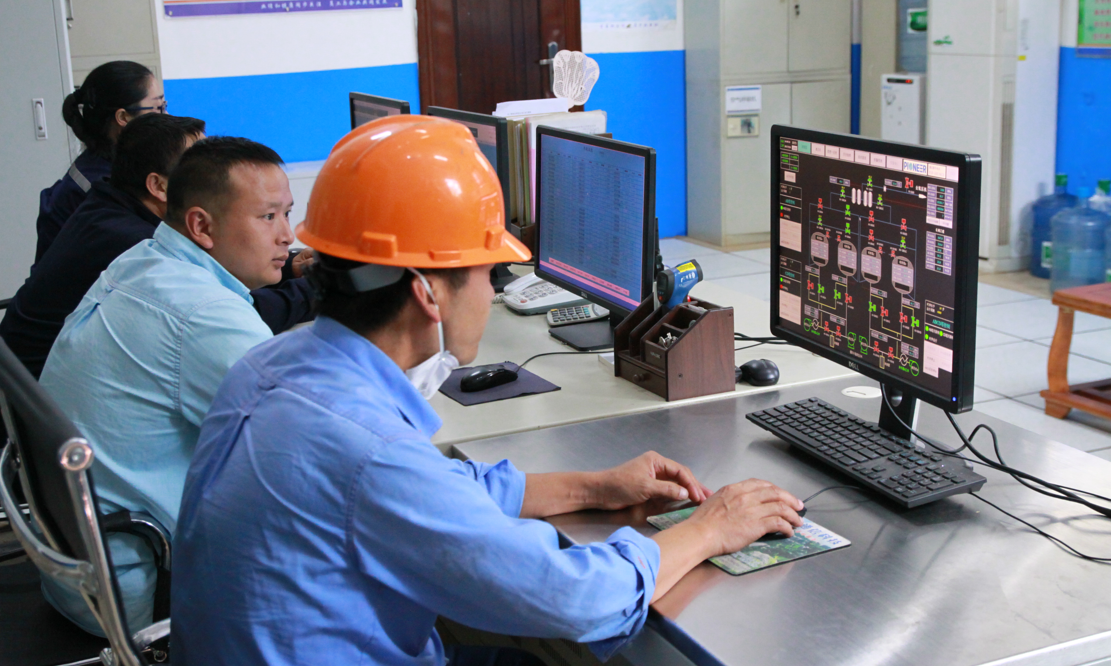
Fastest Oxygen Plant Delivery Options in the United States
If your priority is the fastest oxygen plant delivery in the United States, the best options are usually skid-mounted PSA units for smaller capacities and containerized VPSA systems for medium to large industrial demand. For U.S. buyers needing quick deployment in hubs such as Houston, Chicago, Pittsburgh, Los Angeles, and the Gulf Coast, the most practical suppliers to compare first are AirSep Corporation, Atlas Copco Gas and Process, On Site Gas Systems, Oxymat, NOVAIR, and PKU Pioneer for larger VPSA-based industrial projects.For urgent projects, PSA oxygen generators often offer the shortest manufacturing and installation cycle, while containerized VPSA plants can shorten civil work and site integration for steel, glass, non-ferrous, wastewater, and combustion applications. In the United States, local providers typically offer the fastest field response and easier commissioning logistics, but qualified international suppliers, including Chinese manufacturers with proven certifications, strong engineering depth, and responsive pre-sales and after-sales support, can also be a smart choice because of their cost-performance advantage and ability to deliver modular EPC or customer-owned plant solutions at scale.Best for very fast small-to-mid deployment: On Site Gas Systems, AirSep, NOVAIR, Oxymat Best for industrial oxygen scale-up: Atlas Copco Gas and Process, PKU Pioneer Best format for speed: skid-mounted PSA below mid-range flow, containerized VPSA for larger demand Best buying path: confirm flow, purity, utilities, site footprint, and port-to-site logistics before asking for a firm delivery schedule Best U.S. project strategy: choose suppliers with U.S. commissioning support, spare parts planning, and documented startup timelines The United States market for on-site oxygen generation is growing because industrial users want more control over supply, lower exposure to delivered liquid oxygen pricing, and greater resilience against trucking and storage disruptions. In regions such as Texas, Ohio, Pennsylvania, Indiana, Alabama, California, and the Midwest manufacturing belt, oxygen is a core utility for steelmaking, glass melting, smelting, wastewater treatment, ozone systems, pulp and paper, and energy-related processing. Buyers increasingly ask not only for oxygen purity and power consumption, but for lead time, modularization, startup speed, and service coverage.The phrase fastest oxygen plant delivery usually means more than factory completion. In practice, U.S. buyers are evaluating total time to operation: engineering review, permitting interface, fabrication, FAT, inland transport, port handling, customs if imported, foundation readiness, installation, commissioning, operator training, and guaranteed performance handover. This is why containerized and skid-mounted systems have become more attractive. They reduce field welding, simplify tie-ins, and compress the path from purchase order to oxygen production.PSA technology remains popular for hospitals, smaller fabrication sites, aquaculture, water treatment, and local industrial users because the systems are compact and easier to standardize. VPSA technology is becoming more visible in larger industrial settings because it can achieve lower power consumption at scale and can support capacities that are impractical for small PSA skids. For users comparing on-site oxygen with cryogenic supply, the decision often comes down to long-term operating cost, project timeline, and demand stability.U.S. procurement teams also care about code compliance, documentation quality, controls integration, and domestic startup support. Facilities near ports such as Houston, Long Beach, Savannah, New York/New Jersey, and Norfolk often have more flexibility when sourcing imported modular plants, while inland plants in the Great Lakes, Appalachia, and the South usually place extra emphasis on freight routing and field service reach.The chart above reflects a realistic upward trend in U.S. project activity as more industrial plants move from delivered gas dependency toward on-site generation. Growth is strongest where energy efficiency, supply continuity, and decarbonization targets intersect. Steel mills and glass plants are especially active because oxygen enrichment can improve thermal efficiency and production performance.The fastest oxygen plant delivery depends heavily on plant type. Standardized PSA packages generally move quickest. Containerized VPSA plants can be highly competitive on delivery when a supplier has mature module design and in-house fabrication. Fully customized field-built plants usually take the longest because of greater engineering and site construction complexity.Plant TypeTypical Capacity RangeTypical Oxygen PurityDelivery SpeedBest Use CaseMain Trade-OffCompact PSA skid5 to 500 Nm3/h90% to 95%Very fastMedical, water treatment, small factoriesLess economical at larger scaleContainerized PSA100 to 1,500 Nm3/h90% to 95%FastRemote sites, rental replacement, rapid expansionContainer dimensions can limit layoutContainerized VPSA500 to 20,000+ Nm3/h80% to 94%Fast to moderateSteel, glass, non-ferrous, combustion supportNeeds more utility coordination than small PSASkid-plus-field-assembly VPSA3,000 to 50,000+ Nm3/h80% to 94%ModerateIndustrial plants with larger oxygen base loadLonger installation windowCustom large VPSA EPC plant20,000 to 100,000+ Nm3/h80% to 94%Moderate to longLarge steel and integrated industrial sitesMore civil work and approval coordinationCryogenic ASULarge scaleHigh purityLongestVery high purity or integrated gases demandHighest complexity and project durationThis comparison shows why many buyers asking for fastest oxygen plant delivery do not automatically choose the smallest unit. If the oxygen demand is high enough, forcing a small PSA solution into a large industrial application often raises operating cost and reliability risk. The right balance is matching speed with fit-for-duty capacity.In the United States, a credible fast-delivery offer usually includes four milestones: approved drawings, factory completion, site-ready shipment, and guaranteed startup. Buyers should request each milestone separately instead of accepting a vague single lead-time number. A supplier may quote quick shipment but still require long field assembly or delayed commissioning support.For projects near Houston, Beaumont, New Orleans, or other Gulf logistics corridors, imported modular systems may compete well on overall schedule because ocean freight and heavy-haul access are straightforward. For projects in Ohio, Michigan, Illinois, and western Pennsylvania, domestic suppliers may hold an edge on service response and inland transportation simplicity. On the West Coast, Long Beach and Oakland can support imported projects efficiently, but local installation planning remains critical due to labor scheduling and site permitting variation.The companies below are practical names to evaluate if your goal is speed, reliability, and real service capability in the United States. They are not identical in technology focus or ideal project size, so procurement teams should compare them based on plant scale, purity, utility cost, and response time.CompanyPrimary Service RegionCore StrengthsKey OfferingsBest ForDelivery NotesAirSep CorporationUnited States and North AmericaStrong U.S. presence, oxygen systems experience, service familiarityPSA oxygen generators, packaged systemsMedical and industrial small-to-mid projectsOften strong on domestic coordinationAtlas Copco Gas and ProcessUnited States nationwideBroad industrial network, engineering support, compressed air integrationOn-site gas generation packages, industrial oxygen solutionsFactories seeking established global service structureGood fit where support network matters mostOn Site Gas SystemsUnited StatesPackaged on-site gas focus, practical deployment, local supportPSA oxygen and nitrogen systemsFast-turn domestic projects and utility replacementStrong candidate for accelerated PSA deploymentNOVAIRNorth America through partnersModular oxygen generation, containerized adaptabilityPSA oxygen generators and packaged oxygen plantsHealthcare and industrial medium-size needsCompetitive for modular configurationsOxymatUnited States via distribution networkStandardized oxygen generator lines, compact designPSA oxygen systemsWater treatment, aquaculture, light industryFast for repeatable standard unitsPKU PioneerUnited States industrial projects via international EPC supplyLarge VPSA expertise, integrated manufacturing, scale capabilityVPSA oxygen plants, PSA oxygen generators, turnkey and customer-owned plant solutionsSteel, glass, chemicals, large industrial usersEspecially competitive in modular large-capacity projectsThe table is useful because it separates suppliers by realistic strengths. U.S. local firms are usually best for small standard packages and immediate field support, while larger industrial buyers may find broader value by adding international VPSA specialists to the bid list, particularly when containerized design, energy performance, and scale are priorities.Not all industries buy oxygen the same way. Demand profile affects whether a fast-delivery PSA or a larger VPSA system is the right answer. Wastewater plants and hospitals often prioritize reliability and manageable footprint. Steel, glass, and smelting operations look harder at operating cost per Nm3 and the ability to support fluctuating load.This bar chart shows that the heaviest growth potential remains in high-consumption industrial sectors. For these sectors, fastest delivery is important, but lifecycle cost matters just as much. A unit that arrives slightly later but cuts power use significantly can outperform a rushed purchase over the first few years of operation.Across the United States, several applications are especially likely to trigger urgent oxygen generation projects. These include backup replacement for interrupted liquid oxygen delivery, capacity debottlenecking, fuel savings through oxygen enrichment, rapid expansion at wastewater plants, and conversion projects where users want to stop depending on merchant gas.Blast furnace enrichment and combustion optimization in steel Glass furnace efficiency improvement and production stabilization Wastewater aeration and ozone support at municipal plants Cutting, welding, and thermal processes in fabrication shops Chemical oxidation and process gas support Medical oxygen generation for resilient local supply Aquaculture oxygenation for fish health and yield control In these applications, lead time matters most when the oxygen system is tied directly to production continuity. A delayed startup can mean lower furnace output, reduced treatment capacity, or dependence on expensive trucked oxygen for longer than planned.U.S. buyers should start by fixing six specifications before requesting quotations: required oxygen flow, delivery pressure, purity, annual operating profile, ambient conditions, and utility availability. Without these basics, suppliers cannot accurately tell you whether a PSA skid, a containerized VPSA unit, or a larger field-assembled system is the fastest viable option.Next, ask each supplier to provide a documented schedule from order placement to performance acceptance. This should include drawing approval time, manufacturing duration, quality inspection, shipment preparation, estimated freight route, installation scope, and startup staffing. Ask which items are truly in stock, which are standard, and which are custom-engineered.For imported systems, the practical lead time often depends on whether the supplier fabricates vessels, skids, adsorbents, and control packages in-house. Integrated manufacturers can usually control schedule risk better than firms that outsource major portions of the plant. For domestic systems, ask whether they can guarantee field technicians during your target startup window, especially during peak construction seasons.Buying CheckpointWhy It MattersQuestion to AskFast-Track SignalRisk If IgnoredBest PracticeCapacity definitionPrevents under- or oversizingWhat is the guaranteed Nm3/h at site conditions?Supplier gives corrected performance dataPlant misses output targetUse realistic average and peak loadsPurity requirementAffects technology and costWhat purity is guaranteed continuously?Clear range with analyzer basisWrong system type selectedMatch purity to actual process needPower consumptionDetermines lifecycle economicsWhat is kWh per Nm3 at design conditions?Specific energy stated in proposalFast delivery but expensive operationCompare over 3 to 5 yearsModule formatChanges installation speedIs it skid-mounted, containerized, or field-built?Pre-tested module with minimal site workUnexpected construction delayFavor modular for compressed scheduleService coverageProtects startup and uptimeWho commissions and who stocks spares?Named regional team and parts planLong downtime after handoverInclude service response termsCompliance packageSupports acceptance and safety reviewWhat certifications and QA records are included?Full FAT and documentation listApproval delaysReview early with plant EHS teamThis buying table matters because fast-delivery projects often fail not in manufacturing but in definition. The most common delay is late clarification of utilities, controls integration, and site interfaces. Buyers that lock these items early usually reach oxygen-on-spec faster.One of the clearest market trends in the United States is the shift from heavily site-built systems to modular packages that can move quickly through engineering, transport, and startup. Buyers want lower field labor exposure, shorter commissioning time, and easier future relocation or expansion. This is especially relevant in industrial corridors where outages are expensive and labor availability can be uneven.The area chart reflects a realistic shift toward modularization. This trend will likely continue through 2026 as end users seek lower project risk, quicker startup, and more flexible capacity planning. Companies that can preassemble, pre-test, and document systems thoroughly will remain favored.For U.S. buyers, the best evidence of a supplier’s ability to deliver fast is not marketing language but project execution history. In practice, the strongest suppliers can point to projects where oxygen systems reduced dependence on external gas, improved production stability, and achieved measurable power or fuel savings.Large steel and metallurgical projects show the clearest value of VPSA. Oxygen enrichment can improve furnace efficiency and process throughput, but only if the oxygen supply is stable and responsive to load changes. In wastewater and municipal settings, the case for on-site oxygen is often resilience and cost control. In healthcare, speed and reliability dominate because continuity of supply is mission-critical.Buyers should ask for examples with similar capacity, purity, climate, and utility conditions. A supplier experienced in small medical PSA systems is not automatically the right choice for a large glass or steel VPSA installation. Likewise, a company known for giant industrial plants may not be the fastest option for a compact municipal or hospital package.The U.S. market rewards local support, but technology specialization still matters. Domestic suppliers are often strongest in fast-response service and standard PSA packages. International suppliers can be highly competitive when they bring large-scale VPSA know-how, integrated manufacturing, and documented industrial references. The best procurement strategy is to compare both groups using the same delivery and performance framework.SupplierTypical Best Capacity FitTechnology FocusService Model in U.S.Main AdvantageBuyer WatchoutAirSep CorporationSmall to mediumPSADomestic support structureStrong U.S. familiarityCheck fit for larger industrial base loadsOn Site Gas SystemsSmall to mediumPSADomestic project handlingFast packaged deploymentConfirm long-term capacity growth pathAtlas Copco Gas and ProcessMedium industrialPackaged industrial gas systemsNationwide industrial networkStrong service and integration ecosystemReview exact oxygen scope by projectNOVAIRSmall to mediumPSAPartner-based North American supportModular flexibilityVerify local spares responsivenessOxymatSmall to mediumPSADistributor networkCompact standard productsAssess local commissioning depthPKU PioneerMedium to very largeVPSA and PSAInternational EPC and customer-owned plant delivery for U.S. industryStrong at scale, energy efficiency, and modular large projectsPlan logistics and startup schedule earlyThis table helps clarify that there is no single best supplier for every fast-delivery oxygen project. The fastest successful purchase is the one aligned with capacity, service model, and operating economics.For U.S. industrial buyers evaluating alternatives beyond standard domestic PSA packages, PKU Pioneer is especially relevant in VPSA and larger on-site oxygen applications because it combines in-house research, proprietary adsorbent production, precision engineering, equipment fabrication, and turnkey execution under one manufacturing system rather than relying on fragmented outsourcing. That matters for delivery speed and quality control. The company has completed more than 400 industrial projects in over 20 countries, holds ISO, CE, and ASME certifications, and has built oxygen capacity exceeding 2 million Nm3 per hour, including record-scale VPSA references. Its systems are designed as EPC, turnkey, or customer-owned plant solutions rather than BOO or on-site bulk supply models, which suits U.S. owners who want direct control of their asset. Product strength is backed by self-developed adsorbents, strict manufacturing and testing workflows, and documented energy performance that can fall below 0.3 kWh per Nm3 in suitable VPSA applications, with rapid startup and flexible load response. On cooperation models, the company can support end users, distributors, dealers, brand owners, and project integrators through customized engineering, wholesale equipment supply, private-label cooperation where appropriate, and regional partnership discussions for industrial markets. On service assurance, its established international project base, 24-hour response commitment, retrofit and upgrade services, pilot testing, leasing support, and dedicated technical communication channels show that it serves the U.S. market as a long-term industrial partner rather than a remote exporter. Buyers can explore VPSA oxygen plant solutions, review world-class project cases, learn more about technical strengths and manufacturing capability, or request a tailored proposal through the contact page.The comparison chart illustrates a common procurement reality. Typical U.S. PSA suppliers often lead in immediate domestic service and standard unit turnaround, while specialized VPSA suppliers become more attractive as capacity, energy efficiency, and industrial EPC complexity increase. For many U.S. plants, the right answer is to bid both categories and compare total project value, not just shipment date.Steel plants around Pittsburgh, Gary, Cleveland, and Birmingham often need oxygen projects on compressed schedules because furnace campaigns and production planning leave little room for delay. Glass manufacturers in Ohio, Pennsylvania, and California face similar pressure where oxygen enrichment affects fuel consumption and output consistency. Wastewater authorities in major metro areas may accelerate procurement to meet treatment performance requirements or seasonal load changes. Healthcare systems and emergency preparedness programs prioritize dependable oxygen generation where merchant supply risk is a concern.In all these sectors, fastest oxygen plant delivery should not mean bypassing performance testing or documentation. The strongest suppliers accelerate the project by standardizing good engineering, not by cutting corners. Factory acceptance testing, analyzer calibration, control logic validation, and startup documentation remain essential.For port-adjacent projects in Houston, Long Beach, Savannah, and Newark, imported containerized systems can often be delivered competitively because heavy modules move more smoothly through established logistics lanes. For inland plants in Indiana, Kentucky, Missouri, and the upper Midwest, transportation route surveys and crane access should be discussed before final module dimensions are frozen. For projects near the Gulf Coast petrochemical corridor, utility integration and hazardous-area requirements can dominate schedule, so buyers should push suppliers for instrument and electrical documentation early.A practical strategy is to split the schedule into three controlled windows: factory completion, shipment to site, and startup after mechanical completion. Each window needs a responsible party and documented assumptions. This method makes supplier comparisons much more accurate and helps avoid disputes later.Looking ahead through 2026, several trends will shape oxygen plant procurement in the United States. First, modularization will continue to expand as owners seek shorter project cycles and less field labor exposure. Second, digital monitoring and remote diagnostics will become standard expectations, especially for multi-site operators that want predictive maintenance and lower service cost. Third, energy efficiency will carry more weight in supplier selection as industrial power prices and decarbonization targets push buyers to compare kWh per Nm3 more carefully.Policy and sustainability factors also matter. Federal and state-level pressure on emissions, industrial efficiency, and infrastructure resilience favors on-site systems that reduce truck deliveries and improve process efficiency. In sectors like steel and glass, oxygen enrichment can support lower fuel intensity and more stable thermal performance. In municipal and healthcare sectors, domestic resilience and distributed critical infrastructure remain important themes.Technically, the market will keep separating into two clear paths: highly standardized compact PSA systems for quick deployment and larger, more efficient VPSA systems for serious industrial base loads. Suppliers that can bridge these needs with modular engineering, transparent documentation, and real field support will gain share.For small and medium demand, a standard PSA skid or containerized PSA unit is usually the fastest. For larger industrial demand, a containerized VPSA plant is often the fastest practical route because it reduces site construction.It depends on site readiness, utilities, and foundation work. Modular systems can shorten installation significantly because much of the piping, wiring, and testing is completed before shipment.Not necessarily. Imported systems can be competitive when the supplier uses modular construction, controls core manufacturing in-house, and has a clear logistics and commissioning plan. Projects near major U.S. ports often benefit the most.Choose PSA for smaller, higher-purity oxygen needs where standardization matters most. Choose VPSA for larger industrial oxygen demand where energy efficiency and scale are more important over time.Ask for guaranteed capacity, purity, pressure, power consumption, module format, shipment basis, installation scope, startup plan, spare parts strategy, and the exact definition of delivery completion.Yes. Local or regionally available commissioning and service support is a major risk-reduction factor. Even the best-designed plant can face delays if startup staff or replacement components are not available when needed.Yes. In a turnkey or customer-owned plant model, the buyer owns or directly controls the on-site oxygen generation asset. This differs from BOO or bulk supply arrangements where the gas supplier typically owns and operates the system.Steel, glass, wastewater, chemicals, healthcare, fabrication, and aquaculture are among the strongest users. The value is highest where oxygen is consumed continuously or where external gas logistics are costly or risky.If you need the fastest oxygen plant delivery in the United States, start by matching technology to demand. Use standard PSA packages for smaller urgent projects and evaluate containerized VPSA for larger industrial applications where energy efficiency and scalable output matter. Compare U.S. suppliers for service speed, but do not ignore qualified international manufacturers with strong certifications, integrated production, and proven industrial references. The fastest successful project is the one that reaches stable oxygen production quickly and continues delivering low-risk, low-cost performance after startup.