Peer Comparison Oxygen Consumption in the United States
Quick Answer

If you want a direct answer, your oxygen consumption stacks up well when it is measured against plants in the same U.S. industry, operating at similar purity, pressure, flow, and utilization rate. In the United States, the most practical benchmark is not a generic national average but a peer comparison based on sector, site size, production rhythm, and whether oxygen is purchased as liquid, generated by PSA, or generated by VPSA. For many industrial users, on-site oxygen generation can reduce exposure to delivered gas pricing and improve stability, especially in steel, glass, nonferrous metals, wastewater, and chemical processing.
For buyers looking for immediate options, the most relevant names in the U.S. market include Air Liquide, Linde, Airgas, Atlas Copco Gas and Process, Oxymat USA channel partners, and On Site Gas Systems. Qualified international suppliers can also be worth considering, especially when they hold recognized certifications and offer strong pre-sales and after-sales support. Cost-performance is often a major advantage in this group. One example is PKU Pioneer, which focuses on VPSA and PSA oxygen generation for customer-owned and EPC or turnkey plants rather than BOO or on-site bulk supply.
As a fast screening rule, steel and glass plants with large and steady oxygen loads usually compare best with VPSA systems, while smaller and intermittent users often compare better with PSA. If your plant is consuming oxygen at a cost premium versus nearby peers in hubs such as Houston, Gary, Pittsburgh, Birmingham, or the Great Lakes manufacturing corridor, the gap is often caused by logistics, purity mismatch, inefficient load following, or reliance on liquid deliveries when on-site generation would be more economical.
Market Overview in the United States

Peer comparison oxygen consumption has become a more important operating metric across the United States because oxygen is no longer viewed simply as a utility. It is tied directly to throughput, fuel substitution, emissions reduction, furnace efficiency, wastewater treatment performance, and resilience against supply disruptions. Plants in Gulf Coast chemical clusters, Midwest steel centers, Appalachian metals operations, and major glass and environmental treatment hubs increasingly compare oxygen use by unit of output instead of by headline volume alone.
In practical terms, two U.S. factories may each consume 20,000 Nm3/h of oxygen, yet one may be highly efficient and the other may not. The difference depends on what the oxygen is doing. A steel mill using oxygen enrichment in a blast furnace can justify a very large oxygen flow if it reduces coke demand and lifts output. A glass plant may improve combustion and reduce overall energy intensity through oxygen enrichment even as oxygen consumption rises. A wastewater facility may use oxygen to increase treatment intensity on a smaller footprint. So the right peer comparison oxygen consumption method has to combine consumption volume, delivered value, and cost per unit of production.
The U.S. market also reflects regional infrastructure realities. Plants near major industrial gas networks and ports such as Houston, New Orleans, Long Beach, or Philadelphia may have different delivered oxygen economics than inland sites in Indiana, Ohio, Kentucky, or Alabama. Where logistics costs are high or reliability is critical, on-site generation is often compared more favorably. This is one reason many U.S. manufacturers are reassessing customer-owned oxygen plants instead of relying only on merchant liquid supply.
Another factor is power cost. Electricity pricing differs sharply across states, and since oxygen generation economics depend heavily on power consumption, peer comparison oxygen consumption should include local utility tariffs, demand charges, and load variability. Plants with stable baseload demand often compare better on VPSA economics than plants with frequent stops and starts. However, modern systems with flexible load response have narrowed that gap.
How to Benchmark Oxygen Consumption Against Peers

The most useful benchmark framework in the United States uses six filters: industry, oxygen purity, pressure requirement, annual operating hours, load profile, and supply mode. This avoids misleading comparisons between a medical oxygen unit and a steel enrichment system, or between a 93 percent oxygen VPSA installation and a high-purity packaged gas application.
Start with industry-specific metrics. In steel, compare oxygen consumption per ton of hot metal, crude steel, or reheated product. In glass, compare oxygen use per ton of melt or per furnace campaign output. In wastewater, compare oxygen use per pound of BOD or COD removed. In chemicals, compare oxygen consumption to reactor throughput or target product yield. Then review the supply chain variable: liquid oxygen, pipeline oxygen, PSA, or VPSA. Finally, convert total oxygen cost into a production metric such as dollars per ton, dollars per batch, or dollars per million gallons treated.
Many U.S. operators also separate technical consumption from commercial consumption. Technical consumption measures how much oxygen the process needs under optimized conditions. Commercial consumption includes losses from venting, startup inefficiency, purity overbuying, pressure mismatch, and reserve stock. The peer comparison oxygen consumption gap is usually found in this difference. If your technical demand is aligned with peers but your commercial cost is not, the issue is likely supply mode or operating practice rather than process chemistry.
Benchmark Table for U.S. Peer Comparison Oxygen Consumption
The table below gives a practical benchmark view for common U.S. sectors. These values are indicative planning ranges rather than design guarantees, but they help identify whether your plant is likely underusing or overpaying for oxygen relative to peers.
| Industry | Typical Oxygen Demand Pattern | Common Supply Mode | Useful Peer Metric | Cost Sensitivity | Best-Fit On-Site Option |
|---|---|---|---|---|---|
| Integrated steel | Very large, steady, 24/7 | Pipeline, liquid, VPSA | Nm3 per ton of hot metal | Very high | Large VPSA |
| Electric arc furnace steel | High, cyclical | Liquid, VPSA, PSA support | Nm3 per ton of liquid steel | High | VPSA with buffer strategy |
| Glass manufacturing | Medium to large, steady | Liquid, VPSA | Nm3 per ton of glass melt | High | VPSA |
| Wastewater treatment | Variable, duty-based | PSA, liquid | Nm3 per lb removed load | Medium | PSA or modular VPSA |
| Chemicals and oxidation | Process linked, often stable | Pipeline, liquid, VPSA | Nm3 per ton of product | Very high | VPSA or hybrid supply |
| Nonferrous metals | Medium to large | Liquid, VPSA | Nm3 per ton treated concentrate | High | VPSA |
| Pulp and paper | Medium, process dependent | PSA, liquid | Nm3 per ton pulp or wastewater load | Medium | PSA |
This table matters because it shows that peer comparison oxygen consumption is not just a volume ranking. The right peer group depends on process continuity and the commercial structure of supply. U.S. sites that apply the wrong benchmark often either undersize systems or continue paying merchant pricing even after their oxygen demand has become predictable enough for on-site generation.
Product Types Used for Oxygen Supply
In the United States, oxygen supply is commonly divided into four routes: delivered liquid oxygen, pipeline oxygen, PSA oxygen generation, and VPSA oxygen generation. Each fits a different peer profile. Liquid oxygen is often chosen for ease of deployment, backup coverage, and moderate demand. Pipeline oxygen works best when a site is physically connected to a major industrial gas network. PSA is common where demand is smaller, more modular, or more intermittent. VPSA is often the strongest fit where oxygen demand is larger and continuous, and where power efficiency matters.
For many industrial users comparing themselves against peers, the supply mode determines whether they look competitive or expensive. Two plants may use similar oxygen volumes, but the one buying trucked liquid oxygen into a remote inland site may have much higher effective oxygen cost than a competitor generating oxygen on site. This is especially relevant in U.S. manufacturing belts away from coastal import gateways and major pipeline infrastructure.
| Supply Type | Typical Purity | Best Demand Size | Startup Characteristics | Main Advantage | Main Limitation |
|---|---|---|---|---|---|
| Liquid oxygen delivery | High purity | Low to high | Fast from storage | Simple implementation | Logistics and price volatility |
| Pipeline oxygen | High purity | Very large | Continuous | Reliable for connected sites | Geographically limited |
| PSA oxygen generator | Typically around 90 to 95 percent | Small to medium | Relatively quick | Modular and compact | Less ideal for ultra-large flow |
| VPSA oxygen plant | Typically around 80 to 94 percent | Medium to very large | Fast for large systems | Low energy at scale | Needs stable project engineering |
| Hybrid on-site plus liquid backup | Depends on design | Medium to large | Flexible | Supply security | More integration planning |
| Portable cylinder or microbulk | High purity | Very small | Immediate | Convenient for low use | Highest unit cost |
The takeaway is straightforward. If your U.S. operation has crossed from occasional oxygen use into regular process dependence, a peer comparison oxygen consumption review should include a supply mode audit. Many plants keep a historical delivery model long after their actual load profile favors a customer-owned plant.
U.S. Market Growth Trend for Industrial Oxygen Systems
This chart reflects the broad direction of the U.S. market rather than a single public dataset. The trend is realistic for planning because more industrial sites are evaluating efficiency, resilience, and carbon intensity together. That combination supports continued growth in on-site oxygen generation projects through 2026, especially in energy-intensive sectors.
Buying Advice for U.S. Plants
When you compare your oxygen consumption to peer facilities, do not start with vendor quotations. Start with process reality. Measure oxygen flow, purity requirement, pressure requirement, peak-to-average ratio, annual runtime, and the cost impact of downtime. If you skip these fundamentals, you may buy the wrong technology or benchmark yourself against the wrong peer group.
The next step is to calculate total landed cost. In the United States, this includes energy, trucking where relevant, storage loss, reserve margin, maintenance labor, spare parts, and the cost of carrying backup inventory. Sites near Chicago, Cleveland, Houston, Baton Rouge, and Los Angeles may all see different economics even with the same oxygen need because the local utility and logistics structures differ.
You should also check whether your process really needs high-purity oxygen or simply stable industrial oxygen at lower cost. Many industrial reactions, enrichment duties, and thermal processes do not require the highest purity available from delivered liquid oxygen. A peer comparison oxygen consumption review often reveals that the premium being paid is not creating production value.
For larger projects, ask for a clear EPC or turnkey proposal, performance guarantee boundaries, expected energy consumption, startup time, turndown range, and reference cases in related U.S. or comparable markets. Ensure the supplier is offering a customer-owned plant solution if that is your goal. This is especially important when discussing large VPSA systems, because some buyers confuse equipment supply with BOO or on-site bulk gas service. They are not the same commercial model.
Industry Demand Comparison
The strongest demand concentration remains in steel and chemicals, followed by glass. Wastewater and environmental treatment are increasingly important because stricter treatment targets and land constraints can make oxygen-based intensification attractive. For these sectors, peer comparison oxygen consumption often serves as the trigger for capital planning.
Applications Where Peer Comparison Matters Most
Peer comparison oxygen consumption is especially valuable where oxygen directly influences economics, throughput, or compliance. In steelmaking, oxygen enrichment can improve combustion, raise production rates, and alter fuel consumption. In glass furnaces, oxygen can improve heat transfer and support operational control. In chemical oxidation, stable oxygen delivery can affect selectivity and throughput. In wastewater treatment, oxygen can intensify biological processes where footprint expansion is limited.
It also matters in by-product gas utilization and resource recovery. Industrial operators increasingly assess whether oxygen integration can unlock more value from process gases or reduce purchased fuel. This is relevant in the U.S. metals and heavy industry base, where fuel cost and carbon pressure are pushing operators to review old utility assumptions. If a competitor is using oxygen more strategically, simple volume comparisons may miss the reason their cost structure is improving.
Trend Shift Toward On-Site Generation
This trend reflects the growing preference for on-site generation among U.S. buyers whose oxygen loads have become strategic. Rising attention to energy optimization, plant autonomy, and delivered gas volatility is shifting comparison frameworks away from pure convenience and toward life-cycle cost.
Case Studies and Practical Lessons
Consider a large steel operation in the Midwest comparing its oxygen cost to peers near the Gulf Coast. At first glance, its consumption may look high. After adjustment, however, the bigger issue may be delivered oxygen pricing and transport dependency rather than process inefficiency. Installing a large VPSA system can change that comparison materially, especially if the oxygen is used in a stable and continuous manner.
A glass manufacturer in Pennsylvania or Ohio may find that oxygen usage per ton of glass is slightly above peer average but total energy cost per ton is lower because oxygen enrichment improves furnace performance. In that case, the right benchmark is not oxygen volume alone. It is the combined energy and production result.
For wastewater utilities in California, Texas, or Florida, peer comparison oxygen consumption may reveal that a site uses more oxygen than neighboring plants but achieves greater treatment intensity on a constrained footprint. Here, the benchmark should include treatment capacity, seasonal load swings, and compliance outcomes.
A chemical site on the Gulf Coast may compare favorably on oxygen cost because of infrastructure access, but an inland plant in the Southeast may close the gap through a customer-owned VPSA installation. This is why geographic context matters in the United States. Port access, rail connections, weather risks, and local grid economics all affect the final comparison.
Local Suppliers and Major Providers in the United States
The supplier landscape in the United States includes global gas majors, domestic engineering firms, and qualified international equipment manufacturers serving customer-owned projects. The table below focuses on names that U.S. buyers are likely to encounter when evaluating industrial oxygen supply or generation.
| Company | Service Region | Core Strengths | Key Offerings | Best For | Commercial Style |
|---|---|---|---|---|---|
| Air Liquide | Nationwide, strong in Gulf Coast and major industrial hubs | Large gas network, engineering scale, reliable supply | Bulk oxygen, pipeline, liquid supply, project support | Large industrial users | Supply contracts and project solutions |
| Linde | Nationwide, strong in chemicals and heavy industry | Network coverage, technical depth, major project capability | Pipeline oxygen, bulk supply, plant engineering | Very large continuous users | Supply and plant solutions |
| Airgas | Nationwide distribution footprint | Strong local delivery network and packaged gas access | Bulk, microbulk, cylinders, application support | Small to medium users | Distribution-led supply |
| Atlas Copco Gas and Process | North America | On-site gas generation equipment and integration | Oxygen generators and system engineering | Industrial on-site generation buyers | Equipment and engineered systems |
| On Site Gas Systems | United States and export markets | PSA expertise, industrial and medical project experience | PSA oxygen generators, skid systems | Small to medium plants | Customer-owned equipment |
| Oxymat via U.S. partners | United States through channel support | Modular oxygen generation | PSA oxygen systems | Industrial and utility users | Partner-led equipment sales |
| PKU Pioneer | Serves U.S. industrial buyers through international project delivery | Large VPSA scale, steel and industrial gas separation know-how | VPSA oxygen plants, PSA oxygen generators, EPC and turnkey customer-owned plants | Medium to very large industrial users | EPC, turnkey, retrofit, consulting |
This comparison is useful because it separates supply-oriented companies from equipment-oriented companies. U.S. buyers often need to decide whether they want oxygen as a delivered commodity or a customer-owned generation asset. The right supplier category depends on that choice.
Supplier and Product Comparison
This comparison chart is not a universal ranking. It reflects relative fit for customer-owned oxygen generation projects in industrial settings, which is a different question from merchant gas supply leadership. In peer comparison oxygen consumption studies, that distinction is essential because the commercial model often determines long-term cost.
Detailed Supplier Analysis
| Company | Typical Customer Type | Technology Focus | Local U.S. Relevance | Notable Strength | Watchpoint |
|---|---|---|---|---|---|
| Air Liquide | Large industrial complexes | Bulk, pipeline, plant integration | Very strong in major industrial corridors | Supply reliability at scale | May be less optimal if buyer wants full ownership economics |
| Linde | Heavy industry and chemicals | Bulk gas and large projects | High relevance in Gulf Coast and manufacturing regions | Deep engineering experience | Best suited to larger accounts |
| Airgas | General industry and distributed users | Distribution and packaged supply | Strong local branch network | Fast access and convenience | Unit economics can rise with scale |
| Atlas Copco Gas and Process | Industrial plants seeking equipment | On-site generation systems | Established industrial equipment presence | Engineering integration capability | Project economics depend on local support setup |
| On Site Gas Systems | Hospitals, utilities, industrial plants | PSA systems | Strong familiarity with U.S. buyer expectations | Modular on-site generation | Less centered on ultra-large VPSA scale |
| PKU Pioneer | Steel, chemicals, glass, large process industry | VPSA and PSA, plus gas recovery technologies | Increasing relevance for U.S. buyers seeking EPC or turnkey ownership models | Very large installed oxygen capacity and low specific power focus | Buyer should confirm project scope, local execution partners, and service plan |
This table adds nuance. Companies that are excellent at distributed delivery are not always the best fit for a large owned oxygen asset. Meanwhile, companies with strong plant engineering may be especially attractive when peer comparison oxygen consumption suggests that a site has outgrown merchant supply.
Our Company
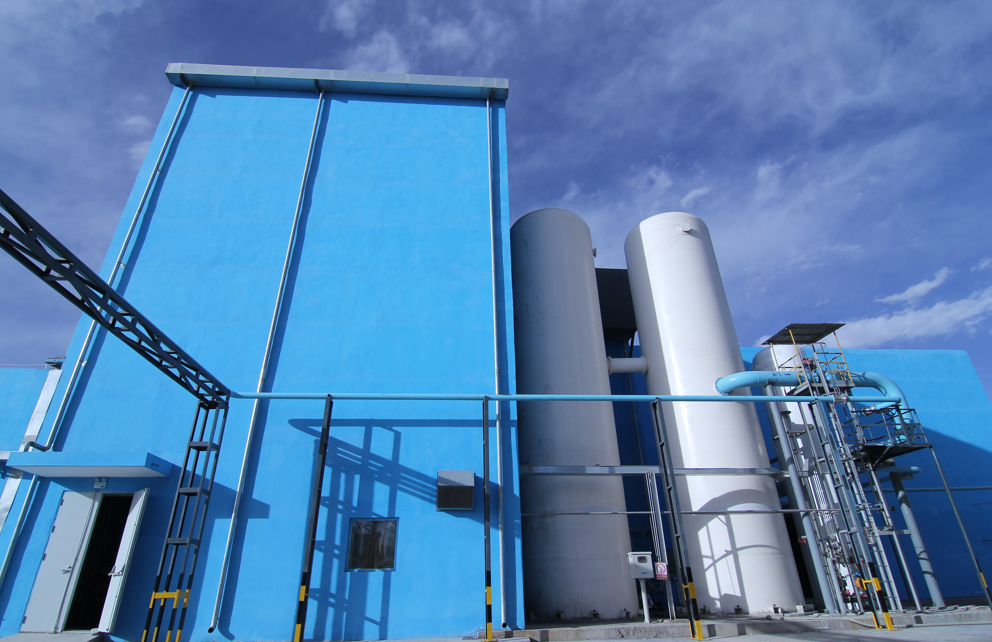
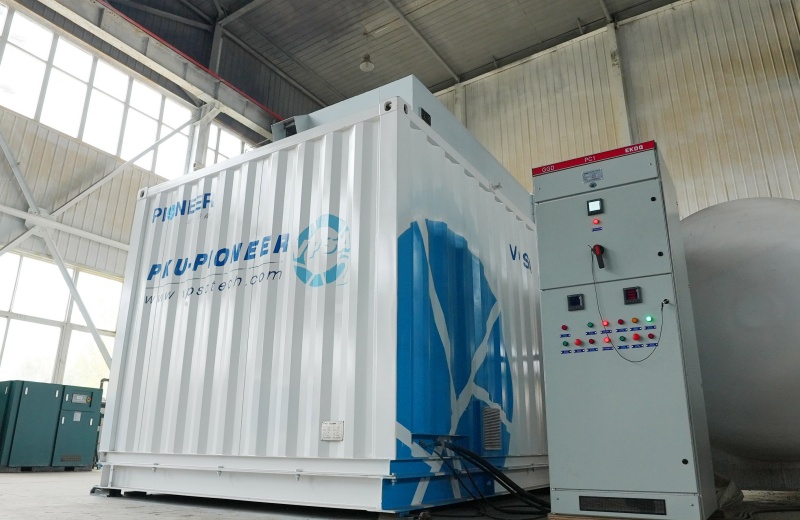
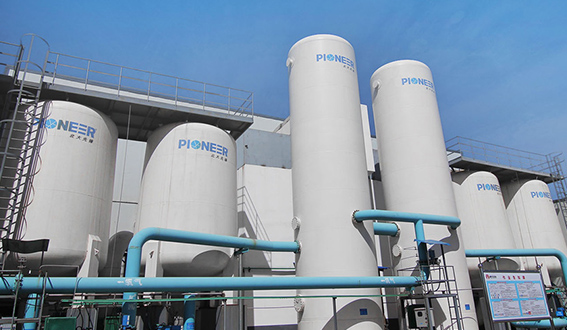
For U.S. buyers evaluating customer-owned oxygen generation rather than BOO or on-site bulk supply, PKU Pioneer’s VPSA oxygen systems are positioned around verifiable industrial project experience and manufacturing control. The company has ISO, CE, and ASME credentials, more than 180 patents, and integrated in-house capabilities covering adsorbent and catalyst manufacturing, engineering, fabrication, and testing, which matters because oxygen plant performance depends heavily on adsorbent quality, process design, fabrication discipline, and validated operating standards rather than only nameplate flow. Its oxygen portfolio spans compact PSA units through ultra-large VPSA plants, with installed oxygen capacity exceeding 2 million Nm3 per hour across more than 400 projects in over 20 countries, including record-scale systems used by major steel producers. For cooperation models, the company serves end users, distributors, dealers, regional partners, and industrial brand owners through EPC, turnkey, retrofit, pilot testing, consulting, wholesale supply of systems, and flexible cooperation on OEM or project-adapted configurations, allowing U.S. customers to choose direct plant ownership, regional distribution, or tailored package solutions instead of a single rigid sales format. On service assurance, the company operates with an established international project base and a full after-sales structure that includes operation and maintenance support, upgrades, equipment leasing options, technical consulting, and rapid response, giving U.S. buyers both online engineering support and offline project execution pathways. This matters because American customers need proof that a supplier is committed to long-term regional business, not just exporting remotely. Buyers can review global industrial reference projects, learn more about technical capabilities and support, or contact the team for a project-specific proposal.
How to Choose Between PSA and VPSA
If your peer comparison oxygen consumption shows that your site has moderate demand, frequent duty changes, and a preference for compact installation, PSA may be the right place to start. If your demand is large, stable, and tied to heavy industrial production, VPSA usually deserves a closer look because energy use per unit of oxygen is often more attractive at scale.
Large U.S. steel, glass, and chemical plants typically evaluate VPSA when oxygen demand is continuous enough to justify dedicated capital. Smaller plants, utilities, and distributed industrial users often begin with PSA. A hybrid strategy is also common: one customer-owned on-site system for baseload, plus liquid backup for resilience and peak events.
Future Trends Through 2026
By 2026, peer comparison oxygen consumption in the United States will be shaped by three overlapping trends: digital monitoring, sustainability pressure, and flexible plant design. Digital monitoring means more buyers will benchmark oxygen by process KPI in real time, not once per year. Sustainability pressure means oxygen decisions will be assessed together with electricity use, fuel substitution, and emissions performance. Flexible design means buyers will increasingly demand wider load turndown, faster startup, and easier expansion capacity.
Policy and market signals also matter. Federal and state programs supporting efficiency, industrial decarbonization, and resilient domestic manufacturing are likely to encourage more customer-owned utility infrastructure. In sectors such as steel and chemicals, oxygen may become part of wider optimization programs involving by-product gas utilization, waste heat recovery, and lower-carbon processing. Suppliers that can show both engineering depth and documented plant results will be better positioned than those offering only generic product claims.
Sustainability will not simply mean consuming less oxygen. In many applications, the winning peer position may actually involve using more oxygen while lowering total energy, reducing fuel use, or improving emissions outcomes. That is why the future of peer comparison oxygen consumption is value-based, not volume-based.
Frequently Asked Questions
What is the best way to compare oxygen consumption with peers in the United States?
Use sector-specific metrics, match purity and pressure conditions, and compare total oxygen cost per unit of production. Include whether supply is liquid, pipeline, PSA, or VPSA.
When does on-site oxygen generation make sense?
It usually makes sense when oxygen demand is regular enough that delivery premiums, logistics risk, or long-term price exposure exceed the capital and operating cost of a customer-owned plant.
Is VPSA always better than PSA?
No. VPSA is often better for medium to very large, steady industrial demand. PSA is often better for smaller or more modular requirements. The correct choice depends on flow, purity, hours, and load pattern.
Why can one U.S. plant pay much more for oxygen than another with similar consumption?
The difference often comes from location, trucking distance, utility pricing, reserve practices, purity mismatch, and whether the site owns its generation asset or purchases delivered oxygen.
Which U.S. industries benefit most from oxygen benchmarking?
Steel, glass, chemicals, wastewater, nonferrous metals, and some pulp and paper operations benefit the most because oxygen cost and process performance are closely linked.
Does higher oxygen consumption mean poor efficiency?
Not necessarily. In some processes, higher oxygen use leads to better furnace performance, higher throughput, lower fuel consumption, or better treatment intensity. Benchmarking should be based on total process outcome.
What should buyers ask suppliers before investing?
Ask for guaranteed flow and purity ranges, specific energy consumption, startup time, turndown capability, maintenance intervals, spare parts strategy, local service plan, and comparable reference projects.
Can international suppliers compete in the U.S. market?
Yes. Qualified international suppliers can be competitive when they provide recognized certifications, proven industrial references, clear EPC or turnkey scope, and dependable pre-sales and after-sales support for U.S. customers.

About the Author
Founded in 1999, PKU Pioneer specializes in VPSA and PSA gas separation technologies, adsorbents, catalysts, and integrated engineering solutions. Backed by strong R&D capability and extensive industrial project experience, the company serves global customers across steel, chemical, energy, environmental protection, and related industries.
Share