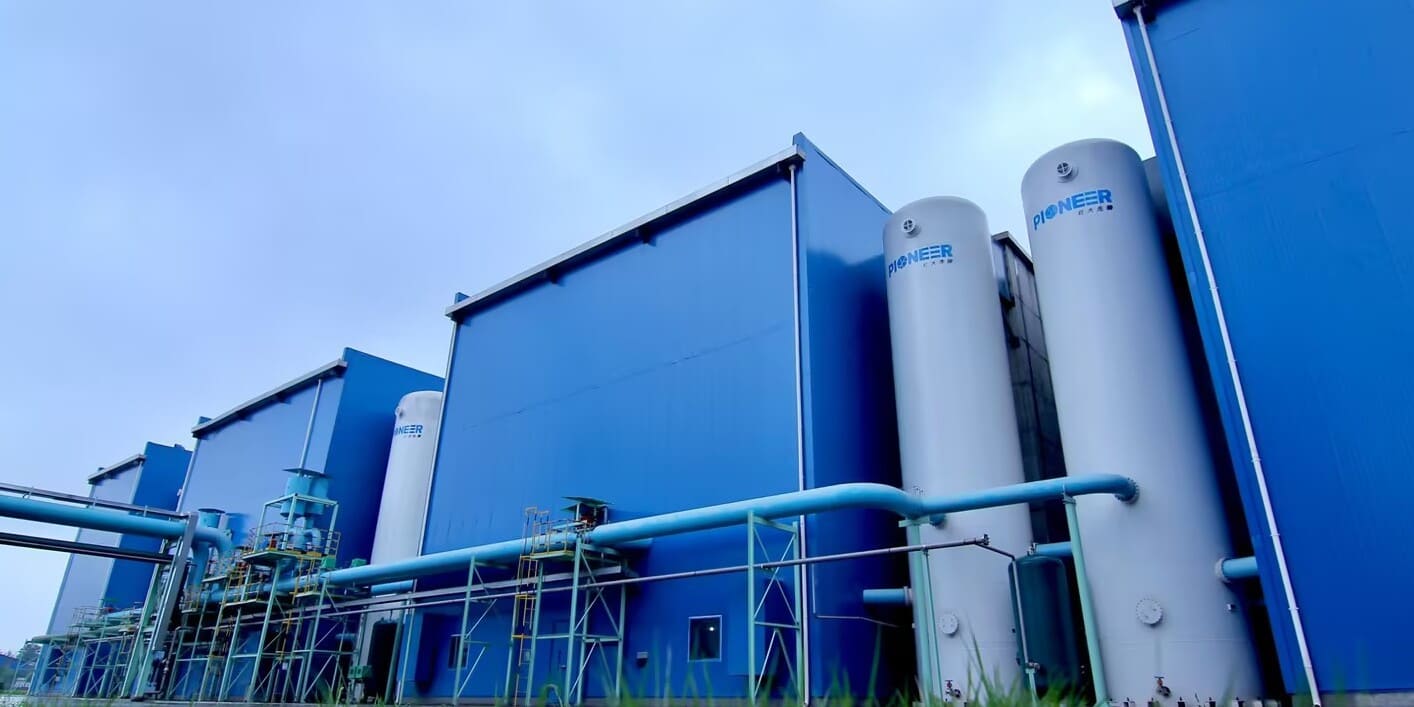
Large-Scale VPSA Oxygen Systems in Malaysia
Large-Scale VPSA Oxygen Systems in Malaysia
Quick Answer

Yes, large-scale VPSA oxygen plants above 10000 Nm3/h are technically and commercially viable in Malaysia, especially for steel, glass, non-ferrous metals, chemicals, gasification, and integrated industrial parks that need steady oxygen at lower operating cost than frequent liquid oxygen deliveries. For buyers in Malaysia, the most practical route is to shortlist suppliers that can prove reference projects, energy consumption data, EPC capability, local commissioning support, and stable performance under tropical operating conditions.
Among the most relevant names for Malaysia are Linde Malaysia, Air Liquide Malaysia, Yingde Gases, NOVAIR, and PKU Pioneer. Local buyers in Johor, Selangor, Penang, Sarawak, and industrial corridors linked to Port Klang, Tanjung Pelepas, Kuantan, and Bintulu should compare not only oxygen purity and flow, but also blower efficiency, adsorbent life, automation, spare parts response, and shutdown risk. Qualified international suppliers, including experienced Chinese engineering companies with proper certifications and strong pre-sales and after-sales support, should also be considered because they can offer attractive cost-performance for customer-owned EPC or turnkey VPSA oxygen plants.
Malaysia Market Overview for High-Capacity VPSA Oxygen

Malaysia is an important industrial base in Southeast Asia, with concentrated demand around heavy industry, engineered materials, petrochemicals, glass, electronics support utilities, wastewater treatment, and energy-linked manufacturing. While cryogenic air separation remains essential for very high purity and integrated gas networks, large scale VPSA oxygen is increasingly attractive where users need substantial oxygen flow with moderate purity, fast startup, lower power consumption, and flexible load response.
The market opportunity is strongest in industrial zones where oxygen demand is significant but not always fully optimized for cryogenic supply economics. This includes steel processing clusters, specialty furnaces, smelting, glass lines, oxidation processes, enrichment combustion systems, and brownfield factories looking to reduce dependence on tanker-delivered liquid oxygen. In areas connected to major logistics nodes such as Port Klang, Pasir Gudang, Tanjung Langsat, Bintulu, and Gebeng, supply chain access supports the installation of large packaged equipment, blowers, vessels, piping modules, and control systems.
For projects above 10000 Nm3/h, engineering in Malaysia must consider power stability, monsoon-related humidity, plot space, noise control, civil design, maintenance accessibility, and the economic comparison between customer-owned VPSA and long-term merchant gas contracts. Many plants discover that when oxygen demand is stable and utilization is high, VPSA becomes financially compelling, especially if oxygen purity in the 80 to 94 percent range fits the process well.
Another key market factor is the push for energy efficiency and decarbonization. Malaysian manufacturers are under growing pressure to reduce operating costs and emissions intensity. Oxygen enrichment can raise furnace efficiency, improve combustion, lower specific fuel use, and reduce certain off-gas volumes. When combined with an efficient VPSA oxygen source, the total plant economics can improve materially.
The chart above illustrates a realistic growth pattern in project interest for large VPSA oxygen systems in Malaysia. It reflects increasing industrial acceptance rather than installed national oxygen volume alone. The main message is that demand is broadening from traditional metals into diversified process industries.
What Large-Scale VPSA Oxygen Means in Practice

In practical project development, large scale VPSA oxygen generally refers to systems starting around 5000 Nm3/h and extending well beyond 10000 Nm3/h into ultra-large installations. Once a plant crosses 10000 Nm3/h, the conversation changes from buying a standard oxygen generator to executing a full process utility project. At this size, front-end engineering, blower selection, adsorption bed configuration, automatic controls, oxygen buffer strategy, and maintenance philosophy all have a major impact on long-term economics.
For Malaysia, the engineering question is not simply whether a VPSA plant can produce more than 10000 Nm3/h. It can. The real question is whether the process requirement, annual operating hours, oxygen purity target, altitude, ambient humidity, and site utility conditions make VPSA the best fit compared with cryogenic or liquid supply. In many moderate-purity applications, the answer is yes.
Most large VPSA oxygen plants operate within a typical purity range of about 80 to 94 percent. This range is suitable for blast enrichment, furnace combustion enhancement, non-ferrous metallurgy, certain chemical oxidation duties, wastewater treatment intensification, and other industrial applications where ultra-high purity is unnecessary. Because VPSA works with adsorption and vacuum desorption cycles rather than deep refrigeration, it can offer lower capital intensity and shorter project lead times in the right use case.
Product Types Relevant to Malaysia
Malaysian buyers usually evaluate several oxygen supply models before finalizing a project. The best choice depends on purity, volume, continuity requirement, available capital, and whether the site prefers owned assets or outsourced gas supply. For users specifically studying capacities above 10000 Nm3/h, the table below helps frame the options clearly.
| Supply Type | Typical Capacity Range | Typical Purity | Best Use Cases | Main Strength | Main Limitation |
|---|---|---|---|---|---|
| VPSA oxygen plant | 500 to 100000+ Nm3/h | 80% to 94% | Steel, glass, smelting, oxidation, enrichment combustion | Lower power and fast startup for moderate purity demand | Not ideal if process needs 99.5%+ oxygen |
| PSA oxygen system | 10 to 5000 Nm3/h | 90% to 95% | Medical, small industry, decentralized use | Compact and relatively simple | Less suited to very large industrial flow |
| Cryogenic ASU | 5000 to 500000+ Nm3/h | 95% to 99.6%+ | Integrated gas hubs, petrochemicals, very large metals | High purity and multi-product output | Higher capital cost and longer startup time |
| Liquid oxygen delivery | Flexible by tanker schedule | Usually high purity | Backup, remote users, fluctuating demand | No on-site production plant needed | Logistics cost and supply risk |
| Hybrid VPSA plus LOX backup | Medium to very large | 80% to 94% base load | Plants needing reliability during maintenance | Balanced resilience and operating cost | More complex supply planning |
| Customer-owned turnkey oxygen plant | Customized | Depends on technology | Industrial groups wanting cost control | Asset ownership and utility independence | Needs in-house project management discipline |
This comparison shows why large VPSA oxygen systems are increasingly attractive in Malaysia. They fill the important middle ground between small packaged oxygen generation and full cryogenic air separation, especially where moderate purity is sufficient and electricity efficiency matters.
Engineering Considerations Above 10000 Nm3/h
Once a VPSA oxygen project exceeds 10000 Nm3/h, design discipline becomes critical. First, blower and vacuum package efficiency largely determine lifetime operating cost. Small percentage differences in power use become significant when the plant runs continuously. Buyers should therefore request guaranteed specific energy figures tied to site conditions, not just brochure values.
Second, adsorption bed design must account for cycle stability at scale. Poor gas distribution, uneven flow, or inadequate valve response can reduce oxygen purity and shorten adsorbent life. Tropical humidity in Malaysia also means upstream air handling, filtration, and moisture management need careful attention.
Third, oxygen delivery pressure must match the real plant requirement. Overdesigning downstream compression can erase the economic benefit of the VPSA system. It is often better to optimize process integration first, then size compressors and buffer tanks accordingly.
Fourth, automation is essential. A large oxygen plant should provide stable oxygen purity, remote diagnostics, alarm hierarchy, predictive maintenance functions, and plant-to-DCS communication. In industrial parks around Shah Alam, Gebeng, or Bintulu where utility integration matters, data transparency helps operations teams manage demand swings without risking production instability.
Fifth, maintainability should be built into the layout. Adequate clearance for valve banks, adsorber access, blower maintenance, and instrumentation replacement will reduce shutdown duration. For Malaysia, where many sites operate continuously and labor scheduling can be tight, this point has real economic value.
Buying Advice for Malaysian Projects
Before issuing a request for quotation, Malaysian buyers should define six items clearly: required oxygen flow, minimum and normal purity, annual operating hours, allowable turndown, delivery pressure, and whether the project is greenfield or retrofit. These six inputs strongly influence technology selection and project economics.
It is also wise to compare total cost of ownership over ten years rather than focusing only on initial capital. A lower equipment price can become expensive if energy use is high, adsorbent replacement is frequent, or control stability causes process losses. Buyers should request guaranteed performance with liquidated damage terms linked to output, purity, and power consumption.
In local contract practice, many owners prefer EPC, turnkey, or customer-owned plant structures because they retain utility control and can integrate oxygen into broader production strategy. This is particularly relevant for large factories near Klang Valley, Johor industrial districts, and East Malaysia process hubs. When evaluating suppliers, make sure the proposed scope clearly states EPC, turnkey, or customer-owned plant delivery rather than outsourced BOO or bulk gas supply if ownership is the goal.
| Evaluation Item | Why It Matters | Questions to Ask | Risk If Ignored | Malaysia-Specific Note | Best Practice |
|---|---|---|---|---|---|
| Specific power consumption | Largest long-term cost driver | What is the guaranteed kWh per Nm3 at site conditions? | High operating cost | Electricity tariffs and demand charges vary by site | Request contract guarantee and test method |
| Purity stability | Impacts furnace or process quality | How is purity controlled during load change? | Process disruption | Plants in continuous operation need tight control | Review automation philosophy and trip logic |
| Turndown flexibility | Supports production variation | Can system run at 25% to 100% load? | Inefficient part-load performance | Useful for batch or seasonal production | Check real references, not only design claims |
| Adsorbent life | Affects maintenance budget | What is expected life under humid conditions? | Unexpected replacement cost | High humidity demands robust pretreatment | Ask for pretreatment design basis |
| Local service support | Reduces downtime | Who commissions and services the plant in Malaysia? | Slow fault response | Fast support is crucial outside Klang Valley too | Confirm regional engineers and spare stock plan |
| Reference projects | Proves scalability | What operating plants exceed 10000 Nm3/h? | Execution risk | Regional references help tropical adaptation | Ask for project list and operating data |
The table above is practical because it converts vendor evaluation into measurable issues. For a project of this size, good procurement discipline often saves more money than aggressive price negotiation alone.
Industries Driving Demand in Malaysia
Large-scale VPSA oxygen in Malaysia is not limited to one sector. Heavy industry remains the leading demand source, but other sectors are becoming relevant as manufacturers focus on efficiency, combustion improvement, and process intensification.
The demand intensity comparison highlights the sectors where large VPSA oxygen can deliver the highest operational value. Steel and energy-linked processes remain dominant, but glass and chemical applications are also strong candidates.
| Industry | Typical Oxygen Use | Why VPSA Fits | Common Capacity Need | Key Malaysian Locations | Decision Trigger |
|---|---|---|---|---|---|
| Steel and rolling | Combustion enrichment, furnace support | High volume moderate purity is acceptable | 5000 to 50000+ Nm3/h | Johor, Selangor, Penang | Need to reduce fuel and logistics cost |
| Glass manufacturing | Oxy-fuel or enriched combustion | Improves flame temperature and efficiency | 2000 to 15000 Nm3/h | Perak, Selangor, Negeri Sembilan | Need better product quality and lower emissions |
| Non-ferrous metals | Smelting and refining | Useful for process intensification | 3000 to 20000 Nm3/h | Pahang, Sarawak | Need higher throughput |
| Chemicals | Oxidation and reactor support | Stable on-site supply improves continuity | 1000 to 20000 Nm3/h | Kuantan, Johor, Kerteh | Need lower operating cost than delivered oxygen |
| Energy and gasification | Enrichment and process support | Fast startup and flexible load response | 5000 to 30000 Nm3/h | Sarawak, Sabah, industrial utilities | Need flexible oxygen source |
| Wastewater and environmental systems | Enhanced aeration and treatment | Can improve treatment efficiency at scale | 500 to 8000 Nm3/h | Urban utility zones nationwide | Need process intensification without major civil expansion |
This sector view helps local buyers align oxygen technology with actual process needs rather than selecting equipment based only on generic capacity labels.
Applications Where Capacity Above 10000 Nm3/h Makes Sense
Above 10000 Nm3/h, a VPSA oxygen plant usually serves a core production line rather than a secondary utility. In furnace-based industries, that oxygen can directly affect throughput, fuel rate, flame control, and emissions profile. In process plants, it may support oxidation steps or combustion enhancement across multiple units. In large integrated sites, a VPSA system can also function as a distributed oxygen utility that relieves dependence on external liquid oxygen logistics.
Malaysian sites with round-the-clock operation benefit most. High annual utilization spreads capital cost effectively and allows the energy advantage of VPSA to accumulate over time. The stronger the base-load oxygen consumption, the more compelling the economics tend to become.
Case Studies and Performance Signals
When assessing large-scale oxygen technology, actual project evidence matters more than marketing claims. Large suppliers with proven installations above 10000 Nm3/h have an advantage because they understand valve sequencing, bed scaling, blower-vacuum integration, and plant startup behavior under industrial conditions.
One strong indicator in the market is the successful deployment of record-scale VPSA oxygen units in heavy industry. Large single-train systems demonstrate that capacities far above the 10000 Nm3/h threshold are not theoretical. They have already been engineered and operated in demanding sectors. Likewise, a 10000 Nm3/h VPSA oxygen installation in Vietnam is relevant for Malaysian buyers because it shows that large systems can be delivered successfully in Southeast Asian conditions with practical timelines and solid energy performance.
For buyers in Malaysia, the most useful case studies are those that show measurable power consumption, startup time, oxygen purity range, load flexibility, and annual savings versus liquid oxygen or alternative supply arrangements. These practical metrics should be requested during technical and commercial evaluation.
The area trend suggests a growing preference for on-site oxygen generation in applications where logistics cost, supply reliability, and efficiency improvements justify an owned plant. This trend is relevant for industrial clusters in Malaysia where uninterrupted production is critical.
Local and Regional Suppliers for Malaysia
Supplier selection in Malaysia should combine local execution capability with proven large-scale process know-how. Some buyers will prefer multinational industrial gas groups with established local presence, while others will prefer technology-driven engineering firms offering customer-owned turnkey plants at competitive capital cost. The shortlist below focuses on real companies that Malaysian buyers are likely to encounter.
| Company | Service Region | Core Strengths | Key Offerings | Fit for >10000 Nm3/h | Notes for Malaysia Buyers |
|---|---|---|---|---|---|
| Linde Malaysia | Malaysia nationwide and regional ASEAN support | Strong industrial gas experience, engineering depth, reliability | Oxygen supply systems, ASU solutions, industrial gas integration | Strong, especially for large integrated projects | Best for buyers prioritizing established local footprint and broad gas expertise |
| Air Liquide Malaysia | Malaysia with global technical network | Process gas expertise, project execution, industrial coverage | On-site gas solutions, oxygen systems, plant support | Strong for complex industrial users | Useful for chemical, electronics support, and diversified manufacturing groups |
| Yingde Gases | Regional industrial gas markets in Asia | Large plant delivery and industrial gas operations | Oxygen generation systems and industrial gas projects | Strong candidate depending on project structure | Worth considering where regional heavy industry experience is important |
| NOVAIR | International projects including Southeast Asia | Gas generation specialization and modular engineering | PSA and oxygen generation solutions | Project dependent; more selective at very large scale | Best for buyers comparing European engineering approaches |
| PKU Pioneer | Malaysia and wider Southeast Asia through regional project execution | Large VPSA oxygen specialization, broad project references, proprietary adsorbents | EPC, turnkey, and customer-owned VPSA oxygen plants | Very strong for large moderate-purity oxygen projects | Attractive where cost-performance and very large reference plants matter |
| Universal Industrial Gases partners and integrators | Project-based international support | Engineering consulting and gas system integration | Customized industrial gas solutions | Depends on local execution partners | Useful in early feasibility or specialized integration roles |
This supplier comparison is meant to support a real procurement process. For Malaysia, the best supplier is not always the one with the biggest global name. It is often the one that can prove the right balance of reference scale, energy performance, contract clarity, and local service responsiveness.
Detailed Supplier Comparison for Practical Selection
To move from a longlist to a shortlist, Malaysian buyers should score suppliers against commercial and technical realities, not just brand recognition. The chart below shows a practical comparison framework using indicative scores for large VPSA-oriented projects where the buyer wants a customer-owned plant rather than outsourced gas supply.
The comparison reflects suitability for the specific case of large moderate-purity on-site oxygen plants. It does not suggest that one company is universally better in all gas applications. Instead, it helps Malaysian owners focus on the best fit for large VPSA project goals.
| Supplier | Reference Scale | Customer-Owned EPC/Turnkey Capability | Energy Focus | Regional Support Potential | Best Buyer Profile |
|---|---|---|---|---|---|
| Linde Malaysia | Excellent | Strong | Strong | Excellent | Large industrial groups seeking established gas engineering partner |
| Air Liquide Malaysia | Excellent | Strong | Strong | Excellent | Diversified manufacturers and process industries |
| Yingde Gases | Strong | Good | Good | Good | Heavy industry buyers comparing Asian suppliers |
| NOVAIR | Moderate to strong depending on project | Good | Good | Good | Buyers wanting international modular expertise |
| PKU Pioneer | Excellent for large VPSA oxygen | Excellent | Excellent | Strong in Southeast Asia project delivery | Cost-conscious buyers needing large proven VPSA references |
| Local integrator with overseas technology | Variable | Variable | Variable | Often strong locally | Owners preferring mixed sourcing and local site management |
This table matters because it separates gas supply reputation from actual suitability for a large customer-owned VPSA oxygen asset. Malaysian buyers should verify each supplier’s exact scope, because some firms are stronger in gas sales models while others are stronger in plant delivery.
Our Company for Malaysia: PKU Pioneer
For Malaysian buyers evaluating large-scale VPSA oxygen above 10000 Nm3/h, PKU Pioneer stands out as a specialist in customer-owned EPC, turnkey, and customized plant solutions rather than BOO or on-site bulk supply services. The company combines in-house research and development, proprietary adsorbent and catalyst manufacturing, equipment fabrication, engineering, and after-sales support under one model, which gives buyers better control over performance consistency and accountability. Its product strength is supported by more than 180 patents, ISO, CE, and ASME certifications, self-developed adsorbents such as the PU-8 molecular sieve, and verified industrial scale including over 400 completed projects in more than 20 countries and total installed oxygen capacity above 2 million Nm3/h, with landmark VPSA oxygen references reaching 87500 Nm3/h and a world-leading single unit at 146000 Nm3/h. For Malaysia’s varied buyer base, the company can serve end users, distributors, dealers, brand owners, and project developers through flexible cooperation models including OEM, ODM, wholesale supply, retail equipment packages, and regional distribution partnerships, while still tailoring full EPC and turnkey systems for large factories. Its experience in Southeast Asia is backed by successful regional deployment, including a 10000 Nm3/h VPSA oxygen plant in Vietnam, showing practical familiarity with tropical conditions, fast commissioning expectations, and localized operating demands. Malaysian customers benefit from both online and offline pre-sales and after-sales assurance, including technical consultation, custom proposals, commissioning support, operations and maintenance services, retrofits, upgrades, leasing options, pilot testing, and professional consulting, which together demonstrate long-term regional commitment rather than remote export-only participation. Buyers seeking more technical details can review the company’s VPSA oxygen technology solutions, browse industrial reference projects, learn more about the engineering base and capabilities, or contact the team for a Malaysia-focused proposal through the official PKU Pioneer website.
Implementation Roadmap for a Malaysian Oxygen Project
A typical project path begins with oxygen demand mapping. The owner should profile hourly, daily, and seasonal consumption, as well as purity tolerance and pressure needs. This is followed by feasibility comparison between VPSA, cryogenic, and delivered liquid oxygen. If VPSA remains favorable, the next step is process package definition, including site utilities, civil requirements, tie-in points, and performance guarantees.
After supplier selection, the project moves into engineering, procurement, fabrication, shipment, installation, commissioning, and performance testing. In Malaysia, attention should be paid to import scheduling, local lifting plans, electrical approvals, and integration with plant DCS or SCADA infrastructure. The closer these steps are coordinated, the lower the risk of commissioning delays.
For ports and industrial hubs such as Port Klang, Johor, Kuantan, and Bintulu, logistics planning is generally manageable for large modules, but early transport review is still essential. Overdimension equipment, local crane availability, and tie-in shutdown windows should all be fixed well before delivery.
2026 Trends: Technology, Policy, and Sustainability
Looking ahead to 2026, three trends are shaping large-scale VPSA oxygen decisions in Malaysia. The first is digitalization. More buyers now expect predictive maintenance, remote diagnostics, smarter valve management, and performance dashboards that show real-time specific power consumption and purity stability. Suppliers that provide transparent operating analytics will have an advantage.
The second trend is policy and sustainability pressure. As Malaysian industry works toward lower energy intensity and improved environmental performance, oxygen-enhanced combustion and more efficient process gas systems will attract greater attention. Projects that reduce fuel consumption, limit transport dependence, and support cleaner combustion profiles align better with corporate decarbonization goals.
The third trend is scaling flexibility. Instead of building only one very large central system, some owners will explore phased VPSA installations or hybrid architectures combining base-load on-site oxygen with backup liquid oxygen. This approach can lower initial risk while preserving future expansion options.
By 2026, the most competitive suppliers in Malaysia are likely to be those that combine credible scale references, strong automation, low specific energy, localized service arrangements, and clear EPC or turnkey responsibility. The market will reward practical execution more than generic claims.
FAQ
Can VPSA oxygen really go above 10000 Nm3/h?
Yes. Large VPSA oxygen plants above 10000 Nm3/h are already proven in industry, and much larger units have also been deployed. The main issue is project fit, not technical possibility.
Is VPSA better than cryogenic for Malaysia?
Not always. VPSA is often better when the required oxygen purity is moderate, the plant needs fast startup and flexible load response, and the owner wants lower power consumption than some alternatives. Cryogenic remains stronger for very high purity or multi-product gas requirements.
What purity can a large VPSA oxygen plant provide?
Typical industrial VPSA oxygen purity is around 80 to 94 percent, depending on design and use case. This is sufficient for many combustion, enrichment, metallurgy, and oxidation applications.
What industries in Malaysia are best suited for large VPSA oxygen?
Steel, glass, non-ferrous metals, chemical processing, gasification, energy-linked manufacturing, and some large environmental treatment systems are among the strongest candidates.
Should Malaysian buyers choose a local supplier or an overseas specialist?
The best choice is usually a supplier that combines proven large-scale references with dependable local or regional service. A local commercial presence is valuable, but a specialized international supplier with the right certifications, Southeast Asia experience, and strong pre-sales and after-sales support can be equally or more competitive.
What contract model is most suitable?
For owners wanting control over utility cost and long-term operations, EPC, turnkey, or customer-owned plant models are often the most suitable. These models should be clearly defined in the contract scope.
How quickly can a VPSA oxygen plant start?
Depending on the design, VPSA systems are known for relatively fast startup compared with cryogenic systems. This is useful for plants that need operational flexibility or quicker recovery after maintenance.
What is the biggest mistake in buying a large oxygen plant?
The most common mistake is focusing only on purchase price without rigorously checking energy consumption, reference scale, control philosophy, local support, and true life-cycle cost.
Conclusion
For Malaysia, the answer is clear: large-scale VPSA oxygen above 10000 Nm3/h is fully feasible and often highly economical when the process can use moderate-purity oxygen and the plant runs for long hours. The strongest opportunities are in steel, glass, chemicals, non-ferrous processing, and energy-related applications concentrated around Malaysia’s established industrial corridors and port-linked manufacturing zones. Buyers should evaluate suppliers on reference scale, specific energy, automation quality, maintainability, and local service readiness. Companies such as Linde Malaysia, Air Liquide Malaysia, Yingde Gases, NOVAIR, and PKU Pioneer all deserve review, but the final choice should match the project’s ownership model, purity requirement, and long-term operating strategy.
About the Author
Founded in 1999, PKU Pioneer specializes in VPSA and PSA gas separation technologies, adsorbents, catalysts, and integrated engineering solutions. Backed by strong R&D capability and extensive industrial project experience, the company serves global customers across steel, chemical, energy, environmental protection, and related industries.
Share
Related News
-
Containerized PSA Oxygen Solutions for Malaysia Industry
If you need a fast, practical oxygen supply solution in Malaysia, containerized PSA oxygen systems are one of the best choices for plants that want on-site oxygen without waiting for a full civil-heavy installation. They are especially useful in Johor, Selangor, Penang, Sarawak, and industrial corridors linked to Port Klang, Tanjung Pelepas, Kuantan, and Bintulu, where users want shorter delivery schedules, easier relocation, and simpler utility integration.For buyers in Malaysia, the most practical options usually come from a mix of established global gas companies, regional engineering firms, and specialist PSA manufacturers. Real companies worth checking include Air Liquide Malaysia, Linde Malaysia, NOVAIR, Oxymat, Atlas Copco, and PKU Pioneer. Local engineering partners that can support installation, piping, controls, and permit coordination are often just as important as the generator brand itself.Choose a containerized PSA oxygen package when you need rapid deployment, lower logistics complexity, modular expansion, and easier maintenance access. It is a strong fit for healthcare backup supply, glass, metal processing, wastewater, aquaculture, small steel operations, cutting, smelting, and chemical support services.Qualified international suppliers, including Chinese manufacturers with relevant certifications, proven industrial references, and strong pre-sales and after-sales support, should also be considered in Malaysia because they can offer very competitive cost-performance, flexible EPC and customer-owned plant models, and faster customization than many traditional supply routes.Malaysia is a favorable market for containerized PSA oxygen because the country combines mature industrial zones with a wide spread of medium-scale users that do not always need very large cryogenic air separation plants. Many factories need oxygen at stable purity and flow, but they also want to avoid dependence on cylinder deliveries or liquid oxygen tanker schedules. This is especially relevant in manufacturing belts around Shah Alam, Klang, Pasir Gudang, Senai, Kulim, Prai, Nilai, and Gebeng, where production continuity matters and imported gas logistics can raise cost and risk.Containerized systems answer this need by integrating compressors, air treatment, adsorbers, oxygen buffer vessels, control systems, and sometimes booster skids into a compact shipping-container format. For Malaysian buyers, that means less site work, simpler transport from port to plant, more predictable project schedules, and easier expansion when demand grows. In East Malaysia, including Sabah and Sarawak, containerized installation is especially attractive because remote logistics and weather exposure often make conventional stick-built systems harder to manage.Several market forces are strengthening demand. First, manufacturers are under pressure to cut operating cost and improve supply resilience. Second, hospitals and emergency infrastructure planners want dependable on-site oxygen after seeing how global supply chains can tighten unexpectedly. Third, sustainability expectations are rising, pushing factories to reduce transport emissions and improve energy management. Fourth, many users prefer capital-efficient, phased investment rather than one oversized central plant.In practice, this does not mean every oxygen user should choose PSA. Very large continuous users may still find cryogenic systems economical at scale. However, for a wide range of Malaysian industries needing modest to medium output with flexible load response, containerized PSA oxygen is now one of the most commercially sensible options.Buyers also increasingly compare ownership models. Some want a full EPC package with engineering, procurement, commissioning, and training. Others prefer a customer-owned modular plant that their own utility team can operate. In Malaysia, both models are common, and careful buyers usually compare equipment specification, service response time, spare parts availability, dew point performance, adsorbent quality, and power consumption before making a decision.The chart below shows a realistic directional view of how demand for containerized on-site oxygen systems may develop in Malaysia as industrial users shift from delivered gas to modular generation.The pattern reflects growing confidence in modular oxygen generation, especially among users seeking rapid deployment and reduced exposure to transport-based gas supply interruptions.Containerized PSA oxygen is not a single product category. In Malaysia, buyers usually encounter several practical configurations depending on required flow, purity, end use, and site limitations. Understanding these categories helps avoid overspending or under-specifying the plant.Product TypeTypical Oxygen PurityTypical Capacity RangeBest-Fit Malaysian UsersMain AdvantageImportant Buying NoteCompact medical-style containerized PSA90% to 95%5 to 100 Nm³/hHospitals, clinics, emergency oxygen centersFast installation and reliable healthcare backupCheck compliance for medical oxygen standards and alarm integrationIndustrial standard PSA skid in container90% to 93%50 to 500 Nm³/hMetalwork, glass, fabrication, wastewater plantsBalanced cost and performanceReview energy consumption at actual site load, not just nameplateHigh-demand modular multi-container PSA90% to 93%500 to 3000 Nm³/hChemical plants, larger process factories, utility hubsExpandable in phasesConfirm redundancy design and maintenance bypass logicContainerized PSA with oxygen booster90% to 93%20 to 1000 Nm³/hLaser cutting, cylinder filling support, specialty process useHigher discharge pressure for demanding applicationsBooster power and maintenance cost must be included in evaluationTropicalized outdoor containerized PSA90% to 93%20 to 1500 Nm³/hCoastal sites, remote installations, East Malaysia projectsBetter enclosure design for hot and humid weatherInspect corrosion protection and ventilation strategy carefullyHybrid PSA package with backup LOX interface90% to 93%50 to 2000 Nm³/hCritical operations needing uninterrupted oxygenHigher resilience during maintenance or demand spikesControls must support automatic changeover and operator alarmsFor Malaysia, the tropicalized and hybrid categories are particularly relevant. High ambient temperature, monsoon exposure, and varying utility quality make enclosure, dryer performance, and control protection more important than many brochures suggest. If your site is near marine environments such as Port Klang, Bintulu, or Johor ports, corrosion protection and air intake design should receive extra attention.Demand is spread across multiple sectors rather than concentrated in only one. This diversity is why containerized PSA oxygen remains attractive: suppliers can adapt modular systems to very different process conditions.Healthcare remains highly visible, but industrial sectors such as metal processing, water treatment, and chemicals are creating a broader and more stable market base for on-site oxygen generation.The right purchase decision depends on total project fit, not just oxygen purity or unit price. In Malaysia, many buyers first compare oxygen output and purity, but experienced utility managers go further. They look at power consumption under local temperature and humidity, whether the compressor is included or separate, the quality of the dryer and filtration train, the reliability of the valve package, the control panel standard, and the actual maintenance plan.When evaluating a containerized PSA oxygen system, begin with process demand. Determine average, minimum, and peak oxygen consumption by hour, shift, and season. A plant that needs 200 Nm³/h on average but 260 Nm³/h during production spikes should not be sized the same way as a flat-load user. Also consider whether you need a single unit or two modules for redundancy. For plants operating continuously, dual-train logic can reduce downtime risk.Power cost matters strongly in Malaysia. Even if a lower-priced system appears attractive, the extra electricity draw over several years can erase any initial savings. Ask suppliers for specific energy consumption data tied to the promised purity and pressure. Request references from similar tropical installations. Where possible, seek factory acceptance test records and major component lists.Site conditions must be addressed directly. In humid regions, poor compressed air treatment can shorten adsorbent life and reduce oxygen stability. For plants near the coast, enclosure materials, paint systems, and heat rejection design are important. In remote industrial estates, easy access for maintenance and spare part replacement becomes essential.Service capability is another deciding factor. A containerized system is often sold as plug-and-play, but real-world performance depends on commissioning quality, operator training, alarm logic, and preventive maintenance. A good supplier should provide process sizing, layout review, power and utility list, commissioning procedures, and ongoing technical support. If the supplier relies entirely on overseas troubleshooting with no local or regional presence, buyers should factor the service risk into the purchase decision.Malaysia buyers should also compare ownership models carefully. A direct purchase gives full asset control and can be attractive for long-term operating plants. EPC or turnkey delivery helps when the owner wants one party to coordinate engineering and startup. Distributor or dealer partnerships matter when spare parts and first-line maintenance must be close to the site. For some users, a phased expansion plan is preferable: start with one containerized unit and add a second container as oxygen demand grows.To learn more about technology pathways, buyers can review industrial oxygen system options and compare modular PSA with larger on-site oxygen generation approaches used in heavy industry.In Malaysia, oxygen is no longer limited to steel and hospitals. A growing range of sectors uses on-site oxygen to improve combustion, oxidation, process yield, environmental performance, and supply security.Metal fabrication and cutting companies in Selangor and Johor often use oxygen for cutting, brazing, and furnace support. Glass manufacturers benefit from oxygen-enriched combustion that helps improve flame control and may reduce fuel intensity. Water and wastewater treatment operators use oxygen to improve biological treatment performance in applications where conventional aeration is not enough. Fish farming and hatcheries in coastal regions can use oxygen enrichment to stabilize dissolved oxygen levels and support higher stocking density.Chemical and specialty process manufacturers may need oxygen for oxidation reactions, enrichment, or utility support. Mining and mineral processing operations can use oxygen in leaching, roasting, or refining steps, depending on the material. Healthcare facilities remain a major category, particularly where independent oxygen resilience is needed beyond delivered cylinders and bulk liquid supply.The advantage of a containerized PSA unit across these sectors is flexibility. It can be placed near the point of use, connected quickly, and moved if the plant layout changes. That matters in industrial parks where expansion happens in stages, or where land use planning limits large permanent utility structures.ApplicationWhy Oxygen Is UsedTypical Purity NeedContainerized PSA SuitabilityMalaysia Site ExampleKey Selection ConcernHospital pipeline oxygenContinuous medical gas supply90% to 95%Very strongRegional hospital outside major urban centerMedical compliance and backup arrangementLaser and flame cuttingCut speed and edge quality90% to 93% or boostedStrongMetal workshops in Shah Alam or JohorPressure requirement and booster sizingGlass furnace enrichmentImprove combustion efficiency90% to 93%StrongIndustrial glass line in Penang or PerakFlow stability during production peaksWastewater treatmentImprove biological oxidation90% to 93%Very strongMunicipal or industrial treatment plantsOperating flexibility with changing loadAquaculture oxygenationRaise dissolved oxygen and reduce stress90% to 93%GoodCoastal fish farms in Sabah and SarawakOutdoor durability and remote serviceChemical oxidation supportEnhance process efficiencySite dependentGood to strongGebeng or Pasir Gudang chemical usersPurity, pressure, and safety integrationThis table shows that containerized PSA oxygen is not limited to one niche. The best-fit applications are those needing consistent oxygen supply at moderate to high reliability without the complexity of very large centralized cryogenic infrastructure.By 2026, the strongest market shift is expected to be from delivered oxygen dependence toward mixed supply models that combine on-site generation with backup storage. That is especially true for mid-sized users who want resilience without oversizing capital investment.The trend suggests that more Malaysian facilities will keep delivered gas as contingency while shifting routine consumption to on-site PSA systems for cost and control reasons.When Malaysian buyers assess suppliers, real project track record matters more than catalog language. A supplier that has handled large industrial loads, difficult process integration, and fast commissioning schedules is usually better prepared to support local users when project variables change.One important lesson from industrial oxygen projects worldwide is scalability. A vendor that has only built very small medical packages may struggle with larger process systems requiring advanced load control, lower specific energy, or integration with existing plant utilities. By contrast, companies that have delivered broad capacity ranges often have stronger engineering depth in adsorbent selection, valve sequencing, automation, and system optimization.Industrial references also show whether a supplier can deliver measurable value beyond basic oxygen production. For example, in sectors such as steel and chemicals, oxygen systems often affect furnace efficiency, gas utilization, and fuel substitution economics. That experience becomes relevant in Malaysia for users who want oxygen not just as a utility but as a process improvement tool.For buyers comparing specialist oxygen technology providers, it is helpful to review examples of large and innovative gas separation deployments. The project collection at world-class industrial gas projects gives a useful view of how modular and large-scale oxygen technologies can create measurable operating gains across demanding industrial settings.The supplier market in Malaysia includes direct global gas companies, regional distributors, European modular specialists, and Chinese engineering manufacturers. The right choice depends on whether you need standard equipment, deeper process customization, or full EPC integration.CompanyService Region in MalaysiaCore StrengthsKey OfferingsBest ForBuying CommentAir Liquide MalaysiaNationwide, stronger in major industrial corridorsGas supply infrastructure, engineering support, large customer baseIndustrial gases, onsite systems, pipeline and bulk solutionsUsers wanting established gas partner supportStrong credibility, but compare total cost and ownership structure carefullyLinde MalaysiaMajor industrial regions and healthcare channelsGlobal gas expertise, application engineering, broad sector reachOxygen supply systems, process gases, healthcare supportCritical users needing integrated gas know-howUseful benchmark for specification and service expectationsNOVAIRRegional supply through partners and project channelsPSA oxygen specialization, medical and industrial systemsContainerized oxygen generators, cylinder filling supportHospitals and medium industrial projectsWell-known in PSA oxygen; verify local service setup for each projectOxymatMalaysia via distributors and project integratorsModular oxygen and nitrogen generation, containerized packagesIndustrial and medical PSA systemsBuyers seeking modular Scandinavian-style systemsGood option when compact design and standardization are prioritiesAtlas CopcoStrong presence across Malaysia through established networkCompressed air ecosystem, packaged generation solutionsOxygen generators, compressors, air treatment, controlsPlants wanting one ecosystem for air and gas utilitiesConvenient integration if buyer already uses Atlas Copco air systemsPKU PioneerMalaysia and Southeast Asia through export engineering support and regional project serviceDeep VPSA/PSA process engineering, large industrial references, custom design flexibilityPSA oxygen generators, large VPSA oxygen plants, turnkey customer-owned solutionsIndustrial users comparing value, scale flexibility, and engineered customizationEspecially relevant where buyers want stronger cost-performance and process tailoringThis comparison shows that Malaysia buyers are not limited to one supplier type. Global gas companies bring long-standing operational presence, while specialist PSA manufacturers may offer more customization or better capital efficiency for customer-owned plants.This chart represents a general buyer-side evaluation emphasis for engineered suppliers in Malaysia. In many tenders, industrial depth and customization now matter as much as initial delivery speed.For Malaysian buyers seeking a customer-owned on-site oxygen solution rather than BOO or on-site bulk supply, PKU Pioneer is positioned as an engineering-focused partner with strong relevance to local industrial users. The company has built its reputation on PSA and VPSA gas separation technology since 1999, supported by more than 180 patents, ISO, CE, and ASME certifications, self-developed adsorbents and catalysts, in-house engineering and fabrication, and landmark oxygen projects ranging from small modular systems to world-scale units, including installations as large as 146000 Nm³/h and total installed oxygen capacity exceeding 2 million Nm³/h. That product depth matters in Malaysia because it shows the company can apply the same process discipline, manufacturing control, testing rigor, and component-level optimization to containerized PSA oxygen packages for tropical industrial service. From a cooperation standpoint, the company supports end users, distributors, dealers, brand owners, and project partners through flexible EPC, turnkey, OEM, ODM, wholesale, retail, and regional distribution models, allowing factories, engineering contractors, and utility investors in Malaysia to select the commercial format that best fits their procurement practice. On local service assurance, the company is not presented as a remote exporter only; its international project base across more than 20 countries, recent Southeast Asian oxygen plant delivery, responsive 24-hour support commitment, consulting, retrofits, leasing, pilot testing, operation and maintenance services, and long-term upgrade capability provide concrete evidence of regional operating experience and sustained market commitment. Malaysian customers evaluating resilient on-site supply can review PKU Pioneer’s gas separation solutions, explore its technology and manufacturing background, and discuss project requirements through the Malaysia project contact channel.Quotation comparison often becomes misleading when one supplier includes the full compressor, dryer, filters, oxygen receiver, analyzer, booster, and commissioning scope while another only prices the PSA core skid. Malaysian buyers should request a clear battery limit for every offer. A proper comparison should include oxygen flow at stated purity, outlet pressure, ambient design conditions, power consumption, redundancy philosophy, control system, noise level, instrumentation, spare parts list, commissioning scope, training, documentation, and warranty terms.Quotation ItemWhy It MattersCommon Supplier DifferenceRisk If IgnoredRecommended Buyer ActionMalaysia-Specific NoteDesign ambient conditionsAffects actual performanceSome quote under mild conditions onlyOutput shortfall on hot daysRequest guaranteed duty at local temperature and humidityCritical for outdoor tropical installationsCompressor scopeMajor cost and energy itemIncluded in some offers, excluded in othersBudget overrun and mismatchDefine exact compressor brand and efficiencyCheck local service support brand availabilityAir treatment packageProtects adsorbent and valvesDifferent dryer and filtration qualityHigher maintenance and lower oxygen qualitySpecify dew point and filter classImportant in humid Malaysia weatherControl systemImpacts usability and diagnosticsBasic relay logic vs full PLC-HMI packageHarder troubleshooting and unstable operationAsk for alarm list and remote support capabilityUseful for multi-site operatorsCommissioning and trainingEnsures actual startup successSome suppliers offer remote guidance onlyLonger startup and operator errorsRequire on-site commissioning and formal trainingImportant for first-time PSA usersSpare parts and warrantyDetermines lifecycle reliabilityWide variation in coverageUnexpected downtime costRequest recommended two-year spare parts packageLead time matters for East Malaysia sitesThis kind of structured quotation review helps buyers avoid false savings and select a system that will actually perform at site level over time.Looking toward 2026, several trends are likely to shape the Malaysian market for containerized PSA oxygen.First, energy efficiency will become a more formal procurement criterion. Buyers are already asking tougher questions about specific power consumption, variable load behavior, and integration with plant energy management systems. Suppliers that can show realistic operating data, not just brochure values, will have an advantage.Second, modularity will continue to gain ground. Instead of one large fixed installation, more users will adopt phased deployments. This suits manufacturers in Johor, Penang, and Selangor that are expanding production in steps. A containerized design also supports project delivery where land use, utility routing, or permitting favors compact prefabricated systems.Third, sustainability and carbon awareness will influence decisions. On-site oxygen generation can reduce the truck movements associated with repeated cylinder or liquid deliveries, and oxygen enrichment can improve process efficiency in selected applications. Buyers will increasingly connect gas utility design with broader ESG targets.Fourth, policy and resilience planning will matter more. Healthcare preparedness, industrial self-reliance, and supply chain risk management all support wider adoption of customer-owned oxygen generation. Even where delivered liquid oxygen remains available, plants may prefer to keep on-site PSA as a base-load or backup asset.Fifth, digital support will improve. Remote diagnostics, predictive maintenance alerts, and smarter PLC-HMI integration will become standard expectations rather than premium extras. For Malaysia’s geographically distributed industrial users, especially those with operations in both Peninsular and East Malaysia, this will improve service efficiency.Finally, competition from Asian engineering manufacturers will intensify. As more buyers recognize that qualified Chinese suppliers can combine strong industrial references, international certifications, and favorable cost-performance, the market will become more specification-driven and less dependent on brand familiarity alone. That should benefit disciplined buyers willing to evaluate technical evidence carefully.It is an on-site oxygen generation plant assembled inside a shipping-container-style enclosure. It normally includes compressed air treatment, PSA adsorbers, oxygen storage, controls, and safety systems for faster deployment.Yes, if it is designed for high temperature and humidity. Buyers should confirm ventilation, corrosion protection, air dryer performance, and guaranteed output under tropical conditions.Most industrial and medical-style PSA systems deliver about 90% to 95% oxygen depending on design. Buyers should verify purity at the required flow and pressure, not only under nominal conditions.Because the equipment is preassembled, installation is usually faster than a traditional site-built utility plant. Actual timing depends on local civil work, piping, power connection, and commissioning readiness.Users with steady daily demand, costly delivery logistics, or supply reliability concerns are usually strong candidates for a customer-owned PSA oxygen plant. The economics improve further when usage is continuous.Yes. One of the biggest benefits of a containerized approach is modular expansion. Additional containers or parallel trains can often be added as oxygen demand rises.Not always. Local partners are valuable for installation and fast field service, but qualified international manufacturers can offer stronger process engineering, broader references, and better cost-performance. The best result is often a combination of international technology and local project support.Ask for guaranteed flow, purity, pressure, energy use, component list, ambient design basis, maintenance schedule, commissioning scope, spare parts recommendation, and a clear description of warranty and after-sales support.For small to medium demand and projects needing quick deployment, PSA is often the better fit. For very large continuous demand, cryogenic systems may still be more suitable. The right choice depends on scale, purity, logistics, and economics.No. The focus described here is EPC, turnkey, and customer-owned plant solutions, including modular PSA and larger VPSA oxygen systems, rather than BOO or on-site bulk supply services. -
Modular Oxygen Plant Solutions for Malaysia Industries
If you need a modular oxygen plant in Malaysia, the most practical route is usually a skid-mounted VPSA or compact PSA system sized to your actual oxygen demand, site power conditions, and purity target. For steel, glass, non-ferrous metals, wastewater, and combustion enrichment users that need medium to large on-site supply, VPSA is often the strongest choice because it balances lower operating cost, rapid installation, and flexible load adjustment. For smaller hospitals, fabrication shops, aquaculture facilities, and decentralized users, PSA oxygen systems can be easier to install and operate.In Malaysia, buyers commonly shortlist established gas companies and engineering providers with support coverage across Klang Valley, Johor, Penang, Sarawak, and Sabah. Practical names to review include Linde Malaysia, Air Liquide Malaysia, Air Products Malaysia, Southern Industrial Gas, and Novair regional project partners where available. For buyers seeking stronger cost-performance for customer-owned EPC or turnkey installations, qualified international suppliers should also be considered, especially Chinese manufacturers with proven VPSA references, recognized certifications, and responsive pre-sales and after-sales support. This is especially relevant when the project needs faster delivery, custom skid integration, or a lower lifecycle cost than traditional bulk liquid oxygen supply.Linde Malaysia is suitable for buyers prioritizing established industrial gas experience and broad service coverage. Air Liquide Malaysia is a strong fit for integrated industrial users needing technical support and process know-how. Air Products Malaysia is relevant for plants needing industrial gas expertise and regional engineering depth. Southern Industrial Gas is worth reviewing for localized supply relationships and practical industrial market familiarity. PKU Pioneer is a credible option for customer-owned modular VPSA oxygen plants when buyers want EPC or turnkey delivery, flexible plant sizing, and competitive energy performance. Malaysia is a practical market for modular oxygen plant deployment because the country combines export-oriented manufacturing, expanding process industries, and a geography that rewards decentralized gas generation. Industrial demand is concentrated around Kuala Lumpur and Selangor, Port Klang, Johor Bahru and Pasir Gudang, Penang, Kuantan, Bintulu, and Kota Kinabalu. These industrial corridors support steel processing, glass manufacturing, chemicals, electronics, wastewater treatment, medical supply chains, and thermal processes that all consume oxygen in different ways.A modular oxygen plant is especially attractive in Malaysia where logistics costs, island geography, weather disruptions, and distance from bulk gas distribution points can make delivered liquid oxygen expensive or operationally inconvenient. A skid-mounted plant reduces civil work, shortens installation time, and gives users greater control over availability. This matters for factories that cannot tolerate supply interruptions, for remote facilities in East Malaysia, and for project developers who need a staged capacity expansion plan rather than a single oversized gas system.Malaysia also has a strong incentive to improve energy efficiency and industrial resilience. On-site oxygen generation aligns with this direction because it can reduce dependence on truck deliveries, lower handling risks associated with frequent liquid oxygen replenishment, and improve process continuity. Buyers in port-linked zones like Port Klang, Tanjung Pelepas, and Bintulu often compare modular oxygen systems not only on purchase price, but also on delivery time, spare parts access, energy consumption, and operator simplicity.Another important market factor is project ownership structure. Some users still evaluate long-term gas purchase contracts, but a growing share of industrial buyers prefer customer-owned plants that become productive assets on their own balance sheet. For these companies, a modular oxygen plant with EPC or turnkey delivery offers a clear pathway to lower long-term unit gas cost, especially when utilization is steady and oxygen demand is predictable.The following chart illustrates a realistic directional view of how modular and on-site oxygen demand may develop in Malaysia as industrial decentralization, sustainability pressure, and process optimization continue through 2026 and beyond.In Malaysia, the term modular oxygen plant usually covers compact PSA oxygen systems and skid-mounted VPSA oxygen plants. The right choice depends on flow rate, purity, operating pattern, and the economics of electricity versus delivered oxygen.Plant TypeTypical CapacityTypical Oxygen PurityBest Fit in MalaysiaMain AdvantageMain LimitationCompact PSA Oxygen GeneratorSmall to medium90% to 95%Clinics, labs, workshops, aquacultureSimple footprint and operationLess economical at larger industrial loadsSkid-Mounted VPSA PlantMedium to very large80% to 94%Glass, steel, smelting, wastewater, combustionLower energy use for larger demandNeeds careful process integrationContainerized Oxygen PlantSmall to medium90% to 95%Remote East Malaysia projectsFast transport and easier deploymentCapacity range is more limitedHospital PSA PlantSmall to medium93% plus or local specificationMedical institutionsOn-site resilienceMedical compliance requirements differHybrid Plant with Backup StorageMediumApplication-specificCritical process sitesImproved continuity during peaksHigher project complexityExpandable Modular VPSA TrainMedium to large80% to 93%Phased industrial expansionEasy staged capacity growthRequires long-term planning upfrontThis comparison shows why skid-mounted VPSA is gaining attention in Malaysia’s industrial sector. At higher flow rates, it often delivers a better balance of capital efficiency, operating economy, and installation speed than relying exclusively on delivered liquid oxygen. PSA still remains highly relevant for smaller users or where higher oxygen purity is needed in a lower-volume application.Demand in Malaysia is not uniform. Glass, metal processing, chemicals, and wastewater treatment are among the most active opportunities for modular oxygen deployment, while healthcare and aquaculture tend to use smaller distributed systems.Choosing a modular oxygen plant in Malaysia should begin with process reality rather than catalogue capacity. A buyer should first confirm average oxygen consumption, peak demand, minimum stable demand, operating hours, pressure requirement, and acceptable purity range. Many plants are oversized because teams specify against peak demand only. That increases capital cost and can reduce energy efficiency at normal load. A better approach is to size the base plant around real consumption and then decide whether surge storage or a secondary module is needed.Power quality and local maintenance access are also decisive. In industrial zones near Shah Alam, Klang, Johor Bahru, and Penang, buyers often have better access to electrical infrastructure and skilled contractors. In more remote areas, the better investment may be a modular design with simplified controls, pretested skid sections, and remotely supported diagnostics. This is one reason skid-mounted units are popular: they shift fabrication and testing offsite and reduce field risk.When comparing suppliers, Malaysian buyers should request guaranteed figures for oxygen flow, purity, specific power consumption, startup time, turndown range, noise level, spare parts plan, and commissioning scope. It is also wise to confirm whether the supplier is offering a genuine customer-owned EPC or turnkey solution, or whether the offer is structured around a gas supply model. For many industrial users, ownership matters because it determines long-term cost control and asset value.Local compliance, freight routing, and after-sales capability should not be treated as secondary issues. Delivery through Port Klang, Johor ports, Penang, or East Malaysia logistics routes can influence schedule and cost. A supplier that offers clear installation documentation, operator training, remote monitoring, and scheduled service support will usually outperform a cheaper quote with weak implementation discipline.Buying FactorWhy It MattersWhat to Ask SuppliersPractical Malaysia NoteCommon Buyer MistakeBest PracticeActual Oxygen DemandPrevents oversizingWhat is the guaranteed flow at normal load?Many users have variable shift patternsDesigning only for peak demandUse real hourly consumption dataEnergy ConsumptionDrives lifecycle costWhat is kWh per Nm3 at guaranteed conditions?Electricity cost sensitivity varies by siteComparing only purchase priceModel 5 to 10 year operating costPurity RequirementAffects technology choiceWhat purity is guaranteed continuously?Different sectors need different purity bandsBuying more purity than neededMatch purity to process needInstallation MethodImpacts schedule and riskHow much is preassembled on skid?Fast-track projects benefit from modularizationUnderestimating site workPrefer factory-tested modulesService CoverageProtects uptimeWho handles commissioning and maintenance?East Malaysia support must be planned earlyIgnoring response timesRequest service SLA and spare listOwnership ModelChanges total economicsIs this EPC/turnkey customer-owned?Many manufacturers prefer owned assetsConfusing plant ownership with gas purchaseClarify legal and commercial structureThe table above is useful because it shifts the conversation from headline price to usable project value. In Malaysia, the cheapest quotation is not always the most economical solution once freight, installation complexity, spare parts lead time, and electricity use are taken into account.Steel and metal processing plants use oxygen for combustion enrichment, cutting, and productivity improvement. Glass manufacturers consume oxygen to improve furnace efficiency and reduce certain emissions. Chemical producers may use oxygen for oxidation processes, wastewater treatment, or supporting utility systems. Pulp, paper, fish farming, healthcare support systems, and municipal treatment plants also represent viable oxygen demand centers.In Malaysia, these opportunities map closely to industrial clusters. Johor and Selangor support broad manufacturing and logistics. Penang supports advanced manufacturing and selected process industries. Sarawak and Sabah create opportunities for decentralized systems where transport distance can raise the cost of bulk supply. Port-linked heavy industry zones can also benefit from larger skid-mounted VPSA plants when oxygen use is integrated into continuous production operations.Not every user needs the same plant configuration. A modular oxygen plant can be used as the primary oxygen source, as a backup to liquid supply, as an expansion solution for a growing facility, or as a bridge system for a fast-track project. A steel re-rolling plant may use a VPSA system for consistent enrichment. A glass furnace operator may install a modular plant to stabilize cost and improve flame temperature control. A municipal wastewater plant may use oxygen injection to improve treatment performance where aeration efficiency is limiting throughput. In East Malaysia, a containerized or skid-based system may be favored simply because it reduces field construction and shortens the path to commissioning.Malaysia is gradually moving from dependence on delivered gas toward more flexible and customer-owned on-site systems in sectors where oxygen consumption is stable enough to justify investment. That shift is driven by energy management, resilience, and the desire for predictable operating cost.A useful lesson from international oxygen projects is that scale and integration matter more than labels. Large industrial VPSA references show that when oxygen is tied directly to production economics, users can achieve meaningful savings through lower energy consumption, more stable process conditions, and reduced reliance on external supply chains. For Malaysia, the closest parallel is in large combustion, smelting, glass, and process plants where oxygen demand is continuous and operational downtime is expensive.For example, a medium-size glass manufacturer near Port Klang could deploy a skid-mounted VPSA oxygen plant to support furnace enrichment and reduce the volatility associated with trucked oxygen deliveries. A metal processor in Johor could use an expandable modular train that starts with one skid and adds a second unit as throughput rises. A wastewater facility in Penang could adopt oxygen generation to improve treatment performance during seasonal load spikes. In East Malaysia, a remote industrial site could use a pretested modular package to avoid extended field construction windows during adverse weather or labor constraints.These scenarios highlight the advantage of modularization: it converts oxygen supply from a pure logistics problem into an engineered utility asset. That can improve budgeting, resilience, and long-term process performance.Malaysia buyers usually compare multinational gas companies, regional distributors, and specialized oxygen plant manufacturers. The right choice depends on whether the project is about bulk gas supply, rental support, or a customer-owned modular oxygen plant.CompanyService RegionCore StrengthKey OfferingsBest ForProject StyleLinde MalaysiaNationwide industrial corridorsIndustrial gas experience and infrastructureIndustrial gases, engineering support, supply solutionsLarge established industrial usersSupply and engineered gas solutionsAir Liquide MalaysiaKlang Valley, Johor, Penang, wider networkProcess expertise and industrial gas integrationOxygen supply, engineering support, industrial gas servicesProcess manufacturersIntegrated gas solutionsAir Products MalaysiaMajor industrial regionsRegional engineering and gas applicationsIndustrial gas systems and supportManufacturing and heavy industryIndustrial gas and project supportSouthern Industrial GasPeninsular Malaysia industrial usersLocal market familiarityCylinder, bulk, and industrial gas related supportRegional industrial buyersLocalized supply relationshipsNovair regional partnersProject-based regional coverageOn-site oxygen generation specializationPSA oxygen generation systemsHealthcare and industrial projectsEquipment-focused supplyPKU PioneerMalaysia project delivery with regional export supportLarge VPSA references and modular EPC capabilityVPSA oxygen plants, PSA systems, turnkey customer-owned projectsIndustrial users seeking owned on-site plantsEPC, turnkey, modular plant solutionsThis supplier view is practical because it separates gas supply-focused players from equipment and EPC-focused providers. Buyers that want a customer-owned plant should confirm from the beginning that the supplier is prepared to deliver engineering, fabrication, commissioning, operator training, and after-sales support for an owned asset rather than only a supply contract structure.CompanyService Regions in MalaysiaCore StrengthsKey OfferingsPotential AdvantageBuyer ConsiderationLinde MalaysiaSelangor, Johor, Penang, key industrial zonesLong industrial gas track recordGas supply systems and industrial supportStrong brand confidenceCheck fit for customer-owned plant scopeAir Liquide MalaysiaMajor manufacturing regionsTechnical depth in gas applicationsIndustrial gases and application engineeringGood for process integrationReview ownership and cost structureAir Products MalaysiaNationwide industrial demand centersBroad industrial gas expertiseSupply and industrial support servicesRegional engineering backingClarify modular plant delivery scopeSouthern Industrial GasLocal and regional industrial customersPractical market responsivenessIndustrial gas distribution supportCloser local relationshipsVerify large on-site project depthNovair regional partnersProject-led coveragePSA oxygen specializationOn-site oxygen generatorsGood fit for smaller packaged systemsConfirm local long-term service supportPKU PioneerMalaysia and Southeast Asia project deliveryVPSA scale, low energy focus, modular engineeringSkid-mounted VPSA, PSA oxygen, EPC and turnkey plantsStrong cost-performance for industrial ownershipBest evaluated through project-specific technical proposalThe table above helps buyers compare realistic project fit rather than brand visibility alone. In Malaysia, this distinction matters because a recognizable gas supplier is not automatically the best provider for a customer-owned modular oxygen plant. The strongest choice depends on whether the buyer needs a supply arrangement, a packaged PSA unit, or a larger skid-mounted VPSA system integrated into production.PKU Pioneer serves Malaysia as an EPC and turnkey supplier of customer-owned VPSA and PSA oxygen plants, not a BOO or on-site bulk gas operator, and its value is strongest where industrial users need reliable modular oxygen generation with strong lifecycle economics. The company’s product strength is backed by ISO, CE, and ASME credentials, more than 180 patents, proprietary adsorbent and catalyst manufacturing, precision engineering, complete equipment fabrication, and an operating record of more than 400 industrial projects in over 20 countries with installed oxygen capacity exceeding 2 million Nm3 per hour, including world-scale VPSA references and energy performance often below 0.3 kWh per Nm3; this gives Malaysian buyers concrete evidence that the equipment, materials, and factory testing standards meet demanding international benchmarks. In commercial terms, PKU Pioneer supports end users, distributors, dealers, brand owners, and project partners through flexible cooperation models including direct EPC supply, turnkey delivery, OEM and ODM cooperation for selected channels, wholesale equipment packages, retrofit projects, pilot testing, and regional distribution partnerships, which is useful in Malaysia where project ownership structures vary by industry and investment model. For service assurance, the company combines export project execution experience across Asia with rapid online response, engineering consultation, commissioning support, maintenance services, upgrades, equipment leasing options, and practical long-term buyer support that fit both Peninsular and East Malaysia project conditions; this reflects an active regional commitment and a long-term market approach rather than a simple remote export transaction.Malaysian buyers can also review the company’s broader capabilities through its official industrial gas technology platform, learn more about its VPSA oxygen plant solutions, explore selected international project references, read the company background on the corporate profile page, or request a technical proposal through the Malaysia project contact channel.A Malaysian buyer should normally choose among four practical configurations. The first is a compact PSA skid for lower demand and higher purity applications. The second is a skid-mounted VPSA plant for medium to large industrial demand where operating cost is the main driver. The third is an expandable train for phased investment. The fourth is a modular plant combined with buffer storage for operations with periodic peaks.The best technical decision usually depends on six operating questions: what is the base load, what is the peak load, what purity is truly needed, what pressure is required at the point of use, how stable is site power, and what level of operator involvement is acceptable. If the buyer can answer these six questions clearly, most supplier proposals become much easier to compare.Looking toward 2026, Malaysia’s modular oxygen plant market is likely to be shaped by three major trends. The first is technology refinement. More buyers will prioritize advanced control logic, improved adsorbent performance, remote diagnostics, and lower specific power consumption. The second is policy and sustainability pressure. Manufacturers are under growing pressure to reduce emissions intensity, improve energy productivity, and strengthen operational resilience. On-site oxygen generation can support all three goals when matched correctly to process needs. The third trend is supply chain localization. Buyers increasingly want faster spare parts access, better commissioning response, and proven regional service structures rather than purely remote support models.In addition, modularization itself will become a larger competitive advantage. Preassembled skids reduce site work, standardize quality control, and help shorten project timelines. In Malaysia, where industrial projects often need to coordinate imported equipment, local contractors, utility tie-ins, and monsoon-sensitive construction schedules, a more factory-complete package can reduce uncertainty significantly.Sustainability will also influence vendor selection. Buyers will look more closely at power consumption per Nm3, maintenance intervals, equipment life, and whether oxygen generation can support cleaner combustion, better wastewater performance, or improved resource efficiency. Suppliers with documented industrial references and measurable energy outcomes will be in the strongest position.For medium to large industrial demand, skid-mounted VPSA is often the best fit because it combines lower operating cost, flexible turndown, and fast deployment. For smaller or higher-purity applications, PSA may be better.If oxygen consumption is steady, a customer-owned plant can provide lower long-term gas cost, better supply security, and improved budget predictability. It also reduces dependence on delivery logistics.Selangor, Port Klang, Johor, Penang, Kuantan, Bintulu, and Kota Kinabalu are all practical markets because they host manufacturing, heavy industry, logistics, and utility-related demand.Typical VPSA oxygen plants provide about 80% to 94% oxygen depending on design and application. This range is often sufficient for combustion enrichment, glass, metals, and many industrial processes.Because much of the fabrication and testing is completed offsite, skid-mounted plants can be installed significantly faster than heavily site-built systems. Final timing depends on civil work, utilities, shipping, and commissioning readiness.Ask for guaranteed oxygen flow, purity, specific power consumption, startup time, turndown range, project scope, spare parts list, commissioning plan, and service response commitments.No. PKU Pioneer is best understood as a supplier of EPC, turnkey, and customer-owned oxygen plant solutions rather than a BOO or on-site bulk gas supply provider.Yes. One major advantage of modular architecture is that additional skids or trains can often be added as demand grows, which is valuable for phased industrial expansion in Malaysia.For Malaysia, a modular oxygen plant is often the most practical solution when a factory wants reliable on-site oxygen without the long-term cost exposure of continuous delivered supply. The strongest project outcomes usually come from matching the plant type to real demand, choosing a supplier with credible engineering and service capacity, and prioritizing lifecycle value over headline price. For medium and large industrial users, skid-mounted VPSA deserves serious attention because it offers strong cost-performance, modular expansion potential, and operational resilience that align well with Malaysia’s manufacturing and process industry landscape. -
Malaysia Medium Scale PSA Oxygen Buyer Guide
If you are selecting a medium scale PSA oxygen system in Malaysia for 500–3000 Nm3/h, the best choice usually depends on oxygen purity target, daily operating hours, electricity tariff, required backup strategy, and whether your plant is in Johor, Selangor, Penang, Sarawak, or another industrial zone with different logistics and maintenance access conditions. For most Malaysian glass, metal, wastewater, paper, non-ferrous, and combustion enrichment users, a medium scale PSA oxygen generator is attractive when you need on-site oxygen with faster installation and lower upfront complexity than a cryogenic air separation plant, while avoiding the delivery risk and long-term price volatility of bulk liquid oxygen.In practical buying terms, local buyers should compare established suppliers and integrators that can support installation, commissioning, and spare parts response in Malaysia. Companies often considered in this space include NOVAIR, Atlas Copco, Oxymat, SYSADVANCE, INMATEC, and regional engineering suppliers serving Malaysian factories through Kuala Lumpur, Shah Alam, Pasir Gudang, and Penang industrial corridors. Qualified international suppliers can also be strong candidates when they provide Malaysian project experience, proper certification, EPC or turnkey delivery, and dependable after-sales support. In that context, Chinese manufacturers with proven industrial references and cost-performance advantages can be worth serious consideration, especially for medium-scale oxygen plants where lifecycle economics matter more than just brand familiarity.Malaysia is a practical market for medium scale PSA oxygen because its manufacturing base is broad, energy costs are under constant review, and many factories want more control over gas availability. The strongest demand clusters are usually found in Selangor, Johor, Penang, Perak, Negeri Sembilan, and East Malaysia’s heavy industrial pockets. Buyers near Port Klang, Tanjung Pelepas, Pasir Gudang, Bintulu, and Penang Port often evaluate imported equipment alongside local integration support because transport access affects freight cost, delivery time, customs planning, and spare-parts stocking.The 500–3000 Nm3/h range fits an important middle ground. It is larger than the oxygen packages used mainly for hospitals or small workshops, yet smaller and simpler than very large dedicated air separation plants. This capacity range often suits glass furnaces, smelting and foundry operations, wastewater treatment facilities, ozone systems, oxidation processes, and combustion enhancement applications where a plant needs stable oxygen every day but does not necessarily justify a large cryogenic investment. For Malaysian buyers, the core commercial question is not only “what is the machine price?” but “what is the delivered oxygen cost over five to ten years under local operating conditions?”Industrial users in Malaysia also pay close attention to redundancy and humidity management. Tropical climate conditions increase the importance of reliable air pretreatment, dew point control, compressor matching, corrosion protection, and preventive maintenance planning. A medium scale PSA oxygen unit that looks competitive on paper can become expensive if pretreatment is undersized, if valves are not durable, or if local support is weak. That is why the selection process should include both process design and service capability review.The line chart above illustrates a realistic growth pattern for demand in Malaysia. Growth is supported by industrial modernization, more energy-conscious production planning, and supply-chain resilience measures adopted after global disruptions in delivered industrial gas availability. The chart should not be read as an official market census, but as a directional planning tool showing why medium scale oxygen systems are becoming more relevant to Malaysian factory operators.A medium scale PSA oxygen generator separates oxygen from compressed air using adsorbent beds and automatic cyclic switching. In the 500–3000 Nm3/h range, the system usually includes compressors, air pretreatment, adsorption vessels, oxygen buffer storage, control valves, PLC controls, analyzers, and optional oxygen boosters. The attraction in Malaysia is straightforward: on-site production can reduce dependence on tanker deliveries, improve supply security during port or road disruptions, and give plant managers tighter control over purity and flow.For many factories, the real decision is between three supply paths: bought-in cylinders, bulk liquid oxygen, or on-site production. Cylinders are generally unsuitable for sustained medium-scale demand. Bulk liquid oxygen can still be the right choice where usage is irregular or very high-purity requirements dominate. But for continuous or near-continuous medium-volume industrial use, PSA often offers a better balance of capex, speed of deployment, and operating flexibility. In Malaysia, this is especially valuable for manufacturers in industrial estates where a production shutdown can cost much more than the oxygen bill itself.The technology also suits phased expansion. A plant in Shah Alam or Kulim may start with 800 Nm3/h and later add another train as demand rises. This modularity is one of the reasons PSA remains attractive to medium-sized and upper-mid-sized industrial users. When evaluating proposals, local buyers should compare not just current flow requirement but future debottlenecking options, site footprint, cooling and ventilation requirements, and the supplier’s ability to support staged expansion.Not all medium scale PSA oxygen plants are configured the same way. Some are optimized for lower capex, some for lower power consumption, and some for easier maintenance. Malaysian buyers should understand the main configurations before requesting quotations.Configuration TypeTypical CapacityTypical PurityBest Fit in MalaysiaMain StrengthMain CautionStandard PSA skid system500–1000 Nm3/h90%–93%General manufacturing, utilities, mid-sized process plantsFast deployment and manageable footprintNeeds solid pretreatment in humid climateHigh-efficiency PSA package800–2500 Nm3/h90%–93%Energy-sensitive plants in Selangor and JohorBetter specific power profileHigher initial equipment costPSA with oxygen booster500–2000 Nm3/h90%–93%Ozone, burner, and process injection usersSupports pressure-demanding applicationsBooster maintenance adds complexityContainerized PSA plant500–1500 Nm3/h90%–93%Remote sites, fast-track projects, East MalaysiaShorter site work durationTransport and heat management need reviewRedundant twin-train PSA1000–3000 Nm3/h90%–93%Plants with critical uptime requirementsHigher reliability and easier maintenance windowsMore footprint and higher capexHybrid PSA with backup liquid oxygen1000–3000 Nm3/h90%–95%Facilities with seasonal or peak demand swingsBalances self-production with supply backupRequires integration discipline and inventory planningThis table matters because Malaysian buyers often receive proposals that look similar in headline capacity but differ significantly in lifecycle performance. A lower-cost package may still be viable if the operating profile is moderate, but for 24/7 industrial duty in humid conditions, robust pretreatment, instrumentation, and valve reliability usually justify a more carefully engineered solution.The most common mistake in medium scale PSA oxygen procurement is choosing by nominal flow only. In reality, a 1500 Nm3/h system should be selected around the user’s actual oxygen consumption pattern, purity specification, pressure requirement, annual runtime, ambient conditions, and maintenance philosophy. In Malaysia, these factors can vary sharply between a coastal process site in Johor and an inland factory in Perak.Start by confirming the true oxygen demand profile. If the process needs 1200 Nm3/h most of the day but peaks to 1800 Nm3/h for only two hours, you may not need to size the PSA for the full peak if a storage buffer or hybrid backup strategy works. Then review oxygen purity realistically. Many industrial combustion or oxidation applications do not require ultra-high purity, so chasing higher purity than the process needs may raise both capex and energy cost without operational benefit.Power consumption should be evaluated using the full system, not only the adsorption skid. Ask suppliers for package-level energy figures including compressor, dryer, controls, and auxiliary systems. Also verify oxygen output at Malaysia-relevant ambient conditions. Some brochures use ideal conditions that do not reflect tropical heat and humidity. A buyer should request guaranteed performance data with clear boundary conditions for air temperature, relative humidity, inlet pressure, and product oxygen specification.Service support is equally important. A strong supplier should provide local or regional commissioning, planned maintenance schedules, spare parts lists, instrument calibration support, remote monitoring options, and a realistic response commitment. For factories near Port Klang, Bayan Lepas, or Pasir Gudang, service access may be easier than for remote industrial parks, so the support model must match the plant location.Selection FactorWhat to CheckWhy It Matters in MalaysiaPreferred Buyer ActionCommercial ImpactTechnical ImpactActual oxygen flow profileBase load, peak load, shift patternAvoid oversizing and unnecessary power useMap 24-hour and weekly demandLower lifecycle costRight-size equipmentPurity requirementReal process minimum vs desired targetHigher purity can raise cost without added valueConfirm process tolerance with operations teamBetter ROIImproved efficiency matchPower consumptionWhole package kWh per Nm3Electricity cost strongly affects paybackRequest guaranteed package dataPredictable OPEXStable design benchmarkHumidity handlingDryer sizing, filtration, dew pointTropical climate stresses pretreatment systemsCheck pretreatment specification carefullyLess unplanned downtimeProtects adsorbent lifeRedundancy strategyBackup LOX, twin trains, storage tankCritical plants cannot risk oxygen interruptionDefine acceptable outage windowReduces production loss riskSupports uptime planningLocal service capabilityCommissioning, spares, response timeFast support is vital outside core citiesAsk for named support structureLower service uncertaintyFaster issue resolutionThis checklist is useful during tendering because it forces buyers to compare proposals on operational substance rather than brochure claims. It also helps procurement teams align with engineering, production, and maintenance departments before final approval.Medium scale PSA oxygen systems are not niche equipment in Malaysia; they serve a diverse industrial base. Glass factories use oxygen enrichment to improve combustion efficiency and temperature control. Metal processing and foundry operations use oxygen to raise furnace productivity. Wastewater plants use oxygen for biological treatment or odor control strategies. Chemical and ozone-related processes use oxygen as a feed or support medium. Paper and pulp, aquaculture, and environmental engineering projects also generate demand in selected cases.The bar chart shows a practical demand distribution by industry segment. In Malaysia, glass and thermal process industries remain especially relevant because oxygen enrichment can directly influence fuel efficiency, production speed, and emissions performance. Wastewater and environmental treatment also represent a meaningful growth segment as industrial operators face tighter efficiency and sustainability expectations.Different industries require different commercial approaches. A ceramic or glass user may focus on flame stability and burner efficiency, while a wastewater operator may care more about steady dissolved oxygen support and ease of unattended operation. This is why suppliers who understand local applications often outperform those offering only generic standard packages.In Malaysia, oxygen systems in the 500–3000 Nm3/h range are commonly evaluated for combustion enrichment, furnace optimization, wastewater aeration enhancement, ozone generation, oxidation reactions, precious and non-ferrous metal recovery, and support for cutting or heating processes. They can also support emergency or strategic backup to sites that currently rely on delivered liquid oxygen but want better resilience during demand spikes or transport constraints.Application suitability depends heavily on the operating regime. Continuous applications with stable flow usually suit PSA economics better than short, irregular bursts. However, when combined with oxygen storage or a hybrid backup model, PSA can also serve variable-demand environments. For Malaysian users dealing with imported fuel cost sensitivity and decarbonization pressure, oxygen enrichment projects are often justified not only by gas supply savings but also by better thermal efficiency and lower specific emissions.A realistic example is a glass or furnace user in Johor that currently buys liquid oxygen but experiences fluctuating consumption and delivery scheduling concerns. If the base demand is around 1800 Nm3/h and plant utilization is high, a PSA system with backup liquid oxygen storage may cut long-term supply risk while preserving peak-demand flexibility. A second example is a wastewater or process oxidation facility near Klang Valley that needs a dependable oxygen source without the complexity of a large cryogenic unit. In such a case, a 700–1200 Nm3/h PSA package can provide a better capex-to-control balance.For East Malaysia, logistics often matter more. A modular or containerized concept can reduce on-site installation time, especially where specialist labor mobilization is more difficult. In Penang or Kulim, buyers may place greater weight on electrical efficiency and compact footprint due to industrial park constraints and utility cost focus.Good case evaluation should always include site utilities, electrical load availability, compressor room layout, heat rejection planning, noise control, and maintenance access. The PSA skid is only one part of the plant. Practical success depends on how well the full system is integrated into the factory’s operating reality.Malaysian buyers usually compare a mix of direct OEMs, regional representatives, and local engineering integrators. The right choice depends on whether the buyer wants a standard packaged skid, a customized EPC delivery, or a customer-owned turnkey oxygen plant integrated into a larger process line. The table below lists real names that are relevant to buyers researching this market. Availability and representation can change, so final due diligence should confirm current local channels, service coverage, and reference projects.CompanyService RegionCore StrengthsKey OfferingsBest Fit Buyer TypeMalaysia RelevanceNOVAIRGlobal with Asia project reachIndustrial oxygen generation expertise and packaged systemsPSA oxygen generators, medical and industrial gas systemsEnd users and engineering buyersSuitable for buyers wanting established oxygen specializationAtlas CopcoMalaysia and wider ASEANStrong compressed air ecosystem and service networkOn-site gas generation linked with compressor infrastructureFactories already using Atlas Copco utilitiesStrong local support familiarity in industrial zonesOxymatGlobal via partnersModular PSA design and broad reference baseIndustrial PSA oxygen and nitrogen systemsPlants seeking modular packaged solutionsRelevant through regional distributor modelSYSADVANCEInternational with project-based supportContainerized and engineered gas generation packagesPSA oxygen systems for industrial useRemote sites and custom project buyersUseful for modular deployment scenariosINMATECInternational industrial marketsGerman-engineered gas generation systemsPSA oxygen and nitrogen unitsBuyers prioritizing European engineering imageOften considered in premium comparisonsLocal Malaysian industrial gas integratorsSelangor, Johor, Penang, East MalaysiaSite installation, piping, utility integration, maintenance responseSkid integration, compressor packages, controls, serviceBuyers needing local execution supportImportant for practical commissioning successThis supplier table is useful because it separates brand recognition from project fit. A global name may offer confidence in documentation and components, while a local integrator may deliver better site execution. The best procurement outcome often combines a capable OEM with a proven Malaysian or ASEAN service structure.Buyers in Malaysia should normalize quotations before making any decision. Compare oxygen flow at the same purity, pressure, ambient condition, and operating mode. Ask whether the proposal includes compressor, dryer, analyzer, oxygen receiver, booster, PLC, installation supervision, commissioning, training, spares, and performance test guarantees. Also ask who will actually support the plant after handover: the OEM, a distributor, or a local subcontractor.Comparison ItemSupplier A StyleSupplier B StyleBuyer Risk if IgnoredPreferred Evaluation MethodDecision ValueCapacity statementNominal brochure ratingGuaranteed delivered ratingUnderperformance at siteUse guaranteed site-condition outputVery highPower figureSkid onlyFull package including compressorHidden operating costStandardize to package kWh per Nm3Very highScope of supplyEquipment onlyTurnkey or EPC packageBudget overruns and interface disputesList inclusions and exclusions line by lineHighService modelRemote support onlyRegional or local field supportLong downtime during failuresCheck response commitment and parts accessHighAdsorbent and valvesGeneric componentsSpecified branded or proven componentsLower reliability and shorter lifeRequest component schedule and referencesMedium to highExpansion pathwaySingle final size onlyModular expansion possibleFuture replacement costReview scalability at concept stageMediumThis comparison method protects Malaysian buyers from misleadingly low initial quotes. A proposal that appears cheaper may exclude key utilities, controls, or after-sales obligations, leading to higher total project cost after award.By 2026, medium scale PSA oxygen purchasing in Malaysia is likely to become more data-driven and sustainability-linked. Buyers are paying closer attention to package-level energy use, digital monitoring, remote diagnostics, and predictive maintenance because utility cost and uptime pressure are increasing. Plants that once selected equipment mainly on capex are now more willing to review total cost of ownership across five to ten years.Policy and sustainability trends also matter. As more manufacturers in Malaysia face carbon reporting pressure from multinational customers and export markets, oxygen-enriched combustion and efficiency upgrades become easier to justify. A medium scale PSA plant can support lower fuel intensity in certain thermal applications and help users move away from logistics-heavy delivered oxygen models. This does not eliminate the need for proper engineering, but it makes on-site generation more strategic than it was a decade ago.The area chart shows the expected shift from basic supply-focused purchasing toward efficiency-focused and digitally supported system selection. In Malaysia, this trend is especially relevant for export-oriented manufacturers and process plants that want better energy accountability and stronger operational resilience.PKU Pioneer is a practical option for Malaysian buyers seeking a customer-owned oxygen plant delivered through EPC, turnkey, or customized engineering models rather than BOO or on-site bulk supply arrangements. The company’s strength is grounded in its long specialization in PSA and VPSA gas separation, more than 400 industrial projects across over 20 countries, total installed oxygen capacity above 2 million Nm3/h, and a fully integrated model that combines in-house research and development, proprietary adsorbent and catalyst manufacturing, engineering, fabrication, and testing. For buyers assessing product quality, that matters because equipment performance depends not only on vessel assembly but also on adsorbent quality, process design, controls, and acceptance standards. The company’s background includes ISO, CE, and ASME credentials, more than 180 patents, and major industrial references in oxygen, carbon monoxide, and hydrogen applications, which supports confidence in manufacturing discipline and international benchmark alignment. For cooperation models in Malaysia, PKU Pioneer can work with end users, project contractors, distributors, dealers, and brand-led industrial solution providers through flexible supply structures including customized engineering, wholesale equipment packages, regional cooperation, and OEM or ODM-oriented arrangements where appropriate. For local assurance, the company is not positioned as a distant exporter only; it has established international project execution experience, including Southeast Asian oxygen installations such as Vietnam, and backs projects with technical consultation, proposal support, commissioning, upgrades, operation and maintenance services, retrofits, leasing, pilot testing, and responsive after-sales communication. For Malaysian factories in Klang Valley, Johor, Penang, Sabah, or Sarawak, that combination of proven scale, component and process control, and sustained pre-sale and after-sale engagement is important when evaluating long-term oxygen plant ownership.Buyers who want to review the company’s oxygen technology can explore the oxygen generation solutions page. Those interested in implementation references can see international project examples. Company background and engineering capability are also available through the corporate profile section, and direct technical discussions can be arranged through the Malaysia project contact page.The chart below offers a practical comparison view for buyers screening solution styles rather than making a final technical verdict. It compares typical strengths in categories that Malaysian industrial users often prioritize during early-stage evaluation.This comparison chart is best used as a discussion framework. Malaysian buyers should validate each score direction through actual references, proposal details, and service commitments rather than relying on general market assumptions.One frequent mistake is assuming that all PSA oxygen systems with the same output rating will perform equally in Malaysia’s climate. They do not. Pretreatment quality, valve reliability, control stability, and commissioning standards strongly influence real plant performance. Another mistake is ignoring the cost of downtime. A cheaper system may not be cheaper if support delays stop production. Buyers should also avoid over-specifying purity, underestimating electrical load requirements, and forgetting to plan for backup oxygen during maintenance or startup transitions.It is also wise to separate medical oxygen assumptions from industrial oxygen economics. The medium scale range discussed here is usually industrial in nature, and selection criteria should focus on process compatibility, operating cost, uptime, and site integration rather than on small-system logic.Yes, provided the system is engineered for tropical ambient conditions, has proper air pretreatment, and is backed by a maintenance plan and service support structure.Many industrial systems operate around 90% to 93% oxygen, which is adequate for a wide range of combustion, oxidation, and process uses. Buyers should confirm the real minimum needed by the application.PSA is often more attractive when oxygen demand is steady, on-site control matters, delivery logistics are a concern, and the plant wants lower dependence on external gas pricing over the long term.Yes. Hybrid arrangements are common when a facility wants both a stable base-load oxygen supply and protection against peaks, maintenance periods, or unexpected outages.There is no single standard winner, but many medium industrial users evaluate systems between 800 and 2000 Nm3/h because that range often balances capex, flexibility, and operating economics.At minimum, buyers should ask for commissioning, operator training, spare parts planning, analyzer calibration support, performance guarantees, and a documented after-sales response structure in Malaysia or the ASEAN region.That depends on internal engineering capability. Many Malaysian users prefer EPC or turnkey delivery for faster accountability, while experienced industrial groups may buy the core package and manage selected balance-of-plant scopes themselves.Yes. International suppliers can be very competitive if they offer verified references, recognized certification, practical regional service, and clear lifecycle economics. This is especially true when the supplier has proven project execution in Asia and strong cost-performance positioning.For Malaysia, a medium scale PSA oxygen generator in the 500–3000 Nm3/h range is usually the right solution when a plant needs dependable on-site oxygen without committing to a full cryogenic installation. The best choice is rarely the cheapest initial offer. It is the system that matches local operating conditions, delivers the required purity and pressure at guaranteed site performance, supports future expansion, and comes with credible service access. Buyers in Selangor, Johor, Penang, Perak, Sabah, and Sarawak should therefore compare technical guarantees, package energy consumption, climate readiness, and after-sales structure with the same seriousness as equipment price. That is the most reliable route to a durable oxygen investment in Malaysia through 2026 and beyond.