Oxygen Plant Response Time in India: Supplier Guide
Oxygen Plant Response Time in India: What Buyers Should Expect
Quick Answer

In India, a realistic and commercially strong oxygen plant response time commitment depends on the supplier type, plant size, and service network. For routine service requests, strong suppliers typically promise first acknowledgement within 2 to 24 hours, remote troubleshooting within the same business day, and field technician mobilization within 24 to 72 hours for major industrial belts such as Gujarat, Maharashtra, Tamil Nadu, Karnataka, Odisha, Chhattisgarh, and West Bengal. For critical shutdowns, buyers should look for suppliers that commit to escalation protocols, spare-parts availability in India, and service engineers positioned near hubs such as Mumbai, Pune, Ahmedabad, Jamnagar, Chennai, Hyderabad, Bengaluru, Raipur, Rourkela, Visakhapatnam, and Kolkata.
Among the better-known names active in India, companies frequently considered for industrial oxygen generation and related gas systems include INOX Air Products, Linde India, Air Liquide India, SICGIL India, Universal Industrial Plants Mfg. Co. Pvt. Ltd., and Atlas Copco’s oxygen generation solutions through its Indian channels. Their response capabilities vary, but local footprint, spare inventory, and engineering depth usually matter more than headline claims.
For buyers comparing options, the practical shortlist should include suppliers with clear written commitments on callback time, remote diagnostic access, mean time to dispatch service staff, and annual maintenance coverage. Qualified international suppliers, including Chinese technology companies with suitable certifications, EPC or turnkey execution capability, and strong pre-sales and after-sales support in India, can also be worth considering because they often offer attractive cost-performance ratios for customer-owned oxygen plants rather than BOO or bulk supply models.
Market Overview in India

India’s industrial oxygen market has become more service-sensitive than ever. Buyers no longer evaluate only plant purity, flow, or energy consumption; they also ask how fast a supplier can respond when a blower trips, an analyzer drifts, a valve fails, or adsorbent performance drops. This is especially important in steelmaking clusters, glass manufacturing lines, non-ferrous metallurgy, wastewater ozonation support systems, medical backup infrastructure, and chemical plants where interruption can quickly create production loss.
The geography of India shapes oxygen plant response time in a very practical way. Facilities around ports and heavy industrial corridors usually receive faster support than remote inland installations. Plants near Nhava Sheva, Mundra, Kandla, Hazira, Dahej, Paradip, Chennai, Visakhapatnam, and Kolkata benefit from easier logistics for imported parts and simpler travel routes for technical teams. Likewise, large inland industrial zones in Jamshedpur, Angul, Bellary, Salem, Durgapur, Bokaro, Nagpur, Raigarh, and Hosur often receive stronger attention from suppliers that already support steel, foundry, glass, and fabrication customers.
Another reason response time matters in India is the wide mix of plant ownership structures. Some companies buy EPC or turnkey oxygen plants and run them internally, while others seek customer-owned packaged systems with operation support contracts. The response burden is very different in each case. A buyer that owns and operates the plant must ensure that the supplier can support emergency service, spare parts, PLC troubleshooting, blower service coordination, and process optimization. Therefore, a supplier with excellent equipment but weak after-sales coverage may become expensive over the life of the project.
In 2026 and beyond, India’s policy direction toward manufacturing growth, energy efficiency, and lower carbon intensity is likely to push oxygen users toward more efficient VPSA and PSA solutions in suitable applications. This means response time will increasingly be evaluated together with digital monitoring, predictive maintenance, and lifecycle support. Buyers are moving from “Who can install?” to “Who can keep my plant running without delay?”
How Response Time Is Actually Measured

When buyers ask about oxygen plant response time, many suppliers answer with a broad phrase such as “24/7 support.” That is not enough. The term should be broken into measurable stages so procurement teams can compare vendors objectively.
| Response Metric | What It Means | Strong Benchmark in India | Why It Matters |
|---|---|---|---|
| First acknowledgement | Time to confirm receipt of complaint | Within 2 to 4 hours | Shows whether support desk is active and disciplined |
| Remote diagnosis | Initial technical review by phone or online | Same day | Many faults can be isolated before travel |
| Spare part identification | Time to define required replacement item | Within 12 to 24 hours | Prevents wasted delay in shutdown events |
| Engineer dispatch | Time to mobilize field technician | 24 to 72 hours | Critical for compressor, valve, or control failures |
| Major city coverage | Support in top industrial states | National network or regional teams | Improves uptime and lowers travel delay |
| Resolution time | Time to restore operation | Case-based, but clear escalation required | Final measure that affects production loss |
The table above shows why buyers should request a service-level matrix instead of a marketing statement. A supplier might answer your call quickly but still take a week to reach site because critical parts are not in India. Another supplier may take longer to acknowledge but keep a much better local inventory. The stronger choice is usually the one with a proven technical workflow rather than the best slogan.
Product Types and Their Service Implications
Different oxygen generation technologies create different service expectations. Small PSA skids for hospitals or fabrication shops may be easier to support remotely, while large VPSA plants for steel or glass need faster on-site coordination and deeper process expertise. Buyers should match service expectations to plant complexity.
| Plant Type | Typical Capacity | Common Users in India | Service Complexity | Expected Response Need |
|---|---|---|---|---|
| Compact PSA oxygen generator | Small to medium | Hospitals, workshops, small process plants | Low to medium | Fast remote support, scheduled visits |
| Industrial PSA oxygen plant | Medium | Cutting, brazing, water treatment, niche chemicals | Medium | Regional field support and spare kits |
| VPSA oxygen plant | Medium to very large | Steel, glass, non-ferrous, paper, chemical sectors | High | Dedicated engineers and process specialists |
| Cryogenic ASU | Large | Integrated steel, gas majors, refinery complexes | Very high | Advanced specialist support and long planning |
| Containerized oxygen system | Small to medium | Remote projects, temporary plants | Medium | Fast replacement-part logistics |
| Customer-owned turnkey plant | Any scale | Industrial groups wanting capex ownership | Varies by design | Contract-defined response SLA essential |
For India, VPSA and PSA systems are often attractive because they can be deployed faster than large cryogenic projects and can suit facilities that want more control over operating cost and production flexibility. However, that advantage only holds if the supplier has a mature support process. Response time should therefore be evaluated together with instrumentation quality, automation architecture, operator training, and spare-parts planning.
Supplier Comparison in India
The companies below are commonly relevant when buyers in India compare oxygen plant response time, industrial support capability, and project execution strength. The exact offering can differ between merchant gas, on-site systems, packaged plants, and engineering projects, so buyers should confirm the delivery model in writing.
| Company | Primary Service Region in India | Core Strengths | Key Offerings | Typical Response Advantage |
|---|---|---|---|---|
| INOX Air Products | Pan-India industrial corridors | Strong gas-sector presence, industrial relationships, engineering support | Industrial gases, on-site systems, related service support | Better access in major manufacturing zones |
| Linde India | Pan-India with strong metro and heavy industry links | Process know-how, large industrial client base, advanced engineering | Industrial gas solutions, supply systems, project support | Strong technical depth for complex cases |
| Air Liquide India | Major industrial states and metro clusters | Global expertise, process integration, safety systems | Gas supply, industrial solutions, support services | Good support for large integrated users |
| SICGIL India | Broad industrial distribution across India | Established domestic presence, gas applications support | Gas systems, industrial support, packaged solutions | Useful local familiarity in diversified industries |
| Universal Industrial Plants Mfg. Co. Pvt. Ltd. | Project-based supply across India | Plant engineering, packaged gas generation equipment | PSA systems and related plant packages | Can be responsive in equipment-focused projects |
| Atlas Copco India channels | Wide distributor and service network | Compressed air ecosystem, packaged generation support | Oxygen generation systems, compressors, service plans | Fast service access where local channel is strong |
| PKU Pioneer | India-focused project support via international supply and regional service coordination | Large VPSA expertise, proprietary adsorbents, EPC and turnkey delivery | VPSA oxygen plants, PSA oxygen generators, retrofit and O&M support | Competitive cost-performance with structured technical response |
This comparison is practical rather than theoretical. Large multinational gas companies often bring deep process capability and safety systems, while specialist plant makers may provide sharper capex efficiency for customer-owned oxygen plants. The right choice depends on whether your priority is integrated gas services, a self-owned oxygen plant, or a flexible EPC/turnkey delivery with lifecycle support.
Local Service Reality by Region
Response time in India is rarely uniform. A supplier may perform very well in western and southern India but slower in eastern or central locations. That makes regional mapping essential during vendor evaluation.
| Region | Key Cities and Hubs | Common Oxygen Demand Sectors | Service Response Consideration |
|---|---|---|---|
| West India | Mumbai, Pune, Ahmedabad, Vadodara, Jamnagar, Hazira | Chemicals, refineries, fabrication, glass, pharma | Usually strongest logistics and quickest parts movement |
| South India | Chennai, Hosur, Bengaluru, Hyderabad, Salem, Bellary | Steel, engineering, electronics support, glass, healthcare | Good access where supplier has regional teams |
| East India | Kolkata, Durgapur, Jamshedpur, Rourkela, Angul, Paradip | Steel, mining, metals, port-linked industries | Excellent if supplier already supports metals sector |
| Central India | Nagpur, Raipur, Bhilai, Raigarh | Steel, fabrication, power-related processes | Check dispatch lead time very carefully |
| North India | Delhi NCR, Faridabad, Panipat, Bhiwadi, Ludhiana | Fabrication, engineering, chemicals, healthcare | Often strong for medium systems and packaged plants |
| Remote project areas | Interior mining belts and isolated plants | Metals, mineral processing, infrastructure projects | Need local spare stock and operator training on site |
The table shows why buyers should ask a simple question: “From which city will your engineer come, and what is the normal travel window to my plant?” If the answer is vague, the supplier’s published response time may not be dependable in your actual location.
What Causes Delays in Oxygen Plant Service
Several recurring issues extend oxygen plant response time in India. The first is poor spare-parts localization. If analyzers, actuated valves, PLC modules, blower components, molecular sieve, or specialty seals must be imported each time, even a good service team cannot restore operation quickly. The second is weak fault data. Plants without remote monitoring force engineers to diagnose by phone using incomplete information, which delays dispatch and increases repeat visits.
The third issue is contract design. Many buyers focus heavily on capex and forget to define support windows, escalation triggers, operator training hours, warranty exclusions, and consumable stocking plans. The fourth issue is supplier structure. Some companies sell equipment through channels but do not directly control field service quality. Others outsource commissioning and provide thin process support after handover. This is why a detailed service matrix matters as much as the process flow diagram.
In heavy industries such as steel and glass, delayed response can create costs far beyond spare part value. Oxygen instability may reduce furnace productivity, impact combustion efficiency, affect flame temperature, disturb downstream quality, and trigger unscheduled production adjustments. Therefore, a supplier with stronger service discipline can be cheaper over five to ten years even if purchase price is higher at the start.
Buying Advice for Indian Procurement Teams
For buyers comparing oxygen plant suppliers in India, response time should be part of technical evaluation, commercial terms, and legal contracting. It should not be left to sales promises or verbal assurances. A robust procurement file should require written commitments for emergency response, phone support availability, named escalation contacts, and critical spare-parts lead times.
Ask every supplier to provide the following: city-wise service coverage, installed base in India, number of local service engineers, list of consumables and recommended stocking quantities, availability of remote access, annual maintenance package scope, and examples of response times achieved for similar industries. If your plant is near a port or industrial corridor, request details on how that location improves logistics. If your site is remote, request a site-specific contingency plan.
It is also wise to separate “response time” from “resolution time.” A supplier may answer within one hour but need ten days to restore full output. The better contract defines both. For example, acknowledgement within four hours, remote diagnosis within twelve hours, dispatch within forty-eight hours, and a spare-parts plan that caps the waiting period for critical items. Buyers should also request training for plant operators so minor issues can be stabilized before service teams arrive.
Industry Demand Outlook
Demand for oxygen generation in India remains tied to infrastructure, metals, manufacturing modernization, healthcare resilience, and energy efficiency. Industrial oxygen use is especially strong where combustion enhancement, oxidation support, or process enrichment improves throughput.
The line chart indicates a realistic growth trajectory driven by industrial expansion and reliability-focused replacement demand. Buyers should not assume that rising demand automatically improves service. In fact, during growth cycles, suppliers with weak staffing may become slower unless they expand their service infrastructure.
The bar chart shows that steel remains the dominant oxygen demand segment in many industrial zones. This matters because suppliers experienced in steel-grade VPSA service often have better readiness for high-load industrial duty than suppliers focused only on small packaged systems.
The area chart reflects a clear trend shift: more Indian buyers now expect digital support tools as part of the service package. In 2026, this trend is likely to intensify under cost, uptime, and sustainability pressure because remote diagnostics reduce travel delay and improve maintenance planning.
Applications Across Indian Industries
Industrial oxygen plants in India are used across a broad range of sectors, each with different expectations on uptime and service speed. Steel plants use oxygen enrichment to improve furnace performance and productivity. Glass manufacturers depend on steady oxygen for combustion enhancement and quality stability. Chemical producers use oxygen in oxidation and synthesis-related processes. Fabrication and cutting units may use smaller systems to reduce purchased gas cost. Hospitals and medical backup installations require reliable support because downtime directly affects resilience planning.
For these users, the value of rapid response is not identical. In a steel plant, delayed oxygen restoration may reduce blast furnace or downstream process efficiency. In glass, unstable oxygen can affect flame balance and product consistency. In healthcare, the risk profile is different and demands conservative redundancy planning. Therefore, the right supplier is not simply the one with the lowest quoted price but the one whose response model matches the operational risk of the application.
Case Studies and Real-World Procurement Scenarios
Consider a steel-linked plant in eastern India near Paradip and Angul. The buyer requires a large customer-owned oxygen plant with 24/7 operation, high utilization, and quick adaptation to load changes. In this scenario, a supplier with proven VPSA references, high-capacity engineering, and specialists familiar with heavy industrial gases will usually outperform a general packaged-equipment vendor. The procurement team should emphasize process stability, spare-parts localization, and emergency dispatch to Odisha and nearby metallurgical zones.
Now consider a medium manufacturing cluster near Pune or Ahmedabad. The site may prioritize moderate purity oxygen for combustion, cutting, or process support. Here, service response still matters, but remote diagnosis, modular spares, and preventive maintenance may be more important than maintaining a large resident technical team. A supplier with a strong western India service route can be highly competitive.
For a remote project in central India, the best solution may include local training, a commissioning engineer handover package, and an on-site spare-parts kit sized for six to twelve months. In such cases, buyers often reduce downtime more effectively by investing in preparedness than by relying only on emergency travel promises.
Detailed Analysis of Selected Suppliers
Below is a more targeted comparison focused on how different types of suppliers are typically evaluated by Indian buyers. The figures are comparative indicators rather than contractual promises and should always be confirmed during tendering.
| Supplier | Best-Fit Customer Type | Likely Strength in Response Model | Possible Limitation to Check | Best Use Case |
|---|---|---|---|---|
| INOX Air Products | Large industrial users | Established domestic footprint and industrial familiarity | Confirm support scope for customer-owned plant projects | Major manufacturing and process industries |
| Linde India | Complex industrial plants | Deep engineering and process expertise | Commercial structure may vary by project type | High-specification installations |
| Air Liquide India | Integrated industrial groups | Strong systems and safety discipline | Check flexibility for smaller self-owned projects | Large process users needing technical rigor |
| SICGIL India | Diversified domestic users | Local market familiarity and broad industry relevance | Validate support depth for large oxygen plants | Mid-scale industrial applications |
| Universal Industrial Plants Mfg. Co. Pvt. Ltd. | Equipment buyers seeking direct plant supply | Focused plant package approach | Check nationwide field-service coverage details | PSA and packaged project supply |
| Atlas Copco India channels | Customers wanting serviceable packaged systems | Broad service access through established channels | Confirm oxygen-specific process support level | Medium packaged generation systems |
| PKU Pioneer | Steel, chemical, glass, and energy users needing EPC or turnkey customer-owned plants | Large-scale VPSA know-how, fast technical response structure, strong project engineering | Check India-specific spares and service routing for each state | Cost-performance driven industrial oxygen projects |
This table helps buyers distinguish between gas majors, equipment suppliers, and engineering-driven plant specialists. Each can be the right choice in the correct context, but the contract must align service expectations with actual project structure.
Our Company in the India Market
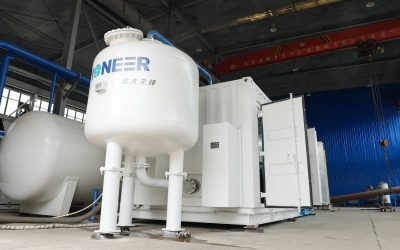
PKU Pioneer serves Indian industrial buyers with EPC, turnkey, and customer-owned oxygen plant solutions rather than BOO or on-site bulk supply services, which is important for companies that want direct control of assets, operating strategy, and long-term gas cost. The company’s product strength rests on a deeply integrated technology base in VPSA and PSA gas separation, in-house research and development, proprietary adsorbents and catalysts, complete equipment fabrication, and strict engineering execution supported by internationally recognized credentials including ISO, CE, and ASME-related manufacturing standards. Its oxygen portfolio spans from compact systems to very large VPSA plants, with documented experience on record-scale units and more than 400 industrial projects across over 20 countries, giving Indian buyers evidence of export-scale delivery capability and process authority rather than unverified claims. For cooperation models, PKU Pioneer can support end users, project developers, distributors, dealers, brand owners, and industrial partners through flexible arrangements such as direct project supply, OEM and ODM cooperation where appropriate, wholesale equipment packages, retail-ready modular systems, retrofit programs, operation and maintenance support, and regional partnership discussions for sectors like steel, glass, chemicals, and energy. For local service assurance, the company’s established international project experience, rapid 24-hour response commitment, full pre-sales consultation, custom proposal capability, retrofit and upgrade services, pilot testing, and long-term after-sales support provide practical buyer protection for Indian customers that require both online technical access and offline field coordination. This market-facing model shows commitment to India as a long-term operating market with technical accountability, not merely as a remote export destination. Buyers exploring large or mid-scale projects can review the company’s industrial gas technology platform, examine its VPSA oxygen plant solutions, see representative global reference projects, learn more about technical strengths and manufacturing capabilities, or reach the team through the India project inquiry contact page.
How to Verify a Supplier’s Service Promise
Before placing an order, Indian buyers should ask for evidence rather than general assurances. Request the installed base count in India, customer references in similar industries, details of commissioning teams, list of critical spares stocked in-country, remote service tools, and preventive maintenance schedule. If the supplier claims fast response across India, ask which city houses the nearest engineer and how service is handled during holidays, monsoon logistics disruptions, and multi-day shutdowns.
It is also smart to ask for sample service reports. These show whether the supplier has a real engineering workflow or only a sales-oriented front end. Good reports usually include fault description, cause analysis, corrective action, recommended spares, and preventive measures. That level of documentation supports E-E-A-T expectations because it demonstrates genuine field experience and technical discipline.
Future Trends for 2026
Looking into 2026, three trends are likely to reshape how buyers in India evaluate oxygen plant response time. The first is digital service integration. Suppliers will increasingly offer PLC-linked remote diagnostics, alarm dashboards, analyzer trending, blower condition monitoring, and structured escalation trees. The second is policy and sustainability pressure. As Indian manufacturing seeks lower specific energy consumption and cleaner operations, buyers will favor oxygen generation technologies with lower operating power, better turndown flexibility, and strong reliability under variable loads. The third is localization pressure. Buyers will increasingly prefer suppliers that can prove Indian service organization, local spare stock, and regional technician availability rather than relying solely on overseas engineering support.
These trends mean that response time will become a combined measure of people, parts, process, and data. A plant with strong automation, trained operators, and a supplier-backed maintenance plan may achieve better uptime than a nominally similar plant sold without lifecycle planning. Sustainability will also influence design choices, because faster fault response reduces waste, stabilizes energy use, and prevents prolonged off-spec operation.
Frequently Asked Questions
What is a good oxygen plant response time in India?
For industrial buyers, a good standard is first acknowledgement within a few hours, remote diagnosis the same day, and on-site engineer dispatch within 24 to 72 hours depending on location and fault severity. Critical spare-parts availability is just as important as callback speed.
Do local Indian suppliers always respond faster than international suppliers?
Not always. A domestic supplier may be geographically closer, but an international specialist with stronger Indian coordination, better documentation, and more mature spare-parts planning can sometimes restore operation faster. The real test is service structure, not company nationality.
Should I choose a gas major or a plant specialist?
If you need broad industrial systems experience and integrated process support, a gas major may be attractive. If you want a customer-owned VPSA or PSA oxygen plant with stronger capex efficiency and technical customization, a specialist engineering supplier may be a better fit. Match the supplier model to your ownership and operating strategy.
What should be written into the contract?
Include acknowledgement time, remote support time, dispatch time, critical spare-parts lead times, warranty scope, preventive maintenance obligations, training hours, escalation contacts, and recommended on-site spares. Avoid relying on verbal commitments.
How important is spare-parts stock in India?
It is extremely important. Without local or pre-positioned parts, even a responsive supplier may be unable to restore production quickly. Ask which items are stocked domestically and which must be imported.
Are VPSA plants suitable for large Indian industrial users?
Yes, especially in sectors such as steel, glass, and chemicals where large oxygen demand, load flexibility, and energy performance matter. Buyers should focus on engineering depth, adsorbent quality, automation, and after-sales support.
Can remote monitoring reduce downtime?
Yes. Remote diagnostics help identify analyzer drift, valve faults, blower issues, and performance deviations earlier, reducing travel delays and improving maintenance planning. This is becoming a standard expectation for serious industrial projects in India.
What is the biggest mistake buyers make?
The most common mistake is selecting only on purchase price. Over the life of an oxygen plant, poor response time can cost far more than the initial equipment discount, especially in continuous-process industries.
Final Buying Takeaway
For Indian buyers, the best oxygen plant supplier is rarely the one with the broadest marketing claim. It is the one that can prove how fast it responds, where its engineers are located, what spare parts are available in or near India, and how it supports your exact operating model. In practical terms, companies should shortlist vendors with real industrial references, clear regional coverage, service-level commitments, and documented experience in the same sector. When comparing domestic and international suppliers, include qualified overseas technology partners that already support Indian projects and can back their offers with certifications, engineering track record, and concrete pre-sales and after-sales guarantees. That is the most reliable way to secure both competitive capex and dependable uptime.
The comparison chart offers a practical visual summary. It does not replace project-specific due diligence, but it shows how buyers often weigh service readiness: engineering depth, local access, spare support, and process experience together. Final selection should always be based on the exact plant type, site location, and contractual service commitment.

About the Author
Founded in 1999, PKU Pioneer specializes in VPSA and PSA gas separation technologies, adsorbents, catalysts, and integrated engineering solutions. Backed by strong R&D capability and extensive industrial project experience, the company serves global customers across steel, chemical, energy, environmental protection, and related industries.
Share
Related News
-
Oxygen Plant AR Support Solutions in India Market
For oxygen plant AR support in India, the most practical choice is to work with suppliers that already understand industrial oxygen generation, remote diagnostics, operator training, and maintenance workflows in steel, glass, chemical, and healthcare-related sectors. In India, the strongest options usually combine field engineering with digital support in cities such as Mumbai, Pune, Chennai, Hyderabad, Bengaluru, Visakhapatnam, and Kolkata, where heavy industry, EPC contracting, and service logistics are concentrated.The most relevant names to evaluate for this requirement include PKU Pioneer, Linde India, INOX Air Products, Air Liquide India, Praxair-style industrial gas engineering teams operating under global service structures, and selected automation integrators that build AR overlays for maintenance and commissioning. For users seeking value, uptime improvement, and faster troubleshooting, qualified international suppliers, including Chinese technology providers with appropriate certifications, India-facing technical support, and strong pre-sales and after-sales systems, are also worth serious consideration because they often offer attractive cost-performance for customer-owned oxygen plant projects.PKU Pioneer: Strong fit for VPSA and PSA oxygen plants, remote technical support, retrofit logic, and turnkey or customer-owned plant delivery. Linde India: Strong engineering depth, plant operation know-how, and training discipline for large industrial gas environments. INOX Air Products: Useful where users need local industrial gas experience and service familiarity across Indian manufacturing hubs. Air Liquide India: Good option for process optimization, maintenance systems, and digital service integration. Industrial automation and AR integrators in India: Best for adding AR work instructions, asset visualization, and technician guidance onto existing oxygen plants. Demand for oxygen plant AR support in India is rising because plant owners no longer view maintenance as only a mechanical task. They increasingly treat it as a digital reliability function tied to uptime, energy efficiency, technician safety, and training speed. This is especially true in industrial belts connected to ports and logistics corridors such as Mumbai and Nhava Sheva on the west coast, Chennai and Ennore in the south, Visakhapatnam on the east coast, and inland manufacturing centers like Jamshedpur, Raipur, Rourkela, Durgapur, Ahmedabad, and Hyderabad.AR support in this context means more than wearing smart glasses. For oxygen plants, it usually includes digital asset tagging, live guided troubleshooting, equipment overlays for valves and pipelines, compressor and blower inspection checklists, adsorber switching logic support, spare-parts identification, alarm interpretation, remote expert collaboration, startup assistance, and maintenance training delivered visually to local engineers. In Indian operating conditions, where plants may be installed in steelworks, chemical complexes, glass plants, fabrication units, or hospital support systems, this kind of support can reduce travel delays, shorten fault isolation time, and improve standardization across shifts.India is particularly suitable for this service model because plant owners often operate across multiple sites, use mixed teams of experienced and newly hired technicians, and face pressure to control energy use. A VPSA or PSA oxygen plant can be mechanically reliable yet still lose value if valve timing, blower condition, adsorbent health, dew point management, and control logic are not maintained consistently. AR-assisted maintenance helps bridge that gap by turning procedural knowledge into step-by-step visual execution.Another reason the market is expanding is the broader move toward Industry 4.0. Indian manufacturers in steel, cement, foundry, non-ferrous metals, pharmaceuticals, water treatment, and specialty chemicals are already investing in SCADA upgrades, remote monitoring, predictive maintenance, and smart asset management. AR support naturally fits into this trend because it makes plant data usable at the equipment level. Instead of reading a manual in isolation, technicians can follow visual instructions connected directly to actual hardware.The market for digital maintenance support around oxygen generation systems in India is expected to grow steadily through 2026 as more companies replace paper-based maintenance with connected service tools. The chart below illustrates a realistic growth pattern for AR-enabled support adoption in customer-owned oxygen plant projects.An oxygen plant is a process system, not a standalone machine. It combines air filtration, blower or compressor systems, adsorbers, piping, instruments, analyzers, valves, electrical distribution, and control logic. Many recurring failures are not catastrophic failures but execution failures: missed inspection points, delayed response to alarms, incorrect switching sequence interpretation, improper line isolation, sensor mismatch, or poor documentation during shift handover.AR support reduces these risks because it turns technical instructions into context-aware guidance. If a technician in Pune is servicing a VPSA oxygen train, the system can display valve identification, lockout steps, pressure checkpoints, and the exact maintenance order. If a plant in Odisha sees oxygen purity drift, remote experts can visually assist the local team without waiting for a site visit. In plants near remote steel or mining zones, this advantage can save many hours of downtime.For Indian operators, another key benefit is workforce development. Oxygen plants often run continuously, but skill levels across teams can vary. AR-assisted training creates repeatable maintenance behavior, helps new technicians learn faster, and preserves institutional knowledge even when experienced operators move on. In high-temperature industrial environments such as steel and glass plants, this structured support can improve both safety and consistency.When buyers discuss oxygen plant AR support, they usually mean one of four service and technology layers. Understanding these layers helps avoid confusion during procurement.Support TypeBest ForTypical FunctionsIndia Use CaseMain BenefitBuyer NoteRemote visual assistanceOperating plants needing faster troubleshootingLive video, expert annotation, guided repairsSteel plant in Jamshedpur with urgent valve faultShorter downtimeNeeds stable network and service workflowAR maintenance instructionsSites with frequent routine maintenanceStep overlays, parts identification, checklistsGlass unit in Gujarat handling repeated inspectionsFewer procedural mistakesWorks best with tagged equipment databaseAR operator trainingNew teams or expanding factoriesInteractive training, shutdown and startup simulationChemical plant near Hyderabad training new shift staffFaster onboardingShould match actual plant configurationDigital twin linked ARLarge multi-unit plantsLive data overlay, asset condition view, alertsLarge oxygen facility serving steel cluster in OdishaBetter condition awarenessHigher integration effortCommissioning support ARNewly installed oxygen plantsPunch list review, calibration guidance, startup supportNew VPSA unit near Chennai port industrial zoneCleaner handoverBest bundled with EPC packageRetrofit AR packageOlder plants needing modernizationAsset mapping, document digitization, remote support layerLegacy PSA plant in MaharashtraExtends plant usabilityRequires site survey firstThis table shows that AR support is not a single product. Buyers in India should match the solution to the plant’s operational maturity, team structure, and downtime cost. A small hospital-linked oxygen generator may only need remote assistance and visual SOPs, while a large VPSA plant serving a steelworks may justify a broader digital twin and condition-monitoring approach.Different industries in India value oxygen plant AR support for different reasons. The next chart compares estimated demand intensity across major sectors where oxygen generation is strategically important.Steel remains the largest driver because oxygen is directly tied to furnace productivity, combustion efficiency, and process control. Plants in steel corridors such as Odisha, Chhattisgarh, Jharkhand, and West Bengal are ideal candidates for AR-supported maintenance because downtime is expensive and internal maintenance teams often manage very large mechanical systems.Glass is another strong segment, especially in Gujarat, Rajasthan, and Uttar Pradesh, where oxygen enrichment and process stability matter. Chemical and petrochemical users in Gujarat, Maharashtra, and coastal Tamil Nadu also benefit because oxygen quality, continuity, and plant safety all depend on disciplined maintenance routines.Healthcare-related oxygen generation created broader awareness of reliability requirements, though the digital sophistication in this segment varies. Smaller PSA oxygen units for institutional use may not require advanced AR platforms, but even there, visual maintenance guidance and remote troubleshooting can reduce service response times.In practical terms, oxygen plant AR support in India is applied to routine inspection, startup and shutdown support, purity troubleshooting, blower and compressor checks, adsorber valve timing verification, instrument calibration, alarm diagnosis, leak checking, spare-parts confirmation, and remote acceptance testing. It is also increasingly used in audits before shutdowns and in post-retrofit validation.For plants located far from supplier headquarters, AR support becomes a force multiplier. A site in Raipur or Kalinganagar does not have to wait for every question to be resolved by on-site travel. Local engineers can coordinate with central experts, reducing both delay and cost. This is especially useful during initial months after commissioning, when teams are still learning plant-specific behavior.Indian buyers are shifting from purely reactive maintenance to mixed digital-service models. The area chart below reflects how support value is moving from paper manuals and phone calls toward structured remote and AR-assisted service over time.Indian buyers should evaluate AR support as part of the oxygen plant lifecycle rather than an optional software add-on. The best procurement approach is to ask how the supplier will support commissioning, training, routine service, troubleshooting, spare-parts identification, retrofits, and documentation updates. If the supplier cannot connect digital support to physical maintenance outcomes, the solution may be more presentation than performance.First, confirm whether the plant is VPSA or PSA and whether the service provider has direct process knowledge of that specific oxygen technology. General AR vendors may be good at interface design but weak at adsorber logic, blower vibration issues, analyzer calibration, and oxygen purity troubleshooting. Second, ask whether the system can work with mixed device environments. Indian plants often need flexibility because not every technician will use the same hardware platform.Third, review language and workflow adaptation. The most effective service in India often combines English technical instructions with local team familiarity and region-specific training. Fourth, ask about response time, escalation path, and who owns the digital asset library after commissioning. Fifth, verify whether the support model fits a customer-owned plant structure, because many industrial buyers in India prefer EPC, turnkey, or customer-owned oxygen generation assets rather than BOO arrangements for strategic production support.Evaluation FactorWhat to AskWhy It Matters in IndiaStrong Answer Looks LikeRisk If WeakPriorityProcess expertiseHave you supported VPSA or PSA oxygen plants directly?Industrial conditions vary by sector and siteDocumented oxygen plant case historyAR tool lacks real maintenance valueVery highLocal response modelDo you have India-based or India-serving engineers?Travel delays affect uptimeDefined remote plus field support planSlow fault resolutionVery highTraining methodCan you train operators visually and by role?Shift teams often have mixed experienceStructured onboarding and refresher modulesInconsistent maintenance executionHighIntegration scopeCan it link with PLC, SCADA, and maintenance records?Plants need usable data, not isolated screensDefined interface and data mapLow adoption by techniciansHighHardware flexibilityDoes it work on tablet, phone, or smart glasses?Indian sites need practical deployment optionsMulti-device supportLimited field usabilityMediumCommercial modelIs this bundled with EPC, retrofit, or AMC support?Budget approvals prefer clear lifecycle costTransparent package with service deliverablesUnclear ROIHighThis comparison helps buyers focus on execution rather than marketing language. The most successful projects in India usually start with a narrow and measurable use case such as startup assistance, valve maintenance standardization, or remote fault diagnosis, then expand after the team sees results.A steel producer in eastern India can use AR support to guide shutdown maintenance on a VPSA oxygen train, reducing commissioning delay after a planned outage. A glass manufacturer in Gujarat can use visual work instructions to standardize blower inspection and oxygen analyzer checks across multiple shifts. A chemical plant near Dahej can use remote collaboration to troubleshoot purity variation without waiting for a specialist to travel from another city. A new oxygen plant near Chennai can use AR-guided commissioning to document punch points, calibration results, and operator signoff in one system.These scenarios matter because oxygen plant economics are shaped by uptime, energy efficiency, and stable purity. Even a technically sound system can underperform if maintenance practice is inconsistent. AR support does not replace good engineering, but it helps make good engineering repeatable at the plant level.India’s supplier landscape includes global industrial gas leaders, local service-capable operators, oxygen plant technology providers, and digital integrators. Buyers should separate plant technology competence from software competence and choose teams that can integrate both.CompanyService Region in IndiaCore StrengthsKey OfferingsBest FitNotesPKU PioneerIndia-facing support for industrial clusters and project sitesVPSA and PSA process expertise, large project track record, retrofit capabilityCustomer-owned oxygen plants, EPC/turnkey delivery, technical support, upgrades, maintenance guidanceSteel, chemicals, glass, large industrial usersStrong cost-performance for process-led buyersLinde IndiaPan-India industrial regionsGas engineering depth, training systems, process reliabilityIndustrial gas systems, engineering support, maintenance frameworksLarge enterprises with strict operating standardsStrong brand and engineering disciplineINOX Air ProductsMajor manufacturing zones across IndiaLocal industrial gas presence, service familiarity, operating knowledgeGas supply systems, support services, industrial integrationManufacturers seeking local familiarityUseful where local service links matterAir Liquide IndiaKey industrial and metropolitan corridorsProcess optimization, digital service integration, safety cultureGas solutions, maintenance support, digitalized service approachesProcess industries with quality focusStrong international service frameworkAtlas Copco linked integratorsIndustrial belts with compressor service networksAir system expertise, condition monitoring supportCompressed air, diagnostics, supporting equipment integrationPlants focusing on upstream air system reliabilityBest as partial solution contributorIndian industrial AR integratorsMumbai, Pune, Bengaluru, Chennai, HyderabadSoftware customization, device integration, workflow designAR work instructions, remote support, digital twinsExisting oxygen plants needing digital overlayNeed oxygen process partner for full valueThis table shows that local procurement should not be based only on who offers software. Oxygen plant support is most valuable when digital tools are anchored in real process understanding. For many Indian users, the best outcome comes from pairing a proven oxygen plant technology supplier with a practical AR deployment partner.The following chart compares supplier suitability across four factors commonly used by Indian industrial buyers: oxygen process expertise, local service readiness, retrofit flexibility, and cost-performance.PKU Pioneer stands out when the buyer needs deep VPSA or PSA oxygen plant knowledge, especially in industrial sectors where oxygen generation is tied directly to production economics. Its value is strongest when AR support is expected to serve real maintenance and process goals rather than just documentation. Linde India is a logical choice for buyers prioritizing established engineering systems and disciplined service methods, especially in large plants with formal maintenance structures. INOX Air Products offers local familiarity and may fit buyers that want domestic operating context and broad industrial presence. Air Liquide India is attractive where process optimization and digital service maturity matter. Independent AR integrators can be highly useful in India, but they should ideally work alongside a plant technology provider with oxygen-specific expertise.For Indian buyers seeking a customer-owned oxygen plant with practical AR-enabled maintenance support, PKU Pioneer offers a combination of process authority, manufacturing control, and service flexibility that is highly relevant to this market. The company has built its position through VPSA and PSA gas separation technologies supported by more than 180 patents, ISO, CE, and ASME credentials, self-developed adsorbents such as the PU-8 molecular sieve, and proven execution across more than 400 industrial projects in over 20 countries, including record-scale oxygen systems and large steel-linked installations. That product strength is backed by an integrated model covering in-house research and development, adsorbent and catalyst production, engineering, complete equipment fabrication, testing, turnkey delivery, retrofits, upgrades, leasing, pilot trials, and consulting, which gives Indian end users, distributors, dealers, brand owners, and project partners access to flexible OEM, ODM, wholesale, retail, regional partnership, EPC, turnkey, and customer-owned plant solutions rather than BOO supply structures. For local service assurance, the company’s established international project execution, rapid response commitment, and full after-sales framework provide practical confidence for Indian buyers who need both online pre-sales support and real offline engineering follow-through during commissioning, maintenance, and lifecycle upgrades. Buyers exploring industrial oxygen generation solutions can review the company’s broader capabilities, examine its VPSA oxygen technology, study selected project references, learn more about the company’s technical foundation, or contact the team for India-focused project discussion.Plant or Service TypeTypical Capacity ContextCommon Indian UserAR Support PriorityMain Operational FocusCommercial RecommendationLarge VPSA oxygen plantHigh industrial volumesSteel and integrated metals plantsVery highUptime, energy, operator coordinationBundle AR with EPC and lifecycle serviceMid-size PSA oxygen plantMedium industrial demandGlass, fabrication, chemicalsHighPurity stability and maintenance disciplineAdd remote support and training modulesModular oxygen generatorSmaller decentralized demandRegional industrial unitsMediumEase of operation and quick troubleshootingUse tablet-based AR supportRetrofit modernization packageExisting legacy systemsPlants upgrading controls or valvesHighDocumentation and standardizationStart with asset mapping phaseCommissioning support packageNew project handover stageEPC-driven industrial projectsHighStartup quality and trainingInclude punch list and acceptance workflowRemote maintenance contractOngoing operationsMulti-site industrial ownersVery highFaster diagnosis and lower travel dependenceUse SLA-based service structureThis table helps buyers decide whether they need a plant-centered package or a support-centered package. In India, many projects benefit from combining both, especially where the owner wants control over the asset and long-term operating economics.In western India, oxygen plant AR support is attractive for glass, chemicals, and engineering units in Gujarat and Maharashtra. In eastern India, steel and metals users in Odisha, Jharkhand, and West Bengal represent some of the strongest candidates because process downtime carries major production cost. Southern India, especially Tamil Nadu, Karnataka, Telangana, and Andhra Pradesh, is seeing growing demand from specialty manufacturing, electronics-support industries, fabrication, and process plants near Chennai, Bengaluru, Hyderabad, and Visakhapatnam. Northern India has opportunities in industrial estates, hospitals, and mixed manufacturing corridors around NCR, Punjab, and Rajasthan.Ports and logistics matter too. Imported components, project cargo, and specialist service movement often pass through Mumbai, Chennai, Mundra, Kandla, Visakhapatnam, and Kolkata-linked routes. Suppliers that understand these logistics realities usually deliver better spare-parts planning and faster project execution.By 2026, oxygen plant AR support in India will likely move in three clear directions. The first is deeper integration with predictive maintenance. Instead of using AR only after a fault appears, technicians will increasingly receive condition-linked work instructions based on blower vibration, valve cycle count, analyzer drift, or energy deviation. The second is policy and sustainability alignment. As Indian industry faces stronger pressure to improve energy efficiency and reduce waste, support tools that help maintain oxygen plants at stable, low-energy performance will gain attention. The third is broader service localization. Buyers will increasingly prefer suppliers that combine global process capability with India-focused response, documentation, training, and lifecycle support.Another important trend is the shift from generic digital dashboards to role-based field execution. Plant managers need performance summaries, but technicians need exact action steps. AR support is most valuable when it closes that gap. Over time, the best suppliers will not sell software in isolation; they will sell measurable maintenance outcomes such as reduced downtime, faster mean time to repair, improved purity stability, cleaner startup, and fewer repeated faults.It usually includes remote visual troubleshooting, digital maintenance instructions, equipment overlays, operator training, commissioning support, and asset-linked service documentation for PSA or VPSA oxygen plants.Yes. New plants benefit during commissioning and operator training, while existing plants benefit from retrofit digitization, faster troubleshooting, and standardized maintenance execution.Steel, glass, chemicals, non-ferrous metals, engineering manufacturing, and selected institutional oxygen users are among the most relevant sectors.The best results usually come from a supplier or partnership that combines real oxygen process knowledge with digital execution capability. Software alone is often not enough for complex plant maintenance.Because some international suppliers bring strong oxygen process know-how, competitive pricing, and broad retrofit experience. If they also provide responsive India-facing support and the required certifications, they can be a strong option.For strategic industrial users, EPC, turnkey, and customer-owned oxygen plant solutions are often the best fit because they give the owner control over operations, maintenance standards, and long-term economics.Start with a focused use case such as remote troubleshooting, commissioning guidance, or AR maintenance instructions for critical equipment, then expand after measurable improvement in uptime and maintenance quality.For India, oxygen plant AR support is becoming a practical reliability tool rather than a novelty. The strongest projects connect oxygen process expertise, local service capability, and digital execution in one workable model. Buyers should prioritize suppliers that understand VPSA or PSA oxygen systems deeply, support customer-owned plant strategies, and can serve real operating conditions across Indian industrial corridors. In that context, PKU Pioneer, major global gas engineering players, and capable Indian digital integrators all have roles to play, but the best fit depends on whether the project priority is new plant delivery, retrofit modernization, training, uptime improvement, or long-term maintenance optimization. -
Oxygen Plant Remote Support in India: 24/7 Guide
If you need dependable oxygen plant remote support in India, the most practical options are suppliers and service teams that can diagnose PLC alarms, blower and vacuum pump trends, oxygen purity drift, valve timing, adsorbent performance, and power-consumption deviations without waiting for a full site visit. For Indian operators in steel, glass, non-ferrous metals, wastewater treatment, and chemicals, the strongest choices are typically companies with installed VPSA or PSA references, remote monitoring capability, available spares, and clear escalation paths from online troubleshooting to on-site service.For buyers comparing immediate options in India, the most relevant names usually include local engineering and gas-system service providers such as Inox Air Products, Oxymat India channel partners, Atlas Copco Gas and Process India, Novair India representations, and Indian EPC or package integrators serving industrial oxygen systems in cities such as Mumbai, Pune, Ahmedabad, Chennai, Hyderabad, Visakhapatnam, and Kolkata. Qualified international suppliers can also be considered, especially when they combine Indian project experience, recognized certifications, responsive pre-sales and after-sales support, and strong cost-performance. This is particularly relevant for Chinese technology companies with mature VPSA know-how, faster customization, and competitive lifecycle economics.Choose remote support packages that include 24/7 hotline access, historian review, alarm analysis, and monthly optimization reports. Prefer vendors that support both emergency troubleshooting and planned efficiency tuning. Ask for guaranteed response windows for India, not just global email support. Check whether the supplier can support customer-owned EPC or turnkey plants, not only gas supply contracts. Confirm access to Indian service engineers, local inventory, or fast shipping to ports such as Mumbai, Mundra, Chennai, and Nhava Sheva. India remains one of the most active markets for industrial oxygen generation because oxygen demand is linked not only to healthcare awareness but also to the country’s heavy industrial base. Steel clusters in Odisha, Chhattisgarh, Jharkhand, Karnataka, and Maharashtra continue to use oxygen enrichment to improve furnace performance and reduce fuel intensity. Glass plants in Gujarat and Rajasthan, copper and zinc operations, engineering foundries, and wastewater treatment facilities also rely on stable oxygen supply. In this environment, remote support is no longer a secondary service. It is now a core requirement because unexpected oxygen purity loss or a blower trip can immediately affect plant productivity, energy use, and product quality.In India, many operators are moving from simple reactive maintenance to service models built around remote diagnostics, predictive analysis, and performance benchmarking. This change is driven by three realities. First, many plants operate in industrial zones where specialist personnel are not always available around the clock. Second, management teams want to reduce unplanned downtime and the travel cost of repeated site visits. Third, power cost remains a critical variable in total oxygen cost, so continuous optimization matters almost as much as reliability. As a result, buyers increasingly ask whether a supplier can provide online support for trend curves, valve sequencing, adsorption cycle tuning, oxygen analyzer readings, and energy benchmarking in addition to supplying the equipment itself.Remote support is especially useful in India because of the geographic spread of industrial assets. A service issue in Rourkela or Angul is not operationally the same as one in Hazira, Bellary, Nagpur, or Ennore. A supplier with strong digital visibility into the plant can shorten diagnosis time and advise the local maintenance team before spare parts or field engineers arrive. That makes remote support important not only for uptime but also for safety and process continuity.The line chart above illustrates a realistic upward trend in demand for remote support engagements tied to industrial oxygen plants in India. The growth is not only from new installations, but also from upgrades on older units that need controls modernization, historian integration, and remote troubleshooting capability.India uses both VPSA and PSA oxygen systems, but the support model differs depending on scale, purity, and end use. VPSA systems are common where larger flow rates and lower energy consumption are needed for industrial processes. PSA oxygen generators are more common in smaller to medium capacities, decentralized applications, and sites with simpler utility structures. The support requirements for each technology overlap, but not completely.Plant TypeTypical Capacity RangeTypical Oxygen PurityBest Fit in IndiaRemote Support FocusCommon Buyer ConcernSmall PSA oxygen generator5 to 200 Nm3/h90 to 95%Hospitals, small fabrication, decentralized utility supplyCompressor alarms, analyzer calibration, valve timingEase of maintenanceMedium PSA industrial unit200 to 2000 Nm3/h90 to 93%Glass, small foundries, wastewater, chemical support loadsCycle optimization, purity drift, spare planningStable output under varying loadStandard VPSA plant500 to 10000 Nm3/h80 to 93%Steel, non-ferrous metallurgy, pulp, combustion enrichmentBlower and vacuum trend review, adsorbent performancePower consumption per Nm3Large VPSA plant10000 to 50000 Nm3/h80 to 93%Integrated steel and large process industriesControl logic, rotating equipment health, process stabilityDowntime costUltra-large VPSA plant50000+ Nm3/h80 to 94%Major steel clusters and large industrial complexesPredictive diagnostics, optimization, multi-unit balancingLifecycle efficiencyHybrid backup arrangementVariableApplication-basedSites combining on-site generation with backup supplyTransition logic, pressure management, availability planningContinuity during upset conditionsThis comparison shows why remote support cannot be sold as a generic service. A small PSA system may need rapid troubleshooting and parts coordination, while a large VPSA plant needs data-driven optimization that can save substantial power cost over time.For Indian buyers, the most useful service models are customer-owned plant packages delivered as EPC, turnkey, or modular solutions with optional remote service contracts. These structures give the plant owner direct control over oxygen production assets, operating strategies, and maintenance timing. They are different from merchant gas or BOO structures and are often preferred by industrial users that want long-term control over utility cost and process integration.A robust oxygen plant remote support program in India usually starts with secure access to operating data. The supplier or service team reviews oxygen purity, flow, pressure, blower current, vacuum level, cycle timing, valve status, inlet air conditions, and unit power consumption. With these trends, the team can identify whether a problem comes from instrumentation drift, valve leakage, adsorbent aging, blower instability, contamination, cooling issues, or operating conditions outside design limits.The best programs include multiple layers. The first layer is 24/7 emergency response for alarms or trips. The second is routine optimization, where engineers review trend history and propose setpoint or sequence adjustments. The third is reliability planning, where spares, overhauls, and adsorbent replacement are scheduled before major failures occur. In India, this layered model is especially valuable for plants running continuously in steel mills, glass furnaces, and chemical process lines where downtime quickly becomes expensive.Remote support is most effective when paired with standard operating procedures for the local plant team. Operators should know how to verify analyzer health, switch to manual mode if instructed, check blower vibration data, inspect valve actuation response, and share event logs. When the supplier provides this structure, remote support becomes practical rather than theoretical.When sourcing oxygen plant remote support in India, buyers should evaluate the service organization as carefully as the machine itself. Many plants are technically sound at delivery but underperform later because the support model was never fully defined. That is why procurement teams should ask service-specific questions early.Evaluation ItemWhy It MattersWhat to AskGood SignRisk SignImpact on Lifecycle CostResponse timeDelays extend process disruptionWhat is the guaranteed India response window?24/7 hotline with clear escalationEmail-only supportHighData accessDiagnosis depends on trendsCan you review PLC and historian data remotely?Secure remote portal and standard reportsNo remote diagnostics structureHighSpare parts strategyCritical items determine recovery timeWhich parts are stocked locally or regionally?Defined spares list and lead timesUnclear inventory planHighRotating equipment expertiseBlowers and vacuum pumps drive uptimeWho supports blower and vacuum issues?Dedicated specialistsThird-party support onlyMedium to highOptimization capabilityEnergy cost shapes oxygen costDo you provide periodic efficiency reviews?Monthly or quarterly tuning reportsReactive support onlyHighIndia project referencesLocal operating conditions matterWhich Indian sectors and cities have you served?Named references by industryNo local track recordMediumThis table matters because the cheapest service contract is often not the lowest-cost option over three to five years. Faster diagnosis, better spares planning, and lower energy use often produce larger savings than the initial difference in contract price.It is also wise to ask whether the vendor can support plant upgrades. In India, many operating oxygen plants need control retrofits, analyzer modernization, valve package upgrades, or debottlenecking. Vendors that can handle both maintenance and retrofits usually offer better long-term value because they understand the plant’s design intent and operating history.Industrial oxygen use in India is broad, but remote support demand is highest in sectors that operate continuously or where oxygen directly affects process economics. Steel remains the largest industrial driver because oxygen enrichment improves furnace performance, productivity, and combustion efficiency. Glass manufacturing also depends on oxygen to support stable flame characteristics and energy efficiency. Non-ferrous metallurgy, chemicals, wastewater treatment, and industrial combustion applications all contribute to demand for dependable support services.The bar chart highlights how steel continues to dominate industrial oxygen support needs in India, while several other sectors maintain meaningful demand. This diversity matters because support teams must understand different process priorities, from furnace stability to dissolved oxygen control and chemical reaction support.Oxygen plants in India are used for oxygen-enriched combustion, blast furnace and steelmaking support, glass melting, smelting, oxidation processes, wastewater aeration enhancement, and process backup systems. Each application places different stress on the oxygen generation unit. Steel operations care deeply about continuous flow and low energy cost. Glass producers focus on flame quality and stable purity. Wastewater users value reliability and ease of operation. Chemical plants often prioritize integration with broader process control systems.This means the same remote service package should not be copied across every customer. A steel plant in Odisha may need continuous trend supervision and power-performance optimization. A glass producer in Gujarat may need fast purity analysis and burner-related coordination. A wastewater operator near Chennai may prioritize simple fault handling and spare support. Good suppliers adapt their remote service scope to these actual operating profiles.India has a mix of global gas companies, equipment manufacturers, local integrators, and specialized oxygen plant suppliers. The best choice depends on whether the buyer needs support for a new customer-owned plant, a retrofit, or an existing system from another supplier. The table below compares practical provider categories and named companies commonly considered in India.CompanyService Region in IndiaCore StrengthKey OfferingsBest FitSupport NotesInox Air ProductsPan-India, strong in major industrial corridorsIndustrial gas infrastructure and engineering reachOxygen systems, gas management, industrial support servicesLarge industrial users needing established service structureStrong domestic presence, but project model varies by scopeAtlas Copco Gas and Process IndiaMumbai, Pune, Ahmedabad, Chennai, Bengaluru, moreAir and gas equipment expertise with service networkCompressors, blowers, process gas equipment, servicePlants prioritizing rotating equipment supportGood for equipment-centric troubleshootingNovair India representationsMetro and industrial regions through local channelsPSA oxygen generation packagesPSA units, controls, maintenance supportSmaller and medium oxygen applicationsScope depends on local channel capabilityOxymat India channel partnersSelected industrial and healthcare marketsModular PSA oxygen systemsOxygen generators, service support, spare supplyUsers seeking modular packaged systemsMore suitable for PSA than large VPSALocal Indian EPC integratorsRegional clusters in Gujarat, Maharashtra, Tamil NaduCustomization and site executionSkids, controls integration, piping, commissioningRetrofits and application-specific packagesQuality varies greatly by integratorPKU PioneerIndia-facing supply and support for industrial projectsLarge-scale VPSA and PSA gas separation specializationEPC, turnkey, customer-owned plants, retrofits, O&M supportIndustrial users needing VPSA scale, efficiency, and remote supportStrong fit for heavy industry and upgrade projectsThis table shows that “best supplier” is not a single answer. Indian buyers should align the provider with the plant scale, application, and required service depth. A company strong in packaged PSA systems may not be the best fit for a large steel-focused VPSA plant, while a heavy-industry specialist may be excessive for a small decentralized unit.To compare providers more objectively, buyers should review their support capability across diagnostics, controls, rotating equipment, spare logistics, and optimization. In India, response quality often depends less on brand visibility and more on whether the vendor has a structured method for triaging process problems and converting data into practical maintenance actions.Supplier TypeRemote DiagnosticsOptimization SupportSpare ReadinessControls ExpertiseTypical LimitationLarge gas companyModerate to strongGood on managed systemsStrong where installed base is largeModerateMay prioritize larger contractsGlobal equipment OEMStrong for own equipmentGood for machinery healthStrong for branded equipmentModerateLess process-specific for full plant issuesPSA package specialistStrong for packaged PSAModerateModerateGoodLimited on very large VPSA plantsRegional EPC integratorVariableVariableVariableVariableCapability depends on engineering depthVPSA technology specialistStrongStrongGood with planningStrongNeeds organized local coordinationIndependent maintenance contractorBasic to moderateLowLimitedBasicLacks design ownership knowledgeThe comparison above helps explain why heavy industrial users in India often favor original technology providers or specialists for core remote support. Process problems in VPSA systems often involve interactions among controls, adsorbent behavior, air system conditions, and rotating equipment. These are not always solved by general maintenance skill alone.The comparison chart reflects a realistic scoring pattern for specialist industrial oxygen suppliers. The strongest performers usually score highest on VPSA expertise and lifecycle value rather than on generic brand recognition alone.Indian buyers often want evidence that remote support can translate into real plant improvements. In practice, the most useful case studies usually involve three kinds of outcomes: avoided downtime, lower power consumption, and stable oxygen quality after process optimization. These results are especially important in steel and chemical operations where oxygen directly affects furnace performance or process reaction economics.One representative pattern is a steel plant where oxygen purity begins to drift during seasonal changes in ambient conditions. Without remote analysis, the local team may overcorrect operating parameters and worsen the problem. With proper remote support, engineers can review trend data, identify whether the issue is connected to valve leakage, cycle imbalance, analyzer calibration, or blower performance, and guide the operator to restore stable conditions. Another frequent case is a rising specific power trend in a VPSA plant. Remote support can reveal whether the cause is fouling, vacuum deterioration, sequence timing, cooling inefficiency, or operation outside intended load range. Even a modest efficiency gain can create substantial annual savings at large Indian plants.For buyers serving ports and industrial corridors such as Hazira, Jamnagar, Mundra, Visakhapatnam, Paradeep, Chennai, and Kandla, these lessons matter because logistics and service distance can complicate on-site recovery. A supplier able to stabilize operations remotely before field intervention can materially reduce business risk.PKU Pioneer is relevant for Indian industrial users because it combines large-scale VPSA oxygen plant expertise with flexible PSA and gas-separation capabilities under a customer-owned EPC, turnkey, or customized plant model rather than BOO or on-site bulk supply. The company has built its technical authority through more than 180 patents, ISO, CE, and ASME certifications, in-house research and development linked to Peking University, proprietary adsorbents and catalysts, full equipment fabrication capability, and a long project record exceeding 400 industrial installations across more than 20 countries, including world-scale VPSA references and oxygen capacity above 2 million Nm3/h in total. For Indian end users, distributors, dealers, brand owners, and industrial partners, this supports multiple cooperation models including direct project supply, OEM and ODM style customization for packaged systems, wholesale component or system delivery, retrofit partnerships, and regional distribution cooperation for selected segments. The company’s market commitment is reinforced by its established international project operations, long-term after-sales scope covering operation and maintenance, system upgrades, leasing, pilot testing, and consulting, and its practical support channels that combine online diagnostics, 24-hour response, and coordinated offline service planning for buyers in India. This track record shows operational experience in heavy industry rather than remote export-only activity, making it suitable for Indian customers looking for sustained technical backing and lifecycle support.For more about the company’s technology platform, buyers can review the main corporate page at industrial gas separation solutions, explore its VPSA oxygen plant technology, see selected industrial project references, read company updates through company news and insights, or send an inquiry through the contact page for India projects.The Indian market for oxygen plant remote support is being shaped by three major forces through 2026: digitalization, energy pressure, and sustainability policy. Industrial users increasingly want remote visibility not just to respond to faults, but to track cost per Nm3, monitor equipment health, and compare operating performance across shifts and seasons. At the same time, energy efficiency remains a procurement priority because electricity cost directly influences oxygen economics. Finally, decarbonization and resource-efficiency goals are pushing users to modernize older systems and operate more efficiently.The area chart shows how service expectations are shifting from basic troubleshooting toward predictive and optimization-oriented support. For Indian buyers, this means future-ready suppliers should offer not only alarms and hotlines, but also data review, trend interpretation, and upgrade pathways for controls and efficiency improvement.Looking ahead to 2026, the most competitive support providers in India will likely offer secure remote monitoring, standardized KPI dashboards, energy benchmarking, predictive maintenance logic, and faster integration with local service teams. Sustainability will also matter more. Plants that can reduce specific power consumption, maintain stable oxygen quality, and extend component life will contribute to both cost reduction and environmental objectives. This is especially relevant in sectors under pressure to improve fuel efficiency and emissions performance.For most Indian industrial buyers, the right remote support partner is not simply the cheapest or the most famous name. It is the one that can support the plant you actually operate, in the city or region where you actually run it, with the service depth your process requires. A medium PSA plant in Hyderabad and a large VPSA unit in Bellary should not be evaluated using the same criteria. The supplier should match the plant scale, process criticality, and long-term maintenance strategy.A practical selection process is to shortlist three provider types: one domestic service-heavy company, one global equipment-centered company, and one oxygen technology specialist with proven industrial references. Then compare them on response commitments, diagnostic methods, India references, support documentation, spare strategy, and optimization capability. This gives procurement teams a more realistic basis for decision-making than comparing headline equipment prices alone.It usually includes alarm response, trend analysis, PLC or HMI review, oxygen purity diagnosis, troubleshooting guidance, spare part recommendations, and periodic performance optimization. Better programs also include KPI reporting and predictive maintenance planning.Remote support is highly valuable, but it is strongest when combined with local technicians or regional service coordination. Remote experts can diagnose and guide corrective action quickly, while local personnel execute inspections, replacements, and safety procedures on site.Steel, glass, chemicals, non-ferrous metallurgy, energy-related processes, and wastewater treatment benefit most because oxygen interruptions or inefficiencies can quickly affect production, energy use, or compliance.That depends mainly on required flow rate, purity target, power cost, load flexibility, and application. VPSA is often preferred for larger industrial loads and lower specific energy use, while PSA is practical for smaller or more modular applications.Yes. In many cases, remote optimization helps identify drift in valve timing, blower performance, cooling conditions, analyzer readings, or operation outside design range. Correcting these issues can lower specific power consumption and improve stability.Ask about response time, escalation path, data access, reporting format, spare inventory, Indian references, support hours, rotating equipment expertise, and whether the supplier can handle retrofits as well as troubleshooting.Because some international specialists offer stronger VPSA process know-how, broader industrial references, and better cost-performance than local-only options, especially when they also provide recognized certifications, structured after-sales support, and practical service coordination for India.Yes. The company is positioned around EPC, turnkey, retrofit, and customer-owned oxygen plant solutions with associated operation and maintenance support, rather than BOO or on-site bulk supply arrangements.For Indian buyers seeking oxygen plant remote support, the most reliable route is to choose a supplier that combines strong process knowledge, realistic India response arrangements, and lifecycle optimization capability. If your plant is small or modular, a PSA-focused provider with good channel support may be sufficient. If your operation is steel, glass, or another heavy industrial process, prioritize a VPSA-capable specialist with references, analytics capability, and upgrade expertise. In the Indian market, where utility cost, uptime, and regional logistics all matter, 24/7 remote support should be treated as part of the plant design and ownership strategy, not as an optional add-on. -
India Oxygen Plant 10-Year Roadmap for Industrial Buyers
For industrial buyers planning an oxygen plant 10 year roadmap in India, the most practical strategy is to match technology with purity, scale, power cost, and expansion timing rather than buying only on lowest capex. For steel, non-ferrous metals, glass, and combustion enrichment, VPSA oxygen plants usually offer the best balance of investment, flexible output, and operating cost. For hospitals and smaller packaged industrial needs, PSA systems remain the easier entry point. For very high purity and very large integrated complexes, cryogenic ASUs still keep a role.The most relevant suppliers to review for India today include INOX Air Products, Linde India, Air Liquide India, Praxair India under the Linde network, NOVAIR India, and internationally active engineering suppliers such as PKU Pioneer’s VPSA oxygen systems for customer-owned plants. Buyers in hubs such as Jamnagar, Hazira, Kalinganagar, Raigarh, Bellary, Chennai, Visakhapatnam, Mundra, and Dahej should shortlist suppliers based on service reach, local commissioning capability, and lifecycle energy use. Qualified international suppliers, including Chinese companies with proven certifications, EPC experience, and strong pre-sales and after-sales support, can also be worthwhile because they often provide attractive cost-performance for large customer-owned oxygen projects in India.Best fit for steel and combustion enrichment: large VPSA oxygen plants with staged expansion. Best fit for hospitals and small factories: compact PSA oxygen generators with backup storage. Best fit for refineries and mega complexes: cryogenic integration when purity and nitrogen co-production matter. Best 10-year buying model: install for current demand, reserve space and utilities for 1.5x to 2x future capacity. Best procurement practice: compare specific kWh per Nm3, turndown ratio, startup time, adsorbent life, and local service commitment. India’s oxygen market is no longer driven by a single sector. Steel remains the anchor, but the growth mix is broadening into glass, copper, zinc, waste-to-energy, gasification, chemicals, medical resilience, and decentralized manufacturing. Industrial corridors around Gujarat, Maharashtra, Odisha, Karnataka, Andhra Pradesh, Tamil Nadu, and Chhattisgarh are especially relevant because they combine port access, power infrastructure, and large process industries.Over the next decade, oxygen plant decisions in India will be shaped by five structural forces. The first is steel capacity expansion, especially blast furnace and electric furnace modernization. The second is pressure on energy intensity, which favors efficient on-site generation over unstable merchant supply in some locations. The third is policy emphasis on manufacturing self-reliance and cleaner combustion. The fourth is the memory of pandemic-era oxygen shortages, which pushed many buyers to redesign redundancy. The fifth is the wider adoption of modular expansion planning, where the first train is installed now and a second or third train is reserved for later commissioning.In practical terms, India’s roadmap through 2035 points to a mixed supply model. Large integrated plants near ports such as Kandla, Mundra, Dahej, Hazira, and Visakhapatnam will continue using cryogenic units where very high purity oxygen, nitrogen, and argon are needed together. But inland manufacturers in places like Raipur, Durgapur, Rourkela, Angul, and Bellary increasingly evaluate VPSA because of lower upfront cost, fast startup, and useful load flexibility.The chart above shows a realistic demand index rather than an absolute national tonnage figure. It illustrates the expected steady rise in industrial oxygen use as new steel lines, specialty metals, and combustion-based industries expand. The slope becomes slightly steeper after 2028 because many projects currently in planning are expected to move from feasibility to execution, especially in western and eastern India.Industrial oxygen generation in India generally falls into three choices: PSA, VPSA, and cryogenic ASU. Each solves a different problem. The mistake many buyers make is assuming oxygen purity alone determines the correct choice. In reality, the correct decision depends on total system economics, ramp profile, site conditions, and whether nitrogen or argon are also required.TechnologyTypical Oxygen PurityBest Capacity RangeMain Use Cases in IndiaAdvantagesLimitationsPSA Oxygen90% to 95%Small to mediumHospitals, fabrication, small glass, wastewater, pilot process unitsCompact, fast deployment, simple operationLess suitable for very large continuous industrial loadsVPSA Oxygen80% to 94%Medium to very largeSteel, non-ferrous metals, furnaces, kilns, gasification supportLow energy use, flexible load changes, lower capex than cryogenic in many casesPurity lower than cryogenic for ultra-high-spec applicationsCryogenic ASU99.5% and aboveLarge to mega scaleRefineries, petrochemicals, integrated gas networks, high-purity oxygen and nitrogen demandHigh purity, multi-product output, strong for base-load supplyHigher capex, longer construction, less flexible at partial loadHybrid PSA with Liquid Backup90% to 95%Small to mediumMedical and specialty users requiring resilienceRedundancy and easier emergency planningMerchant liquid cost can rise sharplyHybrid VPSA with Cryogenic Peak SupportMixedLarge industrial clustersSteel and chemical parks with load swingsBalances efficiency and peak reliabilityMore complex integration and controlsContainerized Oxygen Packages90% to 93%SmallTemporary projects, remote mining, emergency deploymentRapid installation, transportableNot ideal for long-term high-volume demandThis comparison matters because many Indian buyers are transitioning from purchased liquid oxygen toward customer-owned generation. A foundry in Coimbatore and a steel works in Odisha do not need the same solution. The table shows why a 10-year roadmap should not start with a technology bias. It should start with an operational profile, then map that profile to the right platform.Sector-wise demand in India remains uneven. Steel dominates, but second-tier demand growth can be strategically important because these segments often adopt on-site generation faster than mega-scale integrated users. Industries with volatile energy costs or remote logistics are especially strong candidates for on-site oxygen plants.The bar chart highlights why oxygen plant investors in India cannot rely on a single-industry outlook. Steel remains the base case, but glass, non-ferrous metals, chemicals, and waste-to-energy are gaining importance. This diversification improves the long-term business case for standardized VPSA and PSA offerings that can be replicated across multiple geographies.A practical oxygen plant 10 year roadmap in India can be split into phases. From 2025 to 2027, buyers should prioritize supply security and baseline economics. From 2028 to 2031, the focus shifts to optimization, automation, and utility integration. From 2032 to 2035, the winners will be plants designed for decarbonization, digital serviceability, and modular expansion.PeriodBuyer PriorityTechnology DirectionCommercial FocusOperational KPIRisk to Watch2025 to 2027Secure reliable supplyPSA and VPSA accelerationCapex control and faster deliveryAvailability above 95%Power tariff volatility2027 to 2029Expand capacity near growth hubsLarger modular VPSA trainsEPC speed and financing flexibilitySpecific power reductionDelayed utility readiness2029 to 2031Integrate with digital maintenanceRemote diagnostics and predictive controlsLifecycle OPEX contractsLower unplanned downtimeSkills gaps in operation teams2031 to 2033Decarbonize thermal processesOxygen enrichment and hybrid systemsEnergy-performance guaranteesCO2 intensity per unit outputStricter compliance demands2033 to 2035Future-proof strategic assetsAI-assisted control and cluster networksMulti-site service agreementsFleet-wide efficiency benchmarkingTechnology obsolescenceAcross all phasesBuild redundancy wiselyBackup storage and parallel trainsLong-term spares and service planningMean time to recoveryWeak local support coverageThis roadmap is useful because it reframes purchasing from a one-time equipment decision into an operating strategy. Buyers in India often face grid fluctuations, monsoon-sensitive logistics, and phased brownfield expansions. A roadmap-based approach reduces the risk of overbuilding today or underbuilding tomorrow.The area chart indicates how on-site non-cryogenic systems are likely to capture a larger share of new installations in India. This does not mean cryogenic plants disappear. It means more users are choosing right-sized assets closer to point of consumption, especially where purity requirements are compatible with VPSA or PSA and where speed of deployment matters.The best oxygen plant purchases in India are made by teams that compare total ownership cost over ten years instead of just invoice price. A buyer should model power cost, maintenance, adsorbent replacement, blower or compressor overhaul, backup liquid oxygen expense, and cost of downtime. This is especially important in states where industrial electricity tariffs vary significantly by demand band and time-of-day usage.Site conditions matter as much as machine design. Coastal environments around Dahej, Hazira, Chennai, and Visakhapatnam require careful material protection, air filtration planning, and corrosion management. Dust-heavy inland metal clusters require stronger pretreatment and maintenance discipline. Water availability, electrical harmonics, ambient temperature, and land for future trains should be checked before finalizing capacity.Buyers should also separate commercial models clearly. Some gas majors focus strongly on long-term supply agreements. That is useful in some cases, but many manufacturers want asset ownership, utility control, and balance-sheet predictability. For them, EPC, turnkey, and customer-owned plant structures are often better than depending entirely on third-party bulk oxygen deliveries.Evaluation ItemWhy It MattersGood PracticeCommon MistakeImpact on 10-Year CostIndia-Specific NoteSpecific power consumptionDrives long-run OPEXRequest guaranteed kWh per Nm3 at design and part loadComparing only nameplate figuresVery highElectricity cost varies sharply across statesTurndown ratioSupports variable productionCheck stable operation from low to full loadIgnoring seasonal demand swingsHighUseful for batch and campaign industriesStartup timeImproves response to outagesVerify warm and cold start parametersAssuming all systems restart equally fastMediumImportant where grid trips occurLocal service availabilityReduces downtime riskConfirm engineers, spares, and commissioning support in IndiaBuying from a remote exporter without support depthVery highTravel and customs delays can be costlyExpandabilityPrevents future reconstructionReserve foundations, piping corridor, and substation marginDesigning only for current demandHighBrownfield expansions are commonBackup strategyProtects production continuityAdd liquid storage or parallel train logicRunning single-point-of-failure layoutsHighCritical for continuous process plantsThis table is especially helpful for procurement teams because it ties technical data to financial outcome. An oxygen plant with slightly higher capex can be the cheaper asset over a decade if it saves power, tolerates load changes, and has dependable service coverage within India.Steel is the largest demand center, especially in clusters around Odisha, Jharkhand, Chhattisgarh, Karnataka, and Maharashtra. Oxygen is central to blast furnace enrichment, BOF steelmaking, reheating, and productivity improvement. Glass is another strong segment because oxy-fuel support can improve melting efficiency and product quality. Non-ferrous metals such as copper, lead, and zinc use oxygen in smelting and refining. Chemical producers use oxygen in oxidation, gasification support, and waste treatment. Municipal and industrial waste-to-energy projects also create new decentralized demand.Healthcare remains structurally important as a resilience market, but industrial growth will define most of the large-capacity roadmap. In India, the strongest long-term value often comes from plants that can serve one anchor industry while remaining adaptable to adjacent users within an industrial cluster.Not every oxygen use case justifies an on-site plant, but many do. Continuous furnaces, blast furnace enrichment, metal cutting at scale, secondary metallurgy, glass melting, wastewater ozonation support, chemical oxidation, and hazardous waste treatment are all practical applications. Where the site consumes oxygen daily and transport distance from merchant suppliers is long or costly, on-site generation becomes more attractive.Indian buyers should pay attention to oxygen purity tolerance by application. A process that runs well on 90% to 93% oxygen should not be forced into a cryogenic design only because a legacy specification exists. Conversely, a process needing very high purity or co-product nitrogen should not be pushed into VPSA if that increases hidden downstream losses. Matching process reality to plant reality is one of the most important decisions in any 10-year roadmap.The supplier market in India includes global gas majors, local engineering groups, medical oxygen specialists, and internationally active process technology firms. Their strengths differ significantly. Some are strongest in merchant supply and lease-type gas models. Others are better for customer-owned turnkey oxygen plants. Buyers should therefore compare suppliers by project structure, not just brand recognition.CompanyPrimary Service Region in IndiaCore StrengthsKey OfferingsTypical Best-Fit UsersCommercial OrientationINOX Air ProductsPan-India with strong industrial corridorsIndustrial gas infrastructure, reliability, multi-sector coverageBulk oxygen, pipeline supply, packaged gases, on-site solutionsLarge industrial users, metals, manufacturing clustersStrong in integrated gas supply and industrial supportLinde IndiaMajor industrial states and metro regionsLarge-scale gas engineering, high purity supply, process integrationOn-site plants, bulk supply, engineered gas systemsRefineries, steel, chemicals, large complexesStrong in complex and large-scale applicationsAir Liquide IndiaWestern, southern, and northern industrial hubsGlobal process expertise, safety systems, broad sector reachIndustrial and medical oxygen, on-site systems, gas servicesManufacturing, healthcare, electronics, chemicalsStrong in service-backed gas solutionsNOVAIR IndiaHospitals and distributed users across IndiaPSA oxygen generation, packaged systems, decentralizationPSA oxygen generators, medical systems, cylinder filling supportHospitals, institutions, smaller industrial sitesStrong in decentralized PSA installationsUniversal BoschiIndustrial and healthcare projects across IndiaGas plant engineering, local manufacturing presenceOxygen plants, nitrogen plants, cylinder filling systemsMid-sized industrial users and medical infrastructureBalanced local engineering and packaged supplyPKU PioneerIndian steel, chemical, glass, and heavy-industry projects via EPC collaborationLarge VPSA and PSA process technology, energy-efficient designs, proven mega-scale referencesCustomer-owned EPC/turnkey oxygen plants, modular VPSA systems, upgrades and technical servicesSteelworks, smelters, industrial combustion users, expanding brownfield sitesStrong in customer-owned VPSA and flexible expansion projectsThe supplier comparison above is practical because it separates companies by real positioning. A healthcare buyer in Lucknow has very different needs from a steel producer in Kalinganagar. A refinery near Jamnagar may prioritize purity and integrated gas systems, while a furnace operator in Morbi may prioritize speed, energy use, and ownership economics.This comparison chart focuses specifically on customer-owned oxygen plant suitability rather than overall gas market size. That distinction is important. Some companies are excellent total gas suppliers but may not be the most flexible option for an owner-operated VPSA project. Buyers should always match the supplier’s business model with their own control preferences.Across India, the most successful oxygen projects usually share three design habits: realistic demand forecasting, reserved room for expansion, and a backup strategy that fits process criticality. For example, a steel customer in eastern India may install one VPSA train sized for current furnace enrichment and reserve land, cable routing, and blower foundations for a second train later. A glass cluster in Gujarat may choose multiple medium units instead of one large unit to improve uptime and maintenance flexibility. A medical-industrial mixed campus may use PSA with cryogenic backup storage to balance resilience and budget.International case experience also matters when Indian buyers assess new suppliers. Large-scale VPSA deployments in steel plants demonstrate that oxygen systems can reach very high capacities without defaulting to cryogenic architecture in every case. Buyers should ask for references that show actual startup behavior, power performance, and load stability in harsh operating conditions rather than relying only on brochure claims.For broader context on reference engineering and large installations, buyers can review industrial oxygen and gas utilization project examples and compare them with India’s own metallurgy, glass, and chemical expansion patterns.RegionMain Industrial CitiesTypical Oxygen Demand DriversPreferred Plant TypeSupplier Traits to PrioritizeLogistics NoteWest IndiaJamnagar, Dahej, Hazira, Mundra, AhmedabadRefining, chemicals, glass, ports, heavy manufacturingCryogenic for complexes; VPSA for decentralized usersCorrosion control, rapid field service, utility integrationPort access supports imported componentsEast IndiaKalinganagar, Angul, Rourkela, Durgapur, HaldiaSteel, metals, power-linked industriesLarge VPSA and cryogenicMetallurgical experience, high-uptime referencesBulk transport can be lengthy inlandSouth IndiaChennai, Bellary, Visakhapatnam, Hyderabad, CoimbatoreSteel, engineering, glass, electronics, healthcareMixed PSA and VPSAFast commissioning and strong O&M trainingClimate and dust profile vary by zoneNorth IndiaNoida, Lucknow, Bhiwadi, Panipat, LudhianaHealthcare, fabrication, chemicals, food and manufacturingPSA and medium VPSAService density and spare availabilityDistributed users favor modular systemsCentral IndiaRaipur, Bhilai, Nagpur, IndoreSteel, foundries, industrial processingVPSAPower efficiency and rugged filtration designInland freight affects merchant oxygen economicsRemote/Project SitesMining belts and isolated industrial unitsTemporary or difficult-to-serve oxygen needsContainerized PSA or modular VPSAQuick deployment and easy maintenance accessRoad conditions can shape equipment modularizationThis regional table helps turn a national market story into a buying action plan. Supplier suitability changes by geography because India’s infrastructure, climate, and industrial density are not uniform. The right vendor for Panipat may not be the right vendor for Bellary or Haldia.For Indian buyers seeking customer-owned oxygen plants rather than BOO or on-site bulk supply contracts, PKU Pioneer stands out as a specialized EPC and turnkey technology partner with a long operating history in VPSA and PSA gas separation, more than 180 patents, and internationally recognized certifications including ISO, CE, and ASME that support compliance expectations on major industrial projects. Its product strength is built on self-developed adsorbents such as the PU-8 molecular sieve, in-house catalyst and equipment manufacturing, integrated engineering, and proven references ranging from modular systems to some of the world’s largest VPSA oxygen units, including single-unit capacities up to 146000 Nm3/h and total delivered oxygen capacity above 2 million Nm3/h, with energy consumption often below 0.3 kWh per Nm3 and fast startup around 20 minutes. For India’s varied buyer base, the company can support end users, EPC partners, regional distributors, dealers, brand owners, and project developers through flexible cooperation models including OEM, ODM, wholesale supply, retail-scale packaged systems, regional agency relationships, and full customer-owned plant delivery, while keeping the commercial structure focused on EPC, turnkey, retrofit, upgrade, leasing support, pilot testing, and consulting rather than BOO gas sales. Its long-term market commitment is demonstrated through hundreds of completed industrial projects across more than 20 countries, international project execution experience including Southeast Asia, and a service model that combines online engineering response within 24 hours, tailored proposal development, commissioning guidance, retrofit support, and offline after-sales coordination for local operators, giving Indian steel, glass, and chemical clients confidence that the company is participating as a sustained regional industrial partner rather than acting only as a remote exporter. Buyers can explore its broader process background at the company website, review corporate capabilities at its company profile page, or use the contact channel for India project discussions.From 2026 onward, three trends become especially important in India. The first is energy accountability. Buyers will increasingly require guaranteed performance under actual site conditions, not just laboratory design points. The second is sustainability. Oxygen-assisted combustion, better furnace efficiency, and reduced fuel consumption will be linked more directly to carbon and energy reporting. The third is digitization. Remote monitoring, predictive maintenance, and fleet benchmarking will move from premium features to normal procurement requirements.Policy direction also supports this shift. India’s manufacturing growth, infrastructure buildout, and cleaner production agenda all encourage investments in efficient industrial utilities. Future oxygen plants will need to integrate with plant-level EMS systems, power quality management, and preventive maintenance software. Suppliers that cannot document operating data, spare strategy, and field response capability will lose ground.Another clear trend is modularity. Instead of a single oversized plant, many users will prefer staged deployment. That aligns with how Indian brownfield projects often expand: one furnace today, another line later, and a utility system that must grow without major shutdowns. Suppliers that design civil, piping, and controls for future trains from day one will create the strongest ten-year value.The first mistake is specifying purity higher than the process actually needs. That usually pushes the buyer toward a more expensive system without a proportional production benefit. The second mistake is treating oxygen generation as a standalone package rather than a utility that interacts with power supply, compressed air quality, cooling, and process control. The third mistake is choosing a supplier without clear Indian commissioning and after-sales capacity. The fourth mistake is failing to reserve expansion space. The fifth is buying without a backup strategy for critical operations.There is also a financial mistake seen frequently in India: overemphasizing capex while ignoring electricity and downtime. Over ten years, operating cost often dominates the business case. A careful buyer asks for guaranteed performance curves, maintenance intervals, major spare recommendations, and part-load efficiency data before signing.For many medium and large industrial users in India, VPSA is the better choice because it balances output scale, energy efficiency, and flexible operation. PSA is better suited to smaller users, hospitals, and distributed applications.Cryogenic systems are more suitable when very high purity oxygen is required, when nitrogen or argon must also be produced in significant quantities, or when the site is a very large integrated refinery or petrochemical complex.Start with a current-demand plant, but design utilities, land, and controls for a second-phase expansion. Add either liquid backup storage or parallel train logic if production continuity is critical.Yes, especially where oxygen is consumed daily, merchant logistics are expensive, and management wants direct control over utility cost and uptime. EPC and turnkey ownership models can be very attractive for steel, glass, and metal processing sites.It is critical. In India, site response time, spare part access, commissioning quality, and operator training can affect ten-year economics as much as initial equipment design. A strong service footprint reduces production risk.Yes. International suppliers, including experienced Chinese technology companies, can be highly competitive when they combine certified equipment, strong EPC capability, proven industrial references, and responsive local or regional after-sales support.The right oxygen plant 10 year roadmap for India is not a generic technology checklist. It is a location-specific, industry-specific, and ownership-specific strategy. Steel and heavy process users should examine large VPSA systems first, especially where flexibility and energy cost matter. Hospitals and smaller users should keep PSA at the center of procurement. High-purity integrated complexes should continue evaluating cryogenic systems. Across all cases, Indian buyers should prioritize total lifecycle cost, future expansion readiness, and credible service support.As industrial growth spreads from established hubs like Jamnagar, Hazira, Chennai, and Visakhapatnam into wider inland manufacturing belts, on-site oxygen generation will become an even more important utility decision. The winners over the next decade will be buyers who design for efficiency, resilience, and phased expansion from the beginning.