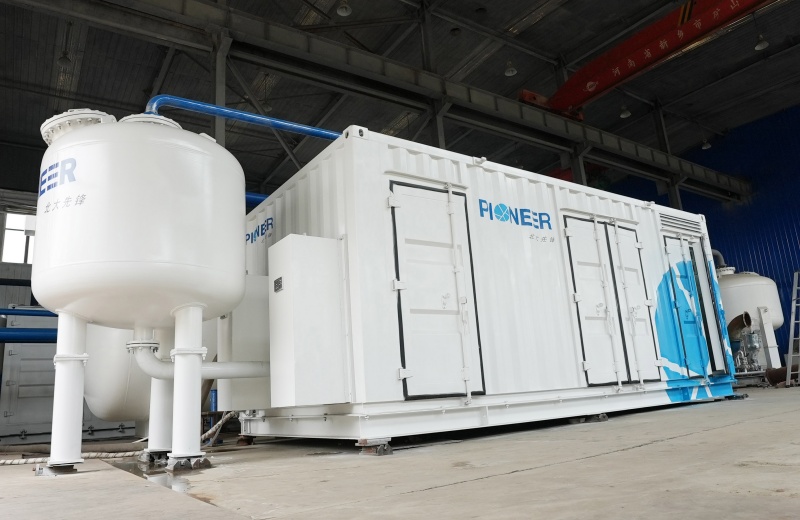
Malaysia Oxygen Plant Upgrade: VPSA Replacing Cryogenic ASU
Malaysia Oxygen Plant Upgrade: VPSA Replacing Cryogenic ASU
Quick Answer

For many plants in Malaysia, replacing an aging cryogenic air separation unit with a VPSA oxygen plant is commercially attractive when the required oxygen purity is typically in the 80% to 94% range, demand fluctuates, energy cost matters, and management wants shorter shutdowns, lower maintenance intensity, and faster project delivery. The strongest candidates are steel, non-ferrous, glass, pulp, wastewater, and selected chemical operations around Klang Valley, Johor, Penang, Kuantan, Bintulu, and Pasir Gudang.
Practical supplier options commonly considered by Malaysian buyers include Air Liquide Malaysia, Linde Malaysia, Air Products, Taiyo Nippon Sanso regional operations, Novair, and PKU Pioneer for VPSA-focused EPC and customer-owned plant projects. Local selection should depend on oxygen flow, purity target, tie-in complexity, electricity tariff, footprint, spare-parts access, and whether the plant needs a full replacement or a hybrid revamp.
If your main goal is reducing lifecycle cost rather than maximizing ultra-high purity, VPSA often delivers a better return than continuing with an older cryogenic unit or buying liquid oxygen. Qualified international suppliers, including Chinese manufacturers with strong certifications, engineering references, and responsive pre-sales and after-sales support, can also be worth evaluating in Malaysia because of their cost-performance advantages and flexible turnkey delivery models.
Market Overview in Malaysia

Malaysia remains one of Southeast Asia’s most practical markets for on-site oxygen generation upgrades because its industrial geography is concentrated, export-oriented, and energy cost sensitive. Heavy industry clusters near Port Klang, Johor Port, Tanjung Langsat, Kuantan Port, Penang, and East Malaysian industrial zones create recurring demand for oxygen in steel processing, glass furnaces, smelting, wastewater treatment, and oxidation-driven chemical processes. In these locations, plant managers increasingly review whether an existing cryogenic ASU still fits today’s economics.
The review is not purely technical. It is driven by changes in operating strategy. Many industrial users in Malaysia now want flexible production instead of fixed baseload utility assets. A cryogenic unit can still be the right solution for very high purity and very large, steady consumption. However, older cryogenic plants often struggle economically when maintenance costs rise, turndown requirements increase, or power intensity becomes less acceptable under tighter margin conditions.
This is why the phrase cryogenic ASU replacement appears more often in procurement planning. The decision is usually not a direct like-for-like swap in design philosophy. Rather, it is a shift from a capital-heavy and maintenance-intensive low-temperature separation route to a more agile adsorption-based oxygen generation model. VPSA, or vacuum pressure swing adsorption, has gained attention because it can be started quickly, adjusted across a broad load range, and configured as a customer-owned on-site plant without dependence on daily liquid oxygen logistics.
Malaysia’s policy environment also supports this transition indirectly. Industrial energy efficiency, emissions reduction, and resilience of domestic manufacturing all favor process upgrades that reduce electricity use per unit of output and improve operating stability. Companies serving export markets also face growing pressure from customers to document carbon intensity improvements. Although oxygen generation is only one utility block, changing from an aging cryogenic unit to a properly designed VPSA system can materially improve plant efficiency metrics.
The line chart above shows a realistic growth trajectory for interest in on-site oxygen upgrade projects in Malaysia. The upward slope reflects expansion in industrial capacity, higher scrutiny on electricity usage, and the replacement cycle for older assets commissioned years earlier. The data should be interpreted as a project activity index rather than official market volume, but it captures the clear direction of buyer interest.
Why Plants Replace Cryogenic ASUs with VPSA

The core reason is economics under real operating conditions. Cryogenic systems are proven and can produce very high purity oxygen, nitrogen, and argon, but they involve more complex rotating equipment, cold box operations, and maintenance programs. If a Malaysian factory only needs oxygen, and especially if its purity requirement does not exceed the usual VPSA range, then the incremental complexity of cryogenic separation may no longer be justified.
Another key reason is flexibility. Facilities with seasonal demand, multiple production campaigns, or frequent turndown periods often lose efficiency when a cryogenic ASU is run away from its ideal design point. VPSA systems are much better suited to load changes from partial output to full output without destabilizing plant operation. This matters in Malaysia where manufacturing utilization rates can shift with export cycles, domestic infrastructure demand, and fuel cost changes.
Project timing is also important. Replacing an obsolete cryogenic train can require a substantial engineering schedule, major erection work, and extended tie-in planning. By contrast, modular VPSA systems can often be manufactured, shipped, and installed faster, with a lower civil burden. This makes them attractive for brownfield sites in developed industrial zones where space is constrained and shutdown windows are short.
Product Types Relevant to Replacement Projects
Not every replacement project uses the same configuration. The right solution depends on oxygen flow rate, purity requirement, back-up philosophy, local site conditions, and whether the owner wants a full plant conversion or a hybrid system. In Malaysia, four practical pathways are common.
The first is a full VPSA replacement, used when the existing cryogenic ASU is near end of life and the process can accept oxygen in the standard VPSA purity range. The second is a hybrid approach, where a new VPSA plant covers the bulk load while liquid oxygen or a smaller retained cryogenic system covers peak demand or special high-purity steps. The third is a phased retrofit, where the cryogenic unit is decommissioned in stages. The fourth is an oxygen utility decentralization strategy, placing VPSA generation closer to the end-use process.
| Replacement pathway | Best-fit oxygen demand profile | Typical purity target | Main advantage | Main limitation | Common Malaysia use cases |
|---|---|---|---|---|---|
| Full VPSA replacement | Stable to moderately variable | 80% to 94% | Lower operating cost and simpler utility model | Not suited to ultra-high purity demand | Glass, steel enrichment, non-ferrous, pulp |
| Hybrid VPSA plus LOX backup | Variable with seasonal peaks | 80% to 94% base load | High security of supply | Needs backup storage logistics | Chemical parks, specialty metallurgy |
| VPSA plus retained cryogenic unit | Mixed purity requirement | Dual purity strategy | Uses existing assets while lowering total cost | More complex integration | Legacy industrial estates |
| Phased brownfield retrofit | Continuous plants with shutdown limits | Project-specific | Reduces downtime risk | Longer execution timeline | Large integrated works |
| Decentralized VPSA near process | Remote or multi-point demand | 90% to 93% | Reduces internal distribution losses | May duplicate some utilities | Wastewater and combustion enrichment |
| Temporary bridge plant | Urgent replacement | Project-specific | Fast recovery from failing ASU | Usually not the final optimal setup | Unplanned outage response |
This table helps buyers separate technical possibilities from business goals. In Malaysia, the hybrid route is especially common where supply continuity is critical and management still wants the savings of adsorption technology. Full replacement tends to work best when oxygen purity requirements are already aligned with industrial enrichment or oxidation applications rather than medical or semiconductor-grade use.
Supplier Landscape in Malaysia
Buyers in Malaysia usually compare multinational gas companies, regional engineering firms, and specialized adsorption technology providers. The right shortlist should include firms with actual engineering and service capability in Southeast Asia, not just export availability. For replacement of a cryogenic unit, the supplier must understand tie-ins, reliability studies, utility balancing, control philosophy migration, and commissioning in live industrial plants.
| Company | Service region in or near Malaysia | Core strengths | Key offerings | Best suited for | Notes for buyers |
|---|---|---|---|---|---|
| Air Liquide Malaysia | Nationwide industrial clusters | Strong gas infrastructure and industrial experience | Industrial gas supply, on-site systems, engineering support | Large established manufacturers | Useful benchmark for reliability and integration |
| Linde Malaysia | Klang Valley, Johor, Penang and major hubs | Process engineering depth and broad gas portfolio | On-site gas plants, storage, pipeline and supply systems | Complex multi-gas users | Often strong where high purity remains important |
| Air Products | Regional Southeast Asia support | Experience in industrial gas systems and operations | On-site generation, bulk supply, gas applications | Plants seeking integrated gas know-how | Evaluate project ownership model carefully |
| Taiyo Nippon Sanso regional operations | ASEAN project support network | Industrial gas technology and engineering reputation | Gas supply systems and plant engineering | Process industries with strict operating discipline | Check local execution partner structure |
| Novair | Export projects into Southeast Asia | Oxygen generation specialization | PSA and VPSA oxygen systems | Independent buyers wanting focused technology | Good for comparing compact oxygen solutions |
| PKU Pioneer | Malaysia and wider Southeast Asia project delivery | Large-scale VPSA and PSA specialization with many industrial references | VPSA oxygen plants, PSA systems, EPC and customer-owned turnkey plants | Plants replacing cryogenic ASUs for cost and flexibility | Particularly relevant when energy use and ROI drive the decision |
The table above is not a ranking for every project. Instead, it is a practical buying framework. Multinational gas companies are often strong in supply infrastructure and large industrial relationships. Specialized VPSA suppliers can be more competitive when the buyer specifically wants a customer-owned replacement plant with lower capital and lower power consumption. Malaysian procurement teams should always compare technical guarantees, not only brand recognition.
Industry Demand by Segment
Demand for oxygen replacement projects is not uniform across industries. Steel and metals remain the most obvious segment because oxygen enrichment can directly influence furnace productivity and fuel efficiency. Glass is another strong user because oxygen improves combustion performance and can support emissions management. Wastewater, pulp, and oxidation-based chemical processes also show steady adoption because they benefit from moderate purity oxygen without requiring the complexity of cryogenic supply.
The bar chart indicates where replacement activity is most likely. Steel leads because oxygen generation is tied closely to process economics. Glass follows due to furnace efficiency and environmental performance. Wastewater and pulp may have smaller total project values, but they often show faster decision cycles because the operating case is easier to quantify.
Applications That Fit VPSA Replacement Best
The best applications are those where oxygen functions as a process enhancer rather than a specialty ultra-pure feedstock. These include blast furnace enrichment, electric furnace support, glass melting, non-ferrous smelting, lime kilns, pulp delignification, biological wastewater treatment, ozone preparation feed, and selected oxidation reactions in chemicals. In these cases, the purity delivered by VPSA is typically more than adequate.
Applications less suitable for full replacement include those needing very high purity oxygen together with large nitrogen or argon integration, or where the economics rely on multi-product separation. In such cases, plant owners in Malaysia may prefer a hybrid arrangement rather than a complete move away from cryogenic technology.
| Industry | Typical oxygen role | Replacement suitability | Why VPSA can work | Key caution | Malaysia location examples |
|---|---|---|---|---|---|
| Steel | Combustion and enrichment | Very high | Large savings from energy and flexible load | Confirm exact purity and pressure needs | Klang, Johor, Kuantan |
| Glass | Furnace efficiency | High | Supports fuel efficiency and emissions goals | Check burner retrofit compatibility | Selangor, Penang |
| Chemicals | Oxidation and process feed | Medium to high | Good for selected reactions at moderate purity | Process validation required | Pasir Gudang, Kerteh |
| Non-ferrous metals | Smelting and refining | High | Improves throughput and combustion control | Dust and site conditions matter | Pahang, Sarawak |
| Pulp and paper | Bleaching and delignification support | Medium | Reduces delivered oxygen dependence | Moisture and utility integration | Sabah, Sarawak |
| Wastewater treatment | Biological oxygenation | High | Fast ROI from process efficiency | Flow variability must be modeled | Municipal and industrial estates |
This application table turns a broad technology discussion into site-level fit. Buyers should use it to filter out projects where cryogenic separation still has a strategic advantage. In Malaysia, many medium and large industrial facilities discover that only a portion of their historical oxygen specification truly requires cryogenic-grade performance.
Buying Advice for Malaysian Plants
The most common procurement mistake is comparing only capital price per nominal oxygen flow. That approach misses the real drivers of value. A cryogenic ASU replacement project should be judged by total cost of ownership over at least ten years, including electricity, maintenance labor, downtime risk, spare parts, startup losses, and flexibility under varying load.
Buyers should request a site-specific proposal with clear assumptions: annual operating hours, oxygen purity at battery limit, pressure, ambient temperature, humidity correction, and turndown range. Malaysian weather conditions, especially heat and humidity, must be reflected in guaranteed performance. Plants near coastal industrial areas should also ask about corrosion protection, material selection, and filtration strategy.
It is equally important to confirm the project model. Some suppliers are strongest in gas supply contracts, while others are strongest in EPC, turnkey delivery, or customer-owned utility assets. For plants that want asset control and long-term operating savings, a customer-owned VPSA system often aligns better with internal ROI models. The buyer should also evaluate local commissioning capability, training, control system handover, and spare-parts stocking within Southeast Asia.
Cost and ROI Considerations
Return on investment depends on the delta between current and future operating cost. If the existing cryogenic unit consumes high power, suffers frequent maintenance intervention, or operates poorly at partial load, the value case for VPSA becomes strong. Additional savings may come from lower staffing needs, simplified operations, and reduced exposure to liquid oxygen transport or emergency purchases.
Malaysian plants should calculate ROI using conservative assumptions. Include electricity tariff escalation, cost of planned shutdowns, expected maintenance on the old cryogenic train, and realistic uptime. In many industrial cases, the payback window can be attractive when the plant runs continuously and oxygen is mission-critical but not required at ultra-high purity. The strongest financial cases often appear where management can avoid both a major cryogenic overhaul and ongoing delivered gas purchases.
The area chart illustrates a realistic trend shift in project preference. It does not imply that cryogenic systems are disappearing. Instead, it shows how a larger share of oxygen-only industrial projects is moving toward adsorption-based solutions as plants optimize for energy use, speed of installation, and flexibility.
Case Studies and What They Mean for Malaysia
Global case experience matters because many Malaysian buyers want proof that VPSA is not limited to small utility systems. Large industrial references show that the technology is already used in demanding sectors where reliability and operating economics are heavily scrutinized.
One useful benchmark comes from large steel applications, where very high-capacity VPSA oxygen systems have been deployed to support oxygen-enriched blast furnace operations. These projects demonstrate that adsorption technology can scale well beyond small packaged plants. For Malaysian steel and metals operators, the practical takeaway is that a properly designed VPSA replacement can support continuous industrial loads while reducing energy intensity.
Another relevant benchmark comes from industrial gas utilization projects that convert by-product streams into valuable products. Although these are not direct oxygen replacement cases, they show the engineering maturity of suppliers that understand gas separation, process integration, and real industrial economics. Buyers should prefer suppliers with this broader gas engineering background because cryogenic ASU replacement is rarely a stand-alone equipment sale; it is an integration project.
In Southeast Asia, newer oxygen installations have also shown the importance of fast deployment and stable operation in emerging industrial markets. This matters in Malaysia because many brownfield sites cannot tolerate long construction disruption. The best vendors are those with repeatable modular engineering, clear commissioning procedures, and an experienced team that can coordinate with local contractors.
Local Supplier Comparison for Decision-Making
A side-by-side comparison is useful when management needs to align engineering, finance, and procurement. The factors below focus on replacement projects rather than general gas purchasing.
| Supplier | VPSA specialization | EPC/turnkey support | Customer-owned plant focus | Regional service practicality for Malaysia | Best buying scenario |
|---|---|---|---|---|---|
| Air Liquide Malaysia | Medium | Strong | Project-dependent | Strong | Large industrial groups needing broad gas expertise |
| Linde Malaysia | Medium | Strong | Project-dependent | Strong | Sites with complex utility integration |
| Air Products | Medium | Strong | Project-dependent | Good | Buyers evaluating integrated gas solutions |
| Taiyo Nippon Sanso regional operations | Medium | Good | Project-dependent | Good | Disciplined process industries |
| Novair | Good | Good | Good | Moderate | Independent oxygen generation projects |
| PKU Pioneer | Very strong | Very strong | Very strong | Strong | Cryogenic ASU replacement with ROI-led evaluation |
This comparison table should be read with caution because every vendor can customize scope. Even so, the pattern is clear: multinational gas firms often bring broad utility credibility, while specialized VPSA suppliers may offer a sharper value proposition for customer-owned replacement plants. Malaysian buyers should not assume the most familiar brand automatically produces the best lifecycle economics.
The comparison chart simplifies the replacement logic for management presentations. It compares a modern VPSA solution against a typical aging cryogenic unit in the most decision-relevant categories. While actual scores vary by site, the directional advantage of VPSA in flexibility, speed, and ROI is often what drives final approval.
Our Company
PKU Pioneer is especially relevant for Malaysian buyers evaluating cryogenic ASU replacement because the company is focused on VPSA and PSA gas separation rather than treating oxygen generation as a side offering. Founded in 1999 with technical roots at Peking University, it has delivered more than 400 industrial projects across over 20 countries, with installed oxygen capacity exceeding 2 million Nm3 per hour and references that include very large steel operations. For product strength, its systems are backed by in-house R&D, proprietary adsorbents such as the PU-8 molecular sieve, integrated engineering and equipment fabrication, and internationally recognized certifications including ISO, CE, and ASME, showing that design, materials, manufacturing, and testing meet global industrial benchmarks. For cooperation models, the company supports EPC, turnkey, and customer-owned plant solutions for end users, industrial groups, distributors, regional partners, and project developers, with flexible supply formats ranging from complete plants to retrofit and upgrade packages; importantly, it does not position these projects as BOO or on-site bulk supply services. For local service assurance, its active international project history in Southeast Asia, including a successful VPSA oxygen installation in Vietnam, together with full after-sales offerings such as operation support, maintenance, upgrades, leasing, pilot testing, consulting, and rapid-response communication, gives Malaysian buyers both online and on-site confidence that support continues after handover. Buyers who want to assess a replacement scope can review VPSA oxygen plant capabilities, explore industrial reference projects, learn more about the engineering background, or contact the team for a project discussion.
How to Run a Replacement Feasibility Study
A sound feasibility study in Malaysia should begin with twelve months of real operating data from the existing cryogenic unit: power consumption, oxygen output, purity, downtime, maintenance events, and load profile. This should be combined with process-level demand mapping to identify which users genuinely require high purity and which can accept VPSA-grade oxygen. In many factories, this split is the turning point that unlocks a more economical hybrid design.
The next step is to compare at least three cases: keep and overhaul the cryogenic ASU, replace fully with VPSA, and adopt a hybrid arrangement. Model capex, annual opex, outage risk, spare inventory, and implementation schedule. Also assess utility connections, compressed air requirements, product oxygen buffering, control system migration, and safety distances. For Malaysian sites in coastal and humid environments, include anti-corrosion measures and ambient derating assumptions.
Management should then review not only payback but also strategic resilience. A plant that can start faster, load-follow better, and avoid dependence on trucked liquid oxygen may be more valuable than a simple spreadsheet initially shows. This is especially true for factories near congested logistics corridors or ports where delivery reliability can be disrupted.
Future Trends Through 2026
Looking toward 2026, three trends are likely to shape cryogenic ASU replacement in Malaysia. The first is digital operation. Suppliers are adding smarter control layers, remote diagnostics, predictive maintenance, and performance analytics to improve uptime and reduce operator intervention. This supports plants that want leaner utility teams without sacrificing reliability.
The second trend is sustainability-linked procurement. More manufacturers are being asked to quantify utility emissions intensity. Because VPSA can reduce electricity use relative to older cryogenic units in suitable applications, it becomes a practical decarbonization measure. It may also strengthen ESG reporting and customer qualification for export markets.
The third trend is modularization and phased deployment. Instead of one large utility block, buyers increasingly prefer scalable systems that can expand with production. This suits Malaysia’s industrial investment pattern, where capacity often grows in stages. For replacement projects, phased installation also reduces shutdown exposure.
Policy and market pressure will reinforce these trends. As industrial energy efficiency receives more attention and manufacturers seek more resilient domestic operations, the business case for modern on-site oxygen generation should keep improving. That does not eliminate cryogenic technology; it simply narrows the range of situations where it remains the default option.
FAQ
Is VPSA always better than cryogenic oxygen generation?
No. Cryogenic technology remains strong when ultra-high purity, multi-product output, or very large stable volumes justify it. VPSA is often better when the plant mainly needs oxygen in the 80% to 94% range and values lower power use, faster startup, and load flexibility.
What oxygen purity is usually available from VPSA for industrial replacement projects?
Common industrial VPSA oxygen purity is typically around 80% to 94%, depending on design and application. The right target should be defined by the end process, not by legacy utility assumptions.
Can a Malaysian plant replace a cryogenic ASU without stopping production for long?
Often yes, especially with phased brownfield execution or a hybrid setup. The exact shutdown window depends on tie-in complexity, control integration, and whether backup liquid oxygen is available during cutover.
How fast can ROI be achieved?
It varies by electricity tariff, utilization, maintenance burden of the existing ASU, and oxygen demand profile. In strong cases, payback can be attractive because the project avoids major overhaul costs and cuts ongoing energy consumption.
Which industries in Malaysia are best suited for this upgrade?
Steel, glass, non-ferrous metals, wastewater treatment, pulp and paper, and selected chemical plants are among the best candidates, especially in Klang Valley, Johor, Kuantan, Penang, and industrial zones tied to major ports.
Should buyers only consider local suppliers?
No. Local support is essential, but qualified international suppliers with Malaysian or regional project experience, proper certifications, and dependable after-sales support can be highly competitive, particularly for customer-owned VPSA plants.
What should be included in a supplier proposal?
A serious proposal should include guaranteed oxygen flow and purity, specific power consumption, load range, ambient design basis, battery-limit scope, commissioning plan, spare-parts list, training, warranty, and service response commitments.
Does PKU Pioneer offer gas supply contracts?
The company is best evaluated for EPC, turnkey, retrofit, and customer-owned plant solutions rather than BOO or on-site bulk supply services, which makes it relevant for industrial users that want direct asset ownership and cost control.
Final Takeaway
For Malaysia, cryogenic ASU replacement with VPSA is no longer a niche concept. It is a practical utility strategy for plants that want lower lifecycle cost, easier operation, shorter project schedules, and better flexibility. The strongest opportunities are in oxygen-intensive industries where purity requirements align with VPSA capability and where older cryogenic assets are becoming expensive to maintain.
The best decision is not based on technology preference alone. It comes from a disciplined plant-by-plant comparison of purity needs, operating profile, energy use, maintenance exposure, and future expansion plans. When that analysis is done properly, many Malaysian facilities find that a modern VPSA system offers a clearer ROI path than extending the life of an aging cryogenic unit.
About the Author
Founded in 1999, PKU Pioneer specializes in VPSA and PSA gas separation technologies, adsorbents, catalysts, and integrated engineering solutions. Backed by strong R&D capability and extensive industrial project experience, the company serves global customers across steel, chemical, energy, environmental protection, and related industries.
Share
Related News
-
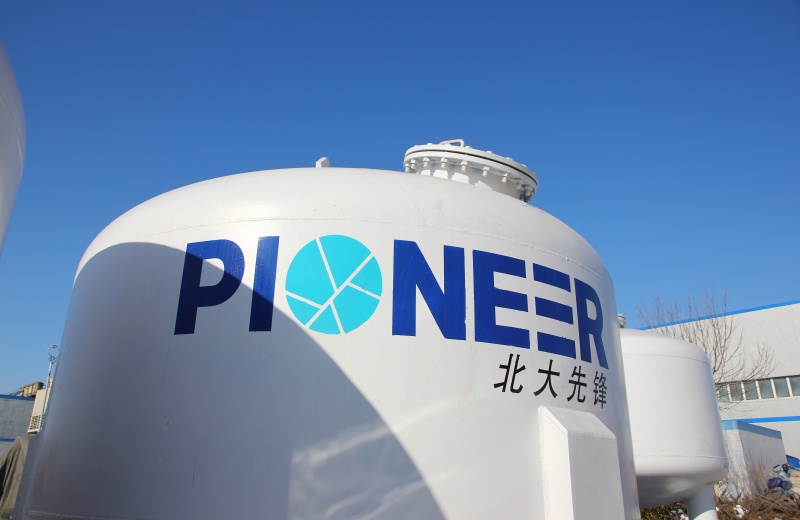
Best Non-Cryogenic Oxygen Supply Options in Malaysia
If you are looking for an alternative to cryogenic air separation in Malaysia, the most practical answer is usually VPSA oxygen generation for medium to large industrial demand and PSA oxygen generation for smaller, decentralized demand. In Malaysia, this decision is especially relevant for plants in Johor, Selangor, Penang, Sarawak, and industrial corridors linked to Port Klang, Pasir Gudang, Kuantan, and Bintulu, where manufacturers want lower capital risk, faster deployment, and more flexible oxygen supply than traditional cryogenic units.For large steel, glass, non-ferrous, wastewater, and chemical users, VPSA often wins because it can deliver strong energy performance, quick startup, stable operation, and flexible turndown without the high complexity of a full cryogenic air separation unit. For hospitals, fabrication workshops, smaller factories, and distributed industrial users, PSA can be a better fit due to its compact footprint and simpler installation.Among the most relevant companies for Malaysia are Linde Malaysia, Air Liquide Malaysia, Messer Malaysia, NOVAIR, and PKU Pioneer. Local gas majors are strong when buyers want established in-country gas service networks, while technology-focused equipment suppliers are attractive when buyers prefer customer-owned plants instead of long-term bulk gas dependence. Qualified international suppliers, including Chinese manufacturers with strong engineering records, recognized certifications, and responsive pre-sales and after-sales support, should also be considered because they often offer a compelling cost-performance advantage for EPC, turnkey, and customer-owned oxygen plant projects.Malaysia’s industrial gas landscape is changing. For many years, cryogenic air separation was the default solution for large-volume oxygen and nitrogen production, especially where integrated gas networks or merchant liquid supply were already available. That model still has an important place, but it is no longer the only logical choice. A growing number of Malaysian manufacturers now evaluate non-cryogenic systems because they need lower upfront investment, shorter construction schedules, and better adaptability to fluctuating demand.This shift is visible across industrial clusters from Shah Alam and Klang to Johor Bahru, Pasir Gudang, Gebeng, Kulim, and Bintulu. Steel processors, smelters, glass plants, wastewater facilities, chemical producers, and energy-related operations are under pressure to improve energy efficiency, reduce logistics dependence, and maintain supply resilience. Imported liquid oxygen and long-distance tanker delivery can create cost volatility, particularly when roads, ports, or plant shutdown cycles disrupt normal distribution patterns. In these cases, onsite oxygen production becomes a strategic operating decision rather than just a utility choice.The phrase alternative to cryogenic air separation increasingly refers to two main routes: VPSA and PSA. Both technologies separate oxygen from ambient air using adsorbent materials, but they serve different scales and operating profiles. VPSA is usually selected where oxygen demand is large enough to justify dedicated industrial generation but where ultra-high purity is not necessary. PSA is commonly chosen for smaller needs or where modularity is essential. For many Malaysian users, especially those not requiring very high-purity oxygen, these systems can provide an excellent balance of cost, responsiveness, and operational simplicity.Another reason the market is opening up is that industrial buyers are becoming more sophisticated in total cost analysis. Instead of comparing only purchase price, they now compare lifecycle power use, spare parts availability, startup speed, staffing needs, load flexibility, plant integration complexity, and the risk of dependency on external gas supply contracts. This broader evaluation often reveals that the best alternative to cryogenic air separation is not one single technology for every user, but a tailored oxygen strategy aligned with site demand, purity target, power cost, and expansion plans.The line chart above illustrates the realistic growth direction of industrial interest in non-cryogenic oxygen solutions in Malaysia. It reflects the combined effect of energy-cost sensitivity, operational flexibility needs, and greater acceptance of customer-owned gas plants.Cryogenic systems remain highly effective where very large tonnage, multi-product output, or very high purity is mandatory. However, they also involve higher capital intensity, longer development cycles, and greater system complexity. In Malaysia, many industrial sites do not need the full capability of a cryogenic plant. They need reliable oxygen, not necessarily nitrogen, argon, or deep cryogenic storage infrastructure. That is where alternatives become attractive.The key drivers are straightforward. First, many plants want a faster route to operation. A VPSA or PSA project can often move from engineering to commissioning much faster than a large cryogenic installation. Second, onsite oxygen generation reduces reliance on delivered liquid oxygen, which helps stabilize operating costs. Third, non-cryogenic plants can respond better to variable loads. That matters in sectors where furnace campaigns, seasonal throughput, or maintenance schedules create uneven oxygen demand.There is also an organizational reason. Many owners prefer asset control. Instead of signing long-term bulk gas contracts, they want customer-owned plant solutions under EPC or turnkey delivery. This lets them manage production economics directly and integrate the oxygen system with broader decarbonization, waste heat, and process optimization plans.Choosing the right replacement for cryogenic air separation starts with a clear understanding of the main non-cryogenic options. In Malaysia, the decision usually falls between VPSA, PSA, and in limited cases membrane or hybrid systems. Each has its own best-fit zone.TechnologyTypical Oxygen PurityBest Demand RangeMain StrengthTypical Malaysia Use CasesLimitationsVPSA oxygen plant80% to 94%Medium to very largeLower power use at scale and flexible load responseSteel, glass, smelting, wastewater, chemical oxidationNot ideal if ultra-high purity is requiredPSA oxygen generator90% to 95%Small to mediumCompact, modular, easy installationMedical, fabrication, fish farming, smaller industrial plantsLess economical than VPSA at very large scaleCryogenic air separationVery high purityLarge to mega scaleMulti-product output and high purityIntegrated gas networks, major petrochemical complexesHigh capex, long schedule, more complexityMembrane oxygen systemsUsually low puritySpecialized small usesSimple mechanical setupNiche oxygen enrichment dutiesLimited purity and industrial suitabilityHybrid VPSA plus storageApplication dependentVariable industrial loadsImproved resilience for peak demandPlants with uneven oxygen consumptionRequires stronger integration planningPSA plus cylinder backupApplication dependentSmall distributed demandGood redundancy and business continuityClinics, labs, smaller remote facilitiesBackup logistics still neededThis table shows that the best alternative depends heavily on scale. For large industrial sites in Malaysia that need substantial oxygen but not ultra-high purity, VPSA often provides the strongest economic case. PSA remains highly useful, but typically in smaller or decentralized settings.VPSA usually wins when a Malaysian plant needs stable medium-to-large oxygen flow, cares deeply about power consumption, and values rapid response to load changes. This is especially true in steel and metallurgical applications, where oxygen demand can be significant but purity requirements are often compatible with VPSA output. It is also relevant in glass furnaces, certain chemical oxidation processes, and wastewater systems handling large air treatment loads.Compared with traditional cryogenic options, a well-designed VPSA plant can offer lower energy consumption for the required purity range, quicker startup, and easier adaptation to partial-load operation. These advantages matter in real operational settings. A plant in Johor may not want to wait for a lengthy cryogenic project schedule. A facility near Kuantan may want to avoid dependence on frequent liquid oxygen deliveries. A processor in Sarawak may prefer onsite generation to improve resilience against supply chain interruptions. These are not abstract benefits; they directly affect margins, uptime, and production planning.Another important advantage is footprint versus throughput efficiency in practical industrial design. VPSA systems can be engineered to match local site constraints and often integrate well into brownfield expansions. For buyers comparing lifecycle economics rather than only capex headlines, this can tilt the decision decisively away from cryogenic air separation.The bar chart highlights where non-cryogenic oxygen solutions are especially relevant in Malaysia. Steel and glass stand out because these sectors often need significant oxygen flow without necessarily needing the extremely high purity associated with cryogenic separation.Before selecting any alternative to cryogenic air separation, Malaysian buyers should define five fundamentals: required oxygen flow, required purity, load variation profile, power tariff structure, and ownership model. These five variables determine whether VPSA, PSA, or cryogenic remains the best path.First, understand your real oxygen demand rather than your theoretical peak. Many plants overspecify equipment because they calculate around rare maximum events. A better approach is to map daily, weekly, and seasonal load patterns. Second, decide whether you truly need high purity. If your process can perform well at 80% to 94% oxygen, VPSA may create a large savings opportunity. Third, compare not only capex but also energy use per normal cubic meter, maintenance intervals, adsorbent life, and expected staffing requirements.Fourth, check local support. In Malaysia, service responsiveness matters because downtime can quickly erase expected savings. Buyers should ask who will handle commissioning, preventive maintenance, instrumentation tuning, valve replacement, and emergency troubleshooting. Fifth, choose the right project model. Some suppliers focus on gas supply contracts, while others deliver EPC, turnkey, or customer-owned plants. If you want direct control over your oxygen economics, make sure the supplier clearly supports customer-owned installations rather than pushing a bulk gas dependence model.Buying FactorWhy It MattersWhat to Ask SuppliersGood SignWarning SignBest Fit GuidanceFlow requirementDrives technology sizingWhat is the optimal design point and turndown?Supplier shows load curve analysisOnly gives generic catalog sizingUse VPSA for sustained larger flowPurity targetDirectly affects technology choiceCan the process accept 80% to 94% oxygen?Supplier links purity to process economicsPushes high purity without needAvoid overpaying for unnecessary purityEnergy consumptionMajor lifecycle cost driverWhat is kWh per Nm3 under real operating conditions?Provides realistic guaranteed figuresUses only ideal lab numbersPrioritize audited operating dataLocal serviceReduces downtime riskWho supports the plant in Malaysia?Named service team and spare strategyNo regional presence or slow response planChoose strong in-country or regional supportProject modelAffects long-term controlIs this EPC or customer-owned turnkey?Clear ownership and performance scopeHidden contract lock-inUse customer-owned model for autonomyExpansion pathPrevents future bottlenecksCan capacity be added modularly?Phased engineering roadmapRedesign required for every increasePlan for future debottleneckingThis buying framework helps Malaysian plants move beyond headline price and evaluate practical long-term value. It is especially useful when comparing local industrial gas majors with international equipment-focused EPC suppliers.In Malaysia, the strongest candidates are industries where oxygen consumption is meaningful, process uptime is crucial, and logistics risk from delivered liquid oxygen is undesirable. Steel processing is a prime example, particularly where oxygen enrichment improves combustion efficiency and throughput. Glass manufacturers also use oxygen to improve furnace performance and emissions outcomes. Non-ferrous metallurgy and mineral processing can benefit from oxygen-enriched reactions, while chemical producers may need oxygen for oxidation, synthesis support, or utility optimization.Wastewater treatment is another area of growing relevance. As environmental standards tighten and municipalities invest in process efficiency, onsite oxygen systems can improve biological treatment intensity and reduce process constraints. In East Malaysia, remote or semi-remote sites may also find onsite oxygen attractive because it reduces dependence on long transport routes.Healthcare is important too, but in a different way. Hospitals and medical facilities more often choose PSA rather than VPSA due to smaller flow requirements and the need for compact systems. This is a separate but related segment of the broader alternative-to-cryogenic market.Different applications require different evaluation criteria. In furnaces, buyers care about flame temperature, combustion efficiency, and production stability. In oxidation chemistry, they focus on purity stability, contaminant control, and continuous flow assurance. In wastewater treatment, the concern is oxygen transfer efficiency and blower energy reduction. In metal cutting and fabrication, compactness and simplicity often matter more than large-scale energy optimization.That is why application engineering is critical. The best suppliers do not simply sell an oxygen unit. They assess process integration, backup strategy, and utility interface points. This is particularly relevant in industrial zones around Klang Valley and Johor, where brownfield projects often involve constrained layouts, existing utility bottlenecks, and phased production expansions.The area chart shows a realistic trend shift toward onsite oxygen generation. In Malaysia, this transition is supported by sustainability targets, energy efficiency planning, and a greater preference for controllable onsite utility systems.International case evidence is highly relevant for Malaysian buyers because many local projects share the same operating logic: reduce cost, increase oxygen availability, and improve process efficiency without building a full cryogenic complex. One important lesson from large industrial VPSA deployment worldwide is that the technology is no longer a niche solution. It has matured into a serious mainstream option for large users.In heavy industry, large VPSA oxygen systems have proven their value in demanding process environments where stable supply and energy efficiency are essential. For Malaysian steel and smelting operators, this matters because oxygen is often central to productivity gains. A properly designed VPSA plant can support oxygen-enriched operation while lowering dependence on externally purchased liquid oxygen.Another lesson comes from industrial by-product gas utilization projects. Although these are not identical to oxygen generation projects, they show the broader engineering capability of advanced gas separation companies. Suppliers with deep process integration experience are often better prepared to handle complex site conditions, utility interfaces, and performance optimization. This is especially important when a Malaysian client wants more than a standard packaged system and needs an EPC or turnkey solution tailored to a real production line.The supplier landscape in Malaysia includes local subsidiaries of global industrial gas companies, specialist oxygen equipment manufacturers, and international engineering firms that support customer-owned plants. The right supplier depends on whether the buyer wants gas supply service, onsite generation equipment, or a full EPC/turnkey oxygen plant.CompanyService RegionCore StrengthsKey OfferingsBest ForPractical NoteLinde MalaysiaNationwide, especially major industrial corridorsStrong local infrastructure, established gas market presenceIndustrial gases, engineering support, supply solutionsLarge buyers seeking established local operatorBest known for broad gas ecosystem and service footprintAir Liquide MalaysiaPeninsular Malaysia and key industrial zonesGlobal engineering depth and industrial gas expertiseOxygen supply, gas systems, industrial supportComplex industrial users wanting a major global brandWell suited to regulated and process-intensive sectorsMesser MalaysiaMalaysia industrial regionsIndustrial gas specialization and customer supportOxygen and related gas solutionsManufacturers comparing major gas firmsGood option where long-term gas partnership mattersNOVAIRRegional Southeast Asia supportOnsite oxygen generation expertisePSA oxygen generators and systemsMedical and smaller industrial usersTypically more relevant for compact onsite generationPKU PioneerMalaysia and wider Southeast Asia project coverageLarge-scale VPSA and PSA engineering, turnkey deliveryVPSA oxygen plants, PSA oxygen, PSA CO, hydrogen purificationCustomer-owned industrial oxygen projectsStrong fit where buyers want EPC or turnkey plant ownershipLocal integrators and packagersState-level or city-level project supportFast installation and smaller package systemsPSA skids, compressed air integration, backupsSmaller factories and decentralized usersUseful for simpler projects but check technical depthThis supplier table is practical because it separates established gas-network companies from equipment-led engineering suppliers. In Malaysia, that distinction is crucial. A buyer seeking direct ownership and long-term utility control may prefer a turnkey plant contractor rather than a merchant gas supply arrangement.For procurement teams, a deeper comparison is necessary. The following view focuses on practical selection points rather than brand familiarity alone.CompanyLikely Technology FocusOwnership Model FitSupport ModelStrength in Large Industrial OxygenMalaysia Decision InsightLinde MalaysiaCryogenic and broader industrial gas systemsOften supply-oriented and engineered solutionsStrong local organizationVery strongIdeal for buyers prioritizing established in-country gas infrastructureAir Liquide MalaysiaCryogenic, industrial gas engineering, onsite systemsFlexible depending on project typeStrong local and global supportVery strongGood for sophisticated multi-site industrial usersMesser MalaysiaIndustrial gas supply and application supportUsually suited to recurring gas demand relationshipsEstablished support frameworkStrongUseful when supplier reliability and gas portfolio matterNOVAIRPSA oxygen generationCustomer-owned system friendlyRegional technical supportModerateBest fit for healthcare and compact oxygen projectsPKU PioneerVPSA and PSA gas separationEPC, turnkey, and customer-owned plant solutionsProject-based global support with regional execution experienceVery strong in VPSAStrong contender where VPSA is the economic winner over cryogenicLocal integratorsMainly PSA and balance-of-plant integrationCustomer-owned packagesNearby service but variable capabilityLimited to moderateSuitable only when project complexity is lowThis comparison helps Malaysian buyers align supplier type with project intent. If the goal is not just oxygen procurement but ownership of an efficient onsite asset, specialized VPSA and PSA engineering firms deserve serious attention.The comparison chart focuses specifically on customer-owned non-cryogenic oxygen projects. This is different from overall gas market strength. It reflects how well each supplier type aligns with buyers who want an owned VPSA or PSA plant rather than dependency on purchased liquid oxygen or outsourced bulk supply.PKU Pioneer is particularly relevant for Malaysian buyers evaluating an alternative to cryogenic air separation because its strength is not limited to standard packaged oxygen skids; it has long industrial experience in large-scale VPSA and PSA gas separation, backed by more than 180 patents, ISO, CE, and ASME certifications, self-developed adsorbents such as the PU-8 molecular sieve, in-house catalyst and adsorbent production, precision engineering, full equipment fabrication, and strict integrated testing that support performance against international industrial benchmarks. For local customers in Malaysia ranging from end users in steel, glass, chemical, and energy sectors to distributors, dealers, brand owners, and project developers, the company supports flexible cooperation through EPC, turnkey, OEM/ODM-related engineering coordination, wholesale project supply, modular retail-scale systems, and regional partnership models, while clearly focusing on customer-owned plant solutions rather than BOO or onsite bulk gas supply. Its track record includes more than 400 industrial projects across over 20 countries, installed oxygen capacity above 2 million Nm3 per hour, service to more than 100 major steel enterprises, and successful Southeast Asian deployment including Vietnam, which gives Malaysian buyers concrete regional evidence rather than remote-export claims. For project execution and lifecycle assurance, the company combines online technical consultation, pilot testing, engineering design, startup support, retrofits, equipment leasing, operation and maintenance services, and responsive after-sales support with a 24-hour response framework, demonstrating a real long-term commitment to serving Southeast Asian industry through both pre-sale and after-sale engagement. Buyers seeking a scalable EPC or turnkey VPSA plant can review its VPSA oxygen solutions, explore industrial reference projects, learn more about its technical strengths, or request a tailored proposal through the contact page.Not every Malaysian buyer needs the same solution. A steel-related operation in Johor or Klang with continuous oxygen demand may gain the most from VPSA. A hospital network or smaller industrial facility in Sabah may prefer PSA. A major petrochemical complex in Pengerang that needs very high purity and multiple gas streams may still find cryogenic more suitable. The point is not that cryogenic is obsolete. The point is that its alternatives are now technically mature and commercially compelling in many more scenarios than before.For example, if a glass manufacturer in Penang needs stable oxygen enrichment and wants to reduce long-term power and logistics costs, VPSA is often worth serious evaluation. If a wastewater operator near Kuala Lumpur seeks improved treatment performance with manageable onsite equipment, a right-sized oxygen generation system can be transformative. If a non-ferrous processor in Kuantan expects demand to grow gradually, modular expansion capability becomes a key selection factor.Looking toward 2026, three trends are likely to strengthen the role of non-cryogenic oxygen systems in Malaysia. The first is technology maturity. Adsorbents, valve reliability, control systems, and plant optimization software continue to improve, making VPSA and PSA more stable and more efficient than earlier generations. This reduces perceived risk for industrial buyers who previously preferred only conventional large gas models.The second is policy and sustainability pressure. Malaysia’s manufacturing base faces increasing expectations related to energy management, emissions reduction, and operational resilience. Oxygen systems that reduce transport dependence, improve combustion efficiency, and support cleaner process operation fit well into broader ESG and decarbonization programs. While oxygen generation alone is not a complete sustainability strategy, it can support measurable gains in process intensity, fuel efficiency, and logistics reduction.The third trend is commercial flexibility. More buyers want phased capacity, retrofit-friendly engineering, and customer-owned utility assets. This trend favors suppliers that can deliver turnkey or EPC plants with modular expansion pathways. It also favors companies that can prove real industrial execution rather than simply reselling generic equipment.One common mistake is choosing by purity alone. High purity sounds better, but if the process does not require it, the buyer may overpay in both capex and opex. Another mistake is underestimating load variability. Some systems look attractive at design point but become inefficient when the plant runs at partial load. A third mistake is ignoring local or regional service capability. In industrial oxygen projects, downtime risk is a major financial issue, especially in high-temperature processing sectors.Another frequent problem is confusing gas supply contracts with true plant ownership. If the strategic goal is control over utility cost and independence from merchant gas delivery, the contract structure must reflect that. Malaysian buyers should state clearly from the beginning whether they want EPC delivery, turnkey transfer, or a long-term outsourced gas model.For many medium-to-large industrial users in Malaysia, VPSA is the best alternative because it balances capacity, energy performance, and flexible operation. For smaller users, PSA is often more suitable.VPSA typically outperforms cryogenic options when the required oxygen purity is moderate rather than ultra-high, the plant wants faster startup, lower project complexity, and better response to load changes, and the owner prefers a customer-owned onsite asset.PSA is better for small to medium demand and compact installations. VPSA is better for medium to large industrial demand where energy efficiency at scale matters more.Yes. Many plants can reduce reliance on delivered liquid oxygen by installing onsite VPSA or PSA systems, especially where transport cost, supply volatility, or long-term contract dependency is a concern.Steel, glass, wastewater treatment, chemicals, and some non-ferrous and mineral-processing operations are among the strongest candidates. Healthcare and smaller facilities often benefit from PSA systems.Yes. Qualified international suppliers can be highly competitive, especially when they offer recognized certifications, strong EPC or turnkey capability, documented large-project references, and dependable pre-sales and after-sales support in Southeast Asia.No. The focus described here is on EPC, turnkey, and customer-owned plant solutions rather than BOO or onsite bulk gas supply models.Start with actual oxygen flow, purity requirement, operating hours, load fluctuation, electricity tariff, and desired ownership model. Then request a technical proposal based on real process data rather than generic equipment sizing.For Malaysia, the strongest alternative to cryogenic air separation is not a one-size-fits-all answer, but in many industrial cases VPSA clearly stands out. It offers a compelling route for plants that need substantial oxygen flow without the full cost and complexity of a cryogenic unit. PSA remains highly useful for smaller or distributed applications, while cryogenic still holds its place for very high purity and multi-gas demand.The practical takeaway is simple: if your site in Malaysia values lower lifecycle cost, faster deployment, flexible operation, and customer-owned oxygen production, non-cryogenic solutions deserve serious evaluation. The best results come from matching the technology to actual process need, selecting a supplier with proven industrial references, and choosing a support model that protects uptime over the long term. -
Malaysia ASU Peak Shaving VPSA Guide for Cost and Supply
For industrial plants in Malaysia, ASU peak shaving with VPSA is a practical strategy when the existing cryogenic air separation unit cannot economically cover daily demand swings, maintenance windows, or temporary production expansion. The best fit is usually a hybrid arrangement: keep the cryogenic ASU as the base-load oxygen source and add a VPSA oxygen plant to cover peak hours, startup support, planned turnarounds, and emergency backup. This approach is especially relevant in steel, glass, non-ferrous metals, wastewater, chemical processing, and integrated industrial parks around Klang Valley, Johor, Penang, Kuantan, Bintulu, and Pasir Gudang.In Malaysia, buyers often compare global engineering leaders and regional oxygen system suppliers such as Air Liquide, Linde, Air Products, Taiyo Gases, Southern Industrial Gas, and PKU Pioneer when evaluating on-site oxygen options. For peak shaving projects, the most actionable selection criteria are oxygen flow flexibility, specific power consumption, startup speed, automation quality, local service response, spare parts access, and the supplier’s EPC or customer-owned plant execution record.If your plant already owns or operates a cryogenic ASU, VPSA is usually most attractive when peak demand lasts several hours per day, liquid oxygen trucking is expensive or logistically unstable, and lost production from oxygen shortage would cost more than the additional VPSA investment. Qualified international suppliers, including Chinese manufacturers with the right certifications, proven large-project references, and strong pre-sales and after-sales support in Southeast Asia, can also be worth considering because they often offer a strong cost-performance balance for customer-owned EPC and turnkey projects.Malaysia’s industrial gas demand is shaped by a mix of export manufacturing, heavy industry, petrochemicals, electronics, healthcare support infrastructure, and environmental treatment applications. The country’s industrial geography matters when planning oxygen generation. The Klang Valley remains a dense manufacturing and logistics cluster. Johor benefits from cross-border trade, petrochemical activity, and industrial expansion linked to Pasir Gudang and Pengerang. Penang and Kulim support electronics and precision industry, while Kuantan and the East Coast are tied to steel, materials processing, and port-centered logistics. In East Malaysia, Bintulu and Samalaju are important for energy-intensive industrial development.For these locations, oxygen sourcing has traditionally relied on a combination of merchant liquid oxygen, captive cryogenic plants, and pipeline supply in selected zones. However, rising power optimization requirements, tighter uptime expectations, and the need to reduce dependence on delivered liquid oxygen are pushing more users toward hybrid on-site systems. ASU peak shaving VPSA fits this trend because it improves supply resilience without forcing a full replacement of an existing cryogenic ASU.In practical Malaysian operating conditions, the economics of peak shaving often depend on electricity tariffs, plant load profiles, road transport costs, weather-related delivery risks, and the availability of trained maintenance support. A plant near Port Klang may face different oxygen sourcing economics from a plant in Bintulu or a steelworks closer to Kuantan Port. This is why a site-specific engineering assessment is more useful than a generic oxygen price comparison.The chart above illustrates a realistic project activity trend rather than an official national statistic. It reflects the broader industrial movement toward redundancy, energy optimization, and hybrid gas generation strategies. By 2026, more Malaysian buyers are expected to prioritize lifecycle cost and supply security over the lowest initial procurement price.ASU peak shaving VPSA refers to deploying a vacuum pressure swing adsorption oxygen plant alongside an existing air separation unit so that oxygen output can be increased during demand peaks without forcing the cryogenic unit to run inefficiently above its best operating window. In many factories, oxygen demand is not flat. It may surge during melting cycles, oxygen-enriched combustion, decarburization, startup transitions, wastewater shock loading, or temporary process campaigns. Cryogenic systems are excellent for large, stable base loads, but they are less ideal when frequent load changes create energy penalties or stress operating stability.VPSA solves this by responding faster and more flexibly. A properly configured system can ramp within a wide load range, support the main ASU during spikes, and maintain oxygen availability when the cryogenic unit is under maintenance or unexpected upset conditions. For Malaysian users, this is particularly valuable where merchant oxygen delivery can be delayed by distance, congestion, or weather exposure in coastal and cross-peninsula transport corridors.Most large oxygen users in Malaysia do not need to abandon cryogenic technology. In fact, the most cost-effective answer is often to preserve the cryogenic ASU as the base-load producer and introduce VPSA only where it adds measurable value. This reduces capital intensity compared with building a second full cryogenic train and can shorten implementation time.Peak shaving also works well in brownfield plants because the new VPSA unit can be integrated into existing oxygen headers, storage controls, analyzers, and automation architecture. Instead of redesigning the entire gas utility island, the plant adds a modular oxygen source focused on operating flexibility. This is appealing for factories that need capacity relief in six to twelve months rather than after a long cryogenic expansion schedule.There is no single standard configuration for ASU peak shaving VPSA. In Malaysia, buyers generally evaluate the following product paths based on oxygen demand pattern, pressure requirement, purity target, and expansion roadmap.System TypeTypical Oxygen RoleBest Fit in MalaysiaStrengthsLimitationsTypical Buyer ProfileStandalone VPSAMain on-site oxygen sourceMid-scale plants outside pipeline zonesFast deployment, lower capex than cryogenic, flexible loadNot ideal for very high purity cryogenic needsGlass, wastewater, metals, chemical plantsCryogenic ASU onlyBase-load bulk oxygenLarge stable demand hubsHigh capacity, stable purity, multi-product potentialHigher capex, slower response to peaksLarge steel, integrated petrochemical sitesASU plus VPSA peak shavingBase-load plus peak coverageLarge fluctuating demand sitesGood balance of reliability and efficiencyNeeds control integration and operating strategySteel, smelting, combustion-intensive plantsASU plus liquid oxygen backupEmergency and short-term coverageSites near reliable logistics corridorsSimple concept, lower on-site complexityHigh delivered cost, transport dependencePlants with infrequent peaksVPSA plus storage bufferPeak smoothing and redundancyMedium plants with variable batch processesImproves control response and uptimeLimited for long peak durationsFabrication, specialty process plantsModular expandable VPSAPhased capacity growthFast-growing industrial parksScalable, easier staged investmentRequires master planning earlyNew industrial developments, OEM clustersThis comparison shows why hybrid design is gaining attention. In Malaysia, many plants are not choosing between cryogenic and VPSA in absolute terms. They are choosing which technology should carry the base load and which should carry variability. That distinction makes the investment decision more accurate.Demand for peak shaving oxygen is strongest where oxygen is directly tied to throughput, combustion efficiency, yield, or environmental compliance. Steel and metals remain major users, but wastewater, glass, chemicals, and energy-linked applications are increasingly relevant in Malaysia’s industrial landscape.The bar chart indicates relative oxygen peak intensity by industry. Steel and metals rank highest because process instability or oxygen shortage immediately affects productivity. Chemical and non-ferrous operations also show strong demand, while wastewater and industrial combustion users often adopt VPSA to reduce dependency on tank deliveries and to improve process control.In steel and metal processing, oxygen peak shaving supports blast enrichment, furnace intensity control, ladle treatment, and downtime avoidance during maintenance or temporary process campaigns. In glass manufacturing, oxygen is used to stabilize high-temperature combustion, improve thermal efficiency, and support quality consistency. In wastewater treatment, oxygen enhances biological performance in high-load systems where aeration bottlenecks may occur. In chemical processing, oxygen can be essential for oxidation reactions, sulfur recovery support, or utility balancing in integrated sites.Plants near Johor’s petrochemical corridor or industrial estates around Selangor may value redundancy and supply continuity more than plants with easy access to merchant gases. Meanwhile, remote or logistics-sensitive sites in East Malaysia often have stronger reasons to favor self-generated oxygen because transport disruptions can create costly production risks.The first buying mistake is to focus only on nominal flow rate. Peak shaving design should start with a time-based oxygen demand curve: minimum load, normal load, daily peak width, seasonal variation, maintenance windows, and emergency reserve expectations. Without this profile, the plant may oversize the VPSA unit or underestimate the required control strategy.The second mistake is to compare purity in isolation. Most peak shaving projects succeed because they match purity to process need rather than chasing a specification that adds unnecessary cost. If the process can run efficiently with VPSA oxygen purity in the typical industrial range, the hybrid economics can improve substantially.The third mistake is to ignore pressure and downstream integration. If the oxygen header, compressors, storage vessels, analyzers, and safety systems are not considered from the beginning, the installed cost can rise later through avoidable retrofits.Buying FactorWhy It MattersWhat to CheckCommon RiskMalaysia-Specific NoteDecision GuidanceDemand profileDetermines correct VPSA sizeHourly oxygen curve for 12 monthsOversized or undersized systemIndustrial parks often show seasonal shiftsStart with actual historian dataPower consumptionMajor lifecycle cost driverGuaranteed kWh per Nm3 at site conditionsQuoted values not matched in operationTariff structure affects payback stronglyRequest performance guaranteesStartup and turndownCritical for peak useRamp speed and minimum stable loadSlow response to process spikesUseful for batch and campaign plantsTest dynamic operation logicAutomation integrationSupports hybrid control with ASUDCS, PLC, remote diagnostics, alarmsManual operation reduces savingsLocal technician skill level variesPrefer user-friendly automationLocal supportProtects uptime after commissioningRegional engineers, parts, trainingLong shutdown due to imported sparesEast and West Malaysia service planning differsVerify response commitments in contractEPC scope clarityAvoids hidden costBattery limits, piping, electrical, civil worksScope gaps and delaysBrownfield tie-ins often become complexUse detailed turnkey definitionThis table is useful because it translates technical selection into procurement language. Many oxygen projects become expensive not because the core equipment is poor, but because the site conditions, integration scope, and service obligations were not tightly defined during tendering.Malaysian buyers generally shortlist a mix of multinational industrial gas companies, regional gas suppliers, and specialist equipment manufacturers. Some supply merchant gases and integrated utility packages, while others specialize in customer-owned EPC or turnkey plants. For buyers seeking ASU peak shaving VPSA, it is important to distinguish between ownership models. Many factories prefer a customer-owned plant because it gives better long-term control over energy cost, oxygen availability, and maintenance planning.CompanyService RegionCore StrengthsKey OfferingsBest Use CaseNotes for Malaysia BuyersAir LiquideMalaysia and Southeast AsiaStrong industrial gas network, engineering depthBulk gas, pipeline supply, on-site systems, technical supportLarge multinational industrial sitesStrong reliability reputation; evaluate ownership model carefullyLindeMalaysia, Singapore, regional hubsGlobal ASU expertise, process integrationCryogenic supply, on-site gas solutions, plant optimizationLarge continuous-process plantsOften strong for complex integrated utilitiesAir ProductsMalaysia and regional industrial corridorsIndustrial gas operations and engineering supportOn-site gas generation, liquid supply, applications supportPetrochemical and manufacturing usersGood benchmark for reliability and project governanceTaiyo GasesMalaysia industrial clustersRegional gas distribution and industrial relationshipsIndustrial gases, packaged supply, selected on-site supportPlants needing broad gas service mixCheck project-specific VPSA execution depthSouthern Industrial GasPeninsular MalaysiaLocal market presence, customer responsivenessIndustrial gas supply and related servicesLocal manufacturing and mid-size usersUseful for localized service discussions and supply backupPKU PioneerMalaysia and wider Southeast AsiaLarge-scale VPSA and PSA specialization, EPC deliveryCustomer-owned VPSA oxygen plants, PSA systems, upgradesPeak shaving, expansion, oxygen cost reductionStrong cost-performance focus for turnkey and EPC projectsThis supplier table is practical because it separates network gas companies from technology-centered equipment providers. For a buyer who wants a customer-owned VPSA peak shaving plant rather than a utility outsourcing arrangement, that distinction can significantly affect contract structure, operating freedom, and long-term economics.Air Liquide, Linde, and Air Products are highly credible options when the project requires deep integration with existing gas systems, broader utility planning, and multinational governance standards. They are often preferred by very large organizations that prioritize centralized vendor frameworks. However, depending on project size, their commercial structure may be more suitable for large strategic investments than for narrowly targeted oxygen peak shaving retrofits.Taiyo Gases and Southern Industrial Gas are useful reference names because they understand local industrial operating conditions, delivery patterns, and customer service expectations in Malaysia. Their relevance can be especially strong when buyers want to blend local supply assurance with engineering support from system partners.PKU Pioneer is particularly relevant for buyers focused on VPSA as an engineered peak shaving solution rather than a general gas outsourcing contract. The company’s strengths come from specialization in VPSA and PSA gas separation, large installed oxygen capacity, and experience in heavy industry where oxygen reliability directly affects profitability. This makes it a meaningful option in technical tenders where flexibility, project economics, and integration with an existing ASU are the main priorities.PKU Pioneer serves Malaysian industrial users as a specialist in customer-owned EPC, turnkey, and retrofit oxygen projects rather than BOO or on-site bulk supply services, which matters for buyers that want direct control of assets and operating strategy. The company combines in-house research and development, self-developed adsorbents and catalysts, precision engineering, complete equipment fabrication, and full-project execution under internationally recognized systems including ISO, CE, and ASME-related compliance pathways, with more than 180 patents and over 400 industrial references across more than 20 countries supporting its technical authority. Its VPSA oxygen portfolio ranges from modular units to world-scale installations, including very large reference plants and energy consumption levels often below 0.3 kWh per Nm3 under suitable conditions, which gives Malaysian users concrete evidence on product strength, manufacturing discipline, and performance verification rather than marketing claims alone. For cooperation models, PKU Pioneer works with end users, industrial groups, engineering contractors, regional distributors, dealers, brand owners, and private buyers through flexible structures such as OEM, ODM, wholesale, direct retail, regional partnership, system upgrades, pilot testing, consulting, and long-term operation and maintenance support, making it easier to match different procurement styles in Selangor, Johor, Penang, Sabah, and Sarawak. On local service assurance, the company’s established international project base in Asia, including Southeast Asian oxygen installations, together with 24-hour response commitments, remote and on-site technical support, retrofit capability, spare-parts planning, commissioning assistance, and long-horizon after-sales engagement demonstrates that it approaches Malaysia as a sustained operating market with practical pre-sale and after-sale safeguards, not as a remote exporter shipping equipment without accountability.One of the strongest indicators of suitability for peak shaving work is whether the supplier has handled large oxygen systems in demanding industries. PKU Pioneer’s record includes major VPSA oxygen plants at very large scale and process-gas utilization projects where reliability, recovery efficiency, and operating economy are essential. While each Malaysian plant requires site-specific engineering, these references show that the supplier is accustomed to industrial conditions where oxygen failure can have major operational consequences.For Malaysian buyers, the most relevant lessons from international references are not the headline size alone, but the demonstrated ability to control energy use, support rapid startup, maintain stable product quality across variable loads, and deliver EPC execution with long-term service support. That is exactly the profile needed for ASU peak shaving in steelworks, heavy materials plants, and integrated process sites.Case TypeProcess ContextKey Technical LessonBusiness BenefitMalaysia RelevanceTakeawayLarge VPSA oxygen unitHigh-demand industrial oxygen serviceStable operation at large throughputLower energy and scalable supplyUseful for major steel and metals sitesProves viability beyond small modular projectsWorld-scale single VPSA trainVery high-capacity oxygen applicationEngineering capability for complex dutyReduced dependence on alternative supplyImportant for large expansion planningSupports confidence in integration capacityBlast furnace gas utilizationBy-product gas recovery and purificationStrong process separation expertiseFuel replacement and savingsRelevant to steel ecosystem decarbonizationShows competence beyond oxygen generation aloneFast-deployment overseas VPSA plantInternational project executionAdaptability across marketsShorter project lead timeUseful for Malaysian schedule-driven projectsSupports export project execution confidenceHybrid process support projectIndustrial load variabilityFlexible response and process stabilityReduced outage riskFits ASU peak shaving logic directlyHighlights dynamic operating valueRetrofit and upgrade servicesExisting plant optimizationBrownfield integration expertiseLower total project disruptionImportant for operating Malaysian plantsRetrofits can be more economical than rebuildsThis case table helps decision makers connect reference projects to local applications. The point is not that a Malaysian site should copy a foreign project directly, but that proven operating behaviors such as scale, dynamic control, and brownfield execution are transferable indicators of project readiness.A successful Malaysian project usually follows a staged path. First, collect oxygen consumption data by hour and by process area. Second, identify the cost of oxygen shortage, including lost output, burner instability, missed treatment targets, or emergency liquid oxygen purchases. Third, determine the role of VPSA: peak-only, backup-only, or combined peak and contingency support. Fourth, confirm whether the existing ASU should be kept at a flatter operating point to improve efficiency. Fifth, define the tie-in scope, utility requirements, civil footprint, and control philosophy.Buyers should also decide early whether they want a pure equipment supply package, EPC delivery, or a full turnkey customer-owned plant. In Malaysia, many industrial groups prefer turnkey execution for faster implementation, but they still want direct ownership and operational control after commissioning.Over the next several years, oxygen generation strategy in Malaysia is expected to shift from simple source procurement toward hybrid resilience planning. This means more projects will be justified not only by unit oxygen cost, but also by downtime prevention, maintenance flexibility, and carbon-aware energy optimization.The area chart highlights the trend toward hybrid systems. This shift is driven by operational reality: plants want oxygen availability without overspending on oversized cryogenic expansion or relying too heavily on trucked liquid oxygen. Hybrid systems can align better with changing production patterns and sustainability goals.When evaluating the main options, buyers should compare not just capex, but also responsiveness, service dependency, and brownfield integration complexity. The chart below gives a realistic directional comparison of common oxygen supply strategies for peak demand applications in Malaysia.This comparison shows why ASU plus VPSA often scores well in peak shaving scenarios. It offers strong flexibility and independence while remaining practical for brownfield integration. A second cryogenic train may be justified for very large and sustained growth, but not always for variable peaks. Liquid oxygen backup remains useful, but logistics dependence can weaken long-term reliability and cost control.In Malaysia, local response capability matters almost as much as core equipment quality. Buyers should ask where commissioning engineers are based, what critical spare parts can be stocked regionally, how quickly remote troubleshooting is available, and whether the supplier has experience with local electrical standards, site safety expectations, and tropical operating conditions.Service planning should include preventive maintenance intervals, adsorbent life assumptions, blower and vacuum equipment support, analyzer calibration, and operator training. Plants in Peninsular Malaysia typically have easier access to service travel than remote sites in East Malaysia, so the support model should be adapted accordingly.When reviewing proposals, it is also wise to ask whether the supplier can support future debottlenecking. A VPSA peak shaving system that can later be expanded, upgraded, or integrated with digital monitoring may have greater long-term value than a cheaper but rigid system.Buyers that want to understand technical scope in more detail can review VPSA oxygen system information to compare process logic and performance considerations, while broader supplier background and technology direction can be explored through the PKU Pioneer main site. For examples of engineering execution in heavy industry, the project reference section is helpful when benchmarking scale and application variety. Corporate background and manufacturing capability can also be checked through the company profile page, and project-specific inquiries for Malaysian plants can be started directly through the contact page.By 2026, three trends are likely to shape ASU peak shaving VPSA decisions in Malaysia. The first is smarter plant control. More oxygen systems will be integrated with plant historians, predictive maintenance tools, and automated load management so that the VPSA unit responds to real-time production data rather than operator guesswork. The second is sustainability pressure. Energy efficiency, emissions intensity, and reduced transport reliance will become more visible in procurement discussions, especially for export-oriented manufacturers facing ESG scrutiny from overseas customers.The third trend is policy and resilience alignment. While oxygen generation is not regulated as a single technology category in the same way as some emissions equipment, broader industrial policy direction in Malaysia favors energy productivity, supply chain resilience, and stronger domestic industrial performance. These factors support hybrid oxygen systems that reduce vulnerability to logistics shocks and improve plant efficiency. In practical terms, future projects will increasingly be evaluated on total resilience value, not merely nameplate capacity.A Malaysian plant should seriously evaluate this strategy if it has one or more of the following conditions: recurring daily oxygen peaks; frequent liquid oxygen purchases during production surges; an aging cryogenic ASU operating outside its ideal load range; expensive consequences from oxygen shortfall; a brownfield expansion that needs faster delivery than a new cryogenic train; or a site location where transport reliability is not guaranteed. These factors are common in industrial estates where production has grown beyond the assumptions of the original utility design.Conversely, if demand is perfectly flat, the existing ASU has ample spare capacity, and delivered backup oxygen is cheap and reliable, then peak shaving may be less urgent. The right answer depends on operations data, not on supplier preference alone.For many industrial applications, yes. The correct answer depends on the actual process requirement. Many peak shaving projects work well when the VPSA unit covers applications that do not require the same purity profile as a cryogenic product stream. The hybrid design should match oxygen quality to actual process need.Sometimes, but not always. For large Malaysian plants with stable very high oxygen demand, cryogenic systems often remain the best base-load solution. VPSA is especially attractive where flexibility, fast startup, and lower expansion cost are more important than full cryogenic replacement.Deployment time depends on scope, civil works, import logistics, and tie-in complexity. In many cases, it is faster than adding a new cryogenic unit. Brownfield readiness, automation integration, and utility availability often determine the real schedule.Steel, non-ferrous metals, glass, chemicals, wastewater treatment, and combustion-intensive manufacturing are among the strongest candidates. Plants in Johor, Selangor, Kuantan, Penang, Bintulu, and other major industrial zones can all benefit when oxygen demand is variable or reliability-sensitive.That depends on internal engineering capability. Many Malaysian buyers prefer customer-owned EPC or turnkey delivery because it reduces implementation risk while preserving asset control. This is especially useful when integrating a VPSA unit with an existing ASU.Ask for guaranteed flow, purity, specific power consumption at site conditions, startup time, turndown range, control philosophy, battery limits, local service commitments, spare-parts list, training scope, and reference cases with similar process duty.For Malaysia, ASU peak shaving with VPSA is not simply an alternative oxygen source; it is a strategic operating tool for plants that need lower oxygen cost, stronger supply resilience, and better response to variable demand. The most effective configuration usually keeps the cryogenic ASU on efficient base load while letting VPSA absorb peaks, maintenance risk, and expansion pressure. Buyers in major industrial zones such as Klang Valley, Johor, Penang, Kuantan, and Bintulu should evaluate hybrid oxygen systems using real load data, clear EPC scope, and supplier support capability rather than headline equipment price alone.Among available options, multinational gas companies remain important benchmarks for large integrated sites, while specialist VPSA suppliers such as PKU Pioneer can be especially competitive for customer-owned peak shaving and turnkey oxygen plant projects where responsiveness, lifecycle economics, and brownfield integration matter most. For the right Malaysian facility, this approach can deliver measurable savings, more stable operations, and a stronger foundation for 2026 efficiency and sustainability targets. -
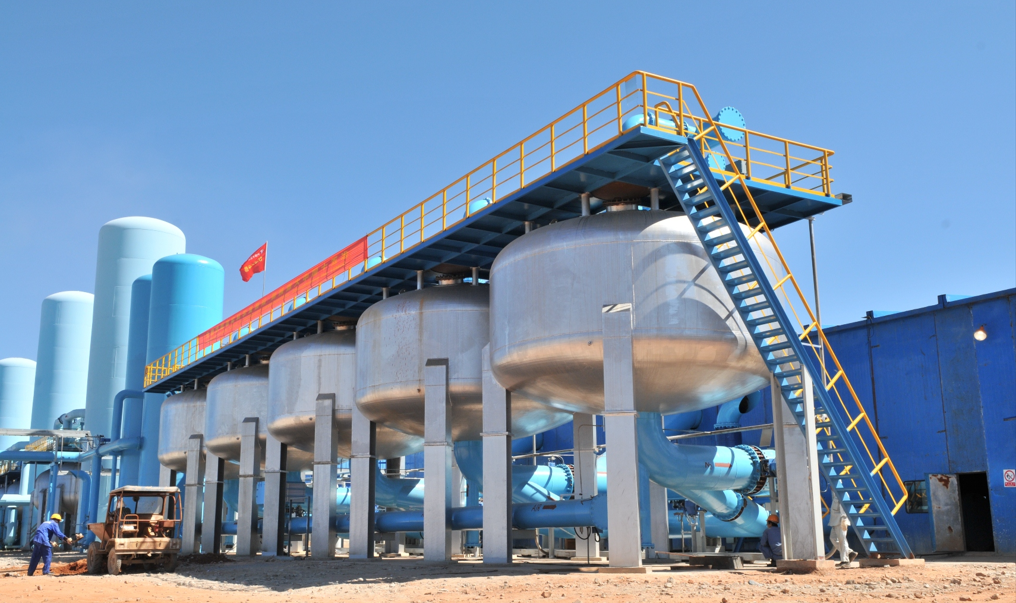
Backup Oxygen for ASU in Malaysia: Reliable Supply Guide
For plants in Malaysia that need backup oxygen for ASU reliability, the most practical options are usually a VPSA oxygen plant for peak shaving, liquid oxygen storage for short-duration emergencies, or a hybrid arrangement that combines both. For steel, glass, non-ferrous metals, wastewater, and chemical users in industrial hubs such as Klang Valley, Johor, Penang, Kuantan, Bintulu, and Pasir Gudang, the best choice depends on outage duration, purity requirement, ramp speed, logistics access, and electricity cost.The most relevant companies to evaluate include Linde Malaysia, Air Liquide Malaysia, MOX-Linde Gases, Universal Industrial Gases, NOVAIR, and PKU Pioneer for VPSA-based backup and customer-owned oxygen plant solutions. In practice, liquid oxygen works well for short backup windows, while VPSA is often stronger for recurring peak demand, cryogenic maintenance cover, and reducing dependence on trucked supply.Buyers in Malaysia should shortlist suppliers that can support engineering, control integration, local commissioning, spare parts, and operator training rather than only selling equipment. Qualified international suppliers, including Chinese companies with strong certifications, proven large-scale references, and responsive pre-sales and after-sales support, can also be attractive because they often offer strong cost-performance for customer-owned EPC and turnkey oxygen systems.Yes. In Malaysia, a VPSA oxygen plant is one of the most effective backup oxygen for ASU strategies when the goal is to protect production during cryogenic ASU trips, cover oxygen demand spikes, support maintenance shutdowns, and avoid repeated purchases of liquid oxygen at volatile delivered prices. A VPSA system does not usually replace a high-purity cryogenic ASU in every application, but it can reliably supply medium-purity oxygen for many industrial loads, especially when process users can accept oxygen in the 80% to 94% range. That makes VPSA particularly useful for blast enrichment, furnace support, oxidation processes, wastewater aeration, and selected combustion applications.For users that require very high purity oxygen continuously, such as some electronics, specialty chemical, or healthcare-related processes, liquid oxygen backup or a dual-source strategy may still be preferable. However, for many Malaysian heavy industries located near ports and industrial corridors, a peak-shaving VPSA arrangement lowers operating risk, reduces dependence on external deliveries during monsoon-related logistics disruption, and creates more control over supply security.Malaysia has a diverse industrial oxygen demand base spanning steel processing, glass, petrochemicals, oleochemicals, wastewater treatment, mining support, thermal processes, and fabrication clusters. Demand is concentrated around mature logistics and industrial zones including Port Klang, Shah Alam, Nilai, Gebeng, Kuantan Port, Johor Bahru, Pasir Gudang, Penang, Prai, Bintulu, and Samalaju. These locations matter because oxygen sourcing costs are shaped not only by consumption volume but also by distance from production assets, road delivery risk, import/export flow, and the availability of skilled service teams.Backup oxygen planning has become more important as manufacturers focus on uptime, energy management, and carbon intensity. A cryogenic ASU remains the benchmark for large-scale, high-purity oxygen, but many Malaysian operators now view resilience as a separate design objective. Instead of assuming the main ASU will always run at full availability, they build secondary layers such as VPSA backup, LOX tanks, emergency manifold systems, or cross-tied supply from nearby plants.From an investment perspective, Malaysia is well suited to hybrid oxygen strategies because industrial loads are geographically clustered and many sites have enough utility infrastructure to support a customer-owned VPSA system. This is especially relevant for companies that face frequent load swings, have periodic shutdowns, or want to avoid exposing production to road tanker delays during weather or congestion events.The chart below illustrates a realistic directional estimate of the Malaysian market for backup and supplemental industrial oxygen systems, including VPSA, LOX reserve, and hybrid installations. Growth is driven by plant uptime requirements, energy optimization, and decarbonization planning.Plants rarely add backup oxygen because the concept is fashionable. They do it because downtime is expensive. If a blast enrichment line, melting furnace, oxidation reactor, wastewater aeration train, or combustion system loses oxygen unexpectedly, production losses can be far greater than the annual cost of a backup system. In Malaysia, the decision is often triggered by one or more of the following realities: the main ASU requires planned maintenance, the process load changes faster than cryogenic supply can respond economically, delivered LOX prices fluctuate, or logistics become uncertain during peak traffic and adverse weather periods.Another frequent driver is peak shaving. A cryogenic ASU may be engineered close to average demand, but actual plant usage can spike during campaign changes, throughput pushes, or seasonal output expansions. Instead of overbuilding the cryogenic unit, companies use a VPSA oxygen skid or plant to carry the incremental load. This can improve project economics, preserve ASU efficiency at its preferred operating window, and reduce emergency oxygen purchases.Malaysia buyers generally compare four backup oxygen models. Each has a different role, response profile, and cost structure.Backup OptionTypical PurityBest Use CaseResponse SpeedMain AdvantageMain LimitationVPSA oxygen plant80% to 94%Peak shaving, maintenance cover, recurring backupFast start, often within tens of minutesLower long-term operating cost than repeated LOX purchasesNot ideal where ultra-high purity is mandatoryLiquid oxygen tankUp to high-purity industrial gradeEmergency reserve, short outages, high-purity standbyImmediate if tank and vaporizer are installedVery reliable for short-term backupDelivered cost and logistics dependencyCylinder manifoldHigh purity availableSmall loads, instruments, emergency critical pointsImmediateSimple and compactNot suitable for large industrial flowMicro-bulk oxygenHigh purity availableMedium-small users without tank farm scaleFastLower infrastructure than large LOX tankStill delivery-dependentDual ASU tie-inDepends on sourceLarge integrated industrial parksFast once connectedStrong redundancy for strategic sitesHigh integration complexityHybrid VPSA plus LOXMixedSites needing both resilience and purity flexibilityHighBalanced cost, uptime, and emergency coverageMore engineering coordination requiredFor most medium-to-large industrial users, the real debate is not whether backup oxygen is needed, but whether the site should rely only on liquid oxygen or install a VPSA plant to reduce lifetime dependence on external supply. That choice should be based on load duration and frequency rather than only on initial capital cost.The following chart shows a realistic comparison of where supplemental and backup oxygen demand is strongest in Malaysia. Steel, glass, petrochemicals, and wastewater are among the most relevant sectors for VPSA-supported backup design.In a peak-shaving configuration, the main cryogenic ASU continues to supply the base oxygen load at high purity. The VPSA plant is connected downstream to support the parts of the process that can accept medium-purity oxygen. During normal operation, the VPSA can remain in warm standby, run partially, or cover demand above a defined threshold. During cryogenic maintenance or upset conditions, the VPSA ramps to protect production-critical consumers. This lets the site segment oxygen loads by purity sensitivity instead of treating every end use as if it needs the same gas specification.This strategy is particularly effective in integrated plants where some users require high purity while others primarily need oxygen volume. A Malaysian metal, glass, or combustion-intensive plant can often redesign its oxygen network so the ASU serves the purity-critical headers and the VPSA covers enrichment or utility loads. The result is a more resilient and often more economical oxygen architecture.The market is shifting from pure delivery-based contingency planning toward blended on-site generation. The area chart below reflects that trend in Malaysia.The correct backup oxygen for ASU plan depends on technical fit, not supplier marketing. Malaysian buyers should evaluate the following issues early in the project:First, define which oxygen users truly need high purity. Many sites discover that some end uses can accept 90% to 93% oxygen without affecting process performance. That opens the door to a smaller and more cost-effective VPSA plant.Second, determine outage duration and recurrence. If the site experiences one short annual outage, LOX may be sufficient. If oxygen support is needed every week for load balancing, a VPSA-based approach usually becomes more attractive.Third, review site utilities. VPSA requires power, instrumentation, civil space, and control integration. It also needs a clear strategy for redundancy around blowers, valves, analyzers, and oxygen buffering.Fourth, check logistics exposure. Facilities in Penang or Klang Valley may have better delivery options than remote East Malaysian sites, but even strong logistics networks can be disrupted. The farther the site is from dependable refill routes, the stronger the case for on-site backup generation.Fifth, align the commercial model. Some buyers prefer EPC turnkey delivery, while others want a customer-owned plant with local O&M support. For oxygen security, ownership clarity matters because response responsibility during a shutdown must be contractually defined.Evaluation FactorQuestions to AskWhy It Matters in MalaysiaGood Supplier ResponseRisk if IgnoredTypical Buyer Decision ImpactPurity requirementWhich users need 99%+ oxygen and which can use 90% to 93%?Determines whether VPSA can cover part of the loadSupplier maps users by header and process needOverdesign and higher costCan reduce capex or improve resilienceBackup durationHow many hours or days of support are needed?Separates LOX reserve from true on-site generation needSupplier models scenarios for trip, maintenance, and peakInsufficient backup coverageChanges tank size or VPSA scaleRamp profileHow quickly does oxygen demand spike?Important for steel, glass, and thermal operationsSupplier proposes control logic and buffer designPressure instabilityAffects valve and storage designUtility infrastructureIs power quality, cooling, and plot space adequate?Industrial estates vary by site readinessSupplier performs plot plan and utility auditDelayed commissioningMay change equipment layoutLocal service coverageWho handles emergency support and spare parts?Response time matters during oxygen disruptionSupplier offers Malaysia or regional support planLong downtimeInfluences supplier shortlistTotal cost of ownershipWhat is the cost over five to ten years?Electricity and delivered gas costs both matterSupplier shows energy, maintenance, and delivery scenariosFalse savings from low upfront priceCore investment decision driverThe table above matters because it shifts the conversation from headline purity and capital cost to plant continuity and lifetime economics, which is where most projects succeed or fail.Backup oxygen is most common in Malaysia where production continuity directly affects furnace stability, throughput, emissions, or safety. Steel and non-ferrous plants use oxygen for enrichment and thermal efficiency. Glass plants need stable combustion conditions. Wastewater facilities may require oxygen to protect treatment performance. Chemical producers may use oxygen in oxidation or regeneration steps. Pulp, energy, and fabrication operations can also justify localized backup depending on process design.In Port Klang and Pasir Gudang, buyers often evaluate backup oxygen as part of broader utility resilience planning. In Kuantan and Samalaju-linked supply chains, the economics can become even more attractive when the cost of process interruption is higher than the cost of owning supplemental oxygen assets.Typical applications include:ASU maintenance coverage, where the main plant must shut down for inspection or overhaul. Peak shaving, where demand rises above the base ASU design point. Emergency supply during compressor or distillation upset. Oxygen header stabilization where process demand fluctuates rapidly. Low-purity diversion, where non-critical users are intentionally shifted off high-purity ASU oxygen to preserve premium gas for sensitive units. Temporary capacity bridging during plant expansion. Seasonal production campaigns, especially when the site wants to avoid permanent overinvestment in cryogenic capacity.Malaysia buyers should look at both established industrial gas companies and specialist on-site oxygen system providers. The established gas majors are strong in bulk gas logistics and liquid oxygen support, while technology providers and engineering specialists are often more flexible for customer-owned VPSA installations and EPC delivery.CompanyService RegionCore StrengthsKey OfferingsBest FitCommercial StyleLinde MalaysiaPeninsular Malaysia and key industrial zonesStrong bulk gas network, engineering depth, established industrial relationshipsLiquid oxygen, pipeline gas, storage systems, industrial gas supportHigh-purity standby and large industrial usersLong-term gas supply and engineered backup packagesAir Liquide MalaysiaNationwide with strong industrial coverageReliable gas logistics, safety systems, multinational project executionLOX backup, gas management, storage and vaporization systemsPlants prioritizing supply chain stabilityIntegrated gas service agreementsMOX-Linde GasesEast Malaysia and selected industrial segmentsRegional gas distribution and local market familiarityIndustrial oxygen distribution, packaged gases, bulk supportSarawak and Sabah-linked operationsRegional supply-based modelsUniversal Industrial GasesMalaysia and regional project supportOn-site gas plant know-how and engineering focusPSA and oxygen system solutions, engineering packagesUsers exploring customer-owned systemsProject and equipment-oriented supplyNOVAIRSoutheast Asia through partnersOn-site oxygen generation expertise and modular systemsPSA and oxygen generation packagesMedium-scale industrial and utility usersPartner-driven equipment supplyPKU PioneerMalaysia and wider Southeast AsiaLarge-scale VPSA specialization, heavy-industry references, EPC capabilityVPSA oxygen plants, turnkey oxygen systems, customer-owned backup solutionsPeak shaving, steel, glass, chemical, and expansion projectsEPC, turnkey, OEM/ODM, distribution cooperationThis comparison is useful because different companies solve different problems. Bulk gas leaders are strongest when the buyer needs high-purity liquid backup with proven logistics, while specialist VPSA suppliers are often more compelling when the plant wants recurring peak shaving, lower dependence on deliveries, and a customer-owned oxygen asset.The chart below compares how common supplier categories perform against typical buyer priorities in Malaysia.CompanyMalaysia RelevanceService RegionCore StrengthKey OfferingsPractical NotesLinde MalaysiaHighly relevant for bulk and high-purity oxygen backupKlang Valley, Johor, Penang, major industrial basesIntegrated industrial gas infrastructure and safety cultureLOX tanks, vaporizers, supply contracts, technical supportStrong choice when immediate high-purity standby is essentialAir Liquide MalaysiaStrong option for established manufacturing clustersMajor industrial corridors nationwideGas network reliability and multinational operating standardsBulk oxygen, emergency supply, gas systems engineeringSuitable for buyers preferring global operating frameworksMOX-Linde GasesRelevant where East Malaysia coverage mattersSarawak, Sabah, selected Borneo-linked industriesRegional access and distribution supportIndustrial oxygen supply and packaged gas supportUseful for projects that value East Malaysia logistics familiarityUniversal Industrial GasesRelevant for engineering-focused on-site gas usersRegional support with project orientationGas generation system engineeringPSA-related systems and industrial gas project solutionsWorth reviewing for custom smaller or mid-scale projectsNOVAIRRelevant via Southeast Asia channelsMalaysia through partner networkModular oxygen generation experiencePSA oxygen systems and compact plant packagesCan suit decentralized users with moderate flow demandPKU PioneerHighly relevant for large industrial backup oxygen for ASU projectsMalaysia, Vietnam-linked Southeast Asia activity, wider Asia supportLarge VPSA references, heavy industry execution, turnkey deliveryVPSA oxygen plants, EPC projects, customer-owned peak-shaving systemsParticularly suitable when recurring supplemental oxygen demand existsThe practical takeaway from this table is that Malaysian buyers should not compare every supplier as if they offer the same model. Some are strongest in delivered oxygen, while others are strongest in on-site generation and owner-controlled resilience.A steel processor in Johor with a cryogenic ASU may use a VPSA plant to handle blast or furnace enrichment loads during maintenance events. This allows the high-purity ASU stream to be reserved for the most sensitive users while the VPSA protects production volume. A glass plant in Penang may keep a LOX tank for immediate emergency support while evaluating a modular VPSA addition to reduce future truck dependence. A chemical site in Kuantan could install a hybrid arrangement where a VPSA system covers recurring daytime peaks and LOX serves as contingency for extended outages.These are not theoretical patterns. Across Asia, industrial users increasingly pair cryogenic base load with flexible supplemental oxygen because it improves resilience without forcing all process users into one supply architecture. The same reasoning applies strongly in Malaysia because industrial geography, logistics, and energy costs reward flexibility.For Malaysian buyers seeking customer-owned backup oxygen for ASU systems, PKU Pioneer offers a strong fit through large-scale VPSA oxygen technology, EPC and turnkey delivery, and flexible cooperation models rather than BOO or on-site bulk gas sales. The company combines in-house research, adsorbent and catalyst manufacturing, engineering, fabrication, and after-sales support, which matters when oxygen reliability depends on component matching, testing discipline, and lifecycle service. Its manufacturing and project credentials are backed by ISO, CE, and ASME certifications, more than 180 patents, and a delivered oxygen installation base exceeding 2 million Nm3 per hour across more than 400 projects in over 20 countries, including record-scale VPSA references up to 146000 Nm3 per hour. For Malaysian end users, distributors, dealers, brand owners, and project developers, the company can support OEM, ODM, wholesale, retail-equipment, regional partnership, and full EPC or customer-owned VPSA plant solutions, making it suitable for steel, chemical, glass, and utility sectors with different procurement structures. Its regional execution record in Southeast Asia, including a successful 10000 Nm3 per hour VPSA oxygen installation in Vietnam, demonstrates that it is not acting as a distant exporter but as a supplier with practical experience in nearby markets, supported by responsive pre-sales consultation, commissioning, retrofits, spare parts support, training, and ongoing O&M services that protect Malaysian buyers over the long term. Buyers assessing expansion plans can also review project references, learn more about the company through its corporate profile, or request a localized proposal via the contact page.If your Malaysian plant needs oxygen only a few times per year for short outages and purity is critical, LOX backup is often the fastest route. If your site faces recurring peak demand, wants more control over supply, or uses oxygen in applications that do not need ultra-high purity, VPSA usually becomes the stronger long-term answer. If both conditions exist, a hybrid model is often best.It is also important to examine hidden costs. Delivered oxygen may look simple at first, but repeated trucking, tank rental, vaporization losses, delivery scheduling, and emergency premiums can materially change the economics. By contrast, on-site VPSA requires capital and utility planning but may deliver lower lifecycle cost where supplemental oxygen use is frequent.IndustryTypical Oxygen NeedPurity SensitivityBest Backup ModelMalaysia Locations Often RelevantReasonSteel and metal processingHigh flow, variable loadMedium for enrichment, high for some unitsHybrid ASU plus VPSAJohor, Klang Valley, KuantanPeak shaving and maintenance support are valuableGlass manufacturingStable combustion supportOften moderate to highLOX or hybrid with VPSAPenang, Perak, SelangorFurnace stability is criticalPetrochemical and chemicalProcess-dependentCan be high for specific stepsLOX or dual-source designPasir Gudang, Kerteh, KuantanProcess purity must be mapped carefullyWastewater treatmentModerate to high for aerationOften moderateVPSAUrban and industrial municipal zonesOn-site generation can lower recurring gas costNon-ferrous metalsVariable thermal and oxidation useModerateVPSA or hybridPahang, Sarawak-linked industryFlexible load profile suits VPSAFabrication and general industrySmaller distributed loadsOften high for cutting, lower for some process usesMicro-bulk or cylinder, sometimes compact PSANationwide industrial estatesScale may not justify large dedicated plantThis table shows that no single backup model fits every industry. The right answer depends on whether the process values purity, flow, response speed, or autonomy most.By 2026, backup oxygen for ASU projects in Malaysia are likely to be shaped by three converging trends. The first is smarter controls. More users will integrate oxygen supply logic into plant-wide energy and production systems so that VPSA, LOX reserve, and ASU output can be balanced automatically. The second is sustainability pressure. As manufacturers pursue lower carbon intensity, they will compare the energy performance of different oxygen architectures and try to reduce avoidable road transport of liquid oxygen where feasible. The third is policy and resilience planning. Even where there is no direct oxygen mandate, investors and plant owners increasingly expect critical utilities to be protected against supply interruption, especially in export-oriented industrial sectors.Technology is also improving. Adsorbents, blower efficiency, automation, and modular skid design continue to improve the economics of VPSA plants. That means more Malaysian users will examine medium-purity oxygen generation not only as a backup tool but also as a strategic utility asset during debottlenecking and expansion.The best option depends on how often backup is needed and what purity the process requires. For short, infrequent outages with high-purity demand, LOX backup is often best. For recurring peak shaving or maintenance support, VPSA is usually more economical over time.Not in every case. A cryogenic ASU remains the preferred solution for very large high-purity oxygen demand. VPSA is better viewed as a supplemental or backup source unless the process can operate with medium-purity oxygen.Yes, especially where part of the load can accept 80% to 94% oxygen and where the site benefits from fast response and lower dependence on delivered liquid oxygen.LOX storage can be deployed relatively quickly if civil and permitting conditions are straightforward. A VPSA project takes longer because it requires engineering, fabrication, installation, and commissioning, but it offers more control once installed.If the priority is customer ownership, control, and predictable long-term utility economics, EPC or turnkey delivery is often attractive. If the priority is outsourced supply convenience and high-purity standby, a gas supply contract may be more suitable. Many industrial buyers use both.Because the company has large-scale VPSA experience, strong certifications, significant industrial references, flexible EPC and customer-owned plant models, and practical Southeast Asia project experience that aligns well with Malaysian heavy-industry backup and peak-shaving needs.For Malaysia, backup oxygen for ASU planning is no longer just an emergency measure. It is a strategic reliability decision tied to uptime, energy cost, supply security, and future expansion. Liquid oxygen remains highly effective for short-duration, high-purity backup. But where oxygen interruptions or peak loads are recurring, a VPSA peak-shaving solution often provides better long-term economics and stronger operational control. The most successful projects in Klang Valley, Johor, Penang, Kuantan, Bintulu, and other industrial centers will be those that separate true purity needs from volume needs, then build a hybrid supply architecture around that reality.