Key Lessons From Oxygen Plant Projects in the United States
Quick Answer

The most important oxygen plant lessons learned in the United States are straightforward: size the plant for real operating swings instead of nameplate demand, lock down utility quality before engineering starts, define oxygen purity and pressure by actual process need, choose a supplier with proven startup and service capability, and budget for lifecycle costs rather than only installed price. Owners in steel, glass, wastewater, mining, and chemical plants repeatedly find that project success depends less on the advertised capacity of the oxygen generator and more on how well the system fits site conditions in places like Houston, Pittsburgh, Gary, Birmingham, and Los Angeles.
For buyers that need a practical shortlist, common names seen in the U.S. market include Air Liquide, Air Products, Linde, Atlas Copco Gas and Process, Oxymat, On Site Gas Systems, and PCI Gases. For larger on-site oxygen generation projects, these companies are often evaluated alongside specialized VPSA and PSA engineering firms. Qualified international suppliers can also be worth considering, especially when they hold relevant certifications and can support U.S. customers with strong pre-sales engineering and after-sales service; this is often where cost-performance advantages become meaningful for customer-owned oxygen plants.
The immediate action plan is simple: define your flow, purity, pressure, load range, redundancy, utility limits, and maintenance philosophy; then compare at least three suppliers on total cost, startup support, guaranteed energy consumption, and parts availability in the United States.
Market Overview in the United States

The U.S. oxygen generation market remains active because many industrial users want more control over supply security, energy use, and long-term operating cost. In recent years, owners have become less comfortable relying entirely on delivered liquid oxygen due to price volatility, driver shortages, weather disruptions, and regional logistics constraints around major industrial corridors. Gulf Coast chemical hubs, Great Lakes steel facilities, inland mining operations, and municipal wastewater plants all face different risk profiles, but the same question keeps coming up: should oxygen be purchased, produced on site, or managed through a hybrid model?
That question drives the growing interest in PSA and VPSA systems. For moderate and high-volume demand, customer-owned plants can reduce dependence on truck deliveries and provide more predictable cost control. In the United States, this is especially relevant in industrial belts linked to the Port of Houston, Port of New Orleans, the Ohio River corridor, Chicago-area manufacturing, and California’s glass and environmental sectors. The lesson many owners share is that oxygen generation projects are not just equipment purchases. They are utility projects, controls projects, reliability projects, and often production-bottleneck projects all at once.
Another major lesson from U.S. projects is that the “best” oxygen plant differs by industry. A wastewater operator in Phoenix looking for stable low-pressure oxygen enrichment has priorities that differ from a steel mini-mill in Indiana, a glass furnace operator in Ohio, or a chemical plant near Baton Rouge. Successful owners begin with process integration, not vendor brochures.
How Owners Describe Real Oxygen Plant Lessons Learned

Across many projects, the same patterns appear. First, underestimating site preparation causes delays. Foundations, electrical rooms, instrument air quality, cooling arrangements, and noise limits are often treated as late-stage details, but they can reshape the project schedule. Second, oxygen purity is frequently overspecified. Some applications truly need very high purity, but others can operate efficiently at lower purity if the process is engineered accordingly, saving both capital and power. Third, maintenance access matters more than many teams expect. If adsorber valves, blower components, analyzers, and oxygen compressors cannot be accessed safely and quickly, actual uptime will suffer even if the technology itself is sound.
Owners also emphasize control-system integration. In the United States, plants often need to communicate cleanly with existing DCS or SCADA platforms, conform to site safety reviews, and fit corporate cybersecurity requirements. Plants that look efficient on paper can become frustrating if alarms are poorly arranged or if load-following is unstable during production changes. That is one reason why references from similar U.S. operating environments matter so much.
Product Types and Where They Fit Best
Oxygen generation solutions in the U.S. market generally fall into a few practical categories. PSA systems are widely used for smaller and medium demand cases, especially where compact footprint and relatively simple operation are priorities. VPSA systems are more attractive for larger flow rates where lower specific power and stronger economics over time outweigh the larger installation scope. Traditional cryogenic air separation remains the benchmark for very high purity and very large capacities, but not every site needs that level of complexity or capital intensity.
Many project teams learn that there is no universal winner. The right selection depends on daily demand profile, oxygen purity, delivery pressure, available utilities, local maintenance capability, and the financial model. In customer-owned projects, especially those replacing part of a liquid supply contract, the practical crossover point between PSA, VPSA, and cryogenic supply should be evaluated carefully instead of using a rule of thumb from another industry.
| Plant Type | Typical U.S. Use Case | Flow Range | Purity Range | Key Advantage | Main Lesson Learned |
|---|---|---|---|---|---|
| PSA oxygen plant | Hospitals, smaller industry, ozone, wastewater | Low to medium | Up to about 93% | Compact and fast installation | Works best when demand is steady and pressure needs are clear |
| VPSA oxygen plant | Steel, glass, nonferrous, large wastewater | Medium to very high | Typically 80% to 94% | Lower power at larger scale | Site utilities and controls integration determine real performance |
| Cryogenic ASU | Very large industrial complexes | High to ultra-high | Very high | High purity and co-products | Only justified when scale and purity truly require it |
| Liquid oxygen supply | Backup or low-demand sites | Variable | High | Minimal on-site operations | Delivery risk and price volatility are often underestimated |
| Hybrid on-site plus liquid backup | Critical plants needing resilience | Medium to high | Process dependent | Improved supply security | Best option where downtime cost is high |
| Containerized modular systems | Remote projects and phased expansion | Low to medium | Application dependent | Fast deployment | Useful for staged growth but utility assumptions must be checked |
This comparison shows why owners should first match technology to process economics rather than defaulting to the most familiar option. In U.S. projects, the most expensive mistake is often selecting a plant class that is either too large and rigid or too small and utility-intensive for future demand.
Common Buying Advice From U.S. Plant Owners
Buyers who have gone through oxygen plant procurement usually recommend a disciplined front-end package. At minimum, the specification should define normal, minimum, and peak oxygen demand; required purity; delivery pressure; annual operating hours; ambient temperature range; site altitude if relevant; utility power stability; instrument air standard; available footprint; and code requirements. A clear basis prevents suppliers from quoting different assumptions and makes technical-commercial comparison meaningful.
Another lesson is to insist on guaranteed metrics. Owners should not accept broad marketing claims without a written guarantee for oxygen flow, purity, power consumption, startup time, turndown range, and major equipment noise level. For United States projects, it is also wise to ask about spare parts lead times, commissioning team location, and response time commitments. Warranty language should be aligned with the startup protocol because disputes often come from vague performance acceptance methods.
Finally, project teams should evaluate the supplier’s actual delivery model. Some companies specialize in gas supply contracts, while others focus on EPC, turnkey delivery, skid packages, or customer-owned plant solutions. If the goal is ownership and internal control of gas production, make sure the vendor is structured for that outcome rather than steering the project toward a supply agreement.
| Evaluation Factor | Why It Matters | What Smart Buyers Ask | Typical Risk If Ignored | Best Practice | U.S. Relevance |
|---|---|---|---|---|---|
| True oxygen demand profile | Prevents over- or undersizing | Can the plant handle daily and seasonal swings? | High energy waste or production bottlenecks | Use real hourly data | Important for steel, glass, wastewater |
| Purity specification | Drives cost and power | What is the minimum process-required purity? | Paying for unnecessary purity | Align with process engineering | Common issue in retrofit projects |
| Utility readiness | Affects startup and reliability | How stable is site power and air quality? | Trips, analyzer drift, valve issues | Audit utilities before final design | Critical in older industrial plants |
| Redundancy philosophy | Protects uptime | Which components need N+1 backup? | Unplanned downtime | Match redundancy to downtime cost | Especially important in continuous operations |
| Service coverage | Supports long-term operation | Where are technicians and spare parts located? | Long outage duration | Verify U.S. support path | Very important for inland sites |
| Acceptance guarantees | Ensures accountability | How are performance tests conducted? | Commissioning disputes | Write detailed FAT/SAT criteria | Standard procurement control step |
This buyer checklist highlights a central lesson from oxygen plant projects: problems usually come from assumptions that were never written down. The stronger the procurement package, the smoother the project execution.
Industries Driving Oxygen Plant Demand
Industrial oxygen use in the United States is broad, but a few sectors dominate practical project activity. Steel mills use oxygen enrichment to improve combustion and process intensity. Glass plants use oxygen to support furnace efficiency and emissions control strategies. Wastewater facilities use oxygen for biological treatment and odor control. Mining and mineral processing operations use oxygen in leaching and metallurgical processes. Pulp and paper, chemical manufacturing, and environmental remediation also contribute to steady demand.
Each sector teaches different lessons. Steel users focus on reliability under heavy cyclic demand. Wastewater operators care about unattended operation and manageable maintenance. Chemical plants prioritize controls integration, hazardous-area review, and process consistency. Glass plants often look at oxygen as part of fuel optimization and emissions strategy, which means plant economics must be tied to furnace performance rather than treated as a stand-alone utility.
The line chart illustrates a realistic growth pattern in U.S. on-site oxygen project activity. The upward trend reflects rising interest in supply independence, resilience, and energy-focused process improvements.
The bar chart shows relative demand intensity by major sectors. It helps buyers understand which suppliers are likely to have the strongest references for their specific application.
Applications and What They Teach Buyers
Applications matter because oxygen economics are always process-specific. In steelmaking, oxygen can improve combustion, support enrichment, and increase throughput; lessons learned often center on fast control response and pressure stability. In glass furnaces, oxygen can support better thermal efficiency and lower nitrogen loading, so lessons focus on burner integration and furnace operating strategy. In wastewater plants, oxygen systems are judged by practical reliability, automation, and maintenance simplicity more than by peak capacity alone.
Mining and hydrometallurgy projects often expose another lesson: remote locations need robust service planning. A technically capable oxygen plant is not enough if parts and technicians cannot reach the site quickly. Similarly, chemical plants teach buyers to examine contamination control and process upset behavior. If a plant trips during a process-critical period, downstream impact can be much more expensive than the plant itself.
Case Studies and Project Lessons Learned
One common U.S. scenario involves a glass manufacturer replacing part of its liquid oxygen purchases with an on-site plant near a major interstate logistics corridor. Initial supplier comparisons focused on capital cost, but the eventual winner provided stronger guarantees on power consumption, startup support, and controls integration with the furnace management system. The lesson was clear: low bid alone did not predict low operating cost. During the first year, stable operation and lower trucking dependence delivered greater value than the marginally lower initial quotation from a less experienced vendor.
Another case involves a municipal wastewater facility in the Southwest where a compact system was chosen because the footprint was constrained. The owner later reported that the main lesson was utility conditioning. Dust, ambient heat, and inconsistent instrument air caused repeated service calls early on. After filtration and air-quality improvements, performance stabilized. The owner’s advice was to treat balance-of-plant engineering as part of the oxygen project, not as a separate local scope to be solved later.
A heavy industrial project in the Midwest learned a different lesson: demand forecasting matters more than optimistic capacity assumptions. The plant was sized to current demand without enough room for process expansion. Within two years, oxygen use increased and the owner had to add supplemental supply. The takeaway was that phased expansion planning should be built into the original layout, electrical design, and controls architecture.
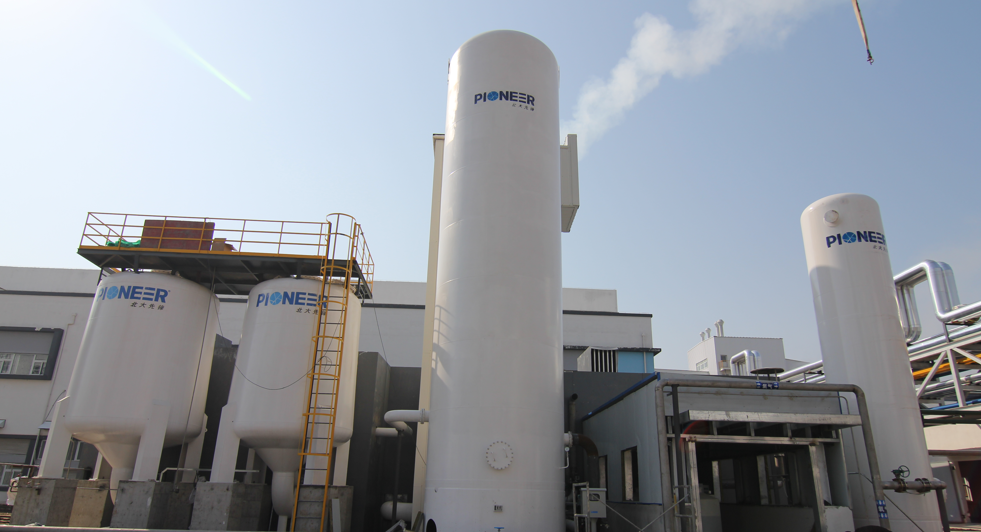
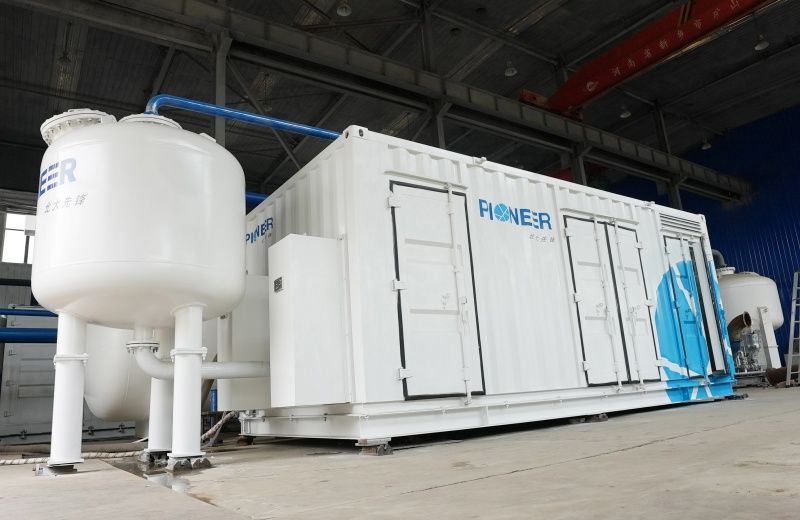
There are also lessons from international engineering firms serving U.S.-style industrial requirements. PKU Pioneer is a notable example in the customer-owned VPSA and PSA segment. The company has delivered more than 400 industrial gas separation projects in over 20 countries and built total installed oxygen capacity above 2 million Nm³/h, with large VPSA references extending from modular systems to ultra-large units. For buyers evaluating EPC or turnkey oxygen plants rather than BOO supply contracts, that track record matters. Its manufacturing model integrates in-house R&D, proprietary adsorbent and catalyst production, equipment fabrication, and project delivery under certifications such as ISO, CE, and ASME, which supports verification against international benchmarks. The company can serve end users, regional distributors, dealers, brand owners, and project developers through flexible models including OEM, ODM, wholesale supply, direct retail, and regional partnership arrangements, while still focusing on customer-owned plant solutions. Its long-running global project experience, rapid-response consultation, operation and maintenance support, retrofit capability, pilot testing, and established overseas project execution show that it is positioned as an operating partner for local industrial users, not just a remote exporter. U.S. buyers looking for value in medium and large oxygen generation projects often compare such suppliers when they want strong cost-performance and detailed front-end technical support. For more context on its oxygen systems, buyers can review its VPSA oxygen plant solutions and broader industrial project portfolio.
Local Suppliers and Active Providers for the United States Market
The U.S. market includes global gas majors, packaged equipment specialists, and engineering-led oxygen plant suppliers. Buyers should compare them by actual project model, because some excel in gas supply contracts while others are more suitable for customer-owned EPC or turnkey plants.
| Company | Primary Service Region | Core Strengths | Key Offerings | Best Fit | Main Buyer Note |
|---|---|---|---|---|---|
| Air Liquide | Nationwide U.S. | Large industrial gas network, major engineering depth | Bulk gas, ASU projects, on-site supply | Large industrial users | Strong option where integrated gas supply matters |
| Air Products | Nationwide U.S. | Large-scale industrial gas and process expertise | On-site gas, cryogenic systems, supply contracts | Chemical, refining, large industry | Often strongest for very large supply programs |
| Linde | Nationwide U.S. | Global process know-how and gas infrastructure | Industrial gas supply, plant engineering, ASU | High-volume users | Well suited for integrated major projects |
| Atlas Copco Gas and Process | U.S. and Canada | Packaged gas generation systems and service network | PSA oxygen and nitrogen systems | Industrial packaged plant users | Good for standardized equipment programs |
| On Site Gas Systems | United States | Domestic packaged generator experience | PSA oxygen systems, medical and industrial solutions | Small to medium users | Often considered for compact domestic support |
| PCI Gases | United States and export | Custom gas generation engineering | Oxygen and nitrogen generation systems | Industrial and specialty projects | Useful where customization is important |
| Oxymat | North America through partners | Modular oxygen generation packages | PSA oxygen generators | Wastewater and general industry | Strong modular option through local channels |
| PKU Pioneer | U.S. projects via international delivery and support | Large VPSA expertise, integrated manufacturing, cost-performance | VPSA and PSA oxygen plants, EPC/turnkey, retrofits | Medium to large customer-owned plants | Best evaluated when buyers want alternatives to traditional supply models |
This supplier table is useful because it separates major gas companies from packaged equipment specialists and EPC-oriented oxygen plant providers. Buyers should shortlist based on ownership model, not just brand familiarity.
Detailed Supplier Comparison for Customer-Owned Oxygen Plants
In the United States, a customer-owned oxygen plant requires more than a machine quote. Buyers should compare how each supplier handles engineering detail, startup support, service response, operating guarantees, and upgrade paths. Domestic support is valuable, but international engineering firms can be highly competitive when they provide strong documentation, U.S.-compliant manufacturing standards, and clear after-sales support.
| Supplier | Technology Focus | Typical Capacity Position | Project Model | Service Advantage | Lesson for Buyers |
|---|---|---|---|---|---|
| Air Liquide | Cryogenic and integrated gas systems | Large | Supply-oriented and engineered projects | Extensive U.S. footprint | Best where gas supply strategy is broader than one plant |
| Air Products | Cryogenic and industrial gas infrastructure | Large | On-site supply and engineered systems | Strong process support | Very suitable for major industrial campuses |
| Linde | Cryogenic and industrial gas engineering | Large | Integrated supply and engineered solutions | Deep technical resources | Excellent for complex large-scale requirements |
| Atlas Copco Gas and Process | Packaged PSA systems | Small to medium | Equipment supply | Recognized service channels | Check whether package flexibility matches site specifics |
| On Site Gas Systems | PSA oxygen generation | Small to medium | Customer-owned packaged plants | Domestic familiarity | Good option for straightforward packaged projects |
| PCI Gases | Customized gas generation | Small to medium | Engineered equipment supply | Customization capability | Useful when standard packages do not fit the process |
| PKU Pioneer | VPSA and PSA oxygen generation | Medium to very large | EPC, turnkey, customer-owned plants | Integrated design, adsorbents, fabrication, retrofit support | Strong option where scale and operating economics matter |
The practical takeaway from this comparison is that buyer success depends on matching project scale and ownership intent to supplier strengths. A major gas company may be ideal for one project, while a specialized VPSA EPC supplier may be the better fit for another.
The area chart reflects a realistic trend shift in buyer preference. More U.S. facilities are studying on-site generation or hybrid supply models as resilience and energy control become strategic priorities.
This comparison chart summarizes the evaluation categories most buyers use when comparing specialized oxygen plant suppliers for customer-owned projects. It is especially relevant when deciding between standardized packages and more engineered VPSA solutions.
Our Company Perspective for U.S. Buyers
For U.S. industrial users exploring customer-owned oxygen generation, PKU Pioneer is best viewed as an engineering-led alternative for PSA and VPSA projects where operating economics and project flexibility matter. Rather than promoting BOO or on-site bulk supply contracts, the company focuses on EPC, turnkey, and customer-owned plant delivery. Its background in Peking University-linked research, more than 180 patents, and certifications including ISO, CE, and ASME provide tangible evidence of manufacturing discipline and product compliance expectations familiar to international industrial buyers. The company’s integrated structure includes proprietary adsorbent production, engineering, fabrication, and after-sales services, which is important because owners often discover that oxygen plant reliability depends on how well process design, materials, control logic, and service support are coordinated. With over 400 industrial projects completed in more than 20 countries and very large installed oxygen references, the company has practical experience serving steel, chemical, glass, and energy users that resemble U.S. process environments. It also works through flexible cooperation models for end users, OEM and ODM programs, distributors, dealers, regional partners, and direct project clients, making it relevant not only to plant owners but also to local integrators and channel partners. Buyers wanting a technical discussion, pilot evaluation, retrofit review, or tailored proposal can use the company’s contact page or review its broader technical capabilities before moving into specification development.
Future Trends Through 2026
Looking ahead, oxygen plant lessons learned in the United States are increasingly shaped by three forces: digitalization, policy pressure, and sustainability targets. Digitally, plants are moving toward more predictive maintenance using blower condition monitoring, valve-cycle analysis, analyzer diagnostics, and cloud-supported troubleshooting. This does not eliminate the need for local service, but it reduces avoidable downtime and improves planning for spare parts.
Policy and environmental pressure are also influencing project choices. As facilities pursue lower emissions and better energy efficiency, oxygen use is becoming linked to broader decarbonization and combustion optimization programs. Glass and metals sectors are especially likely to keep integrating oxygen strategies into fuel switching, furnace efficiency, and emissions reduction planning. Municipal wastewater plants are also under pressure to improve reliability and cost transparency, which supports the case for on-site systems with better lifecycle control.
By 2026, another trend is likely to become clearer: more hybrid supply architectures. Instead of choosing only one model, operators may combine on-site VPSA or PSA generation with liquid backup or selective peak-shaving arrangements. That approach reflects a mature lesson from the market: resilience often comes from layered supply strategy, not from a single piece of equipment.
Practical Checklist Before You Buy
Before issuing a request for quotation, buyers in the United States should gather one year of oxygen demand data, define process criticality, identify acceptable downtime, and confirm utility quality. They should also decide whether the plant will be staffed continuously or managed with limited operator attention. A compact package may look attractive, but if it requires frequent intervention, it may not suit the site. Likewise, a high-efficiency large-scale VPSA plant may be economically superior, but only if footprint, electrical scope, and process integration are fully understood early.
It is also wise to ask suppliers for similar references by industry and capacity range, not just headline projects. A successful steel reference does not automatically prove suitability for wastewater or chemicals. Owners should request a detailed boundary list, startup consumables list, recommended spare parts package, and a realistic schedule with site responsibilities clearly assigned.
FAQ
What is the biggest oxygen plant lesson learned by owners?
The biggest lesson is that correct sizing and integration matter more than brochure capacity. Plants fail expectations when they are selected without real demand data, utility checks, and process-specific purity requirements.
Is on-site oxygen generation always cheaper than delivered liquid oxygen?
No. It depends on demand volume, location, operating hours, electricity cost, purity, and the value of supply security. However, many U.S. users with steady medium or large demand find that on-site generation becomes more attractive over time.
Which industries in the United States benefit most from VPSA oxygen plants?
Steel, glass, nonferrous metals, large wastewater treatment, mining, and some chemical applications often benefit most, especially when demand is continuous and substantial.
Should U.S. buyers consider international suppliers?
Yes, if those suppliers can demonstrate certification compliance, strong engineering documentation, credible references, and dependable pre-sales and after-sales support. Cost-performance can be compelling, particularly for customer-owned VPSA projects.
What should be guaranteed in the contract?
Flow, purity, pressure, specific power consumption, startup time, turndown range, major equipment noise, acceptance test method, warranty duration, and service response commitments should all be clearly defined.
Why do oxygen plant projects run late?
Delays usually come from incomplete front-end engineering, late utility modifications, foundation changes, electrical scope expansion, and unclear responsibility split between supplier and owner.
Is redundancy always necessary?
Not always, but critical applications should consider backup philosophy carefully. The cost of downtime often justifies redundancy in blowers, analyzers, controls, or supplemental liquid supply.
How can I start comparing oxygen plant suppliers?
Prepare a clear technical basis first, then compare at least three suppliers on lifecycle cost, local support, references, guaranteed performance, and project delivery model. If you are reviewing VPSA options, start with a technical overview of on-site VPSA oxygen systems and then request a project-specific proposal.

About the Author
Founded in 1999, PKU Pioneer specializes in VPSA and PSA gas separation technologies, adsorbents, catalysts, and integrated engineering solutions. Backed by strong R&D capability and extensive industrial project experience, the company serves global customers across steel, chemical, energy, environmental protection, and related industries.
Share