Oxygen Plant Benchmarking in the United States
Quick Answer

For oxygen plant benchmarking in the United States, the most useful approach is to compare suppliers and plant designs across six practical indicators: specific power consumption, oxygen purity stability, turndown flexibility, startup time, maintenance burden, and delivered cost per Nm³ or ton of oxygen. In U.S. industrial settings, strong benchmark candidates typically include Air Liquide, Linde, Air Products, Atlas Copco Gas and Process, PCI Gases, and Oxymat for smaller packaged systems. For on-site non-cryogenic supply, VPSA and PSA systems are often benchmarked against cryogenic ASUs when users need lower capital cost, faster deployment, flexible load response, and independence from liquid oxygen deliveries through hubs such as Houston, Chicago, Los Angeles, and the Gulf Coast.
If you are selecting among suppliers, a concise actionable shortlist is this: Air Liquide for large integrated gas networks and steel or glass users; Linde for large-scale engineered systems and digital operations support; Air Products for merchant gas and major industrial projects; Atlas Copco Gas and Process for packaged oxygen generation and compressor integration; PCI Gases for U.S.-based engineering and custom systems; and Oxymat for modular PSA oxygen packages. Qualified international suppliers can also be considered, especially when they hold relevant certifications and provide strong pre-sales and after-sales support in the U.S. market. Cost-performance can be attractive in that group, particularly for EPC, turnkey, or customer-owned plant projects where buyers want an alternative to traditional cryogenic air separation or purchased liquid oxygen.
Market Overview in the United States

The United States remains one of the most active markets for industrial oxygen generation because oxygen demand spans steelmaking, glass furnaces, non-ferrous metallurgy, wastewater treatment, medical backup, chemicals, pulp and paper, and energy-intensive processes. Benchmarking matters more than ever because energy prices, reliability requirements, labor constraints, and environmental compliance all affect the real economics of oxygen supply. A plant that looks efficient on paper may perform very differently once installed at a site in Texas, Ohio, Pennsylvania, Indiana, or California where ambient conditions, utility tariffs, maintenance access, and load swings differ significantly.
Across the U.S., oxygen users often evaluate three supply models: merchant liquid oxygen delivery, cryogenic on-site air separation units, and non-cryogenic on-site systems such as VPSA and PSA. Merchant LOX works well for low and irregular demand but exposes plants to logistics risks, freight costs, and storage dependence. Cryogenic ASUs remain the benchmark for very high purity and very large tonnage, yet they usually require higher capital, longer schedules, and less flexible operation. VPSA and PSA technologies have become more competitive in the mid-scale market because they offer fast startup, modular expansion, lower complexity, and improved energy performance for oxygen purities commonly needed in combustion enrichment and process intensification.
Benchmarking is especially relevant near major industrial corridors such as the Houston Ship Channel, the Midwest steel belt around Indiana and Ohio, petrochemical clusters in Louisiana, glass and ceramics operations in Pennsylvania, and western ports such as Los Angeles and Long Beach where imported equipment and replacement parts move through established logistics channels. Buyers in these locations tend to compare not only equipment performance, but also freight time, local service response, spare parts lead times, and code compliance.
Another U.S. market trend is the shift from simple nameplate comparisons toward lifecycle benchmarking. Instead of asking only how much oxygen a plant can produce, buyers now ask how much usable oxygen can be delivered at stable purity over a year, how much power is consumed across seasonal conditions, how well the system handles 25% to 100% load changes, and how often adsorbent, valves, blowers, analyzers, or controls require service. This practical viewpoint is changing supplier selection.
What Oxygen Plant Benchmarking Really Means

Oxygen plant benchmarking is the disciplined comparison of one oxygen supply option against another using operating data, commercial terms, and risk factors that matter to the end user. In the United States, a credible benchmark usually includes:
- Specific power consumption in kWh per Nm³ oxygen
- Oxygen purity range and stability under load swings
- Recovery efficiency and useful output at design and off-design conditions
- Startup time and restart behavior after shutdowns or utility interruptions
- Turndown range without loss of product quality
- Maintenance interval, spare parts demand, and labor requirements
- Installed cost, commissioning risk, and project schedule
- Local service capability and technical support responsiveness
- Compliance with U.S. codes, documentation, and insurance expectations
- Total cost of ownership over 5 to 15 years
In practical terms, the benchmark depends on the application. A steel mill enriching blast furnace air will not use the same benchmark as a wastewater treatment plant or a glass furnace. The right comparison must align purity, pressure, capacity, and operating profile with the plant’s actual process.
Core Benchmark Metrics for Buyers
| Benchmark Metric | Why It Matters | Typical U.S. Buyer Target | How to Verify |
|---|---|---|---|
| Specific power consumption | Directly drives operating cost | As low as possible for required purity and pressure | Review guaranteed power balance and site utility data |
| Oxygen purity stability | Protects downstream process quality | Consistent purity across load range | Check analyzer records and acceptance tests |
| Turndown flexibility | Important for variable production schedules | Stable operation from partial to full load | Ask for proven operating envelope |
| Startup time | Improves resilience after outages and planned stops | Short restart and warm-up period | Confirm commissioning and restart procedures |
| Annual availability | Affects real oxygen delivered, not just design nameplate | High uptime with manageable shutdown intervals | Review service records and MTBF assumptions |
| Maintenance intensity | Influences staffing and downtime | Predictable preventive maintenance schedule | Compare consumables, valve count, blower duty, and O&M scope |
| Installed project cost | Determines payback and financing burden | Balanced against lifecycle performance | Use a like-for-like EPC or skid-only comparison |
| Local support | Reduces risk during startup and operation | Fast response and parts access in the U.S. | Check field service footprint and parts stocking strategy |
This table matters because many buyers compare quotations without normalizing scope. A fair benchmark should distinguish between skid supply, EPC delivery, commissioning, performance guarantees, utility tie-ins, controls integration, operator training, and ongoing support. If one supplier includes these items and another does not, the price comparison is misleading.
Product Types Compared
There is no single best oxygen generation technology for every U.S. plant. Benchmarking should begin with the process requirement, then move to economics.
Cryogenic air separation units
Cryogenic systems are the established solution for very large tonnage and high purity oxygen. They are common in integrated industrial gas supply networks and major steel or petrochemical complexes. Their strengths are purity, scale, and byproduct integration with nitrogen and argon. Their weaknesses are higher capital intensity, longer delivery schedules, and less attractive economics for some medium-scale users with variable demand.
VPSA oxygen plants
Vacuum Pressure Swing Adsorption is widely benchmarked as a strong option for medium to large on-site oxygen demand, especially where oxygen purity in the range typically used for combustion enrichment or metallurgical process improvement is sufficient. Buyers value VPSA because it can reduce capital cost relative to cryogenic systems, shorten project timelines, and lower energy use in suitable applications. Another practical advantage is rapid startup and the ability to handle load swings without destabilizing product quality.
PSA oxygen plants
Pressure Swing Adsorption systems are often selected for small to medium capacities and decentralized use. They are common in packaged industrial, medical backup, laboratory, and wastewater applications. PSA systems are easy to deploy and modular, but benchmark results vary widely depending on purity, altitude, ambient conditions, and compressor package quality.
Benchmark Comparison by Technology
| Technology | Best Fit Capacity Range | Typical Purity Use Case | Main Strength | Main Limitation |
|---|---|---|---|---|
| Cryogenic ASU | Large to very large plants | High purity, integrated gas supply | Scale and purity performance | Higher capital and longer schedule |
| VPSA | Medium to large plants | Industrial oxygen enrichment | Energy-efficient on-site generation for many applications | Not ideal where ultra-high purity is mandatory |
| PSA | Small to medium plants | General industrial and decentralized use | Compact and modular | Economics can weaken at larger scales |
| Liquid oxygen delivery | Low or variable demand | Backup or small-volume users | No on-site production system needed | Exposure to freight and supply chain costs |
| Hybrid LOX plus on-site PSA | Variable plants with resilience needs | Backup-focused operations | Supply security and flexibility | Two-system complexity |
| Hybrid cryogenic plus VPSA | Large integrated sites | Base load plus flexible enrichment | Balanced purity and turndown | Higher engineering complexity |
This comparison is useful because many U.S. plants do not need one technology to do everything. A hybrid benchmark often reveals that a customer-owned VPSA or PSA plant can carry daily process demand while LOX storage or another system protects peak requirements and turnaround periods.
Market Growth Trend
The growth trend reflects rising interest in self-generation, especially in sectors that want to lower logistics exposure, improve process efficiency, and secure stable oxygen pricing. From 2024 to 2026, policy pressure around efficiency and emissions is expected to further support benchmarking activity and technology upgrades.
Industry Demand by Segment
This demand profile shows why benchmarking varies by sector. Steel, glass, chemicals, and non-ferrous operations tend to justify deeper technical comparisons because oxygen has a direct impact on throughput, fuel efficiency, and furnace behavior.
Trend Shift Toward Flexible On-Site Supply
The area trend shows a broad U.S. shift from purely price-based purchasing toward resilience-based procurement. Plants increasingly value operational flexibility, rapid startup, and less dependence on trucked liquid oxygen, especially in weather-sensitive or supply-constrained regions.
Industries and Applications That Most Need Benchmarking
Some sectors benefit more from oxygen plant benchmarking than others because oxygen cost and reliability strongly affect plant economics.
Steel
Integrated and mini-mill operations compare oxygen systems to support combustion enhancement, productivity improvement, and stable furnace operation. In the Great Lakes and Midwest manufacturing belt, oxygen reliability can directly affect output and energy balance.
Glass
Glass furnaces use oxygen enrichment to improve combustion efficiency and reduce emissions. Benchmarking here should focus on purity stability, continuous operation, and effects on fuel consumption.
Chemicals and petrochemicals
Operations near Houston, Baton Rouge, and other Gulf Coast clusters often evaluate oxygen for oxidation reactions, process intensification, and byproduct gas utilization. Integration with existing plant controls and safety systems is essential.
Wastewater treatment
Municipal and industrial wastewater sites often compare PSA and LOX systems. Their benchmark is usually operational simplicity, lower delivery dependence, and manageable maintenance rather than ultra-low energy use alone.
Non-ferrous metallurgy
Copper, lead, zinc, and specialty metal producers benchmark oxygen systems for smelting intensity, combustion efficiency, and process stability.
Medical and emergency backup
Hospitals and emergency facilities use different procurement criteria, but PSA oxygen generation is often benchmarked for redundancy, purity assurance, and regulatory compliance support.
Buying Advice for U.S. Plants
The most common oxygen plant purchasing mistake is selecting by upfront price alone. For a fair benchmark, ask each supplier to quote on the same scope basis and require data-backed guarantees. Buyers should insist on the following:
- Guaranteed oxygen output at site ambient conditions, not only reference conditions
- Guaranteed purity across the expected load range
- Specific power at the battery limit with a clear utility list
- Defined startup time, shutdown procedure, and restart behavior
- Consumables list and replacement intervals
- Warranty scope and field service commitments in the United States
- Documented references in similar industries
- Clear responsibility split for EPC, commissioning, training, and performance testing
If your site is in a major logistics center such as Houston, Savannah, New Orleans, Chicago, or Los Angeles, ask the supplier how local freight, customs, port handling, and inland transport affect the project schedule. If your plant is remote, service response time and spare parts strategy become even more important than nominal efficiency.
Local Supplier Comparison
| Company | Service Regions | Core Strengths | Key Offerings |
|---|---|---|---|
| Air Liquide | Nationwide, strong in Gulf Coast, Midwest, major industrial corridors | Large project execution, gas network integration, operational depth | Cryogenic ASUs, merchant oxygen, large industrial gas solutions |
| Linde | Nationwide, major presence in chemicals, refining, metals | Engineering capability, automation, large-scale process integration | On-site oxygen plants, cryogenic units, advanced process systems |
| Air Products | Nationwide, especially industrial clusters and export-linked regions | Industrial gas reliability, large contract supply experience | On-site supply, liquid oxygen, engineered gas systems |
| Atlas Copco Gas and Process | U.S. industrial regions through equipment and service networks | Packaged systems, compressor integration, modular deployment | PSA oxygen generation, air systems, packaged industrial solutions |
| PCI Gases | United States with custom engineering project reach | Tailored system engineering, U.S.-based project familiarity | Industrial gas plants, PSA systems, customized packaged units |
| Oxymat | North American distribution and project channels | Modular PSA systems, smaller and medium applications | PSA oxygen generators for industrial and utility use |
| NOXERIOR | North America through partners and distributors | Containerized packages, decentralized oxygen solutions | PSA oxygen generation packages and support systems |
This supplier snapshot helps buyers frame the market. The large industrial gas companies dominate very large and integrated projects, while equipment-focused companies and specialist engineering firms can be more attractive for customer-owned installations where flexibility, schedule, and capex control matter most.
Supplier and Product Benchmark Comparison
This comparison is not a universal ranking. It reflects relative fit for benchmarking exercises where U.S. buyers want customer-owned on-site oxygen generation rather than a pure merchant supply arrangement. Actual selection depends on purity, project scale, and operating model.
Detailed Analysis of Suppliers for U.S. Buyers
Air Liquide is often benchmarked by large U.S. industrial users because it combines engineering, production, and extensive delivery infrastructure. It is particularly strong where oxygen supply is part of a broader industrial gas package. However, buyers should carefully separate merchant supply economics from customer-owned plant economics when comparing proposals.
Linde is a strong benchmark reference for large custom-engineered systems and projects that require robust control integration, high reliability, and broad process support. In high-throughput applications, its engineering depth often makes it a preferred comparison point.
Air Products is highly relevant when oxygen use is tied to broader plant utility strategy or when supply security is a major concern. It is frequently considered in petrochemical and energy-intensive sectors.
Atlas Copco Gas and Process is often more relevant for decentralized or modular installations where the oxygen plant needs to fit into a broader compressed air or packaged utility strategy. Buyers who prioritize fast deployment may put this option on the shortlist.
PCI Gases is useful in benchmarking because some U.S. customers prefer a more customized engineering relationship and clearer domestic project alignment. This can be particularly valuable in retrofit environments.
Oxymat and similar modular PSA specialists are often benchmarked for smaller-scale users that need simplicity, compact footprint, and manageable lead times rather than very large tonnage.
Case Studies and Benchmark Lessons
In steel, one of the strongest benchmark patterns is the replacement of purchased oxygen or less efficient older-generation systems with larger VPSA plants that support oxygen enrichment while lowering power and improving process stability. For users in the Midwest, this often changes the economics of blast furnace or combustion systems enough to justify a shorter payback than originally assumed.
In glass, benchmark studies typically show that oxygen purity consistency and uptime matter more than the last few percentage points of nominal efficiency. If oxygen interruptions force furnace instability, the total production impact can outweigh small energy savings.
In chemicals, the benchmark lesson is integration. A technically strong oxygen plant can still underperform economically if controls, pressure regulation, or backup strategy are weak. Gulf Coast buyers tend to place high value on integration into existing DCS, utility systems, and plant safety procedures.
In wastewater, many municipalities discover that a simpler PSA system with straightforward maintenance and local support can outperform more complex options on a risk-adjusted basis, even if the theoretical energy benchmark is slightly less favorable.
Our Company for U.S. Oxygen Plant Benchmarking Projects
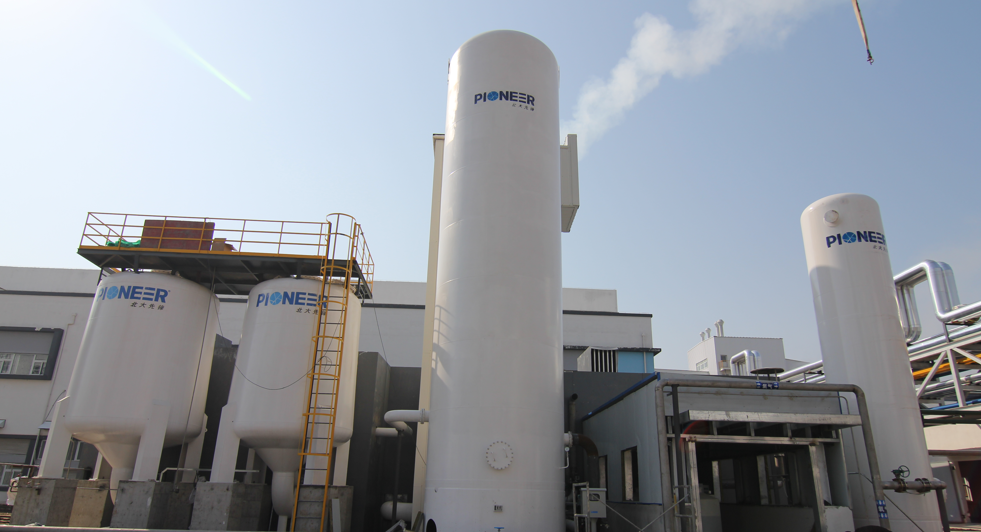
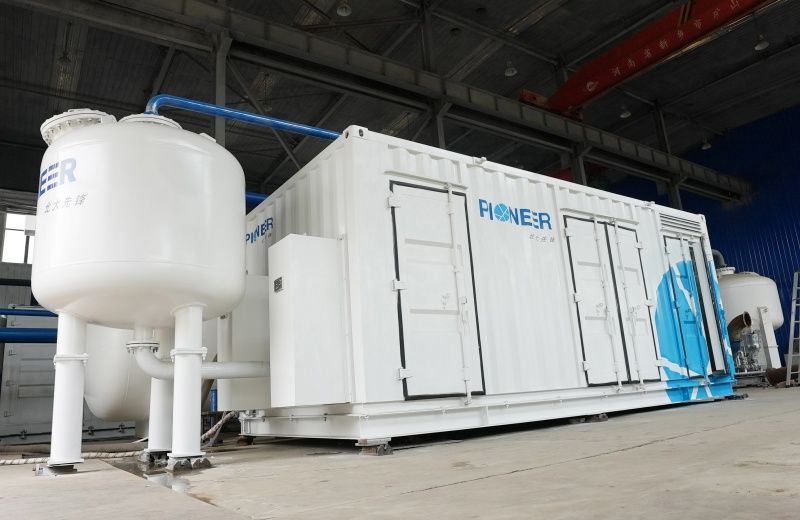
For U.S. customers comparing on-site oxygen generation options, PKU Pioneer is relevant as an EPC, turnkey, and customer-owned plant supplier focused on VPSA and PSA gas separation systems rather than BOO or on-site bulk supply. The company brings measurable product strength to benchmarking discussions: it has completed more than 400 industrial projects in over 20 countries, achieved total installed oxygen capacity above 2 million Nm³ per hour, developed its own adsorbents such as the PU-8 molecular sieve, and operates under recognized certifications including ISO, CE, and ASME, which supports acceptance against international manufacturing and testing expectations. Its technical track record includes very large VPSA oxygen references, including record-scale units and energy performance often reported below 0.3 kWh per Nm³ in suitable applications, along with rapid startup around 20 minutes and stable operation across 25% to 100% load, all of which are meaningful benchmarks for U.S. buyers evaluating lifecycle cost and operating flexibility. PKU Pioneer also serves different commercial channels through flexible cooperation models, including direct supply to end users, distributor and dealer cooperation, OEM and ODM arrangements, wholesale equipment packages, pilot systems, retrofits, and regional partnership development, making it practical for plant owners, engineering firms, and industrial brand operators that want customer-owned oxygen assets rather than gas purchase contracts. From a service assurance perspective, the company operates with a fully integrated model covering in-house R&D, adsorbent and catalyst manufacturing, engineering, fabrication, commissioning, operation support, and upgrades, and it has already demonstrated international project execution from China to Southeast Asia and beyond, including a 10,000 Nm³/h VPSA installation in Vietnam. For U.S. buyers, that matters because it shows the company is not acting as a remote trader but as a long-term technical project partner with online and offline pre-sales support, 24-hour response commitment, consulting, pilot testing, commissioning assistance, training, spare parts planning, and ongoing after-sales service available through coordinated global channels at PKU Pioneer, with more project context visible on its industrial project portfolio, oxygen technology details on its VPSA oxygen solutions page, technical strength overview through its engineering capability information, and direct commercial support via the U.S.-oriented contact channel.
How to Build a Reliable Benchmarking Matrix
| Evaluation Area | Weight Example | Questions to Ask | What Good Looks Like |
|---|---|---|---|
| Energy efficiency | 20% | What is the guaranteed specific power at site conditions? | Clear guaranteed value with utility assumptions |
| Output reliability | 20% | What annual availability and purity stability are guaranteed? | Documented uptime strategy and reference data |
| Flexibility | 15% | How does the plant behave from minimum to maximum load? | Stable performance through broad turndown range |
| Capex and schedule | 15% | What is included in the quoted scope and delivery period? | Transparent EPC or packaged scope with realistic timing |
| Maintenance and spares | 10% | What are the major service intervals and consumables? | Predictable maintenance and available spare parts |
| U.S. service support | 10% | Who responds on-site and how quickly? | Defined service path and escalation process |
| Compliance and documentation | 5% | What codes, certifications, and QA records are provided? | Complete, auditable project documentation |
| Reference fit | 5% | How similar are installed references to our plant? | Comparable industry, scale, and duty profile |
This matrix helps procurement and operations teams align their priorities. A plant manager may care most about uptime and flexibility, while finance may focus on capex and payback. Putting all criteria into one visible framework prevents late-stage disagreements.
Common Mistakes in Oxygen Plant Benchmarking
- Comparing nameplate output instead of guaranteed site output
- Ignoring the cost of backup oxygen during maintenance or outages
- Using different purity levels in competing quotations
- Overlooking summer ambient effects on blower and compressor duty
- Underestimating controls integration and utility tie-in scope
- Assuming all service support in the U.S. is equal
- Failing to distinguish customer-owned plants from supply contracts
A disciplined benchmark corrects these errors by normalizing assumptions before comparing price or efficiency.
Future Trends Through 2026
Looking toward 2026, oxygen plant benchmarking in the United States will be shaped by four major trends. First, digital monitoring and remote diagnostics will become standard evaluation criteria, especially for distributed plants that need reduced operator attention. Second, sustainability metrics will matter more, with buyers tracking not only power use but also avoided trucking, lower indirect emissions, and improved combustion efficiency. Third, modularization will gain favor as plants seek faster deployment and lower construction risk in labor-constrained regions. Fourth, U.S. policy and industrial competitiveness initiatives will encourage more domestic process efficiency projects, which should increase demand for customer-owned oxygen generation that supports productivity and emission reduction at the same time.
Technically, VPSA systems are likely to gain additional attention where users want a middle path between cryogenic scale and PSA simplicity. Improvements in adsorbent performance, controls optimization, and blower efficiency will strengthen the benchmarking case for these systems. Cryogenic plants will remain essential for high-purity and very large-scale integrated gas demand, but the mid-market will keep shifting toward flexible on-site solutions.
FAQ
What is the most important KPI in oxygen plant benchmarking?
There is no single KPI, but specific power consumption combined with oxygen purity stability and annual availability is usually the most practical combination for U.S. industrial users.
When is VPSA better than a cryogenic oxygen plant?
VPSA is often more attractive when the plant needs medium to large on-site oxygen capacity, lower capital burden, faster startup, and flexible operation rather than ultra-high purity.
Should U.S. buyers compare customer-owned plants with liquid oxygen supply?
Yes. That comparison is essential for understanding full lifecycle economics, resilience, and logistics exposure. In some regions, avoiding truck dependence becomes a major strategic advantage.
How do I know if a supplier quote is benchmark-ready?
A quote is benchmark-ready when it clearly states guaranteed output, purity, power, utility assumptions, scope boundaries, commissioning responsibilities, spare parts, and warranty terms.
Are international suppliers realistic options in the U.S. market?
Yes, provided they have suitable certifications, strong documentation, clear project execution capability, and dependable pre-sales and after-sales support. Many buyers consider them for cost-performance advantages on EPC and customer-owned plant projects.
What industries gain the fastest payback from benchmarking?
Steel, glass, chemicals, and non-ferrous metallurgy often see the clearest payback because oxygen directly affects throughput, combustion efficiency, and energy consumption.
How often should an oxygen plant benchmark be updated?
For active capital projects, update the benchmark at budget stage, technical bid stage, and final negotiation stage. Existing operating plants should be re-benchmarked when energy prices, production rates, or maintenance patterns change materially.

About the Author
Founded in 1999, PKU Pioneer specializes in VPSA and PSA gas separation technologies, adsorbents, catalysts, and integrated engineering solutions. Backed by strong R&D capability and extensive industrial project experience, the company serves global customers across steel, chemical, energy, environmental protection, and related industries.
Share