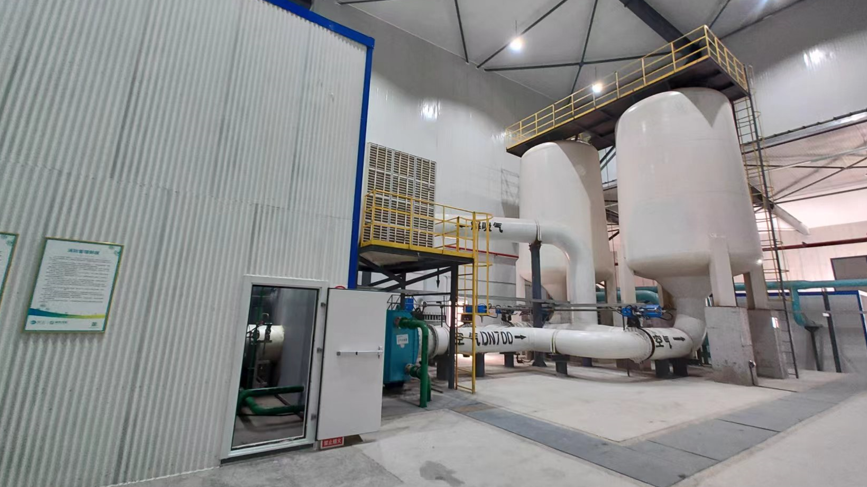
Is VPSA Reliable for 24/7 Operation in the United States?
Quick Answer

Yes. For steel plants, glass plants, nonferrous smelters, wastewater facilities, and other continuous-process users in the United States, VPSA can be reliable enough for 24/7 operation when the system is correctly sized, engineered with redundancy, matched to site conditions, and supported by a strong service team. In practice, the key question is not whether VPSA can run continuously, but whether the selected supplier has proven references, suitable controls, robust blower and valve design, disciplined maintenance planning, and realistic uptime commitments.
For U.S. steel operations especially, VPSA is often a strong fit where oxygen purity in the usual 80% to 94% range meets process needs and where operators want lower power use, faster startup, and better load flexibility than traditional alternatives. Buyers in major industrial regions such as Indiana, Ohio, Pennsylvania, Alabama, and Texas should prioritize suppliers with steel references, domestic field service access, and clear spare-parts planning.
- Best fit for 24/7 duty: large industrial VPSA systems with redundant critical components and remote diagnostics.
- Best buyer practice: ask for reference uptime data, valve replacement intervals, blower maintenance plans, and restart history after power interruptions.
- Best local approach: compare major U.S. gas companies, specialized oxygen generator suppliers, and experienced EPC providers.
- Best process rule: define minimum oxygen flow, purity, ramp rate, and allowable downtime before selecting plant size.
- Best cost-performance option: qualified international suppliers, including Chinese manufacturers with strong certifications, EPC capability, and responsive pre-sales and after-sales support, can also be worth serious consideration for U.S. projects.
How Reliable Is VPSA in Real 24/7 Industrial Service?

When people ask “is VPSA reliable for 24/7 operation,” they usually mean one of three things: can the oxygen plant stay online continuously, can it keep product quality stable during changing production loads, and can the owner maintain it without frequent unplanned shutdowns. On those points, modern VPSA plants can perform very well. Reliability depends less on the basic process principle and more on engineering execution.
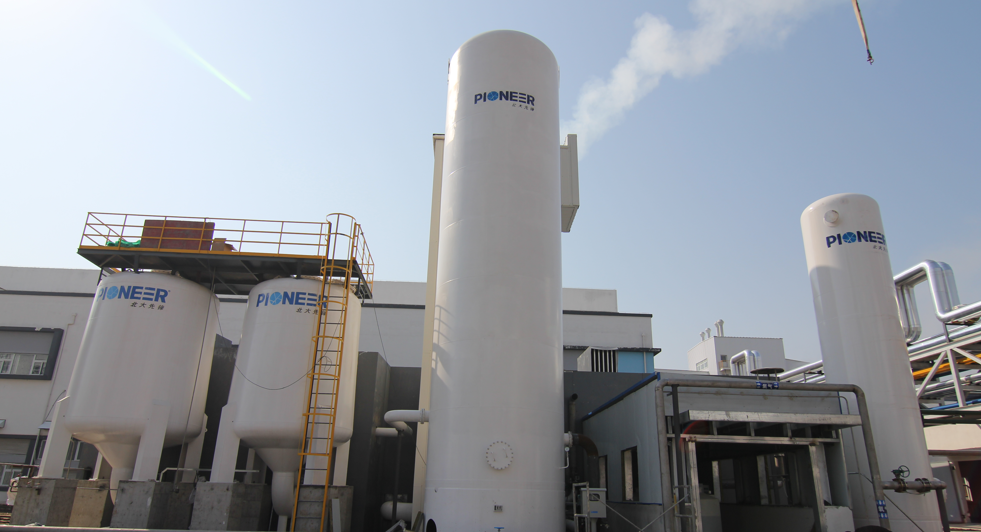
VPSA, or Vacuum Pressure Swing Adsorption, separates oxygen from air using adsorbent beds that cycle between adsorption and regeneration. Because the process avoids cryogenic refrigeration, it is attractive for many continuous industrial users that need on-site oxygen at moderate purity and large flow rates. For a U.S. steel mill operating blast furnaces, electric arc furnaces, reheating furnaces, or oxygen-enrichment systems, the appeal is obvious: lower logistics dependence than liquid oxygen, fast startup, and flexible turndown.
In actual plant conditions, a properly designed VPSA system can support round-the-clock operation if it includes conservative blower sizing, quality vacuum equipment, stable valve sequencing, clean intake filtration, reliable controls, and a service plan tied to the site’s production cycle. Facilities near heavy industrial corridors such as Gary, Pittsburgh, Birmingham, and Houston often value this because any interruption in oxygen delivery can quickly affect furnace balance, throughput, fuel use, and product quality.
Market Overview in the United States

The United States remains one of the most important markets for industrial oxygen generation because it combines large steel capacity, extensive glass and nonferrous production, a broad wastewater sector, and a growing focus on energy efficiency and decarbonization. Buyers are increasingly reviewing on-site oxygen systems not only for supply security but also for total lifecycle economics.
Across the U.S., VPSA demand is supported by several trends. First, industrial sites want protection from transportation disruptions affecting delivered liquid oxygen. Second, rising pressure on operating costs is pushing plants to review power consumption per Nm3 and maintenance cost per operating hour. Third, sustainability programs are encouraging systems that can cut waste and support process optimization. Fourth, plant managers increasingly prefer flexible oxygen generation that can follow partial-load operation rather than forcing a fixed output profile.
At ports and industrial logistics hubs such as Houston, Baltimore, New Orleans, and the Great Lakes steel corridor, oxygen users also care about supply resilience. A customer evaluating whether VPSA oxygen technology is right for a 24/7 site will usually compare uptime, maintenance intervals, installation timeline, and expected energy intensity against cryogenic supply or bulk liquid purchasing.
The line chart above illustrates a realistic project activity trend rather than a formal market census. It reflects how interest in on-site oxygen generation has expanded as U.S. manufacturers seek energy savings, supply independence, and lower exposure to delivered-gas volatility.
What Makes VPSA Reliable Enough for Continuous Operation?
Reliable 24/7 VPSA service comes from the full system architecture. Buyers should evaluate the following elements in detail before approving a project.
First, blower and vacuum system quality matters. In many plants, these are among the most critical rotating assets. Reputable systems use proven industrial machines with clear maintenance intervals, vibration monitoring options, and accessible service parts in North America.
Second, valve durability is essential. A VPSA plant cycles frequently, so valve selection, seat material, actuator quality, and control logic directly affect uptime. Weak valve packages often become the hidden cause of downtime.
Third, adsorbent performance and bed design influence both oxygen stability and cycle longevity. If the adsorbent is poorly matched to the operating profile, purity swings and efficiency losses may appear over time.
Fourth, automation quality matters more than many buyers expect. A mature control system can handle startup, shutdown, load swings, ambient changes, alarm management, and safe restart after disturbances.
Fifth, redundancy planning is a major reliability lever. For a steel mill with no tolerance for interruption, one train may be risky unless backup liquid oxygen or an alternative oxygen source exists. Many 24/7 projects use N+1 logic or dual-train layouts for critical sections.
Sixth, operator training and preventive maintenance are not optional. Even the best plant can underperform if intake filters clog, valve timing drifts, drains are neglected, or spare parts are unavailable.
Typical Uptime Drivers for U.S. Plants
| Reliability Factor | Why It Matters | Impact on 24/7 Use | What Buyers Should Ask |
|---|---|---|---|
| Blower and vacuum package | Core rotating equipment affects stable flow and regeneration | High impact on uptime and restart reliability | Brand, service network, overhaul interval, vibration protection |
| Valve package | Frequent cycle switching creates wear risk | High impact on unplanned shutdowns | Cycle life, seat materials, field replacement time |
| Adsorbent quality | Controls oxygen output and long-term energy performance | Medium to high impact on purity stability | Source, replacement cycle, performance guarantee |
| Control system | Manages sequencing, alarms, and process transitions | High impact on stable operation | PLC platform, remote access, restart logic, cybersecurity plan |
| Redundancy level | Limits effect of component failure | Very high impact for steel and glass plants | N+1 philosophy, backup oxygen plan, bypass design |
| Service response | Determines outage duration after faults | Very high impact in remote or high-load regions | U.S. technicians, spare parts stock, response time commitment |
| Air quality management | Dust, oil, humidity, and heat reduce system stability | Medium impact but cumulative over time | Filtration design, ambient design basis, summer derating |
This table shows why simple purchase price should not be the only basis for supplier selection. Reliability in 24/7 service is built from component choices and support structure, not just nameplate oxygen capacity.
Product Types and Which Ones Work Best for 24/7 Duty
In the U.S. market, oxygen supply options for continuous users usually fall into four broad categories: delivered liquid oxygen, cryogenic ASU, PSA oxygen generators, and VPSA oxygen plants. Each has a different reliability profile, cost structure, and installation path.
Delivered liquid oxygen can be dependable where logistics are strong, but transport bottlenecks, weather events, or peak-demand shortages can create risk. Cryogenic ASUs are highly established for very large plants and very high purity, but they generally require larger investment and longer project schedules. PSA systems are useful for smaller capacities. VPSA often occupies the attractive middle-to-large on-site range where moderate purity, low energy use, and load flexibility matter.
| Supply Type | Typical Purity | Best Use Case | 24/7 Reliability Consideration |
|---|---|---|---|
| Delivered liquid oxygen | Very high | Sites with modest demand or backup needs | Depends on trucking, storage, and regional supply chain |
| Cryogenic ASU | High to very high | Very large integrated industrial sites | Strong continuous supply when fully supported, but more capital intensive |
| PSA oxygen generator | Moderate | Small to medium facilities | Good for smaller 24/7 needs, but not ideal for all large steel loads |
| VPSA oxygen plant | 80% to 94% | Steel, glass, nonferrous, wastewater, pulp | Strong option for continuous use with proper design and redundancy |
| Hybrid VPSA plus liquid backup | Moderate with backup flexibility | Critical production lines needing resilience | Often excellent for uptime-sensitive U.S. facilities |
| Multi-train VPSA layout | Moderate | Large users with staged expansion | Improves maintainability and outage management |
The table makes clear that VPSA is not the answer for every oxygen duty, but it is often one of the best answers when the process accepts moderate purity and the site values on-site generation flexibility.
Industry Demand by Sector
This demand chart highlights why steel remains central to discussions about whether VPSA is reliable for 24/7 operation. Steelmaking often requires sustained oxygen availability and punishes weak reliability planning more than many other sectors.
Industries and Applications Where 24/7 VPSA Works Well
Steel is the most obvious application, but it is not the only one. In integrated mills and mini-mills, VPSA supports oxygen enrichment, combustion improvement, cutting fuel use, and stabilizing production. In glass plants, stable oxygen supports furnace efficiency and emissions management. In nonferrous metallurgy, oxygen enrichment can improve throughput and thermal performance. Municipal and industrial wastewater plants use oxygen for biological treatment and odor control. Pulp and paper facilities use oxygen in bleaching and delignification stages.
In the United States, applications near industrial centers from Cleveland to Mobile often favor on-site generation because they reduce external delivery dependence. The more remote or weather-exposed the site, the more attractive self-generated oxygen can become.
Common Failure Risks and How to Reduce Them
The most realistic way to judge VPSA reliability is to understand what actually causes outages. Common issues include blower trips, vacuum pump wear, valve leakage, instrumentation drift, poor filtration, unstable power supply, and insufficient spares. None of these risks automatically disqualifies VPSA. They simply mean that uptime comes from disciplined design and ownership practice.
To reduce risk, buyers should insist on the following: a clearly defined preventive maintenance plan, local spare parts strategy, remote support access, critical component redundancy where justified, harmonic and power-quality review, ambient design for summer extremes, and operator training tied to normal and upset conditions.
Trend Shift in U.S. Oxygen Supply Decisions
The area chart reflects a practical shift in buyer behavior. More U.S. plants are no longer asking only for lowest first cost. They are asking for supply security, staged expansion, and resilience under changing production schedules.
Buying Advice for U.S. Plants
If your team is evaluating whether VPSA is reliable enough for 24/7 operation, the buying process should be rigorous and site-specific. Start with process demand. Define not just average oxygen flow, but minimum and maximum flow, purity limits, seasonal ambient conditions, utility stability, and allowable response time to load changes. A steel plant in Indiana with large oxygen fluctuations will not have the same specification profile as a wastewater facility in California.
Then move to uptime design. Ask each bidder what the plant can tolerate in terms of single-point failure. Will one blower outage stop the entire line? Is there an emergency liquid oxygen connection? Can one adsorber bed be isolated without shutting the whole plant? How quickly can the plant recover after a power interruption?
Also compare contracting models carefully. Some suppliers focus on EPC and customer-owned systems, while others emphasize gas supply arrangements. If your goal is ownership and operational control, confirm that the vendor provides EPC, turnkey delivery, or customer-owned plant solutions rather than BOO or on-site bulk supply services.
For practical evaluation, consider browsing industrial VPSA solution resources and reviewing large project examples that demonstrate scale, continuity, and industry relevance.
Supplier Comparison for 24/7 VPSA and Oxygen Solutions
| Company | Primary Service Region | Core Strengths | Key Offerings |
|---|---|---|---|
| Air Liquide | United States nationwide | Deep industrial gas experience, large service network, strong engineering resources | On-site gas plants, oxygen supply systems, industrial gas services |
| Linde | United States nationwide | Strong process engineering, broad gas portfolio, major steel and chemicals presence | Oxygen plants, cryogenic systems, industrial gas infrastructure |
| Air Products | United States nationwide | Large-scale gas supply expertise, broad project delivery capability | On-site oxygen systems, industrial gas solutions, support services |
| Atlas Copco Gas and Process | North America | Known rotating equipment capability and gas process systems | Oxygen generation systems, compressors, process equipment packages |
| PCI Gases | United States and export markets | Packaged gas plants and engineered systems for industrial users | Oxygen plants, nitrogen plants, modular gas generation systems |
| PKU Pioneer | United States projects through international delivery and support | Large-scale VPSA specialization, strong steel references, integrated manufacturing | VPSA oxygen plants, PSA systems, EPC and turnkey customer-owned plants |
| Oxymat | North America through partners | On-site oxygen generation focus, modular plant solutions | PSA and oxygen generation packages for industrial applications |
This comparison is helpful because many U.S. buyers start with the biggest industrial gas names, but specialized oxygen plant suppliers and qualified international EPC providers may deliver stronger cost-performance for certain customer-owned projects.
Local Suppliers and Practical Buyer Notes
For U.S. projects, local support is critical even when the equipment source is international. Companies such as Air Liquide, Linde, and Air Products have a deep footprint across industrial states and can be attractive for buyers who prioritize broad service coverage. Specialized suppliers may offer more flexibility for customer-owned systems and faster customization. International suppliers can be competitive if they demonstrate U.S.-ready controls, acceptable certifications, spare-parts planning, and credible field service structure.
| Supplier | Best For | Service Region | Buyer Caution |
|---|---|---|---|
| Air Liquide | Large users wanting a major established gas partner | Strong U.S. footprint | May not always be the lowest-capex route for customer ownership |
| Linde | Large industrial and complex integrated sites | Strong U.S. footprint | Project structure may favor broader gas relationship |
| Air Products | Large strategic gas users and engineered supply programs | Strong U.S. footprint | Check project model and ownership flexibility |
| PCI Gases | Packaged industrial plant users | U.S.-based and export capable | Confirm large-scale steel references if project is mission-critical |
| Atlas Copco Gas and Process | Users valuing rotating equipment pedigree | North America | Review exact offering scope for full VPSA EPC needs |
| PKU Pioneer | Steel, glass, and large oxygen users seeking strong VPSA cost-performance | International delivery into U.S. market | Verify local field support plan and commissioning structure in contract |
| Oxymat | Modular on-site oxygen projects | Partner-based North American reach | Check scaling limits for very large continuous duty applications |
This table is useful because it converts general supplier awareness into a more practical shortlist logic based on the nature of the project. A large blast-furnace-adjacent system has different needs than a smaller regional industrial installation.
Case Studies and Operational Lessons
Real project experience matters more than brochure claims. In steel and chemical sectors, successful oxygen and gas-separation projects usually share the same traits: the supplier understands process integration, the plant is sized for real operating swings, and maintenance access is built into the layout.
One lesson from major industrial projects worldwide is that scale does not automatically reduce reliability if the engineering base is mature. In fact, some larger systems perform better because they are designed with more disciplined controls, better machine selection, and clearer service protocols. Another lesson is that uptime benefits often come not from the oxygen plant alone, but from how it integrates with furnaces, burners, and the plant’s utility system.
For buyers who want examples of large integrated gas-separation work, reviewing technical capabilities and engineering support can help clarify whether a supplier is oriented toward real industrial operation rather than only standard catalog units.
Our Company
PKU Pioneer is a strong option for U.S. buyers asking whether VPSA is reliable for 24/7 operation because its track record is rooted in industrial scale rather than laboratory theory. Founded in 1999 with technology roots at Peking University, the company has completed more than 400 industrial projects in over 20 countries and built installed oxygen capacity exceeding 2 million Nm3 per hour, including service for more than 100 leading steel enterprises and record-scale VPSA oxygen systems up to 146000 Nm3/h in a single unit. That operating history supports real E-E-A-T signals for American buyers: the company combines in-house R&D, proprietary adsorbent and catalyst production, precision engineering, complete equipment fabrication, and turnkey EPC delivery under certifications including ISO, CE, and ASME, helping customer-owned plants meet international benchmarks for manufacturing control and testing discipline. In commercial terms, PKU Pioneer works flexibly with end users, distributors, dealers, brand owners, and project partners through EPC, turnkey, OEM/ODM, wholesale, retail, and regional cooperation models, with a clear focus on customer-owned plant solutions rather than BOO or on-site bulk supply contracts. For U.S. customers, the practical protection comes from its established international project execution, 24-hour response commitment, consulting support, commissioning assistance, retrofits, upgrades, operation and maintenance services, pilot testing, and long-term technical follow-up, which together show that it is not functioning as a distant exporter only but as a supplier prepared to support local industrial operations over the life of the asset. Buyers can review contact and project discussion options when assessing fit for American steel, glass, chemical, or wastewater applications.
Supplier Capability Comparison
This comparison-style chart is a simplified buying aid. It illustrates the decision dimensions many U.S. industrial buyers now weigh beyond pure name recognition: support reach, proven large-scale delivery, project model flexibility, steel experience, and overall economic value.
How to Evaluate Uptime Claims Before Purchase
Do not accept broad statements such as “high reliability” or “continuous operation capable” without evidence. Ask each supplier for guaranteed oxygen purity range, guaranteed flow at local ambient conditions, reference list for similar U.S. or international industries, major maintenance intervals, startup time, restart sequence after trip, control platform details, spare-parts list for two years, and list of single-point failure items. If your process is critical, ask for a dynamic operating philosophy that explains partial-load stability and upset recovery.
It is also wise to ask how many hours the supplier expects between planned shutdowns, what consumables are required annually, and which items must be stocked on site. A technically strong bidder should answer these questions directly and in writing.
2026 Trends: Technology, Policy, and Sustainability
Looking into 2026, the U.S. market will likely evaluate VPSA reliability through a broader lens than simple mechanical uptime. Three shifts are becoming more important.
The first shift is digital monitoring. Plants increasingly want remote diagnostics, predictive maintenance, blower health analytics, and control optimization. These tools improve reliability by helping operators catch developing faults before they trigger outages.
The second shift is energy accountability. As electricity cost and carbon intensity remain under review across states, buyers will focus more on kWh per Nm3, load-following efficiency, and lifecycle operating cost. Suppliers that can show lower energy use at partial load will gain an advantage.
The third shift is policy and sustainability alignment. U.S. manufacturers face pressure to reduce fuel consumption, improve process efficiency, and document emissions progress. VPSA can support this where oxygen enrichment improves combustion and reduces waste. In steel, that can mean better furnace performance; in wastewater, more efficient treatment; in glass, improved thermal balance.
There is also a trend toward modular expansion. Instead of one oversized initial installation, buyers may prefer multi-train systems that can be expanded as production grows. This can improve both capital efficiency and practical reliability because maintenance can be staged.
Frequently Asked Questions
Can VPSA really run nonstop in a steel plant?
Yes, it can, provided the plant is engineered for the site’s real operating profile and includes appropriate reliability measures. For steel plants, redundancy, backup oxygen planning, and strong service support are especially important.
What uptime should I expect from a well-designed VPSA plant?
Actual uptime depends on design quality, maintenance discipline, operating environment, and whether backup systems exist. A serious supplier should discuss planned versus unplanned downtime transparently and provide reference-based expectations rather than generic promises.
Is VPSA better than delivered liquid oxygen for 24/7 use?
Not always, but often. VPSA can be more attractive where the process accepts moderate purity, where delivery risk is a concern, or where long-term operating economics favor on-site generation. Liquid oxygen remains useful as backup or for smaller users.
What purity range is typical for VPSA oxygen?
Large industrial VPSA plants commonly operate in the 80% to 94% oxygen purity range. Whether that is sufficient depends on the process. Many steel, glass, and wastewater applications work well within this range.
Does VPSA need a backup system?
For highly critical 24/7 operations, a backup strategy is strongly recommended. That may be a liquid oxygen tank, a second VPSA train, or another contingency source depending on process risk.
Are international suppliers realistic for the United States?
Yes, if they can demonstrate compliance, credible commissioning and service support, strong references, and acceptable spare-parts planning. Many U.S. buyers consider international suppliers because they can offer attractive cost-performance and advanced process specialization.
What should be included in the contract?
The contract should define guaranteed oxygen capacity, purity, energy consumption basis, ambient design conditions, startup responsibilities, commissioning scope, training, spare parts, warranty, maintenance responsibilities, and response times for technical support.
Final Verdict
So, is VPSA reliable for 24/7 operation? In the United States, the answer is yes for many industrial applications, including steel, if the project is selected and engineered correctly. A modern VPSA plant is not just a low-cost oxygen generator; it is a process asset whose uptime depends on system design, component quality, control maturity, maintenance planning, and supplier accountability. For buyers in heavy industrial regions from the Great Lakes to the Gulf Coast, the most practical path is to compare established U.S. providers with experienced specialized suppliers and qualified international EPC companies, then choose the one that offers the best mix of proven reliability, local support, and lifecycle value.

About the Author
Founded in 1999, PKU Pioneer specializes in VPSA and PSA gas separation technologies, adsorbents, catalysts, and integrated engineering solutions. Backed by strong R&D capability and extensive industrial project experience, the company serves global customers across steel, chemical, energy, environmental protection, and related industries.
Share